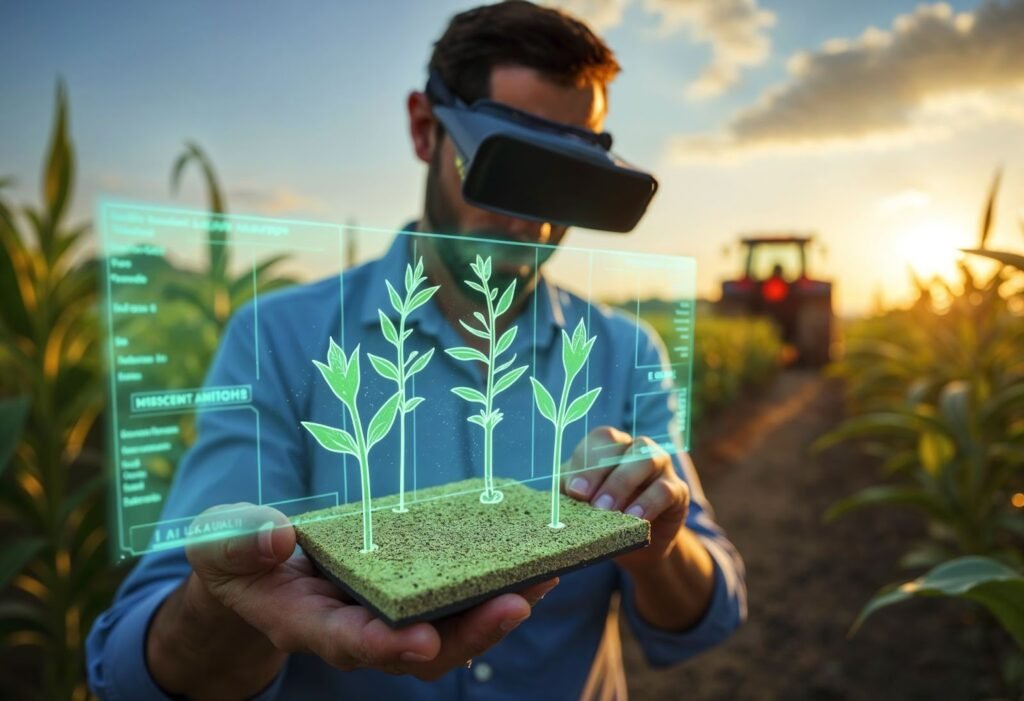
Five groundbreaking eco-friendly technologies are reshaping sustainable living. First, solar energy innovations, particularly perovskite solar cells and integrated photovoltaics, are enhancing efficiency and aesthetics. Second, smart water management utilizes sensors for precise irrigation, reducing waste. Third, biodegradable materials from renewable resources are increasingly popular, replacing harmful plastics. Fourth, carbon capture solutions like direct air capture aim to mitigate climate change impacts. Finally, vertical farming maximizes crop production while considerably lowering water usage. Together, these advancements drive the evolution to a sustainable future, addressing critical environmental challenges and enhancing our quality of life. Discover more about these technologies’ profound impact.
KEY TAKEAWAYS
- Perovskite Solar Cells: Offer higher efficiency and lower costs, revolutionizing solar energy and enhancing its role in sustainable living.
- Smart Water Management Systems: Utilize sensors and real-time data to optimize water usage, minimizing waste and promoting conservation in households and agriculture.
- Biodegradable Materials: Made from renewable resources, these materials reduce ecological footprints and are increasingly sought after for eco-friendly packaging and products.
- Vertical Farming Technologies: Maximize crop yield in urban spaces using hydroponics, significantly reducing water usage and transportation emissions for fresher produce.
- Energy-Efficient LED Lighting: Supports sustainable agriculture by lowering energy consumption and enabling year-round crop growth, ultimately reducing the carbon footprint of farming practices.
SOLAR ENERGY INNOVATIONS
In recent years, numerous solar energy innovations have emerged, greatly enhancing the efficiency and accessibility of this renewable resource. One of the most significant developments is the advancement of solar panel technology, which has transformed the landscape of renewable energy. These solar panel advancements have led to the creation of more efficient photovoltaic cells that convert sunlight into electricity with remarkable efficacy. The International Renewable Energy Agency (IRENA) reports an 82% nosedive in solar photovoltaic (PV) costs since 2010. That’s not just market momentum — it’s the democratization of clean energy, and it’s happening in real time.
The evolution of photovoltaic efficiency has been propelled by breakthroughs in materials science, particularly the introduction of perovskite solar cells. These cells not only boast higher efficiency rates compared to traditional silicon-based panels but also promise lower manufacturing costs, thereby democratizing access to solar energy. In addition to material improvements, advancements in solar tracking systems have allowed panels to follow the sun’s trajectory, further optimizing energy capture throughout the day.
Moreover, innovative designs like building-integrated photovoltaics (BIPV) have facilitated the integration of solar technology into architecture, enabling structures to generate energy without compromising aesthetic appeal. This fusion of functionality and design empowers homeowners and businesses alike to go green while enjoying greater energy independence and long-term cost savings.
As solar energy continues to evolve, the potential for widespread adoption becomes increasingly feasible. Enhanced photovoltaic efficiency, coupled with accessible technology, positions solar power as an essential pillar in the shift to a more sustainable future. By harnessing these innovations, individuals can liberate themselves from traditional energy sources and contribute to a cleaner, greener planet.
Smart Water Management
Water management has become a critical focus in the pursuit of sustainable living, particularly as global water scarcity intensifies. The increasing demand for fresh water, coupled with climate change, has necessitated the adoption of innovative solutions. Smart water management technologies are at the forefront of this evolution, enabling individuals and communities to optimize resources in support of sustainable living without compromising daily convenience.
A key component of smart water management is smart irrigation, which leverages advanced sensors, weather forecasts, and real-time data to guarantee that water is applied efficiently and effectively. By employing soil moisture sensors and automated irrigation systems, users can minimize water waste, thereby fostering significant water conservation. This approach not only enhances crop yield in agriculture but also reduces the burden on municipal water supplies.
Additionally, smart water management systems can provide insights into consumption patterns, allowing households and businesses to identify inefficiencies and adjust their habits accordingly. For instance, mobile applications can alert users to leaks or unusual water usage, empowering them to take immediate action and prevent further wastage.
Moreover, integrating these technologies into urban planning can facilitate the development of sustainable cities. Rainwater harvesting systems and greywater recycling can be optimized through smart management systems, reducing reliance on traditional water sources and enhancing resilience against droughts. The goal of green tech is to protect the environment, repair damage done to the environment in the past, and conserve the Earth’s natural resources.
Biodegradable Materials
Amid the growing urgency to combat plastic pollution and its detrimental effects on the environment, biodegradable materials have emerged as a promising alternative. Unlike traditional plastics that can take centuries to decompose, biodegradable plastics and compostable packaging are designed to break down naturally, considerably reducing their ecological footprint. These materials are made from renewable resourcessuch as cornstarch, sugarcane, and even mushrooms, making them ideal for eco friendly products that reduce plastic waste and support sustainable consumption.
The shift to biodegradable materials not only addresses waste management challenges but also aligns with a broader commitment to environmental stewardship. As businesses and consumers increasingly seek eco-friendly solutions, the demand for biodegradable options is set to rise. Below is a comparison of various biodegradable materials and their applications:
| Material | Application |
| PLA (Polylactic Acid) | Food containers, utensils |
| PHA (Polyhydroxyalkanoates) | Medical devices, packaging |
| Starch-based plastics | Grocery bags, films |
| Cellulose-based films | Wrappers, protective packaging |
| Mushroom mycelium | Insulation, packaging |
The development and adoption of biodegradable plastics and compostable packaging are crucial steps toward a future where consumer convenience does not compromise environmental integrity. By embracing these alternatives, individuals and organizations can contribute to a cleaner, healthier planet, allowing freedom from the burdens of pollution and waste.

CARBON CAPTURE SOLUTIONS
Carbon capture solutions represent a pivotal advancement in the quest to mitigate climate change and reduce greenhouse gas emissions. These innovative technologies aim to capture carbon dioxide (CO2) from the atmosphere or directly from industrial processes, preventing it from contributing to global warming. Among the various carbon sequestration methods, direct air capture (DAC) has garnered significant attention for its potential to remove CO2 directly from the air, thereby addressing emissions on a global scale.
DAC systems utilize chemical processes to extract CO2 from ambient air, which is then stored underground or repurposed for commercial use. This approach not only helps to lower atmospheric CO2 levels but also reflects a critical shift towards a proactive stance in climate action. As the world grapples with the escalating effects of climate change, adopting and scaling these technologies becomes imperative for achieving net-zero emissions.
Moreover, advancements in carbon sequestration methods, such as bioenergy with carbon capture and storage (BECCS), further illustrate the diversity within this sector. These methods combine biomass energy production with CO2 capture, allowing for a net-negative emissions scenario when managed sustainably.
Investing in carbon capture solutions not only enhances energy security but also fosters economic growth through the creation of new jobs and technologies. As society seeks to embrace freedom from the constraints of fossil fuels, these eco-friendly technologies provide a pathway towards a sustainable future, empowering individuals and communities to reclaim their environmental footprint.
Vertical Farming Technologies
In agriculture, sustainable technology is used to monitor the water level and health of crops, in order to increase yield and optimize water usage. As the urgency for sustainable food production intensifies in the face of climate change and urbanization, vertical farming technologies emerge as a transformative solution that maximizes agricultural efficiency while minimizing environmental impact. By integrating innovative hydroponic systems into urban agriculture, these technologies not only enhance food security but also reduce the carbon footprint associated with traditional farming practices.
Vertical farming utilizes stacked layers of crops, often in controlled environments, to optimize space and resource usage. This method can notably decrease water consumption by up to 90% compared to conventional farming. Additionally, urban settings benefit from reduced transportation emissions, as produce is grown close to consumers.
To better understand the merits of vertical farming, the following table outlines key features and benefits:
| Feature | Benefit |
| Hydroponic Systems | Uses nutrient-rich water, reducing soil dependency |
| Space Efficiency | Maximizes crop yield per square foot |
| Resource Conservation | Minimal water usage and energy-efficient lighting |
| Localized Production | Decreases transportation costs and emissions |
As the world grapples with the challenges of feeding a growing population amid limited arable land, vertical farming presents a bold vision for the future. By embracing these innovative technologies, urban agriculture can thrive, offering sustainable, fresh food options while fostering a deeper connection between consumers and their food sources. This approach not only holds promise for environmental stewardship but also empowers communities to reclaim their food sovereignty.

RELATED STUDIES ABOUT ECO-FRIENDLY TECHNOLOGIES FOR SUSTAINABLE LIVING
The integration of groundbreaking eco-friendly technologies marks a pivotal shift towards sustainable living. Much like a tree that absorbs carbon dioxide while releasing oxygen, these innovations not only mitigate environmental harm but also foster resilience in ecosystems. For instance, vertical farming can yield crops in urban settings, transforming concrete jungles into green oases. As society embraces these advancements, a collective effort emerges, nurturing the planet and ensuring a viable future for generations to come.
Recent Advances in Eco-Friendly Bionanocomposites for Drug Delivery of Natural Bioactive Compounds: A Sustainable Approach
Overview
This review critically examines the role of biodegradable nanobiocomposites as advanced delivery platforms for natural bioactive compounds. It highlights the synergy between natural bioactives (flavonoids, alkaloids, terpenoids, polyphenols) and nanotechnology to overcome key pharmacological limitations, while emphasizing the need for rigorous clinical validation and sustainable synthesis methods.
Key Challenges with Natural Bioactives
Natural bioactive compounds exhibit promising therapeutic properties (anti-inflammatory, anticancer, antimicrobial), but their clinical application is hindered by:
- Poor aqueous solubility
- Chemical instability under physiological conditions
- Rapid metabolism and systemic clearance
- Low bioavailability
- Non-specific biodistribution
Nanotechnology as a Delivery Solution
Nano-drug delivery systems (NDDS) offer mechanisms to enhance drug performance through:
- Improved solubilization and stability
- Controlled and sustained release profiles
- Passive targeting (e.g., Enhanced Permeability and Retention effect)
- Active targeting via surface ligands
- Protection from degradation
Role of Bionanocomposites
Bionanocomposites—hybrid materials combining natural biopolymers (chitosan, alginate, gelatin, plant gums) with nanoscale reinforcements—provide:
- Enhanced mechanical stability and encapsulation efficiency
- Biodegradability and biocompatibility
- Stimuli-responsive release (pH, temperature, enzymes)
- Versatile applications in cancer therapy, wound healing, tissue engineering, and antimicrobial treatments
Green Synthesis and Sustainability
The review emphasizes eco-friendly synthesis methods to reduce environmental and toxicological impacts:
- Plant-mediated synthesis: Uses plant extracts as reducing/capping agents
- Microbial synthesis: Utilizes bacteria, fungi, or algae
- Biopolymer-assisted synthesis: Employs natural polymers as matrices
- Enzyme-mediated synthesis: Offers high specificity under mild conditions
While green approaches align with sustainability goals, challenges remain in scalability, reproducibility, and precise control over nanoparticle properties.
Translational and Regulatory Gaps
Despite promising preclinical results, significant barriers exist:
- Limited clinical evidence: Most studies are in vitro or in small-animal models.
- Standardization issues: Variability in plant-derived materials complicates quality control.
- Manufacturing challenges: Batch-to-batch inconsistency and scale-up difficulties.
- Regulatory uncertainty: Lack of harmonized guidelines for nano-bio hybrid systems.
- Safety concerns: Long-term toxicity, immunogenicity, and degradation pathways are not fully characterized.
Future Directions
To advance clinical translation, the authors recommend:
- Interdisciplinary collaboration across material science, pharmacology, and clinical research.
- Standardization of raw materials, synthesis protocols, and analytical methods.
- Integration of advanced technologies such as AI-guided formulation design, microfluidics, and 3D bioprinting.
- Long-term in vivo studies focusing on safety, biodegradation, and environmental impact.
- Development of multifunctional systems combining therapy with diagnostics (theranostics).
Conclusion
Biodegradable nanobiocomposites represent a transformative approach to delivering natural bioactives, offering targeted, sustained, and eco-friendly therapeutic strategies. However, their full clinical potential depends on overcoming translational challenges through standardized research, robust safety evaluation, and regulatory alignment. The integration of green synthesis, smart material design, and rigorous validation will be essential for realizing safe and effective next-generation therapeutics.
| REFERENCE: Swagatam Sahoo, Amulyaratna Behera, Biswajeet Acharya, Debasis Patra, Recent Advances in Eco-Friendly Bionanocomposites for Drug Delivery of Natural Bioactive Compounds: A Sustainable Approach, Nano Trends, 2026, 100188, ISSN 2666-9781, https://doi.org/10.1016/j.nwnano.2026.100188. (https://www.sciencedirect.com/science/article/pii/S2666978126000103) |
Eco-Friendly Biosurfactants In Shampoo: Green Chemistry Innovations For Sustainable Personal Care
This review evaluates microbial biosurfactants—primarily rhamnolipids and sophorolipids—as sustainable, high-performance alternatives to synthetic surfactants like sodium lauryl sulfate (SLS) in shampoo formulations. It highlights their alignment with green chemistry principles, focusing on environmental benefits, dermatological safety, and functional efficacy, while addressing current adoption barriers.
Key Advantages of Biosurfactants
- Environmental Sustainability: Rapid biodegradability (60–95% within 7–14 days vs. 28–60 days for SLS), lower aquatic toxicity (5–10-fold reduction), and production from renewable feedstocks support a circular bioeconomy.
- Dermatological Safety: Significantly lower irritation potential (patch test scores <1.0 vs. 2.5–3.5 for SLS), reduced protein denaturation (<10% vs. up to 40% for SLS), and better preservation of natural scalp oils.
- Functional Performance: Effective sebum removal (85–95%), stable foam retention (>75% after 5 minutes), and broad pH/temperature tolerance. Many biosurfactants also offer added benefits like antimicrobial and anti-inflammatory properties.
Production and Formulation
- Production: Typically via microbial fermentation (e.g., Pseudomonas aeruginosa for rhamnolipids), with extraction methods including solvent extraction, aqueous two-phase systems, and supercritical CO₂.
- Formulation Challenges: pH sensitivity, electrolyte susceptibility, reduced foam density, higher cost ($20–40/kg vs. $2–4/kg for SLS), and stability issues in hard water or extreme temperatures.
- Strategies: Use of hybrid surfactant blends, natural thickeners, pH buffers, and synergistic combinations with mild synthetic surfactants to optimize performance and stability.
Market and Consumer Perspective
- Growing consumer demand for sulfate-free, natural, and microbiome-friendly products (70% willing to pay a premium).
- Current adoption is limited by cost, formulation complexity, and consumer perception linking rich lather with efficacy.
- Biosurfactants are strategically positioned for niche markets: anti-dandruff (rhamnolipids), baby care (sophorolipids), color-treated hair (MELs), and scalp therapy (lipopeptides).
Future Directions and Challenges
- Cost Reduction: Advances in fermentation yields, waste-based feedstocks, and streamlined downstream processing are critical.
- Research Needs: Long-term clinical studies on scalp microbiome modulation, performance in real-use conditions, and consumer perception.
- Innovation: Metabolic engineering, computational modeling, solid-state fermentation, and in situ production methods hold promise for scalability and functionality.
- Regulatory and Industry Alignment: Tighter restrictions on synthetic surfactants and certifications (e.g., ECOCERT) favor biosurfactant integration.
Conclusion
Biosurfactants represent a viable, eco-friendly alternative to synthetic surfactants, offering comparable cleansing with superior skin compatibility and environmental profiles. To achieve mainstream adoption, focused efforts are needed to reduce production costs, enhance formulation stability, validate clinical benefits, and educate consumers. With targeted innovation and strategic market positioning, biosurfactants can drive the next generation of sustainable, dermatologically gentle hair care products.
| REFERENCE: Shaziya Yasmeen Sayeed, Anju Goyal, Eco-friendly biosurfactants in shampoo: Green chemistry innovations for sustainable personal care,Journal of Dermatologic Science and Cosmetic Technology, Volume 2, Issue 3, 2025, 100105, ISSN 2950-306X, https://doi.org/10.1016/j.jdsct.2025.100105. (https://www.sciencedirect.com/science/article/pii/S2950306X2500038X) |
The effect of eco-friendly and financial technologies on renewable energy growth in emerging economies
Objective: This study investigates the impact of eco-friendly technologies (green patents) and financial technology (FinTech) on the adoption of renewable energy (RE) in emerging economies. It specifically examines the non-linear role of economic growth (GDP) as a threshold variable, identifying the income level at which its effect on RE transitions from negative to positive.
Scope: The analysis covers 38 emerging economies from 2006 to 2021, focusing on a critical but understudied group in the energy transition literature. The study uses advanced econometric models to account for complex dynamics and regional heterogeneity.
Key Findings:
- Non-linear GDP Threshold: The study identifies a critical GDP per capita threshold of $1,831.77. Below this level, economic growth has a negative effect on renewable energy adoption. However, once an economy surpasses this income level, GDP exerts a significant positive influence on the shift to greener energy. This confirms a U-shaped relationship, aligning with the Environmental Kuznets Curve (EKC) hypothesis. Approximately 76% of the sample data falls into this “upper regime.”
- Positive Drivers of Renewable Energy:
- FinTech: Has a strong, positive, and significant effect on RE adoption. Innovations like crowdfunding, peer-to-peer lending, and blockchain facilitate financing, improve transparency, and lower transaction costs for renewable energy projects.
- Eco-Friendly Technology: Also has a significant positive impact. A 1% increase in green patents is associated with a 3.17% rise in renewable energy consumption, highlighting the role of innovation in reducing costs and improving efficiency.
- Challenges and Negative Influences:
- Foreign Direct Investment (FDI): Surprisingly, FDI shows a negative correlation with RE growth in these emerging economies, suggesting it may prioritize short-term economic gains over long-term sustainability.
- Population Growth: Consistently exerts a negative pressure on renewable energy resources, indicating the challenge of scaling sustainable energy to meet the demands of growing populations.
Methodology:
The research employs the First-difference Generalized Method of Moments (FD-GMM) model for dynamic panel data, which is superior for handling endogenous variables and identifying thresholds. Robustness checks were performed using Quantile Regression (QR), which confirmed the main findings and provided nuanced insights across different levels of RE adoption.
Policy Implications:
The findings suggest targeted strategies for policymakers and energy stakeholders in emerging markets:
- Leverage FinTech: Create supportive regulatory frameworks to harness FinTech’s potential for financing RE projects. Integrate FinTech apps with environmental policies and promote financial literacy around green investments.
- Foster Green Innovation: Strengthen intellectual property rights (IPR) for green technologies and provide incentives (tax breaks, grants) for R&D. Encourage technology sharing and incorporate green patents into public procurement.
- Strategic Timing of Interventions: Recognize the GDP threshold. Policies promoting RE may be less effective in very low-income economies. Efforts should initially focus on building foundational capacity and aligning with broader development goals until the threshold is approached.
- Redirect FDI: Develop policies to channel foreign investment specifically toward sustainable energy infrastructure and green technology, moving it away from carbon-intensive projects.
- Plan for Population Pressure: Integrate renewable energy planning with urban development and population growth strategies to ensure scalability.
Conclusion:
For emerging economies, the transition to renewable energy is driven by a combination of technological innovation (both green and financial) and economic development. The study provides evidence that after reaching a modest income threshold, economic growth itself becomes a catalyst for greener energy. Therefore, a dual strategy of promoting FinTech and eco-innovation while fostering inclusive economic growth is essential for a successful and sustainable energy transition in the developing world.
| REFERENCE: Hind Alofaysan, Magdalena Radulescu, Daniel Balsalobre-Lorente, Kamel Si Mohammed, The effect of eco-friendly and financial technologies on renewable energy growth in emerging economies, Heliyon, Volume 10, Issue 17, 2024, e36641, ISSN 2405-8440, https://doi.org/10.1016/j.heliyon.2024.e36641. (https://www.sciencedirect.com/science/article/pii/S2405844024126722) |