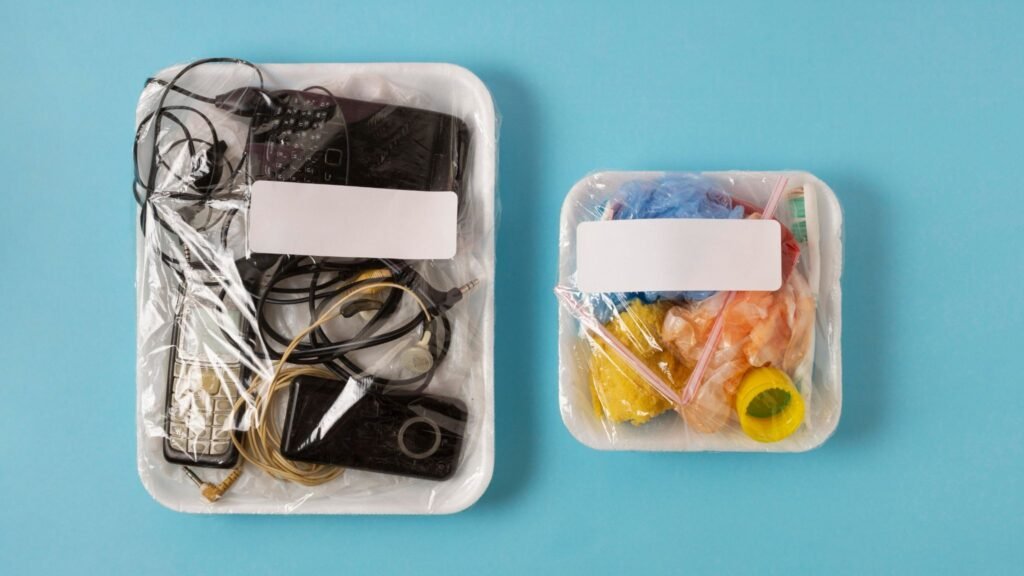
Whenever I am prototyping ultra-low-power IoT hardware in the lab or running simulations on device longevity, I am constantly reminded of the hidden trade-offs baked into modern circuit engineering. For decades, the electronics industry has treated polyvinyl chloride as an indispensable staple. It is rugged, cheap, highly flame-retardant, and provides exceptional dielectric insulation for delicate cable assemblies and connectors. Yet, working at the intersection of electrical engineering and biodegradable materials has taught me that we cannot evaluate a component solely by how well it performs on a test bench.
The moment a smart sensor or consumer gadget reaches the end of its functional life, that resilient engineering turns into an environmental hazard. PVC does not gracefully degrade; instead, the disposal phase transforms durable hardware into a persistent source of hazardous emissions, releasing toxic compounds like dioxins, plasticizers, and heavy metals into surrounding ecosystems.
As engineers, we often get caught up in optimizing energy efficiency and processing speeds while overlooking the physical fate of the enclosures and wire jacketing we specify. We need a fundamental mindset shift across hardware development: true performance must account for the full lifecycle, ensuring that the devices powering tomorrow’s connected world don’t leave behind a legacy of chemical pollution in our soil, air, and water.
PVC plastic emissions from electronics disposal can greatly harm environmental health, impacting air quality, soil integrity, and water resources. Toxic chemicals like dioxins and phthalates leach into ecosystems, disrupting wildlife and posing risks to human communities. Improper disposal contributes to soil contamination and deteriorates water quality, creating dangerous conditions for both health and biodiversity. Addressing these issues is essential for a sustainable future, and there’s much more to explore about the environmental implications and solutions.
KEY TAKEAWAYS
- PVC disposal releases toxic chemicals, including dioxins and phthalates, which disrupt endocrine systems and contaminate soil and water.
- Emissions from burning PVC contribute to air pollution, causing respiratory issues and affecting the health of vulnerable populations.
- Soil contamination from PVC leachates disrupts microbial activity, hindering crop growth and compromising food safety.
- Toxic chemicals from PVC waste threaten water quality, impacting biodiversity and increasing the risk of waterborne diseases.
- Marginalized communities are disproportionately affected by PVC emissions, highlighting the need for sustainable alternatives and equitable environmental practices.
WHAT IS PVC AND WHY IS IT USED IN ELECTRONICS?
Polyvinyl chloride, or PVC, is a widely used plastic commonly known as vinyl. Polyvinylidene chloride, or PVDC, is a related chlorinated plastic used more commonly in specialized packaging. Both are used in consumer, commercial, and industrial products including building materials, food packaging, and children’s toys.
Polyvinyl chloride (PVC) is a versatile polymer widely employed in the electronics industry due to its excellent electrical insulation properties and durability. You’ll find PVC applications in cables, connectors, and circuit boards, where its resilience enhances product longevity and performance.
Its ability to withstand high temperatures and resist corrosion makes it an attractive choice for both consumer electronics and industrial equipment.
However, while PVC’s benefits are notable, environmental concerns surrounding its lifecycle can’t be ignored. The production and disposal of PVC can lead to harmful emissions, raising questions about sustainability in your industry.
As you innovate, consider alternative materials or improved recycling methods that mitigate these concerns. By addressing the environmental impact of PVC, you can lead the way toward more sustainable practices in electronics, ensuring that innovation doesn’t come at the expense of our planet’s health.
Balancing performance with environmental responsibility is key to future advancements.
Understanding the Harmful Emissions From PVC Plastic Disposal
Polyvinyl chloride (PVC) is one of the most widely used types of plastics. Undeniable and complex supply chains anchor this plastics economy, primarily because the multifaceted application possibilities of plastics make them an indispensable fixture of modern life. In fact, it is impossible to envision modern society without plastics. They enhance our quality of life, comfort, and well-being. Plastics also ubiquitously deliver many societal benefits and make technological, safety, medical, and aesthetic advances possible. Over the years, plastics have replaced many traditional materials and given rise to new products with better and safer properties as well as superior performance characteristics.
When you consider the disposal of PVC plastics, it’s essential to recognize the toxic chemicals released during this process.
These emissions not only contribute to air pollution but also pose significant risks of soil contamination.
Understanding these factors can help you grasp the broader environmental impact of electronics disposal.
Toxic Chemical Release
As electronics become obsolete, the disposal of PVC plastic raises significant concerns about toxic chemical release.
When you discard PVC, you risk exposing the environment to harmful substances that linger due to their chemical persistence. Understanding these emissions is essential for mitigating toxic exposure.
Here are three key chemicals of concern:
- Dioxins: Byproducts formed during burning, which can disrupt endocrine systems.
- Phthalates: Chemicals used to soften PVC that can leach into soil and water, affecting wildlife and human health.
- Heavy Metals: Often found in PVC additives, these can contaminate waterways, leading to long-term ecological damage.
Addressing these emissions is critical for fostering a sustainable future and protecting public health from hazardous effects.
Air Pollution Concerns
The disposal of PVC plastic doesn’t just pose risks through soil and water contamination; it also greatly contributes to air pollution. When PVC burns, it releases harmful emissions, including dioxins and hydrochloric acid, which can severely degrade air quality.
These pollutants are linked to respiratory issues and other serious health impacts, particularly among vulnerable populations. As you consider the lifecycle of electronic devices, it’s vital to understand that improper disposal methods exacerbate these air quality problems.
Innovative recycling solutions and secure e-waste solutions can help mitigate these emissions, but awareness and action are essential. By choosing environmentally responsible options, you can help reduce the air pollution associated with PVC plastic and its detrimental effects on health and the environment.
Soil Contamination Risks
While improper disposal of PVC plastic might seem like a distant concern, the reality is that it poses significant risks of soil contamination. The leaching of harmful chemicals from PVC can lead to severe soil degradation, impacting both ecosystems and human health.
Consider these important factors:
- Chemical Leachates: Toxic substances from PVC can seep into the soil, disrupting microbial activity essential for healthy soil.
- Agricultural Impact: Contaminated soil can hinder crop growth, reducing yields and affecting food safety.
- Long-Term Effects: Over time, persistent pollutants accumulate, leading to chronic soil health issues that are difficult to remediate.
Addressing these risks is essential for sustainable environmental innovation and protecting agricultural significance.
How Do PVC Emissions Impact Our Air Quality?
Polyvinyl chloride (PVC) is the third-most used plastic globally, after PET and PP. It’s commonly used in the construction industry for pipes and signs, as well as in healthcare applications and clothing. Recycling PVC is possible, but it must be separated from other plastic types for the recycling process to work.
When PVC is improperly disposed of, it releases harmful emissions that can greatly degrade air quality. These emissions primarily consist of airborne toxins, which pose significant risks to public health. Exposure to these toxins can lead to respiratory issues, affecting not only those directly involved in disposal but also nearby communities.
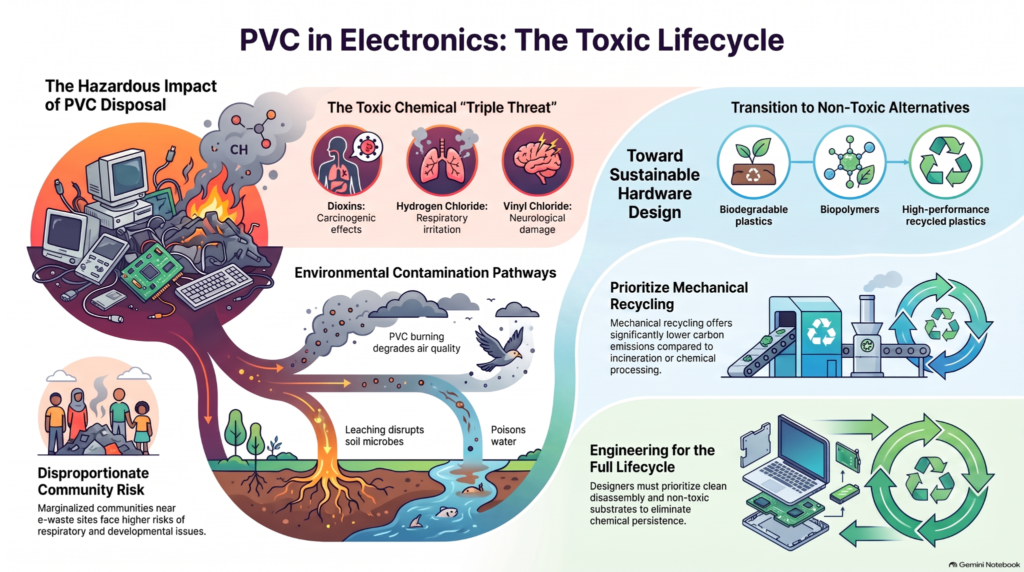
| Emission Type | Health Impact |
| Dioxins | Carcinogenic effects |
| Hydrogen Chloride | Respiratory irritation |
| Vinyl Chloride | Neurological damage |
| Phthalates | Endocrine disruption |
| Heavy Metals | Long-term toxicity |
The correlation between these airborne toxins and health complications highlights the urgent need for improved waste management strategies. By innovating disposal methods, you can help mitigate the adverse effects of PVC emissions, ultimately enhancing air quality and public health.

THE EFFECTS OF PVC PLASTIC ON SOIL AND WATER CONTAMINATION
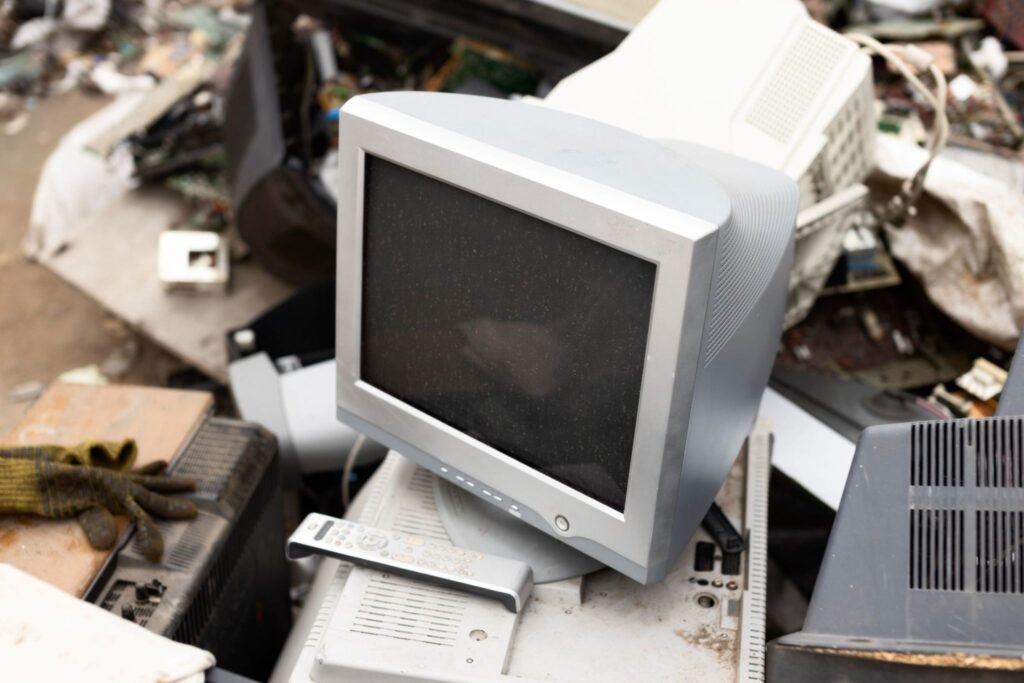
In my research on sustainable hardware architectures, one of the most alarming aspects of conventional electronic waste is the chemical cascade triggered by improper disposal. When discarded electronics containing PVC are incinerated or piled into unmanaged landfills, they release persistent airborne toxins like hydrogen chloride and dioxins, alongside migrating phthalates that leach directly into the soil. From an environmental engineering standpoint, this is disastrous. These leachates actively disrupt soil microbial communities—the very biological foundation required for healthy nutrient cycling and food security.
Furthermore, as recent material flow analyses and lifecycle assessments indicate, plastics accumulating in the electronics sector create immense long-term liabilities. When chlorinated polymers are subjected to thermal breakdown or primitive recycling methods, the resulting acidification potential and heavy metal migration cause widespread ecological strain. What frustrates me most as a hardware developer is that frontline and marginalized communities adjacent to informal disposal sites disproportionately bear the burden of these toxic exposures.
We cannot simply rely on downcycling or standard mechanical separation when hazardous additives cross-contaminate entire material streams. The electronics sector must take responsibility by replacing chlorinated vinyls with high-performance bio-based polymers, circular thermoplastics, and safe biodegradable substrates that eliminate chemical persistence at the molecular level.
When PVC plastic is improperly disposed of, it poses significant risks to soil and water quality.
Toxic chemicals can leach from the plastic, contaminating the surrounding environment and disrupting ecosystems.
Understanding these effects is essential for evaluating the broader implications of PVC emissions in electronics disposal.
Soil Contamination Risks
As PVC plastic waste accumulates in landfills, it poses significant risks to soil and water quality. PVC can leach harmful chemicals, which threaten soil health and create various contamination sources.
You should consider the following risks:
- Chemical Leaching: Toxic additives in PVC can seep into the soil, disrupting microbial ecosystems essential for nutrient cycling.
- Heavy Metal Release: Improper disposal can lead to the release of heavy metals, further degrading soil quality and posing risks to agriculture.
- Bioaccumulation: Contaminants can accumulate in soil organisms, potentially entering the food chain and impacting human health.
Understanding these risks is vital for developing innovative waste management strategies that mitigate soil contamination and protect environmental health.
Water Quality Degradation
The accumulation of PVC plastic waste not only threatens soil health but also poses significant risks to water quality.
When PVC plastics break down, they release harmful substances into water systems, creating an ideal environment for waterborne pathogens. These pathogens can proliferate, compromising both human health and the integrity of aquatic ecosystems.
Contaminated water can disrupt habitats, leading to a decline in biodiversity and affecting species that rely on clean water. You mightn’t realize how interconnected these systems are; the degradation of water quality directly impacts not just aquatic life, but also the communities that depend on these resources.
Addressing this issue requires innovative approaches to waste management, emphasizing recycling and responsible disposal to mitigate the effects on our precious water resources.
Toxic Chemical Leaching
Although PVC plastic is widely used in electronics for its durability and flexibility, it poses severe risks through toxic chemical leaching that affects both soil and water quality.
When PVC and other components in electronic waste break down, they can release harmful chemicals that contribute to brominated flame retardants environmental toxicity, potentially affecting ecosystems and human health.
- Toxic exposure: Contaminants infiltrate water supplies, posing health risks to humans and wildlife.
- Chemical persistence: Many substances released from PVC remain in ecosystems for extended periods, delaying recovery efforts.
- Soil degradation: Harmful compounds can alter soil chemistry, impacting plant growth and ecosystem balance.
As you advocate for innovative solutions, understanding these leaching effects is essential.
Addressing PVC’s environmental impact will drive the development of sustainable alternatives, ultimately protecting our health and natural resources.
Vulnerable Communities Affected by PVC Emissions
Many marginalized communities face heightened risks from PVC emissions during electronics disposal. These communities often lack the resources to mitigate exposure, resulting in significant threats to their community health.
Research indicates that emission exposure from improperly discarded electronics can lead to respiratory issues, skin disorders, and long-term developmental problems, particularly in vulnerable populations such as children and the elderly.
The proximity of these communities to e-waste sites amplifies their risk, as they may be exposed to harmful chemicals released during the degradation of PVC. This environmental injustice underscores the urgent need for innovative solutions to safeguard public health.
As awareness of these issues grows, it’s essential for policymakers and industry leaders to prioritize the health of these communities. By fostering sustainable practices and regulations, we can reduce PVC emissions and protect those who are disproportionately affected, ensuring a healthier environment for all.
Sustainable Alternatives to PVC in Electronics Manufacturing
As manufacturers seek to reduce environmental impact, exploring eco friendly products and sustainable alternatives to PVC in electronics becomes essential.
Shifting towards eco-friendly materials not only enhances sustainability but also aligns with consumer preferences for greener products.
Here are three promising alternatives:
- Biodegradable Plastics: These materials decompose naturally, reducing waste and environmental harm considerably.
- Recycled Plastics: Utilizing post-consumer plastics not only cuts down on new raw material use but also fosters a circular economy.
- Biopolymers: Derived from renewable resources, biopolymers offer similar performance characteristics to traditional plastics, without the environmental drawbacks.
Practical Steps to Reduce PVC Plastic Waste
Reducing PVC plastic waste requires a multifaceted approach that incorporates both innovative practices and consumer awareness.
First, you can support local recycling initiatives dedicated to processing PVC materials. By actively participating in these programs, you contribute to a circular economy that minimizes waste.
Next, consider opting for electronics from manufacturers committed to sustainable practices, as this fosters innovation in product design and materials.
It’s essential to educate yourself and others about the environmental impact of PVC. Share information on social media and engage in community discussions, amplifying consumer awareness on this pressing issue.
Additionally, advocate for policies that promote responsible disposal and recycling of electronic waste. By collaborating with stakeholders, you can drive change toward greener alternatives.
Ultimately, your choices can influence the market, encouraging manufacturers to prioritize environmentally friendly materials over PVC. Together, these steps can greatly reduce PVC plastic waste.
RELATED STUDIES ABOUT PVC PLASTIC EMISSIONS IN ELECTRONICS DISPOSAL
To sum up, as you navigate the complex landscape of electronics disposal, consider the far-reaching consequences of PVC emissions. Are we willing to jeopardize our air, soil, and water for convenience? By prioritizing sustainable alternatives and implementing practical waste reduction strategies, you can contribute to a healthier environment. Ultimately, the choices you make today shape the world of tomorrow—don’t underestimate your power in this critical fight for environmental health.
Decarbonising the plastic industry: A review of carbon emissions in the lifecycle of plastics production
This study reviews greenhouse gas (GHG) emissions across the entire life cycle of plastics—from raw material extraction and production to end-of-life (EoL) waste management—and outlines key pathways for industry decarbonization.
Key Findings
- Over 65% of global plastic production is concentrated in five fossil-based polymers: polypropylene (PP, 19.3%), low-density polyethylene (LDPE/LLDPE, 14.4%), polyvinyl chloride (PVC, 12.9%), high-density polyethylene (HDPE/MDPE, 12.5%), and polyethylene terephthalate (PET, 6.2%).
- Emissions are concentrated heavily in the production and incineration stages.
- Virgin polystyrene (PS) exhibits the highest production emissions at 3.680 kg CO2-eq./kg, followed by PET at 2.940 kg CO2-eq./kg.
- Incineration creates uniformly high emissions across polymer types at 2.730 kg CO2-eq./kg.
- Mechanical recycling generates significantly lower emissions (0.348 to 0.510 kg CO2-eq./kg), offering an immediate, scalable opportunity for carbon mitigation.
Critical Data Gaps
- Fugitive methane emissions during upstream fracking and ethylene production are infrequently measured in real-world petrochemical operations, causing upstream impacts to be underestimated.
- Peer-reviewed emissions data regarding chemical recycling remains limited despite widespread industry promotion.
- Emerging indirect impacts are omitted from standard LCAs, such as land-use change from bio-based plastics and the disruption of marine carbon sinks caused by microplastics.
- Variations in LCA methodologies, system boundaries, and regional energy mixes create substantial discrepancies across literature.
Strategic Recommendations
- Transition high-heat petrochemical cracking processes to renewable energy and explore hydrogen-based cracking technologies.
- Deploy satellite and sensor-based remote sensing to track fugitive methane emissions at extraction and refining facilities.
- Enact targeted policy interventions, including taxes on virgin plastics, subsidies for closed-loop recycling, and mandatory corporate GHG disclosure.
- Expand LCA frameworks to integrate circularity indicators, microplastic impacts, and avoided virgin production benefits into standard modeling.
| REFERENCE: W. Leal Filho, J. Barbir, E. Carpio-Vallejo, A. Dobri, V. Voronova, Decarbonising the plastic industry: A review of carbon emissions in the lifecycle of plastics production, Science of The Total Environment, Volume 999, 2025, 180337, ISSN 0048-9697, https://doi.org/10.1016/j.scitotenv.2025.180337. (https://www.sciencedirect.com/science/article/pii/S0048969725019771) |
Gate to gate life cycle assessment of greenhouse gas emissions and acidification potential in plastic recycling technologies in Nepal
This study evaluates the environmental performance of three Municipal Plastic Waste (MPW) management pathways in Nepal: Mechanical Recycling (MR), Chemical Recycling via pyrolysis (CR), and Landfilling (LF), with MR and CR incorporating Waste-to-Energy (WTE) incineration for residual solid waste. The assessment models greenhouse gas (GHG) emissions and acidification potential across Nepal’s provincial waste profiles, utilizing the national low-carbon electricity grid mix (0.067 kg CO2-eq/kWh).
Key Findings
- Net Climate Change Impact:
- Mechanical recycling delivers the greatest net climate benefit at -805 kg CO2-eq/t MPW, driven by lower processing energy requirements and significant avoided emissions from displacing virgin plastic production (-914 kg CO2-eq/t).
- Chemical recycling achieves a net impact of -544 kg CO2-eq/t MPW, reflecting high avoided emissions (-820 kg CO2-eq/t) counterbalanced by substantial process and thermal energy demands.
- Landfilling produces a net positive climate impact of +114 kg CO2-eq/t MPW due to lack of material recovery and emissions from landfill degradation and methane generation.
- Acidification Potential:
- Chemical recycling generates a massive acidification footprint of 3,360 kg SO2-eq/t MPW due to SO2 and HCl byproduct generation during pyrolysis and purification.
- Mechanical recycling (0.34 kg SO2-eq/t MPW) and landfilling (0.057 kg SO2-eq/t MPW) exhibit negligible acidification potential.
- Energy Demands & Direct Incineration:
- Chemical recycling consumes 732 kWh of electricity and 98.63 kWh of natural gas per tonne of MPW—over 4 times the electricity of MR (181 kWh) and 13.6 times that of LF (53.77 kWh).
- Electricity use contributes 6% to 24% of total climate impact across methods.
- Standalone incineration without energy recovery creates the worst environmental footprint (976 kg CO2-eq/t MPW), generating ~20 times the emissions of MR process emissions.
Scenario Analysis & Decarbonization Pathways
- Surplus Domestic Electricity: Utilizing Nepal’s domestic surplus hydropower (eliminating Indian grid imports and transmission losses) improves net GHG savings across recycling methods.
- Full Process Electrification: Replacing natural gas combustion with surplus renewable electricity reduces recycling emissions further (avoided emissions improve by 2.6% for MR and 4.6% for CR).
Strategic Recommendations
- Prioritize Mechanical Recycling: Scale mechanical recycling infrastructure for compatible polymer fractions (e.g., PET, HDPE, LDPE) as the primary treatment route to maximize carbon offset efficiency.
- Electrify Industrial Heating: Transition recycling thermal processes from fossil gas to low-carbon grid electricity.
- Implement Acid Gas Scrubbing: Mandate acid-gas control technologies for chemical recycling plants to mitigate severe SO2 and HCl emission risks.
- Expand National Waste Inventories: Conduct nationwide, spatially resolved waste characterization surveys to optimize provincial plastic collection and sorting systems.
| REFERENCE: Raghav Sharma, Ashim Joshi, Bivek Baral, Gate to gate life cycle assessment of greenhouse gas emissions and acidification potential in plastic recycling technologies in Nepal, Results in Engineering, Volume 26, 2025, 105367, ISSN 2590-1230, https://doi.org/10.1016/j.rineng.2025.105367. (https://www.sciencedirect.com/science/article/pii/S2590123025014379) |
High-resolution dynamic material flow analysis to elucidate plastic flows in waste management systems
This study develops a high-resolution Dynamic Probabilistic Material Flow Analysis (DPMFA) model to map and evaluate plastic flows across all life-cycle stages in Japan from 1990 to 2023. Tracking eight major commercial polymers across 47 product categories, 17 waste collection pathways, and 10 sorting systems, the study places particular focus on end-of-life (EoL) management, mechanical recycling inflows, and material circularity.
Key Findings
- Consumption & In-Use Stock Trends:
- Domestic plastic consumption peaked in 1997 at 15.3 ± 1.1 Mt and has steadily declined since, with per capita consumption decoupling from GDP growth after peaking at 122 kg/person/year in 2005.
- In-use plastic stocks accumulated to 50.2 ± 0.7 Mt by 2023, heavily concentrated in the building and construction (39%) and electrical equipment/electronics (17%) sectors.
- The container and packaging sector represents the largest share of domestic consumption, averaging 61% throughout the study period.
- Evolution of Waste Collection & Treatment:
- While mixed waste collection decreased from 77% to 62% between 2000 and 2023, source-separated collection remained under 40% of total waste.
- Incineration remains the dominant EoL pathway, managing 71% of cumulative plastic waste (479.8 ± 6.9 Mt total managed since 2000), while landfilling decreased from 21% to 9%.
- Secondary material recovery increased from 5% to 14% of annual EoL waste between 2000 and 2023.
- Shifts in Mechanical Recycling Feedstock:
- Annual inflows to mechanical recycling nearly doubled from 1,238 kt in 2000 to 2,335 kt in 2023.
- Post-consumer waste surged from 32% of recycling inflows in 2000 to 70% in 2023, with packaging contributing 77% of all post-consumer recycling inputs in 2023 (led by PET bottles and sorted packaging).
- PET remains the most recycled polymer (37% of 2023 recycling output), with increasing shares of PP and PS recovered from home appliances.
- Downcycling & Material Cascade Realities:
- Recycled plastics are predominantly downcycled into lower-grade applications (e.g., middle layers of piping and flooring) or transferred cross-sector (e.g., agricultural films converted into PVC flooring), primarily due to polymer mixing and chemical additives.
Strategic Priorities for Waste System Optimization
- Prioritize High-Volume Streams: Focus source-separation and mechanical recycling infrastructure on container and packaging waste, construction/demolition plastics, and textiles.
- Prepare for Long-Life Stocks: Establish dedicated collection systems for building and construction plastics to prepare for large impending waste releases from aging infrastructure.
- Target Agricultural LDPE: Transition agricultural film management from incineration to dedicated mechanical recycling.
- Implement Chemical Screening: Develop detection and removal processes for hazardous additives (such as plasticizers in PVC and brominated flame retardants in electronic waste) to prevent cross-contamination and expand closed-loop recyclability.
| REFERENCE: Yiwen Zhang, Zhanyun Wang, Masahiro Oguchi, Haruhisa Yamamoto, Bernd Nowack, High-resolution dynamic material flow analysis to elucidate plastic flows in waste management systems, Waste Management, Volume 224, 2026, 115719, ISSN 0956-053X, https://doi.org/10.1016/j.wasman.2026.115719. (https://www.sciencedirect.com/science/article/pii/S0956053X26003892) |
CONCLUSION
Looking ahead at the future of consumer tech and industrial IoT, solving the e-waste crisis requires us to bridge the divide between cutting-edge circuit design and ecological stewardship. During my years researching green electronics and testing alternatives to petrochemical plastics, I have seen firsthand that we do not have to sacrifice mechanical integrity or electrical reliability to achieve genuine environmental sustainability. Alternatives like non-toxic biopolymers, recyclable engineering thermoplastics, and bio-derived substrates are no longer theoretical concepts; they are viable materials ready for industrial scaling.
Achieving a clean lifecycle, however, demands active collaboration across the entire supply chain. Hardware designers must refuse to specify toxic materials like PVC, manufacturers must prioritize clean end-of-life disassembly, and policymakers must enforce stringent closed-loop recovery standards. As consumers, we also hold tremendous power by demanding transparent, repairable, and eco-conscious devices rather than accepting planned obsolescence.
Every circuit board we lay out and every device we purchase represents an ecological choice. By phasing out hazardous chlorinated plastics and investing in circular, non-toxic hardware today, we can build a resilient technological landscape that protects our communities and preserves natural ecosystems for generations to come.