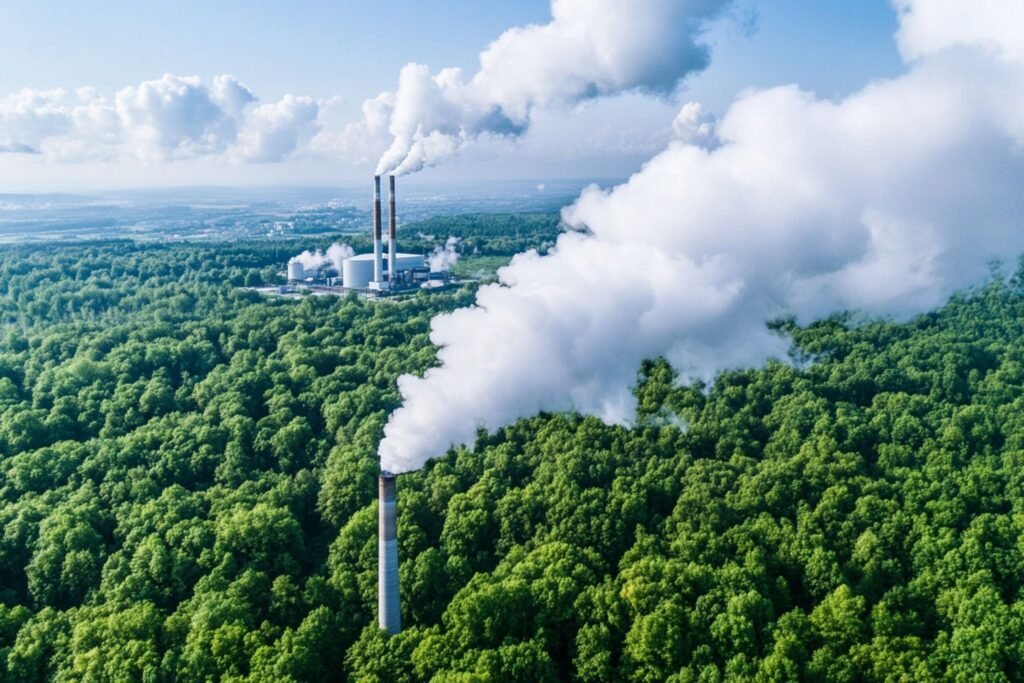
Throughout my years analyzing macroeconomic trends and climate resilience across emerging markets, I have continually witnessed a recurring policy dilemma: the immediate allure of heavy industrialization versus long-term environmental solvency. When walking through burgeoning industrial corridors or reviewing sovereign fiscal reports, the initial value proposition of petrochemical infrastructure is undeniable. It brings direct capital injection, creates thousands of specialized technical and logistics jobs, and builds foundational manufacturing capacity that rapidly elevates regional gross domestic product. Yet, treating these industrial gains in isolation creates a dangerous economic blind spot.
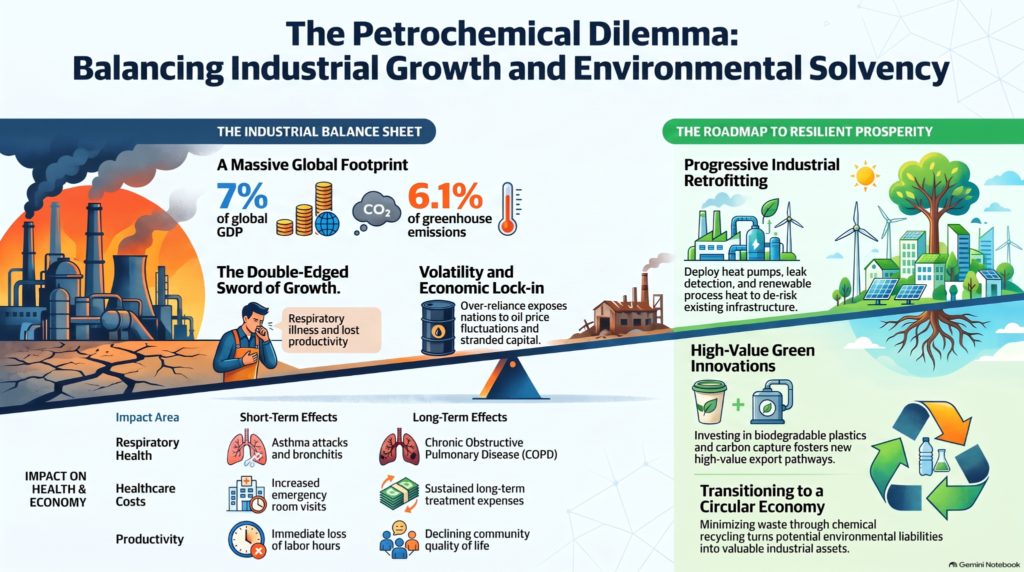
In emerging economies, fossil fuel-based manufacturing often acts as an economic double-edged sword. The revenue generated on balance sheets is frequently offset by unpriced negative externalities deteriorating public health infrastructure, lost labor hours from respiratory illnesses, and an acute vulnerability to volatile global commodity cycles. True economic prosperity cannot be measured purely by short-term industrial output; it must incorporate natural capital and community well-being.
As developing nations position themselves in a changing global trade environment, understanding this delicate intersection between heavy chemical processing, domestic fiscal health, and ecological preservation is not just an academic exercise, it is the foundation for lasting, sovereign economic stability.
Petrochemical emissions play a dual role in developing nations. They boost job creation and infrastructure development but also bring significant environmental and health challenges. Air pollution can strain healthcare systems and increase respiratory illnesses, impacting productivity. Furthermore, economic dependence on volatile oil prices can lead to instability. Balancing job growth with sustainable practices is essential. Understanding these dynamics can reveal effective strategies for fostering economic prosperity while ensuring environmental responsibility, paving the way for a resilient future.
KEY TAKEAWAYS
- Petrochemical industries can drive immediate job creation and infrastructure development in developing nations, boosting local economies.
- However, emissions from petrochemical production can severely impact air quality and public health, leading to increased healthcare costs.
- Economic dependency on petrochemicals can expose nations to global oil price fluctuations, risking financial stability and job security.
- Implementing sustainable practices and green technologies can harmonize economic growth with environmental protection, creating resilient economies.
- Investment in research and development fosters innovation in emission reduction, contributing to both economic and environmental benefits in developing nations.
UNDERSTANDING THE ECONOMIC IMPACT OF PETROCHEMICAL INDUSTRIES
Petrochemicals are chemicals derived from fossil fuels, generally petroleum and natural gas. Petrochemical products often go unrecognized since few people are aware of how pervasive the industry has become in modern life. They are combined with other inputs to produce a surprising range of everyday products including plastics, paints, cleaners and solvents, synthetic resins and rubbers, fertilizers, and certain pharmaceuticals. With increased consumerism, demand for goods containing these inputs—such as plastic packaging, electronics, and synthetic fibers in clothing—is also increasing. This trend is particularly evident at the global level with continued economic and population growth in developing countries.
While many developing nations rely on petrochemical industries as a cornerstone of their economic growth, the consequences of this dependency are multifaceted and often complex.
You’ll find that while petrochemical investments can stimulate immediate job creation and infrastructure development, they can also lead to a lack of economic diversification. This reliance traps economies in a volatile cycle, exposing them to fluctuations in global oil prices and diminishing returns.
To foster sustainable growth, it’s vital to explore avenues for diversification. Policymakers must prioritize investments in renewable energy and technology sectors, which can provide more resilient economic frameworks.
Studies indicate that countries with diversified economies tend to experience more stable growth and lower unemployment rates. By strategically reallocating resources and incentivizing innovation, developing nations can mitigate the risks tied to petrochemical dependence and create a more balanced economic landscape that benefits all citizens.
Economic Benefits of Petrochemical Emissions
Petrochemical pollution comes from the release of harmful substances into the environment derived from petrochemical industry activities. It originates during the transformation of oil and natural gas into chemicals and raw materials for manufacturing countless everyday products. This pollution primarily affects the air but also damages water and soil. It is a significant source of atmospheric pollution that accelerates climate change and poses a severe risk to human health and ecosystems.
Petrochemical emissions can drive significant job creation in developing nations, as industries expand to meet growing demands.
This growth not only stimulates local economies but also attracts foreign investment, further enhancing industrial development.
Job Creation Opportunities
In developing nations, the petrochemical industry can create thousands of jobs, greatly boosting local economies. By investing in job training and workforce development, these countries can harness the potential of this sector to enhance employment opportunities.
- Skilled technicians maintaining advanced machinery
- Researchers innovating eco-friendly production methods
- Logistics professionals managing supply chains efficiently
These positions not only provide immediate income but also foster long-term economic stability.
As local labor forces become more skilled, communities benefit from increased purchasing power, leading to a ripple effect that stimulates other sectors.
Policymakers should prioritize strategic partnerships with petrochemical companies to guarantee sustainable job growth, ultimately transforming local economies while addressing environmental concerns.
Increased Industrial Growth
The growth of the petrochemical industry directly correlates with increased industrial development in many developing nations. This industrial expansion fuels economic progress, creating jobs and enhancing local infrastructure.
By capitalizing on petrochemical emissions, nations can attract foreign investment and spur technological advancements, positioning themselves as competitive players in the global market.
However, balancing these economic benefits with environmental regulations is vital. Policymakers must design innovative frameworks that encourage sustainable practices while fostering growth.
This dual approach not only mitigates environmental impacts but also guarantees that industrial growth remains viable. Embracing cleaner technologies within the petrochemical sector can lead to a more resilient economy, supporting long-term prosperity without compromising ecological integrity.
Environmental Consequences of Petrochemical Emissions
Emissions from petrochemical industries create a significant environmental burden, impacting air quality, public health, and the economic impact of chemical pollutants in developing nations. These emissions contribute to climate change and pose immediate risks to communities.
You might envision the following:
- Thick smog enveloping urban areas, obscuring sunlight and reducing visibility.
- Respiratory illnesses on the rise, straining healthcare systems and affecting productivity.
- Contaminated water sources, endangering both wildlife and human populations.
Data indicates that air pollution from petrochemical plants can lead to increased mortality rates and chronic health conditions.
Policymakers must recognize the urgent need for innovative solutions to mitigate these emissions. Implementing stricter regulations, investing in cleaner technologies, and promoting sustainable practices will be essential.
STRATEGIES FOR HARMONIZING ECONOMIC GROWTH AND ENVIRONMENTAL SUSTAINABILITY
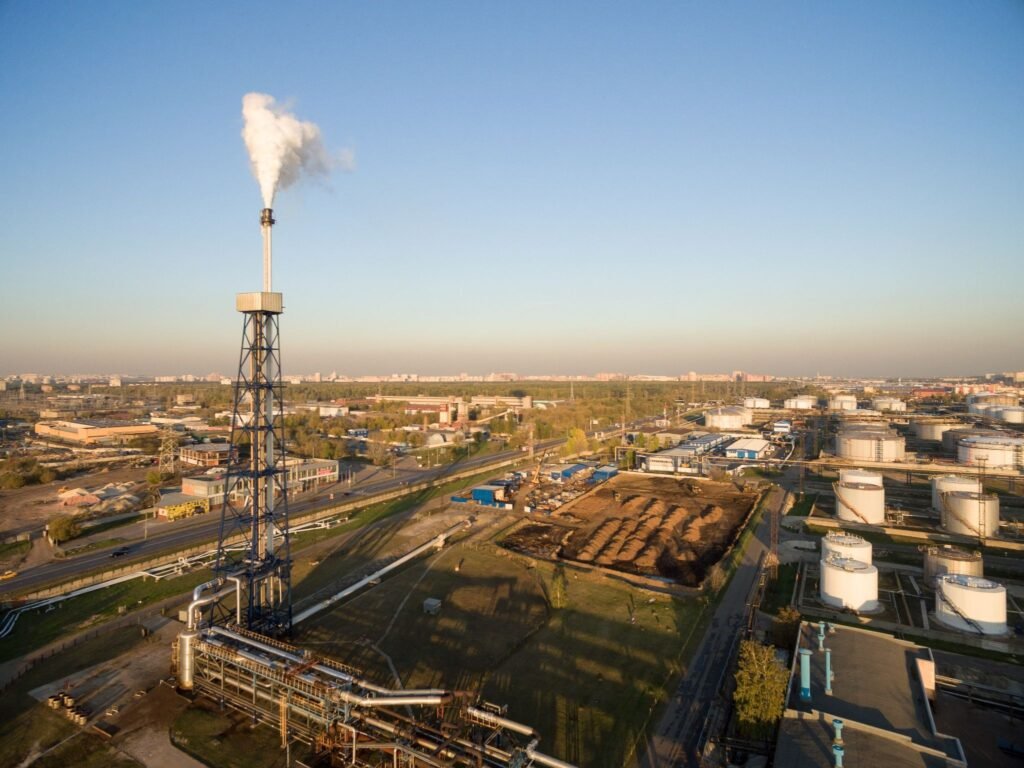
When we examine the operational mechanisms of heavy petrochemical facilities, the divide between immediate financial returns and long-term systemic risk becomes stark. In my field research across developing industrial zones, the human and capital cost of unchecked emissions is clear. When high-temperature cracking furnaces and chemical processing units operate without stringent abatement protocols, local communities near these facilities absorb immense environmental costs. Airsheds filled with fine particulate matter, nitrous oxides, and volatile compounds do not simply degrade local ecosystems; they steadily erode workforce productivity, drive up regional municipal healthcare expenditures, and trap vulnerable populations in cycles of chronic illness.
From a strict financial and policy perspective, ignoring these systemic costs while continuing to subsidize fossil-based infrastructure creates long-term technological and economic lock-in. When emerging markets dedicate limited capital budgets to assets with multi-decade lifespans, they risk stranding billions in capital as international carbon regulations, border adjustment mechanisms, and global ESG standards tighten.
The sustainable path forward requires progressive retrofitting: integrating industrial heat pumps, deploying leak detection, adopting renewable process heat, and enforcing transparent emissions standards. By pairing industrial expansion with modern circular practices and targeted clean energy deployment, developing nations can safeguard human health while insulating their industrial base against future global market shocks.
While balancing economic growth with environmental sustainability may seem challenging, developing nations can adopt targeted strategies that yield positive outcomes for both.
Embracing green technology is vital. By investing in renewable resources, you can reduce reliance on petrochemicals while fostering innovation.
Implementing sustainable practices across industries not only boosts productivity but also aligns with the growing demand for eco friendly products and global eco-friendly investment trends.
Corporate responsibility plays an important role, as businesses must prioritize environmental stewardship alongside profit.
Encouraging community engagement guarantees local populations are involved in sustainability efforts, fostering a sense of ownership and accountability.
Finally, promoting environmental education empowers citizens to make informed decisions, driving demand for greener products and services.
Effective Policies for Emission Reduction
Incorporating sustainable practices into economic frameworks naturally leads to the need for effective policies aimed at emission reduction.
You’ll want to focus on developing robust regulatory frameworks that encourage innovation in emission technologies.
- Incentives for green technology adoption** create a competitive edge for industries.
- Strict emission standards** push companies to innovate and reduce their carbon footprints.
- Public-private partnerships foster collaboration and resource sharing for sustainable practices.
How Emissions Impact Public Health?
Given the escalating levels of petrochemical emissions in developing nations, the implications for public health are becoming increasingly alarming. The rise in pollution exposure directly correlates with increased healthcare costs and respiratory diseases, particularly affecting vulnerable populations. As you analyze these trends, consider the long-term effects on community health and the widening healthcare disparities that emerge.
| Impact Area | Short-Term Effects | Long-Term Effects |
| Respiratory Diseases | Asthma attacks, bronchitis | Chronic obstructive pulmonary disease (COPD) |
| Healthcare Costs | Increased emergency visits | Long-term treatment expenses |
| Community Health | Reduced workforce productivity | Declining quality of life |
Addressing these issues is essential for achieving environmental justice and equitable health outcomes. Innovative policy solutions are needed to mitigate emissions and protect public health effectively.
What’s Next for Petrochemicals and Economic Growth?
Petrochemical products are everywhere and are integral to modern societies. They include plastics, fertilisers, packaging, clothing, digital devices, medical equipment, detergents, tires and many others. They are also found in many parts of the modern energy system, including solar panels, wind turbine blades, batteries, thermal insulation for buildings, and electric vehicle parts.
As you consider the future of petrochemicals, it’s essential to examine innovations that can drive sustainable economic growth.
Policymakers must prioritize strategies that balance industrial development with environmental responsibility, leveraging data to inform decisions.
Future Petrochemical Innovations
While many developing nations grapple with the challenges of balancing economic growth and environmental sustainability, the future of petrochemical innovations presents a crucial opportunity for transformative change.
By embracing advanced technologies, these nations can foster economic expansion while reducing environmental impacts.
- Biodegradable plastics that decompose naturally, lessening landfill burdens.
- Alternative fuels derived from renewable resources, decreasing reliance on fossil fuels.
- Carbon capture technologies that mitigate emissions, supporting a circular economy.
These eco-friendly innovations, grounded in green chemistry and advanced recycling, can drive sustainable practices.
As policymakers promote these initiatives, the potential for economic growth intertwined with environmental responsibility becomes increasingly achievable, paving the way for a more resilient future.
Sustainable Economic Strategies
To guarantee sustainable economic growth in the petrochemical sector, developing nations must implement strategic policies that prioritize both innovation and environmental stewardship.
Embracing renewable alternatives can greatly reduce emissions while fostering job creation and economic resilience. By integrating circular economy principles, you can minimize waste and enhance resource efficiency, turning potential liabilities into valuable assets.
Investing in research and development will drive technological advancements, enabling the shift from traditional petrochemical processes to greener solutions.
Policymakers should incentivize a company’s environmental sustainability strategy concerns, promoting initiatives that focus on sustainable practices. By aligning economic strategies with environmental goals, you’ll not only guarantee a healthier planet but also open new market opportunities, positioning your nation as a leader in the global shift toward sustainable petrochemical production.
RELATED STUDIES ABOUT PETROCHEMICAL EMISSIONS AND ECONOMY
In balancing economic growth with environmental sustainability, it’s vital to recognize that petrochemical emissions can drive short-term gains but lead to long-term costs. Data shows that regions prioritizing emission reduction often experience healthier populations and more sustainable economies. By implementing effective policies, you can foster an industry that supports both economic development and public health. As you navigate these complexities, remember that a greener approach isn’t just beneficial—it’s imperative for a thriving future.
Carbon dioxide-focused greenhouse gas emissions from petrochemical plants and associated industries: Critical overview, recent advances and future prospects of mitigation strategies
The petrochemical sector produces nearly 1 billion tons of products annually (representing approximately 7% of global GDP) while consuming 14% of global oil and 9% of global gas demand. The industry accounts for roughly 6.1% of global greenhouse gas emissions (approximately 3 billion tons CO2eq in 2019). Energy-related emissions from electricity, heat, manufacturing, and construction comprise roughly 60% of this total, while industrial chemical process emissions account for the remaining 40%.
The primary emission targets and their core mitigation strategies across the value chain include:
- Upstream Oil, Gas, and LNG Production: The primary challenges are CO2 from energy-intensive operations and CH4 from venting, flaring, and fugitive equipment leaks. Mitigation focuses on electrification via submarine power cables or offshore renewables (wind, biomass), deploying energy-saving equipment like digital pumping units and high-efficiency motors, leak detection and repair (LDAR) using differential absorption lidar, flare gas recovery, and developing porous sorbents (zeolites, activated carbon, graphene) for CH4 capture.
- Ammonia Manufacturing: As a major CO2 source driven by the high-temperature, fossil-fueled Haber-Bosch process, near-term abatement relies on integrating conventional steam methane reforming Haber-Bosch (SMR-HB) with Carbon Capture, Utilization, and Storage (CCUS). Long-term pathways focus on renewable electrification, electrochemical synthesis using solid-state or liquid electrolytes, and low-temperature photocatalytic nitrogen reduction.
- Plastics Production: Contributing significant lifecycle CO2 emissions (61% from resin production, 30% from conversion), strategies center on shifting from incineration to mechanical and chemical recycling/upcycling, transitioning to bio-based polymers (such as PLA and bio-PET), powering conversion units with solar PV, and implementing demand-reduction policies for single-use plastics.
- Methanol Synthesis: To lower high CO2 intensity from fossil syngas production, mitigation options include bi-reforming and oxidative bi-reforming of CH4 with CO2 and steam, utilizing captured industrial CO2 via CCU hydrogenation, and biomass gasification processes (such as the Hynol route).
- Nitric Acid and Adipic Acid Production: These processes generate more than half of direct industrial N2O emissions. Effective abatement utilizes Selective Catalytic Reduction (SCR and CO-SCR over Fe-zeolites or Fe-MOR catalysts), high-temperature thermal and catalytic decomposition systems (such as EnviNOx®), and developing alternative N2O-free synthetic routes (such as palladium-catalyzed carbonylation of 1,3-dienes).
- Digital and Regulatory Drivers: Decarbonization is further accelerated by regulatory instruments like the EU Carbon Border Adjustment Mechanism (CBAM) and standardized Product Carbon Footprint (PCF) labeling. Additionally, blockchain provides verifiable tracking for recycled materials and emissions data, while Artificial Intelligence (AI) optimizes plant energy consumption, tracks lifecycle footprints, and forecasts emissions to drive operational reductions.
| REFERENCE: Yuxin Yan, Yoong Xin Pang, Xiang Luo, Qingyang Lin, Cheng Heng Pang, Honglei Zhang, Xiang Gao, Tao Wu, Carbon dioxide-focused greenhouse gas emissions from petrochemical plants and associated industries: Critical overview, recent advances and future prospects of mitigation strategies, Process Safety and Environmental Protection, Volume 188, 2024, Pages 406-421, ISSN 0957-5820, https://doi.org/10.1016/j.psep.2024.05.136. (https://www.sciencedirect.com/science/article/pii/S095758202400658X) |
Ending fossil-based growth: Confronting the political economy of petrochemical plastics
The petrochemical sector is central to the connected crises of climate change, plastic pollution, and toxic emissions because it relies on fossil fuels for both energy and material feedstock. Direct production processes account for approximately 4% of global greenhouse gas (GHG) emissions, while plastics generate 4.5% of global GHG emissions across their lifecycle. Annually, the sector produces 460 Mt of plastics, resulting in over 350 Mt of plastic waste. As the transport and energy sectors decarbonize, petrochemicals are projected to become the primary driver of global oil demand growth, with baseline forecasts anticipating that plastic use will nearly triple by 2060.
The persistence of fossil-based plastic growth is maintained by three structural lock-ins:
- Infrastructural and Technological Lock-In: Long operational lifetimes and massive sunk capital in infrastructure like pipelines, refineries, and steam crackers create profound path dependency. Global ethylene production capacity is approximately 200 Mt per year, with over half concentrated in the United States, China, Saudi Arabia, and South Korea. Because facilities average 25-year revamp cycles and newer facilities in Asia and the Middle East are under a decade old, these assets threaten to lock in fossil feedstock use for decades.
- Institutional Lock-In: Policy frameworks have historically emphasized downstream waste management and recycling rather than upstream production caps or material substitution. Furthermore, state ownership of assets, fossil fuel subsidies, and deep political access by incumbent producers insulate the sector from strong climate mandates.
- Behavioral and Cultural Lock-In: Consumption patterns in high-income economies rely heavily on single-use items and packaging. Plastic use reaches 255 kg per capita in the United States compared to 16 kg per capita in sub-Saharan Africa. Historical marketing has reinforced disposability, while current corporate sustainability discourses often emphasize voluntary actions and technical fixes to delay binding regulation.
To transition away from fossil-based petrochemical plastics, the study outlines four primary intervention pillars:
- Green Industrial Policy: Directing state interventions to phase out fossil plastic production, placing a moratorium on emissions-intensive routes like coal-to-olefins, and actively supporting the market entry of non-toxic, recyclable, renewable polymers.
- Redirecting Financial Flows: Halting public finance, loan guarantees, and export credits for unabated fossil petrochemical expansion—which exceeded $30 billion between 2010 and 2020—and channeling capital toward zero-emission alternative materials.
- Strengthening International Governance: Using the legally binding UN Global Plastics Treaty to place global caps on primary plastic polymer production, eliminate hazardous chemical additives, and coordinate trade restrictions through the WTO and World Customs Organization.
- Empowering Social Movements and Environmental Justice: Leveraging grassroots activism, citizen science, and strategic litigation to highlight the disproportionate health and toxic burdens borne by fenceline communities, thereby countering incumbent lobbying power.
Achieving sustainable production requires moving beyond downstream circularity and technical fixes to directly confront the political economy and enforce upstream limits on virgin petrochemical production.
| REFERENCE: Joachim Peter Tilsted, Fredric Bauer, Carolyn Deere Birkbeck, Jakob Skovgaard, Johan Rootzén, Ending fossil-based growth: Confronting the political economy of petrochemical plastics, One Earth, Volume 6, Issue 6, 2023, Pages 607-619, ISSN 2590-3322, https://doi.org/10.1016/j.oneear.2023.05.018. (https://www.sciencedirect.com/science/article/pii/S259033222300252X) |
Achieving effective operations in petrochemical industries using affordable and clean energy: Techniques, benefits, barriers and solutions
The chemical and petrochemical industry is a vital foundation for modern global manufacturing, producing building block chemicals and polymers such as ethylene, propylene, and aromatics. It is also one of the most energy-intensive sectors, accounting for approximately 10% of total global energy demand (around 35 EJ annually), 30% of global industrial final energy demand, and 21% of heavy industry greenhouse gas emissions. A typical facility consumes approximately 2.47 million kJ of energy per metric ton of product, making the transition to affordable and clean energy essential for long-term competitiveness and decarbonization.
Primary operational hotspots and strategic clean energy pathways identified in the study include:
- Energy-Intensive Hotspots: Energy demand is heavily concentrated in steam cracking furnaces operating at 750°C to 950°C (often exceeding 50% of total thermal demand), distillation columns (frequently consuming over 40% of total plant energy), endothermic catalytic reforming, hydrotreating, and large mechanical compressor trains for cryogenic separations.
- Retrofitting Existing Assets: Modernizing existing facilities offers a rapid, cost-effective transition pathway through waste heat recovery (air preheaters, economizers), thermodynamic heat cascading using Pinch Analysis, industrial heat pumps, and electrifying auxiliary pumps and compressors with variable frequency drives.
- Phased Renewable Integration: The study advocates a progressive deployment model starting with onsite solar PV for auxiliary plant loads, expanding to large-scale wind and solar power procurement via Power Purchase Agreements (PPAs), incorporating Concentrated Solar Power (CSP) and biomass for high-temperature process heat, and culminating in green hydrogen deployment for chemical feedstock and furnace fuel.
- Energy Audits and Digital Monitoring: Granular data collection via Industrial Internet of Things (IoT) sensors paired with Machine Learning and Artificial Intelligence powers Smart Energy Management Systems (SEMS) and Digital Twins to optimize dynamic energy dispatch, predict peak loads, and safely manage variable renewable inputs.
- Addressing Key Implementation Barriers: Formidable barriers include high upfront capital costs with extended payback periods (exceeding 5–10 years), technical limits in electrifying ultra-high-temperature processes, renewable intermittency, and workforce skill shortages. Recommended solutions encompass public-private partnerships, targeted carbon pricing, green finance mechanisms, large-scale battery and thermal energy storage systems (BESS/TES), and specialized training programs in power electronics and hydrogen safety.
- Industrial Benchmarks: Concrete implementations demonstrate commercial feasibility, including Shell’s Pernis refinery (onsite solar, green hydrogen via the Holland Hydrogen I project, and a large-scale biofuels facility targeting 1.15 Mt/year CO2 reduction), BASF’s Ludwigshafen Verbund site (extensive heat cascading, a 54 MW PEM electrolyzer reducing 72,000 metric tons/year of GHGs, and large-scale industrial heat pumps), and Saudi Aramco’s 4 GW NEOM green hydrogen and ammonia facility.
Transitioning the petrochemical industry toward affordable and clean energy requires coordinated efforts across operators, policymakers, and financial institutions to de-risk capital investments, align supportive regulatory frameworks, and scale low-carbon technologies.
| REFERENCE: Lekan Taofeek Popoola, Celestine Chidi Nwogbu, Usman Taura, Yuli Panca Asmara, Alfred Ogbodo Agbo, Tajudeen Adejare Aderibigbe, Saheed Olalekan Alawode, Oluwafemi Fadayini, Achieving effective operations in petrochemical industries using affordable and clean energy: Techniques, benefits, barriers and solutions, Cleaner Waste Systems, Volume 13, 2026, 100453, ISSN 2772-9125, https://doi.org/10.1016/j.clwas.2025.100453. (https://www.sciencedirect.com/science/article/pii/S2772912525002519) |
CONCLUSION
Looking ahead, developing nations stand at a pivotal crossroads where industrial policy must converge with strategic green finance. Relying indefinitely on legacy petrochemical growth is no longer a viable long-term strategy, nor is an abrupt shutdown of essential industrial capacity realistic for nations still expanding basic infrastructure. The viable solution lies in structured, deliberate industrial transformation.
By deploying targeted public-private partnerships, blended finance models, and progressive carbon pricing, developing economies can effectively de-risk private investment into bio-based feedstocks, industrial electrification, and closed-loop material recycling. In my advisory work with institutional stakeholders and policymakers, the core takeaway is consistent: sustainability and economic competitiveness are mutually reinforcing.
Transitioning toward low-carbon manufacturing frameworks does far more than reduce environmental liabilities; it opens high-value export pathways, attracts modern foreign direct investment, and creates high-skilled jobs that remain resilient over the long haul. If emerging economies take proactive steps today to replace linear extraction with clean technology and circular industrial systems, they will do more than simply mitigate emissions they will establish themselves as competitive, resilient leaders in the global sustainable economy.