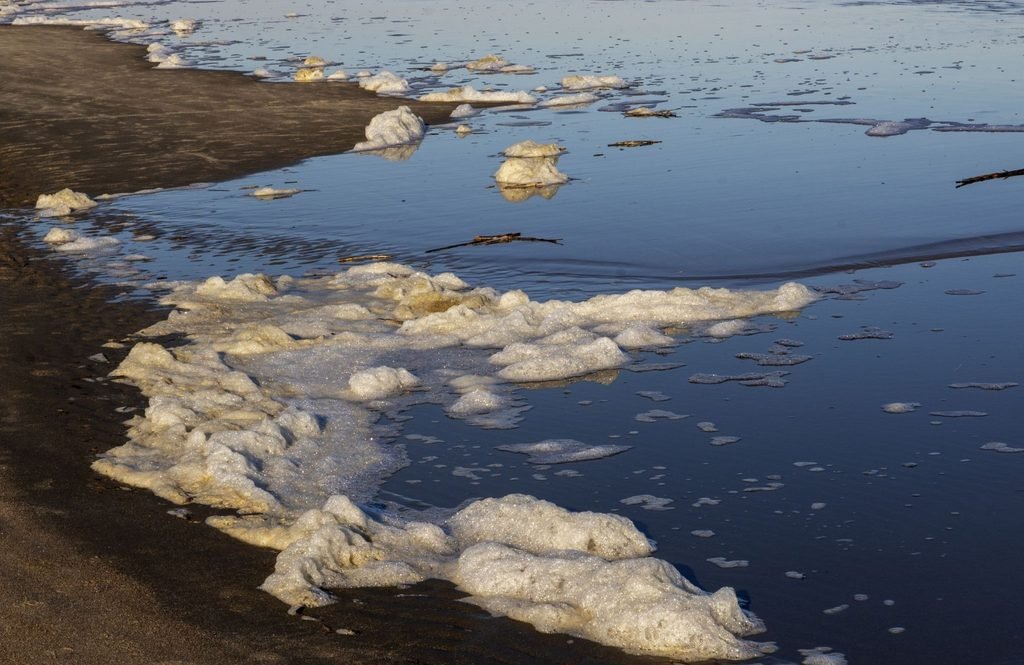
Whenever I sit down with community organizers or local water district boards, there is a recurring theme that always surfaces: the quiet nature of groundwater contamination. Unlike surface spills or sudden algae blooms that turn a lake bright green, nitrate pollution moves invisibly through our soils and subterranean aquifers without altering the taste, odor, or clarity of the water coming out of the tap. Over years of analyzing urban water tables and consulting on community conservation efforts, I have watched how easily this silent contaminant slips under the radar until an infant falls ill or long-term health anomalies start appearing in local clinics.
The scientific reality is stark. When synthetic fertilizers, livestock waste, and leaky septic networks overwhelm the soil profile, negative nitrate ions travel unimpeded straight down into our drinking reserves. We cannot treat groundwater as an infinite, self-purifying filter. For vulnerable populations relying heavily on shallow private wells, clean drinking water is not a guaranteed constant; it is an ongoing struggle against legacy land practices.
Demystifying what nitrates actually do to our bodies—especially to developing infants and expecting mothers—is not meant to stir panic. Rather, it gives neighborhoods the foundational clarity and baseline data they need to advocate for genuine, protective water management.
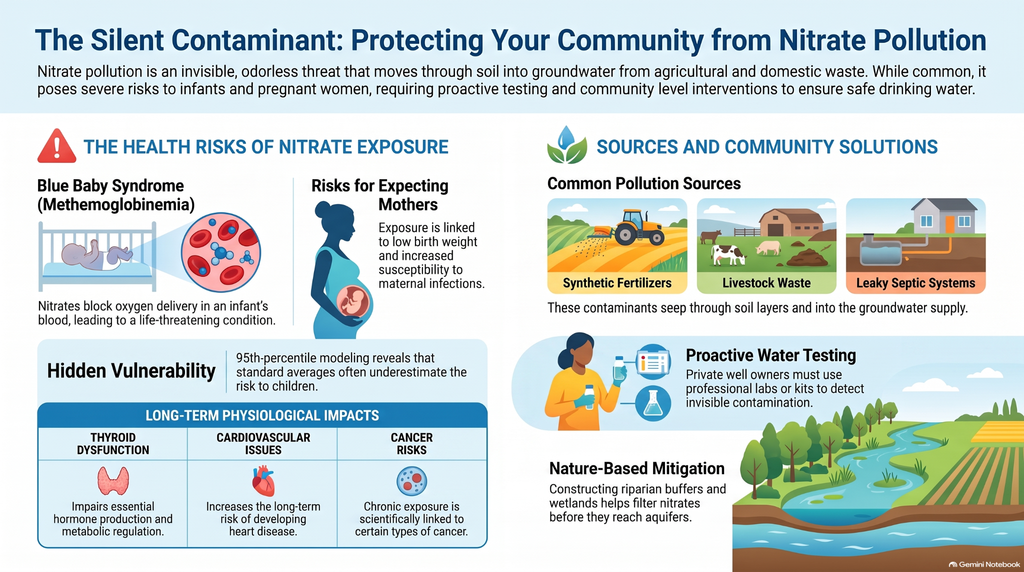
Nitrate pollution in groundwater can pose serious health risks, especially for infants and pregnant women. Exposure may lead to conditions like “blue baby syndrome” in infants and increased pregnancy complications. Chronic exposure can result in thyroid issues, cardiovascular problems, and even certain cancers. Communities with limited access to clean water are particularly vulnerable. Understanding these risks is essential for protection and community action. Learn how communities can effectively address and reduce nitrate pollution risks.
KEY TAKEAWAYS
- Nitrate pollution can cause immediate health risks, particularly in infants, leading to conditions like methemoglobinemia or “blue baby syndrome.”
- Pregnant women exposed to high nitrate levels may face complications, including low birth weight and increased infection susceptibility.
- Chronic exposure to nitrates is linked to thyroid dysfunction, cardiovascular issues, and potential reproductive problems.
- Long-term nitrate exposure has been associated with certain cancers, raising public health concerns.
- Communities should engage in awareness efforts to understand and mitigate the health risks of nitrate pollution in groundwater.
WHAT ARE NITRATES AND WHERE DO THEY COME FROM?
Central Valley farmers are required to report to the Regional Water Board how much nitrogen they applied to their field and how much was removed as part of the crop’s yield. The study compared different ways of monitoring when nitrate from fertilizers seep into groundwater. Kisekka said the results highlight the need for affordable, real-time soil nitrate monitoring tools to help farmers manage fertilizer use efficiently.
Nitrates are chemical compounds composed of nitrogen and oxygen, playing a crucial role in both agriculture and environmental health. Understanding nitrate chemistry helps you recognize their significance in enhancing soil fertility.
In agricultural practices, nitrates are often introduced through fertilizers, promoting plant growth by providing essential nutrients. However, excessive use can lead to environmental concerns.
Nitrates originate from various sources, including natural processes like the decomposition of organic matter and human activities such as livestock waste and synthetic fertilizers.
As you explore deeper into the dynamics of nitrate chemistry, you’ll discover that they can easily leach into the soil and water systems, potentially affecting groundwater quality.
How Nitrate Pollution Contaminates Groundwater Supplies
Groundwater (GW) is the most reliable and accessible potable water source. Many studies show that human activities compromise GW quality and public health. With the intensification of agricultural and livestock farming in recent decades, there has been a corresponding increase in anthropogenic nitrogen (N) input, significantly impacting the global N cycle and resulting in the widespread contamination of GW with nitrate (NO3). Millions of people worldwide suffer from diseases caused by NO3 contamination, such as colorectal cancer and thyroid disease. NO3 contamination is well-known in many areas, like Bangladesh, India, Algeria, Italy, and the Netherlands.
Nitrate pollution often enters groundwater through various sources, including agricultural runoff and wastewater discharge.
As these nitrates seep into the soil, they can travel through porous materials, ultimately contaminating water supplies. Similar concerns can arise from PFAS contamination in drinking water, highlighting the importance of monitoring groundwater for multiple types of contaminants.
Understanding these pathways is essential for addressing the health risks associated with nitrate exposure.
Sources of Nitrate Pollution
When agricultural practices and urban development intersect, they often lead to increased nitrate levels in groundwater supplies. Agricultural runoff is a primary source, as fertilizers applied to crops can wash away during rainfall, carrying nitrates into nearby water systems.
Additionally, wastewater discharge from industrial and municipal sources can introduce significant nitrate loads into the environment. This contamination occurs when treatment facilities fail to adequately remove nitrates or when untreated sewage enters waterways.
The cumulative effect of these sources can overwhelm natural filtration processes, causing nitrates to seep into groundwater. Understanding these sources is essential for developing strategies to mitigate nitrate pollution and protect drinking water supplies, ensuring a healthier future for communities.
Pathways to Groundwater Contamination
The journey of nitrate pollution into groundwater supplies begins with various pathways that facilitate its movement through the environment.
Understanding these pathways is essential for effective pollution mitigation and ensuring safe groundwater recharge.
Here are four primary pathways:
- Agricultural Runoff: Fertilizers applied to crops can wash into nearby streams and soils, eventually reaching groundwater.
- Leaching: Nitrates seep through soil layers, especially in sandy or loose soils, and contaminate underground aquifers.
- Wastewater Disposal: Improperly managed septic systems can leak nitrates into the groundwater.
- Urban Stormwater: Rainwater can carry nitrates from urban surfaces into drainage systems, which may lead to groundwater supplies.
Recognizing these pathways enables communities to implement strategies for effective pollution mitigation and protect their essential groundwater resources.
Vulnerable Populations Most Affected by Nitrate Contamination
Communities with limited access to clean water sources are particularly susceptible to the adverse effects of nitrate contamination. At-risk populations, including low-income families and rural residents, often rely on private wells, which may not be regularly tested for pollutants. These communities may also face exposure to forever chemicals in groundwater, making comprehensive water-quality monitoring especially important.
Individuals with pre-existing health conditions are especially vulnerable, as their bodies may struggle to cope with the added stress of contaminated water.
Moreover, education and resources may be insufficient in these communities, limiting their ability to mitigate risks and seek alternatives. Innovative approaches to monitoring and purifying groundwater are essential to protect these populations.

HEALTH RISKS OF NITRATE EXPOSURE FOR INFANTS AND PREGNANT WOMEN
In my field research and technical project reviews, tracking nitrogen pathways always brings to light a difficult hydrogeological reality: what we put onto the land surface today often sets a chemical trap that persists for decades. Soils carry a negative charge, and because nitrate is also a negatively charged anion (NO3^-), the clay complex simply cannot bind or retain it. Once irrigation water or seasonal rainfall pushes excess nitrogen past the shallow crop root zone, nothing stops it from percolating downward until it reaches the water table.
Recent isotopic source-tracking studies demonstrate how quickly this accumulation outpaces natural attenuation. In oxygen-rich alluvial aquifers, natural denitrification essentially stalls out, leaving nitrate intact as it migrates into domestic extraction wells. When this water enters the human body, the biological impact is immediate and measurable.
In infants, nitrates convert to nitrites, oxidizing hemoglobin into methemoglobin and choking off oxygen delivery at the cellular level. Seeing probabilistic health modeling show hazard index exceedances for children underscores that standard deterministic averages frequently underestimate everyday danger. We cannot simply rely on broad municipal averages when private well users and perimeter farming communities bear the brunt of contaminated shallow plumes.
Although nitrate contamination affects various demographics, infants and pregnant women are particularly at risk due to their developing bodies’ heightened sensitivity. Exposure to elevated nitrate levels can pose significant health risks, especially for these vulnerable groups.
Here are some key concerns:
- Methemoglobinemia: Infants may develop “blue baby syndrome,” a condition where blood can’t carry enough oxygen.
- Pregnancy risks: High nitrate levels are linked to complications such as low birth weight and premature births.
- Developmental issues: Nitrate exposure may affect cognitive and physical development in infants.
- Increased susceptibility: Pregnant women’s immune systems are altered, making them more vulnerable to infections linked to nitrate exposure.
Being aware of these risks is essential for safeguarding infant health and ensuring a healthy pregnancy.
Taking proactive measures to monitor and reduce nitrate levels in drinking water is vital for protecting these sensitive populations.
Chronic Health Effects of Nitrate Pollution
Attributing nitrogen (N) in the environment to emissions from agricultural management practices is difficult because of the complex and inter-related chemical and biological processes associated with N and its cascading effects across land, air and water. Such analyses are critical, however, in understanding the benefits and disbenefits associated with environmental management options, such as the use of corn to produce biofuels. Coupled physical models present new opportunities to understand relationships among environmental variables across multiple sources, pathways and scenarios. In this study, a coupled modeling system was used to assess the impacts of increased corn production on groundwater. In particular, the study showed how the models provide new information on the drivers for contamination in groundwater, and then relate pollutant concentration changes attributed to increased corn production between 2002 and 2022 to health and cost outcomes.
While short-term exposure to high nitrate levels poses immediate risks, chronic exposure can lead to a range of long-term health effects that often go unnoticed until they become severe. Nitrate toxicity can manifest in various ways, impacting your health over time. Recognizing these effects is essential for protecting yourself and your community.
| Health Effect | Description |
| Methemoglobinemia | Impairs oxygen transport in blood |
| Thyroid Dysfunction | Affects hormone production |
| Cardiovascular Issues | Increases risk of heart disease |
| Reproductive Problems | Can lead to fertility issues |
| Cancer Risks | Linked to certain types of cancer |
The environmental impact of nitrate pollution is profound, affecting not just human health but also ecosystems. Understanding these chronic health effects empowers you to advocate for cleaner water resources, ensuring a safer environment for future generations.
Testing Your Water for Nitrate Levels
Given the potential long-term health effects of nitrate pollution, it’s important to know how to assess the quality of your drinking water.
Regular water testing is essential for effective nitrate detection. Here are four key steps you should follow:
- Choose a Testing Method: Select between DIY test kits or professional laboratory services, depending on your needs.
- Collect Samples: Follow the instructions carefully to guarantee accurate results. Use clean containers to avoid contamination.
- Conduct the Test: If using a kit, follow the instructions closely. For lab tests, send your samples as directed.
- Interpret Results: Compare your findings with local safety standards. If nitrate levels exceed recommended limits, consider further action.
What Can Communities Do to Cut Down Nitrate Pollution?
Communities play an essential role in reducing nitrate pollution, and implementing effective strategies can greatly improve water quality. You can start by fostering community initiatives aimed at sustainable agricultural practices. Encourage local farmers to adopt precision farming techniques, which minimize fertilizer use and reduce runoff. Promoting eco friendly products and sustainable alternatives can also help communities reduce their environmental impact and support cleaner water resources.
Additionally, advocating for stronger pollution regulations at the municipal level is vital. By pushing for policies that limit nitrogen inputs from industrial activities and urban runoff, you can create a healthier environment.
Organizing community workshops to raise awareness about the impacts of nitrate pollution and promoting native vegetation in landscaping can also help absorb excess nitrates.
Finally, engaging with local stakeholders, including businesses and schools, can amplify your efforts, creating a unified approach to safeguard groundwater quality. Together, these actions can considerably cut down on nitrate pollution in your community.

RELATED STUDIES ABOUT NITRATE POLLUTION IN GROUNDWATER
In summary, understanding nitrate pollution and its health effects is essential for safeguarding your community. For instance, in a small town where agricultural runoff contaminated drinking water, local leaders initiated a testing program and implemented sustainable farming practices, greatly reducing nitrate levels. By staying informed and proactive, you can help protect vulnerable populations and guarantee safe drinking water for everyone. Engaging in community efforts can lead to meaningful change, fostering a healthier environment for all residents.
Distribution, source apportionment, and non-carcinogenic health risk assessment of nitrate pollution in surface and groundwater of the Yi River Basin, China
This study presents a comprehensive assessment of nitrate (NO3-) contamination across connected surface water and groundwater systems in the Yi River Basin, a historically and agriculturally significant catchment in Henan Province, China. By coupling the Absolute Principal Component Scores–Multiple Linear Regression (APCS-MLR) receptor model with the U.S. EPA health risk assessment framework and Monte Carlo uncertainty simulations, the authors quantitatively resolved pollution sources and apportioned source-specific non-carcinogenic health hazards across different demographics.
Methodology & Field Sampling:
- Field Collection: Collected 34 surface water and 28 shallow groundwater samples (primarily from domestic and agricultural wells) in mid-December 2023 along the river mainstream and major tributaries.
- Laboratory & Hydrochemical Analyses: Measured key field physicochemical parameters alongside major dissolved cations and anions using ICP-OES, ion chromatography, and acid-base titration, verified within acceptable charge balance error thresholds (plus or minus 10%). Standard and modified Piper trilinear diagrams (incorporating NO3-) evaluated hydrochemical facies shifts.
- Source Apportionment & Risk Modeling: Used principal component analysis and APCS-MLR to identify and quantify source contribution rates to dissolved ions. Calculated Hazard Indices (HI) via oral ingestion and dermal exposure for infants, children, adult males, and adult females, integrated source contributions into risk formulas, and ran 10,000-iteration Monte Carlo probabilistic simulations to evaluate assessment uncertainty.
Key Findings:
- Groundwater Nitrate Enrichment & Spatial Gradients: Groundwater exhibited significantly higher nitrate concentrations than surface water, averaging 53.93 mg/L (range: 2.44 to 263.00 mg/L) compared to a surface water mean of 20.14 mg/L (range: 3.55 to 48.69 mg/L). Thirteen groundwater samples exceeded China’s national drinking water quality standard (45 mg/L), showing an increasing concentration trend from upstream to downstream as flat terrain, lower hydraulic gradients, and intensive cropland promoted nitrate accumulation. Conversely, surface water had only three upstream exceedances, benefiting from downstream dilution, faster flow velocities, and atmospheric exchange.
- Oxidizing Conditions Limiting Natural Attenuation: Both surface water and groundwater maintained positive oxidation-reduction potentials (averaging 77.32 mV and 103.93 mV, respectively) and high dissolved oxygen levels (>6 mg/L), establishing stable oxidative environments that suppress microbial denitrification and hinder natural in situ nitrate degradation.
- Quantitative Source Apportionment (APCS-MLR):
- Groundwater: Dominated by agricultural fertilizer application and nitrification (39.08%), followed by industrial and domestic wastewater effluents (16.36%) and natural rock weathering (14.55%), alongside an uncharacterized legacy/infiltration fraction (29.98%).
- Surface Water: Controlled primarily by geological weathering (32.60%), evaporative concentration and salt inputs (18.31%), and mixed agricultural/domestic wastewater subject to nitrification (16.12%).
- Vulnerability of Minors & Risk Underestimation: Non-carcinogenic health hazards followed the vulnerability order: children > infants > adult females > adult males. Deterministic modeling yielded acceptable basin-wide mean HI values (<1). However, Monte Carlo probabilistic simulations showed that the deterministic approach systematically underestimated real-world risks: 95th-percentile HI values exceeded the critical threshold (HI > 1) across all population groups, reaching 6.71 for children and 2.16 for infants, with exceedance probabilities of 37.85% and 16.94%, respectively.
- Agricultural Dominance in Source-Specific Risk: Integrating source loadings into the health risk model revealed that agricultural activities generated the overwhelming majority of non-carcinogenic health risk, driving 81.15% of total risk in groundwater and 50.25% in surface water.
Management & Policy Implications:
- Zoned Groundwater Protection: Prioritize nitrogen fertilizer application quotas, precision fertilization, and slow-release formulations in critical agricultural recharge areas, while strictly controlling livestock manure and rural domestic sewage in midstream and downstream alluvial plains.
- Riparian Buffer Infrastructure: Construct ecological interception channels and denitrification ditches along contiguous farmland bordering the river mainstem to treat agricultural runoff before it recharges surface and shallow alluvial aquifers.
- Integrated Source-to-Tap Monitoring: Establish a unified, long-term monitoring network coupling surface and groundwater quality, incorporating multi-isotope tracking (delta 15N and delta 18O) to track seasonal pollutant transformations and protect vulnerable rural drinking water wells.
| REFERENCE: Panpan Tian, Hui Qian, Siqi Li, Xiaoxin Shi, Kang Li, Yixin Liu, Yanyan Gao, Zhiming Cao, Puxia Wu, Yandong Ma, Distribution, source apportionment, and non-carcinogenic health risk assessment of nitrate pollution in surface and groundwater of the Yi River Basin, China, Journal of Hydrology: Regional Studies, Volume 64, 2026, 103237, ISSN 2214-5818, https://doi.org/10.1016/j.ejrh.2026.103237. (https://www.sciencedirect.com/science/article/pii/S2214581826001357) |
Groundwater hydrochemistry and identification of nitrate pollution sources in the Ouémé Delta (Southern-Benin) using dual isotopes (15N–NO3 and 18O–NO3) and a Bayesian isotope mixing model
This study evaluates groundwater hydrochemistry and identifies nitrate (NO3-) contamination sources in the Ouémé Delta of southern Benin by integrating standard hydrochemical methods, Self-Organizing Maps (SOM), dual stable isotopes (delta 15N-NO3- and delta 18O-NO3-), and a Bayesian isotope mixing model (MixSIAR).
Study Overview & Methodology:
- Sampling Network & Seasonal Design: Conducted two primary sampling campaigns covering 132 water points (111 dug wells and 21 boreholes) across the rainy season (September–October 2020) and dry season (March 2021) in the Mio-Pliocene (Continental Terminal) and Quaternary shallow aquifers. Ten hotspot sites with nitrate levels exceeding national limits were selected for dual stable isotope analysis (delta 15N and delta 18O of NO3-).
- Analytical & Statistical Framework: Major dissolved ions and nutrients were determined via ion chromatography and titration. Unsupervised Self-Organizing Maps (SOM) clustered spatial hydrochemical facies and contamination levels. The MixSIAR Bayesian mixing model was applied to apportion the relative contributions of four potential nitrate sources: manure and sewage (M&S), synthetic fertilizers (SF), soil nitrogen (SN), and atmospheric deposition (AD).
Key Findings:
- Significant Nitrate Contamination & Regulatory Exceedances: Nitrate concentrations reached up to 140.88 mg/L during the rainy season and 80.58 mg/L in the dry season, with approximately 21% of all sampled sites exceeding the WHO guideline and Beninese drinking water standards (50 mg/L and 45 mg/L, respectively). Contamination was more severe during the rainy season due to increased recharge, surface runoff, and vertical leaching from agricultural fields and open waste sites.
- Hydrochemical Facies Shifts & Degradation Indicators: Groundwater transitioned from natural calcium bicarbonate (Ca-HCO3) facies toward calcium chloride (Ca-Cl) and sodium chloride (Na-Cl) facies. This shift strongly correlated with elevated electrical conductivity (EC) and chloride (Cl-) levels, signaling anthropogenic contamination from domestic effluent, septic leachate, and agricultural amendments rather than pristine rock-water interactions.
- Spatial Clustering via Self-Organizing Maps: The SOM algorithm classified groundwater into three distinct clusters:
- Cluster 1: Acidic-to-neutral groundwater from the plateau Mio-Pliocene formations with low mineral content, low EC, and nitrate levels generally under 20 mg/L, representing the regional baseline.
- Cluster 2: Moderately mineralized water showing elevated nitrate and chloride concentrations, typical of developing suburban and shallow aquifer settings.
- Cluster 3: Severely degraded Quaternary groundwater near urbanized centers (Cotonou and Porto-Novo), coastal irrigated perimeters, and waste dumps, exhibiting high EC (up to 1,205 uS/cm), elevated Cl-, and high NO3-.
- Quantitative Source Apportionment via MixSIAR: Dual isotope signatures (delta 15N from +8.46 per mil to +21.66 per mil; delta 18O from +9.4 per mil to +13.5 per mil) clearly pointed to organic waste. MixSIAR modeling quantified that manure and sewage was the predominant contributor to groundwater nitrate across both systems, accounting for 75.2% of nitrate in the Mio-Pliocene aquifer and 87.3% in the Quaternary aquifer. Synthetic fertilizers and soil organic nitrogen contributed secondary fractions in the Mio-Pliocene aquifer (11.4% and 10.1%, respectively), whereas atmospheric deposition played only a minor role (3.2% to 5.2%).
Management & Policy Implications:
- Sanitation & Waste Infrastructure Priority: Because the crisis is primarily driven by domestic sewage and manure rather than synthetic fertilizers, water resource protection must prioritize phasing out open defecation, upgrading leaky pit latrines and septic tanks, and eliminating unlined municipal dumps.
- Aquifer Protection & Pre-Treatment: Implement strict zoning protection around municipal wellfields and mandate point-of-use or centralized treatment for shallow groundwater before consumption, particularly in urbanized Quaternary zones.
- Coordinated Agricultural Controls: Establish seasonal advisory programs for market gardeners and farmers to optimize livestock manure applications and minimize wet-season leaching into shallow groundwater tables.
| REFERENCE: Aoulatou Alassane Zakari, Kodjo Apelete Raoul Kpegli, Dadja-Toyou Masamaéya Gnazou, Abdoukarim Alassane, Bio Guidah Chabi, Fabrice Messan Amene Lawson, Nicaise Yalo, Daouda Mama, Moussa Boukari, Groundwater hydrochemistry and identification of nitrate pollution sources in the Ouémé Delta (Southern-Benin) using dual isotopes (15N–NO3 and 18O–NO3) and a Bayesian isotope mixing model, Case Studies in Chemical and Environmental Engineering, Volume 13, 2026, 101303, ISSN 2666-0164, https://doi.org/10.1016/j.cscee.2025.101303. (https://www.sciencedirect.com/science/article/pii/S2666016425002105) |
Characteristics of spatial distributions for nitrate and traceability of pollution in shallow groundwater of the Qingshui River Basin, China
This study investigates the spatial distribution, seasonal dynamics, and pollution sources of nitrate in shallow groundwater within the Qingshui River Basin, a semi-arid agricultural catchment in northern China (Hebei Province), using hydrochemical facies analysis, multivariate statistics, and dual-isotope tracking (delta 15N-NO3- and delta 18O-NO3-) coupled with a MixSIAR Bayesian model.
Study Overview & Methodology:
- Sampling Strategy & Temporal Scope: In May 2024 (the onset of agricultural cultivation), 27 groundwater samples (springs, monitoring wells, irrigation wells, drinking wells) and 5 surface water samples were collected. In June 2024, follow-up sampling across 17 groundwater locations was conducted to track temporal nitrate surges and perform dual stable isotope analyses (delta 15N and delta 18O of NO3-).
- Analytical & Statistical Techniques: Field parameters (pH, EC, DO, ORP, TDS) and laboratory-analyzed major ions and nitrogen species (measured via ion chromatography, spectrophotometry, and isotope mass spectrometry) were validated within a 5% ionic balance error. Hydrochemical evolution was evaluated using Piper trilinear diagrams and Gibbs models. Principal Component Analysis (PCA) resolved preliminary pollution factors, while the MixSIAR Bayesian model and Redundancy Analysis (RDA) with 500 m and 1,000 m buffer zones quantified source contributions and land-use impacts.
Key Findings:
- Pristine Baseline Governed by Rock Weathering: In May, shallow groundwater exhibited favorable baseline quality, dominated by the HCO3- + CO32- – Ca2+ + Mg2+ facies with low salinity (average TDS of 221.89 mg/L). Gibbs plots and PCA showed that the baseline water composition was primarily regulated by rock dissolution (35.23%), while domestic sewage (32.24%) and ammonium fertilizer inputs (10.14%) represented secondary contributors. Nitrate levels across most of the basin remained below 20 mg/L.
- Rapid Seasonal Nitrate Surge: Between May and June, groundwater nitrate concentrations doubled basin-wide, with sharp increases concentrated in the southwestern downstream convergence zone. Groundwater nitrate-nitrogen spiked to a peak of 37.88 mg/L in June, exceeding China’s drinking water standard (GB 5749-2022).
- Soil Nitrogen as the Dominant Contaminant Driver: Dual-isotope values (delta 15N averaging +8.15 per mil; delta 18O averaging +2.11 per mil) and MixSIAR modeling revealed that the June nitrate spike was primarily driven by the mineralization and nitrification of soil nitrogen (accounting for an average contribution of 88.54% across contaminated wells), followed by sewage and feces (9.69%) and ammonium fertilizer applications (1.76%). Denitrification was negligible, with only two sites exhibiting theoretical isotopic enrichment.
- Agricultural Land-Use & Hydrogeological Controls: RDA confirmed that cultivated land within both 500 m and 1,000 m buffers was the dominant positive predictor of elevated groundwater nitrate. Rather than direct fertilizer runoff alone, excessive irrigation, prolonged greenhouse warming, and high-permeability gravelly sand aquifers (permeability coefficients up to 104.55 m/d) accelerated the vertical leaching of accumulated soil organic nitrogen and legacy agricultural inputs into the shallow water table. A localized point source was also traced to manure runoff from pasture washing upstream of the municipal water collection gallery.
Management & Remediation Implications:
- Shift Focus to Soil Nitrogen Dynamics: Agricultural management in semi-arid basins must address soil nitrogen accumulation and vadose zone transport, as mineralization of soil organic matter under flood and drip irrigation drives substantial downward flux into groundwater.
- Protect Downstream Drinking Water Wellfields: Because regional groundwater converges toward the southwest, municipal water intakes situated beneath agricultural land require strict wellhead protection perimeters and interception of livestock farming effluents to eliminate acute contamination spikes.
- Optimize Irrigation Regimes: Curtail prolonged, high-volume flood irrigation in loose, porous gravel-sand strata to reduce the hydraulic gradient that accelerates nitrate percolation from agricultural soils into shallow aquifers.
| REFERENCE: Xiaoying Xiong, Guizhen Hao, Li Xu, Zhenhe Li, Xuanmo Zhang, Jiangfeng Lu, Zhen Zhang, Characteristics of spatial distributions for nitrate and traceability of pollution in shallow groundwater of the Qingshui River Basin, China, Hydrology Research, Volume 56, Issue 9, 2025, Pages 920-936, ISSN 1998-9563, https://doi.org/10.2166/nh.2025.047. (https://www.sciencedirect.com/science/article/pii/S1998956326005057) |
CONCLUSION
If working in watershed protection has taught me anything, it is that we cannot afford to treat groundwater pollution as an individual troubleshooting exercise. Telling a family on a contaminated private well to simply boil their water or switch indefinitely to bottled supplies is neither an equitable nor scientifically sound strategy—especially since boiling actually concentrates nitrate ions. Protecting our water supplies requires proactive, collective watershed engineering and systemic accountability.
Real resilience happens when local governments, farmers, and community leaders align their strategies. On the ground, this means establishing real-time soil nitrogen monitoring, creating strict wellhead protection perimeters, and investing heavily in decentralized green infrastructure. Constructed wetlands, ecological interception channels, and vegetated denitrification ditches naturally pull excess nitrates out of shallow runoff before that water ever reaches domestic intake galleries.
Simultaneously, local water agencies must support equitable testing programs and subsidized point-of-use filtration, like reverse osmosis, for vulnerable households. Clean, secure water is a fundamental community right, not an amenity. When we couple rigorous scientific tracking with collective community action, we protect both the next generation and the deep aquifers that sustain our future.