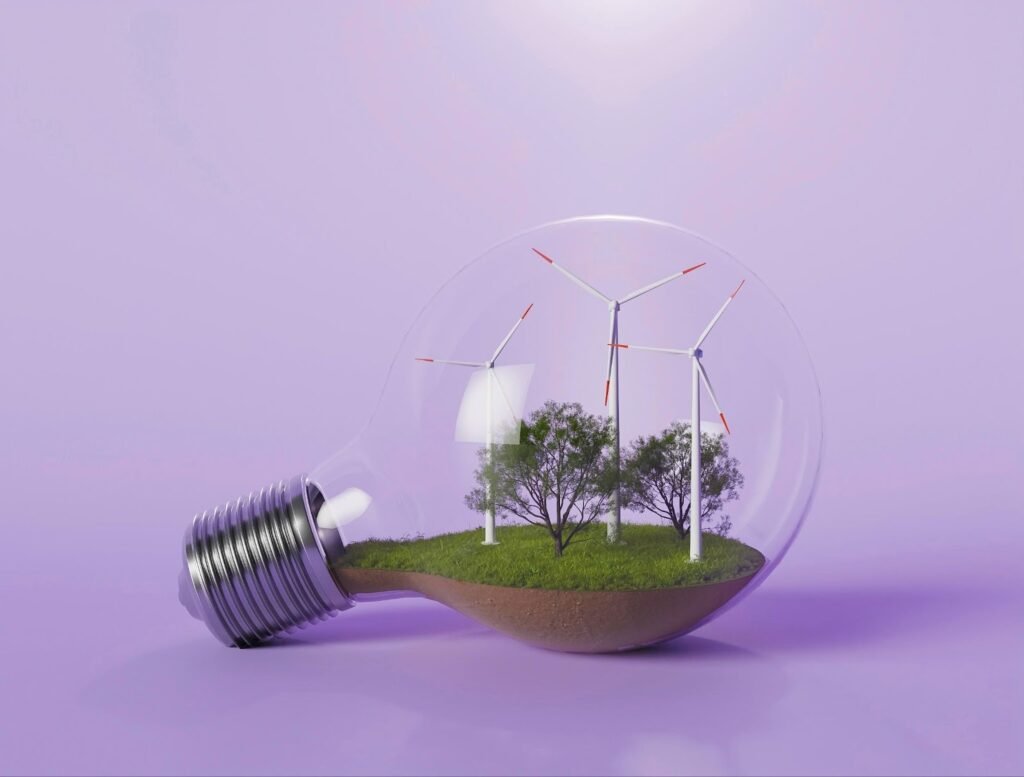
When I’m out on a trail run, breathing in the crisp morning air, or sketching out a new concept for a self-sustaining eco-home, the question of our energy source isn’t just an academic one, it’s the foundation of everything I do. For years, I’ve worked at the intersection of mechanical engineering and green building design, and I’ve seen firsthand how the choices we make today ripple through the systems of tomorrow. The debate between green energy and fossil fuels is often framed as a battle of “economic growth versus environmental preservation,” but from my vantage point, that’s a false dichotomy.
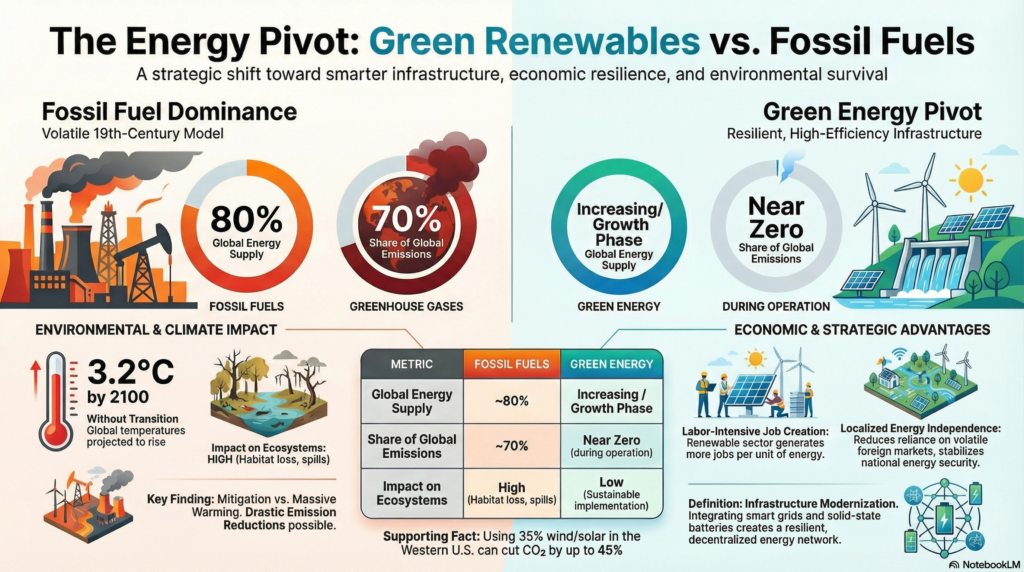
The reality is that we are at a pivotal moment in human history. Fossil fuels have undeniably powered the industrial growth that brought us to this point, currently supplying about 80% of our global needs. But as an engineer, I look at the efficiency and the long-term viability of our systems. When we rely on finite resources that contribute to 70% of global greenhouse gas emissions, we aren’t just harming the planet; we are designing for failure.
My goal at Eco-Friendly Engineer is to help you see that transitioning to renewables like solar and wind isn’t just about being “green” it’s about building a smarter, more resilient infrastructure that offers true energy independence.
The choice between green energy and fossil fuels is complex and multifaceted. Green energy, including solar, wind, and hydroelectric power, offers significant environmental benefits by reducing greenhouse gas emissions and promoting sustainability. In contrast, fossil fuels, while currently dominant globally, contribute heavily to climate change and environmental degradation. Economically, renewable energy investments are increasingly competitive, although initial costs can be a barrier. Technological advancements are improving the efficiency and cost-effectiveness of both sectors. Understanding these dynamics provides insight into future energy choices and their implications for sustainability and security, paving the way for informed decisions in energy consumption.
KEY TAKEAWAYS
- Green energy sources, like solar and wind, produce little to no greenhouse gas emissions, mitigating climate change impacts compared to fossil fuels.
- Fossil fuels currently supply about 80% of global energy but come with hidden environmental costs and significant carbon footprints.
- Renewables are increasingly cost-competitive, with declining investment costs and greater job creation potential compared to fossil fuel industries.
- Technological advancements in renewable energy improve efficiency and affordability, making them a more viable long-term energy solution.
- Transitioning to green energy enhances energy independence and security, reducing reliance on volatile fossil fuel markets.
UNDERSTANDING GREEN ENERGY
Green energy, encompassing renewable energy sources such as solar, wind, hydroelectric, and geothermal power, represents a pivotal change in the global energy landscape. This shift is driven by the urgent need to address climate change and achieve carbon neutrality. Solar power, one of the most accessible forms of renewable energy, utilizes photovoltaic cells to convert sunlight into electricity, greatly reducing reliance on fossil fuels. Wind energy, harnessed through turbines, has seen considerable growth, particularly in regions with high wind potential, making wind energy a viable alternative for large-scale and sustainable power generation.
Hydroelectric systems capitalize on water flow dynamics to generate electricity, providing a stable and efficient energy source. Additionally, geothermal potential can be tapped from the Earth’s internal heat, offering a consistent energy supply, especially in tectonically active regions. Biomass resources, derived from organic materials, present another avenue for sustainable energy, converting waste into usable fuel.
The integration of these renewable sources necessitates advancements in energy storage technologies and smart grids. Energy storage solutions, such as batteries, enable the mitigation of intermittency associated with solar and wind energy, enhancing reliability. Smart grids facilitate the efficient distribution of electricity, optimizing the use of renewable resources across the energy network.
Collectively, these innovations underscore the transformative potential of green energy. By embracing renewable technologies, societies can move towards a more sustainable and independent energy future, fostering economic growth while preserving the environment for future generations.
The Role of Fossil Fuels
Countless studies have found that because output from wind and solar replaces fossil generation, renewables also reduce CO2 emissions. For example, an NREL study found that generating 35% of electricity using wind and solar in the western U.S. would reduce CO2 emissions by 25-45%. Fossil fuels, comprising coal, oil, and natural gas, continue to play a significant role in the global energy landscape, supplying approximately 80% of the world’s energy needs. Their extraction and utilization have been critical in driving industrial growth, providing reliable energy for transportation, electricity generation, and heating. The infrastructure built around fossil fuel extraction has enabled economies to expand rapidly, fostering job creation and technological advancements.
However, the reliance on fossil fuels is not without consequences. The extraction processes, including drilling, mining, and refining, often lead to environmental degradation and significant carbon emissions. Data indicate that fossil fuel combustion is responsible for about 70% of global greenhouse gas emissions, contributing to climate change and its associated challenges. This stark reality compels policymakers and citizens to weigh the economic benefits of fossil fuels against their long-term environmental impacts.
Furthermore, the volatility of fossil fuel markets has raised questions about energy security, prompting discussions about the shift to renewable energy sources. While fossil fuels remain a dominant energy source, the increasing awareness of their detrimental effects on the climate has sparked interest in alternative energy solutions. The challenge lies in balancing the immediate energy demands against the pressing need for sustainable practices.
Environmental Impact Comparison
When evaluating the environmental impacts of energy sources, it is essential to take into account both fossil fuels and renewable alternatives. Fossil fuels are major contributors to climate change, primarily due to their high carbon footprint. The extraction and combustion of coal, oil, and natural gas release considerable greenhouse gases, exacerbating global warming and contributing to severe weather patterns. In contrast, renewable resources such as wind, solar, and hydroelectric power offer a promising avenue for pollution reduction, as they generate clean energy with little to no greenhouse gas emissions during operation.
Ecosystem preservation is another critical consideration. Fossil fuel extraction often involves habitat destruction and resource depletion, which can irreparably damage local ecosystems and biodiversity. For instance, oil spills and coal mining practices disrupt wildlife habitats and contaminate soil and water sources. Renewable energy projects, when implemented with sustainability practices, typically have a lower environmental impact and can even facilitate ecological restoration.
Moreover, the move towards renewable resources fosters a more sustainable future by reducing reliance on finite fossil fuel reserves. The change not only mitigates climate change effects but also promotes energy independence and resilience. It is imperative to weigh these factors carefully, as the long-term consequences of energy choices will greatly influence both the environment and future generations’ ability to thrive. Ultimately, embracing renewable energy not only aligns with the ethos of freedom but also upholds the integrity of our planet’s ecosystems for years to come.
Economic Factors to Consider
The economic implications of energy production and consumption are essential in shaping national policies and global markets. A thorough analysis reveals that investment costs in renewable energy infrastructures, such as solar and wind, are decreasing, yet significant initial capital remains a barrier. Fossil fuels, while historically cheaper regarding immediate energy pricing, often involve hidden costs related to environmental degradation and health impacts. In the other future, our economies remain dependent on fossil fuels. Average global temperatures rise by up to 3.2°C by the end of the century – further fueling the climate crisis.
Job creation is another key factor. The renewable sector has proven to be more labor-intensive than fossil fuels, potentially generating more jobs per unit of energy produced. However, these positions often require different skill sets, leading to changes in the workforce. Additionally, market volatility is a characteristic of both sectors; fossil fuel prices fluctuate with geopolitical tensions and supply chain issues, while renewables can experience instability linked to consumer demand and regulatory changes.
Government subsidies play an important role in shaping the energy landscape. In many nations, fossil fuels continue to receive substantial financial support, distorting market dynamics. In contrast, renewable energy sources are increasingly benefitting from policy impacts aimed at promoting sustainable practices, though the dependency on subsidies can also create vulnerabilities.
Infrastructure development is critical for both energy modalities. Shifting to green energy necessitates significant upgrades to existing systems, which entails substantial investment. Ultimately, the choice between green energy and fossil fuels is not merely an environmental issue but a complex economic decision influenced by investment costs, job creation, market volatility, and consumer demand.
TECHNOLOGICAL ADVANCEMENTS
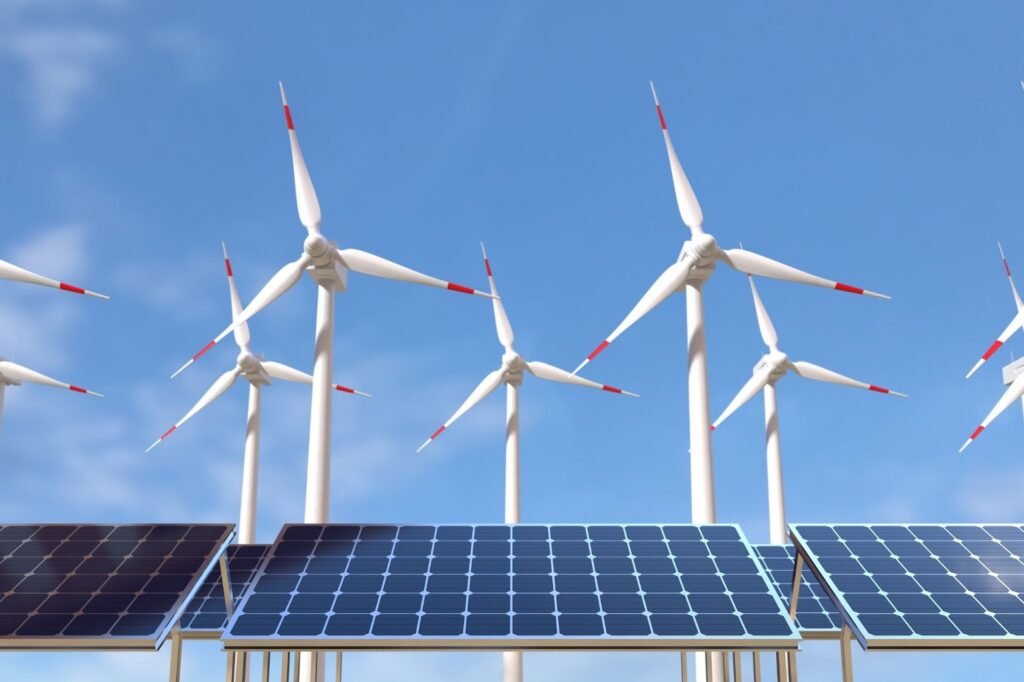
In my daily work, I focus on reducing energy waste and improving building performance. When I look at the data comparing these two sectors, the technological shift is what excites me most. We are seeing breakthroughs in solar panel efficiency and wind turbine design that were unthinkable a decade ago. For example, modern photovoltaic cells are making solar more cost-effective for the average homeowner, while advanced materials are allowing for taller, more powerful wind turbines.
This is the kind of “actionable engineering” I love real solutions that we can implement right now to move toward carbon neutrality.However, I also understand the skepticism. I’ve read the arguments on platforms like Quora claiming that “green” energy is an illusion because of the raw materials required for turbines and batteries.
As an engineer, I don’t ignore these “hidden costs”. Every system has an impact. But we have to compare those impacts rationally. Fossil fuel extraction leads to massive habitat destruction, oil spills, and a carbon footprint that is driving global temperatures toward a 3.2°C rise by the end of the century. Meanwhile, the renewable sector is proving to be more labor-intensive, potentially creating more jobs per unit of energy than fossil fuels. To me, the choice is clear: we can keep patching up a volatile, 19th-century energy model, or we can innovate our way into a sustainable future.
Technological advancements have greatly influenced both the renewable energy sector and fossil fuel industries, leading to innovations that improve efficiency and sustainability. In renewable energy, breakthroughs in solar panel efficiency and wind turbine design have made clean energy sources increasingly competitive. Conversely, fossil fuel technologies have evolved to enhance extraction methods and reduce emissions, highlighting a complex interplay between these two energy paradigms. The total amount of energy used in the U.S. – everything from lighting and heating homes to cooking meals, fueling factories, driving cars and powering smartphones – hit 101.2 quadrillion Btu in 2018, the highest level since data collection began in 1949, according to the federal Energy Information Administration (EIA).
Renewable Energy Innovations
Innovations in renewable energy are rapidly transforming the energy landscape, presenting new opportunities to enhance efficiency and reduce reliance on fossil fuels. Recent solar advancements, such as photovoltaic technology improvements, have greatly increased energy conversion rates, making solar power more accessible and cost-effective. Alongside this, wind innovations, including taller turbines and advanced materials, have elevated energy output while minimizing environmental impact.
Geothermal breakthroughs are harnessing the Earth’s heat more efficiently, while biofuel development is progressing through the use of waste materials, reducing carbon footprints. Energy storage solutions, particularly lithium-ion and emerging solid-state batteries, are critical for managing intermittent renewable sources, enabling stable energy supply. Moreover, the integration of smart grids allows for real-time data analysis, optimizing energy consumption and distribution.
Hydropower enhancements, including run-of-the-river systems, minimize ecological disruption while maximizing output. Carbon capture technologies are becoming increasingly viable, effectively mitigating emissions from various sectors. Additionally, hydrogen technology offers promising pathways for clean energy storage and transport. Collectively, these sustainable practices are paving the way for a future less dependent on fossil fuels, aligning with global goals for environmental sustainability and energy independence.
Fossil Fuel Efficiency Trends
As industries endeavor for greater sustainability, advancements in fossil fuel efficiency are emerging as critical components in optimizing energy production and consumption. The pursuit of enhanced efficiency metrics is driving innovations in technology, particularly in the domains of energy conversion processes. Recent developments, such as combined cycle gas turbine (CCGT) systems, exemplify how traditional fossil fuel sources can be utilized more effectively. These systems capture waste heat and convert it into additional electricity, thereby improving overall energy yield.
Furthermore, the integration of carbon capture and storage (CCS) technology presents a significant opportunity to mitigate emissions while maintaining fossil fuel utilization. By enabling the extraction of energy with reduced environmental impact, CCS can transform fossil fuel operations into more sustainable models.
Data indicates that advancements in refining techniques and combustion efficiency have led to a marked increase in the overall efficiency of fossil fuel power plants. In the past decade, some facilities have reported efficiency improvements of up to 10%, demonstrating that fossil fuels, when leveraged with cutting-edge technology, can remain competitive in the energy market. As we assess energy sources, it is essential to recognize the potential for enhanced efficiency within the fossil fuel sector.
Energy Independence and Security
Achieving energy independence and security is increasingly recognized as a critical objective for nations worldwide, particularly in the context of fluctuating fossil fuel markets and geopolitical tensions. The reliance on fossil fuels not only exposes countries to price volatility but also ties their energy security to the political dynamics of oil-rich regions. In contrast, shifting to green energy sources can foster energy self-sufficiency, allowing nations to harness local resources and reduce dependency on foreign energy supplies.
The pursuit of renewable energy offers a pathway to enhance geopolitical stability. Countries investing in solar, wind, and other renewable technologies can mitigate the risks associated with energy supply disruptions caused by international conflicts or trade disputes. For instance, nations like Denmark and Germany have made substantial strides in wind energy, thereby bolstering their energy independence and reducing vulnerability to external shocks.
Moreover, energy self-sufficiency contributes to national security by diversifying energy portfolios and creating resilience against climate change impacts. A decentralized energy infrastructure, characterized by localized renewable production, diminishes the risk of widespread outages and enhances community-level resilience.
Future Trends in Energy Choices
Shifting towards a more sustainable energy landscape is increasingly evident as countries and industries recognize the imperative to reduce carbon emissions and combat climate change. This change is characterized by a growing emphasis on sustainability practices that prioritize renewable energy sources, such as solar, wind, and hydroelectric power. As technological advancements continue to improve the efficiency and affordability of these alternatives, the global energy market is poised for significant transformation.
Future trends in energy choices will likely be shaped by extensive energy policies aimed at incentivizing the adoption of clean technologies. Governments worldwide are enacting regulations and financial incentives designed to promote investments in renewable energy infrastructure. For instance, the adoption of carbon pricing mechanisms is becoming more prevalent, compelling industries to account for environmental impacts in their operational strategies.
Moreover, the integration of smart grid technology and renewable systems encourages consumers and industries to adopt eco friendly products that align with sustainable energy consumption and reduced environmental impact. This shift not only enhances energy security but also empowers consumers to engage in energy generation and consumption in a more autonomous manner. The rise of electric vehicles further underscores the momentum towards greener energy solutions, as automotive industries pivot away from fossil fuels.
RELATED STUDIES ABOUT GREEN ENERGY
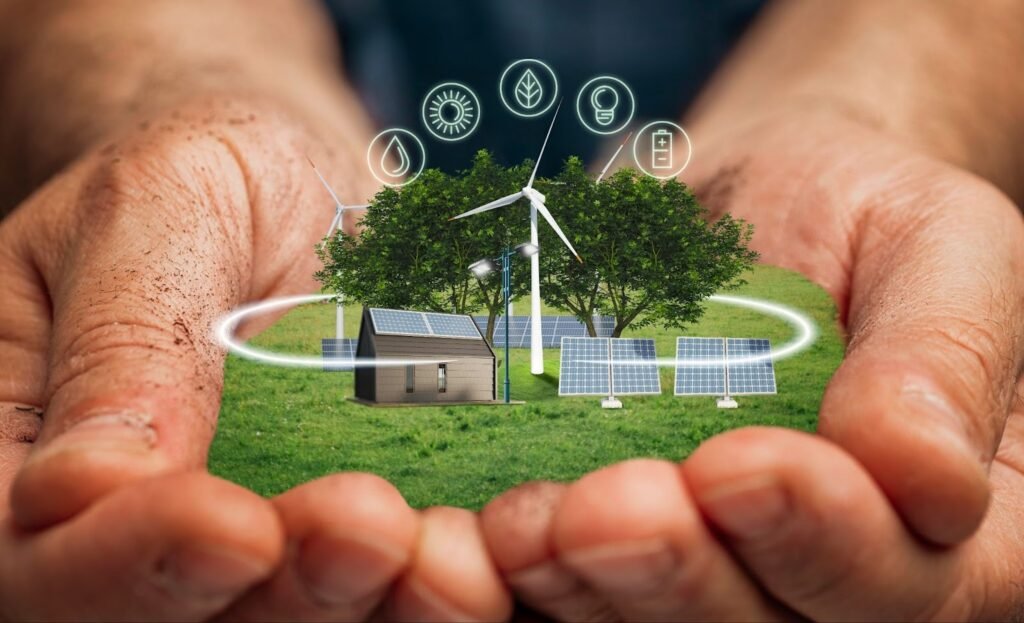
In the ongoing debate between green energy and fossil fuels, the scales tilt towards sustainable practices as environmental imperatives and economic viability increasingly intertwine. While fossil fuels have historically fueled industrial growth, their ecological repercussions cast long shadows over future generations. As technological advancements propel the efficiency of renewable sources, a paradigm shift emerges. Embracing green energy not only fosters environmental stewardship but also paves the path toward energy independence, ensuring a resilient and sustainable future.
Road To A Greener Future: How Does Green Credit Policy Affect The Green Innovation Of Chinese Energy Enterprises?
Objective:
This study examines how China’s Green Credit Policy (GCP), introduced in 2012 through the Green Credit Guidelines, influences green innovation (GI) within the energy sector. Focusing on traditional energy enterprises as the primary target, the research evaluates whether GCP effectively promotes green technology innovation—a critical factor for China’s “carbon peaking and carbon neutrality” goals.
Key Findings:
- GCP Significantly Boosts Green Innovation in Traditional Energy Enterprises:
- Using a Difference-in-Differences (DID) model, the study finds that GCP has a positive and significant effect on green patent applications by traditional energy firms, compared to new energy enterprises (control group).
- This supports Hypothesis H1: GCP encourages traditional energy companies to engage in green innovation to secure credit, reduce compliance costs, and enhance long-term competitiveness.
- Mechanisms of Influence:
- Financing Constraints (H2): GCP tightens credit access for high-polluting firms, increasing their financing costs. To alleviate these constraints, enterprises are motivated to pursue green innovation to improve their creditworthiness.
- Environmental Information Disclosure (H3): GCP encourages better disclosure of environmental performance. Firms improve transparency to gain trust from banks and investors, which in turn drives them to engage in more green innovation to present positive environmental signals.
- Heterogeneous Effects:
- Ownership: The policy impact is stronger for state-owned enterprises than for private firms, likely due to better access to credit and stronger institutional support.
- Region: Enterprises in eastern China respond more positively to GCP, possibly due to more developed financial markets and stricter enforcement.
- Innovation Type: GCP has a more pronounced effect on substantive green innovation (e.g., green invention patents) than on strategic or incremental innovation.
- Executive Awareness: Firms with environmentally aware executives show higher levels of green innovation under GCP.
- Robustness and Validation:
- Results hold under multiple robustness checks, including parallel trend tests, placebo tests, PSM-DID, and alternative measures of green innovation.
- The study addresses sample limitations by manually constructing a control group of new energy firms, enhancing the reliability of the DID approach.
Conclusions:
GCP is an effective policy tool for driving green innovation in China’s traditional energy sector. By tightening financing constraints and encouraging environmental transparency, it aligns financial incentives with environmental performance. However, its impact varies across firm types, regions, and governance contexts.
Policy Recommendations:
- Strengthen Environmental Disclosure Oversight:
Enhance monitoring and standardization of corporate environmental reporting to ensure accuracy and transparency, enabling better credit risk assessment by banks.
- Diversify Green Financial Instruments:
Expand green bonds, funds, and insurance products to support energy firms—especially SMEs and private enterprises—in financing green transitions.
- Tailor GCP Implementation:
Customize green credit products and enforcement based on regional economic conditions and firm characteristics to maximize policy effectiveness and equity.
Limitations & Future Research:
- The study measures green innovation through patent counts, which may not capture innovation efficiency. Future work could integrate multi-dimensional indicators (e.g., AHP, DEA).
- The sample is limited to listed firms; future research could include non-listed energy companies to improve generalizability.
- Exploring the role of digital tools and international green finance cooperation could further enrich understanding of GCP’s evolving impact.
Significance:
This research provides empirical evidence on how financial regulation can drive environmental innovation in high-emission industries. It offers actionable insights for policymakers, financial institutions, and corporate leaders aiming to align economic growth with sustainability goals in China and other emerging economies.
| REFERENCE: Na Zhang, Haoyuan Cheng, Hang Lu, Hui Jiang, Road to a greener future: How does green credit policy affect the green innovation of Chinese energy enterprises?, Sustainable Futures, Volume 9, 2025, 100676, ISSN 2666-1888, https://doi.org/10.1016/j.sftr.2025.100676. (https://www.sciencedirect.com/science/article/pii/S2666188825002448) |
Paving The Way For Sustainable Green Growth In G10 Economies: Perspectives On Green Manufacturing Employment And Renewable Energy Employment
This study examines the contributions of green manufacturing (GM) and green energy (GE) employment to green growth (GRG) in the G10 economies from 2000 to 2022. It also explores the moderating roles of energy, economic, and ICT diversification, as well as the impact of energy uncertainties. Using advanced econometric methods, including the method of moments quantile regression (MMQR), the research uncovers heterogeneous effects across countries and quantiles of green growth.
Key Findings
- Green Manufacturing Employment:
- Positively influences green growth in France, Germany, Netherlands, Switzerland, and the United States, particularly at higher quantiles (75th and 95th).
- Shows insignificant or negative effects in other G10 nations, reflecting uneven adoption and implementation levels.
- Green Energy Employment:
- Significantly enhances green growth in Canada, Japan, Sweden, and the United States, with stronger effects than GM employment.
- Effects are more pronounced at median to upper quantiles, highlighting its potential as a key policy tool for environmental progress.
- Moderating Factors:
- Energy, economic, and ICT diversification generally support green growth, though effects vary across countries and quantiles.
- Energy uncertainty consistently undermines green growth across most quantiles, emphasizing the need for energy self-sufficiency and stable supply chains.
- Country-Specific Nuances:
- Nations such as Belgium, Italy, Japan, and Sweden lag in harnessing the benefits of green jobs, indicating a need for targeted policy interventions.
- The United States and Switzerland lead in both GM and GE employment contributions to green growth.
Policy Recommendations
- Promote Green Jobs: Governments should incentivize GM and GE employment through tax benefits, subsidies, and regulatory support to accelerate the transition from traditional to green employment.
- Enhance Diversification: Deepen energy, economic, and ICT diversification to build resilient and sustainable economies.
- Ensure Energy Security: Reduce reliance on external energy sources by investing in renewable energy and improving energy efficiency to mitigate the negative effects of energy uncertainty.
- Tailor Policies: Adopt country-specific strategies to address varying stages of green job adoption and environmental policy implementation.
Research Contributions
- First Empirical Assessment: This study is among the first to empirically link GM and GE employment directly to green growth in G10 economies.
- Comprehensive Methodology: Uses MMQR and robustness checks (PCSE, FGLS, DOLS, FMOLS, CCR) to provide reliable, nuanced insights.
- Policy-Relevant Insights: Offers actionable recommendations for achieving SDGs 7 (affordable clean energy) and 13 (climate action).
Limitations and Future Research
- The study does not account for all potential determinants of green growth, such as policy stringency, governance quality, or public awareness.
- Future research could explore other environmental metrics (e.g., carbon productivity, load capacity factor) and include a broader set of economies.
Conclusion
Green jobs—particularly in green manufacturing and renewable energy—are significant drivers of sustainable growth in G10 economies. However, their impact is uneven and influenced by structural factors such as diversification and energy stability. To realize their full potential, G10 nations must adopt integrated, context-sensitive policies that promote green employment, enhance diversification, and secure energy independence.
| REFERENCE: Emmanuel Uche, Nicholas Ngepah, Nazatul Faizah Haron, Paving the way for sustainable green growth in G10 economies: Perspectives on green manufacturing employment and renewable energy employment, Sustainable Futures, 2025, 100780, ISSN 2666-1888, https://doi.org/10.1016/j.sftr.2025.100780. (https://www.sciencedirect.com/science/article/pii/S2666188825003466) |
Relationships Between Green Technological Innovation, Renewable Energy, Circular Economy, And Green Growth
This study investigates the nonlinear relationships between green technological innovation (GTI), renewable energy (RE), the circular economy (CE), and green growth across 27 European Union (EU) member states from 2000 to 2022. Using the Panel Smooth Threshold Autoregression (PSTAR) model, the research captures how these relationships change across different levels of GTI intensity, identifying distinct economic regimes and threshold effects.
Key Findings
- Nonlinear Impact of Green Technological Innovation (GTI):
- GTI positively influences green growth across all regimes, but its effect diminishes as innovation intensity increases (from intermediate to high regimes).
- Two optimal thresholds were identified:
- First threshold: 8.655% (low-to-intermediate regime)
- Second threshold: 12.089% (intermediate-to-high regime)
- This confirms a nonlinear relationship where initial investments in GTI yield strong returns, but additional innovation yields progressively smaller gains.
- Role of Renewable Energy (RE):
- RE only positively impacts green growth when GTI exceeds the first threshold (8.655%).
- Below this threshold, insufficient GTI fails to develop effective renewable technologies, reinforcing dependence on non-renewable energy.
- Circular Economy (CE) Contribution:
- CE positively affects green growth only when GTI exceeds the second threshold (12.089%).
- Below this level, weak GTI hinders the transition to circularity, limiting its environmental benefits.
- Control Variables:
- Digitalization (ICT exports) and inflation (INFL) generally support green growth across regimes.
- International collaboration in green technology (ICGTD) becomes beneficial from the intermediate regime onward.
Policy Recommendations
- Promote GTI strategically: Policymakers should focus on incentivizing green innovation, especially in early and intermediate stages, to maximize green growth returns.
- Integrate RE with innovation: RE policies should be coupled with GTI investments to ensure technological efficacy and reduce fossil fuel dependence.
- Advance CE through innovation: High levels of GTI are essential to unlock CE’s full potential. Support for circular practices should be paired with innovation funding.
- Foster international collaboration: Enhance cross-border green technology transfer to accelerate sustainable development across the EU.
- Tailor policies to national contexts: Recognize that EU member states are at different stages of green transition; policies should be adaptable to local innovation capacities.
Research Contributions
- First unified framework: Integrates GTI, RE, and CE into a single green growth model for the EU.
- Nonlinear analysis: Moves beyond linear assumptions to reveal threshold-based dynamics.
- Robust methodology: Uses PSTAR and Granger causality tests to provide reliable, regime-specific insights.
- EU-specific insights: Addresses a gap in literature focused predominantly on China and other regions.
Limitations and Future Research
- The PSTAR model does not account for interactions between explanatory variables.
- Future studies could use GMM or dynamic models to explore these interactions.
- Research could distinguish between digital and non-digital GTI to better understand Industry 4.0’s role in green growth.
- Expanding the analysis to non-EU economies could provide comparative insights.
Conclusion
Green technological innovation is a critical driver of green growth in the EU, but its effectiveness is moderated by threshold effects. Renewable energy and the circular economy contribute positively only when supported by sufficient levels of GTI. To achieve the EU’s 2030 Sustainable Development Goals and carbon neutrality targets, policymakers must adopt integrated, innovation-led strategies that recognize the nonlinear nature of green transitions.
| REFERENCE: Afef BOUATTOUR, Sarra GHARBI, Maha KALAI, Kamel HELALI, Relationships between green technological innovation, renewable energy, circular economy, and green growth, Journal of Innovation & Knowledge, Volume 10, Issue 4, 2025, 100748, ISSN 2444-569X, https://doi.org/10.1016/j.jik.2025.100748. (https://www.sciencedirect.com/science/article/pii/S2444569X25000939) |
CONCLUSION
As I sit in my garage working on a vintage bicycle, I often think about the “restoration” of our planet. Just as I carefully select parts to make an old bike efficient and reliable again, we must carefully select the components of our global energy grid. The path forward isn’t just about replacing one fuel for another; it’s about a total paradigm shift. We need to embrace smart grids, better energy storage like solid-state batteries, and localized renewable production that makes our communities more resilient.
My commitment to you is to keep breaking down these complex ideas into steps you can actually use. Whether you are a homeowner looking to lower your electricity bill with solar or a fellow engineer designing the next net-zero commercial building, your choices matter.
Transitioning to green energy is about more than just stopping climate change; it’s about claiming our energy independence and ensuring that future generations have a world where they can thrive, not just survive. We have the technology, the economic incentive, and the moral imperative. Let’s stop debating whether it’s possible and start building the future we want to live in.