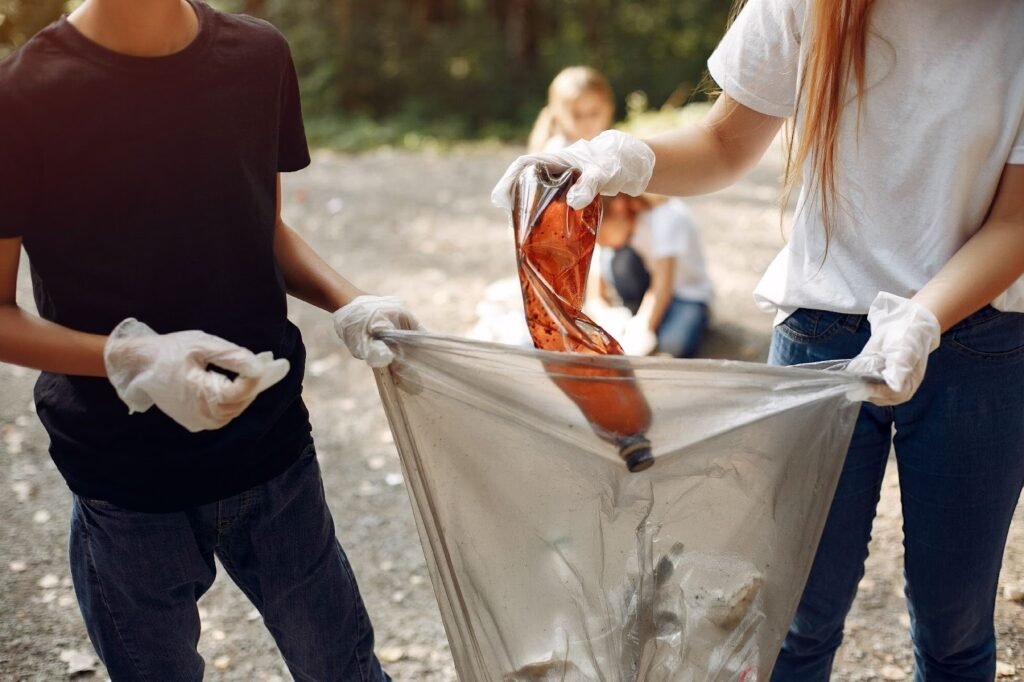
As an environmental engineer who has spent the last 15 years in the trenches of municipal waste consulting, I can tell you that the most sophisticated “data-driven” model in the world is only as good as the community participation behind it. When we talk about global projections like the UN’s staggering estimate that municipal solid waste will hit 3.8 billion tonnes per year by 2050 it’s easy to feel like our individual efforts are just a drop in an ocean of plastic.
But my career has taught me that systemic change almost always starts locally. I’ve seen cities completely redesign outdated disposal systems into efficient, circular models, and it never happens solely through top-down engineering. It happens when residents understand that their waste isn’t just “garbage” to be disappeared, but a resource to be managed. Whether I’m consulting on a multi-million dollar landfill remediation project or just experimenting with a new DIY composting bin in my backyard, the goal is the same: reducing our reliance on massive, centralized landfills that are increasingly reaching their limits.
We need to stop viewing waste management as a “black box” service provided by the city and start seeing it as a collective responsibility. Transitioning to sustainable practices isn’t just about being “green”; it’s about building a resilient infrastructure that can handle the pressures of a rapidly urbanizing world.
To implement sustainable waste practices in your community, start with a thorough waste audit to understand waste composition. Educate residents through workshops, emphasizing responsible disposal and recycling initiatives. Promote alternatives to single-use plastics and advocate for local plastic bans. Organize clean-up events that engage community volunteers and partner with local businesses to enhance eco-friendly practices. Measure progress through clear metrics to inspire community ownership. Highlight accomplishments to foster a positive environment around sustainability. By embracing collective action and education, your community can effectively reduce waste and promote responsible consumption—further insights await to guide your initiatives.
KEY TAKEAWAYS
- Assess current waste practices by conducting audits to identify recyclable materials and inefficiencies in your community’s waste management.
- Educate residents through workshops on responsible disposal, recycling techniques, and the environmental impact of waste.
- Promote recycling initiatives with financial incentives and partnerships with local businesses to encourage community participation.
- Advocate for reducing single-use plastics by highlighting eco-friendly alternatives and engaging citizens in sustainable consumption habits.
- Organize clean-up events and engage volunteers to foster community pride and improve local environments while ensuring proper waste disposal.
ASSESS CURRENT WASTE PRACTICES
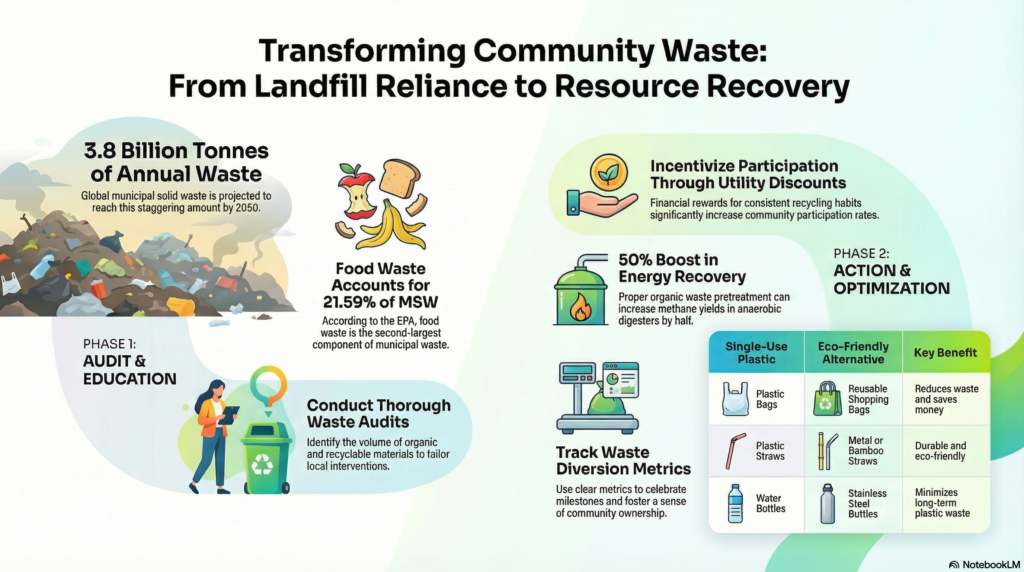
Globally, the UN projected that municipal solid waste generation would grow from 2.1 billion tonnes in 2023 to 3.8 billion tonnes per year by 2050. Evaluating current waste practices is an essential first step in identifying opportunities for improvement within a community. Conducting thorough waste audits enables local authorities and organizations to understand the composition and volume of waste generated. These audits reveal critical data, such as the percentage of recyclable materials and organic waste, which can inform more effective waste management strategies. By analyzing this data, communities can pinpoint inefficiencies and tailor interventions that resonate with their specific needs.
One promising avenue for improvement lies in the implementation of robust composting programs. These initiatives not only divert organic waste from landfills but also foster a sustainable cycle of resource recovery. By reviewing existing waste practices, communities can identify the potential for composting, which can lead to reduced disposal costs and enhanced soil health. This aligns with the increasing demand for eco-friendly solutions that promote freedom from excessive landfill reliance.
Moreover, the insights gained from waste audits can facilitate the development of targeted educational campaigns that encourage community participation in sustainability efforts. By understanding current waste behaviors, local leaders can craft strategies that resonate with residents, empowering them to take ownership of their waste management practices while reinforcing long-term environmental sustainability through informed, community-driven action. This collaborative approach ultimately promotes a culture of responsibility and environmental stewardship, ensuring that community members are not only informed but also motivated to make lasting changes. Consequently, evaluating current waste practices is not merely a procedural step; it is an indispensable foundation for building a more sustainable future.
Educate the Community
To cultivate a culture of sustainability within the community, educating residents about waste management practices is paramount. A well-informed populace is the cornerstone of effective waste reduction strategies and fosters a sense of responsibility towards the environment. Initiatives such as community workshops can serve as dynamic platforms for sustainability education, empowering individuals to adopt eco-friendly initiatives in their daily lives. Food waste is the second single largest component of municipal solid waste, at 21.59% according to the EPA, and has major social, financial, and environmental impacts.
Effective education should encompass various aspects of waste management, including the importance of responsible disposal methods and the impact of waste on our environment. By promoting environmental awareness, residents can understand the long-term benefits of reducing, reusing, and recycling materials. Engaging community involvement is essential; local leaders and organizations can spearhead efforts to create informative sessions that cater to diverse audiences, ensuring that everyone has access to valuable recycling education.
Furthermore, these workshops can facilitate discussions on how individuals can incorporate sustainable practices into their routines, from composting food waste to utilizing proper recycling techniques. By equipping community members with this knowledge, we empower them to make informed decisions that collectively contribute to a cleaner environment.
Ultimately, the goal is to instill a sense of ownership over local waste practices, promoting a lifestyle that prioritizes sustainability. When residents are educated and engaged, they are more likely to participate in community initiatives, leading to a significant reduction in waste and fostering a healthier, more sustainable community for all.
Promote Recycling Initiatives
Building on the foundation of community education, promoting recycling initiatives is an essential step in enhancing sustainable waste practices. Effective recycling initiatives not only reduce waste sent to landfills but also foster a culture of environmental responsibility among community members. To achieve this, it is imperative to implement robust recycling incentives that motivate individuals and businesses to participate actively in recycling efforts.
One effective approach is to introduce financial incentives, such as discounts on utility bills for households that demonstrate consistent recycling habits. These incentives can greatly increase participation rates, transforming recycling from a mere obligation into an appealing and rewarding activity. Furthermore, collaboration with local businesses can yield additional benefits; for instance, offering promotional deals to customers who bring in recyclable materials can create a win-win scenario for both consumers and retailers.
Community workshops serve as another crucial component of promoting recycling initiatives. By organizing interactive sessions that educate residents on the importance of recycling, proper sorting techniques, and the positive environmental impact, communities can empower individuals to take action. These workshops can also encourage residents to go green by adopting everyday habits such as composting, proper recycling, and choosing reusable alternatives to single-use products.
Reduce Single-Use Plastics
As we endeavor to create a more sustainable community, reducing single-use plastics becomes a critical focal point in our collective efforts. Single-use plastics contribute considerably to environmental degradation, prompting the need for actionable strategies such as composting alternatives, reusable containers, and eco-friendly products.
Implementing plastic bans at local levels can serve as a powerful catalyst for change. These bans, complemented by community workshops, can educate citizens about the environmental impact of their consumption habits and guide them in adopting sustainable habits. Shifting to a zero waste lifestyle starts with individual choices, but it requires community involvement to create lasting effects.
Here’s a snapshot of alternatives to single-use plastics:
| Single-Use Plastic | Alternative | Benefits |
| Plastic Bags | Reusable Shopping Bags | Reduces waste and saves money |
| Plastic Straws | Metal or Bamboo Straws | Eco-friendly and durable |
| Disposable Cutlery | Reusable Cutlery | Long-lasting and cost-effective |
| Water Bottles | Stainless Steel Bottles | Reduces plastic waste |
ORGANIZE CLEAN-UP EVENTS
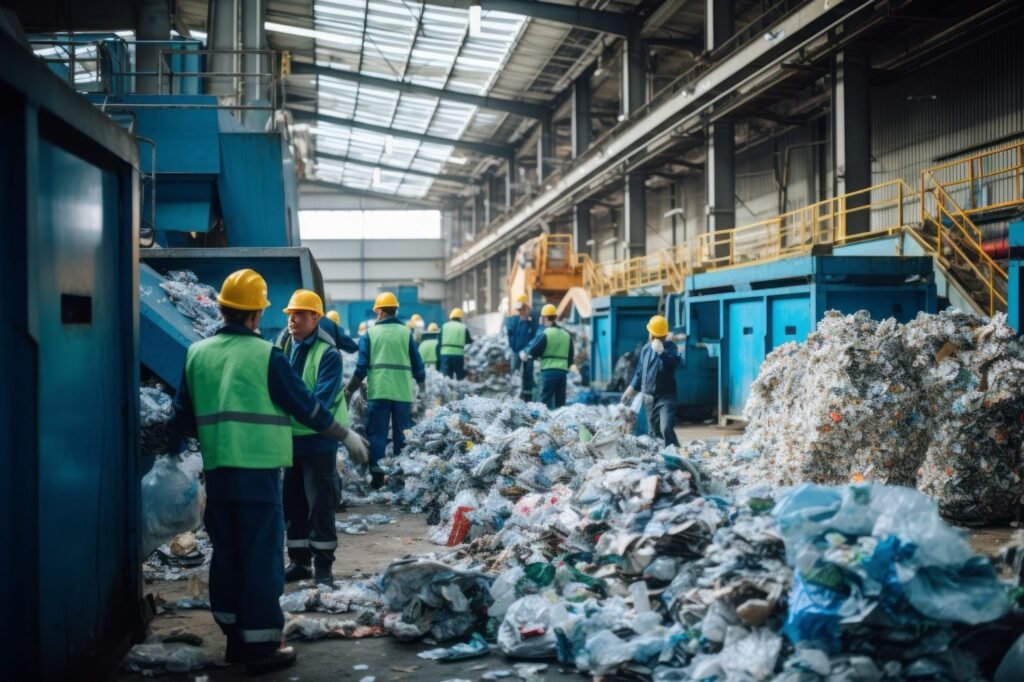
In my professional work with Material Recovery Facilities (MRFs) and anaerobic digestion plants, I’ve noticed a recurring theme: the most expensive part of the process is dealing with contamination. We can build the most advanced robotic sorting systems powered by AI and IoT, but if the feedstock coming from our homes is a messy mix of recyclables and organic waste, the efficiency plummets. This is why I’m such a staunch advocate for decentralized systems and localized resource recovery.
When a community takes ownership of its waste through thorough audits and robust composting programs they aren’t just diverting tons from the landfill; they are creating a higher-quality output that can actually be reused. For instance, I’ve seen how proper pretreatment of sewage sludge or organic waste can boost methane yields in anaerobic digesters by up to 50% or more. That’s real energy being recovered from what we used to throw away. It’s also why I push for alternatives to single-use plastics.
Engineering a solution for a plastic bag is significantly harder and more costly than simply not producing it in the first place. In my own life, I find that woodworking with reclaimed materials gives me a tangible reminder of the value inherent in “waste”. If we can see the potential in a discarded palette or a food scrap, we can begin to close the loop on our consumption habits.
Organizing clean-up events is a crucial strategy for fostering community engagement and promoting environmental stewardship. Effective planning is essential to guarantee these events attract volunteers and yield substantial results, while clearly communicating the benefits of participation can enhance community involvement. By harnessing local resources and enthusiasm, these initiatives not only beautify neighborhoods but also cultivate a collective commitment to sustainable waste practices. Fast fashion also promotes a throwaway culture, where clothes are quickly discarded after a few uses, leading to massive textile waste.
Planning Effective Clean-Up Events
Effective clean-up events can greatly enhance community engagement while promoting sustainable waste management practices. To guarantee these events are successful, meticulous planning and attention to event logistics are vital. Start by identifying specific locations that require clean-up, such as parks, beaches, or urban areas. Coordinate with local authorities and stakeholders to secure necessary permissions and support.
Next, develop a clear timeline that outlines key milestones leading up to the event. Promote the clean-up through social media, local businesses, and community boards to maximize participation. Providing volunteer incentives, such as free refreshments, local business discounts, or recognition for participants, can motivate community members to join in and foster a sense of ownership over their environment.
It is also essential to prepare for waste disposal by partnering with local waste management services to guarantee proper recycling and disposal methods are employed. By planning effectively, communities can create impactful clean-up events that not only remove waste but also inspire ongoing commitment to sustainable practices. Ultimately, these gatherings can cultivate a culture of responsibility and pride in one’s surroundings, driving long-term changes in waste management behaviors.
Engaging Community Volunteers
Volunteer engagement is a cornerstone of successful clean-up events, transforming individual efforts into a collective movement for environmental stewardship. Effective community outreach is essential in rallying volunteers who share a passion for preserving their surroundings. By clearly communicating the objectives and potential impact of clean-up initiatives, organizers can inspire community members to participate actively.
To enhance volunteer motivation, consider implementing strategies that resonate with their values and interests. Highlighting the tangible benefits of clean-up events—such as cleaner parks, enhanced community pride, and improved local wildlife habitats—can foster a sense of purpose among participants. Additionally, providing opportunities for skill development, such as leadership training or environmental education, can further engage volunteers, making them feel valued and invested in the cause.
Moreover, leveraging social media platforms and local networks can amplify outreach efforts, ensuring that diverse demographics are reached. Creating an inclusive environment fosters camaraderie and reinforces the notion that every individual has a role in promoting sustainability. Ultimately, engaging community volunteers not only facilitates the success of clean-up events but also cultivates a culture of environmental responsibility that can flourish long after the event concludes.
Collaborate With Local Businesses
Collaboration with local businesses can foster a sense of community responsibility and drive impactful change in sustainable waste practices. By creating strategic business partnerships, communities can leverage resources, expertise, and networks to enhance waste reduction initiatives. Businesses play a critical role as they generate waste and can directly influence consumer behavior through their practices and policies.
Engaging local enterprises in sustainability efforts encourages them to adopt eco friendly products, such as reusable packaging and biodegradable materials, which not only reduce waste but also influence consumers to make more sustainable purchasing choices. These actions not only minimize waste but also resonate with environmentally conscious consumers, enhancing brand loyalty and community goodwill. Additionally, businesses can participate in local waste reduction campaigns, contributing financial support or in-kind services that amplify their impact.
Moreover, collaboration can lead to innovative solutions tailored to local challenges. For instance, businesses can partner with waste management companies to develop specialized recycling programs that address specific waste streams prevalent in the community. This approach not only optimizes waste management but also fosters a culture of shared responsibility among stakeholders.
Measure and Celebrate Progress
Monitoring and celebrating progress in sustainable waste practices is fundamental for maintaining momentum and fostering community engagement. Progress tracking is a significant component that allows communities to assess the effectiveness of their initiatives. By establishing clear metrics, such as waste diversion rates and recycling participation levels, stakeholders can gain valuable insights into what strategies are working and where improvements are needed. Regular assessments guarantee that the community remains focused on its sustainability goals, adapting as necessary to overcome challenges.
In addition to progress tracking, sharing success stories plays an important role in inspiring continued involvement. Highlighting individual and group achievements creates a sense of ownership and pride among community members. For instance, a local school’s initiative to reduce plastic waste can serve as a model for other institutions, illustrating the tangible benefits of collective action. Public recognition of these efforts through newsletters, social media, and community events can amplify their impact, encouraging others to participate.
Moreover, celebrating milestones, such as reaching a specific waste reduction target or completing a successful education campaign, reinforces the community’s commitment to sustainability. Events that acknowledge these achievements not only reward participants but also serve as powerful tools for outreach, attracting new supporters and fostering a culture of environmental stewardship.
RELATED STUDIES ABOUT SUSTAINABLE WASTE MANAGEMENT
To summarize, the implementation of sustainable waste practices within a community acts as a catalyst for environmental stewardship and collective responsibility. By fostering a culture of awareness and proactive engagement, individuals can transform their surroundings into a thriving ecosystem. Just as a garden flourishes through careful cultivation, so too can a community prosper when united in purpose and commitment to sustainability. Continuous evaluation and celebration of progress will further strengthen this essential initiative, ensuring its long-lasting impact.
Decentralisation Transition In The Chemical, Energy, And Waste Management Sectors: Innovations, Opportunities, And Sustainable Pathways – A Review
This comprehensive review examines the global transition from centralised to decentralised systems (DS) in the chemical, energy, and waste management sectors, highlighting its critical role in advancing sustainability, resilience, and economic inclusivity. The analysis synthesises fragmented research into a unified framework, offering insights for policymakers, engineers, and industry stakeholders.
Key Findings:
- Sustainability and Resilience:
Decentralised systems align with planetary boundaries by reducing carbon footprints, minimising transportation needs, and optimising local resource use. They enhance supply chain resilience, as demonstrated during disruptions like the COVID-19 pandemic.
- Technological Integration:
Modular small-scale plants, digitalisation (IoT, AI), and advanced processes—such as waste-to-energy conversions, anaerobic digestion, and green ammonia production—enable efficient, scalable, and adaptable decentralised operations.
- Sectoral Benefits:
- Energy: Decentralised renewable systems (e.g., mini-grids, biogas) improve energy access, reduce emissions, and support rural development.
- Waste Management: Decentralised approaches reduce landfill use, recover resources, and convert waste into energy or valuable products (e.g., fertilisers, biofuels).
- Chemical Industry: Localised production of high-value chemicals and green ammonia lowers logistics costs and emissions while fostering circular economies.
- Economic and Social Equity:
DS promotes regional development, creates local jobs, and reduces spatial inequalities. It empowers communities through participatory models and enhances energy and resource access in underserved regions.
- Challenges and Barriers:
Key obstacles include high initial capital costs, regulatory frameworks favouring centralised systems, technological gaps, and skill shortages. Policy reform, financial incentives, and capacity-building are essential for widespread adoption.
Recommendations:
- Policy Support: Streamline permitting, introduce subsidies and tax incentives, and align regulations with DS goals.
- Financial Mechanisms: Develop green financing, carbon pricing, and public-private partnerships to mitigate investment risks.
- Capacity Building: Invest in training, research, and demonstration projects to build technical expertise and stakeholder acceptance.
- Integrated Planning: Incorporate decentralised infrastructure into urban and regional planning to support sustainability targets.
Future Outlook:
The transition to decentralisation requires coordinated efforts in research, policy, and investment. Priority areas include scaling pilot projects, enhancing international collaboration, and developing decision-support tools that integrate environmental, economic, and social metrics. Emerging technologies—such as plasma-assisted reactors and advanced bioenergy systems—offer further opportunities for innovation.
Conclusion:
Decentralised systems present a viable pathway to achieving global sustainability goals, enhancing resource efficiency, and building resilient, inclusive economies. Strategic planning, supportive policies, and technological adoption are crucial to realising their full potential across sectors and regions.
| REFERENCE: Muhammad Yousaf Arshad, Volker Hessel, Anthony Halog, David Lewis, Nam Nghiep Tran, Decentralisation transition in the chemical, energy, and waste management sectors: Innovations, opportunities, and sustainable pathways – A review, Sustainable Energy Technologies and Assessments, Volume 76, 2025, 104307, ISSN 2213-1388, https://doi.org/10.1016/j.seta.2025.104307. (https://www.sciencedirect.com/science/article/pii/S2213138825001389) |
Emerging Trends In Sewage Sludge Pretreatment: Enhancing Treatment Efficiency And Sustainable Waste Management
This comprehensive review examines the latest advancements in sewage sludge pretreatment technologies, emphasizing their role in enhancing treatment efficiency and enabling sustainable waste management. The primary goal is to systematically analyze and compare various pretreatment methods—physical, chemical, biological, and combined processes—to improve the subsequent anaerobic digestion (AD) of sludge, thereby increasing biogas production and resource recovery.
Key Findings
- Importance of Pretreatment
Sewage sludge, a byproduct of wastewater treatment, is rich in organic matter but contains recalcitrant compounds, pathogens, and heavy metals. Direct anaerobic digestion of untreated sludge often yields low biogas production. Pretreatment disrupts the sludge structure, increases solubilization of organic compounds, and enhances biodegradability, leading to higher methane yields and more efficient waste stabilization.
- Physical Pretreatment Methods
- Mechanical Methods (e.g., ball milling, ultrasonication, extrusion): Reduce particle size and disrupt cell walls, increasing surface area for enzymatic action. Ultrasonication can improve methane production by up to 95% under optimized conditions.
- Thermal Methods (e.g., thermal hydrolysis, steam explosion): Use heat (typically 120–220°C) to break down complex polymers. Steam explosion at optimal conditions (e.g., 198°C for 8 min) can enhance biogas yield by up to 41%.
- Electrochemical & Electrokinetic Methods: Apply electric fields to disintegrate sludge, achieving up to 50% increase in biogas production and significant reduction in biosolids volume.
- Microwave Irradiation: Combines thermal and athermal effects to disrupt sludge cells, improving solubilization and boosting biogas yield by up to 50%.
- Biological Pretreatment Methods
- Aerobic Microbial Treatment: Uses aerobic bacteria to pre-digest sludge, increasing biogas yield by ~20–26% but risks converting organics to CO₂ if prolonged.
- Fungal Treatment: Employs white-rot fungi to degrade lignin and detoxify sludge, enhancing digestibility.
- Enzymatic Treatment: Adds specific enzymes (e.g., proteases, cellulases) to hydrolyze complex organics, improving methane yield by up to 37%.
- Chemical Pretreatment Methods
- Alkaline Pretreatment: Uses NaOH, Ca(OH)₂, etc., to solubilize lignocellulosic materials. At pH 10 with 5N NaOH, solubility of carbohydrates and proteins can increase by ~179% and 202%, respectively.
- Acidic Pretreatment: Effective for hemicellulose hydrolysis but limited in lignin breakdown. Can improve biogas yield by ~14.3% at pH 2.0.
- Oxidative Pretreatment: Employs H₂O₂ or O₃ to break down recalcitrant organics and improve dewaterability.
- Combined Process Pretreatments
- Steam Explosion: Combines high-pressure steam and rapid decompression, enhancing biogas yield by 20–41%.
- Thermochemical Methods: Integrate heat with acids/alkalis, achieving yield improvements of 50–65% in optimized setups (e.g., 3% H₂SO₄ at 160°C for 20–25 min).
Economic & Sustainability Considerations
- Energy vs. Benefit: High-energy methods (e.g., ultrasonication, thermal pretreatment) offer significant yield improvements but require careful economic balancing.
- Cost-Effective Options: Microwave, enzyme-assisted, and mechanical-chemical pretreatments show favorable economic performance.
- Circular Economy: Pretreated sludge can be converted into valuable products such as biogas, biodiesel, hydrogen, bio-plastics, enzymes, and proteins, aligning with waste-to-value paradigms.
Challenges & Future Prospects
- High Energy Demand: Many advanced methods are energy-intensive, necessitating integration with renewable energy sources.
- Process Optimization: Performance is highly dependent on sludge composition and operational parameters (temperature, pH, retention time), requiring tailored approaches.
- Microbial Community Stability: Harsh pretreatment conditions may inhibit beneficial microbial consortia in anaerobic digesters.
- Scalability & Integration: Future research should focus on hybrid systems (e.g., mild thermal + enzymatic), pilot-scale validation, and life-cycle assessments to ensure environmental and economic viability.
Conclusion
Pretreatment technologies are critical for unlocking the energy and resource potential of sewage sludge. While no single method is universally optimal, integrated and optimized pretreatment strategies can significantly enhance anaerobic digestion efficiency, reduce environmental impacts, and contribute to sustainable waste management and energy recovery. Continued innovation, interdisciplinary collaboration, and holistic system design are essential to advance these technologies toward full-scale, economically feasible implementation.
| REFERENCE: Muhammad Waseem, Muhammad Usman Khan, Alnour Bokhary, Birgitte K. Ahring, Emerging trends in sewage sludge pretreatment: Enhancing treatment efficiency and sustainable waste management, Cleaner Water, Volume 3, 2025, 100080, ISSN 2950-2632, https://doi.org/10.1016/j.clwat.2025.100080. (https://www.sciencedirect.com/science/article/pii/S2950263225000183) |
Sustainable Smart Waste Management Solutions for Rapidly Urbanizing African Cities
Objective: This study systematically evaluates the challenges and opportunities of integrating smart waste management technologies—Artificial Intelligence (AI), the Internet of Things (IoT), and blockchain—into waste collection and processing in African cities. It proposes a scalable Centralized Smart Waste Management (CSWM) framework tailored to the region’s socio-economic and infrastructural conditions.
Key Findings:
- Urbanization and Waste Crisis: Rapid, unplanned urbanization in Africa has overwhelmed existing waste management systems, leading to environmental degradation (land, water, and air pollution), public health risks, and strain on aquatic ecosystems, particularly through plastic and microplastic pollution.
- Technological Potential: AI, IoT, and blockchain can significantly enhance waste collection efficiency, optimize sorting, improve traceability, and support recycling and waste-to-energy processes. Global case studies (e.g., South Korea and India) demonstrate successful applications of these technologies in improving operational efficiency and sustainability.
- Proposed CSWM Framework: A hypothetical centralized system is introduced, featuring:
- Automated waste collection via renewable energy-powered conveyors.
- AI-driven robotic sorting at centralized facilities.
- IoT-enabled real-time monitoring and overflow prevention.
- Emphasis on recycling, reuse, and energy recovery, minimizing landfill use.
- Implementation Barriers: Key challenges include:
- High initial investment and infrastructure gaps.
- Limited technical expertise and data availability.
- Weak regulatory frameworks and policy enforcement.
- Socio-cultural resistance and low public awareness.
- Stakeholder Collaboration: Successful adoption requires coordinated efforts among governments, private sector, communities, academia, and international organizations. Public-private partnerships, policy incentives, and community engagement are critical.
- Economic and Policy Implications: CSWM systems offer long-term economic benefits, including job creation, reduced operational costs, and enhanced resource recovery. Policy reforms should incentivize green technologies, enforce regulations, and support scalable, context-specific solutions.
Recommendations:
- Pilot CSWM models in select urban areas to test feasibility and adapt to local contexts.
- Strengthen policy and regulatory frameworks to support technology adoption and investment.
- Enhance data collection and research to inform evidence-based decisions.
- Foster multi-stakeholder partnerships and build local technical capacity.
- Align waste management strategies with global sustainability goals (e.g., UN SDGs).
Conclusion: Smart waste management technologies hold significant promise for transforming waste systems in African cities. However, their success depends on overcoming financial, technical, and governance barriers through collaborative, tailored approaches that integrate innovation with sustainable urban development.
Summary Note: This study provides a comprehensive roadmap for leveraging emerging technologies to address Africa’s waste management crisis, emphasizing the need for adaptive, inclusive, and policy-supported solutions to achieve sustainable urban futures.
| REFERENCE: Emmanuel O. Atofarati, Victor O. Adogbeji, Christopher C. Enweremadu, Sustainable smart waste management solutions for rapidly urbanizing African Cities, Utilities Policy, Volume 95, 2025, 101961, ISSN 0957-1787, https://doi.org/10.1016/j.jup.2025.101961. (https://www.sciencedirect.com/science/article/pii/S0957178725000761) |
CONCLUSION
Reflecting on my journey from a young researcher to a consultant for municipal authorities, I’ve realized that the “perfect” engineering solution doesn’t exist in a vacuum. The long-term environmental sustainability we’re all striving for requires a blend of technical innovation, policy support, and community pride. We have incredible emerging technologies on the horizon like plasma-assisted reactors and modular waste-to-energy plants but the foundation remains the same: collective action and education.
I often tell people that my backyard composting experiments have taught me as much as my PhD ever did because they highlight the biological reality of resource recovery. When you see waste turn into rich soil or energy, the “circular economy” stops being a buzzword and becomes a visible reality. I encourage everyone to participate in local clean-up events and support businesses that prioritize eco-friendly products. These aren’t just feel-good activities; they are essential for fostering the environmental stewardship needed to maintain the momentum of our infrastructure upgrades.
As we move toward 2050, our success won’t just be measured by how much waste we can bury, but by how much we can keep out of the ground through smart, community-driven engineering. We’re building a thriving ecosystem, one reclaimed board and one compost pile at a time.