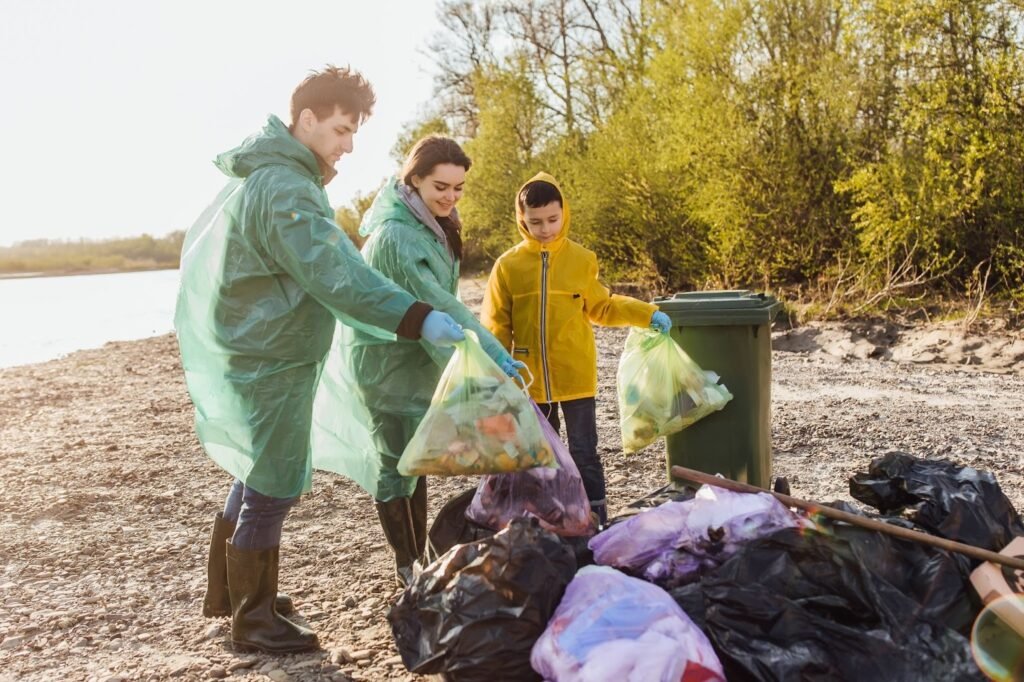
When we talk about “waste,” we aren’t just talking about trash; we are talking about the physical footprint of our regulatory successes and failures. In my work with local governments, I’ve seen firsthand that effective waste management starts long before a truck arrives at a curb. It begins with how we define and categorize the materials our society discards. If our definitions are vague, our enforcement becomes impossible. Many different types of waste are generated daily from municipal solids to complex industrial and medical byproducts and each requires a specific legal and technical roadmap.
For the Eco-Friendly Engineer community, it is vital to understand that classification is the bedrock of compliance. There are several criteria for classifying waste based on its origin, its ability to decompose, or its hazardousness. When these classifications are clear, we can build systems that actually work.
However, when they are poorly designed, we see unintended consequences, like the “leakage” of hazardous materials into regular streams, which eventually burdens local taxpayers and ecosystems. My goal is to help you look past the bin and see the governance structure behind it. Responsible handling isn’t just a “green” choice; it is a technical necessity for a functioning, equitable city.
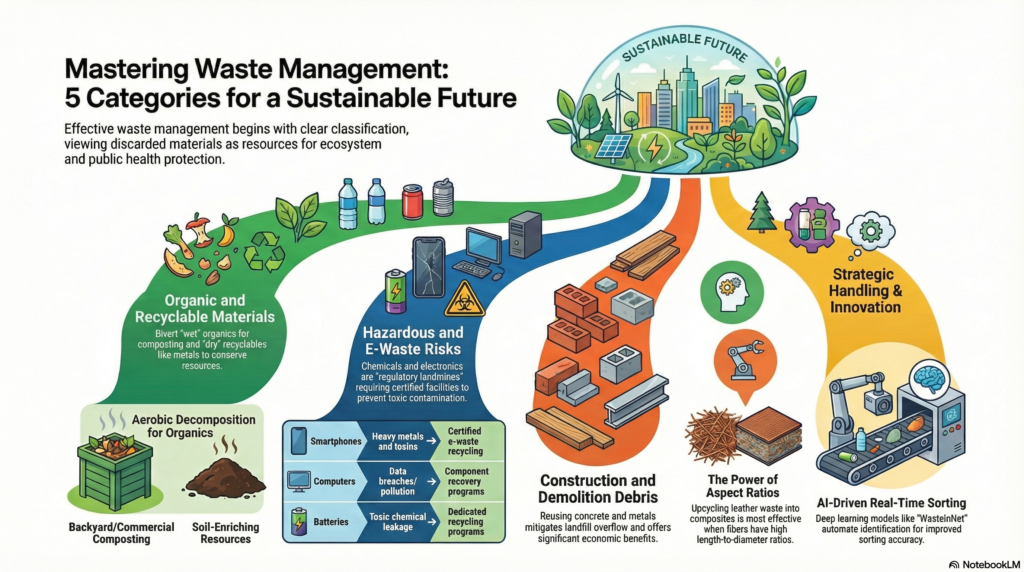
The five main types of waste are organic, recyclable, hazardous, e-waste, and construction debris. Organic waste, such as food scraps and yard trimmings, can be composted to reduce landfill impact. Recyclable materials like paper and metals can be efficiently processed to conserve resources. Hazardous waste, including chemicals and batteries, requires careful disposal to prevent environmental harm. E-waste poses unique challenges due to toxic components, necessitating specialized recycling methods. Finally, construction debris can be reused and recycled to mitigate waste. Understanding these classifications informs responsible management practices, leading to a more sustainable future. Explore further to discover effective strategies you can implement.
KEY TAKEAWAYS
- Organic Waste: Compost food scraps and yard trimmings to reduce landfill waste and promote sustainability through backyard or community composting.
- Recyclable Materials: Participate in local recycling programs for paper, glass, metals, and plastics to conserve resources and reduce landfill use.
- Hazardous Waste: Properly dispose of chemicals and toxic substances through designated facilities to ensure public safety and prevent environmental contamination.
- E-Waste: Recycle discarded electronics through certified e-waste programs to recover valuable materials and minimize harmful environmental impacts.
- Construction Debris: Implement recycling practices for construction materials to reduce landfill overflow and promote resource conservation and economic benefits.
ORGANIC WASTE
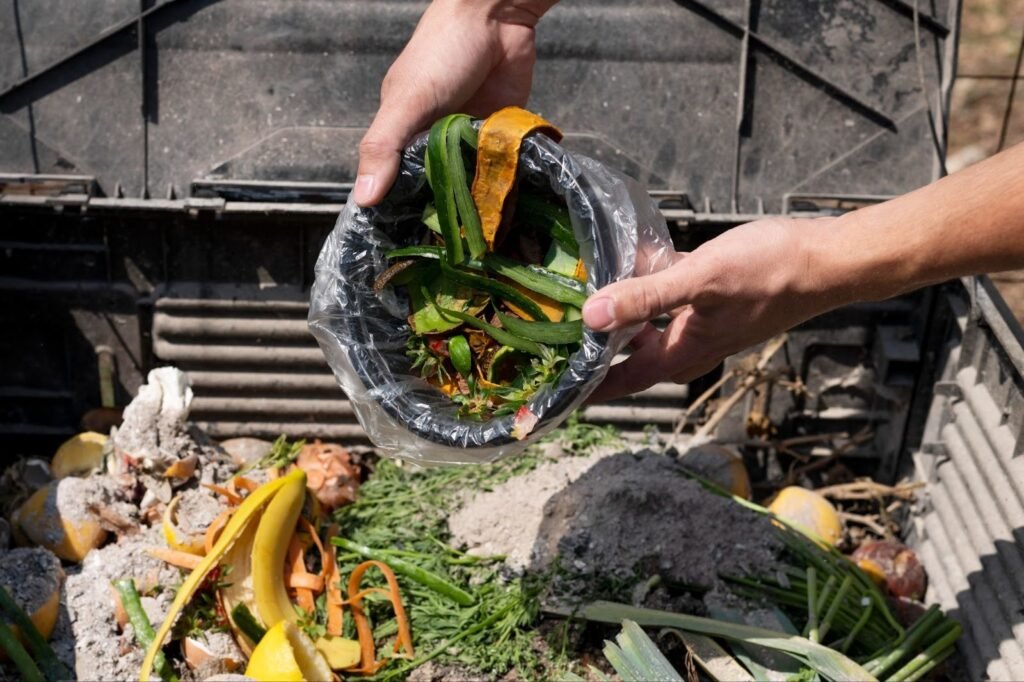
Organic waste, which includes biodegradable materials such as food scraps, yard trimmings, and paper products, plays a significant role in the waste management landscape. Properly managing organic waste is essential not only for reducing landfill waste but also for promoting environmental sustainability. The implementation of effective composting techniques can transform food scraps and other organic materials into valuable compost, enriching soil and fostering healthier ecosystems. By choosing eco friendly products for everyday use—such as biodegradable food containers, reusable bags, and non-toxic cleaning supplies—individuals can further reduce the volume of organic waste and support sustainable composting practices.
Non-biodegradable waste is known as dry waste. Dry wastes can be recycled and can be reused. Non-biodegradable wastes do not decompose by themselves and hence are major pollutants. Composting techniques vary, but they generally involve the aerobic decomposition of organic matter, which can be achieved through methods such as backyard composting, vermicomposting, or large-scale commercial composting. Each of these methods offers unique benefits, catering to different needs and preferences. For instance, backyard composting allows individuals to take control of their waste, facilitating a sense of freedom and responsibility while contributing to the circular economy.
Moreover, the diversion of food scraps from landfills helps mitigate greenhouse gas emissions, which are exacerbated by organic waste decomposition in anaerobic conditions. By adopting composting practices, individuals not only reduce their environmental footprint but also promote a culture of sustainability within their communities.
Recyclable Materials
Recyclable materials encompass a wide range of products that can be reprocessed and transformed into new items, thereby reducing waste and conserving natural resources. These materials include paper, glass, metals, and certain plastics, all of which can be collected through effective recycling programs. By participating in these initiatives, individuals and communities can facilitate material recovery, enabling the reintegration of valuable resources back into the manufacturing cycle while supporting broader municipal waste management efforts aimed at sustainability and resource conservation.
The significance of recycling extends beyond mere waste reduction; it represents a commitment to sustainability and environmental stewardship. Recycling programs not only decrease landfill waste but also minimize the demand for raw materials, thereby preserving ecosystems and reducing energy consumption associated with extraction and processing. For instance, recycling aluminum saves up to 95% of the energy required to produce new aluminum from ore, showcasing the substantial energy savings and environmental benefits inherent in the recycling process.
Moreover, the success of recycling programs hinges on public participation and awareness. Educating the community about proper recycling practices is essential for maximizing material recovery rates. By fostering a culture of responsibility and encouraging individuals to recycle consciously, society can collectively work towards minimizing waste and promoting a circular economy.
Hazardous Waste
While recycling plays an essential role in managing waste, it is equally important to address the issue of hazardous waste, which poses significant risks to both human health and the environment. Hazardous waste encompasses a range of materials that can cause harm if not handled properly, including chemicals, batteries, and other toxic substances. The effective management of these hazardous materials is vital to safeguard public safety and preserve ecological integrity. There are several criteria for classifying waste depending on its origin, its capacity to decompose naturally in the environment (biodegradability), its composition (the material it is made of), its hazardousness, or its physical state (solid, liquid, or gaseous).
Engaging in responsible hazardous materials management involves understanding the nature and risks associated with these substances, which is a critical aspect of comprehensive solid waste management aimed at protecting both public health and the environment. Industries and households alike must be aware of the specific regulations governing the disposal of hazardous waste. This includes the proper identification of materials deemed hazardous and the implementation of strategies for their safe disposal. Failure to comply can result in dire consequences, including environmental contamination and potential legal repercussions.
Toxic substance disposal should never be taken lightly. Individuals must refrain from discarding hazardous materials in regular waste bins or down drains. Instead, they should utilize designated disposal facilities and participate in community hazardous waste collection programs. By doing so, we not only protect our immediate surroundings but also contribute to a larger movement towards sustainable waste management practices.
E-WASTE
In the trenches of urban planning, the distinction between “wet” and “dry” waste or biodegradable and non-biodegradable is where the most significant policy battles are fought. From an engineering standpoint, organic waste is a resource that can be transformed through aerobic decomposition into valuable compost. But from a policy standpoint, it is a massive logistical challenge that requires specialized collection and strict regulatory oversight to prevent methane emissions in landfills. I’ve often found that the real waste problems are easiest to spot during neighborhood clean-ups, where you see exactly which materials the current system is failing to capture.
Take e-waste and hazardous materials as an example. These aren’t just “difficult” to recycle; they are regulatory landmines. Discarding chemicals or electronics in regular bins can lead to environmental contamination and severe legal repercussions for industries and households alike. We are seeing exciting developments in real-time identification, such as the “WasteInNet” deep learning model, which could revolutionize how we sort these materials at the source. However, technology alone won’t save us.
We need enforceable laws that mandate the use of certified recycling facilities. Whether it’s the seasonal surge of waste in tourist hubs like Ibiza or the complexities of upcycling leather into new composites, our technical solutions must be backed by data-driven, equitable legislation.
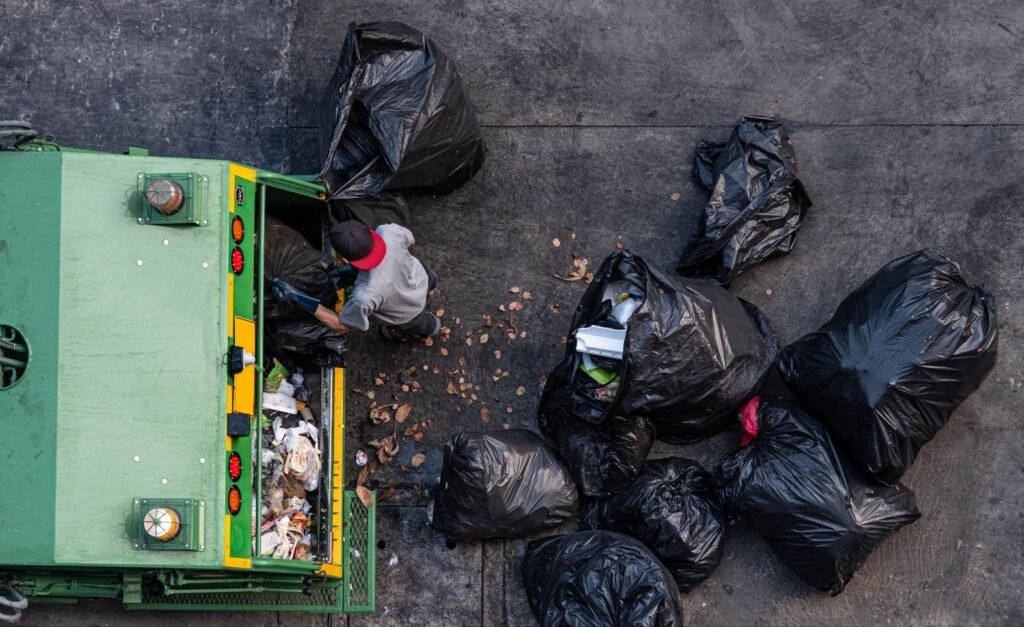
As technology continues to advance at a rapid pace, the issue of electronic waste, commonly known as e-waste, has emerged as a pressing environmental concern. E-waste encompasses discarded electronic devices, including computers, televisions, and smartphones, which pose significant risks to both human health and the environment if not managed properly. With the global demand for electronics rising, the volume of e-waste is expected to grow exponentially, underscoring the need for effective e-waste recycling and responsible electronic disposal.
To illustrate the scale and impact of e-waste, consider the following table:
| Type of E-Waste | Potential Harm | Recycling Solutions |
| Smartphones | Heavy metals and toxins | Certified e-waste recycling |
| Computers | Data breaches, land pollution | Component recovery programs |
| Televisions | Hazardous materials | Eco-friendly disposal initiatives |
| Batteries | Toxic chemical leakage | Battery recycling programs |
| Cables and Chargers | Plastic pollution | Reuse and refurbishment schemes |
Responsible e-waste recycling not only mitigates environmental damage but also recovers valuable materials, enabling a circular economy. Individuals and organizations must prioritize proper electronic disposal methods, choosing certified recycling facilities that adhere to environmental regulations. By doing so, we empower ourselves to take control of our digital footprints while fostering a sustainable future. The freedom to innovate must be matched with the responsibility to protect our planet—only then can we truly embrace the advancements of technology without compromising our environment.
Construction Debris
Construction debris represents a considerable environmental challenge, particularly as urban development continues to expand globally. The accumulation of waste generated during construction and demolition activities, including materials such as concrete, wood, metals, and plastics, has profound implications for our ecosystems. If not managed properly, this debris can contribute to landfill overflows, habitat destruction, and pollution. Many different types of waste are generated, including municipal solid waste, hazardous waste, industrial non-hazardous waste, agricultural and animal waste, medical waste, radioactive waste, construction and demolition debris, extraction and mining waste, oil and gas production waste, fossil fuel combustion waste, and sewage sludge
Effective debris management is essential in reducing the environmental footprint of construction activities. This involves adopting construction recycling practices that promote the recovery and reuse of materials. By recycling concrete and metals, for instance, we can considerably reduce the demand for virgin resources, thereby conserving energy and minimizing greenhouse gas emissions associated with material extraction and processing.
Moreover, implementing a systematic approach to debris management not only aids in environmental preservation but can also result in economic benefits. Many construction firms are discovering that recycling materials can lower disposal costs and, in some cases, even generate revenue through the sale of reusable materials. This shift towards sustainability is not merely a regulatory obligation but a pathway to innovation and competitiveness in a market increasingly focused on environmental responsibility.
RELATED STUDIES ABOUT TYPES OF WASTE
In a world where waste reigns supreme, the handling of organic, recyclable, hazardous, e-waste, and construction debris requires not just diligence, but a touch of humor to navigate the absurdity of the situation. One might ponder if landfills have become the new tourist attractions, showcasing humanity’s finest refuse. Responsible waste management is not merely a necessity; it is a civic duty, transforming mountains of discarded materials into opportunities for a cleaner, more sustainable future.
The Impact of Tourism and Seasonality on Different Types of Municipal Solid Waste (MSW) Generation: The Case of Ibiza
Objective: This study investigates how tourism and seasonality affect the generation of sorted (recyclable) and non-sorted municipal solid waste on the Spanish island of Ibiza. It differentiates between the waste generation patterns of the tourist and resident (non-tourist) populations, applying a modified STIRPAT model to assess the drivers of waste generation and the development of circular economy practices.
Key Findings:
- Differing Waste Generation Patterns: The study confirms that tourists and residents generate waste differently. While the non-tourist population shows higher population elasticity for waste generation overall (due to its larger size), tourists are relatively more intensive in generating recyclable waste, particularly glass and packaging.
- Trend Towards a Circular Economy: A positive trend is observed towards circular economy practices on Ibiza. Per capita generation of non-sorted waste has decreased over time, while per capita generation of sorted recyclable materials (paper/cardboard, packaging, glass) has increased.
- Significant Role of Seasonality: Waste generation patterns vary strongly by season. During the high tourist season (summer), a tourist generates approximately four times more non-sorted waste than a resident. This ratio changes dramatically in the mid-season, where residents and tourists generate similar amounts of non-sorted waste. Seasonal patterns also affect the generation of recyclables.
- Impact of Population Growth: The analysis reveals that the non-tourist population has grown faster than the tourist population in Ibiza, making it a major driver of total waste generation. This highlights the need for waste management policies to address the impacts of both permanent residents and seasonal visitors.
- Role of Technology: The “technology” factor in the STIRPAT model captures long-term improvements in waste management, showing a significant negative effect on non-sorted waste and a positive effect on recyclables, further evidencing progress in waste handling and recycling infrastructure.
Methodology: The research employs a modified STIRPAT (Stochastic Impacts by Regression on Population, Affluence, and Technology) model, adapted to separate the impacts of tourist and non-tourist populations. It uses data from 2003 to 2019 from official sources (IBESTAT, INE, Consell de Ibiza) and runs both a basic model and a seasonal model to account for variations across high, mid, and low seasons.
Conclusions:
The study concludes that effective waste management in tourist destinations like islands requires policies that account for:
- The distinct waste generation behaviors of tourists and residents.
- The strong influence of seasonality on waste volumes and composition.
- The ongoing positive trend toward waste reduction and recycling, which supports circular economy goals.
Implications for Policy: Policymakers should develop targeted strategies that address the seasonal influx of tourists, promote recycling among all population groups, and continue investing in waste management technology. Future research should utilize more granular data to understand the impact of tourist types and accommodation on waste generation patterns.
Limitations: The study is limited by aggregated data, which prevents analysis of how specific tourist typologies or accommodation types influence waste generation. The data also cannot pinpoint the exact causes behind the observed technological trends toward circularity.
| REFERENCE: Italo Arbulú, Javier Rey-Maquieira, Francesc Sastre, The impact of TOURISM and seasonality on different types of municipal solid waste (MSW) generation: The case of Ibiza, Heliyon, Volume 10, Issue 13, 2024, e33894, ISSN 2405-8440, https://doi.org/10.1016/j.heliyon.2024.e33894. (https://www.sciencedirect.com/science/article/pii/S2405844024099250) |
Upcycling Leather Waste: The Effect of Leather Type and Aspect Ratio on the Performance of Thermoplastic Polyurethane Composites
Objective: To develop a sustainable method for upcycling leather waste by incorporating it into polymer composites, and to systematically investigate how the type of leather (tanning method) and the physical characteristics (particle size and aspect ratio) of the waste influence the properties of the resulting composite material.
Key Findings:
- Successful Composite Fabrication: Leather waste from three common tanning methods—wet blue (chromium), wet white (glutaraldehyde), and vegetable-tanned—was successfully incorporated into a Thermoplastic Polyurethane (TPU) matrix via melt compounding at loadings of 5-30 wt%.
- Critical Role of Aspect Ratio: The aspect ratio (length-to-diameter ratio) of the leather waste fibers was identified as the most critical factor determining mechanical reinforcement. Wet blue leather, with the highest average aspect ratio of 61, provided the most significant enhancement in composite properties.
- Enhanced Mechanical and Functional Properties:
- Stiffness (Young’s Modulus): Increased with leather content, reaching up to 305 MPa with wet blue fibers.
- Abrasion Resistance: Improved monotonically with leather filler addition, with wet blue and wet white composites showing a twofold increase compared to pure TPU.
- Tensile & Tear Strength: Both properties improved at low filler loadings (≤10 wt%), surpassing the performance of a reference finished leather product. Higher loadings led to embrittlement.
- Good Interfacial Adhesion: Microscopy (SEM) and spectroscopy (FTIR) analysis confirmed good dispersion and strong interfacial adhesion between the TPU matrix and leather fibers, with evidence of ester bond formation, eliminating the need for additional surface functionalization.
- Model Predictions for Future Optimization: Using the Halpin-Tsai micromechanical model, the study predicted that to achieve the maximum theoretical reinforcement, leather fibers with an aspect ratio exceeding 1000 are needed. This translates to a target fiber diameter of ~1 μm, providing a clear technical challenge and direction for future waste processing methods.
- Thermal Stability: The composites maintained good thermal stability. Leather acted as a nucleating agent, raising the crystallization temperature of TPU, but did not significantly alter its glass transition temperatures.
Methodology:
The research involved:
- Material Preparation: Compounding dried TPU with milled leather waste powders via melt mixing, followed by compression molding.
- Characterization: Comprehensive analysis using Optical Microscopy (particle size/aspect ratio), Scanning Electron Microscopy (morphology), FTIR (chemical interactions), DSC/TGA (thermal properties).
- Mechanical Testing: Evaluation of tensile properties, tear resistance, and abrasion resistance using standard protocols.
- Theoretical Modeling: Application of the Halpin-Tsai model to correlate experimental data with theoretical predictions based on filler aspect ratio.
Conclusion:
This work demonstrates a viable, simple, and scalable upcycling pathway for leather waste into value-added composite materials. The performance of these composites is highly dependent on the aspect ratio of the leather fibers, with higher ratios leading to superior mechanical reinforcement and abrasion resistance. Wet blue leather waste emerged as the most effective filler. The findings provide both a practical solution for waste valorization and a scientific framework (via the Halpin-Tsai model) to guide future efforts in optimizing leather waste processing to achieve even higher-performance sustainable materials for consumer and engineering applications.
| REFERENCE: Muhammad Umar Nazir, Rosario Mascolo, Phil Bouic, Mohammad Mahbubul Hassan, Jane Harris, Sara Naderizadeh, James J.C. Busfield, Han Zhang, Dimitrios Papageorgiou, Emiliano Bilotti, Upcycling leather waste: The effect of leather type and aspect ratio on the performance of thermoplastic polyurethane composites, Sustainable Materials and Technologies, Volume 43, 2025, e01221, ISSN 2214-9937, https://doi.org/10.1016/j.susmat.2024.e01221. (https://www.sciencedirect.com/science/article/pii/S2214993724004019) |
WasteInNet: Deep Learning Model for Real-time Identification of Various Types of Waste
Objective: This research aimed to develop an accurate and efficient deep learning model for real-time identification and classification of various types of waste to support automated waste management systems, specifically tailored to domestic waste in Indonesia.
Key Findings:
- Model Development: The study successfully developed “WasteInNet,” a deep learning model based on the YOLOv7-tiny architecture, optimized for speed and efficiency in real-time detection.
- High Performance: The model demonstrated strong overall performance on the test dataset, achieving:
- Precision: 0.801
- mAP@0.5: 0.868 (86.8%)
- mAP@0.5-0.95: 0.618
- Category-Specific Accuracy: Performance varied by waste type. The model excelled in detecting paper waste (97% AP) but performed less accurately on glass waste (68% AP), attributed to insufficient and unrepresentative training data for that category.
- Dataset Creation: The research contributed a new, curated dataset (“WasteIn”) focused on six categories of Indonesian domestic dry waste (electronic, glass, metal, organic, paper, plastic) plus a background class. Data augmentation techniques were employed to improve model robustness and prevent overfitting.
- Comparative Advantage: When compared to similar studies, the WasteInNet model with augmentation achieved a superior mAP@0.5 score (86.8%), positioning it as a state-of-the-art solution, particularly for indoor or household waste detection.
- Practical Implications: The model is suitable for integration into automated systems such as smart trash bins using Internet of Things (IoT) technology, enabling on-the-spot waste sorting.
Methodology:
The research followed a structured pipeline:
- Data Collection & Curation: Aggregating and filtering images from public sources to create a specialized Indonesian waste dataset (1,210 images).
- Data Preparation: Annotating images and applying data augmentation (horizontal/vertical flipping, auto-orientation) to enhance dataset diversity.
- Modeling: Implementing and training the lightweight YOLOv7-tiny object detection model.
- Evaluation: Assessing model performance using standard metrics like Precision, Recall, mAP, and confusion matrix analysis.
Conclusions:
The WasteInNet model proves effective for real-time, multi-class waste identification, achieving high accuracy for most categories. However, the study highlights a critical dependency on high-quality, representative training data, as evidenced by the lower performance on glass waste.
Future Work & Recommendations:
- Improve model accuracy, especially for the glass category, by expanding and optimizing the training dataset.
- Explore the application of the model in IoT-based smart waste management systems.
- Investigate advanced annotation methods (e.g., instance segmentation) and incorporate additional features to enhance detection robustness across diverse and uncontrolled real-world environments.
| REFERENCE: Alam Rahmatulloh, Irfan Darmawan, Aldy Putra Aldya, Firmansyah Maulana Sugiartana Nursuwars, WasteInNet: Deep Learning Model for Real‐time Identification of Various Types of Waste, Cleaner Waste Systems, Volume 10, 2025, 100198, ISSN 2772-9125, https://doi.org/10.1016/j.clwas.2024.100198. (https://www.sciencedirect.com/science/article/pii/S277291252400071X) |
CONCLUSION
As we look toward a more sustainable future, we must acknowledge that responsible waste management is a civic duty that goes beyond individual action. From my perspective as a researcher, a truly “circular economy” is only possible when our laws are as innovative as our engineering. We’ve seen that construction debris can be reused to mitigate waste and even lower costs, proving that sustainability and economic health are not mutually exclusive. But for this to become the standard rather than the exception, we need policy frameworks that incentivize resource conservation and penalize environmental negligence.
I’ve always believed that the measure of a good waste law is whether it protects the people who have the least power to protest. Poorly designed systems often result in landfills or processing plants being sited in marginalized areas, shifting the environmental burden onto those already struggling.
By understanding the five main types of waste organic, recyclable, hazardous, e-waste, and construction debris we empower ourselves to demand better from our local governments. We must continue to invest in waste management technology while never losing sight of the human impact. My hope is that through a combination of technical rigor and social equity, we can transform our “mountains of refuse” into a foundation for cleaner, more resilient communities.