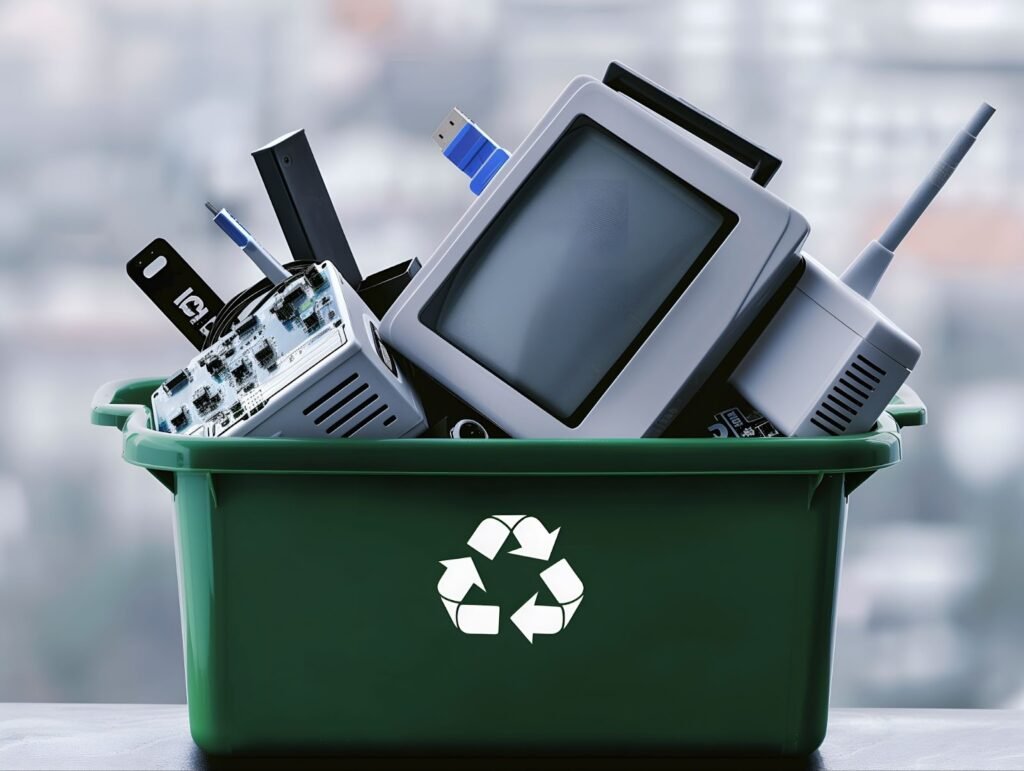
Whenever I’m out hiking with Pixel, my golden retriever, I’m struck by the perfect, waste-free design of the natural world. In nature, every “output” is an “input” for something else. Unfortunately, as an electronics engineer, I know our gadgets are designed with the opposite philosophy. We live in a world where over 50 million tons of e-waste are produced annually. It’s easy to look at a cracked smartphone or an old router and see a piece of plastic and glass, but in my lab at Berkeley, I see a complex cocktail of heavy metals like lead and mercury, and precious resources like gold and silver that we’ve literally ripped out of the earth.
Effective electronic waste management at home involves more than just tidying up; it’s about understanding local regulations and ensuring secure data backup. I’ve spent my career researching biodegradable electronic materials because I want to change how devices are made, but until that transition is complete, the responsibility falls on us to manage what currently exists.
Adhering to the do’s and don’ts of e-waste isn’t just a chore, it’s a necessary act of environmental stewardship that keeps hazardous materials out of our soil and groundwater. By making informed recycling choices today, we ensure that the nature trails I walk with Pixel remain pristine for the next generation.
Effective electronic waste management at home involves understanding local regulations, ensuring secure data backup, and making informed recycling choices. Do research e-waste laws and find collection centers to prevent environmental damage. Always remove personal information securely to protect your privacy. Avoid improper disposal, as it can release hazardous materials. Explore recycling options, including manufacturer take-back programs and donations to local organizations. If your device can be repaired, assess the costs before replacement. Adhering to these do’s and don’ts will enhance your efficiency in managing e-waste, fostering responsible practices. Discover additional strategies to optimize your approach to this pressing issue.
KEY TAKEAWAYS
- Research and adhere to local e-waste disposal laws and regulations to ensure responsible management of electronic waste.
- Always back up your data before disposing of devices to prevent irreversible data loss.
- Explore recycling options such as local centers, manufacturer take-back programs, and donation opportunities for functioning electronics.
- Assess whether repairing devices is more economical than replacing them, and consider DIY fixes for simple issues.
- Never dispose of e-waste improperly; always use designated recycling facilities to protect the environment and recover valuable materials.
UNDERSTANDING ELECTRONIC WASTE
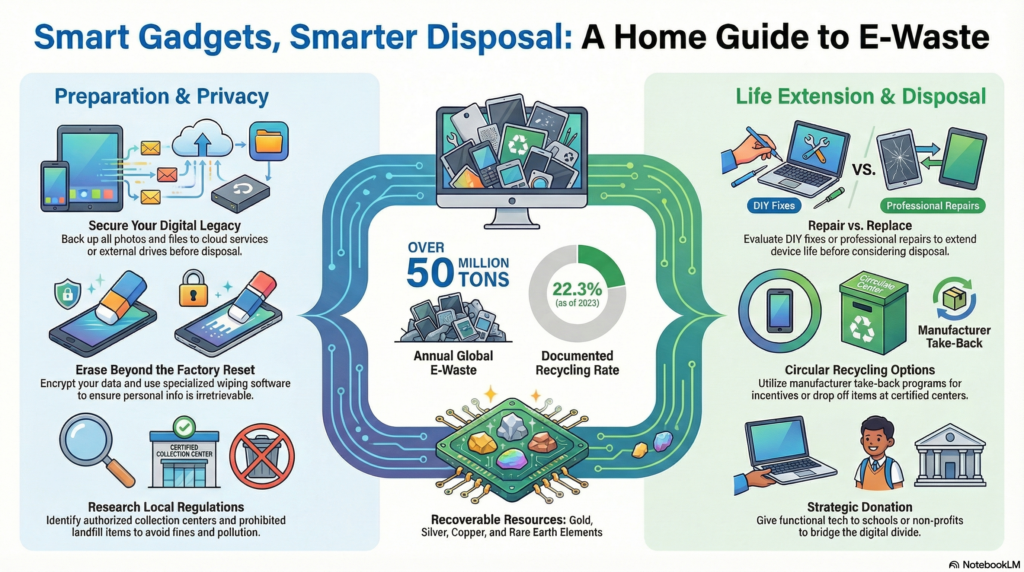
Electronic waste, commonly referred to as e-waste, encompasses a wide range of discarded electronic devices, including smartphones, computers, televisions, and household appliances. As technology evolves, the volume of e-waste generated continues to rise, leading to pressing environmental concerns. Understanding the various e-waste categories is essential for responsible disposal and recycling. Over 50 million tons of e-waste are produced every year. And with electronics like cell phones becoming more and more popular, it’s easy to assume that this number will only rise as the years go by. This is why it’s important for us to start finding proper ways to manage our e-waste now before it becomes a bigger problem.
E-waste can be divided into several categories, including large household appliances, small electric appliances, IT and telecommunications equipment, and consumer electronics. Each category presents unique challenges and opportunities for effective recycling. For instance, large appliances often contain valuable metals, while smaller devices may house hazardous materials like lead and mercury. Recognizing these distinctions is critical for mitigating environmental impacts and promoting sustainability.
Recycling e-waste offers numerous benefits that extend beyond environmental protection. By reclaiming valuable materials such as gold, silver, and copper, recycling reduces the need for virgin resource extraction, thereby conserving natural habitats and minimizing energy consumption, ultimately promoting environmental sustainability. In addition, responsible recycling practices can create job opportunities within local economies, fostering a sense of community engagement and empowerment.
As advocates for freedom and sustainability, individuals must take active roles in understanding e-waste. By supporting recycling initiatives and educating others about proper disposal methods, we can collectively work towards reducing the negative impacts of e-waste on our planet. Embracing our freedoms also means taking responsibility for our technological footprints, ensuring a healthier future for generations to come.
Do: Research Local E-Waste Laws
Before disposing of any electronic devices, it is crucial to explore local e-waste laws, as regulations can greatly vary by region. Understanding these laws not only helps individuals avoid potential fines but also contributes to mitigating the e-waste impact on the environment. By familiarizing yourself with local regulations, you can guarantee that your disposal methods align with sustainable practices that benefit both your community and the planet.
Here are some key aspects to take into account when researching local e-waste laws:
- Regulatory Requirements: Identify what your locality mandates regarding the disposal and recycling of electronic waste.
- Drop-off Locations: Find out designated e-waste collection centers or events in your area to facilitate responsible disposal.
- Prohibited Items: Understand which electronic devices are banned from landfills and must be recycled.
- Recycling Programs: Investigate any local programs offering incentives for recycling e-waste, which can encourage participation.
- Community Resources: Utilize local organizations or municipal websites that provide information on e-waste management.
Don’t: Dispose of E-Waste Improperly
Improper disposal of electronic waste poses significant risks to both public health and the environment. The surge in technology usage has led to an increase in e-waste, a category that includes discarded computers, smartphones, and other electronic devices. When these items are disposed of irresponsibly—whether through landfilling, incineration, or abandonment—they contribute to a range of e-waste hazards that can have dire consequences.
First and foremost, many electronic devices contain toxic substances such as lead, mercury, and cadmium. These hazardous materials can leach into soil and groundwater, posing serious health risks to communities and ecosystems. Furthermore, the environmental impact of improper disposal extends beyond local areas; pollutants can travel through water systems and air currents, affecting distant regions and wildlife.
In addition to environmental degradation, the improper handling of e-waste undermines the potential for recycling valuable materials such as gold, silver, and rare earth elements. By neglecting responsible disposal methods, individuals not only harm their immediate surroundings but also squander resources that could otherwise be recovered and reused.
Therefore, it is essential to recognize the importance of proper e-waste management. Communities must be encouraged to utilize designated e-waste recycling facilities, participate in collection events, and stay informed about local regulations. By doing so, we can mitigate the e-waste hazards that threaten our planet and promote a sustainable future that respects both human health and environmental integrity.
Do: Back Up Your Data
Backing up your data is a critical step in guaranteeing the security and longevity of your digital information. As electronic devices age or become obsolete, the risk of data loss increases considerably. To maintain control over your valuable content, implementing a robust backup strategy is essential. Digital backups not only safeguard against potential hardware failures but also protect against accidental deletions and cyber threats. Electronic scrap components, such as CPUs, contain potentially harmful materials such as lead, cadmium, beryllium, or brominated flame retardants. Recycling and disposal of e-waste may involve significant risk to the health of workers and their communities.
Here are several key practices to enhance your data security through effective backups:
- Utilize Cloud Services: Leverage platforms like Google Drive or Dropbox for automatic, off-site backups.
- External Hard Drives: Regularly transfer important files to physical drives for an additional layer of security.
- Version Control: Maintain multiple versions of critical documents to prevent irreversible loss of information.
- Schedule Regular Backups: Automate your backup process to guarantee that it happens consistently without your intervention.
- Test Your Backups: Periodically verify that your backups are complete and functional to avoid surprises during data recovery.
Embracing these practices not only empowers you with the freedom to manage your digital life but also provides peace of mind in an increasingly uncertain technological landscape. In a world where data is an invaluable asset, taking proactive steps to back up your information is not merely advisable; it is imperative. By prioritizing data security through diligent digital backups, you safeguard your work, memories, and personal information against unforeseen disasters.
Don’t: Forget to Remove Personal Information
As you prioritize data security through effective backups, it is equally important to contemplate what happens to your personal information when you dispose of or repurpose electronic devices. Failing to remove personal information can lead to significant privacy concerns, exposing your sensitive data to malicious actors and potentially resulting in identity theft or financial exploitation.
When preparing your electronic devices for disposal, remember that simple deletion of files is often inadequate. Data can be recovered using specialized software, leaving your personal information vulnerable. Instead, employ data encryption techniques prior to disposal. By encrypting your data, you add an additional layer of security, rendering any recovered information inaccessible without the appropriate decryption key. This is a vital step in safeguarding your privacy.
Consider utilizing factory reset options available on devices, but do not rely solely on this method. An extensive approach includes securely wiping all data—using software designed for data destruction—to guarantee that your personal information is irretrievable.
Furthermore, keep in mind that different devices require different levels of security measures. Laptops and smartphones may contain more sensitive information than e-readers or old gaming consoles. As a result, assess the risk associated with each device accordingly.
Ultimately, taking these precautions not only protects your individual freedom but also contributes to a broader culture of privacy consciousness. By prioritizing the removal of personal information, you can confidently move forward with the knowledge that your data remains secure even as you embrace new technology.
Do: Explore Recycling Options
In 2022, an estimated 62 million tonnes of e-waste were produced globally. Only 22.3% was documented as formally collected and recycled When managing electronic waste, it is essential to explore various recycling options available in your community. Local recycling centers often provide safe disposal methods, while many manufacturers offer take-back programs for their products, ensuring responsible recycling. Additionally, consider donation opportunities for functional electronics, which can extend their life and benefit others while reducing waste.
LOCAL RECYCLING CENTERS
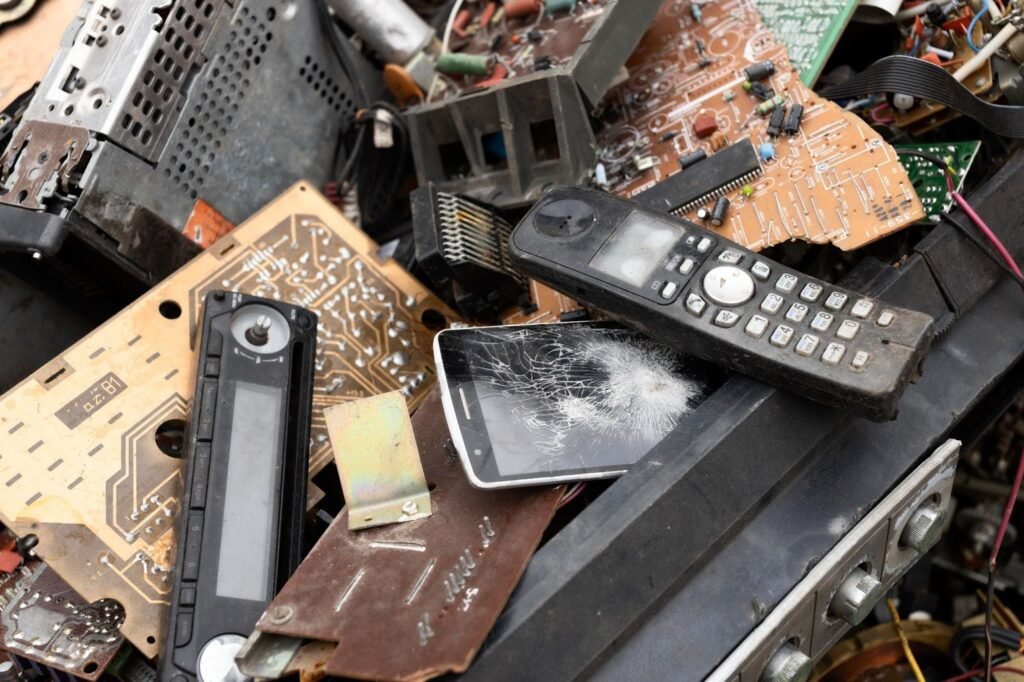
While many individuals may overlook the importance of proper electronic waste management, local recycling centers play an essential role in mitigating environmental impact and promoting sustainability. These centers not only facilitate the responsible disposal of electronic devices but also contribute to community initiatives that foster a greener future. By engaging with local recycling facilities, individuals can access numerous recycling benefits that extend beyond personal convenience.
- Reduce landfill waste and conserve natural resources
- Recover valuable materials for reuse in new products
- Support local economies through job creation
- Foster community awareness on environmental responsibility
- Encourage responsible consumer behavior
Exploring the options available at local recycling centers empowers individuals to take control of their electronic waste. Participating in these initiatives not only helps to minimize harmful effects on the environment but also reinforces a commitment to a sustainable lifestyle, especially when paired with the use of eco friendly products in everyday life. By making informed choices about electronic waste disposal, you contribute to a collective effort that enhances the community’s ecological health and promotes freedom through responsible stewardship of resources. Embrace the opportunity to make a difference by seeking out and utilizing your local recycling centers effectively.
Manufacturer Take-Back Programs
Local recycling centers provide a solid foundation for responsible electronic waste management, but additionally, an effective avenue for reducing e-waste is through Manufacturer Take-Back Programs. These initiatives allow consumers to return their old electronics to the manufacturers, who are then responsible for recycling or properly disposing of the devices. This not only fosters a circular economy but also empowers individuals to engage in sustainable practices.
Participating in a take-back program can yield significant take back benefits, such as ensuring that hazardous materials are handled safely and encouraging the reuse of valuable components. Furthermore, many manufacturers offer incentives, such as discounts on future purchases, to promote program eligibility and motivate consumers to return their outdated electronics.
As you consider your options for managing e-waste, exploring Manufacturer Take-Back Programs can provide a straightforward and effective solution. By collaborating with manufacturers, you not only contribute to environmental stewardship but also reclaim your freedom from the burden of obsolete technology. Embracing these programs can lead to a cleaner environment and a more responsible approach to consumption, aligning with the ideals of sustainability that resonate with many individuals today.
Donation Opportunities Available
Donation opportunities present a viable alternative for managing electronic waste, allowing individuals to extend the life cycle of their devices while benefiting others in the community. By engaging in reuse programs, homeowners not only contribute to a more sustainable environment but also support community initiatives that aim to bridge the digital divide. This dual benefit underscores the importance of considering donation as an effective waste management strategy.
Consider the following donation options:
- Local schools and educational institutions may need functioning devices for their students.
- Non-profit organizations often welcome technology donations to assist underserved populations.
- Community centers frequently run programs that provide refurbished electronics to those in need.
- Charitable organizations may have specific initiatives aimed at collecting and redistributing electronics.
- Online platforms can facilitate connections between donors and individuals seeking affordable tech solutions.
Engaging in these donation opportunities fosters a sense of community while promoting responsible electronic waste management. By choosing to donate rather than discard, individuals are empowered to make a positive impact and actively go green, ensuring that their devices continue to serve a purpose while reducing overall electronic waste. Embrace the freedom to contribute to a sustainable future through thoughtful donations.
Don’t: Ignore Repair Possibilities
From a hardware design perspective, the most “eco-friendly” device is the one you already own. Before you look for a recycling center, I always urge people: don’t ignore repair possibilities. Assessing whether repairing a device is more economical than replacing it is a vital step. Many times, a simple DIY fix or a professional component swap can extend a device’s life by years. When a device truly reaches its end-of-life, the engineering “treasure hunter” in me wants those materials back. Recycling e-waste reclaims valuable materials like gold and copper, which reduces the need for virgin resource extraction. This is why exploring recycling options, such as manufacturer take-back programs or local centers, is so critical.
However, as someone who develops IoT devices, I have to give you a stern warning about data. Always back up your data before disposing of a device. But more importantly, don’t forget to remove personal information. A simple factory reset isn’t always enough; data can often be recovered using specialized software.
I recommend an extensive approach: encrypt your data first, then use software designed for secure data destruction. This protects your privacy while allowing the hardware to be safely processed. We must bridge the gap between our digital security and our environmental responsibility to truly go green.
When faced with malfunctioning electronic devices, it is essential to assess repair options before resorting to disposal. Many issues can be resolved through simple fixes or professional assistance, which not only extends the life of the device but also reduces electronic waste. By prioritizing repair, consumers can contribute to a more sustainable approach to electronic management while potentially saving money in the process.
Assess Repair Options
In the domain of electronic waste management, evaluating repair options is a critical step that should not be overlooked. Many consumers hastily discard malfunctioning electronics, overlooking the potential for repair, which can often be a cost-effective and environmentally sound solution. Examining repair options not only contributes to sustainability but also empowers individuals to take control of their devices.
Before deciding to dispose of an electronic item, consider the following aspects:
- Repair Costs: Evaluate whether the cost of repairs is considerably less than purchasing a new item.
- DIY Repairs: Investigate if you can perform simple fixes yourself, which may save both time and money.
- Availability of Parts: Check if replacement parts are readily available and affordable.
- Device Age: Consider the age of the device; older models may have limited repair options.
- Skill Level: Honestly assess your own technical skills to determine if a DIY repair is feasible.
Seek Professional Help
Evaluating repair options can lead to the realization that professional assistance may be necessary for complex issues beyond one’s skill set. When confronted with malfunctioning electronics, the temptation to DIY can often cloud judgment. Engaging professional services not only guarantees effective repairs but also contributes to responsible e-waste disposal.
Here’s a comparative perspective on the implications of seeking professional help versus tackling repairs independently:
| Seeking Professional Help | DIY Repairs |
| Expertise and efficiency | Time-consuming and potentially ineffective |
| Safe handling of hazardous materials | Risk of injury or damage |
| Guarantees and warranties | No recourse for failure |
| Environmentally responsible | Potential for improper disposal |
| Saves money in the long run | Possible additional costs from mistakes |
Choosing to consult professionals can liberate you from the burden of uncertainty, assuring that your electronic devices are handled with care. This not only protects your investment but also promotes sustainable practices in e-waste management. In an age where we seek both freedom and responsibility, prioritizing professional services is both a wise and conscientious choice.

RELATED STUDIES ABOUT ELECTRONIC WASTE MANAGEMENT
To sum up, effective electronic waste management at home requires an extensive understanding of local laws, responsible disposal practices, and a proactive approach to data security and recycling options. Just as a gardener carefully prunes dead branches to nurture healthy growth, individuals must meticulously handle electronic waste to foster a sustainable environment. By adhering to established guidelines and considering repair before disposal, the negative impact of e-waste can be greatly reduced, contributing to a greener and more sustainable future.
Sustainability of Electronic Product Manufacturing Through E-Waste Management and Reverse Logistics
Objective: To develop an integrated optimization model that enhances the sustainability of electronic product manufacturing by combining a two-stage automated inspection process to ensure product quality, with a reverse logistics system for managing end-of-life e-waste. The model aims to maximize profit while minimizing environmental impact.
Key Findings:
- Integrated Framework: The study proposes a comprehensive supply chain framework that links forward manufacturing (with quality control) to reverse logistics (for e-waste recovery). This creates a closed-loop system promoting a circular economy.
- Quality Assurance via Automation: Implementing a two-stage automated inspection during manufacturing effectively identifies and segregates defective products for rework. This ensures only defect-free products reach the market, protecting brand reputation and customer trust.
- Profit Maximization Under Constraints: The model successfully optimizes key decision variables—production quantity, quantities for repair and recycling, and selling price (with price-dependent demand)—to maximize total supply chain profit. The optimal solution yielded a profit of ₹2,516,400.
- Cost Driver Identification (Pareto Analysis): Analysis revealed that the manufacturing unit (29.46%) and the return processing unit (37.48%) together account for nearly two-thirds of the total supply chain cost. This highlights these stages as primary targets for cost-reduction and efficiency improvements.
- Sensitivity Insights: Sensitivity analysis identified that costs related to recycling, repair, and component disassembly have the most significant negative impact on profit. In contrast, increases in transportation and holding costs had a relatively moderate effect.
- Stakeholder Collaboration is Key: The model underscores the critical need for collaboration between manufacturers, retailers, consumers, recycling facilities, and policymakers to create an effective and sustainable lifecycle management system for electronics.
Methodology:
The research employs a mathematical optimization model for a multi-manufacturer, multi-retailer supply chain. The model incorporates:
- Imperfect Production & Automated Inspection: Accounts for defect generation and uses a costed, two-stage automated inspection and rework process.
- Price-Dependent Demand: Models market demand as a function of the product’s selling price.
- Reverse Logistics Network: Includes costs for collecting, testing, sorting, disassembling, repairing, recycling, and forwarding scrap to secondary manufacturers.
- Solution Technique: Uses Sequential Quadratic Programming (SQP), a numerical optimization method well-suited for solving constrained nonlinear problems, to find the profit-maximizing solution.
Conclusion and Managerial Implications:
The study demonstrates that integrating robust quality control at the production stage with a structured reverse logistics system is both economically viable and environmentally beneficial for the electronics industry.
Key recommendations for managers include:
- Invest in Automated Quality Control to reduce defects, rework costs, and protect brand value.
- Focus Cost-Optimization Efforts on the manufacturing and return processing units, as these are the largest cost contributors.
- Develop Efficient Reverse Logistics Channels to recover valuable materials, reduce virgin resource extraction, and minimize landfill waste.
- Foster Cross-Sector Collaboration to build a cohesive system for product take-back, component recovery, and responsible recycling.
Future Research could extend the model by incorporating factors like inflation, fuzzy demand parameters, trade credit policies, and investments in green technology to further reduce the carbon footprint of the production process.
| REFERENCE: Anshika Singh, Abhinav Goel, Anand Chauhan, Shubham Kumar Singh, Sustainability of electronic product manufacturing through e-waste management and reverse logistics, Sustainable Futures, Volume 9, 2025, 100490, ISSN 2666-1888, https://doi.org/10.1016/j.sftr.2025.100490. (https://www.sciencedirect.com/science/article/pii/S2666188825000607) |
Electronic Waste and Environmental Diplomacy: How GCC E-waste Management Interfaces with the Stockholm Convention
Key Challenge: The Gulf Cooperation Council (GCC) region (Bahrain, Kuwait, Oman, Qatar, Saudi Arabia, UAE) faces a rapidly growing electronic waste (e-waste) crisis, driven by high economic growth, technological consumption, and urbanization. This poses significant environmental, health, and economic challenges, particularly due to the hazardous persistent organic pollutants (POPs) and heavy metals contained in e-waste.
Core Objective: This study analyzes the dynamics of e-waste management within the GCC, examining its alignment with the international Stockholm Convention on Persistent Organic Pollutants (POPs). It explores the intersection of local waste management policies with global environmental diplomacy.
Key Findings:
- High and Growing E-waste Generation: GCC countries have some of the highest per capita e-waste generation rates globally (e.g., UAE: 17.2 kg, Saudi Arabia: 17.6 kg). Volumes are projected to rise sharply, fueled by rapid technology turnover and consumerism.
- Regulatory Landscape is Varied and Evolving:
- Leaders: Saudi Arabia (with Extended Producer Responsibility programs) and the UAE have established more advanced regulatory frameworks and recycling initiatives.
- Developing: Qatar, Oman, Kuwait, and Bahrain are in earlier stages, often managing e-waste under broader waste policies without specific, comprehensive legislation.
- Significant Health and Environmental Risks: Improper disposal and informal recycling lead to the release of POPs (like brominated flame retardants) and heavy metals (like lead and mercury). This causes soil/water contamination, air pollution, and severe health issues including cancer, neurological damage, and endocrine disruption.
- Reliance on Export and Infrastructure Gaps: Due to insufficient local recycling capacity, a significant portion of GCC e-waste is exported. The region lacks adequate specialized infrastructure for safe and efficient recycling, relying heavily on informal sectors with unsafe practices.
- Interface with the Stockholm Convention: The Convention provides a critical diplomatic framework. While not directly regulating e-waste, its mandate to eliminate POPs compels GCC countries to manage e-waste containing these substances (e.g., in flame-retardant plastics) more stringently, driving the need for better policies and technologies.
- Recycling Technologies and Challenges: The study reviews current techniques (manual dismantling, mechanical, pyro-, hydro-, and bio-metallurgical processes) but notes limitations in cost, efficiency, environmental impact, and scalability within the GCC context.
Critical Recommendations:
- Policy Enhancement: Enact comprehensive, GCC-wide e-waste legislation featuring Extended Producer Responsibility (EPR), strict enforcement, and harmonization with international standards (Basel Convention, EU WEEE Directive).
- Technological Investment: Develop state-of-the-art local recycling facilities employing advanced separation and recovery technologies to reduce export dependency and capture economic value.
- Capacity Building & Awareness: Increase public awareness of e-waste hazards and proper disposal while integrating and formalizing the informal recycling sector with training and safety standards.
- Strengthened Diplomacy & Cooperation: Deepen regional collaboration under the GCC Secretariat and enhance partnerships with global bodies (UNEP, Basel Convention centers) for knowledge transfer, capacity building, and unified action.
Conclusion:
Effective e-waste management in the GCC is an urgent imperative for environmental sustainability, public health, and economic opportunity. Aligning regional strategies with the Stockholm Convention through robust policy, technology investment, and international cooperation is essential. This will position the GCC as a leader in sustainable waste management, mitigate the harmful impacts of e-waste, and contribute to a circular economy.
| REFERENCE: Yasar N Kavil, Hassan Alshemmari, Mohammed M Alkasbi, Saeed Saad Alelyani, Mohammed I Orif, Radwan Kh Al-Farawati, Electronic waste and environmental diplomacy: How GCC E-waste management interfaces with the Stockholm Convention, Journal of Hazardous Materials Advances, Volume 17, 2025, 100610, ISSN 2772-4166, https://doi.org/10.1016/j.hazadv.2025.100610. (https://www.sciencedirect.com/science/article/pii/S2772416625000221) |
Electronic Waste Recycling in South Asia: Overview of Associated Risks from a Cocktail of Micro-pollutants and Recommendations for Sustainable E-Waste Management
Core Issue: South Asia faces a severe and growing crisis from electronic waste (e-waste), exacerbated by both rising domestic consumption and large-scale legal/illegal imports from developed countries. The region’s e-waste management is dominated by the informal sector, which employs hazardous, rudimentary recycling (IER) methods, leading to widespread environmental contamination and severe public health risks.
Key Findings:
- Dominance of Informal Recycling: Approximately 95% of e-waste in South Asia is processed by the informal sector. Common practices include open burning, acid baths for metal recovery, and unsafe dismantling, which release a complex “cocktail” of toxic micro-pollutants into the environment.
- Major Sources and Contributors: The region’s e-waste burden comes from both domestic generation (rapidly increasing due to urbanization and tech adoption) and significant imports, especially after China’s 2018 import ban. India, Pakistan, and Bangladesh are the largest contributors to e-waste generation and are primary destinations for imported waste.
- Toxic “Cocktail” of Pollutants: IER sites are hotspots for a wide range of hazardous substances, including:
- Heavy Metals: Lead (Pb), cadmium (Cd), copper (Cu), chromium (Cr), nickel (Ni) found at levels far exceeding safety limits in soil, water, and dust.
- Persistent Organic Pollutants (POPs): Polychlorinated biphenyls (PCBs), brominated flame retardants (PBDEs, HBCDDs), and dioxins/furans (PCDD/Fs).
- Plastic Additives: Phthalic acid esters (PAEs like DEHP) and Bisphenol A (BPA), leaching from e-waste plastics.
- Emerging Contaminants: Per- and polyfluoroalkyl substances (PFAS) are now detected in IER areas.
- Severe Health and Environmental Risks:
- Workers & Communities: Direct exposure leads to neurological damage, kidney disease, respiratory issues, endocrine disruption, reproductive disorders, and increased cancer risk.
- Environmental Contamination: Pollutants leach into soil and groundwater, contaminate rivers, and enter the food chain (evidenced in food, milk, and dust samples). The open burning of e-waste contributes to air pollution and greenhouse gas emissions.
- Data Highlights: Soil in Indian IER workshops showed PCB levels up to 440 ng/g and lead concentrations thousands of times above safe limits. Human milk in Pakistan showed PCB contamination linked to e-waste handling.
- Weak and Uneven Regulatory Landscape:
- India has the most advanced framework (E-Waste Management Rules with Extended Producer Responsibility – EPR), but enforcement is weak, and the informal sector still dominates.
- Pakistan, Bangladesh, Sri Lanka, Nepal, Bhutan, Maldives, and Afghanistan have either inadequate, nascent, or non-existent specific e-waste policies, relying on broader hazardous or solid waste regulations.
Strategic Recommendations for Sustainable Management:
- Formalize the Informal Sector: Integrate informal workers into the formal economy through training, certification, microloans, and the establishment of centralized, formal metal recovery workshops with proper safety and environmental controls.
- Strengthen Policies and Global Partnerships: Enhance the Basel Convention to curb illegal transboundary waste flows. Foster international cooperation (SDG 17) for technology transfer, capacity building, and financial support.
- Implement and Enforce EPR Effectively: Strengthen Extended Producer Responsibility rules to hold manufacturers accountable for end-of-life product management, incentivize eco-design, and fund formal recycling systems.
- Promote Circular Economy and Sustainable Design: Shift EEE design towards modularity, durability, and recyclability. Develop cost-effective recycling clusters and establish traceable supply chains for recycled materials, while regulating downstream uses (e.g., banning recycled e-waste plastics in children’s toys).
- Invest in Awareness, Technology, and Monitoring: Launch public education campaigns on safe disposal. Invest in advanced recycling technologies (e.g., automated disassembly, hydrometallurgy). Implement routine monitoring of formalized facilities and environmental media.
Conclusion:
South Asia’s e-waste challenge is a critical environmental and public health emergency driven by informal recycling. Addressing it requires a multi-pronged strategy centered on formalizing the recycling sector, strengthening and harmonizing regulations, fostering international collaboration, and driving a transition towards a circular economy. These actions are essential to mitigate the toxic legacy of e-waste, protect vulnerable populations, and align the region’s development with the UN Sustainable Development Goals.
| REFERENCE: Paromita Chakraborty, Ronnie Rex K, Jabir Hussain Syed, Sarath Chandra, Siddharth Hande, Balram Pokhrel, Emadul Islam, Md.A. Halim Miah, Electronic waste recycling in South Asia: Overview of associated risks from a cocktail of micro-pollutants and recommendations for sustainable e-waste management, Journal of Hazardous Materials Advances, Volume 18, 2025, 100715, ISSN 2772-4166, https://doi.org/10.1016/j.hazadv.2025.100715. (https://www.sciencedirect.com/science/article/pii/S2772416625001275) |
CONCLUSION
As we’ve explored, managing e-waste is a pressing issue that requires a proactive approach. In my 12 years of experience in sustainable hardware, I’ve seen how much damage a single improperly discarded battery or circuit board can do to an ecosystem. But I’ve also seen the power of community engagement. When you choose to donate functioning electronics to local schools or non-profits, you aren’t just clearing clutter; you’re bridging the digital divide and extending the life cycle of a product that took immense energy to create. It’s about fostering a sense of responsibility for our technological footprints.
Just as I carefully tend to my urban garden or choose local produce at the farmers’ market, we must meticulously handle our electronic waste to foster environmental sustainability. The volume of e-waste is projected to rise, but by researching local laws and using designated recycling facilities, we can mitigate these hazards.
We are at a crossroads where our love for technology must be balanced with our respect for the planet. By adhering to these guidelines and prioritizing repair and responsible recycling, we aren’t just managing “waste”—we are recovering resources and protecting the health of our global community. Let’s commit to making our smart devices as eco-conscious as the world they are meant to improve.