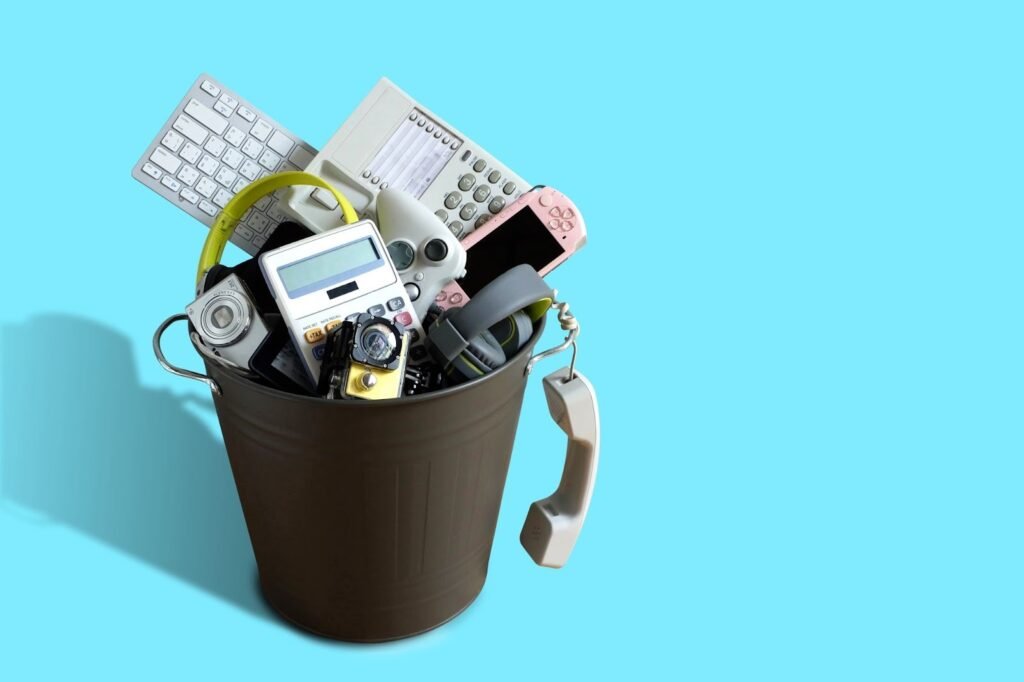
As someone who spends my days immersed in the architecture of microcontrollers and the potential of renewable energy, I’ve seen firsthand the incredible speed of innovation. We are living in a golden age of accessibility where high-performance electronics have become more affordable for everyone. But there’s a shadow following this progress. E-waste is now the fastest-growing waste stream on the planet, making up a staggering 70% of all toxic waste.
In my own hobby of building solar-powered drones, I’m constantly reminded that every component I choose has a lifecycle that extends far beyond its time in the air. We can’t just keep upgrading to the “next best thing” without a plan for the “old best thing”. When I look at the data like the fact that we generated over 53 million metric tons of e-waste in 2019 alone it’s clear that our current trajectory is unsustainable.
For me, electronic innovation must go hand-in-hand with environmental responsibility. It’s not just about making a device faster or more efficient; it’s about ensuring that once its primary life is over, it doesn’t end up leaching lead or mercury into our soil. We need to shift our mindset from a linear “take-make-waste” model to a truly circular economy.
E-waste recycling greatly reduces environmental impacts by diverting toxic materials from landfills and preventing harmful leachates from contaminating ecosystems. In 2019, approximately 53.6 million metric tons of e-waste were generated globally, exacerbating environmental toxicity. Recycling this electronic waste recovers valuable materials, saving energy and conservatively natural resources essential for production. Economically, the sector fosters job creation across various facets, including logistics, processing, and green job training programs. This growing field not only promotes sustainability but also enhances local economies through skilled labor opportunities. Further insights reveal how e-waste initiatives effectively combine environmental and economic benefits.
KEY TAKEAWAYS
- E-waste recycling prevents toxic materials from contaminating landfills and waterways, reducing environmental pollution and health risks.
- Recycling one million laptops saves energy equivalent to powering 3,657 households, demonstrating significant energy conservation.
- The e-waste recycling sector creates thousands of green jobs, enhancing local economies and workforce development through training programs.
- Recovered materials from e-waste reduce the need for new resource extraction, promoting a circular economy and lowering production costs.
- Community engagement and education increase participation in recycling initiatives, fostering responsible consumer behavior and environmental stewardship.
UNDERSTANDING E-WASTE
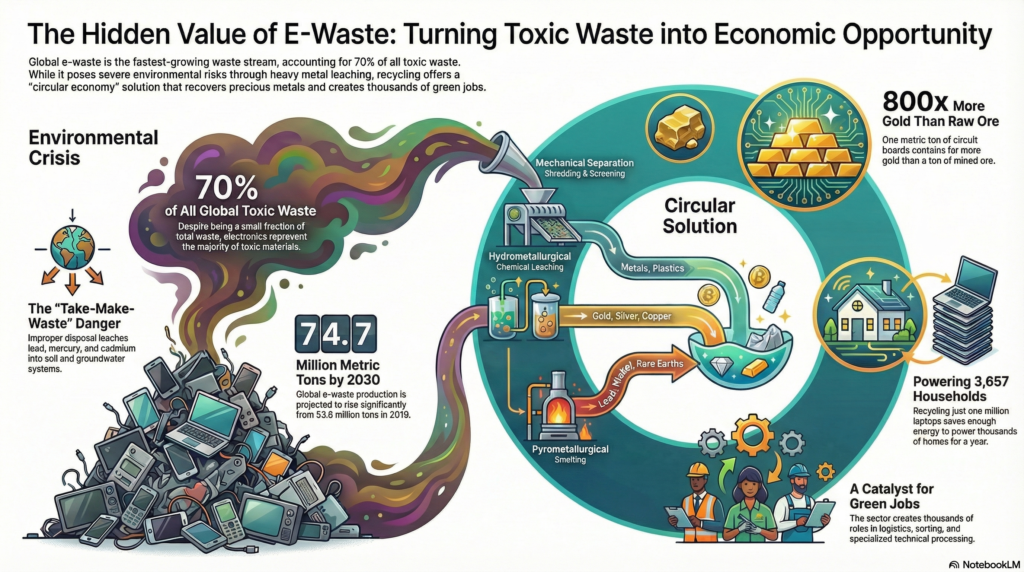
Electronics have also become more affordable, making them more accessible for people to buy and replace. As a result, e-waste is now the fastest-growing type of waste globally—amounting to 70% of all toxic waste. In an increasingly digital world, understanding e-waste—defined as discarded electrical and electronic devices—is essential for addressing both environmental and health challenges. E-waste encompasses a wide array of products, including computers, smartphones, and household appliances, all of which contribute to a growing global concern. According to the Global E-waste Monitor, approximately 53.6 million metric tons of e-waste were generated worldwide in 2019, with projections indicating an increase to 74.7 million metric tons by 2030. Such alarming e-waste statistics highlight the urgent need for effective management and recycling strategies.
E-waste definitions vary slightly across different jurisdictions, but they all encapsulate the idea of electronic devices that are no longer in use. This category not only includes items that are broken or obsolete but also those that are simply unwanted. The rapid technology advancement contributes to this growing waste stream, as consumers frequently upgrade to the latest devices, resulting in significant volumes of e-waste entering landfills.
The composition of e-waste is complex, containing both valuable materials such as gold, silver, and copper, as well as hazardous substances like lead and mercury. This duality presents unique challenges for waste management and recycling processes. By understanding what constitutes e-waste and recognizing its implications, individuals and organizations can take proactive measures to support effective electronic waste management, thereby fostering a more sustainable approach to technology consumption and disposal.
Environmental Risks of E-Waste
Each year, about 50 to 60 million tons of e-waste are generated, equivalent to only 2-3% of annual global waste. The environmental risks associated with e-waste are profound and multifaceted, stemming from the improper disposal and inadequate recycling of electronic devices. This growing issue is exacerbated by the presence of toxic materials found in many electronics, including lead, mercury, and cadmium, which pose significant health hazards to communities and ecosystems alike. When e-waste is improperly discarded, it often ends up in overcrowded landfills, leading to landfill overflow and the leaching of harmful substances into soil and groundwater, ultimately contributing to environmental degradation.
Moreover, illegal dumping of e-waste is a rampant problem in many regions, where the absence of stringent pollution control measures allows for the irresponsible disposal of these materials. This not only perpetuates resource depletion, as valuable metals and components are lost, but also increases the potential for environmental contamination. The reliance on outdated recycling technology further complicates the issue, as many facilities are ill-equipped to handle the diverse array of materials contained in electronic devices.
To combat these risks, heightened community awareness and consumer responsibility are essential. Individuals must recognize the impact of their electronic waste and make informed choices regarding disposal and recycling. Advocating for improved recycling methods and supporting legislation aimed at establishing better pollution control can lead to a safer, more sustainable future. Addressing the environmental risks of e-waste is not merely an ecological obligation; it represents a collective opportunity to foster a healthier planet for generations to come.
Benefits of E-Waste Recycling
E-waste recycling offers significant environmental protection benefits by reducing toxic substances from entering landfills and waterways, which can harm ecosystems and human health. Additionally, the recycling industry creates job opportunities in various sectors, from collection and processing to refurbishing and resale, thereby supporting local economies. As the demand for sustainable practices increases, the value of e-waste recycling becomes even more critical in fostering both environmental and economic resilience.
Environmental Protection Benefits
The U.S. Environmental Protection Agency (EPA) says, “One metric ton of circuit boards can contain 40 to 800 times the amount of gold and 30 to 40 times the amount of copper mined from one metric ton of ore in the United States.” These precious materials can be reclaimed through recycling. Recycling electronic waste plays an essential role in environmental protection by mitigating the harmful effects of toxic materials commonly found in discarded devices. E-waste contains hazardous substances such as lead, mercury, and cadmium that can leach into soil and waterways, posing considerable risks to ecosystems and human health. By employing sustainable practices in e-waste recycling, these materials can be safely processed and repurposed, greatly reducing environmental contamination.
Data indicates that improper disposal of e-waste contributes to more than 20% of toxic chemical releases globally, underscoring the urgent need for effective recycling initiatives. Additionally, recycling supports the conservation of valuable resources; for instance, recycling one million laptops can save the energy equivalent to the electricity used by 3,657 households in a year.
Promoting community awareness about the importance of e-waste recycling enhances participation and fosters responsible consumer behavior. By educating individuals on proper disposal methods and the benefits of recycling, communities can collectively go green by reducing electronic waste and supporting practices that promote long-term environmental sustainability. Overall, e-waste recycling not only protects our planet but also empowers individuals to engage in practices that promote a healthier, cleaner environment for future generations.
Job Creation Opportunities
A significant advantage of e-waste recycling lies in its potential to create numerous job opportunities across various sectors. The growing demand for e-waste recycling services has catalyzed the emergence of green jobs, which are integral to workforce development and the shift to sustainable industries. According to industry reports, the e-waste recycling sector can create thousands of jobs, from collection and sorting to dismantling and processing.
Community initiatives that focus on e-waste recycling not only promote environmental responsibility but also enhance local economies by fostering skills training programs. These programs equip individuals with the necessary skills to thrive in an evolving labor market, ensuring that workers can navigate new technological innovations. Additionally, as e-waste recycling centers expand, they open diverse career pathways, encouraging long-term employment opportunities.
Investing in e-waste recycling not only addresses environmental challenges but also serves as a catalyst for economic growth. By prioritizing sustainable practices, communities can harness the potential of e-waste recycling to drive job creation and bolster local economies, ultimately contributing to a more resilient and environmentally conscious society.
The Recycling Process Explained
The recycling process for e-waste involves several critical stages: collection and transportation, dismantling and sorting, followed by recovery and reprocessing. Each phase is essential for ensuring that valuable materials are extracted efficiently while minimizing environmental impact. Understanding these steps highlights the complexity and importance of responsible e-waste management in promoting sustainability.

COLLECTION AND TRANSPORTATION
In the lab, we often talk about “resource recovery” in abstract terms, but the physical reality is fascinating. Did you know that a single metric ton of circuit boards can contain up to 800 times more gold than a ton of raw ore mined here in the U.S.? To an engineer, that’s not just waste; it’s a high-grade urban mine. When we recycle, we aren’t just being “charitable” to the planet; we are reclaiming incredibly valuable materials like copper, silver, and rare earth elements that are essential for the next generation of green tech.
However, the process isn’t without its risks. Recent studies, like the HBM4EU assessment, show that workers in the recycling sector face real hazards from lead and cadmium exposure if proper engineering controls aren’t in place. This is where my passion for better design comes in. If we can improve automated dismantling using the robotic systems I’ve seen evolving in Singapore we can extract these materials more safely and efficiently.
This evolution also creates a massive opening for “green jobs”. We’re seeing a surge in demand for skilled professionals who understand both the hardware and the environmental regulations. By investing in these workforce development programs, we aren’t just cleaning up the environment; we are building a resilient, skilled economy.
Effective collection and transportation of e-waste are essential components of the recycling process, accounting for approximately 20-30% of the overall efficiency in e-waste management systems. The effectiveness of various collection methods greatly influences the volume and quality of recyclable materials. Common collection methods include drop-off centers, curbside pickups, and collection events, each tailored to enhance accessibility and encourage participation from consumers.
Transportation logistics play an essential role in ensuring that collected e-waste is efficiently and safely moved to recycling facilities. Factors such as route optimization, vehicle capacity, and compliance with environmental regulations must be carefully managed to minimize the carbon footprint associated with e-waste transport. Data-driven approaches, including geographic information systems (GIS), can be utilized to analyze collection patterns and optimize logistical operations.
Dismantling and Sorting
Following the successful collection and transportation of e-waste, the next phase in the recycling process involves dismantling and sorting the collected materials. This critical stage employs various dismantling techniques, aimed at efficiently separating valuable components from hazardous materials. Manual dismantling, often employed for complex devices, enables workers to identify and safely extract components such as circuit boards, batteries, and metals. Automated dismantling techniques, utilizing robotic systems and shredders, enhance efficiency and minimize the risk of exposure to toxic substances.
Once dismantled, effective sorting methods are employed to categorize the materials based on their composition. Advanced sorting technologies, including magnetic separation, eddy current separation, and optical sorting, facilitate the identification of metals, plastics, and glass. Data indicates that approximately 60% of e-waste can be recycled through effective sorting, considerably reducing landfill contributions and environmental impact.
This dismantling and sorting process not only maximizes resource recovery but also creates job opportunities within the recycling sector. By investing in these methods, communities can foster a more sustainable approach to e-waste management while empowering individuals through employment in a rapidly evolving industry.
Recovery and Reprocessing
Approximately 90% of the materials extracted during the dismantling and sorting phase can be effectively recovered and reprocessed in the recycling of e-waste. The recovery techniques employed in this process are critical, as they allow for the extraction of valuable resources while mitigating environmental harm. These techniques include mechanical separation, hydrometallurgical processing, and pyrometallurgical methods, each offering unique advantages.
The following table illustrates the various recovery techniques and their corresponding reprocessing methods:
| Recovery Technique | Reprocessing Method | Key Materials Recovered |
| Mechanical Separation | Shredding & Screening | Metals, Plastics |
| Hydrometallurgical | Chemical Leaching | Gold, Silver, Copper |
| Pyrometallurgical | Smelting | Lead, Nickel, Rare Earths |
| Manual Dismantling | Hand Separation | Circuit Boards, Batteries |
The reprocessing methods guarantee that the recovered materials are refined and purified, making them suitable for reintegration into the manufacturing cycle. This not only conserves natural resources but also supports economic growth by creating jobs in the recycling industry. Understanding these processes empowers individuals to advocate for sustainable e-waste management.
Economic Impact and Job Creation
Harnessing the potential of e-waste recycling not only addresses environmental challenges but also generates significant economic benefits and job creation. The e-waste recycling industry has emerged as a pivotal player in promoting sustainable practices while simultaneously fostering market growth. As technology innovation accelerates, the demand for skilled professionals dedicated to recycling operations has surged, necessitating extensive workforce development initiatives.
Legislative incentives at local, state, and federal levels have further catalyzed this growth, encouraging businesses to invest in e-waste recycling. These incentives often include tax breaks and grants for companies that adopt sustainable practices in their operations. In turn, this contributes to a robust circular economy, where valuable materials are recovered and reintroduced into the production cycle, reducing reliance on virgin resources.
Moreover, community engagement plays a critical role in shaping the success of e-waste recycling programs. By educating the public about the benefits of recycling electronic waste, communities can foster grassroots movements that promote sustainable behaviors. Skill training programs designed for workers in this sector are essential, ensuring that the workforce is equipped with the necessary competencies to meet the evolving demands of technology and recycling processes.
The economic benefits of e-waste recycling extend beyond environmental impact; they create jobs across various sectors, from logistics and processing to research and development. As the market continues to expand, the potential for job creation in e-waste recycling remains substantial, paving the way for a more sustainable and economically resilient future.
Case Studies in E-Waste Recycling
Numerous case studies around the world illustrate the effectiveness and impact of e-waste recycling initiatives. One notable example is the e-waste recycling program in Switzerland, which integrates innovative technologies and robust regulatory frameworks. This program has achieved a recycling rate of over 80% for electronic devices, showcasing the potential of effective policies and community engagement. The Swiss model emphasizes corporate responsibility, requiring manufacturers to take back and recycle products, thereby promoting a circular economy.
In India, the e-waste management initiative led by the Ministry of Electronics and Information Technology has fostered public-private partnerships to enhance recycling capabilities. This initiative not only addresses the burgeoning e-waste problem but also incorporates educational programs to raise consumer awareness about responsible disposal practices. By leveraging local communities, this program has created jobs while effectively diverting hazardous materials from landfills.
In the United States, the e-Stewards program exemplifies a commitment to sustainable e-waste management through responsible recycling practices, ensuring that e-waste does not end up in developing countries. This initiative has established standards for recyclers, promoting transparency and ethical practices in the industry.
These case studies underscore the importance of global initiatives that combine innovative technologies, regulatory frameworks, and community engagement. By fostering consumer awareness and promoting corporate responsibility, these programs not only mitigate environmental impact but also create economic opportunities, illustrating the multifaceted benefits of effective e-waste recycling strategies.
How to Recycle E-Waste Effectively
Effective e-waste recycling requires a systematic approach that incorporates best practices and informed decision-making. As the volume of electronic waste continues to rise, understanding how to recycle e-waste effectively is vital for both environmental sustainability and economic viability.
- Participate in Recycling Programs: Engage with local or national recycling programs that specialize in e-waste management to guarantee proper disposal.
- Consider E-Waste Donations: Donate functional devices to charities or organizations that refurbish and redistribute electronics to underserved communities.
- Stay Informed About Regulations: Familiarize yourself with local laws regarding e-waste disposal to avoid penalties and guarantee compliance.
To maximize the impact of e-waste recycling, individuals and businesses must prioritize responsible disposal practices. Many recycling programs offer drop-off locations and collection events, enhancing accessibility and convenience. It is essential to verify that these programs adhere to environmentally responsible methods, such as recovering valuable materials and preventing hazardous substances from entering landfills.
Moreover, e-waste donations present an opportunity to extend the life cycle of devices. By donating working electronics, we can reduce waste while providing valuable resources to those in need. This not only benefits the environment but also fosters community engagement and support. By making informed purchasing decisions and choosing eco friendly products, consumers can further reduce the environmental footprint of electronic devices while reinforcing the positive impacts of responsible e-waste recycling practices.
RELATED STUDIES ABOUT E-WASTE RECYCLING
E-waste recycling serves as an essential mechanism for mitigating environmental degradation while simultaneously fostering economic growth through job creation. As electronic devices reach the end of their life cycle, the act of recycling transforms potential environmental hazards into valuable resources. This process mirrors the natural cycle of a phoenix rising from ashes, where discarded materials are reborn into new products. In 2020 alone, the global e-waste recycling market was valued at approximately $49 billion, underscoring its significant impact on both the environment and the economy.
Hbm4eu E-Waste Study – Occupational Exposure Assessment To Chromium, Cadmium, Mercury And Lead During E-Waste Recycling
Objective:
This Europe-wide study aimed to assess occupational exposure to four toxic metals—chromium, cadmium, mercury, and lead—during electronic waste (e-waste) recycling, using harmonized biomonitoring and industrial hygiene methods.
Study Design:
- Participants: 195 e-waste workers from 8 European countries, compared to 73 control workers.
- Worker Categories: Lead battery, white goods, brown goods, metals/plastics, and miscellaneous recycling.
- Samples Collected: Blood, urine, hair, personal air, hand wipes, and settled dust.
- Analyses: Metal concentrations were measured using ICP-MS, GFAAS, and standardized industrial hygiene methods.
Key Findings:
- Lead Exposure is Widespread and Concerning
- Lead exposure was elevated across all five e-waste categories, with the highest levels in lead battery workers.
- Blood lead levels exceeded the newly proposed EU Biological Limit Value (BLV) of 150 µg/L in 13% of workers, particularly in battery recycling.
- Airborne lead levels often exceeded the proposed occupational exposure limit (OEL) of 3 µg/m³, especially in battery recycling.
- Strong correlations were found between external (air, wipes) and internal (blood, urine, hair) lead biomarkers, indicating inadequate protection.
- Cadmium Exposure is Present but Lower
- Cadmium levels in blood and urine were elevated compared to controls but generally below current BLVs.
- Smoking significantly contributed to cadmium levels, but occupational exposure was also evident.
- Airborne cadmium exceeded the OEL (1 µg/m³) in some workers, particularly in white goods, brown goods, and metals/plastics recycling.
- Mercury Exposure is Limited
- Mercury exposure was low overall, with some elevated urine levels in brown goods workers (e.g., those handling screens and bulbs).
- No results exceeded health-based limit values.
- Dietary seafood consumption influenced urinary mercury levels, complicating occupational assessment.
- Chromium Exposure is Minimal
- Urinary and blood chromium levels were generally low and comparable to background populations.
- Air sampling indicated higher total chromium in lead battery workers, but could not distinguish between less toxic Cr(III) and hazardous Cr(VI).
- Hair as a Biomarker
- Hair analysis supported findings for lead and cadmium but was less reliable for mercury at low exposure levels due to dietary influence.
- Hair is not yet a standardized matrix for occupational biomonitoring of these metals except mercury.
Conclusions:
- Lead is the primary occupational health concern in European e-waste recycling, with current control measures insufficient.
- Cadmium and mercury show measurable but lower occupational exposure, requiring continued monitoring.
- Chromium exposure appears well-controlled in the studied settings.
- Urine may serve as a supplementary biomarker for lead exposure given its strong correlation with blood lead.
- Improved protective measures, regular biomonitoring, and adherence to upcoming stricter OELs/BLVs are urgently needed, especially for lead and for protecting female workers of reproductive age.
Implications:
As e-waste volumes grow under the Circular Economy Action Plan, this study underscores the need for enhanced exposure assessments, better engineering controls, personal protective equipment, and ongoing biomonitoring to safeguard worker health. Future studies should expand to include other emerging metals like lithium, cobalt, and nickel.
| Elizabeth Leese, Jelle Verdonck, Simo P. Porras, Jaakko Airaksinen, Radu C. Duca, Karen S. Galea, Lode Godderis, Beata Janasik, Selma Mahiout, Carla Martins, Inese Mārtiņsone, Maria Mirela Ani, An van Nieuwenhuyse, Paul T.J. Scheepers, Maria João Silva, Susana Viegas, Tiina Santonen, Kukka Aimonen, Lāsma Akūlova, Adam Clarke, Matteo Creta, Maurice van Dael, Thomas Göen, Martien Graumans, Emilie Hardy, Kate Jones, Lisbeth E. Knudsen, Laura Komarovska, Sirpa Laitinen, Henriqueta Louro, Linda Matisāne, Ana Nogueira, Linda Paegle, Hermínia Pinhal, Katrien Poels, Tiina Rantio, Jouko Remes, Sílvia Santos, Anita Seile, Erik Smolders, Ana Maria Tavares, Marjo Vänskä, Riitta Velin, Wojciech Wasowicz, HBM4EU E-Waste Study – Occupational Exposure Assessment to Chromium, Cadmium, Mercury and Lead During E-Waste Recycling., Environmental Research, 2025, 121892, ISSN 0013-9351, https://doi.org/10.1016/j.envres.2025.121892. (https://www.sciencedirect.com/science/article/pii/S0013935125011430) |
Understanding Household Hesitancy: Analysis Of E-Waste Recycling Application Adoption Among Indian Recyclers
Objective:
This study investigates the factors that encourage the adoption of mobile applications for electronic waste (e-waste) recycling among Indian households, focusing on both psychological and functional enablers within the Theory of Planned Behavior (TPB) framework.
Study Design:
- Framework: Extended Theory of Planned Behavior (TPB).
- Method: Survey of 271 Indian respondents already engaged in some form of e-waste recycling.
- Analysis: Partial Least Squares Structural Equation Modeling (PLS-SEM).
- Variables:
- Functional Enablers: Ease of Use, Perceived Value, Perceived Trust & Security.
- Psychological Enablers: Positive Social Influence, Cultural Fit.
- TPB Constructs: Attitude, Subjective Norms, Perceived Behavioral Control (PBC), Recycling Intention, Actual Recycling Behavior.
Key Findings:
- Significant Enablers of Positive Attitude:
- Positive Social Influence (β = 0.466) and Cultural Fit (β = 0.339) were the strongest psychological drivers of a positive attitude toward recycling apps.
- Perceived Value (β = 0.303) and Perceived Trust & Security (β = 0.177) were significant functional enablers.
- Ease of Use was not a significant predictor (β = 0.156, p = 0.051), suggesting usability is secondary to value, trust, and social acceptance.
- Drivers of Recycling Intention and Behavior:
- Attitude (β = 0.219) and Perceived Behavioral Control (β = 0.410) significantly predicted recycling intention.
- Subjective Norms had no significant effect (β = 0.054, p = 0.578), indicating social pressure alone does not drive intention.
- Recycling Intention strongly predicted Actual Recycling Behavior (β = 0.537), confirming the intention-behavior link.
- Key Insight:
Adoption is driven more by personal motivation, perceived benefits, and self-efficacy than by social pressure or mere ease of use. Apps that align with cultural norms, offer tangible value, and ensure security are more likely to be adopted.
Implications:
- For Policymakers & App Developers:
- Design culturally adaptive apps that resonate with local disposal practices.
- Emphasize transparency, data security, and verified recycling partners to build trust.
- Offer financial incentives and clear environmental benefits to enhance perceived value.
- Use community-driven campaigns and social proof (e.g., influencer endorsements) rather than relying on normative pressure.
- For Theory:
- Extends TPB by integrating functional and psychological enablers.
- Challenges the overemphasis on subjective norms and ease of use in technology adoption models for sustainability contexts.
Conclusion:
To boost e-waste recycling app adoption in India, interventions should prioritize building trust, demonstrating value, ensuring cultural relevance, and enhancing users’ sense of control. By focusing on these enablers—rather than just overcoming barriers—stakeholders can more effectively promote sustainable recycling behaviors and support circular economy goals.
| Saurabh Verma, Rohit Yadav, Herlandi De Souja Andrade, Sunil Kumar Yadav, Understanding household hesitancy: Analysis Of E-waste recycling application adoption among indian recyclers, Cleaner Waste Systems, Volume 11, 2025, 100265, ISSN 2772-9125, https://doi.org/10.1016/j.clwas.2025.100265. (https://www.sciencedirect.com/science/article/pii/S2772912525000636) |
Unlocking The Enigma: Navigating American Passivity In E-Waste Recycling Through Push-Pull Mooring Insights
This study investigates why U.S. consumers, despite participating in general recycling, remain passive toward e-waste recycling. It applies the Push-Pull-Mooring (PPM) framework and Regulatory Focus Theory (RFT) to understand the behavioral drivers and barriers influencing the switch from passive to active e-waste recycling.
Key Findings
- Push Factors (Drive away from current behavior):
- Moral obligation and electronic product obsolescence significantly increase switching intention.
- Occupying space was not a significant factor.
- Pull Factors (Attract toward recycling):
- Environmental awareness and perceived coolness strongly predict switching intention.
- Financial benefits were not significant.
- Mooring Factors (Barriers to change):
- Low convenience, knowledge gap, and information privacy concerns significantly reduce switching intention.
- Lack of critical mass was not significant.
- Moderating Role of Regulatory Focus:
- Promotion-focused individuals (oriented toward gains) are influenced by environmental awareness, coolness, and knowledge gap.
- Prevention-focused individuals (oriented toward avoiding losses) are influenced by moral obligation and privacy concerns.
- Product obsolescence influenced both groups positively.
Methodology
- Sample: 225 students from a large U.S. public university.
- Analysis: Structural Equation Modeling (AMOS 28) and multi-group analysis.
- Model Fit: Excellent (R² = 69.5% for switching intention).
Theoretical Contributions
- Introduces PPM theory to e-waste recycling, framing it as a behavioral switching process rather than mere adoption.
- Integrates RFT to show how regulatory focus moderates the impact of PPM factors.
- Provides a robust model explaining 69.5% of variance in switching intention—higher than prior adoption-focused studies.
Practical Implications
- Policy & Campaigns:
- Federal e-waste legislation and nationwide awareness campaigns are needed.
- Messaging should link e-waste recycling with environmental benefits and coolness, especially for younger generations.
- Industry Actions:
- Implement extended producer responsibility and take-back programs.
- Offer secure data-wiping services to address privacy concerns.
- Targeted Strategies:
- Tailor communications based on regulatory focus (e.g., gain-framed messages for promotion-focused, loss-avoidance for prevention-focused).
Limitations & Future Research
- Sample limited to university students; may not generalize to broader populations.
- Cross-sectional design; longitudinal studies are needed.
- Future research should explore socio-economic factors and business e-waste behaviors (e.g., cloud data storage).
Conclusion
The study successfully identifies key psychological and contextual factors influencing U.S. consumers’ transition to e-waste recycling. By applying PPM and RFT, it offers a nuanced understanding of behavioral switching and provides actionable insights for policymakers, educators, and industry leaders to enhance e-waste recycling participation.
| REFERENCE: Chad Anderson, Younghwa Lee, Unlocking the enigma: Navigating American passivity in e-waste recycling through push-pull mooring insights, Journal of Cleaner Production, Volume 508, 2025, 145554, ISSN 0959-6526, https://doi.org/10.1016/j.jclepro.2025.145554. (https://www.sciencedirect.com/science/article/pii/S0959652625009047) |
CONCLUSION
When I’m out on the weekends capturing sustainable architecture through my lens, I often think about the legacy we’re leaving behind. Is it going to be a mountain of discarded silicon and plastic, or a streamlined system where nothing is truly “lost”? Real e-waste recycling is about more than just tossing a phone into a bin; it’s about a systematic commitment to the planet. We have seen successful models, like the Swiss program that hits an 80% recycling rate, proving that when manufacturers take responsibility, the system works.
I encourage everyone to look at their devices differently. Whether it’s choosing eco-friendly products from the start or ensuring your old laptop finds a second life through donation, these actions matter. We’ve seen that personal motivation and a sense of “environmental coolness” can be powerful drivers for change.
For me, the ultimate goal is to design electronics that are as harmonious with nature as the solar-powered systems I research. We have the tools, the technology, and now we need the collective will to ensure that our digital future doesn’t come at the cost of our physical one. Let’s make sure our innovation leaves a legacy of ingenuity, not a pile of toxic dust.