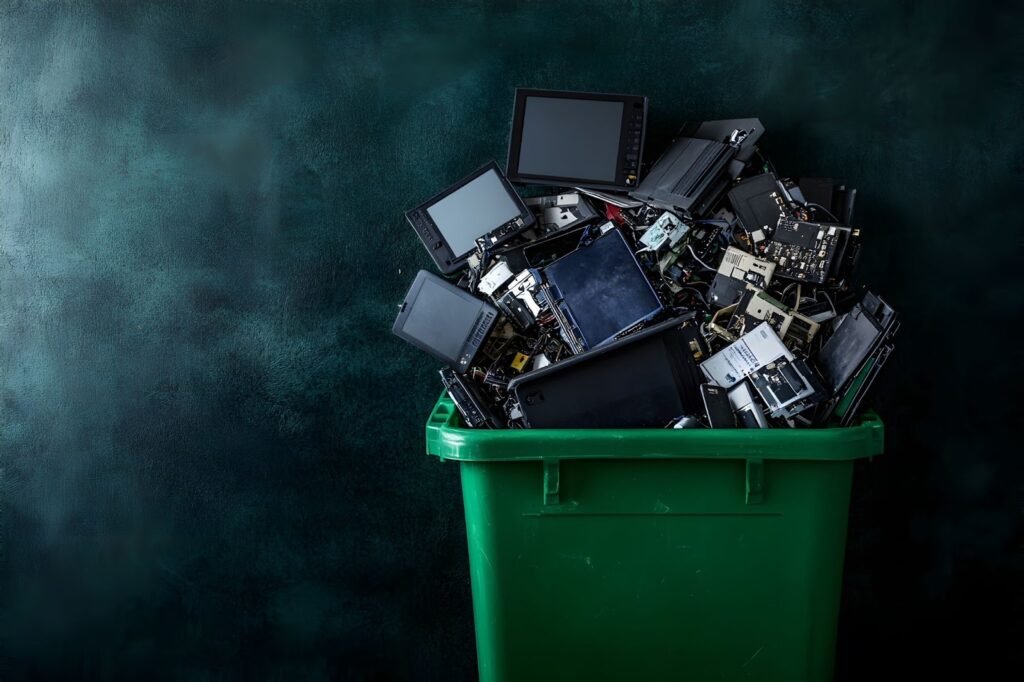
As an engineer who has spent years researching the intersection of circuit design and environmental impact, I’ve seen firsthand how the “brilliant” gadgets we create today often become the toxic legacy of tomorrow. In my workshop, I frequently experiment with solar-powered gadgets and woodworking using reclaimed materials, which has given me a deep appreciation for the inherent value in what most people call “trash”.
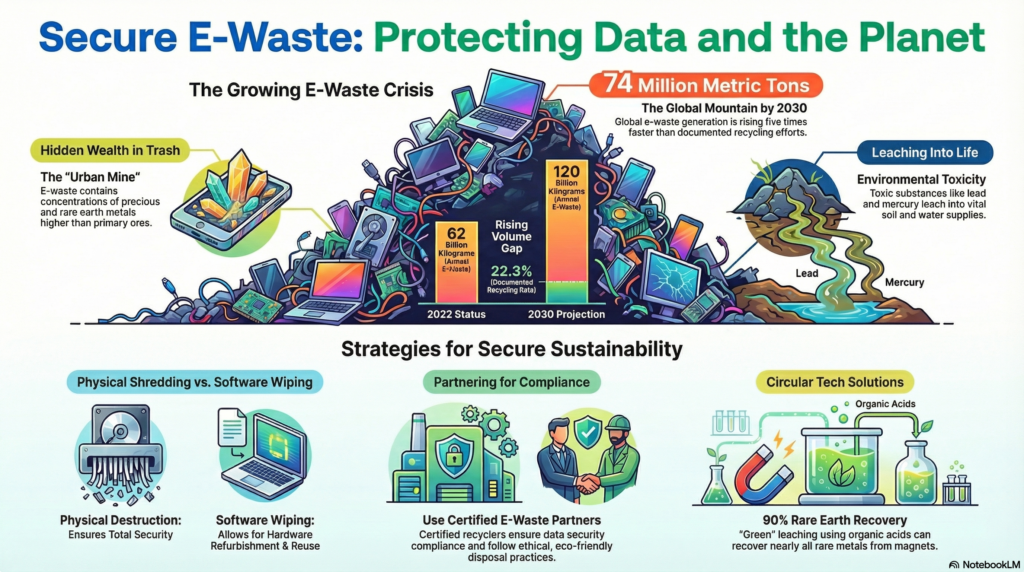
We are currently facing an e-waste crisis where the sheer volume of discarded electronics is rising five times faster than our ability to document its recycling. By 2030, we are looking at a global mountain of 74 million metric tons of electronic waste. This isn’t just a logistics problem; it’s a design failure and a significant risk to human health, as toxic substances like lead and mercury leach into our vital soil and water supplies.
When we treat an old smartphone as a disposable item, we aren’t just tossing plastic; we are throwing away high-concentrations of precious, base, and rare earth metals that are increasingly scarce. My goal is to help you see e-waste not as a burden, but as a secondary resource, an “urban mine” that we must learn to navigate with both security and sustainability in mind.
Secure e-waste solutions are essential for safeguarding sensitive data while fostering environmental sustainability. As e-waste continues to rise, the risks of inadequate data protection can lead to severe financial and reputational damage. Employing effective data destruction methods—such as physical shredding and software data wiping—ensures irretrievable erasure of sensitive information. Partnering with certified e-waste recyclers promotes eco-friendly practices and compliance with regulations. Innovative disposal technologies and community education enhance recycling efficiency and awareness. By adopting best practices, individuals and organizations can effectively manage e-waste, contributing to both data security and planetary health. More insights await those who explore further.
KEY TAKEAWAYS
- Implement certified e-waste recycling partners to ensure responsible disposal and data security compliance.
- Utilize effective data destruction methods like shredding, degaussing, or software wiping to safeguard sensitive information.
- Educate consumers on proper e-waste disposal and data wiping techniques to reduce environmental impact.
- Support local e-waste initiatives and choose brands committed to sustainable practices for a healthier planet.
- Adopt innovative technologies such as automated sorting and refurbishing to enhance recycling efficiency and promote a circular economy.
UNDERSTANDING E-WASTE RISKS
E-waste, estimated to reach 74 million metric tons globally by 2030, poses significant risks to both human health and the environment. As electronic devices become increasingly ubiquitous, the improper disposal of such items leads to a growing crisis that necessitates heightened e-waste awareness. The health impacts of e-waste are profound, as toxic substances like lead, mercury, and cadmium can leach into soil and water supplies, causing serious health risks to communities, particularly vulnerable populations. According to the UN’s Global E-waste Monitor 2020, a record 53.6 million metric tonnes of e-waste was generated worldwide in 2019. That’s an increase of 21% in just five years. National Geographic reported that the average American family throws away 400 iPhones worth of e-waste a year.
Moreover, the environmental consequences of e-waste are far-reaching. The accumulation of discarded electronics contributes to pollution, habitat destruction, and resource depletion. These factors underscore the urgent need for regulatory compliance to guarantee that e-waste is managed responsibly. Governments and organizations must enact and enforce regulations that promote sustainable practices in electronic waste disposal and recycling to reduce environmental harm and protect public health.
Consumer education plays a pivotal role in mitigating the risks associated with e-waste. By informing individuals about proper disposal methods and the importance of recycling, communities can take proactive measures to reduce their environmental footprint. Enhanced consumer awareness not only fosters responsible behavior but also empowers individuals to advocate for policies that prioritize eco-friendly practices.
Importance of Data Security
The safeguarding of sensitive information has become a paramount concern in the context of e-waste management. As organizations increasingly rely on technology, the potential for data breaches and privacy concerns escalates, necessitating a robust approach to data security. Inadequate measures can expose sensitive information, leading to severe repercussions, including financial losses and damage to reputation.
To effectively mitigate risks associated with e-waste, organizations should focus on several critical aspects:
- Compliance Regulations: Adhering to relevant laws and standards guarantees the protection of sensitive data, reducing the likelihood of legal penalties.
- Organizational Policies: Establishing clear data handling and disposal policies is crucial in guiding employees on best practices for data security.
- Employee Training: Regular training programs educate employees about potential risks, insider threats, and how to recognize and respond to security incidents.
- Risk Assessments: Conducting thorough assessments helps identify vulnerabilities in data management processes, allowing organizations to implement necessary safeguards.
Moreover, managing digital footprints in cloud storage environments has emerged as an essential practice. Organizations must be vigilant in monitoring data access and implementing incident response strategies to address potential breaches swiftly.
Prioritizing data security within e-waste solutions not only protects sensitive information but also reinforces trust with clients and stakeholders, fostering a culture of transparency and responsibility. As the landscape of technology evolves, remaining proactive in data security will be crucial for sustainable growth and freedom in a digital age.
Effective Data Destruction Methods
Effective data destruction is vital in safeguarding sensitive information during the e-waste disposal process. Two primary methods employed for ensuring data security are physical destruction techniques, which render devices unusable, and software data wiping, which systematically erases data from storage media. Analyzing the strengths and limitations of each approach is essential for determining the most appropriate strategy for different scenarios. Electronics also contain valuable non-renewable resources including gold, silver, copper, platinum, aluminium and cobalt. This means when we dispose of them without recycling, we are throwing away precious materials.
Physical Destruction Techniques
In an era where data breaches and information theft pose significant risks, the physical destruction of electronic devices emerges as a vital strategy for safeguarding sensitive information. Employing effective physical destruction techniques guarantees that data cannot be recovered, providing peace of mind for organizations and individuals alike.
Here are four notable methods of physical destruction:
- Mechanical Shredding: This method involves using high-powered shredders to reduce devices to small fragments, making data recovery virtually impossible.
- Thermal Incineration: By incinerating electronic waste, this method utilizes high temperatures to completely destroy the components, including any residual data.
- Electromagnetic Degaussing: This technique disrupts the magnetic fields on storage devices, effectively erasing data, though it requires specialized equipment.
- Physical Disassembly: This involves manually dismantling devices, followed by crushing or drill penetration to guarantee that sensitive components are irrevocably destroyed.
Employing these methods, particularly safe shredding and incineration methods, plays a vital role in maintaining data security while also contributing to environmentally responsible e-waste management.
Software Data Wiping
When it comes to ensuring data security, software data wiping serves as an essential alternative to physical destruction methods. This approach effectively eliminates the digital footprints of sensitive information, thereby safeguarding data integrity and mitigating risks of unauthorized data recovery. Utilizing advanced software solutions, organizations can adhere to compliance standards and industry regulations that mandate secure data disposal.
Software data wiping employs various encryption methods to overwrite existing data on storage devices, ensuring that the original information becomes irretrievable. This process not only protects proprietary and personal information but also supports eco-friendly e-waste management practices by extending the lifespan of hardware.
User awareness is vital in this scenario; organizations must educate employees on the significance of using certified software solutions for data wiping. Inadequate practices can lead to severe data breaches, undermining the very compliance standards designed to protect sensitive information. By implementing robust software data wiping protocols, businesses can confidently dispose of outdated equipment while maintaining compliance and safeguarding their reputations. Consequently, software data wiping emerges as a pragmatic and responsible method for effective data destruction in today’s digital landscape.
Eco-Friendly E-Waste Recycling
From my perspective in the research lab, the technical challenge of e-waste is twofold: we must destroy the data, but we must save the materials. When I talk to colleagues about data destruction, there’s often a tension between digital security and the circular economy. Physical destruction techniques like mechanical shredding or thermal incineration are incredibly effective at making data recovery impossible.
However, as someone who advocates for recyclable circuit boards, I find it heartbreaking to see valuable non-renewable resources like gold, silver, and cobalt reduced to dust that is harder to recover. This is why I am such a strong proponent of software data wiping and refurbishing whenever possible. Software wiping systematically erases data using encryption methods to overwrite existing information, which allows the hardware itself to remain intact and its lifespan to be extended.
Of course, for highly sensitive components, I’ve been known to use a drill myself to ensure physical disassembly. We are also seeing incredible innovations in the field, such as using organic acids like citric acid for “green” leaching of rare earth elements, or even creating activated carbon from waste lemon peels to remove lead from e-waste bioleachate. These are the kinds of circular economy practices that make me optimistic about the future of green electronics.
As our reliance on electronic devices continues to grow, the challenge of managing e-waste becomes increasingly important. Eco-friendly e-waste recycling is essential not only for mitigating environmental impact but also for fostering a circular economy that promotes sustainable materials and resource recovery. In this situation, consumer awareness and regulatory compliance are vital to guarantee that e-waste recycling is carried out responsibly, minimizing environmental harm while maximizing material recovery.
To navigate the complexities of eco-friendly e-waste recycling, consider the following key aspects:
- Lifecycle Assessment: Understanding the lifecycle of electronic products helps identify opportunities for improvement in design and recycling processes, ultimately minimizing waste.
- Green Technologies: The adoption of innovative technologies can enhance e-waste recycling efficiency, making the process more environmentally friendly and economically viable.
- E-Waste Legislation: Regulatory compliance ensures that organizations adhere to e-waste legislation, safeguarding both the environment and public health.
- Community Initiatives: Engaging local communities in e-waste recycling efforts fosters awareness and encourages participation in sustainable practices.

CHOOSING CERTIFIED E-WASTE PARTNERS
Selecting certified e-waste partners is a fundamental step in guaranteeing responsible recycling practices. Certification standards serve as benchmarks that validate a partner’s commitment to ethical practices and industry compliance. Engaging with certified entities not only mitigates the risk of data breaches but also enhances the environmental impact of e-waste disposal.
A rigorous partner evaluation process is essential. Prospective vendors should be assessed through thorough risk assessments, focusing on their audit processes and adherence to established certification standards. This scrutiny guarantees that they employ responsible recycling methods while safeguarding sensitive data. Additionally, reviewing service agreements can clarify the scope of services provided, thereby fostering transparency in operations.
Vendor reputation must not be overlooked. Investigating customer reviews can provide insights into a partner’s reliability and ethical practices. Positive testimonials often indicate a track record of successful compliance with industry standards, while negative feedback may uncover potential risks associated with data security or environmental negligence.
Ultimately, choosing certified e-waste partners is not merely a matter of compliance; it reflects a commitment to sustainability and responsible citizenship. By prioritizing partnerships that adhere to rigorous certification standards, organizations not only protect their data but also contribute to a collective effort to minimize the ecological footprint of e-waste. This dual focus on data security and environmental stewardship is essential in today’s increasingly digital landscape, where the consequences of neglecting either can be profound.
Innovative Disposal Technologies
Innovative disposal technologies are transforming the landscape of e-waste management, offering new methods that enhance efficiency and sustainability. As businesses and consumers increasingly recognize the importance of responsible e-waste disposal, these technologies are paving the way for a more circular economy. The integration of smart recycling initiatives and advanced shredding techniques allows for greater recovery of valuable materials while minimizing environmental impact.
Key innovative technologies include:
- Automated Sorting: Utilizing AI and machine learning, automated sorting systems can efficiently categorize electronic waste, ensuring that recyclable components are separated from non-recyclable materials.
- Electronic Refurbishing: This process focuses on restoring used electronic devices to their original or better condition, extending their lifespan and reducing the demand for new products.
- Biodegradable Materials: The development of biodegradable components in electronic products supports zero waste initiatives by ensuring that materials decompose naturally, reducing landfill contributions.
- Energy Efficient Disposal: Advanced methods for e-waste disposal minimize energy consumption and emissions, contributing to a more sustainable waste management framework.
Incorporating these innovative technologies into e-waste management not only enhances recycling efforts but also aligns with global sustainability goals. By embracing these advancements, businesses and consumers can contribute to a circular economy, reduce their environmental footprint, and participate in a movement toward responsible electronic waste management. The future of e-waste disposal lies in these technologies, promising a cleaner, greener planet.
Best Practices for Consumers
According to the UN’s recent Global E-Waste Monitor Report, “The world’s generation of electronic waste is rising five times faster than documented e-waste recycling.” The report estimates that in “only 12 years, the amount of e-waste generated per year worldwide almost doubled, to 62 billion kilograms in 2022. It is projected to increase to 120 billion kilograms in 2030.” Most of the e-waste ends up in landfills, as currently, only 22.3% of e-waste is collected and recycled. As consumers increasingly seek to manage their electronic waste responsibly, understanding best practices is crucial. Implementing proper data wiping techniques guarantees personal information remains secure, while engaging with responsible recycling programs can greatly mitigate environmental impact. Additionally, selecting secure disposal options further enhances the effectiveness of e-waste management strategies.
Proper Data Wiping Techniques
When it comes to disposing of electronic devices, consumers must prioritize the effective wiping of personal data to mitigate the risk of identity theft and unauthorized access. Adhering to proper data wiping techniques not only protects individual privacy but also aligns with emerging privacy regulations. Here are four best practices for consumers:
- Use Specialized Software: Employ reputable data-wiping software that conforms to recognized standards, ensuring thorough data destruction that prevents recovery.
- Multiple Passes: For added security, perform multiple overwrite passes. A single pass may not suffice against sophisticated data recovery techniques, so aim for at least three passes.
- Physical Destruction: In cases of highly sensitive data, consider physically destroying the storage medium. Shredding or incinerating drives guarantees that data cannot be recovered.
- Verify Wiping Success: After data wiping, use recovery tools to confirm that no recoverable data remains. This step is essential for maintaining your privacy and security.
Responsible Recycling Programs
Participating in responsible recycling programs is essential for consumers aiming to reduce electronic waste and minimize environmental impact. These programs not only facilitate proper disposal but also promote sustainability practices that benefit communities. By engaging in local partnerships, consumers can support corporate responsibility initiatives aimed at fostering educational initiatives and increasing public awareness about e-waste. Additionally, supporting brands that prioritize sustainability and design eco friendly products encourages responsible manufacturing practices while reducing the overall environmental impact of electronic devices.
The following table illustrates best practices for responsible recycling:
| Best Practice | Description | Benefits |
| Community Engagement | Participate in local e-waste drives | Strengthens community ties and collective action |
| Corporate Responsibility | Choose brands with sustainable practices | Supports ethical manufacturing and disposal |
| Educational Initiatives | Attend workshops on e-waste recycling | Enhances consumer knowledge and awareness |
| Regulatory Compliance | Follow local e-waste regulations | Guarantees safe and legal disposal methods |
As technology advancements continue to evolve, consumer education becomes paramount. Understanding regulatory compliance and the environmental impact of electronic waste empowers individuals to make informed choices. By embracing these responsible recycling practices, consumers contribute to a healthier planet while promoting a culture of sustainability.
Secure Disposal Options
Ensuring the secure disposal of electronic devices is critical for protecting sensitive information and reducing the risk of data breaches. As consumers, adopting best practices for secure disposal not only safeguards personal data but also contributes to environmental sustainability. Here are four key strategies to evaluate:
- Utilize Secure Collection Programs: Engage with local initiatives that offer secure collection services for e-waste, ensuring compliance with regulatory standards.
- Prioritize Responsible Disposal: Select certified e-waste recyclers who adhere to environmentally responsible practices and promote recycling incentives, thereby minimizing the ecological footprint.
- Foster Community Awareness: Participate in public education campaigns that highlight the importance of secure e-waste disposal, encouraging others to act responsibly.
- Advocate for Corporate Responsibility: Support businesses that implement secure disposal methods and demonstrate a commitment to environmental stewardship, enhancing overall community health.

RELATED STUDIES ABOUT SECURE E-WASTE SOLUTIONS
In the landscape of electronic waste, safeguarding sensitive data serves as a shield against potential breaches while simultaneously nurturing the earth. The convergence of effective data destruction methods and eco-friendly recycling practices illuminates a pathway toward sustainable disposal. Certified e-waste partners emerge as guardians of both information integrity and environmental health, employing innovative technologies that transform discarded devices into valuable resources. This dual commitment to security and sustainability fosters a harmonious balance, ensuring a cleaner planet and protected data.
Can E-Waste Recycling Provide A Solution To The Scarcity Of Rare Earth Metals? An Overview Of E-Waste Recycling Methods
This comprehensive review examines the potential of electronic waste (e-waste) recycling as a sustainable solution to address the growing scarcity and supply risks of Rare Earth Elements (REEs). REEs are critical for modern electronics, renewable energy technologies, and various industrial applications, but their primary mining is environmentally damaging, geopolitically concentrated, and resource-intensive. The study argues that e-waste represents a significant secondary resource, or “urban mine,” for these valuable metals.
Key Findings:
- The E-Waste Challenge and Opportunity: Global e-waste generation is rising rapidly (expected to reach ~75 million tonnes by 2030), posing severe environmental and health risks due to its hazardous content (e.g., heavy metals, brominated flame retardants). However, this waste stream contains precious, base, and rare earth metals at concentrations often higher than in primary ores. For instance, printed circuit boards (PCBs) can contain metals making up to 40% of their weight.
- Current Recycling Technologies: The review details the dominant methods for metal recovery:
- Pyrometallurgy: Involves high-temperature processes like smelting and incineration. While effective for bulk recovery and treating complex waste, it is energy-intensive, emits toxic gases, and often loses REEs in slag.
- Hydrometallurgy: Involves leaching metals using chemical solutions, followed by recovery via solvent extraction, precipitation, or electrochemical methods. This approach is generally more selective, has lower energy consumption, and is better suited for REE recovery, but it can generate toxic wastewater and sludge.
- The review also highlights emerging techniques like solvometallurgy (using non-aqueous solvents) and adsorption using Metal-Organic Frameworks (MOFs), which offer potential for higher selectivity and lower environmental impact.
- The Promise of Organic Acids: A significant focus is placed on using organic acids (e.g., citric, oxalic acids) as environmentally benign leaching agents. They can achieve >90% recovery rates for REEs from certain e-wastes like magnets and batteries, presenting a greener alternative to traditional inorganic acids.
- Lifecycle Assessment (LCA) Contradictions: LCA studies on REE recovery from secondary sources show mixed results. Some indicate that recycling can have higher environmental impacts than primary production for specific metals in low-concentration wastes (e.g., Gallium in LEDs). However, most evidence suggests that recovery from secondary sources generally reduces the environmental burden compared to virgin mining.
- Gaps and Recommendations: Major challenges remain, including:
- The lack of processes specifically designed for low-concentration REEs in diverse e-waste streams.
- The need for integrated processes that recover REEs alongside base and precious metals to be economically viable.
- The necessity for more stringent and consistently enforced e-waste legislation.
- The requirement for further research into hybrid pyro-hydrometallurgical processes, novel separation techniques for individual REEs, and scaling up lab-scale innovations.
Conclusion:
E-waste recycling holds substantial promise for mitigating REE scarcity and advancing a circular economy. Hydrometallurgy, particularly with the use of greener leaching agents like organic acids, is identified as a mature and efficient pathway. However, no single technology is a standalone solution. Future progress depends on developing cost-effective, integrated recycling systems that are both technologically robust and environmentally sustainable, supported by strong policy frameworks and continued research into next-generation recovery methods.
| REFERENCE: Sai Sree Varsha Vuppaladadiyam, Bennet Sam Thomas, Chandan Kundu, Arun K. Vuppaladadiyam, Huabo Duan, Sankar Bhattacharya, Can e-waste recycling provide a solution to the scarcity of rare earth metals? An overview of e-waste recycling methods, Science of The Total Environment, Volume 924, 2024, 171453, ISSN 0048-9697, https://doi.org/10.1016/j.scitotenv.2024.171453. (https://www.sciencedirect.com/science/article/pii/S0048969724015948) |
Lemon Peel Activated Carbon: A Sustainable Solution For Lead Ion Removal From E-Waste Bioleachate
This study presents an innovative, sustainable approach to treating hazardous electronic waste (e-waste) by developing an effective adsorbent from agricultural waste. The research focuses on creating Lemon peel Activated Carbon (LAC) for the removal of toxic lead ions (Pb²⁺) from bioleachates of waste printed circuit boards (PCBs).
Key Findings:
- Sustainable Material Synthesis: LAC was successfully produced via thermal activation of waste lemon peels, a readily available and low-cost agricultural byproduct. This process represents a circular economy approach, valorizing waste into a valuable remediation tool.
- Effective Lead Removal: Under optimized conditions (pH 6, 0.25 g adsorbent dose, 30-minute contact time), LAC achieved an impressive 89.16% removal efficiency of lead ions from e-waste bioleachate. This performance is competitive with Commercial Activated Carbon (CAC), despite LAC having a lower specific surface area (603.7 m²/g vs. 990 m²/g for CAC).
- Material Characterization: Comprehensive analysis confirmed LAC’s suitability as an adsorbent:
- High Carbon Content: LAC comprised 75.82% carbon.
- Porous Structure: SEM imaging revealed a highly porous morphology conducive to adsorption.
- Functional Groups: FTIR spectroscopy identified key surface functional groups (e.g., carboxylate, hydroxyl) that facilitate lead ion binding through electrostatic interactions and complexation.
- Adsorption Mechanism & Kinetics: The adsorption process was best described by the pseudo-second-order kinetic model and the Langmuir isotherm model (R² = 0.9879), indicating chemisorption and monolayer adsorption on a homogeneous surface. The maximum adsorption capacity (Qm) was calculated to be 29.98 mg/g.
- Regeneration Potential: LAC demonstrated promising reusability, maintaining over 75% removal efficiency through three adsorption-desorption cycles using 3M nitric acid for regeneration, enhancing its cost-effectiveness.
- Environmental & Economic Advantages: Utilizing lemon peel waste makes LAC production eco-friendly, sustainable, and cost-effective. It offers a green alternative to conventional treatment methods and commercial adsorbents, reducing reliance on finite resources and minimizing agricultural waste sent to landfills.
Conclusion:
This research successfully demonstrates that activated carbon derived from waste lemon peels is a highly effective, sustainable, and low-cost adsorbent for remediating lead-contaminated e-waste bioleachates. LAC’s competitive performance, coupled with its renewable source and simple production process, positions it as a promising solution for mitigating heavy metal pollution from the growing e-waste stream, contributing to both environmental protection and a circular economy.
| REFERENCE: R. Divahar, T. Meenambal, J. Senophiyah Mary, P.S. Aravind Raj, S.P. Sangeetha, S. Athavan Alias Anand, Lemon peel activated carbon: A sustainable solution for lead ion removal from E-waste bioleachate, Sustainable Chemistry for the Environment, Volume 6, 2024, 100094, ISSN 2949-8392, https://doi.org/10.1016/j.scenv.2024.100094. (https://www.sciencedirect.com/science/article/pii/S2949839224000373) |
E-waste Management in Saudi Arabia: Policy Challenges, Environmental Hazards, and Sustainable Solutions
This study provides the first comprehensive assessment of electronic waste (e-waste) generation trends, associated environmental and health hazards, and the current management landscape in Saudi Arabia. It proposes a structured policy roadmap to transition the country toward a sustainable and circular e-waste management system aligned with Saudi Vision 2030.
Key Findings:
- Growing E-waste Crisis: Saudi Arabia is a leading e-waste generator in the Arab region, producing an estimated 617–620 million kg in 2022, with a per capita generation among the highest in West Asia. Projections indicate this could surge to approximately 1,102 million kg by 2030.
- Ineffective Disposal & High Risks:
- Approximately 85% of e-waste is disposed of in landfills, leading to significant resource loss.
- At the household level, over 80% of e-waste is discarded in public waste containers, destined for landfills without treatment.
- Major contributing regions are Makkah, Riyadh, and the Eastern Province.
- Hazardous materials (e.g., lead, mercury, brominated flame retardants) from e-waste pose severe risks of soil, groundwater, and air pollution, threatening public health.
- Critical Policy & Infrastructure Gaps: The country lacks a comprehensive national regulatory framework, a formal e-waste collection system, and adequate recycling infrastructure. Management is dominated by an informal sector with environmentally harmful practices, and there is a severe lack of reliable national data on e-waste flows.
- Case Study – LED Lighting Waste: As a major waste stream, spent LED lighting equipment was found to contribute significant quantities of heavy metals to landfills via public containers (e.g., ~478 kg of lead in Makkah in 2019), highlighting a specific and urgent management challenge.
Proposed Policy Roadmap:
The study outlines a multi-faceted conceptual roadmap for Saudi Arabia, centered on the following pillars:
- Adopt Extended Producer Responsibility (EPR): Mandate producers and importers to finance and manage the collection, recycling, and environmentally sound disposal of their products.
- Integrate Circular Economy (CE) Principles: Promote eco-design for durability and recyclability, prioritize reuse and refurbishment, and establish recycling targets for critical materials.
- Develop Robust Infrastructure: Establish a nationwide network of dedicated e-waste collection points and invest in advanced, large-scale recycling and treatment facilities.
- Strengthen Governance & Monitoring: Enact dedicated e-waste legislation, set mandatory collection/recycling targets, and create a centralized digital tracking system for transparency and compliance.
- Engage Stakeholders & Raise Awareness: Formalize and integrate the informal sector with training, launch public awareness campaigns, and foster public-private partnerships (PPPs) to drive innovation and investment.
- Align with Vision 2030: Leverage the national vision’s sustainability goals to frame e-waste management as integral to environmental protection, resource efficiency, economic diversification, and job creation.
Expected Outcomes:
Successful implementation of the roadmap is projected to:
- Create over 10,000 new jobs in the recycling sector.
- Recover high-value materials (e.g., cobalt, lithium, rare earths), reducing import dependency.
- Divert e-waste from landfills, supporting the national target of diverting 90% of waste from landfills by 2040.
- Mitigate significant environmental and health risks by preventing hazardous substance leakage.
- Reduce CO₂ emissions by an estimated 1.19 million tons annually through formal recycling.
Conclusion:
The study underscores the urgent need for Saudi Arabia to shift from its current fragmented and landfill-dependent e-waste management approach to an integrated, regulated, and circular system. The proposed roadmap provides a actionable foundation for policymakers to develop effective regulations, engage stakeholders, and build the necessary infrastructure to turn a growing environmental challenge into an opportunity for sustainable development.
| REFERENCE: Md Tasbirul Islam, Amjad Ali, E-waste management in Saudi Arabia: Policy challenges, environmental hazards, and sustainable solutions, Journal of Hazardous Materials Advances, Volume 18, 2025, 100738, ISSN 2772-4166, https://doi.org/10.1016/j.hazadv.2025.100738. (https://www.sciencedirect.com/science/article/pii/S2772416625001500) |
CONCLUSION
Ultimately, the shift toward secure and sustainable e-waste management requires us to move beyond a fragmented, landfill-dependent approach. Whether you are a large organization or an individual consumer, your choices drive the market. I believe that a sustainable electronics industry is essential for the planet, but it only works if we prioritize partnerships with certified recyclers who respect both data integrity and environmental health.
We need to support brands that commit to eco-design creating products that are modular, easy to disassemble, and free from glued-in batteries that make repair a nightmare. In my own life, whether I’m cycling or building gadgets, I try to live by the principle of resource efficiency. We have the technology from AI-driven automated sorting to advanced hydrometallurgy to recover almost everything we use. But technology alone isn’t the silver bullet; it must be backed by consumer education and a “right to repair” culture.
By adopting the best practices we’ve discussed using specialized wiping software, verifying data destruction, and engaging in local collection drives we can turn the e-waste crisis into a sustainable opportunity. Let’s commit to protecting our personal information while simultaneously nurturing the earth for the next generation of engineers and explorers.