
In my years of research at Cambridge and beyond, I have often encountered the persistent myth that environmental protection and economic profitability are at odds—a “zero-sum game” where one must be sacrificed for the other. However, as we stand in 2026, the data tells a far more compelling story. Sustainability is not merely a philanthropic “add-on” or a response to regulatory pressure; it is the most sophisticated form of modern efficiency. When I speak to my students or colleagues about ecological economics, I emphasize that we must view the “planet” not as an external factor, but as the very foundation of our “profit”.
Sustainable business practices represent a fundamental shift from a linear “take-make-waste” mentality to a regenerative model that optimizes every resource at our disposal. Whether it is through the adoption of renewable energy or the optimization of supply chains, these strategies are essentially about eliminating the “economic noise” of waste.
In this article, we will explore how shifting our focus toward the long-term health of our ecosystems actually sharpens a company’s competitive edge in the present. By reducing the physical materials and energy we consume, we aren’t just “saving the earth” we are building leaner, more resilient enterprises capable of thriving in an increasingly volatile global market.
Sustainable business practices reduce operational costs by enhancing efficiency and optimizing resource management. Implementing energy-efficient technologies lowers energy bills and minimizes environmental impact. Effective waste reduction strategies, such as robust recycling programs, cut disposal costs and improve company reputation. Additionally, sustainable sourcing enhances supply chain resilience while lowering procurement expenses. Employee engagement in sustainable initiatives fosters a positive workplace culture, boosting productivity and retention, which further reduces operational expenditures. Together, these practices yield long-term financial benefits and guarantee competitiveness in the market. For a deeper understanding of these advantages, exploring further will provide invaluable insights.
KEY TAKEAWAYS
- Energy efficiency and renewable energy adoption significantly lower operational costs while reducing environmental impact.
- Waste reduction strategies, like robust recycling programs, decrease disposal costs and enhance company reputation.
- Optimizing resource management and sustainable sourcing cuts costs and improves supply chain resilience.
- Employee engagement and collaboration foster a positive work culture, increasing productivity and reducing turnover expenses.
- Sustainable practices can lead to long-term financial benefits, such as cost savings, increased customer loyalty, and potential tax incentives.
UNDERSTANDING SUSTAINABLE PRACTICES
Sustainability is about finding and executing efficient processes that protect the planet, including its resources, ecosystems, biodiversity, cultures, and people. It’s not a one-time solution, but a commitment to continuous action and improvement for the greater good that limits future social and environmental damages. Sustainability is a valuable practice in individual, organizational, and corporate environments, both to advance environmental and social protections and benefit business. Sustainable practices encompass a range of strategies and methodologies aimed at minimizing environmental impact while promoting economic viability and social equity. Central to these practices is the concept of sustainable supply, which prioritizes ethical sourcing of materials. This approach not only reduces the carbon footprint associated with transportation and production but also promotes social responsibility by ensuring fair labor practices throughout the supply chain.
Incorporating eco-friendly innovation and green technology is imperative for businesses seeking to thrive in an increasingly competitive landscape. For instance, the use of renewable resources and energy-efficient processes can lead to substantial cost savings while enhancing a company’s reputation. Adopting a circular economy model further supports sustainability by emphasizing resource reuse and recycling, thereby minimizing waste and extending product life cycles.
Moreover, businesses that embrace sustainable practices are better positioned to demonstrate climate resilience. By proactively addressing environmental challenges, they can mitigate risks associated with climate change and regulatory compliance. This forward-thinking approach not only appeals to eco-conscious consumers but also attracts investors who prioritize long-term viability.
Ultimately, understanding sustainable practices is essential for any business aiming to foster a culture of innovation and social responsibility, where initiatives such as corporate social responsibility programs play a pivotal role in engaging communities and building long-term stakeholder trust. As the demand for ethical and environmentally responsible products continues to grow, organizations that integrate these principles into their operations will not only reduce operational costs but also contribute to a more sustainable future. Adopting these methodologies empowers businesses to align their goals with the broader aspirations of society, promoting freedom through responsible stewardship of the planet.
Energy Efficiency Improvements
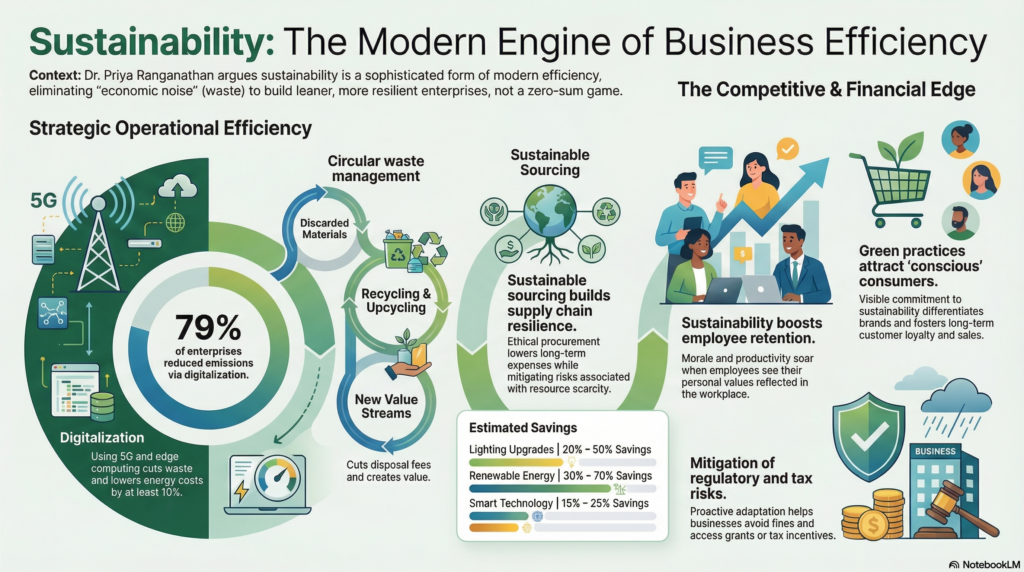
Industrial enterprises no longer have to choose between profits and sustainability. Today, digitalization is a critical enabler of both, powering sustainable business growth. Industry 4.0 deployments, such as remote drone inspections, digital twins and autonomous vehicles, empower enterprises to achieve operational, commercial and sustainability goals by driving operational efficiencies and reducing energy, fuel and material waste. This helps lower costs and accelerate decarbonization and net-zero strategies. A recent survey shows that 79% of enterprises have reduced emissions by at least 10% by adopting digitalization solutions such as edge computing and 5G private wireless (GlobalData and Nokia). Implementing energy efficiency improvements is a critical strategy for businesses aiming to reduce operational costs and minimize their environmental footprint. By adopting renewable energy sources and leveraging smart technology, organizations can create a more sustainable operational model. Energy audits are essential in identifying areas where energy conservation can be maximized, allowing businesses to implement targeted solutions such as lighting upgrades and heating optimization.
The integration of energy management systems facilitates effective power management, allowing businesses to monitor energy usage and make informed decisions. Energy benchmarking provides a comparative analysis of energy performance, enabling companies to track improvements over time. These strategies not only enhance operational efficiency but also foster a culture of sustainability within the organization.
The following table highlights key energy efficiency improvements and their potential impact:
| Improvement Type | Benefits | Estimated Savings (%) |
| Lighting Upgrades | Enhanced visibility, reduced waste | 20-50% |
| Heating Optimization | Improved comfort, reduced costs | 10-30% |
| Smart Technology | Automated control, real-time data | 15-25% |
| Renewable Energy Sources | Sustainable power, long-term savings | 30-70% |
Incorporating these energy efficiency improvements not only leads to substantial cost reductions but also empowers businesses to embrace a more responsible approach to energy consumption. This commitment to sustainability enhances brand reputation and can attract a more conscientious customer base, ultimately fostering long-term growth and success.
Waste Reduction Strategies
The importance of waste reduction strategies cannot be overstated in today’s business landscape, where both economic efficiency and environmental stewardship are paramount. Implementing effective waste reduction methods can considerably lower operational costs while enhancing a company’s reputation and commitment to sustainable practices.
One of the most impactful strategies is the establishment of robust recycling programs and composting initiatives. By diverting waste from landfills, businesses not only contribute to a circular economy but also reduce the costs associated with waste disposal. Conducting regular waste audits helps organizations identify areas of improvement and enables effective waste tracking, facilitating informed decision-making.
Moreover, integrating eco friendly products into daily operations and supply chains helps businesses reduce waste, lower long-term procurement costs, and strengthen their sustainability commitments while meeting growing consumer expectations. Businesses can also explore upcycling projects, which transform discarded materials into valuable products, further contributing to zero waste goals. Digital documentation reduces paper use, promoting efficiency and simplifying waste management practices.
These strategies create a ripple effect within the organization, fostering a culture of sustainability that empowers employees and stakeholders alike. By adopting these waste reduction strategies, businesses can position themselves at the forefront of the sustainability movement, attracting environmentally conscious consumers and investors.
Ultimately, the shift to waste reduction strategies is not merely a compliance issue but a strategic imperative that aligns with the growing demand for responsible business practices. Embracing this paradigm shift can lead to substantial cost savings and a more resilient, eco-conscious enterprise.
Resource Management Optimization
Optimizing resource management is a natural progression for businesses already committed to waste reduction strategies. This process involves enhancing efficiency across the supply chain by integrating sustainable practices that minimize environmental impact and operational costs. Companies can leverage renewable resources and eco-friendly materials to not only reduce their carbon footprint but also foster a circular economy, where materials are reused and recycled rather than discarded.
By employing sustainable sourcing practices, organizations enhance their resilience while promoting responsible consumption, a principle at the core of green entrepreneurship that encourages innovative and environmentally conscious business solutions. This approach allows businesses to capitalize on green logistics, which optimizes transportation and distribution networks to reduce emissions. Incorporating water conservation strategies further amplifies these efforts, ensuring that essential resources are preserved for future generations.
The following table highlights key strategies for resource management optimization:
| Strategy | Impact on Operations |
| Sustainable Sourcing | Reduces costs and improves supply chain resilience |
| Green Logistics | Minimizes emissions and enhances delivery efficiency |
| Water Conservation | Lowers operational costs and secures resource availability |
Employee Engagement and Productivity
Employee engagement is a critical component of sustainable business practices, as it fosters enhanced team collaboration and a healthier work environment. When employees feel valued and involved, their productivity increases, ultimately leading to higher retention rates. Organizations that prioritize engagement not only boost their performance but also cultivate a culture that supports long-term sustainability.

ENHANCED TEAM COLLABORATION
One aspect of my work that I find particularly fascinating is the “spillover effect” between personal values and professional output. It’s something I see in my own life: the patience and precision I learn at the pottery wheel often inform how I approach complex data sets. Similarly, when a company adopts sustainable practices, it taps into a powerful, underutilized driver of productivity: employee alignment. Research indicates a strong correlation between an individual’s sustainable lifestyle and their perception of their employer’s green initiatives. When employees see their personal commitment to the environment reflected in their workplace through green office designs or robust recycling programs their morale and retention rates naturally soar.
Furthermore, as we discuss resource optimization, we must look at the role of finance and technology as catalysts. In my webinars, I often talk about “green taxation” and “circular finance,” and it is heartening to see these concepts moving from academic theory into the boardroom. The integration of AI-driven management and green logistics isn’t just about high-tech gadgets; it’s about using data to ensure that not a single watt of energy or gallon of water is used unnecessarily.
This intersection of human passion and technical innovation is where true operational magic happens. By fostering a culture of “circularity,” businesses can transform what was once considered “waste” into a new stream of value, effectively decoupling growth from environmental degradation.
Collaboration serves as a cornerstone of successful business operations, greatly influencing employee engagement and productivity. Enhanced team collaboration not only fosters a more connected workforce but also reduces operational costs through efficient practices. Embracing cross-functional teamwork and leveraging collaborative technologies can lead to significant advantages.
Key benefits include:
- Improved Communication: Effective collaboration tools facilitate seamless information sharing, breaking down silos and promoting transparency.
- Increased Innovation: Diverse teams working together can generate creative solutions, driving innovation that contributes to long-term sustainability.
- Enhanced Efficiency: Streamlined workflows enabled by collaborative technologies minimize redundancy, allowing teams to focus on core tasks and reducing wasted resources.
- Boosted Morale: A culture of teamwork nurtures a sense of belonging among employees, enhancing job satisfaction and retention rates.
Healthier Work Environment
A healthier work environment considerably enhances employee engagement and productivity, creating a positive feedback loop that drives overall business success. By adopting sustainable practices such as establishing a green office and implementing wellness programs, organizations can foster a culture that values employee well-being.
The benefits of a healthier work environment are manifold:
| Aspect | Impact on Employees | Impact on Business |
| Green Office Design | Improved mental well-being | Reduced operational costs |
| Wellness Programs | Increased job satisfaction | Lower absenteeism rates |
| Natural Lighting | Enhanced focus and creativity | Boosted innovation |
| Ergonomic Workspaces | Decreased physical strain | Higher productivity levels |
| Team-Building Activities | Strengthened relationships | Enhanced collaboration |
When employees feel valued and supported in a green office, they are more likely to engage fully in their work. Wellness programs, such as fitness classes and mental health resources, create an environment that empowers employees to take charge of their well-being. This investment in health not only nurtures individual performance but also contributes to a thriving organizational culture, ensuring long-term success.
Increased Employee Retention
While companies endeavor to enhance productivity and innovation, a critical factor often overlooked is the direct correlation between sustainable practices and increased employee retention. Sustainable practices not only foster a healthier workplace culture but also greatly boost employee morale, leading to heightened engagement and productivity.
Consider the following benefits of integrating sustainability into your business model:
- Enhanced Employee Satisfaction: Employees take pride in working for environmentally responsible companies, which elevates their overall job satisfaction.
- Attracting Top Talent: A commitment to sustainability can make a company more appealing to prospective employees, particularly those who value ethical practices.
- Reduced Turnover Rates: A positive workplace culture encourages loyalty, reducing the costs and disruptions associated with high turnover.
- Improved Team Collaboration: Sustainability initiatives often promote teamwork and shared goals, strengthening interpersonal relationships among employees.
Long-Term Financial Benefits
Embracing sustainable business practices not only addresses environmental and social concerns but also cultivates long-term financial benefits that can considerably enhance a company’s bottom line. One of the most notable advantages lies in the potential for cost savings, which directly impacts profit margins. By implementing energy-efficient technologies and reducing waste, companies can lower their operational expenses substantially. These initiatives often lead to a more streamlined production process, minimizing resource usage and enhancing overall efficiency. Sustainable business practices align with ESG principles by minimising environmental impact, promoting social responsibility, and ensuring good governance. They contribute to long-term financial success, enhance brand reputation, and attract conscious consumers and investors.
Additionally, businesses that prioritize sustainability tend to attract a growing base of environmentally conscious consumers. This shift in consumer behavior can result in increased sales and loyalty, further bolstering profit margins. Companies that effectively communicate their commitment to sustainability can differentiate themselves in a crowded marketplace, positioning themselves as leaders in their industry.
Moreover, sustainable practices can mitigate risks associated with regulatory changes and resource scarcity. As governments worldwide increasingly emphasize sustainability, companies that proactively adapt to these changes will not only avoid potential fines but may also benefit from incentives such as tax breaks or grants. This forward-thinking approach can notably contribute to long-term financial stability.
Case Studies of Success
Numerous companies across various industries have demonstrated that sustainable business practices can lead to remarkable success stories, showcasing the tangible benefits of such initiatives. These success stories illustrate how sustainable innovation not only enhances brand reputation but also drives operational efficiency and reduces costs.
Consider the following case studies:
- Unilever: By integrating eco-friendly materials and renewable resources into their supply chain, Unilever has reduced its carbon footprint considerably while also enhancing stakeholder engagement through transparent ethical sourcing practices.
- Patagonia: This outdoor apparel company has committed to a circular economy model by promoting the repair and reuse of its products. Their community involvement initiatives have fostered a loyal customer base, reinforcing the brand’s social responsibility ethos.
- IKEA: Through its green supply chain practices, IKEA has pioneered the use of sustainable materials, resulting in a reduction of operational costs. Their commitment to renewable resources has not only attracted eco-conscious consumers but also minimized waste.
- Tesla: By focusing on sustainable innovation in energy solutions, Tesla has disrupted the automotive industry. Their emphasis on renewable energy and ethical sourcing has positioned them as leaders in both environmental sustainability and market growth.
These examples highlight the profound impact of sustainable business practices. By embracing eco-friendly materials, fostering stakeholder engagement, and committing to community involvement, companies can thrive while contributing positively to society and the environment.

RELATED STUDIES ABOUT SUSTAINABLE BUSINESS PRACTICES
In the landscape of modern business, the adoption of sustainable practices emerges as a beacon of hope, illuminating pathways to reduced operational costs. By weaving efficiency into the fabric of daily operations, organizations not only nurture the environment but also cultivate a fertile ground for financial growth. As resources are optimized and waste diminished, the seeds of innovation take root, yielding long-term benefits that flourish for both the enterprise and the planet. Sustainable practices are not merely a trend; they are a transformative force.
Artificial Intelligence-Driven Management: Bridging Innovation, Knowledge Creation, and Sustainable Business Practices
Objective: This study systematically examines how AI-driven management practices integrate innovation, knowledge creation, and sustainable business practices. It aims to identify key themes, variables, and interlinkages across six major functional domains, proposing a framework for AI adoption aligned with long-term organizational and societal goals.
Methodology: A structured review of 1,377 peer-reviewed articles from the Scopus database (up to September 2024) was conducted using a hybrid approach combining systematic analysis and manual synthesis. Articles were filtered based on quality criteria (ABS, ABDC, impact factor) and relevance to AI-driven management and sustainability.
Key Findings:
The analysis identifies six primary themes where AI significantly impacts management:
- AI-driven HRM: Enhances recruitment, talent management, performance monitoring, and employee well-being.
- AI in Consumer & Service Management: Improves customer interaction, service personalization, and operational efficiency.
- ML in Management Decision-Making: Supports predictive analytics, risk management, and business process optimization.
- AI in Strategic Management & Leadership: Aids strategic planning, decision support, and competitive advantage.
- AI in Operational & Supply Chain Management: Optimizes logistics, inventory, demand forecasting, and operational efficiency.
- AI in Enhancing Customer Experience: Drives personalization, feedback analysis, and proactive customer support.
Theoretical Contribution: The study extends the Resource-Based View (RBV) and Knowledge-Based View (KBV), arguing that AI capabilities—such as data, algorithms, and digital skills—constitute new strategic resources that foster sustainable competitive advantage when integrated dynamically.
Practical Implications: Organizations should view AI as a core competency rather than a standalone tool. Successful AI adoption requires:
- Alignment with organizational culture and human capital.
- Investment in employee training and change management.
- Strong governance frameworks addressing ethics, transparency, and accountability.
- Cross-functional integration to maximize value across HR, operations, strategy, and customer engagement.
Policy Recommendations: The study advocates for:
- Ethical AI governance emphasizing fairness, privacy, and security.
- Regulatory measures to ensure transparency, prevent bias, and protect consumers.
- Support for SMEs in accessing AI technologies to promote market fairness.
- National investments in AI literacy and education to build a future-ready workforce.
Limitations: The rapidly evolving nature of AI technology may affect the longevity of findings. Sectoral coverage and data accessibility also pose constraints.
Conclusion: AI is a transformative force in management, enabling innovation, enhancing knowledge creation, and supporting sustainable business models. Organizations that strategically integrate AI with complementary resources and ethical governance are best positioned to achieve long-term resilience and competitive advantage.
Key Takeaway: AI-driven management is not merely a technological upgrade but a strategic imperative that, when ethically and effectively integrated, bridges innovation, knowledge, and sustainability for lasting organizational success.
| REFERENCE: Khushboo Raina, Gagan Deep Sharma, Babak Taheri, Dhairya Dev, Shubham Chavriya, Artificial intelligence-driven management: Bridging innovation, knowledge creation, and sustainable business practices, Journal of Innovation & Knowledge, Volume 11, 2026, 100860, ISSN 2444-569X, https://doi.org/10.1016/j.jik.2025.100860. (https://www.sciencedirect.com/science/article/pii/S2444569X25002057) |
Sustainable Synergy: Unveiling the Symbiotic Relationship Between Personal Lifestyles and Corporate Sustainable Business Practices
Objective: This study investigates the correlation between individuals’ personal sustainable lifestyles and their perceptions of sustainable business practices (SBP) in their workplaces, focusing on energy consumption and renewable energy use. The aim is to understand if sustainability behaviors spill over from personal to professional contexts.
Methodology: A survey was conducted with 596 employees across various industries in Slovenia, a country with high sustainability performance. Two established scales were used:
- Sustainable Lifestyle Score (SLS): Measured via three constructs: Care for Environmental Well-being, Quality of Life, and Care for Future Generations.
- Sustainable Business Practices (SBP): Measured via four constructs: Sustainable Product Design, Sustainable Manufacturing Process, Sustainable Supply Chain Management, and Sustainable End-of-Life Management.
Data were analyzed using descriptive statistics, Spearman’s correlation, and Kruskal-Wallis H tests.
Key Findings:
- Strong Positive Correlation: A significant, positive correlation exists between personal SLS and perceptions of corporate SBP. Individuals who practice sustainability at home are more likely to work in and positively perceive companies with strong sustainability initiatives.
- Demographic Variations:
- Gender: Female respondents reported significantly higher SLS and perceived SBP than males.
- Age: Older employees (40+) reported higher personal SLS, while younger employees (<40) perceived corporate SBP more positively.
- Position: Organizational heads rated SBP highest, while regular employees rated Quality of Life highest.
- Sector: The production sector scored highest in both personal SLS and perceived SBP, attributed to industry trends like lean & green operations.
- Spillover Effect: The results suggest a positive spillover effect, where personal sustainability habits influence and align with workplace sustainability values, and vice-versa.
- Perception Gap: Individuals generally rated their personal SLS slightly higher than their company’s SBP, though the difference was not statistically significant.
Theoretical and Practical Implications:
- For Companies: Sustainability can be leveraged as a competitive advantage to attract and retain talent whose personal values align with corporate goals. Promoting gender diversity and integrating sustainability into strategic roles can enhance environmental initiatives.
- For Management: Understanding demographic differences (age, gender, role) is crucial for designing effective sustainability engagement programs.
- For Policy: The findings support integrated approaches that connect personal behavior change with corporate sustainability mandates (e.g., EU Taxonomy, CSRD).
Limitations:
- Potential social desirability bias may inflate self-reported sustainable behaviors.
- The study is context-specific to Slovenia, though findings may be applicable to similar cultural and economic regions.
- Focus on production/logistics sectors may limit generalizability to other industries.
Conclusion: Personal and corporate sustainability are intrinsically linked. Employees who live sustainably tend to seek out and value sustainable employers, creating a symbiotic relationship that accelerates the transition to a low-carbon economy. Organizations should recognize and foster this synergy by aligning corporate practices with the sustainability values of their workforce.
Key Takeaway: Building a sustainable future requires a dual focus: cultivating responsible personal habits and embedding genuine sustainability into core business strategies. The synergy between the two is a powerful, underutilized driver of systemic change.
| REFERENCE: Matevž Obrecht, Tina Cvahte Ojsteršek, Lazar Pavić, Sustainable synergy: Unveiling the symbiotic relationship between personal lifestyles and corporate sustainable business practices, Energy Reports, Volume 12, 2024, Pages 6093-6101, ISSN 2352-4847, https://doi.org/10.1016/j.egyr.2024.11.090. (https://www.sciencedirect.com/science/article/pii/S2352484724008060) |
Exploring The Role of Finance in Driving the Circular Economy and Sustainable Business Practices
This systematic literature review explores the critical relationship between financial innovation and the transition to a Circular Economy (CE). Analyzing 150 articles, the study demonstrates that finance is a powerful catalyst for adopting circular business models and achieving sustainable development.
Key Findings
- Finance as a Catalyst: Financial innovations—such as green bonds, sustainability-linked loans (SLLs), and circular-focused funds—are essential for scaling CE initiatives. They provide the necessary capital and incentives for businesses to integrate circular principles and ESG factors into their operations.
- Effective Financial Instruments:
- Green Bonds & Loans: Dedicated to funding environmentally friendly projects (e.g., renewable energy, waste management).
- Sustainability-Linked Loans (SLLs): Tie loan terms to the borrower’s achievement of predefined sustainability targets.
- Circular-Focused Funds: Direct investment toward businesses implementing circular models.
- Pay-for-Performance Mechanisms: Link financial rewards to measurable environmental outcomes.
- Role of FinTech, AI, and ML: Digital technologies enhance transparency, traceability, and efficiency in circular supply chains. FinTech improves access to finance, especially for SMEs, while AI and ML optimize resource use and enable predictive maintenance.
- Business Benefits: Adopting circular models reduces operational costs, creates new revenue streams, and enhances brand reputation by meeting growing consumer demand for sustainable products.
- Barriers to Adoption: Challenges include lack of standardized metrics, regulatory inconsistencies, technological limitations, and uncertainty in ROI for circular investments.
- Global Research Trends: Publication volume on CE and finance has surged since 2016. Leading contributors include China, the UK, the USA, Italy, and Brazil. Top journals include Sustainability and the Journal of Cleaner Production.
Conclusions & Recommendations
- Policy & Collaboration: Supportive regulatory frameworks and cross-sector collaboration are vital to creating an enabling environment for circular finance.
- Innovation in Finance: Continued development of tailored financial products is needed to address specific CE challenges.
- Education & Awareness: Enhancing financial literacy around sustainable investment can drive broader adoption.
- Technology Integration: Leveraging FinTech, AI, and blockchain can improve the effectiveness and scalability of circular finance.
The study concludes that aligning financial systems with CE principles is not only beneficial for environmental and social outcomes but also drives long-term economic resilience and competitive advantage. Future efforts should focus on standardizing metrics, expanding green financial markets, and fostering inclusive innovation to accelerate the global transition to a circular economy.
| REFERENCE: Bhavesh Kumar, Avinash Kumar, Claudio Sassanelli, Love Kumar, Exploring the role of finance in driving circular economy and sustainable business practices, Journal of Cleaner Production, Volume 486, 2025, 144480, ISSN 0959-6526, https://doi.org/10.1016/j.jclepro.2024.144480. (https://www.sciencedirect.com/science/article/pii/S0959652624039295) |
CONCLUSION
As I reflect on the success stories of pioneers like Patagonia or IKEA, it’s clear that the transition to sustainability is a marathon, not a sprint. It requires a commitment to continuous action and an understanding that our economic systems are wholly owned subsidiaries of the environment. As an ecological economist, my ultimate goal is to see us move toward a “steady-state” economy, one where we live comfortably within the regenerative capacity of the Earth. While that may sound like a lofty academic ideal, the practical steps outlined in this article energy audits, sustainable sourcing, and ethical supply chains are the very bricks and mortar of that future.
We are moving into an era where “business as usual” is the greatest risk of all. The long-term financial benefits of sustainability from tax incentives to increased customer loyalty are now too significant to ignore. But beyond the spreadsheets and the market share, there is a deeper sense of purpose.
When a business aligns its goals with the broader aspirations of society, it contributes to a more stable, equitable world for the “future generations” I often think about during my weekend birdwatching trips. I encourage every leader and entrepreneur to view these practices not as a cost to be managed, but as an investment in a resilient, flourishing future for us all.