
When I first started in green finance, many executives viewed environmental sustainability as a luxury or a “nice-to-have” line item in the annual report. Today, that perspective is a liability. In my work as a consultant, I’ve seen that true sustainability isn’t about a single department or a flashy PR campaign; it’s about a fundamental shift in how a business defines success. Environmental sustainability is the responsible management of resources to ensure ecological health is maintained for future generations. For me, this is personal I see the same principles of stewardship in my own life, whether I’m surfing a clean break or carefully tending to my rooftop garden.
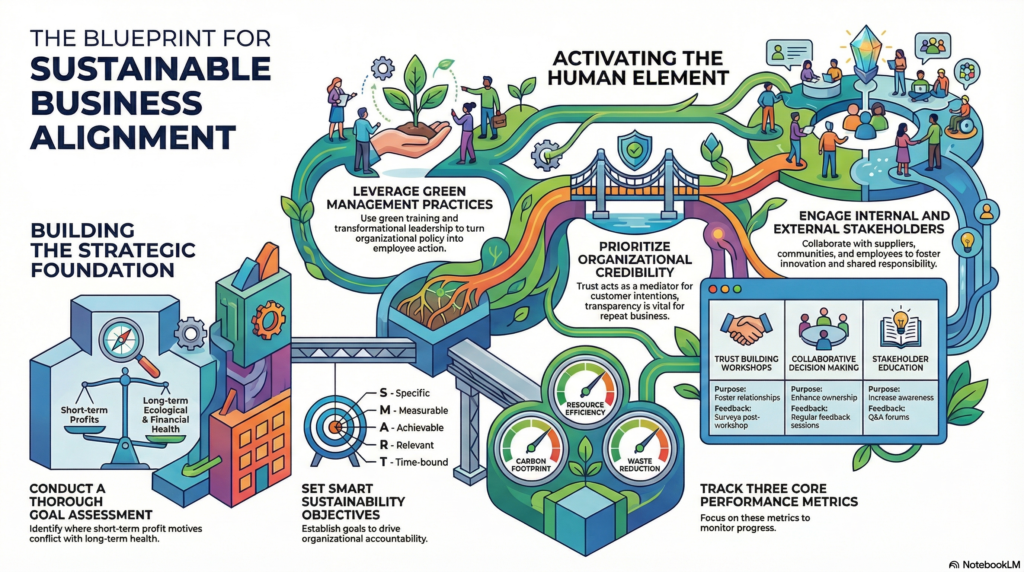
To effectively align business operations with these principles, organizations must first conduct a thorough assessment of their current goals. It’s about looking at performance metrics and identifying where short-term profit motives might be cannibalizing long-term ecological and financial health. This initial step is vital because it sets the foundation for a strategic approach that integrates sustainability into the core of business practices.
We are moving toward a world where profitability and ecological stewardship are intertwined destinies. By adopting sustainable business practices, companies can reduce their environmental impact while actually improving operational efficiency. This isn’t just about “doing good”; it’s about ensuring the freedom of future generations to thrive in a healthy environment.
To align business goals with a company’s environmental sustainability strategy, start by evaluating existing business objectives and identifying conflicts with sustainability principles. Engage with diverse internal and external stakeholders to foster collaboration and innovation. Establish measurable sustainability objectives following the SMART criteria and track progress using relevant metrics like carbon footprints and resource efficiency. Cultivating a culture of continuous improvement among employees enhances motivation and ownership of sustainability initiatives. By addressing these strategic dimensions, organizations can effectively integrate sustainability into their core operations, leading to impactful outcomes while being responsive to evolving environmental concerns. Further insights await your exploration.
KEY TAKEAWAYS
- Conduct a thorough assessment of current business goals to identify areas for sustainability integration and potential conflicts.
- Engage internal and external stakeholders to foster collaboration and align sustainability efforts with business objectives.
- Establish clear, measurable sustainability objectives using the SMART framework to drive accountability.
- Implement key sustainability metrics to monitor progress and guide resource optimization initiatives.
- Foster a culture of sustainability through employee training, open communication, and recognition programs to enhance engagement.
UNDERSTANDING ENVIRONMENTAL SUSTAINABILITY
Environmental sustainability refers to the responsible management of resources to guarantee that ecological health is maintained for future generations. Understanding this concept is essential for businesses aiming to align their operations with eco-friendly practices and sustainable innovation. By adopting sustainable business practices, organizations can meaningfully reduce their environmental impact while improving operational efficiency and strengthening alignment between long-term business goals and ecological responsibility.
Central to environmental sustainability is the commitment to utilizing renewable resources, which encourages a shift away from finite materials and fosters long-term ecological resilience. Corporate responsibility plays a vital role in this change, as businesses are increasingly held accountable for their actions and the environmental consequences they entail. Engaging in climate action becomes not just a moral imperative, but a strategic necessity for companies seeking to maintain their competitive edge in a rapidly evolving marketplace.
Furthermore, effective waste reduction strategies are imperative for minimizing the ecological footprint of business operations. By implementing practices that prioritize recycling and the circular economy, organizations can contribute to biodiversity conservation, ensuring the preservation of various ecosystems.
Ultimately, understanding environmental sustainability requires a collaborative approach, engaging stakeholders across the spectrum—from employees to consumers. This shared commitment to sustainability fosters a culture of innovation, wherein companies can devise new solutions that align profitability with ecological stewardship. As businesses embrace these principles, they not only enhance their reputation but also pave the way for a sustainable future that honors the freedom of future generations to thrive in a healthy environment.
Assessing Current Business Goals
Environmental sustainability in business is the operation of a business that does not compromise the environment. A business that has considered environmental sustainability prioritises the environment’s best interest, with society and its ecosystems coming before making a profit. It involves responsible decision-making that minimizes carbon footprint or waste while simultaneously improving the quality of life for humankind and the natural world alike. To effectively align business operations with environmental sustainability, organizations must first conduct a thorough assessment of their current business goals. This initial step is vital as it sets the foundation for a strategic approach to integrating sustainability into the core of business practices. By evaluating performance metrics and existing priorities, companies can identify areas where sustainability initiatives can enhance operational efficiency and contribute to long-term success.
A detailed evaluation involves analyzing not only financial objectives but also the cultural and ethical dimensions of the organization. This dual perspective allows businesses to pinpoint where their goals may conflict with sustainability principles and to rethink their priorities accordingly. For instance, a company focused solely on short-term profits may overlook opportunities for innovation in eco friendly products or waste reduction initiatives that could yield significant benefits over time.
Furthermore, collaboration across departments is essential during this assessment phase. Engaging employees from various levels and functions fosters a culture of shared responsibility and encourages diverse perspectives on sustainability. This collaborative effort can reveal unique insights that challenge traditional business paradigms, ultimately leading to a more cohesive and aligned strategy.
Identifying Key Stakeholders
One thing my experience at UC Berkeley and years in the field taught me is that data alone doesn’t change a company people do. While we focus heavily on ESG metrics like carbon footprints and resource efficiency, the real magic happens when you engage the human element. Identifying key stakeholders is essential for a strategic approach. This includes internal departments from finance to marketing and external partners like suppliers and local communities. When we map these relationships, we create a network of shared responsibility that can drive impactful change.
I’ve always advocated for the use of SMART objectives, specific, measurable, achievable, relevant, and time-bound to drive accountability. But beyond the numbers, there must be a culture of continuous improvement. I’ve observed that Green Management Practices, such as green training and transformational leadership, have a significant positive effect on employee behavior.
When employees feel that their individual contributions toward collective ecological goals are valued, their motivation skyrockets. This is where “Green Perceived Organizational Support” comes in; by clearly communicating environmental commitment, companies empower their teams to take ownership of sustainability efforts. Just as I rely on the right weather patterns for a good surf, a business relies on a supportive internal culture to catch the wave of sustainable innovation.
Environmental sustainability refers to the responsible management of natural resources to fulfill current needs without compromising the ability of future generations to meet theirs. It aims to balance ecological, economic and social goals, such as reducing carbon emissions, promoting renewable energy and ensuring equitable resource access. Identifying key stakeholders is essential for aligning business goals with environmental sustainability, as it fosters a strategic approach to engagement. Internal stakeholder engagement guarantees that all departments understand and contribute to sustainability initiatives, while external partner collaboration can enhance resource sharing and innovation. By mapping these relationships, organizations can strategically position themselves to achieve mutual benefits and drive impactful change.
Internal Stakeholder Engagement
Engaging internal stakeholders is vital for aligning business goals with environmental sustainability. Identifying and understanding stakeholder motivations is essential as it informs tailored communication strategies and engagement techniques. By employing influence mapping, organizations can prioritize key stakeholders based on their impact and interest levels.
The following table highlights effective methods for engaging internal stakeholders:
| Engagement Technique | Purpose | Feedback Mechanism |
| Trust Building Workshops | Foster relationships | Surveys post-workshop |
| Collaborative Decision Making | Enhance ownership of initiatives | Regular feedback sessions |
| Stakeholder Education Sessions | Increase awareness of sustainability goals | Q&A forums |
| Conflict Resolution Training | Equip teams to handle disputes | Anonymous feedback forms |
These methods not only promote trust but also facilitate conflict resolution and enhance relationship management. Stakeholder education guarantees that all parties are well-informed, enabling constructive dialogue. By actively involving stakeholders, organizations can cultivate a culture of collaboration, leading to more effective sustainability strategies that align with core business objectives. This strategic approach builds a robust foundation for future partnerships, making certain that all voices are heard and valued in the pursuit of sustainability.
External Partner Collaboration
A diverse array of external partners plays an essential role in advancing environmental sustainability initiatives within an organization. Identifying key stakeholders such as suppliers, customers, non-profit organizations, and local communities is vital for effective collaboration. Each partner brings unique perspectives, resources, and expertise that can amplify sustainability efforts, particularly through supply chain collaboration and community partnerships.
Strategically aligning with supply chain partners allows organizations to optimize resource use, reduce waste, and enhance transparency. This collaborative approach fosters innovation, enabling the development of sustainable products and practices that resonate with an increasingly environmentally conscious consumer base and support the growth of green entrepreneurship within the organization and its partner networks. Additionally, engaging with community partners can facilitate a deeper understanding of local environmental challenges and opportunities, ensuring that sustainability initiatives are contextually relevant and impactful.
Setting Measurable Sustainability Objectives
Establishing measurable sustainability objectives is critical for organizations aiming to integrate environmental stewardship into their core business strategies. By defining clear and quantifiable goals, companies can not only track their progress but also foster a culture of accountability and transparency. This alignment between business objectives and sustainability benchmarks guarantees that environmental considerations are woven into the fabric of organizational decision-making.
To set these objectives effectively, organizations should first conduct a thorough assessment of their current environmental impact. This involves identifying key performance indicators (KPIs) relevant to their operations, such as carbon emissions, energy consumption, and waste generation. Once these metrics are established, companies can formulate specific, measurable, achievable, relevant, and time-bound (SMART) objectives that align with their overall business goals.
Collaboration across departments is essential when setting these objectives. Engaging stakeholders from various functions—such as operations, finance, and marketing—can yield diverse perspectives and foster a sense of shared responsibility. Additionally, aligning sustainability objectives with broader corporate goals can enhance organizational coherence and drive collective action.
Regularly revisiting and refining these objectives in light of emerging sustainability benchmarks and regulatory changes is also important. This iterative approach allows organizations to remain agile and responsive to environmental challenges while maintaining their competitive edge. Ultimately, by committing to measurable sustainability objectives, businesses can contribute to a more sustainable future while fulfilling their mission and enhancing stakeholder value.

INTEGRATING SUSTAINABILITY INTO BUSINESS STRATEGY
Integrating sustainability into business strategy requires a clear identification of key sustainability metrics that align with overarching business objectives. By establishing these metrics, organizations can effectively measure their environmental impact while driving performance improvements. Additionally, engaging stakeholders throughout this process fosters collaboration and guarantees that diverse perspectives are incorporated into strategic decision-making.
Identifying Key Sustainability Metrics
Sustainability in business refers to a company’s strategy and actions to reduce adverse environmental and social impacts resulting from business operations in a particular market. An organization’s sustainability practices are typically analyzed against environmental, social and governance (ESG) metrics. While businesses increasingly recognize the importance of sustainability, identifying key metrics that align with corporate goals is essential for effective integration into their overarching strategy. By establishing clear sustainability benchmarks, organizations can track their progress and drive meaningful change. Key performance indicators (KPIs) should include:
- Carbon Footprint: Measuring greenhouse gas emissions helps businesses understand their impact and set reduction targets.
- Resource Efficiency: Analyzing energy consumption and material usage promotes optimization in operations, contributing to cost savings and sustainability.
- Waste Reduction: Monitoring waste generation and implementing strategies for minimizing waste fosters a circular economy approach.
Incorporating these metrics into a lifecycle assessment framework enhances transparency throughout the supply chain, ensuring regulatory compliance while also considering community impact. By aligning sustainability metrics with business goals, companies can create a cohesive strategy that not only drives financial performance but also reinforces their commitment to environmental stewardship. This collaborative approach empowers organizations to adapt and thrive in an evolving market, ultimately leading to a more sustainable future.
Engaging Stakeholders Effectively
How can organizations effectively engage stakeholders to guarantee sustainability is woven into the fabric of their business strategy? The key lies in understanding stakeholder motivations and employing robust communication strategies. Organizations must identify who their stakeholders are—employees, customers, suppliers, and the community—and recognize their specific interests in sustainability.
To facilitate meaningful dialogue, companies should establish engagement platforms that foster open communication. These platforms can serve as avenues for feedback mechanisms, allowing stakeholders to express concerns and share ideas. By actively listening to stakeholders, organizations can enhance relationship building and cultivate trust development.
Moreover, it is crucial to implement conflict resolution strategies to address differing perspectives on sustainability initiatives. Collaborative initiatives that involve stakeholders in decision-making processes can lead to innovative solutions that align business goals with environmental objectives. Engaging stakeholders in this manner not only promotes transparency but also empowers them to become advocates for sustainability, creating a shared vision.
Ultimately, effective stakeholder engagement is a dynamic process that integrates their voices into the core of the business strategy, ensuring that sustainability becomes a fundamental aspect of organizational culture and practice.
Monitoring and Reporting Progress
Effective monitoring and reporting of progress towards environmental sustainability are critical for organizations aiming to align their business goals with ecological responsibility. By implementing robust progress tracking mechanisms, businesses can guarantee that their sustainability initiatives are not only effective but also transparent to stakeholders. This approach fosters trust and demonstrates a commitment to accountability.
To achieve effective monitoring and reporting, organizations should consider the following key strategies:
- Utilize Reporting Frameworks: Adopt established reporting frameworks such as the Global Reporting Initiative (GRI) or Sustainability Accounting Standards Board (SASB). These frameworks provide a structured approach to sustainability reporting, guaranteeing consistency and clarity.
- Establish Performance Indicators: Define clear performance indicators that align with sustainability goals. These indicators enable organizations to measure progress objectively and identify areas for continuous improvement.
- Implement Feedback Loops: Create feedback loops that integrate stakeholder input into the sustainability strategy. This approach allows for adaptive management, guaranteeing that organizations can respond to evolving needs and maintain alignment with environmental objectives.
In addition to these strategies, conducting regular sustainability audits can enhance data transparency and provide insights into the effectiveness of initiatives. By fostering a culture of continuous improvement, organizations can not only track their progress but also make informed decisions that further align their business goals with sustainable practices. Ultimately, effective monitoring and reporting create a pathway towards achieving both ecological and business success.
Engaging Employees and Culture
An organization’s success in achieving environmental sustainability hinges greatly on its ability to engage employees and cultivate a culture that prioritizes ecological responsibility. This engagement begins with employee motivation, which can be notably enhanced through effective sustainability training that emphasizes the importance of individual contributions towards collective goals. By aligning the company’s values with environmental initiatives, organizations can foster cultural alignment that encourages proactive participation.
To facilitate this alignment, organizations should implement robust communication strategies that clearly articulate sustainability objectives and the rationale behind them. Open channels for team collaboration not only allow for innovative ideas to flourish but also encourage employees to take ownership of sustainability efforts. Inclusion in decision-making processes can further empower individuals, reinforcing their commitment to the organization’s ecological goals.
Feedback mechanisms play a vital role in this dynamic, enabling employees to share insights and experiences related to sustainability initiatives. This iterative process not only helps refine programs but also demonstrates that employee input is valued. Additionally, recognition programs can celebrate contributions to sustainability, motivating employees to engage more deeply with these initiatives.
Ultimately, integrating sustainability into the organizational culture is a strategic endeavor that requires commitment at all levels. By prioritizing employee engagement through targeted training, collaborative efforts, and recognition, companies can create a vibrant culture that supports their environmental sustainability strategy, leading to both improved performance and a more sustainable future.

RELATED STUDIES ABOUT A COMPANY’S ENVIRONMENTAL SUSTAINABILITY STRATEGY CONCERNS
In the pursuit of aligning business goals with environmental sustainability, organizations must navigate a complex landscape where profit and planet coexist as intertwined destinies. By establishing measurable objectives and fostering stakeholder collaboration, companies can weave sustainability into the very fabric of their strategies. Continuous monitoring and employee engagement are essential, creating a culture where environmental stewardship thrives. Ultimately, the successful integration of sustainability not only enhances corporate responsibility but also positions businesses for long-term resilience and competitive advantage.
Navigating Corporate Social Responsibility and Customer Behavior in Sustainable Hospitality: Role of Credibility, Environmental Concerns, and Green Brand Image
Objective: This research examines how perceived green Corporate Social Responsibility (CSR) and perceived CSR authenticity influence customers’ intentions to continue staying at green hotels. It investigates the mediating role of perceived credibility and the moderating roles of environmental concerns and green brand image, using two complementary theoretical frameworks.
Methodology:
- Design: Quantitative, based on two online survey studies conducted in Pakistan.
- Sample: Study 1 (N=423) and Study 2 (N=418) with customers who had recently stayed at specified green hotels.
- Analysis: Covariance-Based Structural Equation Modeling (CB-SEM).
- Theoretical Frameworks:
- Study 1: Stimulus-Organism-Response (S-O-R) theory, focusing on perceived green CSR as the stimulus and environmental concerns as a moderator.
- Study 2: Signaling theory, focusing on perceived CSR authenticity as the signal and green brand image as a moderator.
Key Findings:
- Direct Effects on Intentions: Neither perceived green CSR (Study 1) nor perceived CSR authenticity (Study 2) had a direct significant effect on customers’ continuous stay intentions at green hotels.
- Crucial Role of Credibility:
- Both perceived green CSR and CSR authenticity significantly strengthened perceived credibility.
- Perceived credibility, in turn, directly increased continuous stay intentions.
- Perceived credibility acted as a full mediator. It completely explained the pathway through which green CSR and CSR authenticity ultimately influence stay intentions.
- Moderating Effects:
- Environmental Concerns (Study 1): Significantly strengthened the relationship between perceived green CSR and continuous stay intentions. Customers with higher environmental concerns showed a stronger positive response to green CSR initiatives.
- Green Brand Image (Study 2): Significantly strengthened the relationship between perceived CSR authenticity and continuous stay intentions. A stronger green brand image amplified the positive effect of authentic CSR on customer intentions.
Theoretical Contributions:
- Extends S-O-R Theory: Demonstrates its application in green hospitality, showing environmental stimuli (green CSR) affect organism (credibility) to drive response (stay intentions), moderated by environmental concerns.
- Advances Signaling Theory: Positions CSR authenticity and green brand image as effective signals that enhance credibility and influence customer behavior in sustainable hospitality.
- Addresses Research Gaps: Provides novel insights from an emerging market (Pakistan) on the psychological mechanisms (credibility) linking CSR perceptions to behavioral outcomes.
Managerial Implications:
- Build Credibility: Hotels should prioritize transparency, obtain eco-certifications, and communicate sustainable practices aligned with SDGs to build trust, which is the key driver of repeat stays.
- Highlight Authenticity: Communicate genuine, SDG-aligned CSR initiatives to combat skepticism and greenwashing perceptions.
- Leverage Moderators:
- Target marketing toward environmentally conscious segments, as they respond more positively to green CSR.
- Invest in building a strong green brand image, as it enhances the effectiveness of authentic CSR efforts in encouraging repeat visits.
- Strategic Positioning: Use credible green CSR and authentic practices as core elements of marketing communication to differentiate in the competitive hotel market.
Limitations & Future Research:
- Geographic Scope: Conducted only in Pakistan. Future studies should test the model in other cultural contexts (e.g., Asia vs. Europe).
- Methodology: Used convenience sampling. Future research could employ experimental designs or random sampling.
- Variables: Examined credibility as the primary mediator. Future work could explore other mediators (e.g., perceived value, brand attitude) and moderators (e.g., cultural values, personality traits).
Conclusion: For green hotels, building and communicating credibility is paramount. While green and authentic CSR practices do not directly guarantee repeat business, they are essential for establishing trust. This trust, in turn, directly drives customers’ intentions to return, especially among those who are environmentally concerned and when the hotel has a strong green brand image. The study offers a validated roadmap for hotel managers to strategically implement and communicate sustainability efforts to foster customer loyalty.
| REFERENCE: Asif Ali Safeer, Muhammad Abrar, Wang Qing, Navigating corporate social responsibility and customer behavior in sustainable hospitality: Role of credibility, environmental concerns, and green brand image, Acta Psychologica, Volume 261, 2025, 105794, ISSN 0001-6918, https://doi.org/10.1016/j.actpsy.2025.105794. (https://www.sciencedirect.com/science/article/pii/S0001691825011072) |
Towards a Holistic Model of Green Consumerism: Integrating Ethical Obligations, Collective Efficacy, and Environmental Concerns in Sustainable Purchase Behavior
Objective: This study addresses the persistent gap between consumers’ positive intentions and their actual purchase of eco-friendly (green) products. It aims to enhance the predictive power of the Theory of Planned Behavior (TPB) by integrating additional psychological and social factors to better understand and promote sustainable consumption.
Methodology:
- Sample: 400 Indonesian consumers, aged 18+, who were aware of and had previously purchased green products.
- Model: An extended TPB model incorporating core dimensions (Attitude, Subjective Norms, Perceived Behavioral Control) plus six new predictors: Environmental Concern, Environmental Knowledge, Social Media Usage, Ethical Obligation, Moral Obligation, and Environmental Collective Efficacy.
- Analysis: Data was analyzed using Partial Least Squares Structural Equation Modeling (PLS-SEM) with SmartPLS 4.0 software.
Key Findings:
- Enhanced TPB Drivers: The extended model significantly improves the understanding of green purchase intentions. Environmental Knowledge and Moral Obligation emerged as pivotal new drivers, positively influencing attitudes, perceived control, and purchase intention.
- Core TPB Results: Among the original TPB dimensions, Attitude and Perceived Behavioral Control were strong, significant predictors of green purchase intention. Subjective Norms (social pressure) had minimal influence, highlighting the dominance of internal over external motivations.
- Intention-Action Link: Green Purchase Intention was a strong and significant predictor of actual Green Purchase Behavior, confirming its crucial role as a gateway to action.
- Non-Significant Factors: Ethical Obligation and Environmental Collective Efficacy (belief in group impact) did not significantly influence intention. This suggests abstract ethical values or community beliefs alone are insufficient without a sense of personal moral duty.
- Social Media’s Role: Social media usage positively shaped Attitudes and Subjective Norms, but did not directly increase purchase intention or perceived control.
Theoretical Implications:
The study successfully expands the TPB framework, demonstrating that sustainable consumption is driven by a complex blend of rational planning (TPB), cognitive awareness (knowledge), and internalized personal values (moral obligation). It provides a more holistic, realistic model for studying the green intention-behavior gap.
Practical Implications:
- For Marketers & Businesses: Focus on educating consumers about the tangible environmental benefits of green products to boost knowledge, confidence (perceived control), and positive attitudes. Frame green purchases as a personal moral responsibility rather than just an ethical or collective action. Leverage social media to build supportive communities and norms around sustainable choices.
- For Policymakers: Support initiatives and campaigns that enhance environmental literacy and empower individual agency to facilitate the transition from sustainable intention to habitual purchasing behavior.
Limitations & Future Research:
- The sample is skewed toward young, educated Indonesians, limiting generalizability.
- Green products were studied broadly; future research should examine category-specific drivers.
- The use of self-reported data and quantitative methods suggests future studies could benefit from mixed methods, incorporating past behavior as a variable, and using belief-elicitation techniques for deeper context.
Conclusion:
This research provides a validated, comprehensive model showing that green purchase behavior is best encouraged by fostering informed, positive attitudes, a sense of personal capability, and an internalized moral obligation to act sustainably. It offers a strategic roadmap for closing the intention-behavior gap in green consumerism.
| REFERENCE: Ixora Javanisa Eunike, Andri Dayarana K. Silalahi, Do Thi Thanh Phuong, Adi Prasetyo Tedjakusuma, Towards a holistic model of green consumerism by integrating ethical obligations, collective efficacy, and environmental concerns in sustainable purchase behavior, Sustainable Futures, Volume 9, 2025, 100746, ISSN 2666-1888, https://doi.org/10.1016/j.sftr.2025.100746. (https://www.sciencedirect.com/science/article/pii/S2666188825003120) |
The Link Between Green Management Practices and Sustainable Environmental Performance Through the Mediating Role of Employee Green Behavior: Evidence from Large-Scale Manufacturing Organizations
Objective: This study investigates how Green Management Practices (GMP) influence Sustainable Environmental Performance (EP) in large-scale manufacturing firms in Ethiopia. It specifically examines the mediating role of Employee Green Behavior (EGB) and the moderating role of Employee Environmental Concern (EC) in this relationship. The research aims to provide insights for organizations in resource-scarce, developing economies.
Methodology:
- Design: Explanatory, quantitative study using a cross-sectional survey.
- Sample: 359 employees from large-scale manufacturing firms in Kombolcha City, Ethiopia.
- Measures: Established scales were used to measure key constructs: Green Human Resource Management (GHRM), Green Transformational Leadership (GTL), Green Perceived Organizational Support (GPOS), Employee Green Behavior (EGB), Environmental Concern (EC), and Environmental Performance (EP).
- Analysis: Data were analyzed using Partial Least Squares Structural Equation Modeling (PLS-SEM). A two-stage hierarchical component model was used to form GHRM as a higher-order formative construct.
Key Findings:
- Direct Effects of GMP on EGB and EP:
- All three Green Management Practices—GHRM, GTL, and GPOS—had a significant positive direct effect on Employee Green Behavior (EGB).
- GHRM, GTL, and GPOS also had a significant positive direct effect on Environmental Performance (EP).
- Mediating Role of Employee Green Behavior:
- EGB significantly mediated the relationship between each GMP and EP. This means that GMPs improve environmental performance largely by first encouraging employees to adopt green behaviors.
- Moderating Role of Environmental Concern:
- Environmental Concern (EC) significantly strengthened the positive relationship between EGB and EP. Employees with higher personal concern for the environment showed a stronger link between their green behaviors and improved organizational environmental performance.
Theoretical Implications:
The study successfully integrates three theoretical frameworks:
- Ability-Motivation-Opportunity (AMO) Theory: Explains how GHRM practices (green training, rewards, empowerment) build employee capacity and motivation for green behavior.
- Social Learning Theory (SLT): Illustrates how Green Transformational Leaders act as role models, inspiring employees to adopt green behaviors through observation and imitation.
- Social Exchange Theory (SET): Clarifies how employees reciprocate perceived organizational support (GPOS) and trust from leaders by engaging in pro-environmental actions (EGB).
Practical Implications:
For manufacturing firms in developing economies aiming to improve sustainability:
- Integrate Green into Core HR: Implement comprehensive GHRM systems, including green recruitment, training, performance management, and rewards.
- Develop Green Leadership: Cultivate transformational leaders who champion environmental goals and model sustainable practices.
- Foster a Supportive Green Culture: Clearly communicate and demonstrate organizational commitment to the environment (GPOS) to make employees feel their green efforts are valued.
- Recognize EGB as the Critical Link: Understand that organizational policies (GMP) must translate into individual employee actions (EGB) to achieve tangible environmental results.
- Raise Environmental Awareness: Initiatives that boost employees’ personal environmental concern (EC) can amplify the effectiveness of their green behaviors.
Limitations and Future Research:
- The study is context-specific to large-scale manufacturing in one Ethiopian city.
- Data are cross-sectional and self-reported.
- Future research should test the model in other sectors (e.g., services), countries, and with longitudinal designs. Exploring additional mediators (e.g., green organizational identity) and moderators (e.g., organizational culture) is also recommended.
Conclusion: This research demonstrates that in resource-constrained settings, achieving superior environmental performance is not just about technology or policy, but fundamentally about people. By strategically implementing Green Management Practices that foster Employee Green Behavior—and by nurturing employees’ Environmental Concern—manufacturing organizations can effectively translate sustainability goals into measurable environmental outcomes.
| REFERENCE: Mekuria Belayneh Haile, Sandeep Singh, The link between green management practices and sustainable environmental performance through the mediating role of employee green behavior: Evidence from large-scale manufacturing organizations, Acta Psychologica, Volume 263, 2026, 106275, ISSN 0001-6918, https://doi.org/10.1016/j.actpsy.2026.106275. (https://www.sciencedirect.com/science/article/pii/S0001691826000740) |
CONCLUSION
As we look toward the horizon, it’s clear that the path to a sustainable future requires both agility and transparency. Implementing robust monitoring and reporting mechanisms is not just about compliance; it’s about fostering trust with your stakeholders. By utilizing reporting frameworks like GRI or SASB, organizations provide a structured, clear view of their progress. This commitment to accountability is what differentiates a truly green company from one that is merely “greenwashing”. For me, reading a historical novel often reminds me that the civilizations that survived were those that respected their natural limits.
The successful integration of sustainability doesn’t just enhance corporate responsibility; it positions a business for long-term resilience and a competitive advantage in a rapidly evolving marketplace. We must realize that achieving superior environmental performance is fundamentally about people. By nurturing employee environmental concern and aligning it with clear, measurable sustainability objectives, we translate abstract goals into measurable outcomes.
Whether you are a small startup or a large manufacturing firm, the goal is the same: to create a cohesive strategy that drives financial performance while reinforcing a commitment to environmental stewardship. It is a continuous journey of monitoring, reporting, and engaging, ensuring that our business goals today do not compromise the ability of future generations to meet theirs. Let’s build a future where our portfolios are as vibrant and enduring as a well-kept garden.