
As Marcus Linwood, an ecological researcher who spends more time in urban “pocket prairies” and local wetlands than behind a desk, I’ve seen firsthand how the intricate web of life isn’t just a scientific concept, it’s the literal foundation of our society. When I’m out sketching a rare pollinator or checking on my beehives, I’m constantly reminded that these tiny creatures are the silent engines of a massive global economy. We often frame biodiversity as a distant environmental concern, but it is fundamentally intertwined with the air we breathe, the food we eat, and the long-term stability of our global industries.
In my own research on ecosystem resilience, I’ve found that the variety of life—from soil microbes to apex predators serves as a critical buffer against climate-induced disturbances. It’s easy to overlook the “natural world” when you’re in a boardroom or a city center, but understanding the multifaceted contributions of biodiversity is essential for our prosperity and social well-being.
Whether it’s the genetic resources found in biodiversity hotspots or the essential ecosystem services that support global supply chains, we are deeply dependent on a healthy, diverse planet. This blog explores why protecting this biological wealth isn’t just a moral obligation; it is a foundational element of sustainable economic development and our future freedom to thrive in a stable climate.
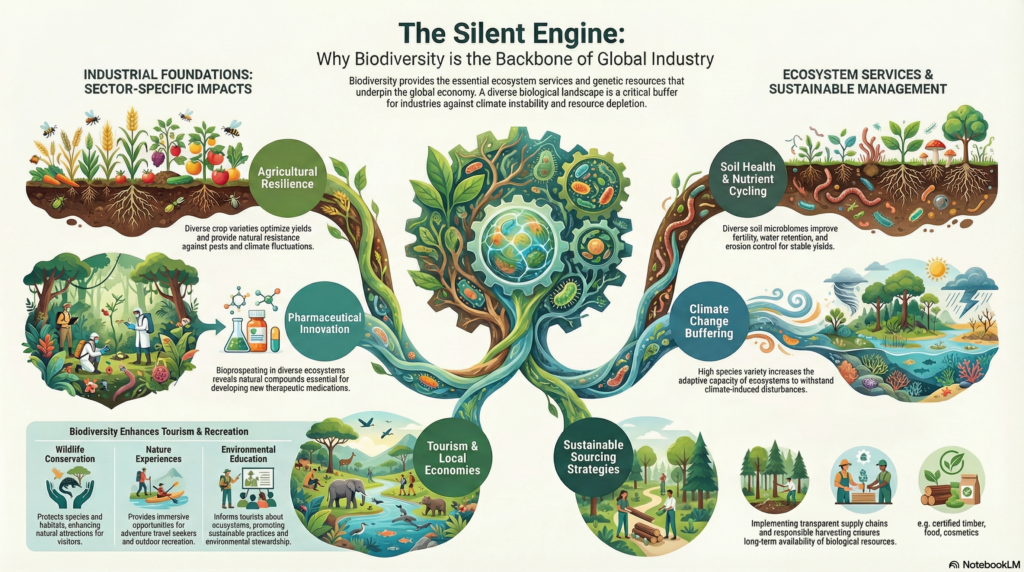
Biodiversity underpins the economic landscape by providing essential ecosystem services that support various global industries. In agriculture, diverse species enhance crop resilience and food security, while pharmaceuticals rely on unique genetic resources for drug discovery. Tourism benefits from rich natural habitats, fostering eco-friendly travel. Additionally, the interplay between biodiversity and climate resilience is critical for maintaining industry stability. Sustainable management strategies, including habitat restoration and stakeholder collaboration, are fundamental for preserving these economic benefits. A deeper exploration of these interconnections reveals the significant role biodiversity plays in ensuring long-term economic viability and environmental health.
KEY TAKEAWAYS
- Biodiversity drives ecological stability, essential for economic prosperity and social well-being across various industries.
- Agricultural biodiversity enhances food security and climate resilience, supporting sustainable farming practices.
- Diverse crop varieties optimize yields, improve nutritional value, and mitigate risks related to crop failure.
- Biodiversity is crucial for pharmaceutical innovation, providing natural compounds for essential medications and treatments.
- Eco-tourism benefits from biodiversity by promoting conservation, enhancing travel experiences, and supporting local economies.
UNDERSTANDING BIODIVERSITY’S VALUE
Biodiversity is essential for the processes that support all life on Earth, including humans. Without a wide range of animals, plants and microorganisms, we cannot have the healthy ecosystems that we rely on to provide us with the air we breathe and the food we eat. And people also value nature of itself. Understanding the value of biodiversity requires us to unpack its multifaceted contributions to ecological stability, economic prosperity, and social well-being. The preservation of biodiversity is not merely an environmental concern; it is fundamentally intertwined with economic valuation, which includes the ecosystem services that sustain industries and communities. For instance, biodiversity hotspots often harbor unique species that are vital for various sectors, from pharmaceuticals to agriculture. The genetic diversity found in these regions is essential for developing resilient crops and medicines, emphasizing the need for effective conservation strategies.
Incorporating indigenous knowledge into conservation efforts enhances our understanding of local ecosystems, promoting habitat preservation while respecting cultural significance. Ethical considerations must guide our approach, ensuring that the rights and livelihoods of indigenous communities are recognized and integrated into regulatory frameworks. This intersection of ethics and economics underscores the importance of ecosystem interdependence, as the health of one species often directly impacts another.
To foster a sustainable future, policymakers must prioritize biodiversity within economic planning. This involves not only recognizing the intrinsic value of natural ecosystems but also implementing robust conservation strategies that reflect their economic importance. By promoting habitat preservation and supporting regulations that protect biodiversity, we can create resilient societies that benefit from nature’s wealth while safeguarding it for future generations. Consequently, a thorough understanding of biodiversity’s value is essential for a balanced approach to economic growth and environmental stewardship.
Biodiversity in Agriculture
Biodiversity is the natural world around us, and the variety of all of the different kinds of organisms – the plants, animals, insects and microorganisms that live on our planet. Every one of these live and work together in ecosystems to maintain and support life on earth, and exist in delicate balance. Biodiversity in agriculture plays an essential role in enhancing crop variety, which is vital for food security and resilience against climate fluctuations. The integration of diverse plant species not only promotes pest resistance strategies but also contributes greatly to soil health enhancement, thereby fostering sustainable farming practices. Policymakers must recognize and support these ecological benefits to guarantee an economically viable and environmentally sound agricultural sector.
Crop Variety Benefits
Amidst the challenges posed by climate change, pest invasions, and shifting consumer preferences, the role of crop variety as a cornerstone of agricultural biodiversity emerges as increasingly important. Crop selection, enriched by genetic diversity, serves as a essential strategy for yield optimization and climate resilience. Diverse crop varieties not only enhance market adaptability but also contribute considerably to nutritional enhancement, responding to consumers’ diverse dietary needs.
The integration of various crops within agricultural systems promotes pest management strategies that reduce reliance on chemical inputs, thereby benefiting both ecosystems and farmer livelihoods. By diversifying their plantings,farmers can mitigate risks associated with crop failure, ensure more stable incomes, and support market demand for eco friendly products that align with sustainable agricultural practices. In addition, seed preservation efforts play an important role in maintaining this genetic diversity, safeguarding against unforeseen environmental shifts and market fluctuations.
The agroecological benefits derived from crop variety extend beyond individual farms, fostering resilience in entire communities. Policymakers must recognize the economic importance of supporting programs that incentivize biodiversity in agriculture, as these initiatives not only enhance agricultural productivity but also contribute to sustainable development goals. In this way, crop variety stands as a linchpin for a resilient and thriving agricultural sector.
Pest Resistance Strategies
The integration of diverse crop varieties lays the groundwork for effective pest resistance strategies in agricultural systems. By cultivating a range of species, farmers can enhance ecosystem resilience and reduce dependency on chemical inputs, thereby promoting sustainable agricultural practices. This approach is central to integrated pest management (IPM), which emphasizes the use of biological control methods, including the introduction of natural predators, to mitigate pest pressures.
The implementation of IPM strategies not only protects crops but also supports the ecological balance necessary for long-term agricultural viability. Diversified cropping systems create habitats for beneficial organisms, such as ladybugs and parasitic wasps, which play critical roles in controlling pest populations. This synergy between biodiversity and pest management fosters a more resilient farming landscape, ultimately contributing to food security and economic stability.
Policymakers must prioritize initiatives that encourage biodiversity in agriculture, facilitating research and incentivizing practices that promote crop variety diversification. By recognizing the economic importance of biodiversity and its role in pest resistance, we can empower farmers and communities to adopt sustainable practices, reinforcing a strong biodiversity conservation introduction that links ecological health with long-term agricultural resilience. The future of agriculture hinges on these holistic approaches to pest management.
Soil Health Enhancement
Soil health, a cornerstone of sustainable agriculture, is greatly enhanced through the integration of diverse plant species and microbial communities. The intricate relationships within soil microbiomes play a pivotal role in nutrient cycling, facilitating the breakdown of organic matter and enhancing soil fertility. By fostering a rich diversity of organisms, farmers can improve water retention, vital for maintaining crop yields in variable climates.
Additionally, diverse agricultural systems contribute to erosion control, reducing soil loss and promoting habitat restoration. Implementing biodiversity corridors not only enhances ecosystem services but also supports carbon sequestration, an essential strategy in mitigating climate change. Policy frameworks encouraging diverse land use practices can effectively promote these benefits, ensuring long-term sustainability.
Moreover, the role of biodiversity in pollution reduction cannot be overstated; a healthy soil ecosystem can filter contaminants and improve overall environmental quality. As global industries increasingly recognize the economic importance of biodiversity, innovative agricultural practices that prioritize soil health will be indispensable. By investing in the enhancement of soil health through biodiversity, stakeholders can secure a more resilient agricultural future, fostering both ecological integrity and economic viability.
Impacts on Pharmaceuticals
During my years of field research in urban ecology, I’ve noticed a fascinating, though often invisible, synergy between biodiversity and the industries that sustain us. Take agriculture, for instance: it’s not just about crops; it’s about the soil microbiomes and diverse plant species working together to enhance soil fertility and water retention. When farmers diversify their plantings, they aren’t just practicing traditional methods; they are implementing pest resistance strategies that reduce chemical dependency by creating habitats for beneficial organisms like ladybugs and parasitic wasps. This kind of agroecological resilience is what keeps our food systems stable in the face of shifting consumer demands and a changing climate.
The pharmaceutical sector is another area where I’m constantly amazed by nature’s complexity. So many of the therapeutic agents we rely on today were first discovered through bioprospecting the exploration of genetic resources in diverse ecosystems. As someone who values the preservation of rare flora, it’s sobering to realize that many potential medications are still hidden in nature, waiting to be revealed through a combination of biotechnology and indigenous knowledge.
However, this “natural pharmacy” is only available to us if we maintain ecosystem resilience through habitat restoration and ethical, sustainable sourcing. We must move toward transparent supply chains and responsible harvesting to ensure that our pursuit of innovation doesn’t lead to the very resource depletion we are trying to solve.
The pharmaceutical industry relies heavily on biodiversity for the discovery of natural compounds that serve as the foundation for many essential medications. In addition, maintaining ecosystem resilience is vital for sustaining the supply of these biological resources, as it enhances the stability and availability of medicinal plants. Implementing sustainable sourcing practices not only safeguards these resources but also promotes a more ethical and responsible approach to drug development.
Natural Compounds Discovery
Frequently overlooked in discussions of biodiversity is the critical role that natural compounds play in the discovery of pharmaceuticals. The exploration of genetic resources through bioprospecting techniques has become essential for pharmaceutical innovation, revealing a wealth of natural products derived from diverse ecosystems. These compounds, often identified with the aid of traditional knowledge and indigenous practices, provide a foundation for developing new therapeutic agents that could address pressing health challenges.
Conservation strategies that prioritize the sustainable harvesting of these genetic resources not only safeguard biodiversity but also enhance ecosystem services that underpin human health. By integrating biotechnology applications with insights gained from indigenous knowledge, researchers can reveal the potential of natural compounds while promoting ethical practices that respect local communities.
The intersection of biodiversity and pharmaceutical discovery highlights the necessity for interdisciplinary collaboration among biologists, chemists, and policymakers. To maintain the momentum in pharmaceutical innovation, it is imperative to establish policies that encourage the responsible use of natural resources, ensuring that the benefits of biodiversity are accessible to all, while simultaneously fostering a commitment to conservation that remains integral to the future of healthcare advancements.

ECOSYSTEM RESILIENCE BENEFITS
Biodiversity not only serves as a reservoir for pharmaceutical discovery but also contributes greatly to ecosystem resilience, which in turn impacts the stability and availability of these natural resources. The intricate relationships within ecosystems foster genetic diversity, which is vital for the development of new drugs and treatments. A robust genetic pool enhances the potential for discovering novel compounds that can lead to innovative pharmaceutical solutions, ultimately benefiting public health.
Furthermore, habitat restoration plays a pivotal role in maintaining this resilience. By rehabilitating degraded ecosystems, we can restore the delicate balance necessary for sustaining diverse biological communities. This not only supports the survival of various species but also guarantees the continued availability of medicinal resources derived from them.
Policy frameworks aimed at protecting biodiversity must prioritize habitat conservation and restoration initiatives. Such measures are essential not only for the integrity of ecosystems but also for the pharmaceutical industry, which relies on these natural systems for its raw materials. In an era of increasing environmental change, fostering ecosystem resilience through biodiversity preservation is not merely a conservation issue; it is a necessity for sustaining the future of pharmaceuticals and public health.
Sustainable Sourcing Practices
Biodiversity, also known as ‘biological diversity’, is the variety of life found on Earth. It includes all living things, like bacteria, plants, fungi, insects, animals, and humans. But it is not simply the number of species in an area. It also includes the number of individuals per species, and the balance of different species’ populations. This is influenced by different environmental pressures and mechanisms of evolution, like genetic mutation. In the context of pharmaceutical development, sustainable sourcing practices are crucial for guaranteeing the long-term availability and integrity of biological resources. The industry must prioritize ethical sourcing to safeguard biodiversity while fostering innovation. By integrating sustainability into procurement strategies, pharmaceutical companies can mitigate risks associated with resource depletion and enhance their reputations.
Key principles of sustainable sourcing include:
- Biodiversity certification to validate sustainable practices.
- Supply chain transparency to build trust and accountability.
- Responsible harvesting techniques that prevent ecosystem degradation.
- Community engagement to guarantee local populations benefit from resource use.
- Fair trade initiatives that promote equitable economic relationships.
Adopting these practices requires a thorough approach, including ecosystem accounting and conservation partnerships. Such initiatives not only promote sustainable livelihoods but also strengthen local sourcing efforts, guaranteeing that the pharmaceutical industry can rely on a diverse array of resources. By aligning business strategies with environmental and social goals, the sector can contribute positively to global biodiversity while fostering innovation and resilience in drug development. This interdisciplinary approach is crucial to sustaining both industry growth and ecological integrity.
Role in Tourism and Recreation
How does biodiversity enhance the appeal of tourism and recreation sectors? Biodiversity serves as a cornerstone for eco-friendly tourism and adventure travel, drawing visitors enthusiastic to connect with nature. By offering rich wildlife experiences and unique landscapes, diverse ecosystems promote sustainable practices that benefit both the environment and local economies. The interplay between cultural heritage and biodiversity fosters community engagement, allowing local populations to actively participate in wildlife conservation initiatives.
The following table outlines key aspects of biodiversity’s role in tourism and recreation:
| Key Aspects | Description |
| Wildlife Conservation | Protects species and habitats, enhancing natural attractions. |
| Nature Experiences | Provides immersive opportunities for adventure travel seekers. |
| Environmental Education | Informs tourists about ecosystems, promoting sustainable practices. |
Engaging in recreation activities within biodiverse settings not only enriches the tourist experience, but also raises awareness of conservation efforts. Travel incentives, such as eco-tours and cultural heritage programs, encourage visitors to explore areas where biodiversity thrives, fostering a sense of responsibility towards environmental stewardship.
Ultimately, the integration of biodiversity into tourism and recreation sectors is essential for promoting sustainable development. By harnessing nature’s potential, stakeholders can create a thriving tourism industry that respects ecological balance while offering unforgettable experiences. As a result, ensuring the protection of biodiversity is not only a moral obligation but also an economic imperative in our pursuit of freedom and enjoyment in nature.
Contribution to Ecosystem Services
Ecosystem services are essential benefits provided by nature that sustain human life and economic activities. These services, which arise from the intricate web of species interdependence, are crucial for maintaining ecological balance and promoting ecosystem stability. The economic valuation of these services underscores their significance across various industries, emphasizing the need for effective conservation strategies and habitat preservation.
- Genetic Diversity: Critical for resilience to diseases and changing environmental conditions.
- Cultural Significance: Enriches communities, supporting traditions and identities through biodiversity.
- Urban Biodiversity: Enhances urban living conditions, promoting mental well-being and recreational opportunities.
- Ecosystem Restoration: Essential for reversing environmental degradation, ensuring sustainable development.
- Economic Valuation: Provides quantifiable benefits that drive policy-making and funding for conservation efforts.
The contribution of biodiversity to ecosystem services extends beyond mere economic metrics; it is intertwined with cultural values and social well-being. As urban areas expand, the integration of urban biodiversity becomes paramount, fostering green spaces that contribute to both environmental health and quality of life.
Moreover, conservation strategies must prioritize the protection of genetic diversity, as it plays a crucial role in the resilience of ecosystems. By investing in habitat preservation and ecosystem restoration initiatives, societies can safeguard these invaluable services that ultimately support economic growth and human flourishing. The imperative is clear: the protection of biodiversity is not just an environmental concern, but a foundational element of sustainable economic development.
Biodiversity and Climate Resilience
Biodiversity serves as a significant buffer against the impacts of climate change, enhancing climate resilience across various ecosystems. A rich variety of species contributes to the adaptive capacity of ecological systems, enabling them to withstand and recover from climate-induced disturbances. This is particularly evident in biodiversity hotspots, regions that are both rich in endemic species and under significant threat from environmental changes.
The interdependence of species within these hotspots creates complex interactions that bolster ecosystem functions, such as carbon sequestration, soil health, and water regulation. These functions in turn play an essential role in climate adaptation strategies, as ecosystems that are biologically diverse are better equipped to cope with changing climatic conditions.
Policymakers should recognize the economic implications of biodiversity in the context of climate resilience. Investing in the conservation of biodiversity hotspots can yield significant returns in the form of enhanced ecosystem services, which are imperative for agriculture, fisheries, and tourism—industries reliant on stable climates. Additionally, integrating biodiversity considerations into climate action plans can lead to more holistic approaches, ensuring that efforts to mitigate climate change do not compromise the very ecological foundations upon which our economies depend.
To foster this resilience, interdisciplinary collaboration is essential. Scientists, economists, and policymakers must work together to promote sustainable practices that honor the intricate connections between biodiversity and climate adaptation. Fostering this synergy will not only protect our ecosystems but also provide the freedom and opportunity for future generations to thrive in a stable climate.
Strategies for Sustainable Management
The intricate relationship between biodiversity and climate resilience underscores the necessity for sustainable management strategies that prioritize ecological integrity. To effectively address the challenges posed by biodiversity loss, a multifaceted approach is vital—one that integrates community engagement, robust policy frameworks, and conservation practices tailored to specific ecosystems.
Key strategies for sustainable management include:
- Stakeholder Collaboration: Engaging local communities, businesses, and governmental bodies fosters a shared responsibility for biodiversity conservation.
- Habitat Restoration: Implementing targeted restoration projects can revitalize degraded ecosystems, enhancing their capacity to provide essential services.
- Education Initiatives: Raising awareness of biodiversity’s economic importance cultivates a culture of stewardship and responsibility among community members.
- Funding Mechanisms: Securing financial resources for biodiversity projects guarantees long-term sustainability and supports innovative research priorities.
- Indigenous Knowledge: Incorporating traditional ecological knowledge offers valuable insights for effective ecosystem management and conservation practices.
The implementation of these strategies must be guided by thorough policy frameworks that facilitate adaptive management and promote resilience. By prioritizing collaboration and education, we can empower communities to go green and take an active role in biodiversity stewardship while strengthening industries that depend on healthy ecosystems. Ultimately, these sustainable management practices will not only safeguard ecosystems but also enhance the economic viability of industries reliant on biodiversity, creating a harmonious balance between ecological integrity and human freedom.

RELATED STUDIES ABOUT IMPORTANCE OF BIODIVERSITY
Biodiversity serves as the intricate tapestry of life, weaving together the threads of economic significance and ecological stability. In an era marked by environmental uncertainty, the preservation of diverse biological resources emerges as a cornerstone for sustainable development. As industries increasingly rely on nature’s bounty, the interconnectedness of ecosystems becomes evident, illuminating pathways for resilient economies. Recognizing and safeguarding this wealth of biodiversity is imperative, ensuring that future generations inherit a flourishing planet, rich in both life and opportunity.
The Importance Of Biome In Shaping Urban Biodiversity
Objective: This review synthesizes current knowledge to argue that the impacts of urbanization on biodiversity differ fundamentally between biomes, with a particular focus on the understudied drylands. It critiques the over-reliance on data and management paradigms from temperate biomes and proposes a framework for understanding biome-specific urban ecology.
Key Findings:
- Major Research Bias: Urban biodiversity research is heavily skewed towards temperate biomes. Drylands—the world’s largest terrestrial biome, covering over 40% of land—are drastically underrepresented, especially cities in low-income countries. This limits global understanding and risks inappropriate conservation policies.
- The Critical Role of Irrigation: In drylands, supplemental irrigation is the key mechanism altering urban ecology. It can create urban “oases” that are sometimes greener and more biodiverse than surrounding wildlands, but with fundamentally different species compositions dominated by non-native and human-commensal species.
- Divergent Biodiversity Patterns:
- Species Richness: Urban species decline is often less severe in drylands than in temperate zones. Dryland cities can support a higher proportion of the regional species pool.
- Species Composition: This is where the most critical differences lie. In drylands:
- Green patches (irrigated, mesic areas) favor non-native species.
- Gray spaces (built-up areas) and yellowspaces (remnant wildlands or xeriscaped areas) can better support native dryland specialists adapted to heat and sparse vegetation.
- In contrast, in temperate cities, green spaces are often crucial for supporting native biodiversity.
- Socioeconomic and Cultural Mediators: The “luxury effect” (where wealth correlates with biodiversity) is stronger in drylands due to the cost of irrigation. Wealthier neighborhoods can afford lush, exotic landscaping, increasing local diversity but often favoring non-natives. Historic policies (e.g., redlining) and cultural preferences for “greening” also shape urban ecological patterns and environmental injustices in biome-specific ways.
- Misleading Focus on “Green”: The global narrative equating “nature” and conservation with “green spaces” is temperate-biased and can be harmful in drylands. It may promote water-intensive landscaping that undermines native ecosystems. The authors advocate for the broader concept of “nature spaces” (including native yellowspaces) as management targets.
Conclusions & Recommendations:
- Biome-Specific Management is Essential: Policies and management strategies (e.g., urban greening initiatives) cannot be uniformly applied across biomes. What works in temperate cities may be ecologically and socially detrimental in dryland cities.
- Prioritize Native Dryland Ecosystems: Conservation in dryland cities should focus on protecting and creating yellowspaces (native, xeric habitats) rather than simply increasing generic greenery, to support endemic dryland specialists.
- Address Knowledge Gaps: Urgent research is needed in low-income dryland cities. Future studies must integrate biome type, socioeconomic factors, and cultural contexts to understand urban biodiversity drivers.
- Reframe Global Goals: International assessments and sustainability goals (e.g., UN SDGs) must move beyond a temperate-centric, “green”-focused view of urban nature to incorporate biome-specific ecological and social realities.
Broader Implication: Effective urban conservation requires a paradigm shift from a one-size-fits-all approach to context-specific strategies that account for the interactive effects of biome, climate, socioeconomic inequality, and culture.
| REFERENCE: Eleanor S. Diamant, Krista N. Oswald, Adewale G. Awoyemi, Kevin J. Gaston, Ian MacGregor-Fors, Oded Berger-Tal, Uri Roll, The importance of biome in shaping urban biodiversity, Trends in Ecology & Evolution, Volume 40, Issue 6, 2025, Pages 601-612, ISSN 0169-5347, https://doi.org/10.1016/j.tree.2025.03.014. (https://www.sciencedirect.com/science/article/pii/S0169534725000862) |
THE FATE OF BIODIVERSITY FOLLOWING REGULATION AND RESTORATION OF A LOWLAND RIVER OF DANISH AND EUROPEAN IMPORTANCE
Background: The lower Skjern River in Denmark was historically a biodiversity hotspot of national and European importance. In the 1960s, the river was channelized and wetlands were drained for agriculture, leading to severe biodiversity loss. To reverse this, a major restoration project (2000–2002) re-meandered 19 km of the river into a 26 km winding channel, aiming to restore natural hydrology and biodiversity.
Objective: This study evaluates the long-term effects of channelization and subsequent restoration on aquatic biodiversity, focusing on aquatic plants and EPT taxa (Ephemeroptera, Plecoptera, Trichoptera). It compares data from before regulation (pre-1960), after regulation (1976–2000), and after restoration (2003–2012).
Key Findings
- Impact of Channelization
- Taxon richness of aquatic plants and EPT taxa significantly declined after channelization.
- Losses were most severe for species associated with backwaters (BW) and near-bank zones (NBZ).
- Backwater habitats were nearly completely eliminated (only 5.8% of the original area remained after restoration).
- Response to Restoration
- Restoration led to a significant increase in taxon richness for both aquatic plants and EPT taxa.
- Recovery was immediate (within 1 year) and persisted over 10 years.
- However, richness did not return to pre-channelization levels, especially for backwater-associated species.
- Habitat-Specific Recovery
- Vegetated current zones (VCZ) recovered well, reaching pre-regulation levels.
- Near-bank zones (NBZ) and backwaters (BW) showed limited recovery.
- Rare species, particularly those dependent on backwaters, remained largely absent.
- Dispersal Limitations
- Many missing species had distant source populations (up to 300 km away), hindering recolonization.
- Common species with nearby populations recolonized more successfully.
- Waterfowl and wind are important dispersal vectors, but stochastic and slow.
- Other Factors
- Weed cutting cessation post-restoration benefited some plant species.
- Water quality changes had minimal impact on recovery.
- Invasive species (e.g., Elodea canadensis) did not significantly hinder native recolonization.
- Climate change effects were negligible during the study period.
Lessons Learned
- Habitat recreation was insufficient: Only 5.8% of original backwater area was restored.
- Natural processes are slow: Full channel recovery through erosion and sedimentation may take decades.
- Stabilization measures (e.g., boulder placement) inhibited natural habitat formation.
- Long-term monitoring (>10 years) is essential to assess restoration success.
Recommendations
- Avoid artificial bank stabilization to allow natural hydromorphological processes.
- Actively create backwaters and islands during restoration.
- Enhance hydrological connectivity between the river and floodplain.
- Consider reintroductions of rare species with poor dispersal capacity.
- Implement long-term monitoring programs to track recovery beyond 10 years.
Conclusion
While restoration of the Skjern River successfully increased biodiversity relative to the channelized state, full recovery to pre-regulation levels was not achieved within 10 years—especially for backwater-associated species. Achieving pre-disturbance biodiversity will require additional active measures, greater habitat recreation, and patience for natural processes to unfold over decades.
| REFERENCE: P. Wiberg-Larsen, B. Kronvang, E.A. Kristensen, A. Baattrup-Pedersen,The fate of biodiversity following regulation and restoration of a Lowland River of Danish and European importance, Ecological Engineering, Volume 218, 2025, 107664, ISSN 0925-8574, https://doi.org/10.1016/j.ecoleng.2025.107664. (https://www.sciencedirect.com/science/article/pii/S0925857425001521) |
Beyond Species Richness: Forest Structure And Edaphic Conditions Have Similar Importance But Different Effects On Multi-Taxon Biodiversity
Key Findings:
This study investigates how forest management impacts biodiversity by disentangling the effects of forest structural changes from underlying soil (edaphic) conditions across seven taxonomic groups in temperate broadleaf forests. Using a paired-stand design (managed vs. unmanaged) in Denmark, the research reveals that:
- Taxon-Specific Responses to Management: The overall effect of forest management on alpha diversity (species richness per plot) varies significantly by taxa:
- Positive for plants and rove beetles.
- Neutral for ground beetles and mosses.
- Negative for crane flies, fungi, and lichens.
- Equal Importance of Drivers: Both forest structure (e.g., tree size, deadwood, canopy cover) and edaphic conditions (soil properties and moisture) are similarly important in explaining species occurrences and abundances. However, their specific effects differ among taxa.
- Individual Species Responses Are Key: Analysis using joint species distribution models (HMSC) showed that individual species’ responses to local conditions are crucial. For example, while ground beetle species richness showed no overall management effect, ~20% of species responded strongly to structural variables, with positive and negative responses canceling each other out at the community level.
- Synergies and Trade-offs: Lichens and fungi generally responded positively to mature forest structures and soils with higher carbon/nitrogen, whereas vascular plants responded negatively to these same factors, revealing a trade-off between these taxa.
- Limited Direct Management Effect: After accounting for changes in forest structure and soil conditions, the simple management category (managed vs. unmanaged) itself explained little additional variation, indicating that management effects are largely mediated through these altered environmental features.
Implications for Management & Conservation:
- Move Beyond Simple Categories: Forest management planning and conservation prioritization should move beyond simple “managed vs. unmanaged” classifications and focus on specific, manageable forest attributes like structural complexity and soil moisture.
- Site Selection is Crucial: Since inherent soil properties (e.g., pH, nutrient content) vary regionally and are less amenable to short-term management, selecting sites with appropriate soil conditions is a key strategy for effective biodiversity conservation.
- Target Structural Complexity: For taxa that benefit from complex structures (e.g., fungi, lichens), management practices that increase structural heterogeneity, extend rotation periods, and retain deadwood are beneficial.
- Use Indicator Species: Focusing on individual species’ responses can help identify specific indicator species for certain management intensities or environmental conditions, allowing for more targeted conservation actions.
Conclusion: The balance between manageable forest structure and inherent abiotic soil conditions jointly shapes multi-taxon biodiversity patterns. Effective forest stewardship requires considering both dimensions and the nuanced, species-specific responses within ecological communities to predict biodiversity outcomes and design optimized management and conservation strategies.
| REFERENCE: Sebastian Kepfer-Rojas, Otso Ovaskainen, Peter Friis Møller, Vivian Kvist Johannsen, David Bille Byriel, Mathias Just Justesen, Torben Riis-Nielsen, Aslak Kappel Hansen, Lasse Gottlieb, Inger Kappel Schmidt, Beyond species richness: Forest structure and edaphic conditions have similar importance but different effects on multi-taxon biodiversity, Forest Ecology and Management, Volume 571, 2024, 122230, ISSN 0378-1127, https://doi.org/10.1016/j.foreco.2024.122230. (https://www.sciencedirect.com/science/article/pii/S0378112724005425) |
CONCLUSION
As we look toward the future, it’s clear to me that a “one-size-fits-all” approach to conservation simply won’t work. My work in urban biodiversity has taught me that management strategies must be biome-specific; what revitalizes a temperate forest in Denmark won’t necessarily work for a city in a dryland biome. We need to embrace “nature spaces” that honor local ecological realities, such as protecting native dryland specialists rather than just adding generic greenery that drains local water resources. This requires a paradigm shift in how we think about economic growth and environmental stewardship, moving beyond simple categories to focus on structural complexity and inherent abiotic conditions.
Ultimately, the preservation of biodiversity is about more than just numbers on a balance sheet; it’s about the legacy we leave for the next generation. Whether it’s through the restoration of historical biodiversity hotspots like the Skjern River or the integration of green spaces in our expanding urban centers, our goal should be a flourishing planet rich in both life and opportunity.
By prioritizing stakeholder collaboration, education, and the inclusion of indigenous knowledge, we can empower communities to go green and take an active role in stewardship. It’s time we recognize that a resilient economy is one that exists in harmony with the delicate balance of the natural world, ensuring that we continue to benefit from nature’s wealth while safeguarding it for those who follow.