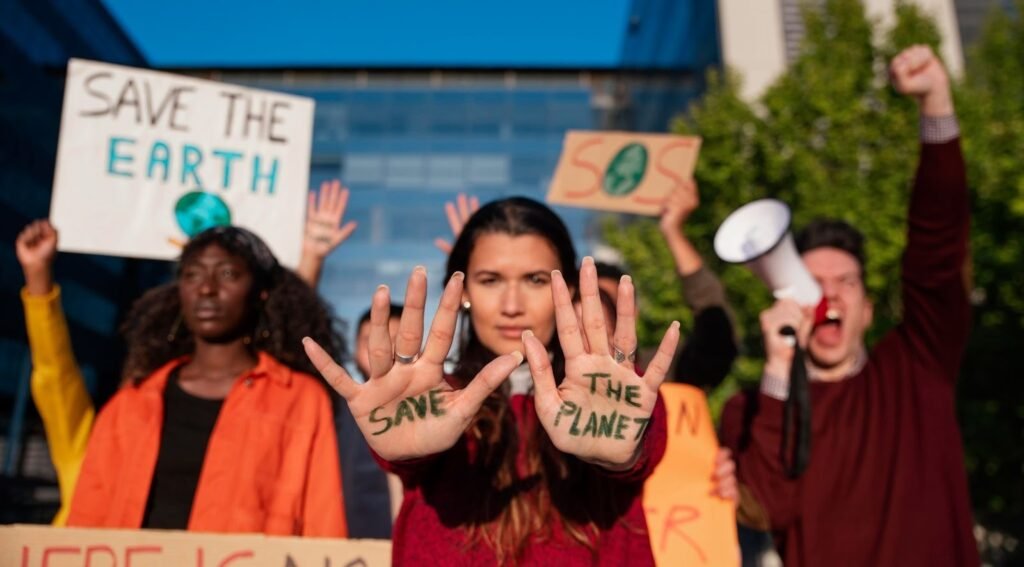
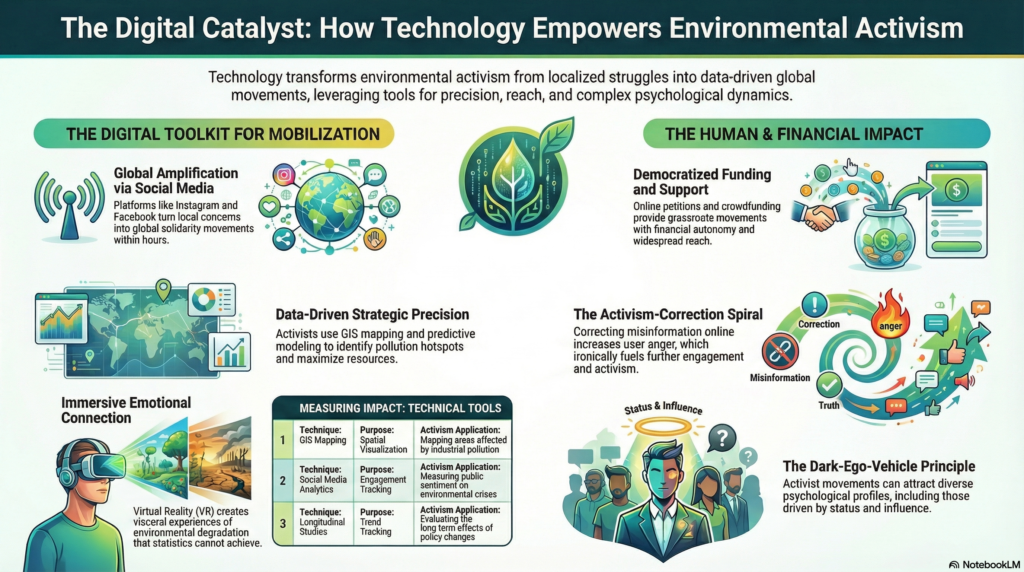
In my research at UC Berkeley, I’ve often focused on how community-led activism can pivot from local concerns to global impact. Social media has become the ultimate amplifier for this. I remember a time when a small community group fighting for clean water would struggle to get a single local news mention. Today, that same group can leverage Instagram or Facebook to build global solidarity in hours. However, as someone deeply embedded in these movements, I see the “double-edged sword” of these platforms daily.
We have the power to democratize information, but we must also navigate the thicket of misinformation that can derail even the most scientific, data-driven campaigns. Data analytics, too, has fundamentally changed how we strategize. In my work with non-profits, we no longer just “hope” our message lands; we use predictive modeling and impact measurement to ensure every resource is used to its maximum potential.
Whether it’s using GIS to map pollution hotspots or longitudinal studies to track policy shifts, these technical tools allow us to fight for environmental sustainability with a level of precision that was once reserved only for major corporations. This intersection of technology and activism isn’t just about being “high-tech” it’s about being effective, measurable, and ultimately, successful in creating the change our planet so desperately needs.
Technology notably strengthens environmental activism by enhancing communication, awareness, and mobilization. Social media platforms amplify activist voices, facilitating real-time updates on pressing issues like climate change. Data analytics empower organizations to strategize effectively, while mobile apps promote eco-friendly practices through community engagement. Virtual reality immerses users in environmental narratives, fostering emotional connections and inspiring action. Online petitions and crowdfunding democratize support by simplifying participation and funding innovative solutions. Collaborative platforms unite activists globally, enhancing resource sharing and collective efforts. Each advancement uniquely contributes to a potent movement, and more insights await those looking to explore this transformative journey.
KEY TAKEAWAYS
- Social media amplifies environmental activism by facilitating rapid communication, mobilizing communities, and raising awareness on critical issues like climate change.
- Data analytics enhances activism by enabling organizations to measure impact, allocate resources strategically, and forecast future environmental trends.
- Mobile apps promote eco-friendly practices and community engagement through features like carbon footprint calculators and local sustainability resources.
- Virtual reality experiences create emotional connections to environmental issues, fostering urgency and personal responsibility for conservation efforts.
- Online petitions and crowdfunding platforms democratize support for environmental causes, allowing activists to mobilize resources and engage a broader audience.
SOCIAL MEDIA’S IMPACT
In the domain of environmental activism, social media serves as a powerful catalyst, amplifying voices and mobilizing communities around critical issues. The rise of platforms such as Twitter, Instagram, and Facebook has transformed how activists communicate, allowing for rapid dissemination of information and fostering a sense of global solidarity. This digital outreach has become an essential tool for raising awareness about environmental crises, from climate change to deforestation, enabling grassroots movements to gain momentum and visibility.
Social influence plays a pivotal role in this landscape. Influencers and activists leverage their platforms to educate their followers on pressing environmental concerns, often sparking discussions that extend beyond their immediate circles. The viral nature of social media campaigns can lead to unprecedented levels of engagement, encouraging users to participate in petitions, protests, and community clean-up events. The ability to share personal stories and experiences enhances the emotional resonance of these campaigns, fostering a sense of urgency and collective responsibility.
Moreover, social media serves as a means for marginalized voices to be heard, often highlighting issues that mainstream media overlooks. By democratizing information access, these platforms empower individuals to challenge established narratives and advocate for change. However, this newfound power comes with challenges; misinformation can spread just as quickly as the truth, complicating the landscape of environmental advocacy. Ultimately, social media’s impact on environmental activism underscores its role as a double-edged sword, offering both opportunities for connection and potential pitfalls that activists must navigate.
Data Analytics for Activism
The term “environmental activism” is defined as the actions of individuals or groups that protect or aid the environment. Those involved in the movement identify issues that threaten the planet’s viability, from community to global concerns, and then develop strategies to promote awareness or produce solutions that directly address the problem. Data analytics is transforming environmental activism by providing tools for impact measurement and predictive modeling. These techniques enable activists to quantify the effectiveness of their initiatives and forecast future outcomes based on current trends. As a result, organizations can strategically allocate resources and tailor their approaches to maximize their influence on environmental issues.
Impact Measurement Techniques
Impact measurement techniques are essential for environmental activism, providing activists with the tools necessary to evaluate the effectiveness of their initiatives. With the rise of data analytics, these techniques enable the systematic collection and analysis of data to inform strategies, assess impact, and drive accountability. Measurement tools play a critical role in this process, allowing organizations to quantify their efforts and present compelling evidence to stakeholders.
Here is a concise overview of various impact measurement techniques:
| Technique | Description | Example Use Case |
| Surveys and Questionnaires | Collect qualitative and quantitative data from stakeholders | Assess community awareness after a campaign |
| Social Media Analytics | Analyze engagement and reach on social platforms | Measure public sentiment on environmental issues |
| Geographic Information Systems (GIS) | Visualize spatial data for environmental changes | Map areas affected by pollution |
| Case Studies | In-depth analysis of specific initiatives | Document success stories of conservation efforts |
| Longitudinal Studies | Track changes over time in specific metrics | Evaluate long-term effects of policy changes |
Predictive Modeling Applications
Utilizing predictive modeling applications, environmental activists can harness data analytics to anticipate future trends and outcomes, ultimately enhancing their strategic decision-making processes. These advanced tools enable climate forecasting, allowing activists to better understand potential shifts in weather patterns and their implications for ecosystems. By employing ecosystem simulations, activists can visualize the impacts of environmental policies on biodiversity, aiding in resource management and habitat modeling.
Wildlife tracking technologies further empower activists by providing real-time data on species movements, which is essential for conservation efforts. Predictive analytics also plays an important role in pollution prediction, helping organizations identify potential hotspots and prioritize interventions. As these models simulate various scenarios, they bolster disaster preparedness, equipping communities to respond proactively to environmental threats.
Furthermore, by evaluating the carbon footprint of various activities, predictive modeling helps inform strategies to reduce emissions effectively. In this era of data-driven activism, the integration of predictive modeling applications not only enhances operational efficiency but also empowers activists to advocate for environmental sustainability with confidence, fostering a more resilient and liberated environment for future generations.
Mobile Apps for Awareness
Beyond the data and the “big” movements, I find immense value in the personal, daily actions that technology now facilitates. As an urban gardener, I’ve used mobile apps to track my own plant-growing experiments and calculate my family’s carbon footprint. These aren’t just gadgets; they are community engagement tools that foster a sense of shared responsibility. They turn the abstract concept of “saving the planet” into a tangible, social experience where we can encourage one another to go green through gamified challenges and real-time updates.
One of the most profound shifts I’ve witnessed is the rise of Virtual Reality in environmental narratives. I’ve seen skeptics become advocates after a VR experience that transports them into a dying coral reef or a melting polar landscape. There is a visceral, emotional resonance that statistics simply cannot achieve. By bridging the gap between cold data and the lived reality of environmental degradation, VR empowers us to feel the urgency of this crisis in our very bones.
Similarly, the democratization of funding through crowdfunding allows us to support eco friendly products and innovative conservation projects that might never have received traditional backing. This financial autonomy is crucial for grassroots movements that often operate on the fringes of the political status quo.
Mobile apps have emerged as powerful tools in raising environmental awareness, offering features that promote eco-friendly practices among users. By integrating community engagement tools, these applications facilitate collaboration and information sharing, empowering individuals to take meaningful action. As the landscape of environmental activism evolves, exploring the functionalities of these mobile apps reveals their potential to transform awareness into tangible change. In the environmental management profession, we tend to focus on management, policy and science, with perhaps less consciousness of the roles of environmental activism and advocacy in influencing the democratic processes that lead directly and indirectly to vital outcomes for environment, society and often economy.
Eco-Friendly App Features
As environmental concerns escalate globally, the emergence of eco-friendly apps has become an essential tool for raising awareness and promoting sustainable practices among users. These applications are designed with sustainable design principles in mind, ensuring that their development and functionality support eco-friendly initiatives.
Key features of these apps often include carbon footprint calculators, recycling guides, and local sustainability resources, empowering users to make informed choices. By integrating gamification elements, eco-friendly apps can enhance user engagement, motivating individuals to go green through sustainable challenges and by sharing their progress within social networks. This not only fosters a sense of community but also amplifies the message of environmental responsibility.
Moreover, many apps utilize real-time data to provide insights into local environmental conditions, such as air quality and waste management, further promoting awareness. Features like personalized notifications and reminders for eco-friendly practices help users incorporate sustainability into their daily routines.
Ultimately, the innovative use of technology in these applications not only raises awareness but also inspires a collective movement towards a more environmentally conscious society, engaging users in a dialogue that advocates for freedom through responsible living.

COMMUNITY ENGAGEMENT TOOLS
The rise of eco-friendly apps has paved the way for innovative community engagement tools that empower users to advocate for environmental awareness on a local scale. These mobile applications not only facilitate grassroots mobilization but also promote digital storytelling, enabling individuals to share their experiences and insights effectively. By harnessing the power of technology, communities can collaborate and amplify their voices in the fight for a sustainable future.
Key features of these apps include:
- Event Coordination: Users can organize local clean-ups, tree planting, and awareness campaigns, fostering community participation.
- Information Sharing: Apps provide real-time updates on environmental issues, legislation changes, and sustainability tips, keeping users informed and engaged.
- Storytelling Platforms: Users can upload and share their environmental narratives, creating a rich tapestry of experiences that resonate with others and inspire action.
In an era where information is at our fingertips, these community engagement tools serve as essential instruments for environmental activism. As individuals connect through these platforms, they not only advocate for change but also cultivate a sense of shared responsibility, empowering them to forge a more sustainable world together.
Virtual Reality Experiences
How can virtual reality (VR) transform the way we engage with environmental issues? By harnessing immersive storytelling, VR creates experiences that transcend traditional forms of communication, allowing individuals to step into the shoes of those affected by environmental degradation. This technology fosters an emotional connection that can inspire genuine action and advocacy.
Consider the following table illustrating the potential impact of VR experiences on environmental activism:
| Experience Type | Emotional Impact |
| Virtual Forest Walk | Awe and appreciation for nature |
| Coral Reef Dive | Urgency and concern for marine life |
| Polar Ice Exploration | Sadness and desire to protect habitats |
| Urban Pollution Tour | Anger and motivation to seek change |
These VR experiences transport users to critical ecosystems facing threats, enabling them to witness the consequences of inaction firsthand. Such powerful engagement not only elevates awareness but also cultivates a deep emotional resonance with the issues at hand.
Moreover, by bridging the gap between abstract statistics and visceral experiences, VR empowers individuals to feel the urgency of environmental crises. As participants navigate through these transformative narratives, they emerge with a renewed sense of responsibility and a call to action, enthusiastic to advocate for the preservation of our planet. In this way, virtual reality serves as a potent tool in the environmental activist’s arsenal, releasing the potential for increased empathy and mobilization in the fight for a sustainable future.
Online Petitions and Campaigns
Harnessing the power of the internet, online petitions and campaigns have become essential tools in the arsenal of environmental activism. These digital platforms facilitate grassroots mobilization, providing a voice to those who seek to effect change in environmental policies and practices. As advocates rally for a sustainable future, they increasingly rely on the following key features:
- Widespread Reach: Online campaigns can engage thousands, if not millions, of supporters around the globe, amplifying the message of environmental justice.
- Instant Communication: Social media integration allows activists to share updates rapidly, keeping supporters informed and engaged in real-time.
- User-Friendly Platforms: Tools such as Change.org and Avaaz have simplified the petition process, making it accessible to anyone with an internet connection.
These platforms exemplify digital advocacy, enabling individuals and organizations to mobilize collective action effectively. By harnessing the internet, environmental activists can quickly gather signatures, generate awareness, and apply pressure on decision-makers. The immediacy of online campaigns not only rallies support but also creates a sense of community among like-minded individuals who are passionate about protecting the planet.
However, the effectiveness of online petitions hinges on strategic promotion and engagement. Activists must craft compelling narratives that resonate with their audience, ensuring that their cause garners the attention it deserves. As the world becomes more interconnected, the potential for online petitions and campaigns to drive meaningful change in environmental activism continues to grow, empowering citizens to advocate for freedom and sustainability.
Crowdfunding for Environmental Causes
Crowdfunding has emerged as a transformative financial tool for environmental causes, enabling individuals and organizations to fund innovative projects that address pressing ecological challenges. Through various crowdfunding platforms, activists can mobilize grassroots support and engage donors in a more dynamic manner than traditional funding avenues allow. Concern for the impact on human life of problems such as air and water pollution dates to at least Roman times. Pollution was associated with the spread of epidemic disease in Europe between the late 14th century and the mid-16th century, and soil conservation was practiced in China, India, and Peru as early as 2,000 years ago. In general, however, such concerns did not give rise to public activism.
Effective campaign strategies are essential for harnessing the power of crowdfunding. Successful projects often incorporate compelling narratives that resonate with potential backers, complemented by transparent financial practices that assure donors their contributions will be used responsibly. This financial transparency not only builds trust but also enhances donor engagement, encouraging repeat contributions and fostering a sense of community among supporters.
Fundraising events, whether virtual or in-person, serve as a catalyst for engaging wider networks and generating excitement around environmental initiatives, including campaigns that support eco friendly products as practical alternatives to unsustainable consumer choices. By leveraging reward incentives, such as exclusive merchandise or recognition, campaigns can motivate donors to contribute at higher levels, further amplifying their impact.
Numerous success stories illustrate the potential of crowdfunding in driving environmental change. From reforestation projects to clean energy initiatives, these campaigns often showcase the power of impact investing and community outreach in creating tangible results. As more individuals become aware of environmental issues, crowdfunding offers a unique opportunity to channel their passion into actionable support.
In an era where freedom to advocate for the planet is paramount, crowdfunding stands out as an empowering tool, enabling collective action that can lead to meaningful change in the fight for environmental sustainability.
Collaborative Platforms for Change
The rise of crowdfunding has paved the way for innovative collaborative platforms that amplify collective efforts in environmental activism. These platforms empower grassroots organizing and foster a sense of community among advocates. By combining technology with a shared vision for sustainability, activists can create significant impact through collaborative initiatives.
Consider the following key elements that define these platforms:
- Digital Storytelling: Harnessing the power of narratives to engage and inform the public about environmental issues.
- Advocacy Networks: Forming connections across diverse groups to coordinate efforts and amplify voices for change.
- Resource Sharing: Facilitating access to tools, knowledge, and strategies essential for effective activism.
Collaborative platforms also offer environmental education through online workshops and virtual conferences, equipping participants with the skills and insights needed to advocate effectively. These action-oriented platforms encourage knowledge exchange, allowing activists to learn from one another’s successes and challenges.
Moreover, the integration of resource-sharing mechanisms guarantees that valuable information is readily accessible, enhancing the ability of activists to mobilize and execute initiatives. By leveraging technology, these platforms create a dynamic ecosystem where individuals are empowered to take action, fostering a culture of collaboration that transcends geographical boundaries. As the movement for environmental justice continues to grow, the role of these collaborative platforms will be integral in shaping a more sustainable future for all.

RELATED STUDIES ABOUT ENVIRONMENTAL ACTIVISM
To sum up, technology serves as a powerful catalyst for environmental activism, enhancing connectivity and amplifying voices across diverse platforms. While critics may argue that digital activism lacks tangible impact, evidence shows that online movements have led to significant policy changes and increased public awareness. By leveraging social media, data analytics, and collaborative tools, activists can mobilize support and foster a global community dedicated to environmental preservation. The integration of technology into activism is essential for driving meaningful, lasting change.
Environmental Activism, Dark Triad Traits, and Left-Wing Authoritarianism – A Constructive Replication Study
Objective:
This study aimed to constructively replicate and extend previous research (Zacher, 2024) that found positive links between environmental activism, dark triad traits (Machiavellianism, narcissism), and left-wing authoritarianism. Using a larger sample and a longitudinal design, the study tested reciprocal relationships over one year to clarify whether these traits predict activism, or whether activism reinforces such traits.
Method:
- Sample: 1,998 employed adults in Germany, surveyed at two time points one year apart (2023–2024).
- Measures:
- Environmental activism: Civic actions, participation in activist groups (e.g., Fridays for Future, Last Generation), and support for such groups.
- Dark triad traits: Machiavellianism, narcissism, psychopathy.
- Left-wing authoritarianism: Antihierarchical aggression, anticonventionalism, top-down censorship.
- Design: Two-wave panel study with baseline controls, pre-registered hypotheses, and multiple regression analyses accounting for demographics, Big Five personality, right-wing authoritarianism, and political orientation.
Key Findings:
- Dark Triad Traits & Activism:
- Machiavellianism uniquely predicted increased civic environmental actions over time, and vice versa.
- Narcissism was not a unique predictor in controlled models, but exploratory analyses showed it predicted participation in and support for activist groups.
- Psychopathy was positively predicted by civic actions and group participation (exploratory).
- Left-Wing Authoritarianism & Activism:
- Antihierarchical aggression uniquely predicted greater participation in activist groups (but not vice versa).
- Anticonventionalism and support for activist groups positively predicted each other over time.
- Top-down censorship was negatively predicted by civic actions and positively by support for activist groups (exploratory).
- Reciprocal Effects:
- Activism not only attracts individuals with certain traits but can also strengthen those traits over time, supporting both the dark-ego-vehicle principle and self-perception theory.
Theoretical Implications:
- The dark-ego-vehicle principle is partially supported: aberrant traits may drive engagement in activism for self-serving reasons (e.g., influence, status).
- Self-perception theory is supported: engaging in activism can reinforce narcissistic, psychopathic, or authoritarian tendencies.
Practical Implications:
- Challenges the idealised view of environmental activism as purely altruistic.
- Suggests activist movements may attract individuals with darker motivations, which could impact group dynamics, credibility, and effectiveness.
- Highlights the need for organisations to recognise diverse motives within movements.
Limitations:
- Only two time points; more waves and shorter intervals would better capture dynamics.
- Reliance on self-report data risks social desirability bias.
- Sample limited to German employed adults; cross-cultural replications are needed.
- Did not differentiate between types of activism (e.g., disruptive vs. cooperative).
Conclusion:
This study provides robust, longitudinal evidence that environmental activism is linked to darker personality traits and authoritarian tendencies. It shows that these relationships are often bidirectional: traits can lead to activism, and activism can reinforce traits. The findings call for a more nuanced understanding of the psychological profiles and motivations within environmental movements.
| REFERENCE: Hannes Zacher, Environmental activism, dark triad traits, and left-wing authoritarianism: A constructive replication study, Personality and Individual Differences, Volume 249, 2026, 113495, ISSN 0191-8869, https://doi.org/10.1016/j.paid.2025.113495. (https://www.sciencedirect.com/science/article/pii/S019188692500457X) |
Pro- And Anti-Climate Activism: The Ideological Correlates Of Intentions To Engage In Collective Action For – And Against – Environmental Protections
Objective:
This study investigates how right-wing ideological attitudes predict intentions to engage in collective action both for (pro-climate) and against (anti-climate) environmental protections. It moves beyond the typical focus on pro-environmental action to explore whether the same ideologies that resist climate science might also motivate active opposition to climate policies.
Method:
- Sample: 5,244 Australian adults, surveyed in 2021. Participants were screened into a pro-climate group (n=4,530) or an anti-climate group (n=714) based on their support for national climate action.
- Measures:
- Collective action intentions: 11-item scales for pro- and anti-climate activism (e.g., joining a protest).
- Ideological attitudes: Social Dominance Orientation (SDO), Right-Wing Authoritarianism (RWA: Aggression, Conservatism, Traditionalism), and Free Market Ideology.
- Analysis: Multi-group path modelling to compare how each ideological facet uniquely predicts activism intentions across the two groups.
Key Findings:
- Group Differences:
- The anti-climate group scored significantly higher on all right-wing ideological measures compared to the pro-climate group.
- The pro-climate group was younger, included more women, and had higher education levels.
- Predictors of Activism Intentions:
- SDO & RWA-Conservatism predicted lower intentions to engage in both pro- and anti-climate activism to a similar degree.
- RWA-Traditionalism predicted higher intentions to engage in activism for both causes, to a similar degree.
- RWA-Aggression & Free Market Ideology predicted lower pro-climate activism intentions, but were unrelated to anti-climate activism intentions.
- Variance Explained:
- The model explained 18.7% of variance in pro-climate activism intentions, but only 9.4% in anti-climate intentions, suggesting other factors may be more important for motivating opposition.
Theoretical Implications:
- Challenges the view that right-wing authoritarianism inherently discourages all collective action. Instead, its facets have distinct effects:
- Traditionalism motivates action to defend or restore traditional norms, regardless of the cause.
- Conservatism (submission to authority) suppresses protest activity across the board.
- SDO is a barrier to activism in general, not just pro-environmental action, possibly due to tolerance for inequality or free-rider tendencies.
- Free Market Ideology specifically dampens pro-climate activism but does not fuel anti-climate protests, possibly due to satisfaction with the status quo in a nation with weak climate policies.
Practical Implications:
- Understanding the ideological profiles of both pro- and anti-climate movements can inform communication and engagement strategies.
- The findings suggest that anti-climate activism may not be primarily driven by the same core right-wing ideologies that predict climate denial, pointing to the need to identify other key motivators (e.g., threat to lifestyle, local grievances).
- Policymakers should note that strong traditionalist values can mobilize people on both sides of the climate debate.
Limitations:
- Cross-sectional design limits causal inferences.
- Reliance on behavioral intentions rather than observed actions.
- Context-specific (Australia, 2021); findings may differ in nations with more ambitious climate policies or heightened political conflict.
- Model explained less variance for anti-climate activism, indicating other important predictors were not captured.
Conclusion:
Right-wing ideological attitudes are not uniformly associated with collective action. While some facets (SDO, RWA-Conservatism) generally suppress activism, others (RWA-Traditionalism) can motivate it for either side of the climate debate. The study underscores the importance of disaggregating broad ideological constructs to understand the nuanced drivers of both progressive and reactionary social movements.
| REFERENCE: Samantha K. Stanley, Danny Osborne, Zoe Leviston, Iain Walker, Pro- and anti-climate activism: The ideological correlates of intentions to engage in collective action for – and against – environmental protections, Personality and Individual Differences, Volume 246, 2025, 113387, ISSN 0191-8869, https://doi.org/10.1016/j.paid.2025.113387. (https://www.sciencedirect.com/science/article/pii/S0191886925003496) |
Correcting climate change misinformation on social media: Reciprocal relationships between correcting others, anger, and environmental activism
Objective:
This study investigates the drivers and psychological consequences of correcting climate change misinformation on social media. It examines the reciprocal relationships between correcting others, climate change-related anger, and political environmental activism, testing whether activism and anger motivate corrections, and whether correcting others in turn fuels anger and further activism.
Method:
- Design: Two-wave online panel survey in Germany (July–September 2021), with ~6 weeks between waves.
- Sample: 549 social media users, quota-matched to the German population on age, gender, and education.
- Measures:
- Political environmental activism: Frequency of actions like signing petitions, demonstrating, donating (4 items).
- Correcting perceived misinformation: Self-reported frequency of pointing out or questioning false climate claims (2 items).
- Climate change-related anger: Agreement with feeling “angry” and “furious” about climate change.
- Controls: Demographics, political ideology, climate change knowledge, social media use, exposure to misinformation.
- Analysis: Structural equation modeling with latent variables, controlling for autoregressive effects.
Key Findings:
- Reciprocal Activism–Correction Relationship:
- Activism predicts correction (H1 supported): Higher political environmental activism at Time 1 predicted more frequent correction of perceived misinformation at Time 2 (β=0.23).
- Correction predicts activism (H2 supported): Correcting others at Time 1 also predicted increased activism at Time 2 (β=0.08), indicating a reinforcing cycle.
- Anger as an Outcome of Correction (H3 supported):
- Correcting misinformation at Time 1 predicted increased climate change-related anger at Time 2 (β=0.20), suggesting that the act of correction has affective expression effects.
- Anger Predicts Activism (H4 supported):
- Anger at Time 1 predicted higher activism at Time 2 (β=0.10), confirming anger’s mobilizing role.
- Non-Findings:
- Anger did not predict correction (H5 not supported): Anger at Time 1 did not lead to more corrective behavior at Time 2.
- Activism did not predict anger (RQ1): Activism at Time 1 did not lead to increased anger at Time 2.
- Control Variables:
- Older age and high social media use were associated with less activism and correction.
- Higher exposure to misinformation predicted more activism and correction.
- Political ideology, gender, education, and climate knowledge were not significant predictors.
Theoretical Implications:
- Extends the expression effects model to an affective level, showing that correcting others can increase the sender’s anger, likely due to negative feedback, disagreement, or frustration with ineffective corrections.
- Supports a reinforcing spiral between activism and correction: engaged individuals are more likely to correct misinformation, and correcting further deepens their activism.
- Anger functions as a consequence of correction and a driver of activism, but not as a motivator for correction itself.
Practical Implications:
- Correcting misinformation may have a dual democratic effect: it counters false claims and strengthens the sender’s civic engagement.
- However, corrections may also increase anger and polarization, potentially hindering constructive dialogue.
- Interventions should consider the emotional toll on those who frequently engage in corrections, and support constructive ways to channel anger into action.
Limitations:
- Two-wave design limits causal inference and cannot test mediation or longer-term spirals.
- Reliance on self-reported behaviors and intentions.
- Context-specific (Germany, 2021); findings may differ in more polarized countries (e.g., the U.S.).
- Did not analyze the content or tone of corrections, or the nature of responses received.
Conclusion:
Correcting climate misinformation on social media is both a consequence and a catalyst of environmental activism. The act of correction can increase the corrector’s anger, which in turn fuels further activism—but anger itself does not directly drive correction. These findings highlight the complex psychological dynamics of online misinformation correction and its role in shaping democratic engagement.
| REFERENCE: Isabelle Freiling, Jörg Matthes, Correcting climate change misinformation on social media: Reciprocal relationships between correcting others, anger, and environmental activism, Computers in Human Behavior, Volume 145, 2023, 107769, ISSN 0747-5632, https://doi.org/10.1016/j.chb.2023.107769. (https://www.sciencedirect.com/science/article/pii/S0747563223001206) |
CONCLUSION
As we look toward the future, it is essential to remember that technology is a catalyst, not a cure-all. My academic work has shown that while digital tools amplify voices, the motivations behind those voices are complex. Recent studies have even explored how environmental activism can intersect with diverse psychological profiles, reminding us that we must stay mindful of the group dynamics and diverse motives within our movements. Whether we are correcting misinformation on social media, a process that can often fuel our own climate-related anger or navigating the ideological divides that shape our intentions to act, the human element remains at the center of the machine.
As an activist and a researcher, I believe the true power of technology lies in its ability to build collaborative platforms that transcend geographical boundaries. We are no longer isolated voices; we are a global ecosystem of advocates sharing resources, knowledge, and digital stories. From the history of ancient soil conservation to the modern era of online petitions, the goal has always been the same: a sustainable future for all.
By combining data-driven research with real-world activism and the innovative tools at our disposal, we can move beyond awareness and toward measurable, lasting environmental change. Let’s continue to use these tools not just to talk about the world, but to actively, passionately, and effectively save it.