
As someone who has spent years navigating the halls of Stanford and later the gritty, rewarding world of renewable energy advocacy, I’ve seen firsthand that policy is only half the battle. The real heartbeat of change lies in the hands of environmental activism groups that refuse to let our oceans and wildlife be sidelined by bureaucratic red tape. When we talk about marine and wildlife protection, we aren’t just talking about abstract numbers or distant reefs; we are talking about the very life-support systems of our planet that are currently under siege from overfishing and habitat destruction.
I remember leading campaigns where the goal was to make clean energy a household name, and I see that same fire in the eyes of activists at Oceana or Greenpeace as they fight to establish marine protected areas. It’s easy to feel overwhelmed by the scale of the crisis, but activism provides a roadmap for turning that anxiety into action.
Whether it’s a global network like the Climate Action Network driving collective pressure at UN talks or a local crew cleaning up a stretch of coastline, every effort is a vital thread in the safety net we are weaving for the future. We must recognize that protecting these ecosystems is a matter of social justice and ethical responsibility. It is about ensuring the freedom of our seas remains intact for the next generation of activists, scientists, and dreamers.
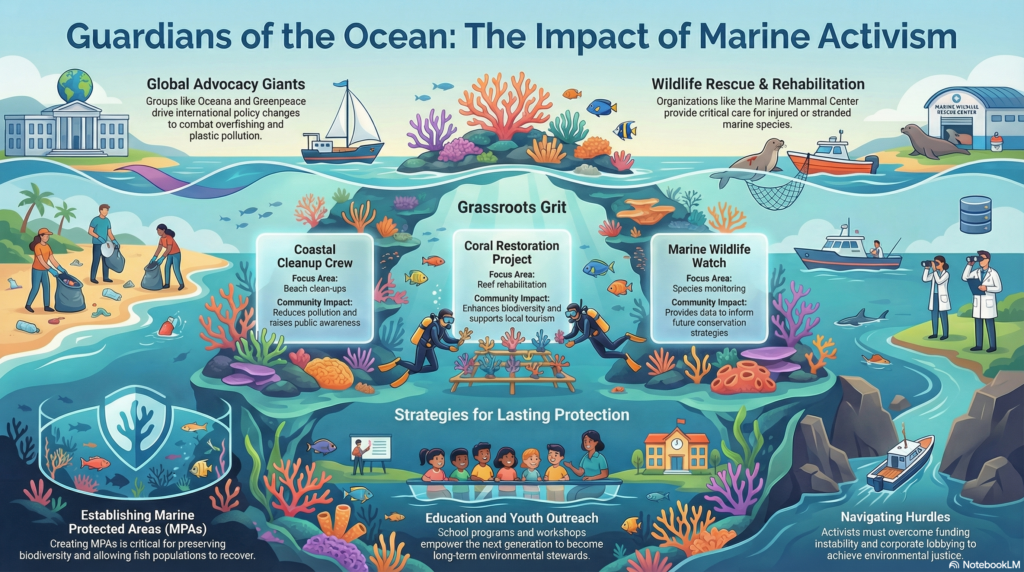
Environmental activism groups are pivotal in marine and wildlife protection, employing diverse strategies to combat overfishing, habitat destruction, and pollution. Organizations like Oceana and Greenpeace lead global advocacy efforts, promoting policy changes and establishing marine protected areas. Local initiatives, such as beach clean-ups and educational programs, engage communities and foster a culture of conservation. Despite challenges like funding and regulatory hurdles, these groups drive impactful change by raising awareness and rallying public support for sustainable practices. Discovering the specifics of their efforts reveals the innovative approaches shaping the future of environmental activism.
KEY TAKEAWAYS
- Activism groups like Oceana and Greenpeace focus on global advocacy to combat ocean pollution and promote sustainable fishing practices.
- Local initiatives, such as Coastal Cleanup Crew and Coral Restoration Project, engage communities in direct conservation efforts and habitat restoration.
- Wildlife rescue organizations, including the Marine Mammal Center, rehabilitate injured marine animals and raise awareness about environmental threats.
- Establishing marine protected areas (MPAs) is critical for preserving biodiversity and enhancing fish populations, benefiting both ecosystems and local economies.
- Community involvement and education are essential for fostering environmental stewardship and empowering individuals to participate in marine conservation efforts.
OVERVIEW OF MARINE AND WILDLIFE ISSUES
Climate Action Network (CAN) is a global network of more than 1,900 civil society organisations in over 130 countries driving collective and sustainable action to fight the climate crisis and to achieve social justice. CAN convenes and coordinates civil society at the UN climate talks and other international fora. The escalating threats to marine ecosystems and wildlife demand urgent attention and action from both policymakers and the public. Overfishing impacts have reached alarming levels, with fisheries operating beyond sustainable limits, leading to the depletion of crucial fish populations. This not only disrupts the delicate balance of marine food webs but also threatens the livelihoods of countless communities reliant on fishing for sustenance and economic stability. The consequences of overfishing extend far beyond the immediate loss of fish stocks, as it exacerbates habitat destruction, particularly in vulnerable areas like coral reefs and seagrass beds.
Habitat destruction, driven by both industrial activities and climate change, poses a grave risk to marine biodiversity. Coastal development, pollution, and destructive fishing practices are decimating critical habitats that serve as nurseries for young marine species. The loss of these ecosystems diminishes the natural resilience of marine life, making it increasingly difficult for species to adapt to changing environmental conditions.
It is imperative that stakeholders recognize the interconnectedness of these issues. Protecting marine ecosystems is not merely an environmental concern; it is a matter of social justice, economic viability, and ethical responsibility. Public awareness and collective action are essential to advocate for policies that prioritize sustainable fishing practices and the preservation of marine habitats. Only through concerted efforts can we hope to mitigate the impacts of overfishing and habitat destruction, ensuring that future generations inherit a thriving ocean rich in biodiversity. The time for action is now, as the freedom of our seas and the well-being of our planet hang in the balance.
Notable Activism Groups
Numerous notable groups are making significant strides in marine protection through local conservation initiatives, global marine advocacy, and wildlife rescue efforts, demonstrating the impact of environmental activism in safeguarding our oceans.These organizations not only address urgent environmental challenges but also foster community engagement and international cooperation in safeguarding marine ecosystems. Understanding their diverse strategies and impacts is essential for appreciating the collective effort to preserve our oceans and the wildlife that inhabit them.
Local Conservation Initiatives
A variety of local conservation initiatives play an essential role in the protection of marine ecosystems, driven by passionate activism groups dedicated to preserving aquatic biodiversity. These initiatives often thrive on community partnerships, empowering local residents to engage in habitat restoration efforts. By focusing on grassroots movements, these groups foster a sense of ownership and responsibility towards marine environments.
The following table highlights some notable local conservation initiatives:
| Initiative Name | Focus Area | Community Impact |
| Coastal Cleanup Crew | Beach clean-ups | Reduces pollution, raises awareness |
| Coral Restoration Project | Reef rehabilitation | Enhances biodiversity, supports tourism |
| Marine Wildlife Watch | Species monitoring | Informs conservation strategies |
| Ocean Advocacy Network | Policy influence | Mobilizes community support for legislation |
| Aquatic Education Alliance | Youth engagement | Inspires future conservationists |
Global Marine Advocacy
Frequently, global marine advocacy groups emerge as essential players in the fight for ocean conservation, mobilizing efforts to address pressing environmental issues on a larger scale. Organizations such as Oceana, Greenpeace, and the World Wildlife Fund (WWF) focus on combating ocean pollution and promoting sustainable fishing practices. Their initiatives not only highlight the urgency of protecting marine ecosystems but also empower communities to take action.
Oceana, for instance, has led impactful campaigns that press for policy changes to reduce plastic waste and enforce sustainable fishing regulations. By engaging with local communities and policymakers, they emphasize the importance of healthy oceans for future generations. Greenpeace’s relentless efforts to expose illegal fishing practices have raised awareness about the devastating consequences of overfishing, advocating for stricter enforcement of marine protected areas.
The work of these groups underscores an essential truth: the health of our oceans is directly linked to the wellbeing of our planet. As advocates for freedom and sustainability, these organizations inspire individuals to challenge the status quo and demand a cleaner, more sustainable future for our seas. Through their collective efforts, they foster a movement toward greater accountability and stewardship of marine resources worldwide.
Wildlife Rescue Efforts
While global marine advocacy groups play a crucial role in addressing ocean conservation, the protection of marine wildlife is equally important to preserving the delicate balance of marine ecosystems. Notable activism groups have emerged as champions of wildlife rescue efforts, focusing on the rehabilitation of injured or stranded marine animals. Organizations like the Marine Mammal Center and SeaWorld’s Animal Rescue Team exemplify the power of rescue partnerships, collaborating with local authorities and volunteers to provide immediate care and rehabilitation.
These groups not only address the urgent needs of individual animals but also raise awareness about the threats facing marine wildlife, such as pollution and habitat destruction. Their dedication to wildlife rehabilitation serves as a significant reminder of our shared responsibility to protect these creatures. By fostering community involvement and education, these initiatives empower individuals to participate in conservation efforts, fostering a sense of freedom in their ability to effect change.
Supporting wildlife rescue efforts is not merely an act of compassion; it is an investment in the health of our oceans. As advocates for marine wildlife, we must unite to guarantee that these organizations receive the necessary resources to continue their crucial work. Together, we can safeguard marine ecosystems for future generations.
Key Strategies for Protection
Through a multifaceted approach, environmental activism groups implement key strategies to protect marine ecosystems effectively. Central to their efforts is policy advocacy, which seeks to influence legislation and regulatory frameworks at local, national, and international levels. By collaborating with lawmakers and stakeholders, these groups champion policies that prioritize marine conservation and enforce sustainable practices. They advocate for the establishment of marine protected areas (MPAs), which are critical in preserving biodiversity and ensuring the resilience of marine habitats against climate change and human exploitation.
In tandem with policy advocacy, these organizations focus on raising public awareness about the importance of sustainable practices among individuals and industries alike. Educational campaigns are designed to inform the public about the detrimental impacts of overfishing, pollution, and habitat destruction, fostering a culture of responsibility and stewardship towards marine environments. By harnessing the power of grassroots movements, they mobilize communities to go green by adopting eco-friendly behaviors, such as reducing plastic use and supporting sustainable seafood initiatives.
Furthermore, partnerships with scientific communities are essential in promoting research on marine ecosystems. By funding and participating in studies, activists can provide data-driven insights that bolster their advocacy efforts and highlight the urgency of marine protection.

SUCCESS STORIES IN CONSERVATION
Success stories in marine conservation often emerge from the collaborative efforts of environmental activism groups and local communities. These partnerships have proven effective in safeguarding marine ecosystems, demonstrating the power of collective action. One notable example is the Restoration of the Great Barrier Reef, where local conservationists and international organizations have united to combat coral bleaching. Utilizing success metrics such as coral cover recovery and biodiversity indices, they have monitored progress and adapted strategies to enhance resilience.
In another instance, the establishment of marine protected areas (MPAs) in the Pacific Islands has shown significant benefits. Here, conservation partnerships between indigenous communities and NGOs have led to the sustainable management of fishing practices, which not only protects marine life but also supports local economies. The success metrics in this case include increased fish populations and improved livelihoods for residents, highlighting the dual benefits of conservation.
Additionally, the campaign to eliminate single-use plastics has gained momentum through grassroots activism and corporate partnerships. Organizations have successfully lobbied for bans on plastic bags and straws, leading to measurable reductions in ocean plastic pollution. These victories exemplify how concerted efforts can lead to tangible outcomes, reinforcing the notion that freedom from environmental degradation is achievable.
As we reflect on these success stories, it is imperative to recognize the importance of ongoing collaboration. The future of marine conservation hinges on the strength of conservation partnerships and the commitment to track success metrics, ensuring that progress is not only made but sustained.
Challenges Faced by Activists
The term “environmental activism” is defined as the actions of individuals or groups that protect or aid the environment. Those involved in the movement identify issues that threaten the planet’s viability, from community to global concerns, and then develop strategies to promote awareness or produce solutions that directly address the problem. Environmental activists dedicated to marine protection face a myriad of challenges that can hinder their efforts and undermine conservation initiatives. One of the most pressing issues is funding struggles. Many organizations rely on donations, grants, and sponsorships to finance their projects. However, as economic conditions fluctuate, securing consistent funding becomes increasingly difficult. This financial instability can limit the scope and effectiveness of conservation efforts, forcing groups to prioritize short-term projects over long-term initiatives that could yield substantial ecological benefits.
In addition to funding challenges, activists often encounter regulatory hurdles that complicate their work. Government policies and legislative frameworks can be slow to evolve, frequently lagging behind the urgent need for marine protection. Activists must navigate complex legal landscapes, which can be time-consuming and resource-intensive. These regulatory constraints can stymie innovative approaches to conservation, leaving activists struggling to implement thorough strategies.
Moreover, the intersection of politics and environmentalism poses additional challenges. Activists frequently find themselves at odds with powerful industries that prioritize profit over ecological health. Lobbying efforts by these industries can overshadow the voices of activists, creating a significant barrier to effective change.
Ultimately, for activists committed to marine protection, overcoming these challenges is crucial. They must advocate not only for funding and policy reforms but also for greater public awareness and participation. By addressing these hurdles, activists can build a stronger foundation for sustainable marine conservation, ensuring future generations inherit a healthier planet.
Community Involvement and Education
In my workshops, I always tell young activists that while global headlines often focus on massive international treaties, the most immediate impact frequently happens at the community level. We see this in the incredible work of local initiatives like the Coral Restoration Project or the Coastal Cleanup Crew, which take the theoretical goal of biodiversity and turn it into tangible reef rehabilitation and cleaner beaches. This grassroots grit is what sustains the movement when funding struggles or regulatory hurdles threaten to slow us down. It’s a complex landscape; as a writer and researcher, I’m fascinated by the psychological and social drivers behind this work.
For instance, recent studies suggest that activism can be a developmental context that reinforces specific personality traits, sometimes even attracting those driven by a need for influence the “dark-ego-vehicle principle”. While that sounds clinical, it’s a reminder that motivations are diverse; some act out of pure altruism, while others are driven by a desire for control or visibility.
Even corporate activism is evolving, with companies now taking public stances on polarized issues to drive social change, despite the risk of being accused of “woke washing”. As we push for policy innovations like satellite monitoring and AI-driven data collection, we must never lose sight of the human element. We need to go green not just in our technology, but in our habits, by reducing plastic and supporting sustainable seafood.
Community involvement and education are critical components in fostering a culture of marine protection. Local workshops and events provide hands-on learning experiences, while school outreach programs cultivate awareness and responsibility among younger generations. By engaging the community in these initiatives, we can empower individuals to contribute to the conservation of marine ecosystems actively. Environmental organizations are non-governmental entities that have gained prominence since the 1970s, particularly in response to growing global awareness of environmental issues. These organizations aim to promote research, influence public policy, and encourage community engagement in addressing ecological challenges.
Local Workshops and Events
Numerous local workshops and events play an essential role in fostering community involvement and education regarding marine protection. These initiatives not only raise awareness about pressing environmental issues but also empower individuals to take actionable steps towards safeguarding marine ecosystems. Through various workshop formats—ranging from hands-on activities to expert-led discussions—participants gain invaluable insights into sustainable practices, the significance of biodiversity, and the benefits of using eco friendly products in their daily lives.
Effective event planning is vital for maximizing engagement and outreach. Well-structured events attract a diverse audience, allowing for the exchange of ideas and experiences. For instance, community beach clean-ups coupled with educational sessions can galvanize support for local marine conservation efforts. Additionally, leveraging social media and local partnerships enhances visibility and participation, drawing in individuals who might otherwise remain uninformed.
The importance of these workshops and events cannot be overstated; they serve as a platform for dialogue and collaboration, fostering a sense of ownership and responsibility within the community. By actively participating in these initiatives, individuals not only advocate for marine protection but also champion a culture of environmental stewardship, ultimately contributing to a more sustainable future for all.
School Outreach Programs
Engaging students through school outreach programs is a pivotal approach to instilling a sense of environmental responsibility from an early age. By fostering student engagement and creating opportunities for interactive learning, these programs empower young minds to become stewards of marine and wildlife protection. The hands-on experiences provided by outreach initiatives not only educate but also inspire students to take action.
Key components of effective school outreach programs include:
- Interactive Workshops: Students participate in hands-on activities that demonstrate the importance of marine ecosystems.
- Guest Speakers: Experts share their knowledge and experiences, igniting curiosity and passion for environmental issues.
- Field Trips: Visits to local habitats or conservation centers provide real-world context for classroom learning.
- Service Projects: Students engage in community-driven initiatives, such as beach clean-ups, promoting a sense of ownership and responsibility.
Future Directions for Advocacy
In light of escalating threats to marine ecosystems, future directions for advocacy must focus on innovative strategies that harness both technology and community involvement. As climate change, overfishing, and pollution continue to jeopardize ocean health, environmental activism groups must proactively adapt their approaches to guarantee lasting impact. Policy innovations that prioritize sustainable practices are crucial in fostering an environment where both marine life and communities thrive.
Technological advancements present unique opportunities for advocacy organizations. Tools such as satellite monitoring, drone surveillance, and artificial intelligence can enhance data collection, enabling activists to provide compelling evidence in support of stronger marine protection policies. The integration of these technologies also facilitates transparency, allowing communities to engage more meaningfully in conservation efforts. By utilizing technology to raise awareness and mobilize support, advocacy groups can create a more informed and empowered public.
Furthermore, collaboration with local communities is essential. Engaging grassroots movements ensures that the voices of those directly impacted by marine degradation are heard. Empowering communities to take ownership of their local ecosystems fosters a sense of responsibility and encourages sustainable practices that extend beyond mere advocacy.

RELATED STUDIES ABOUT ENVIRONMENTAL ACTIVISM GROUPS
In a world where plastic straws receive more outrage than oil spills, the commitment of environmental activism groups to marine and wildlife protection remains both commendable and perplexing. As species face extinction and oceans suffocate under human neglect, the real heroes emerge, armed with petitions and TikTok videos. Future advocacy must rise to the occasion, ensuring that the plight of the planet garners as much attention as the latest celebrity scandal. After all, saving the Earth is the ultimate trend.
Environmental Activism, Dark Triad Traits, and Left-Wing Authoritarianism: A Constructive Replication Study
This study aimed to replicate and extend prior research (Zacher, 2024) that found positive associations between environmental activism, “Dark Triad” personality traits (Machiavellianism, narcissism), and facets of left-wing authoritarianism (antihierarchical aggression, anticonventionalism). Using a more robust longitudinal design, it investigated both the predictive effects of these traits on activism and the reverse effects—whether activism can reinforce such traits and beliefs over time.
Key Methodology:
- Design: A two-wave longitudinal panel study with a one-year time lag (June 2023 to June 2024).
- Sample: 1,998 employed adults in Germany, providing high statistical power.
- Measures: Survey scales for three types of environmental activism (civic actions, participation in activist groups, support for activist groups), the Dark Triad (Machiavellianism, narcissism, psychopathy), and left-wing authoritarianism (antihierarchical aggression, anticonventionalism, top-down censorship). Controls included demographics, Big Five personality traits, right-wing authoritarianism, and political orientation.
- Analysis: Hierarchical regression analyses to test for unique effects while controlling for baseline levels of the outcome variables.
Key Findings:
- Partial Replication of Previous Findings: The study partially supported and partially falsified the original hypotheses, offering a more nuanced picture.
- Reciprocal Relationships Over Time:
- Machiavellianism and civic environmental actions positively predicted each other over the year.
- Anticonventionalism and support for environmental activist groups also positively predicted each other.
- One-Way Predictive Effects:
- Antihierarchical aggression predicted greater future participation in environmental activist groups (but not vice versa).
- Participation in environmental activist groups predicted higher future narcissism (but not vice versa).
- Exploratory Discoveries:
- Civic environmental actions and participation in activist groups predicted higher future psychopathy.
- Civic environmental actions predicted lower future top-down censorship, while support for activist groups predicted higher future top-down censorship.
Theoretical Implications:
- Supports the “dark-ego-vehicle principle”: Aberrant personality traits can motivate engagement in activism to fulfill egoistic needs (e.g., seeking influence, dominance, moral superiority).
- Supports self-perception theory: Engaging in activism can lead individuals to infer and subsequently strengthen corresponding personality traits and beliefs (e.g., activism reinforcing narcissism or anticonventional views).
- Suggests activism can act as a developmental context that not only attracts but also amplifies certain personality characteristics over time.
Practical Implications:
- Challenges idealized views of environmental activists as uniformly altruistic. The findings suggest motivations can be heterogeneous, including desires for control, visibility, or conflict.
- Suggests that environmental movements employing highly confrontational or polarizing tactics may inadvertently attract individuals with higher levels of Dark Triad traits, which could impact group dynamics and public credibility.
Limitations & Future Research:
- Reliance on self-report data and only two time points. Future research would benefit from multi-wave designs, behavioral measures, and cross-cultural replications.
- The sample was limited to employed adults in Germany. Generalizability to other countries and populations (e.g., students) needs testing.
- Did not differentiate between specific forms of activism (e.g., online vs. offline, disruptive vs. cooperative). Future research should examine if different tactics attract or reinforce different psychological profiles.
Conclusion:
This constructive replication provides robust, longitudinal evidence that engagement in environmental activism has complex psychological antecedents and consequences. It demonstrates that activism is linked not only to the expression of darker personality traits and certain authoritarian beliefs but may also contribute to their reinforcement over time. The study advocates for a more dynamic and differentiated understanding of the psychology behind environmental activism.
| REFERENCE: Hannes Zacher, Environmental activism, dark triad traits, and left-wing authoritarianism: A constructive replication study, Personality and Individual Differences, Volume 249, 2026, 113495, ISSN 0191-8869, https://doi.org/10.1016/j.paid.2025.113495. (https://www.sciencedirect.com/science/article/pii/S019188692500457X) |
Pro- and Anti- Climate Activism: The Ideological Correlates of Intentions to Engage in Collective Action for – and Against – Environmental Protections
Objective: While the drivers of pro-climate activism are well-studied, little is known about the psychological factors motivating anti-climate activism (actions against environmental protections). This Australian national survey aimed to identify and compare the ideological underpinnings of both types of activism, focusing on distinct facets of right-wing ideology.
Key Methodology:
- Design: A cross-sectional survey conducted in 2021.
- Sample: 5,244 Australian adults, split into two groups based on a screening question:
- Pro-climate group (*n* = 4,530): Supported Australia acting on climate change.
- Anti-climate group (*n* = 714): Did not support such action.
- Measures:
- Activism Intentions: Separate 11-item scales for pro- and anti-climate collective action (e.g., joining a protest march).
- Ideological Attitudes: Social Dominance Orientation (SDO), three facets of Right-Wing Authoritarianism (RWA-Conservatism/submission, RWA-Traditionalism, RWA-Aggression), and Free Market Ideology.
- Analysis: Multigroup path analysis to identify the unique contributions of each ideological facet to activism intentions in both groups.
Key Findings:
- Shared Ideological Correlates (for both Pro- and Anti-Climate Activism):
- Higher SDO (preference for inequality) and higher RWA-Conservatism (deference to authority) predicted lower intentions to engage in both pro- and anti-climate activism.
- Higher RWA-Traditionalism (preference for traditional norms) predicted higher intentions to engage in both pro- and anti-climate activism.
- Unique Ideological Correlates (for Pro-Climate Activism only):
- Higher RWA-Aggression (preference for coercive social control) and stronger Free Market Ideology predicted lower intentions specifically for pro-climate activism. These ideologies were unrelated to anti-climate activism intentions.
- Group Differences: The anti-climate group scored significantly higher on all measures of right-wing ideology compared to the pro-climate group.
- Interpretation & Implications:
- Beyond Simple Opposition: Right-wing ideologies are not monolithic motivators for anti-climate action. While individuals holding these views are less supportive of climate reform, they are also generally less inclined to protest for any cause, reflecting a preference for social order and the status quo.
- The Role of Traditionalism: A desire to preserve tradition can motivate activism, but the direction (pro or anti) depends on an individual’s stance on climate action itself. Traditionalists may protest for climate action to return to a perceived “better” past environment, or against it to prevent changes to their way of life.
- Context Matters: The null finding for Free Market Ideology and anti-climate activism may reflect Australia’s political context at the time (perceived as lacking ambitious climate policy). Those satisfied with the status quo may feel no need to mobilize.
- Nuanced View of Authoritarianism: The study challenges the view that authoritarianism is inherently anti-collective action. Instead, specific facets predict behavior: submission suppresses protest, while traditionalism can fuel it.
Limitations & Future Research:
- Correlational design limits causal claims.
- Reliance on behavioral intentions, not observed actions.
- The model explained less variance for anti-climate intentions, indicating other important predictors (e.g., group-based emotions, efficacy) need exploration.
- Findings are context-specific to Australia; replication in other political climates is needed.
Conclusion:
This research provides a critical, nuanced map of the ideological landscape surrounding climate activism. It demonstrates that the same core ideologies (SDO, RWA-Conservatism, RWA-Traditionalism) function similarly in predicting propensity to act, regardless of whether the cause is progressive or reactionary. However, other ideologies (RWA-Aggression, Free Market Ideology) specifically dampen progressive mobilization. Understanding these shared and divergent drivers is essential for navigating the complex social dynamics of climate policy debates.
| REFERENCE: Samantha K. Stanley, Danny Osborne, Zoe Leviston, Iain Walker, Pro- and anti-climate activism: The ideological correlates of intentions to engage in collective action for – and against – environmental protections, Personality and Individual Differences, Volume 246, 2025, 113387, ISSN 0191-8869, https://doi.org/10.1016/j.paid.2025.113387. (https://www.sciencedirect.com/science/article/pii/S0191886925003496) |
From Motivation to Outcome: A Structured Narrative Review of the Literature on Corporate Activism
Overview
This paper conducts the first comprehensive, structured narrative review of academic literature on Corporate Activism (CA), defined as “a company’s willingness to take a stand on social, political, economic, and environmental issues to create societal change by influencing the attitudes and behaviors of actors in its institutional environment.” CA is distinct from related concepts like Corporate Social Responsibility (CSR), cause-related marketing, CEO activism, and brand activism—primarily through its partisan engagement with controversial issues that extend beyond a firm’s immediate economic interests.
Methodology
- A systematic literature review was conducted using the SALSA model, covering articles from 1989 to 2023.
- Initial searches in Scopus yielded 1,572 documents, refined to 191 relevant sources using precise keywords (e.g., “corporate activism,” “brand activism,” “corporate political engagement”).
- After applying inclusion and exclusion criteria, 79 articles (13 conceptual, 66 empirical) formed the final dataset.
- Analysis was structured around three pillars: antecedents, manifestations, and outcomes of CA.
Key Findings
- Antecedents (Drivers)
- Primary Motivations: Companies engage in CA mainly to drive social change, respond to stakeholder expectations (employees, consumers), and avoid reputational risks from silence.
- Industry-Specific Factors: Firms in controversial industries (e.g., firearms, tobacco) use CA to seek legitimacy, while luxury brands must consider generational differences in consumer expectations.
- Limited Financial Motives: Unlike cause-related marketing, CA is rarely driven by short-term financial gains; some firms avoid it due to perceived financial risks.
- Trigger Events: Sociopolitical movements (e.g., Black Lives Matter, #MeToo) and controversial policies (e.g., during the Trump administration) have spurred CA engagement.
- Manifestations (Forms)
- Common Issues: CA addresses topics such as poverty reduction, gender equality, gun control, minority rights, environmental concerns, and racial equity.
- Tactics: Include public statements, social media campaigns, product redesigns, donations, and policy boycotts.
- Controversy as Core: CA is defined by engagement with polarized issues lacking societal consensus. However, the concept of “controversy” remains underdefined and culturally contingent.
- Regional Variation: Activism differs by region (e.g., religious tensions in India, environmental focus in Europe, gun rights in the U.S.), but cross-country comparisons are scarce.
- Outcomes
- Financial Impact: Mixed results. Early movers (“leaders”) may face short-term stock declines, while followers may not. Outcomes vary by industry and issue type.
- Consumer Response: Depends on alignment between company values and consumer beliefs. Authenticity drives positive outcomes; misalignment leads to accusations of “woke washing,” boycotts, and backlash.
- Employee Impact: Activism can demotivate employees who disagree with the stance, affecting productivity. Conversely, authentic engagement can boost retention and attract diverse talent.
- Reputational Effects: Genuine CA enhances brand reputation, trust, and eWOM; perceived hypocrisy damages brand equity.
- Societal Outcomes: Largely unmeasured. Most studies focus on corporate metrics rather than broader societal impacts (e.g., policy change, community welfare).
Research Gaps & Future Directions
- Conceptual Clarity: Need for a clearer, dynamic definition of “controversy” in CA contexts.
- Stakeholder Perceptions: How different stakeholders (employees, consumers, investors) judge authenticity and alignment.
- Cross-Cultural & Generational Insights: Deeper study of how CA varies across countries, cultures, and generations.
- Tactical Frameworks: An integrative model linking CA tactics to issue types and stakeholder groups.
- Societal Impact: More research on CA’s long-term societal effects, not just corporate performance.
- Geopolitical Context: How multinationals navigate CA during conflicts (e.g., Ukraine war, Israel-Hamas) and balance moral, operational, and reputational risks.
Conclusion
Corporate Activism is an emerging, significant phenomenon where companies take public stances on divisive sociopolitical issues. While academic interest is growing, the literature remains fragmented and often conflates CA with related concepts. This review provides a structured foundation for understanding CA’s drivers, forms, and consequences, highlighting the need for more nuanced, context-sensitive research. As pressure on firms to take public positions increases—where even silence is interpreted as a stance—both scholars and practitioners must better understand the risks, rewards, and societal implications of corporate activism.
| REFERENCE: Selma Saracevic, Bodo B. Schlegelmilch, From motivation to outcome: a structured narrative review of the literature on corporate activism, Journal of Business Research, Volume 202, 2026, 115797, ISSN 0148-2963, https://doi.org/10.1016/j.jbusres.2025.115797. (https://www.sciencedirect.com/science/article/pii/S0148296325006204) |
CONCLUSION
Reflecting on the success stories we’ve seen from the restoration of the Great Barrier Reef to the banning of single-use plastics it’s clear that when we unite, we win. But these victories aren’t permanent unless we foster a lasting culture of stewardship. As someone passionate about mentoring, I believe our greatest investment is in education. School outreach programs that use interactive workshops and field trips are essential for instilling environmental responsibility in the next generation. We need to move past the era where a plastic straw generates more outrage than an oil spill and start treating the health of our planet like the ultimate priority it is.
My time cycling through nature trails or capturing the world through my camera lens constantly reminds me what’s at stake. We aren’t just fighting against pollution; we are fighting for a world where we use eco-friendly products as a norm, not a niche. The road ahead for activism involves navigating a polarized ideological landscape, where even a preference for traditional norms can be harnessed to protect our natural heritage.
It’s about building a foundation for sustainable conservation that survives fluctuating economic conditions and political shifts. I’ve always believed that the freedom of our seas and the well-being of our planet are worth every campaign and every workshop. Let’s continue to demand a future where the oceans thrive and our wildlife is protected by a global community that truly cares.