
Best practices in solid waste management for local governments encompass a strategic approach to minimize environmental impacts. Emphasis should be placed on the waste hierarchy, prioritizing reduction, reuse, and recycling. Engaging the community through educational initiatives and volunteer programs enhances participation and ownership. Implementing effective recycling and composting programs can substantially decrease landfill waste while improving soil health. Leveraging technology through smart waste collection systems optimizes operational efficiency and cost-effectiveness. Continuous monitoring and evaluation of efforts are essential to adapt strategies. A closer look at these practices reveals further insights into successful waste management initiatives for municipalities.
KEY TAKEAWAYS
- Prioritize waste reduction, reuse, and recycling over disposal, adhering to the waste hierarchy for effective solid waste management.
- Engage the community through awareness campaigns, educational workshops, and volunteer programs to enhance participation in waste management efforts.
- Implement recycling and composting programs based on waste audits to identify recyclable materials and optimize community involvement.
- Collaborate with local businesses to promote sustainable practices, minimizing packaging and enhancing resource efficiency.
- Leverage technology like smart waste collection systems and data-driven decision-making to improve operational efficiency and reduce environmental impact.
UNDERSTANDING SOLID WASTE MANAGEMENT
Understanding solid waste management is essential for developing effective strategies to mitigate environmental impacts and promote sustainability. As urbanization accelerates, the complexities associated with waste generation necessitate a strategic approach to address these challenges. The waste hierarchy serves as a guiding framework, prioritizing waste reduction, reuse, and recycling over disposal, thereby promoting sustainable practices that align with a circular economy model. Poor waste management – ranging from non-existing collection systems to ineffective disposal -causes air pollution, water and soil contamination.
Effective solid waste management also involves identifying landfill alternatives that minimize land use and environmental degradation. For instance, waste-to-energy technologies can convert organic waste into energy, thereby reducing the volume of waste sent to landfills while generating renewable resources. However, the management of hazardous waste remains a critical concern, requiring stringent compliance with environmental regulations to protect public health and ecosystems.
Conducting waste audits is a strategic method for evaluating the types and quantities of waste generated within communities. This data informs targeted interventions and fosters community workshops, aimed at educating residents on responsible waste disposal practices. In addition, robust policy frameworks must be established to support sustainable waste management initiatives, ensuring that regulatory measures incentivize compliance and innovation.
Importance of Community Involvement
How can communities effectively engage in solid waste management to foster sustainable practices? The involvement of local residents is pivotal in creating a robust framework for waste management. Community engagement not only enhances the efficacy of programs but also cultivates a sense of ownership and responsibility among residents.
The following table outlines key strategies for fostering community involvement:
| Strategy | Description | Benefits |
| Awareness Campaigns | Informing residents about waste management issues | Increased knowledge and participation |
| Educational Workshops | Providing training on waste reduction techniques | Empowerment through skills development |
| Volunteer Programs | Encouraging residents to participate in clean-up efforts | Strengthening community bonds |
| Feedback Mechanisms | Establishing channels for community input | Adaptive programs that reflect community needs |
| Local Partnerships | Collaborating with businesses and organizations | Resource sharing and enhanced outreach |
Stakeholder collaboration is essential for success. By leveraging local partnerships, governments can tap into diverse resources and expertise, enhancing the effectiveness of neighborhood initiatives. Furthermore, cultural considerations must be integrated into strategies to guarantee inclusivity and respect for community values.
Participatory planning invites community members to contribute to decision-making processes, fostering transparency and trust. As individuals engage through these various avenues, they not only influence policies but also inspire others to adopt sustainable practices. Ultimately, a community that actively participates in solid waste management is key to achieving long-term environmental goals.
Implementing Recycling Programs
Recycling programs serve as a cornerstone of effective solid waste management, promoting sustainability and resource conservation. For local governments, the implementation of robust recycling initiatives requires a strategic approach that incorporates various elements to guarantee success. An essential first step involves conducting waste audits to identify recyclable materials within the community, thereby informing program design and resource allocation.
Establishing community partnerships is critical for enhancing recycling accessibility. Collaborating with local businesses can foster engagement by creating recycling incentives that encourage participation. Educational workshops can also be instrumental in raising awareness about proper recycling practices, with a focus on contamination reduction to guarantee the effectiveness of the program.
Optimizing collection scheduling is essential for maximizing participation. By aligning collection times with community needs and promoting convenience, governments can greatly increase recycling rates. Additionally, ongoing program evaluation is necessary to assess the effectiveness of the implemented strategies, allowing for adjustments based on feedback and changing community dynamics.
Ultimately, a successful recycling program hinges on a multi-faceted approach that prioritizes collaboration and education. By empowering residents through knowledge and accessibility, local governments can create a culture of recycling that not only reduces waste but also promotes environmental stewardship. In doing so, they can guarantee that their communities move toward a more sustainable future, balancing the desire for freedom with the collective responsibility of managing resources effectively.
Composting and Organic Waste Solutions
Building on the foundation established by effective recycling programs, composting and organic waste solutions present a transformative opportunity for solid waste management. These practices not only reduce landfill waste but also contribute to sustainability by returning nutrients to the soil, thereby enhancing soil health. By adopting composting strategies, local governments can empower communities to turn food scraps and yard waste into valuable organic fertilizers, fostering a cycle of nutrient recycling. Landfills are the most common method of disposing of solid wastes. Modern-day landfills are designed by taking care of various environmental factors and types of wastes, so as to minimise pollution and health risks.
Key benefits of implementing composting and organic waste solutions include:
- Reduction of Landfill Waste: By diverting organic materials from landfills, communities can decrease methane emissions and prolong landfill life.
- Soil Enrichment: Compost enhances soil structure, improves water retention, and provides essential nutrients, making it an excellent amendment for community gardens and agricultural practices.
- Education and Community Engagement: Initiatives like composting workshops and the introduction of compost bins can educate residents on sustainable practices, encouraging involvement and fostering a sense of community responsibility.
Moreover, innovative approaches such as vermicomposting techniques can further enhance the efficiency of organic waste management. As local governments embrace these solutions, they can cultivate a culture of sustainability that aligns with the desires of citizens for a healthier environment. By integrating composting into solid waste management strategies, municipalities not only address waste issues but also promote environmental stewardship and community resilience.
Waste Reduction Strategies
Effective waste reduction strategies are essential for minimizing the environmental impact of solid waste management. Implementing source reduction techniques, alongside robust recycling and composting programs, can greatly decrease the volume of waste generated. Additionally, public education initiatives play a critical role in promoting sustainable practices and encouraging community participation in waste reduction efforts. Compared to those in developed nations, residents in developing countries, especially the urban poor, are more severely impacted by unsustainably managed waste. In low-income countries, over 90% of waste is often disposed in unregulated dumps or openly burned. These practices create serious health, safety, and environmental consequences.
Source Reduction Techniques
In the domain of solid waste management, source reduction techniques emerge as a critical strategy for minimizing waste generation at its origin. By focusing on reducing waste before it enters the disposal phase, local governments can foster a cleaner environment and promote sustainable practices. To effectively implement source reduction, it is essential to contemplate the following strategies:
- Product Design Innovation: Encourage manufacturers to create products with lower environmental impact through lifecycle assessment, which evaluates the environmental consequences from production to disposal.
- Consumer Education and Behavior Change: Empower communities with information on responsible consumption, highlighting the benefits of choosing durable, reusable products over single-use items. This shift in behavior can greatly reduce overall waste generation.
- Business Engagement: Collaborate with local businesses to promote sustainable practices, such as minimizing packaging and adopting efficient manufacturing processes, which can lead to a considerable decrease in waste production.
Collaborating with local businesses can further strengthen waste reduction efforts by encouraging the use of eco friendly products, which help minimize packaging waste and support more sustainable production and consumption practices within the community.
RECYCLING AND COMPOSTING PROGRAMS
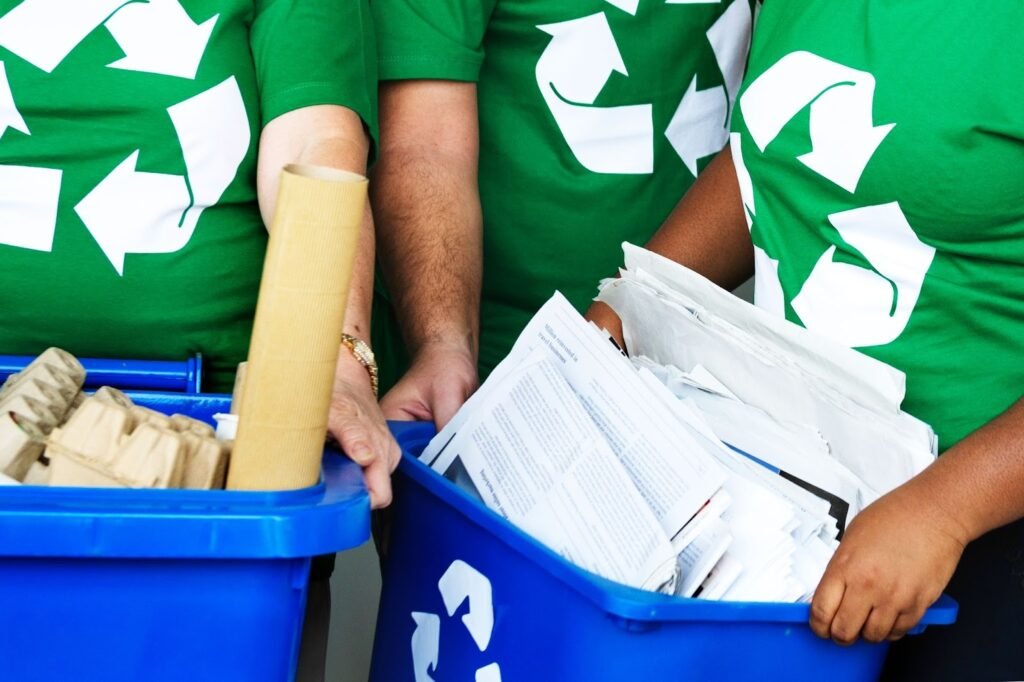
Many municipalities recognize that recycling and composting programs are essential components of a thorough waste reduction strategy. Implementing effective recycling incentives can greatly enhance participation rates, while recycling partnerships with local businesses can further bolster community engagement. However, managing recycling contamination remains a critical challenge, as improper sorting can diminish the value of collected materials.
To address these challenges, municipalities can invest in recycling education that informs residents about proper practices and the importance of reducing contamination. Additionally, leveraging advanced recycling technologies can improve processing efficiency and recovery rates, thereby maximizing the potential of recycled materials.
On the composting front, offering composting workshops can empower citizens to adopt various composting methods, which not only reduces organic waste but also provides numerous composting benefits, such as improved soil health. Nevertheless, local governments must navigate composting regulations that can vary greatly, impacting program implementation.
Ultimately, a strategic approach that integrates both recycling and composting initiatives fosters a culture of sustainability, promoting a cleaner environment and enhancing community resilience. By addressing challenges and leveraging educational opportunities, municipalities can create robust waste management systems that align with the values of freedom and environmental stewardship.
Public Education Initiatives
Public education initiatives play a pivotal role in the success of waste reduction strategies, serving as a bridge between individual behaviors and community-wide sustainability goals. By fostering a culture of awareness and responsibility, local governments can effectively engage citizens in efforts to minimize waste and promote environmental stewardship.
Effective public education can be structured around three core components:
- Awareness Campaigns: Utilize targeted messaging techniques to inform the community about the importance of waste reduction and the environmental impact of their choices.
- Educational Workshops: Host sessions that provide practical knowledge on waste management practices, such as composting and recycling, enabling residents to adopt sustainable behaviors.
- Community Partnerships: Collaborate with local organizations to enhance outreach programs and develop resource guides that empower citizens to take actionable steps in reducing waste.
Leveraging Technology and Innovation
The integration of smart waste collection systems and data-driven decision-making is transforming solid waste management practices. By utilizing advanced technologies, municipalities can optimize collection routes, reduce operational costs, and enhance service efficiency. In addition, real-time data analytics enables stakeholders to make informed decisions, ultimately leading to more sustainable waste management outcomes.
Smart Waste Collection Systems
As urban populations continue to rise and the demand for efficient waste management intensifies, municipalities are increasingly turning to smart waste collection systems that harness technology and innovation. These systems utilize automated collection and sensor technology to enhance operational efficiency and minimize environmental impact. By integrating real-time tracking and route optimization, cities can guarantee that collection frequency aligns with actual waste generation, thereby reducing unnecessary trips and fuel consumption.
Key components of smart waste collection systems include:
- Sensor Technology: Sensors in waste bins monitor fill levels, enabling timely collections and efficient fleet management.
- Mobile Applications: These platforms facilitate citizen engagement by allowing residents to report issues, track collection schedules, and receive notifications.
- Waste Sorting: Advanced sorting technologies can be employed at collection points, guaranteeing recyclables are properly processed and reducing landfill waste.
Data-Driven Decision Making
Data-driven decision making is transforming solid waste management by providing municipalities with the insights necessary to optimize operations and enhance sustainability efforts. Through the application of data analytics, local governments can identify performance metrics that highlight areas for improvement, ensuring efficient resource allocation and reducing environmental impact.
By leveraging predictive modeling, municipalities can forecast waste generation trends, enabling proactive strategies that align with community needs. This approach fosters stakeholder engagement, as data-driven initiatives empower residents to participate in waste reduction efforts, cultivating a sense of shared responsibility.
Furthermore, robust policy frameworks grounded in data analysis facilitate informed decisions that are responsive to the evolving dynamics of waste management. Behavior analysis can reveal patterns in waste disposal and recycling habits, guiding educational campaigns that effectively shift public behavior towards sustainability.
Ultimately, integrating data across all facets of solid waste management not only enhances operational efficiency but also promotes transparency and accountability. By embracing technology and innovation, local governments can create a resilient waste management system that prioritizes both environmental stewardship and community engagement, paving the way for a sustainable future. By integrating data across all facets of operations, local governments can strengthen sustainable waste management practices that improve efficiency, enhance transparency, and support long-term environmental and community goals.
Measuring Success and Outcomes
Success in solid waste management is often measured through a combination of quantitative and qualitative metrics that reflect the effectiveness of implemented strategies. To guarantee thorough evaluation, local governments must engage in robust waste auditing and program evaluation. This involves tracking performance metrics that gauge operational efficiency, as well as gathering stakeholder feedback to assess community satisfaction.
Three critical components for measuring success and outcomes in solid waste management include:
- Performance Metrics: Tracking key indicators such as recycling rates, diversion rates from landfills, and overall waste reduction provides tangible data on the program’s effectiveness. These metrics serve as benchmarks for ongoing improvement.
- Outcome Assessment: Analyzing the environmental impact of waste management strategies—such as reductions in greenhouse gas emissions—offers insights into the broader ecological consequences of municipal efforts. This assessment can influence strategic planning and resource allocation.
- Community Surveys: Engaging the public through surveys allows local governments to capture qualitative feedback. This information is essential for understanding community perceptions and identifying areas for improvement.
Through the use of performance metrics and outcome assessments, local governments can evaluate the effectiveness of municipal waste management efforts and refine strategies to better meet environmental and community needs.

RELATED STUDIES ABOUT SOLID WASTE MANAGEMENT
Effective solid waste management is essential for sustainable community development. By prioritizing community involvement, implementing robust recycling and composting programs, and reducing waste generation, local governments can considerably enhance environmental outcomes. Leveraging technology further optimizes waste management processes. As the adage goes, “Many hands make light work,” emphasizing the importance of collaborative efforts among stakeholders. Ultimately, a strategic approach to solid waste management not only benefits the environment but also fosters community resilience and engagement.
Challenges in Commercial Solid Waste Management — Generation Indicators and Willingness to Pay for Management
Study Overview
This study investigates commercial solid waste (CSW) generation indicators and the willingness to pay (WTP) for waste management among businesses in Vitória and Aracruz, Brazil. The research addresses a gap in existing literature by focusing on commercial establishments, which are typically the second-largest waste generators in municipalities but are underrepresented in waste management policy research.
Key Objectives
- Establish waste generation indicators for various commercial typologies (e.g., food services, educational institutions, markets).
- Assess the WTP of commercial establishments for CSW management services using the contingent valuation method (CVM).
- Identify barriers to payment and provide recommendations for implementing fair and effective waste management policies.
Methodology
- Systematic Review: Analysis of international and national literature on CSW generation (2017–2024).
- Case Study: Surveys conducted in Vitória and Aracruz, Brazil, with a total of 419 commercial establishments.
- Data Collection: Questionnaires covering waste generation, employee count, floor area, and WTP across three scenarios (current service, improved service, and informed pricing).
- Statistical Analysis: Generation indicators (kg/day, kg/employee/day, kg/m²/day) and WTP calculations, with results validated using standard deviation and confidence intervals.
Key Findings
- Waste Generation Indicators
- High variability was observed across commercial types, with significant standard deviations, indicating diverse waste generation patterns.
- Daily waste generation averages:
- Educational institutions: 39.47 kg/day
- Food services: 53.19 kg/day
- Accommodation services: 54.78 kg/day
- General stores: 18.28 kg/day
- Indicators per employee and per square meter also varied widely, reflecting differences in business size, location, and operational intensity.
- Self-reported data tended to overestimate actual waste generation, as verified through on-site measurements in Aracruz.
- Willingness to Pay (WTP)
- Vitória: Average WTP for current service was R$ 0.10/liter, higher than the municipal rate of R$ 0.08/liter. However, only 32% of businesses were willing to pay.
- Aracruz: Average WTP was R$ 0.03/liter, far below the municipal rate of R$ 0.16/liter, with 38.7% willing to pay. Respondents expressed dissatisfaction with the lack of public consultation in setting fees.
- WTP increased in Vitória when improvements to the service were proposed, but remained low in Aracruz.
- Key reasons for unwillingness to pay: High existing taxes (25%), distrust in revenue use (19%), and budget constraints.
- Policy and Implementation Insights
- Public participation in policy design is critical for acceptance and fairness.
- Transparent, equitable pricing aligned with the polluter-pays principle enhances compliance.
- Environmental education is needed to increase awareness of CSW management responsibilities.
- The study proposes a step-by-step framework for implementing CSW charging policies:
- Maintain an updated registry of commercial establishments.
- Apply waste generation indicators to classify large generators.
- Survey WTP to inform pricing.
- Set fees that balance municipal revenue needs with fairness and accessibility.
Conclusions
- CSW generation is highly variable and influenced by business type, seasonality, and location.
- WTP is influenced by perceived fairness, service quality, and community involvement in policymaking.
- Involving businesses in fee-setting processes increases acceptance and supports sustainable waste management financing.
- Future research should develop econometric models to better quantify WTP drivers and expand sample sizes for more representative indicators.
Recommendations
- Implement mandatory Solid Waste Management Plans for large generators.
- Conduct periodic waste audits to improve data accuracy.
- Foster stakeholder engagement and transparency in policy development.
- Promote environmental education to align CSW management with utility payment norms (e.g., water, electricity).
Study Limitations
- Lack of unified, up-to-date business registries in the studied municipalities.
- Challenges in longitudinal waste audits due to participant retention.
- Potential bias from self-reported waste data.
| REFERENCE: Juliana Salomão das Neves, Luciana Harue Yamane, Rodrigo Pratte Santos, Renato Ribeiro Siman, Challenges in commercial solid waste management: Generation indicators and willingness to pay for management, Cleaner Waste Systems, Volume 11, 2025, 100250, ISSN 2772-9125, https://doi.org/10.1016/j.clwas.2025.100250. (https://www.sciencedirect.com/science/article/pii/S277291252500048X) |
Social Capital as a Key Predictor in Solid Rural Waste Management — A Case Study of Rural Residents in Iran
Study Overview
This study investigates the role of social capital in shaping solid waste management (SWM) behaviors among rural residents in Semiroum County, Iran. Recognizing a research gap in understanding how social dynamics influence SWM in rural areas, this research examines how dimensions of social capital—such as social ethics, participation, trust, awareness, and security—affect waste management practices, compared to socioeconomic factors.
Key Objectives
- Assess the relationship between social capital dimensions and rural SWM behaviors.
- Determine the relative importance of social capital versus socioeconomic factors in predicting SWM.
- Identify specific components of social capital that most significantly influence SWM.
- Provide evidence-based policy recommendations to enhance rural SWM through social capital development.
Methodology
- Sample: 150 rural residents selected via simple random sampling (Cochran’s formula).
- Data Collection: Semi-structured interviews and questionnaires (70 items) using a 5-point Likert scale.
- Analytical Methods:
- Pearson’s correlation to examine relationships between variables.
- Artificial Neural Network (ANN) to assess variable importance.
- Stepwise regression to identify key predictors of SWM behavior.
- Study Area: Semiroum County, Isfahan Province, Iran.
Key Findings
- Strong Correlation Between Social Capital and SWM
- A high positive correlation (r = 0.76) was found between the overall social capital index and SWM scores.
- Social ethics (r = 0.77) and social participation (r = 0.71) showed the strongest correlations.
- Social security (r = 0.33) and social trust (r = 0.49) had weaker but still positive correlations.
- Social Capital Outweighs Socioeconomic Factors
- ANN analysis revealed that social capital (normalized importance = 100%) is a more significant predictor of SWM than all socioeconomic variables combined.
- Among socioeconomic factors, only age showed a weak negative correlation with SWM.
- Gender (male) was the only socioeconomic variable with a significant negative effect in regression models.
- Key Social Capital Dimensions Identified
- Social ethics had the highest relative importance in predicting SWM.
- Social participation was the second most influential dimension.
- Stepwise regression confirmed that social ethics and social participation together explain ~64% of the variance in SWM behaviors.
- Each unit increase in:
- Social ethics improved SWM behavior by 1.41 units.
- Social participation improved SWM by 0.76 units.
- VLimited Role of Socioeconomic Variables
- Income, education, household size, and residence period showed no significant correlation with SWM.
- Age and gender were the only socioeconomic factors with notable effects, both negative.
Conclusions
- Social capital—particularly social ethics and participation—is a stronger driver of effective SWM in rural Iran than socioeconomic factors.
- Community-driven approaches that foster ethical norms and collective action are more likely to succeed than purely economic or infrastructural interventions.
- Men and older residents may require targeted engagement to improve SWM participation.
- Policies should prioritize building social cohesion, trust, and participatory networks to enhance SWM outcomes.
Policy Recommendations
- Strengthen Social Ethics Through Education:
- Launch awareness campaigns linking ethical behavior to environmental health.
- Conduct workshops on communal responsibility and sustainable practices.
- Promote Social Participation:
- Organize community clean-up drives, recycling programs, and SWM committees.
- Introduce incentive systems (recognition, small grants) to encourage involvement.
- Address Gender Dynamics:
- Empower women in SWM leadership roles.
- Develop gender-sensitive programs that engage men in dialogue and responsibility-sharing.
- Integrate Social Capital into SWM Planning:
- Design policies that leverage existing social networks and norms.
- Use participatory approaches to ensure community ownership and sustainability.
Study Limitations
- Reliance on self-reported data may introduce bias.
- Cultural specificity of Semiroum County may limit generalizability.
- Cross-sectional design limits causal inferences.
| REFERENCE: Alireza Alipour, Seyedeh Shadi Mousavi, Mohammad Sadegh Ebrahimi, Social capital as a key predictor in solid rural waste management: A case study of rural residents in Iran, Cleaner Waste Systems, Volume 11, 2025, 100293, ISSN 2772-9125, https://doi.org/10.1016/j.clwas.2025.100293. (https://www.sciencedirect.com/science/article/pii/S2772912525000910) |
Linking the Type and Origin of Solid Wastes in Rice Fields — Implications for Waste Management
Study Overview
This study investigates the types, origins, and ecological implications of solid waste pollution in rice fields near Kolkata, India. Unlike urban waste systems, agricultural waste—especially plastics—remains understudied despite its potential threat to biodiversity, soil health, and crop productivity. Using field surveys and bipartite network analysis, the research traces waste sources and proposes targeted management strategies.
Key Objectives
- Identify and classify solid waste types present in rice fields.
- Trace the origins of these wastes to specific industries or human activities.
- Apply bipartite network analysis to model waste-source interactions.
- Provide evidence-based recommendations for waste management in agricultural landscapes.
Methodology
- Study Sites: Rice fields in South 24 Parganas and Howrah, West Bengal, surveyed from November 2021 to May 2022.
- Sampling: 50+ quadrants (1 m² each) across multiple fields; wastes collected, weighed, and categorized.
- Classification: Wastes classified by material (plastic, paper, wood, etc.) and origin (e.g., packaged food, beverages, tobacco).
- Analysis:
- Logistic regression and diversity indices.
- Bipartite network analysis to map interactions between waste types and sources.
- Network metrics: connectance, specialization, modularity, and nestedness.
Key Findings
- Waste Composition and Dominance
- Eight waste types identified: plastics, paper, wood, polythene bags, polythene sheets, glass, earthen materials, and metals.
- Plastics dominated by abundance, followed by paper and polythene bags.
- By biomass, plastics and paper contributed the most.
- Origins of Waste
- Nine primary sources identified, led by:
- Packaged food industry
- Beverages
- Tobacco products
- Plastics were linked to multiple origins (generalist), while glass and wood wastes were source-specific (specialists).
- Bipartite Network Insights
- Network showed moderate specialization (connectance = 0.333), indicating varied but traceable waste-source links.
- Plastic waste (PLA) had the highest number of links and interaction strength.
- Five distinct modules emerged, revealing clustered waste-source relationships.
- Key connector sources: Packaged food (PFD) and cooked food (CFO) industries.
- Statistical Significance
- Logistic regression confirmed significant variation in waste abundance across sites (P<0.0001).
- Waste diversity (Shannon index) ranged from 0.722 to 1.144 across sites.
- Colored wastes (e.g., paper, chemically treated materials) were significantly more prevalent.
Discussion and Implications
- Plastic proliferation in rice fields mirrors global trends of plastic pollution in agriculture, with risks of microplastic formation and soil contamination.
- Multiple waste origins suggest contributions from local consumption, inadequate disposal, and possible spillage during transport.
- Bipartite network analysis proved effective in identifying high-impact sources for targeted intervention.
- Management potential: Regulating packaging in rural markets and improving recycling infrastructure could reduce waste ingress.
Conclusions
- Rice fields are accumulating diverse solid wastes, primarily plastics from food and beverage packaging.
- Waste origins are traceable, enabling source-specific management strategies.
- Plastic waste is generalist (multiple sources), while materials like glass and wood are specialist (fewer sources).
- Bipartite network modeling offers a novel, actionable framework for agricultural waste management.
Recommendations
- Targeted source reduction: Focus on packaged food, beverage, and tobacco industries to curb plastic inflow.
- Improved rural waste infrastructure: Enhance collection and recycling systems in agricultural zones.
- Awareness and regulation: Implement policies on plastic use in farming communities.
- Long-term monitoring: Expand studies to more regions and include microplastic assessments.
Study Limitations
- Sample limited to West Bengal, India; broader geographical coverage needed.
- Seasonal and hydrological influences on waste visibility not fully addressed.
- Microplastics and chemical impacts require further investigation.
| REFERENCE: Tandrima Sil, Gargi Nandy, Dipanwita Das, Himangshu Barman, SusobhanDatta Mudi, Gautam Aditya, Linking the type and origin of the solid wastes in ricefields: Implications in waste management, Waste Management Bulletin, 2025, 100221, ISSN 2949-7507, https://doi.org/10.1016/j.wmb.2025.100221. (https://www.sciencedirect.com/science/article/pii/S2949750725000501) |