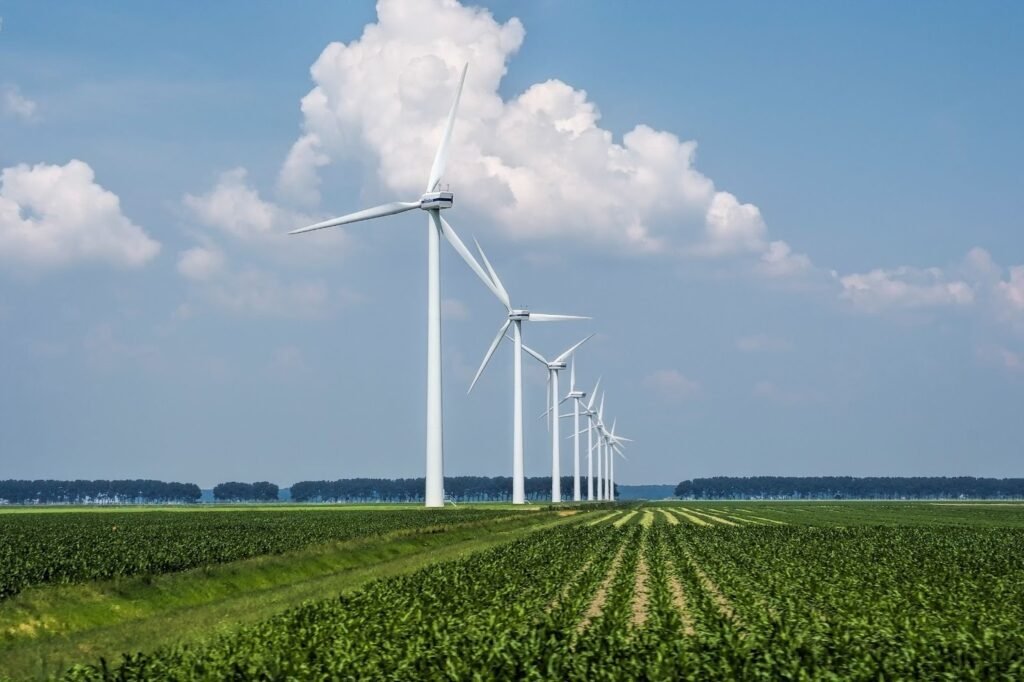
Wind turbines operate by harnessing the kinetic energy from wind and converting it into mechanical energy. This process begins with rotor blades that capture wind, creating lift and enabling rotation. The blades connect to a gearbox, which amplifies the rotational speed for efficient electricity generation via a generator. The design of turbine components, such as aerodynamic blades and tall towers, enhances performance and efficiency. Factors like wind speed and site selection greatly impact energy output. As innovations in technology continue to evolve, the future of wind energy promises even greater efficiency and sustainability. Discovering these advancements reveals the potential of this renewable resource.
KEY TAKEAWAYS
- Wind turbines convert kinetic energy from wind into mechanical energy through rotor blades that spin in response to aerodynamic lift.
- The rotor’s motion drives a shaft connected to a gearbox, which increases rotational speed for efficient electricity generation.
- Generators then convert the mechanical energy into electrical power using magnetic induction, producing usable energy for the grid.
- Turbine efficiency is influenced by factors such as wind speed, turbine height, and rotor blade design, all optimizing energy capture.
- Regular maintenance and innovative technologies enhance turbine performance, ensuring consistent energy production and longevity.
OVERVIEW OF WIND ENERGY
The terms “wind energy” and “wind power” both describe the process by which the wind is used to generate mechanical power or electricity. Wind energy represents a transformative force in the pursuit of sustainable power generation. As one of the most abundant renewable resources, it harnesses the kinetic energy of wind through advanced technologies, primarily wind turbines. The increasing demand for clean energy solutions highlights the advantages of wind energy, making it a focal point in energy alteration strategies across the globe.
The wind energy benefits extend beyond mere electricity generation; they encompass economic, environmental, and social dimensions. Economically, wind energy has become one of the most cost-effective sources of electricity, leading to job creation in manufacturing, installation, and maintenance sectors. Additionally, it contributes to energy independence by reducing reliance on fossil fuels, thereby enhancing national security.
From an environmental perspective, the impact of wind energy is remarkably positive, as it supports the broader transition toward eco friendly products and technologies that reduce greenhouse gas emissions and promote sustainable resource use. Unlike traditional energy sources, wind power generation results in negligible greenhouse gas emissions, mitigating climate change effects. The lifecycle emissions associated with wind energy are considerably lower than those of fossil fuels, contributing to improved air quality and reduced public health risks. Additionally, wind farms occupy less land compared to other energy infrastructures and can be integrated into agricultural landscapes, promoting coexistence with nature.
Despite some challenges, such as variability in wind patterns and concerns over wildlife interactions, the potential of wind energy as a clean, sustainable power source remains unparalleled. As technology continues to evolve, addressing these challenges will further enhance the role of wind energy in a balanced, sustainable energy future, aligning with the aspirations of those who value freedom from pollution and resource depletion.
Components of Wind Turbines
Harnessing wind energy effectively hinges on the intricate design and functionality of its primary technology: wind turbines. These machines comprise several essential components that work in harmony to convert kinetic energy from wind into mechanical energy, and ultimately, electricity. The turbine’s core components include the rotor, gearbox, generator, and tower, each playing a vital role in energy production.
The rotor, equipped with blades designed for ideal aerodynamic efficiency, captures wind energy and transfers it to the gearbox. The gearbox increases the rotational speed, allowing the generator to convert mechanical energy into electrical energy with higher efficiency. Following this process, the generator produces electricity that can be fed into the power grid.
The tower, typically constructed from steel or reinforced concrete, supports the entire structure and elevates the rotor to a height where wind speeds are greater and more consistent. This elevation also reduces the environmental impact, as turbines can be strategically placed to minimize disruption to wildlife and landscapes.
However, the functionality of wind turbines is not solely reliant on design; effective turbine maintenance is essential for ensuring longevity and operational efficiency. Regular inspections and upkeep minimize downtime and operational costs, thereby enhancing the overall productivity of wind farms. As society increasingly seeks sustainable energy solutions, understanding these components highlights the importance of innovation in turbine technologies and their role in mitigating the environmental impact of energy production. In this way, wind turbines not only exemplify engineering excellence but also represent a significant step towards energy freedom.
How Wind Turbines Capture Energy
Wind turbines capture energy through a sophisticated interplay of blade design mechanics, turbine rotation, and energy conversion systems. The aerodynamic profile of the blades is engineered to optimize lift and minimize drag, facilitating efficient rotation in varying wind conditions. As the rotor spins, kinetic energy is transformed into electrical energy via generators, illustrating the seamless integration of mechanical and electrical engineering in renewable energy technology.
Blade Design Mechanics
At the core of wind turbine efficiency lies the intricate mechanics of blade design, which plays a pivotal role in capturing kinetic energy from moving air. The principles of blade aerodynamics are essential in optimizing lift generation, enabling turbines to harness wind energy effectively. The design of turbine blades is a complex interplay of geometry, materials, and aerodynamics, resulting in a system that efficiently converts wind into mechanical energy.
Key aspects of blade design mechanics include:
- Airfoil Shape: Optimized profiles to minimize drag and maximize lift.
- Angle of Attack: Adjustments to enhance lift generation relative to wind direction.
- Material Selection: Use of lightweight, durable composites to improve performance and longevity.
- Blade Length: Longer blades can capture more wind energy, but require careful structural considerations.
- Twist and Taper: Variations in blade shape along its length to optimize aerodynamic performance.
These design features create a dynamic system that responds adeptly to varying wind conditions, ensuring that wind turbines remain effective and adaptable in the pursuit of renewable energy freedom.
Turbine Rotation Process
The turbine rotation process is an essential mechanism through which wind energy is converted into usable electrical power. As wind flows over the blades of a turbine, aerodynamic forces generate lift, causing the rotor to spin. This rotational motion is significant, as it directly influences the efficiency of energy capture. Modern turbines are designed to optimize this process, featuring advanced materials and blade designs that enhance performance while minimizing environmental impact.
Effective turbine maintenance is vital to guarantee that the rotation process operates at peak efficiency. Regular inspections and servicing prevent mechanical failures, which can lead to reduced energy output and increased wear on components. By implementing predictive maintenance strategies, operators can address potential issues proactively, thereby extending the turbine’s operational lifespan.
Moreover, the environmental impact of wind turbines is a significant consideration, as their operation produces clean energy while reducing dependence on fossil fuels and lowering overall carbon emissions. While their operation produces clean energy, the siting and installation of turbines must be carefully managed to mitigate effects on local ecosystems. As the demand for sustainable energy sources grows, innovations in turbine design and maintenance practices will continue to play an essential role in maximizing both energy efficiency and ecological responsibility in wind energy systems.
Energy Conversion Systems
Harnessing the kinetic energy of the wind, energy conversion systems in modern wind turbines utilize a multi-stage process to transform this renewable resource into electrical power. This intricate system is designed to maximize efficiency while adapting to varying market trends and energy policies that govern the renewable energy landscape. For example, because winds can be more powerful and less volatile higher in the atmosphere, placing turbines on towers 100 feet (or 30 meters) tall—about the height of the Statue of Liberty—can help them generate more electricity.
The core components of energy conversion systems include:
- Wind Capture: Turbine blades are engineered to optimize aerodynamic efficiency, capturing maximum wind energy.
- Mechanical Energy Conversion: The rotational motion from the blades turns a shaft connected to a gearbox, increasing rotational speed.
- Generator Activation: The gearbox drives a generator, converting mechanical energy into electrical energy.
- Power Regulation: Advanced control systems guarantee the output voltage and frequency align with grid requirements, stabilizing the energy supply.
- Grid Integration: Energy is transmitted through transformers, facilitating distribution to the electrical grid, ensuring compliance with energy policies.
These systems are not only pivotal in harnessing wind energy but also in aligning with global market trends that increasingly favor sustainable energy solutions. As technological advancements continue, the efficiency and effectiveness of energy conversion systems will evolve, promoting a freer, cleaner energy future.
Conversion of Kinetic Energy
Wind energy systems convert kinetic energy from moving air into mechanical energy, which can then be transformed into electricity. This conversion process is fundamental to harnessing the power of wind and is predicated on the principles of physics, particularly the dynamics of kinetic energy. Wind, with its inherent motion, possesses kinetic energy that can be effectively captured by wind turbines.
When wind flows past the blades of a turbine, it generates lift and drag forces, prompting the blades to rotate. This rotation is a direct manifestation of the kinetic energy in the wind being converted into mechanical energy. The design of turbine blades is critical, as their shape and angle optimize the energy transformation process, maximizing the efficiency of energy capture.
The mechanics involved in this transformation are intricate yet precise. As the blades turn, they drive a shaft connected to a gearbox, which increases the rotational speed. This mechanical energy is then prepared for conversion into electrical energy. The efficiency of this kinetic energy conversion depends on several factors, including wind speed, blade design, and turbine placement.
Understanding the nuances of kinetic energy conversion is essential for advancing wind energy technology. Innovations in materials and aerodynamics can further enhance the efficiency of energy transformation, contributing to a more sustainable future. As society seeks greater freedom from fossil fuels, mastering the conversion of kinetic energy positions wind energy as a pivotal solution in the global energy landscape.
THE ROLE OF GENERATORS
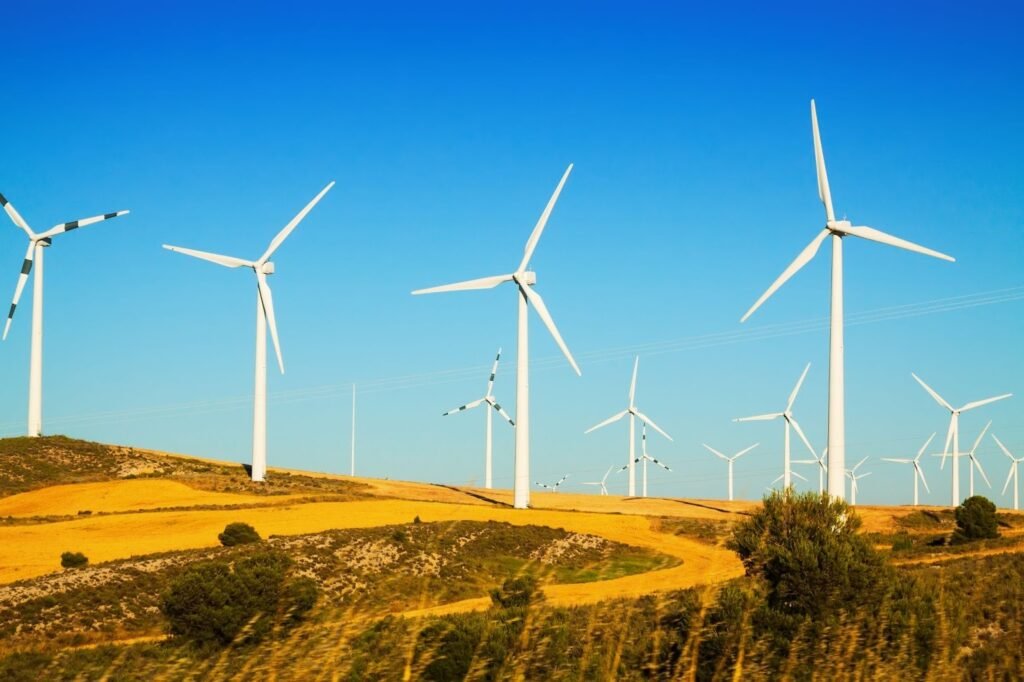
Following the mechanical energy generation from wind turbine rotation, the role of generators becomes vital in converting this energy into usable electrical power. Generators harness the kinetic energy derived from wind, utilizing various generator types to achieve efficient energy transformation. The most commonly employed generators in wind turbines are synchronous and asynchronous (induction) generators, each leveraging the principle of magnetic induction.
The process of magnetic induction involves the generation of electric current through the movement of magnetic fields, which is essential for the effective operation of wind energy systems. These generators convert the rotational motion of turbine blades into electrical energy that can be fed into the power grid. Key aspects of their functionality include:
- Generator Types: Synchronous and asynchronous generators each have unique operational characteristics suitable for different wind conditions.
- Energy Conversion: The transformation of mechanical energy into electrical power is a significant process that underpins wind energy systems.
- Efficiency: The effectiveness of energy conversion is influenced by the generator design and its compatibility with the turbine.
- Control Systems: Advanced control mechanisms are vital for optimizing generator performance and ensuring stable output.
- Integration with Grids: Generators must be capable of synchronizing with the electrical grid, ensuring a seamless flow of energy.
Understanding the intricate role of generators in wind turbines not only highlights their significance in the renewable energy landscape but also embodies the spirit of innovation and freedom inherent in harnessing natural resources for sustainable energy solutions.
Factors Affecting Efficiency
Efficiency in wind energy systems is influenced by a multitude of factors that interact within the turbine’s operational framework. The site selection plays a vital role in enhancing performance; it determines the exposure to consistent and robust wind patterns that are essential for energy generation. Locations with higher average wind speeds and fewer obstructions, such as trees or buildings, are typically preferred to harness maximum kinetic energy.
Wind patterns, characterized by their speed and directional consistency, directly impact the efficiency of turbines. Variability in wind speed can lead to fluctuating power outputs, which can complicate grid integration. To mitigate this, advanced turbine designs incorporate pitch control mechanisms that adjust blade angles, allowing for ideal energy capture across a range of wind conditions.
Moreover, turbine height greatly affects efficiency. Taller turbines can access stronger winds found at higher altitudes, which are often more consistent. The aerodynamic design of the rotor blades is another significant factor; blades designed with advanced materials and shapes can reduce drag and enhance energy conversion.
Additionally, maintenance practices guarantee that turbines operate at peak efficiency by minimizing downtime and performance degradation. Regular inspections and technological upgrades are essential to keep systems running smoothly.
Future of Wind Energy Technology
The future of wind energy technology is poised for significant advancements through the development of advanced turbine designs that enhance efficiency and performance. Additionally, the expansion of offshore wind farms presents an opportunity to harness greater energy capacity while minimizing land use conflicts. Coupled with innovative energy storage solutions, these trends will be critical in optimizing the reliability and sustainability of wind energy as a key component of the global energy landscape. The most common utility-scale wind turbines have power capacities between 700 KW and 1.8 MW, and they’re grouped together to get the most electricity out of the wind resources available.
Advanced Turbine Designs
Frequently, advancements in turbine designs are pivotal to enhancing the viability and performance of wind energy systems. Innovative engineering and research are leading to more efficient and adaptable designs that can meet diverse energy needs. Among these advancements, vertical axis wind turbines (VAWTs) and hybrid systems are gaining traction for their unique advantages.
- Vertical Axis Wind Turbines (VAWTs): These designs can capture wind from any direction, making them suitable for urban environments.
- Hybrid Systems: Combining wind energy with solar and battery technologies maximizes energy generation and storage.
- Larger Blade Technology: Longer blades enhance energy capture, allowing turbines to harness more wind at lower speeds.
- Smart Turbine Control Systems: Advanced sensors and AI algorithms improve turbine efficiency and maintain peak performance in varying wind conditions.
- Modular Designs: These enable easy scalability and maintenance, fostering adaptability to different wind farm layouts.
Incorporating these advanced turbine designs into current energy infrastructure not only increases overall efficiency but also empowers communities to embrace renewable energy sources, thereby aligning with the global pursuit of sustainability and energy independence.
Offshore Wind Expansion
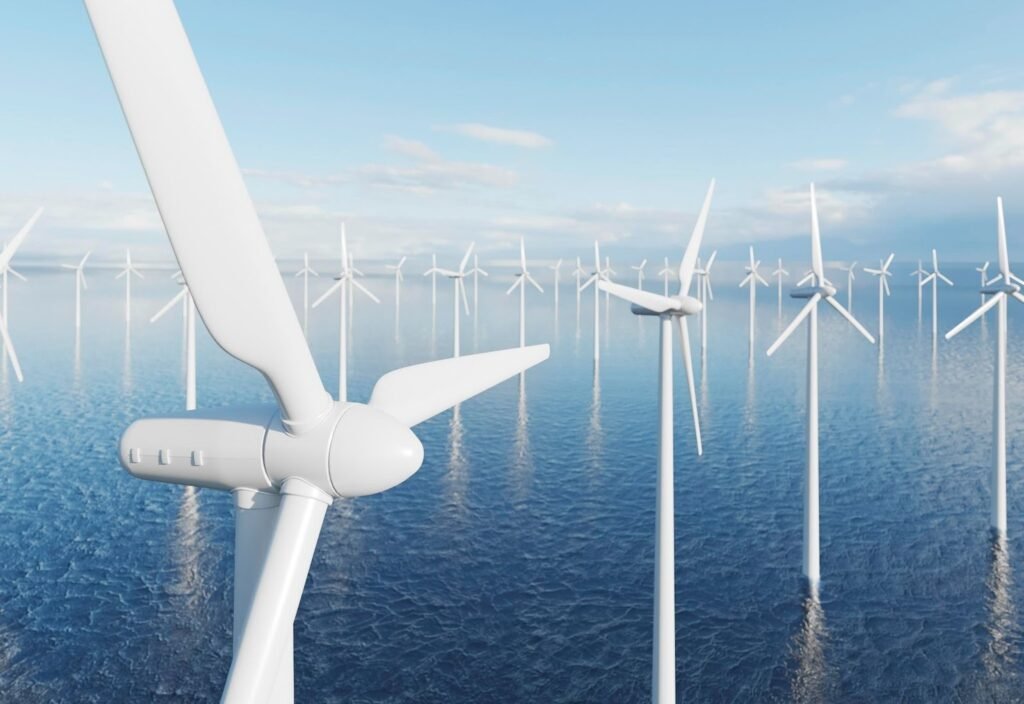
Offshore wind expansion represents a groundbreaking shift in the landscape of renewable energy technology, leveraging the vast potential of oceanic winds to generate substantial power. As countries seek to accelerate their movement to sustainable energy, offshore wind farms are emerging as a viable solution, often complementing other renewables such as solar energy to create more resilient and diversified power systems. However, this expansion is not without challenges.
Navigating offshore regulations is critical to guarantee compliance with environmental impacts, which necessitate thorough assessments during site selection. Installation challenges, including the logistics of transporting and erecting large turbines in marine environments, require innovative technological solutions. In addition, robust maintenance strategies are essential to secure the longevity and efficiency of these systems.
Community acceptance plays a crucial role in project financing, as public support can facilitate smoother development processes. Additionally, effective grid integration is essential to harness the generated power efficiently and distribute it to meet demand. As the sector evolves, continuous advancements in technological innovations also bolster the feasibility and attractiveness of offshore wind, positioning it as a cornerstone of future energy systems. Through overcoming these hurdles, offshore wind can greatly contribute to a cleaner, more resilient energy future.
Energy Storage Solutions
As the wind energy sector continues to evolve, integrating effective energy storage solutions has emerged as a significant focus for enhancing the reliability and efficiency of power generation. The intermittent nature of wind energy necessitates robust systems to store excess energy produced during peak generation periods and release it during low production times. This guarantees a consistent power supply, aligning with the growing demand for renewable energy.
Key energy storage solutions include:
- Battery Storage: Advanced lithium-ion and emerging solid-state batteries provide rapid response times and scalability for decentralized applications.
- Pumped Hydro: Utilizing gravitational potential, this method stores energy by pumping water uphill during excess generation and releasing it to generate electricity when needed.
- Flywheel Energy Storage: This technology uses kinetic energy to provide short-duration energy storage, ideal for balancing grid fluctuations.
- Compressed Air Energy Storage (CAES): By compressing air in underground caverns, CAES systems can store substantial amounts of energy for later use.
- Thermal Energy Storage: This approach stores energy in the form of heat, which can be converted back to electricity when required.
These innovative solutions will play a significant role in stabilizing wind energy’s integration into the grid, fostering a sustainable future.
RELATED STUDIES ABOUT WIND ENERGY
In the dance between the invisible force of wind and the towering blades of turbines, a symbiotic relationship emerges, transforming kinetic energy into usable electricity. This intricate mechanism reveals the potential of harnessing nature’s power, juxtaposing the delicate balance of technology and environment. As advancements in wind energy technology unfold, the promise of a sustainable future looms on the horizon, where clean energy moves from the periphery to the forefront, illuminating the path toward a greener tomorrow.
Performance Study of Low-Speed Wind Energy Harvesting by Micro Wind Turbine Systems
Objective:
This review article examines the performance, challenges, and design optimizations of micro-scale wind turbine systems for harvesting wind energy in low-speed wind environments, with a focus on enhancing efficiency, reliability, and integration into urban and remote settings.
Key Findings:
- Micro Wind Turbine Advantages:
- Cost-Effective & Low Maintenance: Micro turbines are more affordable to install and maintain than large-scale turbines, making them suitable for residential, commercial, and remote applications.
- Operational Flexibility: They operate effectively in low wind speeds (below 7.5 m/s) and turbulent urban environments where large turbines are inefficient.
- Environmental & Social Benefits: Produce minimal noise, have lower visual impact, reduce greenhouse gas emissions, and can enhance energy security in off-grid areas.
- Technical Challenges in Low-Speed Wind:
- Intermittency & Unpredictability: Wind variability complicates grid integration and requires reliable forecasting and energy storage solutions.
- Aerodynamic Limitations: Small turbines operate at lower Reynolds numbers, reducing aerodynamic efficiency compared to large turbines.
- Structural & Control Issues: High turbulence, blade erosion, mechanical stress, and the need for effective pitch/yaw control in high winds are significant hurdles.
- Performance Optimization Strategies:
- Maximum Power Point Tracking (MPPT): Essential for maximizing energy capture in variable wind conditions. Advanced MPPT algorithms improve efficiency across wind speed ranges.
- Blade Design & Augmentation:
- Horizontal Axis Wind Turbines (HAWTs) are generally more efficient in low winds due to better aerodynamic profiles and lower noise.
- Vertical Axis Wind Turbines (VAWTs) offer omnidirectional operation and are suitable for turbulent urban flows but require design enhancements (e.g., guide vanes) to improve efficiency.
- Ducts & Shrouds: Augmentation devices like INVELOX ducts can increase wind speed by up to 42%, significantly boosting power output.
- Blade Number & Geometry: Optimizing blade count, airfoil shape, and tip-speed ratio (TSR) enhances performance. Bio-inspired designs (e.g., golden eagle wings) show promise for low-speed applications.
- Hybrid & Integrated Systems:
- Combining micro wind turbines with solar panels, energy storage (batteries), and diesel generators creates resilient hybrid systems, mitigating intermittency and improving reliability in remote or disaster-prone areas.
- Microgrid Integration: Supports decentralized energy production, reduces transmission losses, and enhances community energy independence.
- Environmental & Economic Considerations:
- Micro turbines have a lower carbon footprint than solar panels when considering manufacturing and recycling impacts.
- Policy Support & Standardization: Regulatory frameworks and incentives are needed to promote adoption, especially in developing regions.
- Lifecycle Cost: While initial costs are low, long-term viability depends on site-specific wind resources, maintenance, and system integration.
Conclusion:
Micro wind turbine systems represent a viable, sustainable solution for low-speed wind energy harvesting, particularly in urban, residential, and remote locations. Continued advancements in aerodynamic design, control strategies (MPPT), and hybrid system integration are critical to overcoming current limitations. Future research should focus on materials durability, noise reduction, policy development, and real-world deployment studies to fully realize the potential of small-scale wind energy in the global renewable energy mix.
Recommendations:
- Develop adaptive pitch/yaw control systems for high-wind conditions.
- Promote hybrid renewable energy systems with storage to ensure reliability.
- Encourage government incentives and standardized regulations to support small-scale wind adoption.
- Invest in field testing and real-world performance validation to bridge the gap between simulation and practical application.
| REFERENCE: Moamel Alwan Kadhim, Chen Chai Phing, Lim Chin Wai, Johnny Koh Siaw Paw, Yaw Chong Tak, K. Kadirgama, Amjed Alwan Kadhim, Performance study of low-speed wind energy harvesting by micro wind turbine system, Energy Reports, Volume 13, 2025, Pages 3712-3727, ISSN 2352-4847, https://doi.org/10.1016/j.egyr.2025.02.046. (https://www.sciencedirect.com/science/article/pii/S2352484725001313) |
Transient Torque and Power Number of a Fluid Agitator for Direct Wind Thermal Energy Conversion
Objective:
This study investigates the transient torque and power characteristics of a fluid agitator used in Wind Thermal Energy Conversion (WTEC) systems, which convert wind energy directly into heat via fluid agitation. The research focuses on understanding how variable wind conditions—simulated through transient impeller speeds—affect agitator performance, to improve the design and efficiency of wind-powered heating systems for remote or off-grid applications.
Key Findings:
- Transient vs. Steady-State Performance:
- The power number (NP) of the agitator under transient conditions (acceleration, deceleration, sinusoidal speed changes) differs significantly from steady-state values.
- Transient NP is more sensitive to acceleration rates than deceleration, with acceleration causing spikes in NP due to increased turbulence and hydrodynamic resistance.
- Effect of Acceleration/Deceleration:
- Higher acceleration rates lead to sharper increases in torque (τ) and transient NP, requiring the system to overcome greater resistive forces.
- During deceleration, NP decreases below steady-state values, which can help the system adapt to falling wind speeds but reduces heat generation efficiency.
- Influence of Initial and Final Speeds:
- Higher initial impeller speeds (ω1) reduce the spike in NP during acceleration, making the system more adaptable to increasing wind speeds.
- Final speed (ω2) has minimal impact on transient NP when acceleration/deceleration rates are constant, highlighting the dominance of rate effects over absolute speed changes.
- Sinusoidal Speed Profiles:
- Sinusoidal variations in speed (simulating gusty wind) increase NP and torque fluctuations, leading to higher heat generation but also greater hydrodynamic resistance.
- Higher frequency and amplitude of speed variations exacerbate transient effects, which can hinder system matching and reduce operational efficiency.
- Thermal Performance:
- Sinusoidal speed profiles result in higher fluid temperature rises compared to constant-speed operation due to increased mechanical power input and higher transient NP.
- The study confirms that transient operation can enhance heat conversion but complicates system stability and matching with wind turbine output.
- System Design Implications:
- Designing agitators based solely on steady-state NP is insufficient for real-world variable wind conditions.
- Operating at higher initial rotational speeds with appropriate gearing can mitigate transient resistance and improve system responsiveness.
Conclusions:
The research underscores the importance of accounting for transient hydrodynamic behavior in WTEC system design. Transient NP and torque characteristics must be considered to ensure efficient energy transfer and system stability under fluctuating wind speeds. Future work should explore integrated system testing and potential solutions—such as torque converters or adaptive impeller designs—to smooth transient effects and optimize performance.
Significance:
This study provides critical insights for the development of robust and efficient wind-powered heating systems, particularly for decentralized applications in remote areas. By addressing transient operational challenges, the findings pave the way for more reliable and higher-performing WTEC technologies.
| REFERENCE: Navid Nazari, Xili Duan, Transient Torque and Power Number of a Fluid Agitator for Direct Wind Thermal Energy Conversion, Wind Energy and Engineering Research, 2025, 100011, ISSN 2950-3604, https://doi.org/10.1016/j.weer.2025.100011. (https://www.sciencedirect.com/science/article/pii/S2950360425000038) |
Power Capacity Enhancement of Hydropower Plant through the Integration of Solar and Wind Energy
Objective:
This study investigates the integration of solar photovoltaic (PV) and wind energy with an existing hydropower plant to enhance power capacity, improve reliability, and support sustainable energy transitions. Using Afghanistan’s Salma Dam as a case study, the research optimizes a hybrid renewable energy system (HRES) to meet growing energy demand while reducing costs and environmental impacts.
Key Findings:
- Optimal Hybrid Configuration:
- A combination of 18.5 MW solar PV, 8 MW wind power, and the existing 42 MW hydropower plant was identified as the most cost-effective and reliable hybrid system.
- This configuration increased the total power generation capacity of the hydropower plant by 25%.
- Performance and Reliability Metrics:
- Loss of Power Supply Probability (LPSP): Reduced to 0.75%, indicating high system reliability.
- Net Present Cost (NPC): Estimated at $4.37 million.
- Cost of Energy (COE): Calculated at $0.086 per kWh, demonstrating economic viability.
- Environmental Benefits:
- The hybrid system reduces greenhouse gas emissions by 248,922.4 tons of CO₂ annually compared to conventional grid-connected systems.
- Promotes clean energy use and supports climate change mitigation.
- System Resilience and Seasonal Performance:
- The hybrid system demonstrates improved stability and consistent power output compared to standalone hydropower operation.
- Seasonal variability in solar and wind resources is effectively balanced by hydropower, which provides a stable base load and flexibility during periods of low renewable generation.
- Sensitivity Analysis:
- A 10% decrease in solar radiation requires an increase in PV capacity to maintain reliability, raising NPC and COE slightly.
- A 10% decrease in wind speed similarly necessitates increased wind capacity, with comparable cost impacts.
- Despite these adjustments, total energy expenditure remains stable, confirming system robustness under variable conditions.
Methodology:
- A Multi-Objective Genetic Algorithm (MOGA) was used to optimize the HRES, balancing three key objectives: minimizing LPSP, NPC, and COE.
- Real meteorological data (solar irradiance, wind speed, temperature) and hydrological data were incorporated into simulation models.
- The study considered techno-economic, environmental, and operational factors to ensure a holistic assessment.
Conclusions:
Integrating solar and wind energy with existing hydropower infrastructure significantly enhances power capacity, reliability, and economic efficiency. The proposed hybrid system not only meets increasing energy demand but also reduces carbon emissions and operational costs. The findings provide a scalable model for similar applications in remote or off-grid regions, supporting global renewable energy adoption and energy security.
Recommendations for Future Work:
- Explore integration of advanced energy storage (e.g., batteries, pumped-storage hydropower) to further balance supply and demand.
- Extend analysis to diverse geographic and climatic regions to assess broader applicability.
- Incorporate demand-side management and smart grid technologies to optimize consumption patterns and grid stability.
Significance:
This study offers a practical framework for policymakers and energy planners seeking to enhance existing hydropower plants through renewable integration. It highlights the synergistic potential of hybrid systems in achieving sustainable, reliable, and cost-effective energy solutions, particularly in developing regions with abundant renewable resources.
| REFERENCE: Ahmad Shah Irshad, Ahmad Shah Amin, Amir Mohammad Ilham, M.H. Elkholy, Said Elias, Tomonobu Senjyu, Power capacity enhancement of hydropower plant through the penetration of solar and wind energy, International Journal of Electrical Power & Energy Systems, Volume 169, 2025, 110787, ISSN 0142-0615, https://doi.org/10.1016/j.ijepes.2025.110787. (https://www.sciencedirect.com/science/article/pii/S0142061525003357) |