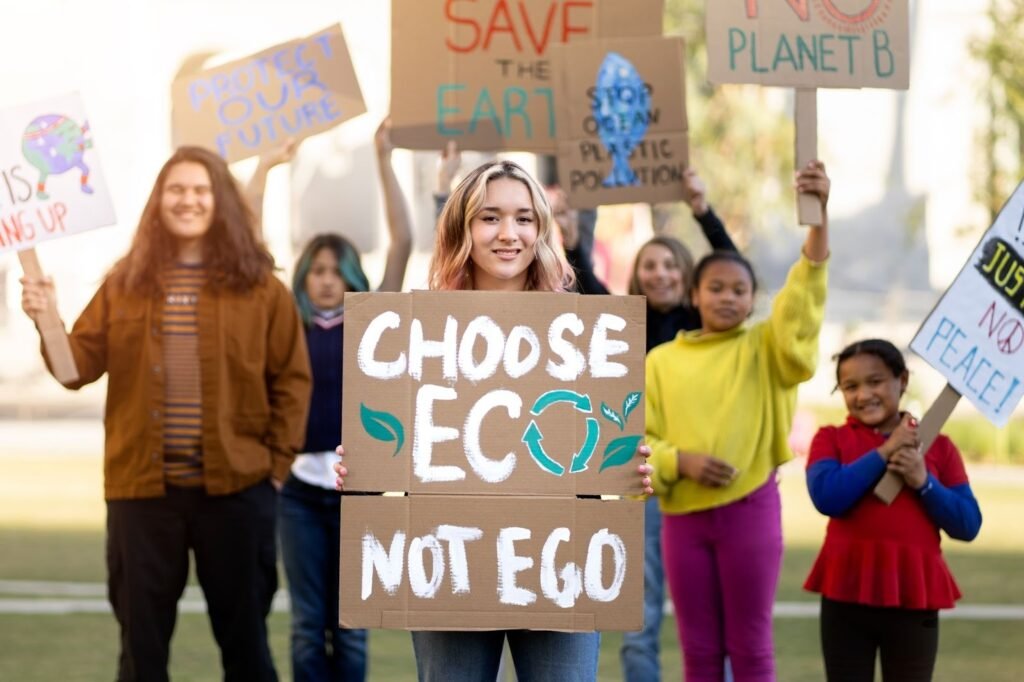
Environmental awareness is the understanding of the complex relationship between human activities and the natural world. It is essential for creating sustainable habits and addressing pressing ecological challenges. To apply this awareness in daily life, individuals can make conscious shopping choices, minimize waste through recycling and composting, and opt for sustainable transportation methods like biking or public transit. Engaging with local communities in environmental initiatives fosters a collective approach to conservation. By adopting these practices, you contribute not only to your well-being but also to the health of the planet. Discover further insights into enhancing your environmental impact.
KEY TAKEAWAYS
- Environmental awareness involves understanding the impact of human actions on nature, promoting informed decisions for sustainability.
- Practice eco-friendly habits like reducing waste through composting and recycling to minimize your environmental footprint.
- Choose sustainable products by prioritizing ethically sourced items, supporting local businesses, and selecting high-quality goods.
- Engage in community initiatives, such as cleanups and tree planting, to foster environmental stewardship and collaboration.
- Utilize sustainable transportation options like walking, biking, or public transit to reduce carbon emissions and encourage healthier lifestyles.
DEFINITION OF ENVIRONMENTAL AWARENESS
Environmental awareness refers to the understanding and recognition of the interconnectedness between human activities and the natural environment. This awareness is essential in addressing pressing global issues such as climate change, which is primarily driven by unsustainable practices and the over-exploitation of natural resources. Understanding that our choices—ranging from the energy we consume to the waste we produce—have profound impacts on the planet is the first step toward fostering a sustainable future. Environmentalism is an ideology that evokes the necessity and responsibility of humans to respect, protect, and preserve the natural world from its anthropogenic (caused by humans) afflictions. Environmental awareness is an integral part of the movement’s success. By spreading awareness to others that the physical environment is fragile and indispensable, we can begin fixing the issues that threaten it.
Individuals who possess environmental awareness are more likely to make informed decisions that contribute to the preservation of the ecosystem. By recognizing the finite nature of natural resources and adopting responsible consumption habits, individuals can contribute to environmental sustainability while supporting long-term ecological balance and resource conservation. This not only supports ecological balance but also encourages the responsible use of resources for future generations.
Furthermore, understanding the implications of climate change, including its effects on weather patterns, sea levels, and biodiversity, empowers individuals to advocate for policies and practices that mitigate these impacts. Environmental awareness is not merely an academic exercise; it is a practical approach to living that emphasizes personal responsibility and collective action.
Importance of Environmental Awareness
Environmental awareness means understanding that for the earth to thrive and survive, it needs to be protected. For that to happen, we must all have an awareness of the natural world and the impact of our choices and behaviours. Our actions can either be positive and support environmental well-being, or be detrimental and cause it further harm. The act of making lifestyle changes to reduce any negative impact on the natural world is to be ‘environmentally friendly. Recognizing the significance of environmental awareness is essential for fostering a sustainable future, as it directly influences individual behaviors and societal norms. The escalating threats posed by climate change necessitate a collective shift in mindset and action. By cultivating environmental awareness, individuals can contribute to pollution reduction efforts, thereby minimizing their ecological footprint and promoting healthier ecosystems.
Wildlife conservation efforts hinge on informed advocacy strategies that engage communities in habitat preservation. When people are aware of their local environments and the species that inhabit them, they become more inclined to support initiatives aimed at protecting biodiversity. This awareness is critical for maintaining ecological balance and ensuring that future generations can enjoy diverse wildlife.
Moreover, understanding renewable energy sources and green technology empowers individuals to move away from fossil fuels towards sustainable alternatives. This change not only facilitates carbon neutrality but also encourages economic growth through the creation of green jobs. Environmental education plays an essential role in this process, equipping individuals with the knowledge necessary to make informed choices.
Ultimately, fostering environmental awareness is a powerful tool for empowering citizens to take action. By embracing sustainable practices and making informed daily choices, individuals are empowered to go green by reducing waste, conserving resources, and supporting environmentally responsible alternatives. Through collective efforts, we can create a society that prioritizes the health of our planet, ensuring a sustainable and vibrant future for all.
Key Principles of Sustainability
How can we effectively implement sustainability in our daily lives? The answer lies in understanding and embracing the key principles of sustainability. At its core, sustainability revolves around meeting the needs of the present without compromising the ability of future generations to meet their own. This requires a shift in our approach to resources, consumption, and environmental stewardship.
One fundamental principle is the promotion of sustainable agriculture. By prioritizing practices that preserve soil health, reduce water consumption, and minimize chemical inputs, we can cultivate food systems that are resilient and productive. Supporting local farmers who employ organic methods not only enhances local economies but also reduces the carbon footprint associated with transporting goods over long distances.
Another cornerstone of sustainability is the change to renewable energy sources. Embracing solar, wind, and hydroelectric power can greatly reduce our reliance on fossil fuels, mitigating climate change while fostering energy independence. Individuals can contribute by choosing renewable energy options for their homes or advocating for policies that support clean energy initiatives.
Moreover, integrating the principles of the circular economy into our lifestyle can further enhance sustainability. This approach encourages the reuse, recycling, and repurposing of materials, greatly reducing waste.
Daily Practices for Eco-Friendly Living
Adopting daily eco-friendly practices begins with making conscious choices in our shopping habits and reducing waste. Sustainable shopping involves selecting items that are ethically sourced, use minimal packaging, and prioritize eco friendly products that reduce environmental impact while supporting responsible production practices. Additionally, implementing effective waste reduction techniques, such as composting and recycling, can greatly lessen our ecological footprint.
Sustainable Shopping Habits
Every year, millions of consumers make purchasing decisions that impact the environment, highlighting the importance of adopting sustainable shopping habits. By embracing ethical sourcing and mindful consumption, individuals can considerably reduce their ecological footprint while enjoying the freedom of making informed choices.
To start, prioritize products from companies that demonstrate a commitment to ethical sourcing. This means supporting brands that use environmentally friendly materials, guarantee fair labor practices, and engage in sustainable production processes. Researching brands before making purchases can empower you to make decisions that align with your values.
Additionally, practice mindful consumption by evaluating your needs before buying. Ask yourself if a product is necessary and consider choosing high-quality items that will last longer, reducing the frequency of replacements. Opt for local and seasonal products to support your community and minimize transportation emissions.
Waste Reduction Techniques
A significant aspect of eco-friendly living is the implementation of effective waste reduction techniques that can be seamlessly integrated into daily routines. By adopting these practices, individuals can contribute to a healthier planet and embrace a lifestyle that prioritizes sustainability. Here are some practical waste reduction strategies:
- Composting Methods: Start composting kitchen scraps and yard waste to reduce landfill contributions and create nutrient-rich soil.
- Reusable Containers: Opt for glass or stainless-steel containers instead of single-use plastics, helping to minimize plastic waste.
- Bulk Buying: Purchase items in bulk to reduce packaging waste and save money, while also supporting local businesses.
- Digital Documentation: Shift to digital receipts and documents to cut down on paper waste, embracing technology for a cleaner environment.
- Plan Meals: Practice mindful meal planning to minimize food waste, ensuring that ingredients are used efficiently.

REDUCING WASTE AND RECYCLING
In an era marked by escalating environmental challenges, the importance of reducing waste and recycling cannot be overstated. The concept of zero waste promotes the idea of minimizing what we discard, aiming for a life where all materials are reused, repaired, or recycled. This approach not only conserves resources but also considerably reduces pollution and greenhouse gas emissions associated with waste disposal.
To effectively reduce waste, one can start by implementing composting methods, which transform organic waste into nutrient-rich soil. Composting is an excellent way to divert food scraps and yard waste from landfills, where they would otherwise produce harmful methane gas. Home composting systems are diverse, ranging from simple bins to sophisticated worm farms, making it accessible for everyone.
Additionally, adopting practical recycling habits is essential. This includes understanding local recycling guidelines and ensuring the proper separation of materials. Investing in reusable products, such as stainless steel water bottles and cloth bags, also plays a key role in reducing single-use plastics.
Sustainable Transportation Options
Embracing sustainable transportation options is essential for reducing our carbon footprint and promoting a healthier planet. By choosing eco-friendly modes of travel, individuals can enjoy the freedom of mobility while contributing to a more sustainable future. Sustainable transportation options include a variety of choices that cater to different lifestyles and preferences.
Consider integrating the following practices into your daily routine:
- Electric vehicles: Shifting to electric vehicles (EVs) can greatly decrease greenhouse gas emissions and reliance on fossil fuels.
- Public transit: Utilizing buses and trains not only reduces congestion but also lowers individual carbon emissions, making it a cost-effective choice.
- Bike commuting: Cycling is an excellent alternative for short distances, promoting physical health and reducing air pollution.
- Carpooling benefits: Sharing rides with others can cut transportation costs, lessen traffic, and minimize emissions.
- Walking routes: For nearby destinations, walking is the most environmentally friendly option, offering health benefits and reducing the need for motorized transport.
Additionally, leveraging transportation apps can enhance your experience by providing real-time information on ride sharing options and public transit schedules. Exploring alternative fuels for traditional vehicles can also pave the way for a more sustainable approach. By actively engaging in these sustainable transportation options, you not only foster a sense of freedom and personal empowerment but also play a vital role in protecting our environment for future generations. Adopting these practices will help create a more sustainable world while enjoying the journey along the way.
Engaging With Your Community
Engaging with your community is a crucial step toward fostering environmental awareness and action. By volunteering for local initiatives, you can contribute to meaningful projects that address environmental challenges while building connections with like-minded individuals. Additionally, attending community workshops provides valuable opportunities to learn and share knowledge about sustainable practices that can be implemented in daily life. Environmental awareness is discussed and studied by many. However, to make an impact, we must be aware of the problems and solutions. We will start with what we are doing wrong and move toward what needs to be done to improve our environment. Some ways to take care of our environment are to practise recycling, follow proper garbage disposal protocol, avoid using our cars too much and rely more on public transportation instead.
Volunteer for Local Initiatives
Volunteering for local initiatives is a powerful way to connect with your community while actively contributing to environmental preservation. Engaging in hands-on projects not only fosters a sense of belonging but also empowers individuals to make a meaningful impact. Through various initiatives, you can help create cleaner, greener spaces for everyone.
Consider participating in the following activities to enhance your involvement:
- Community cleanups: Join local groups to remove litter from parks, beaches, or streets, promoting a cleaner environment.
- Habitat restoration: Work with organizations to restore native vegetation and wildlife habitats, supporting local ecosystems.
- Tree planting events: Contribute to reforestation efforts by planting trees that improve air quality and provide shade.
- Environmental education programs: Help educate the community about sustainability practices and the importance of preserving nature.
- Advocacy campaigns: Partner with local NGOs to raise awareness about environmental issues and drive policy changes.
Attend Community Workshops
Participating in community workshops offers an excellent opportunity to deepen your environmental awareness while connecting with others who share similar interests. These workshops often focus on various aspects of sustainability, such as recycling, conservation, and renewable energy, empowering participants with practical knowledge that can be applied in their daily lives.
One of the significant workshop benefits is the chance to engage with experts and local activists who can provide insights into pressing environmental issues. Attendees can learn about innovative solutions and best practices, fostering a sense of community engagement that enhances collective efforts toward environmental stewardship.
Moreover, workshops can serve as a platform for networking, allowing individuals to form partnerships and collaborate on local initiatives. This sense of camaraderie not only enriches the learning experience but also cultivates a supportive community dedicated to making a positive impact.

RELATED STUDIES ABOUT WHAT IS ENVIRONMENTAL AWARENESS
In the grand tapestry of existence, environmental awareness serves as an essential thread, intricately woven into the fabric of sustainable living. Embracing eco-friendly practices not only nurtures the planet but also fosters a sense of responsibility akin to tending a garden, where every small action contributes to a flourishing ecosystem. By adopting sustainable habits and engaging with communities, individuals can transform the landscape of environmental stewardship, ensuring a verdant legacy for future generations, much like a promise kept to the earth.
Informing the Uninformed, Sensitizing the Informed: The Two Sides of Consumer Environmental Awareness
Objective: This study investigates how environmental information and awareness campaigns influence consumer behavior, firm strategies, and environmental quality. It specifically explores the complementary and sometimes opposing effects of campaigns that inform consumers about product environmental impacts versus those that raise their environmental sensitivity.
Key Concepts:
- Informed vs. Uninformed Consumers: Only informed consumers can differentiate between “brown” (harmful) and “green” (less harmful) products, while uninformed consumers see them as perfect substitutes.
- Aversion Effect: Informed consumers devalue the brown product and value the green product, with intensity varying based on their level of environmental awareness.
- Campaign Types:
- Information Campaigns: Increase the proportion of informed consumers.
- Awareness-Raising Campaigns: Increase the environmental sensitivity (Willingness-to-Pay) of already informed consumers.
- Market Configurations: Depending on the share of informed consumers and their awareness level, the market can be:
- Segmented: Uninformed consumers buy brown; informed consumers buy green or abstain.
- Fragmented: Uninformed and some informed consumers buy brown; the most aware informed consumers buy green.
- Covered: All consumers buy either brown or green.
Core Findings:
- Campaigns are Complementary but Can Have Opposing Effects: Information and awareness-raising campaigns can reinforce each other but may also work against each other depending on the market state. For example, in a fragmented market, more information can paradoxically increase brown product demand by lowering its price for a larger informed segment, unless awareness is simultaneously raised to steer them away.
- “All Informed and Aware” is Not Always the Greenest Outcome: Abstention (not consuming) is assumed to be the most environmentally friendly behavior. A scenario where all consumers are informed and highly aware is not necessarily optimal, as it may increase overall consumption of the green product (which still has an environmental cost) instead of promoting abstention.
- Optimal Campaign Strategy Depends on Context: The most effective mix of information and awareness campaigns depends on three factors:
- The Aversion Effect: How strongly informed consumers dislike the brown product.
- Campaign Cost-Effectiveness: The relative cost of informing a new consumer vs. making an informed consumer more aware.
- NGO Budget: The available financial resources.
- High Aversion: Favors informing all consumers and using remaining budget for awareness.
- Low/Medium Aversion: Favors informing only enough consumers to keep the market segmented (avoiding brown consumption by informed consumers) and focusing on awareness.
- Potential Conflict Between Environmental and Economic Welfare: NGO campaigns consistently increase consumer surplus but reduce total industry profits (mainly harming the brown firm). Therefore, they only improve overall economic welfare (consumer surplus + profits) when the NGO has a large enough budget to inform all consumers and significantly raise their awareness. With limited budgets, improving environmental quality may come at the expense of economic welfare.
Conclusion & Implications:
The research demonstrates that successfully “greening” consumption requires a nuanced, dual-strategy approach. Environmental organizations and policymakers cannot rely on information or awareness-raising alone. They must strategically combine both levers, considering the existing consumer landscape (level of information and aversion), to navigate the market toward configurations that minimize consumption of harmful products. The study also highlights a potential trade-off where environmental gains might require sacrificing some economic welfare, suggesting a role for policy (e.g., subsidies) to align environmental and economic objectives when NGO resources are constrained.
| REFERENCE: Dorothée Brécard, Mireille Chiroleu-Assouline, Informing the uninformed, sensitizing the informed: The two sides of consumer environmental awareness, Journal of Environmental Economics and Management, Volume 134, 2025, 103226, ISSN 0095-0696, https://doi.org/10.1016/j.jeem.2025.103226. (https://www.sciencedirect.com/science/article/pii/S009506962500110X) |
Protocol for a Systematic Evidence Map of Environmental Research Related to Autism Spectrum Disorders: The aWARE Project
Objective: To establish a comprehensive, interactive, and publicly accessible web-based resource that systematically maps and categorizes all published scientific research on the association between early-life environmental exposures (chemical and physical) and Autism Spectrum Disorder (ASD) or ASD-related outcomes. This tool, named aWARE (Web-based tool for Autism Research and the Environment), aims to make the vast and complex evidence base more findable, navigable, and useful for researchers, clinicians, public health professionals, advocates, and families.
Background:
- The prevalence of ASD has risen significantly, increasing scientific and public interest in potential environmental contributors alongside genetic factors.
- Existing literature is large, diverse (spanning human, animal, and organoid studies), and rapidly growing, making synthesis and navigation difficult.
- Prior reviews are often limited to specific exposures (e.g., only air pollution or pesticides) or study types, lacking a comprehensive, integrated overview.
Project Scope (Defined by PECO Statement):
- Populations: Human (any population, including children), experimental animals (non-human primates, rodents, zebrafish, D. melanogaster, C. elegans), and human cerebral organoids.
- Exposures: Environmental chemical (e.g., air pollution, pesticides, metals, plastics) and physical (e.g., radiation) exposures occurring prenatally or in early life. Intentionally ingested pharmaceuticals, vaccines, and recreational drugs are excluded.
- Comparators: Unexposed or lower-exposure control groups.
- Outcomes: ASD diagnosis (human), or ASD-relevant behaviors and neurodevelopmental outcomes in animal/organoid models.
Key Methodological Features:
- Systematic & Comprehensive Search: Searches across PubMed, Web of Science, and Scopus with no date or language restrictions, using broad search strings for developmental life stages and ASD-related outcomes.
- Rigorous Screening & Data Extraction: A multi-stage screening process using DistillerSR software, followed by data extraction using a semi-automated tool (DEXTR). Study characteristics (design, exposure details, outcomes, population) will be captured in a structured database.
- Interactive Evidence Mapping: Extracted data will be visualized as interactive, queryable evidence maps using Tableau software, hosted on the aWARE website. Users can filter, search, and explore studies by exposure type, evidence stream, outcome, etc.
- Community-Centered Design: A defining innovation is the active engagement of the autism community (researchers, clinicians, advocates, families) throughout the project via listening sessions and workshops. Their input directly shapes the tool’s scope, data presentation, and features, including the provision of plain language summaries.
- Living Resource: The aWARE database is designed to be a living evidence map, with plans for annual updates to incorporate new research, maintaining its relevance as a current resource.
Expected Outcomes & Impact:
- A freely accessible online tool that visualizes the entire evidence landscape, highlighting data-rich areas and critical research gaps.
- Facilitates targeted research funding, informs hazard/risk assessments, and guides systematic reviews by identifying where sufficient evidence exists for synthesis.
- Empowers the autism community with accessible information to support healthcare decisions, advocacy, and research planning.
- Enhances transparency and reproducibility in environmental health research related to ASD.
Conclusion: This protocol outlines the creation of the first comprehensive, interactive, and community-informed evidence mapping tool for environmental ASD research. The aWARE project aims to transform a fragmented and overwhelming body of literature into a structured, navigable resource that accelerates scientific discovery and supports evidence-based decision-making for all stakeholders concerned with autism and environmental health.
| REFERENCE: Anisha Singh, Johanna R. Rochester, Robyn Blain, Vickie R. Walker, Katherine E. Pelch, Anthony Hannani, Jeremy Frye, Cindy P. Lawler, Astrid C. Haugen, Amanda E. Garton, Andrew A. Rooney, Protocol for a systematic evidence map of environmental research related to autism spectrum disorders: the aWARE project, Environment International, 2025, 109839, ISSN 0160-4120, https://doi.org/10.1016/j.envint.2025.109839. (https://www.sciencedirect.com/science/article/pii/S0160412025005902) |
Determinants and Effects of Green Bond Issuance: Environmental Awareness, Ecological Budget, Biodiversity, Oil and Lithium
Study Focus: This research investigates the key factors influencing the issuance of green bonds and assesses their environmental impacts, specifically on ecological footprint, biodiversity, and ecological budget (biocapacity minus footprint).
Methodology: The analysis uses a panel dataset from 29 OECD countries from 2014–2020. Two main models are employed:
- Determinants Model: Examines factors driving green bond issuance.
- Impact Model: Analyzes the effects of green bond volume on environmental outcomes.
Key Findings:
- Determinants of Green Bond Issuance:
- Positive Drivers: Higher environmental awareness, GDP per capita, degree of urbanization, and oil prices are significantly associated with increased green bond issuance.
- Negative Driver: Higher lithium prices correlate with lower green bond issuance, likely due to increased costs for green technologies (e.g., batteries for electric vehicles and renewable storage).
- Subsample Analysis: The positive effects of environmental awareness, GDP, and urbanization are stronger in ecological debtor countries (those with a negative ecological budget), highlighting greater urgency for green financing in environmentally stressed nations.
- Environmental Impacts of Green Bond Issuance:
- Green bond volume has a positive impact on the ecological budget and biodiversity, and a negative impact on the ecological footprint.
- Transmission Channels: Green bond financing primarily improves environmental outcomes by funding:
- Renewable energy capacity (reducing emissions and footprint).
- Protected areas (enhancing biodiversity).
- Complementary Factors: Stringent environmental policies and higher environmental awareness independently contribute to better environmental performance (higher biodiversity, lower footprint).
Policy Implications:
- Promote Green Bond Markets: Governments should incentivize issuance through tax benefits, technical assistance, and streamlined procedures.
- Manage Commodity Price Risks: Policymakers and issuers should consider oil and lithium price fluctuations in green investment planning.
- Boost Environmental Awareness: Public campaigns and education are crucial to drive demand for green assets and environmentally friendly behavior.
- Strengthen Environmental Regulations: Robust policies are needed to complement market-based instruments like green bonds.
- Targeted Support for Ecological Debtors: Countries with ecological deficits require focused support to enhance their green finance uptake and environmental resilience.
Conclusion: Green bonds are an effective tool for financing the green transition. Their issuance is influenced by economic, social, and commodity price factors, and they deliver measurable environmental benefits, especially when supported by strong public awareness and regulatory frameworks. The study calls for further research with expanded datasets to refine the understanding of these relationships.
| REFERENCE: Matthias Horn, Amal Dabbous, Andreas Oehler, Florian Göbel, Determinants and effects of green bond issuance: Environmental awareness, ecological budget, biodiversity, oil and lithium, Ecological Economics, Volume 239, 2026, 108753, ISSN 0921-8009, https://doi.org/10.1016/j.ecolecon.2025.108753. (https://www.sciencedirect.com/science/article/pii/S0921800925002368) |