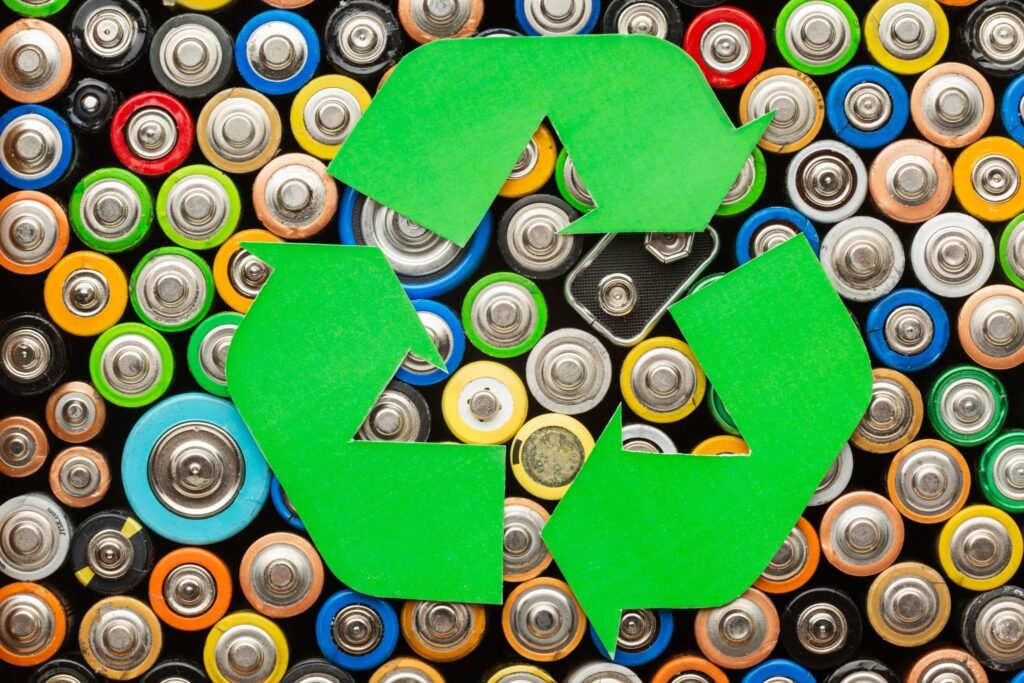
Whenever I sit down at my workbench to assemble solar microcontrollers or design battery management systems, I am reminded of an essential engineering reality: a clean energy device is only truly green if we account for its entire lifecycle. In electronics research, we often marvel at how lithium-ion cells have catalyzed the global shift toward decarbonization, powering everything from our daily tools to renewable microgrids. Yet, working directly with high-density cells gives you an acute appreciation for the underlying materials.
When these batteries reach the end of their operational lifespan, their disposal presents serious chemical risks if not handled through systematic recovery pathways. We cannot simply celebrate the reduction of fossil fuel emissions while overlooking toxic off-gassing, groundwater leaching, and transition metal waste. In my view, engineering innovation must always march alongside strict environmental stewardship.
True technological progress doesn’t stop once a pack delivers efficient kilowatt-hours; it requires designing systems that leave zero destructive footprint behind. As researchers, engineers, and conscious consumers, we must look beyond the initial utility of our hardware and prioritize circular recycling technologies capable of neutralising pollution risks right from the design phase.
Managing lithium-ion battery chemical pollution is critical for safeguarding the environment. By implementing innovative recycling technologies like hydrometallurgy and direct recycling, you can efficiently recover valuable materials while minimizing hazardous waste. These processes not only reduce the need for new mining but also support a circular economy. Overcoming challenges, such as contamination and inadequate collection systems, requires robust regulatory support and public awareness. Continue exploring how these advancements shape the future of sustainable battery management.
KEY TAKEAWAYS
- Advanced recycling technologies, such as hydrometallurgy and direct recycling, efficiently recover valuable materials while minimizing chemical pollution from lithium-ion batteries.
- Implementing Extended Producer Responsibility (EPR) encourages manufacturers to take accountability for battery recycling, reducing hazardous waste and promoting sustainable practices.
- Innovative separation techniques enhance recovery rates of lithium, cobalt, and nickel, decreasing reliance on new mining and mitigating environmental impacts.
- Public awareness campaigns educate consumers on proper battery disposal and recycling, fostering a culture of sustainable battery management.
- International collaboration on regulatory frameworks ensures consistent recycling practices, improving the overall effectiveness of pollution management strategies.
WHY LITHIUM-ION BATTERY POLLUTION MATTERS?
Although lithium-ion batteries are essential for powering modern technology, their pollution poses significant environmental and health risks. The production and disposal of these batteries can lead to lithium toxicity, which contaminates soil and water sources.
When improperly discarded, lithium-ion batteries can release hazardous materials, creating long-term environmental impacts that affect ecosystems and human health. The mining of lithium also contributes to habitat destruction and increased carbon emissions, exacerbating climate change.
As you explore innovative solutions, consider how addressing battery pollution can pave the way for sustainable technology. Understanding the full spectrum of lithium-ion battery pollution is vital for developing effective recycling methods and alternative energy solutions.
Why We Must Recycle Lithium-Ion Batteries?
The use of lithium-ion batteries (LIBs) is rapidly increasing as part of the energy transition aimed at limiting human influence on global warming. This technology can replace numerous carbon-based systems to limit carbon dioxide production. However, these batteries are subject to the intrinsic risk of thermal runaway, which can lead to fires. The specificities of those fires are mainly due to the materials used in the batteries, the specific propagation mode of thermal runaway and the extinguishing difficulties. In light of public concerns regarding the environmental impact of fires, estimating the potential consequences of these incidents and considering both short-term toxicity and long-term effects has become a significant issue. To address this objective, this paper proposes a review of existing data on lithium-ion battery fire emissions. This review shows that, while some data are available regarding acute toxicity through emitted gases, very few exist on other gases or particles that could lead to long-term consequences. Furthermore, the different types of emissions, water pollution, or direct impacts on the ground are rarely studied, even though they could be the primary sources of pollution from large lithium-ion battery fires.
Recycling lithium-ion batteries is essential for protecting our environment by reducing hazardous waste and minimizing pollution.
It also allows us to recover valuable resources like lithium, cobalt, and nickel, which can be reused in new batteries.
Additionally, embracing battery recycling promotes economic sustainability by creating jobs and fostering a circular economy.
Environmental Protection Efforts
As the demand for lithium-ion batteries continues to surge, their environmental impact becomes increasingly concerning.
Recycling lithium-ion batteries is essential for implementing sustainable practices that protect our planet. When you recycle, you minimize hazardous waste, reduce pollution, and conserve natural resources.
By choosing eco friendly products, you actively contribute to a circular economy, where materials are reused rather than discarded. This approach not only mitigates the harmful effects of battery disposal but also fosters innovation in recycling technologies.
As individuals and organizations, you can promote awareness and advocate for policies that support battery recycling initiatives.
Together, we can guarantee that the growth of lithium-ion battery usage aligns with our commitment to environmental protection and sustainable development. Your actions matter.
Resource Recovery Benefits
When you recycle lithium-ion batteries, you release significant resource recovery benefits that are crucial for sustainable development.
Embracing recycling not only mitigates environmental harm but also reveals essential materials.
Here are four key recycling benefits:
- Material Recovery: You reclaim valuable metals like lithium, cobalt, and nickel, reducing the need for mining new resources.
- Energy Savings: Recycling consumes less energy compared to traditional mining and processing, leading to lower carbon emissions.
- Waste Reduction: You prevent hazardous waste from entering landfills, protecting soil and water resources.
- Circular Economy: Recycling supports a circular economy, promoting sustainability and innovation in battery technology.
Economic Sustainability Factors
Lithium and lithium-ion batteries have been heralded as environmental saviors, allowing us to decrease our reliance on carbon-intensive fossil fuels and transition to electric vehicles (EVs) and other more environmentally friendly technologies. These batteries power everything from smartphones to electric cars, positioning themselves at the forefront of the green energy revolution.
While the environmental benefits of recycling lithium-ion batteries are well-documented, the economic sustainability factors are equally compelling.
Recycling not only mitigates pollution but also creates significant economic impact. By reclaiming valuable materials like lithium and cobalt, you can reduce reliance on costly mining operations, driving down production costs within the battery industry.
This shift fosters industry growth, as companies invest in innovative recycling technologies that boost efficiency and profitability.
Additionally, as demand for electric vehicles and renewable energy solutions surges, a robust recycling infrastructure will position you at the forefront of a burgeoning market.
Embracing battery recycling isn’t just an environmental necessity; it’s a strategic economic opportunity that guarantees long-term sustainability for both your business and the planet.
Innovative Recycling Technologies for Batteries
Innovative recycling technologies for batteries are vital in addressing the environmental challenges posed by lithium-ion battery waste. To create a more sustainable future, you’ll want to explore these key advancements:
- Advanced Separation Techniques: Utilizing cutting-edge methods to efficiently isolate valuable materials like lithium, cobalt, and nickel from spent batteries.
- Hydrometallurgical Processes: Employing aqueous solutions to extract metals, minimizing energy consumption and improving recovery rates.
- Mechanical Recycling: Implementing physical processes that shred and sort battery components, ensuring a closed-loop system that reduces raw material dependency.
- Direct Recycling Methods: Innovating strategies that allow for the reuse of battery components without complete material breakdown, enhancing efficiency and reducing waste.
These technologies not only mitigate chemical pollution but also contribute to a circular economy, while helping address PVC plastic emissions in electronics disposal and ensuring that battery materials are reused effectively.
Embracing these innovations is essential for sustainable battery management.
How Lithium-Ion Batteries Are Recycled
Lithium batteries are batteries that use lithium as an anode. This type of battery is also referred to as a lithium-ion battery and is most commonly used for electric vehicles and electronics.
Recycling lithium-ion batteries involves a systematic process aimed at recovering valuable materials and minimizing environmental impact.
First, you utilize advanced battery disassembly techniques to safely dismantle the battery packs, separating components like the casing, electrodes, and electrolyte. This initial step is essential for preventing hazardous material leaks and ensuring safety.
Next, you engage in various recovery processes to extract metals such as lithium, cobalt, and nickel. Hydrometallurgical methods, for instance, use chemical solutions to dissolve and separate the desired materials efficiently.
Pyrometallurgical approaches, on the other hand, involve high-temperature processing to recover metals through melting and refining.
Throughout these stages, innovations in automation and robotics enhance precision and reduce labor costs, making the recycling process more efficient.
Ultimately, these methods not only reclaim valuable resources but also contribute to a sustainable future by reducing waste and minimizing the need for new raw materials.

OVERCOMING CHALLENGES IN LITHIUM-ION BATTERY RECYCLING
From an engineering perspective, modern battery degradation is a complex mechanical and chemical challenge. In the lab, observing cathode fatigue—such as transition metal dissolution, phase transitions, and lattice strains—shows why traditional blunt-force recycling like pyrometallurgy falls short. Smelting spent packs wastes massive energy, destroys functional crystal matrices, and generates secondary emissions.
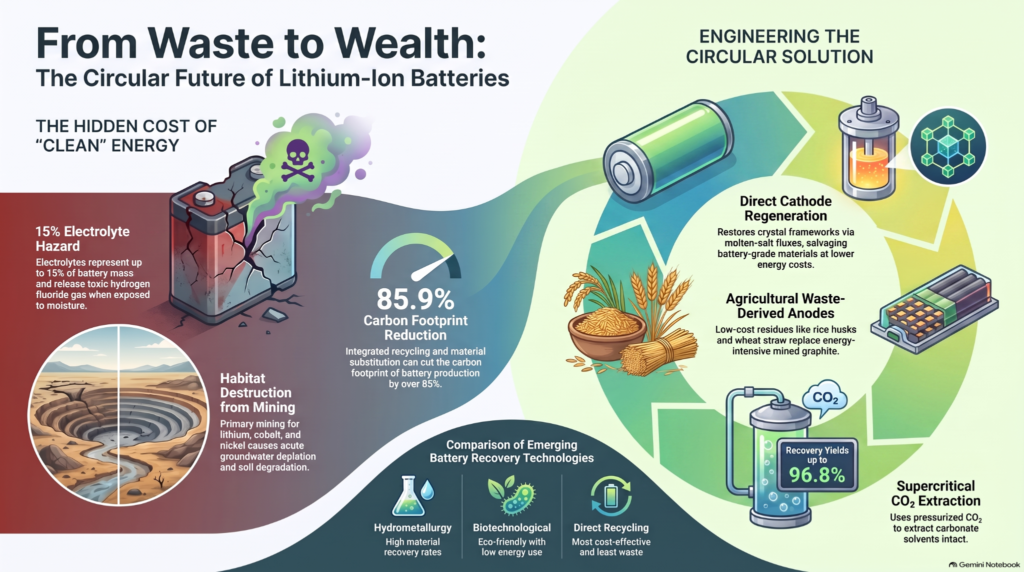
Instead, our focus must pivot toward direct regeneration and targeted microstructural repair. Restoring crystal frameworks via molten-salt fluxes, mild chemical relithiation, and deep eutectic solvents allows us to salvage battery-grade active material at significantly lower energy and carbon costs. Simultaneously, we cannot continue ignoring the electrolyte fraction, which constitutes up to 15 percent of a cell’s total mass. When moisture hydrolyzes salts like LiPF6, corrosive hydrogen fluoride gas and toxic phosphorus compounds form rapidly.
Advanced methods such as supercritical CO2 extraction and vacuum distillation not only prevent dangerous off-gassing and soil contamination but also yield high-purity solvents for immediate reuse. Coupling these closed-loop methods with bio-derived carbon anodes from agricultural residues transforms what used to be a hazardous waste stream into a resilient, circular supply chain.
As the demand for lithium-ion batteries skyrockets, addressing the challenges of their recycling becomes vital to ensuring environmental sustainability.
You’ll encounter several recycling challenges that must be tackled to improve efficiency:
- Technology limitations: Current methods often struggle to extract valuable materials effectively.
- Economic viability: High costs of recycling processes can deter investment and innovation.
- Collection systems: Inadequate infrastructure leads to poor collection rates, reducing the supply of batteries for recycling.
- Material contamination: Mixed battery chemistries complicate the recycling process, impacting yield and quality.
To overcome these challenges, it’s essential to invest in advanced technologies and streamline recycling processes.
By addressing these issues, you can enhance the sustainability of lithium-ion battery use and promote a circular economy.
Emphasizing innovation will play a significant role in developing effective solutions to these pressing recycling challenges.
Regulatory Support for Lithium-Ion Battery Recycling
To effectively tackle lithium-ion battery pollution, you need to understand the importance of a robust legislative framework that supports recycling efforts.
This includes not only developing clear regulations but also offering incentives that encourage businesses and consumers to participate in recycling initiatives.
Additionally, international collaboration can enhance these efforts, ensuring a more thorough approach to managing battery waste globally.
Legislative Framework Development
While the rise in lithium-ion battery usage presents significant environmental challenges, effective legislative frameworks are vital for establishing robust recycling programs.
To support these initiatives, consider the following policy frameworks:
- Standardization of Recycling Processes – Establishing uniform protocols guarantees consistency and safety in recycling methods.
- Extended Producer Responsibility (EPR) – Holding manufacturers accountable for their products’ end-of-life management encourages sustainable practices.
- Financial Incentives – Implementing subsidies or grants for recycling facilities can boost innovation and efficiency.
- Public Awareness Campaigns – Educating consumers about recycling options enhances participation and reduces battery waste.
These legislative initiatives are vital in shaping an effective recycling ecosystem, guaranteeing that the environmental impact of lithium-ion batteries is minimized while promoting sustainable technological advancements.
Incentives for Recycling Initiatives
How can we effectively encourage greater participation in lithium-ion battery recycling? One key approach lies in establishing robust recycling incentives.
By implementing funding programs that support recycling initiatives, you can create a financial framework that motivates manufacturers and consumers alike. For instance, offering tax credits for companies that invest in recycling technologies can stimulate innovation and reduce costs associated with battery disposal.
Additionally, public awareness campaigns highlighting the environmental benefits of recycling can foster community engagement. Regulatory support that requires manufacturers to take responsibility for end-of-life products further strengthens these efforts.
International Collaboration Efforts
Robust recycling incentives can be greatly amplified through international collaboration efforts focused on regulatory support for lithium-ion battery recycling.
By fostering global partnerships, you can enhance the effectiveness of recycling initiatives. Key strategies include:
- Aligning regulations across borders to create a unified framework.
- Establishing a knowledge-sharing platform to disseminate best practices.
- Developing joint research initiatives to innovate recycling technologies.
- Encouraging investment in infrastructure that supports sustainable battery disposal.
These efforts not only streamline the recycling process but also drive innovation in the sector. When countries work together, they can leverage their strengths, share insights, and ultimately reduce chemical pollution and brominated flame retardants environmental toxicity from electronic waste, paving the way for a more sustainable future.
When countries work together, they can leverage their strengths, share insights, and ultimately reduce chemical pollution from lithium-ion batteries, paving the way for a more sustainable future.
The Future of Lithium-Ion Battery Recycling and Sustainability
As the demand for electric vehicles and renewable energy storage surges, the future of lithium-ion battery recycling and sustainability becomes increasingly critical. You must embrace future technologies and sustainable practices to minimize chemical pollution. Innovative recycling methods, like hydrometallurgical and biotechnological processes, are evolving to recover valuable materials more efficiently.
| Technology | Benefits |
| Hydrometallurgy | High recovery rates |
| Biotechnological methods | Eco-friendly, low energy use |
| Direct recycling | Reduced waste, cost-effective |
| Modular battery design | Easier disassembly, recycling |
| Second-life applications | Extends battery lifespan |
RELATED STUDIES ABOUT LITHIUM ION BATTERY CHEMICAL POLLUTION
In the race against lithium-ion battery pollution, recycling emerges as our strongest ally. By embracing innovative technologies and regulatory support, you can help transform discarded batteries into valuable resources, reducing environmental harm. Picture a world where yesterday’s batteries fuel tomorrow’s green energy, turning waste into wealth. As you advocate for sustainable practices, remember that each recycled battery is a step toward a cleaner planet. Together, let’s charge forward into a brighter, more sustainable future.
Targeted microstructural repair of lithium-ion battery cathodes via direct regeneration
Context & Core Problem
Rapid growth in the battery industry and escalating demand for energy storage have intensified concerns regarding critical metal scarcity and the environmental impacts of battery disposal. Conventional recycling routes such as pyrometallurgy and hydrometallurgy focus on breaking down materials into alloys or precursor salts, suffering from high energy consumption, heavy reagent use, toxic emissions, and complex downstream re-synthesis. In response, direct cathode regeneration has emerged as a high-efficiency alternative designed to preserve the original crystal framework and restore electrochemical activity through microstructural defect repair and relithiation.
Degradation & Failure Modes
Cathode degradation during cyclic aging involves coupled chemical and mechanical failure mechanisms:
- Layered Oxides (LCO, NCM, NCA): Subject to anisotropic volume changes during delithiation, irreversible high-voltage phase transitions (e.g., H2 to H3 in Ni-rich NCM), transition metal (TM) dissolution, oxygen loss, Li/Ni anti-site disorder, resistive CEI growth, and intergranular microcracking.
- Olivine Frameworks (LFP): Suffer primarily from lithium deficiency, residual FePO4 phase accumulation, Li/Fe anti-site defects, and lattice mismatch strain between LiFePO4 and FePO4 phases that blocks 1D $[010]$ diffusion channels.
- Spinel Structures (LMO): Exhibit severe capacity fade driven by high-spin Mn^3+ Jahn-Teller distortions and subsequent Mn^3+ disproportionation into soluble Mn^2+, which migrates to the anode and destabilizes the SEI.
Direct Regeneration Methodologies
- Molten-Salt Systems: High-temperature ionic fluxes (such as LiOH-based eutectic salts) exploit liquid-phase capillary action and mass transport to heal microcracks, dissolve disordered surface rock-salt/spinel phases, alleviate internal stresses, and drive single-crystal reconstruction.
- Radical Aprotic & Reductive Media: Aprotic solutions (e.g., biphenyl/THF, PAHs) and mild chemical reductants (e.g., Li2 DHBN, LiTBH, citric acid, glycerol, L-threonine) enable near-ambient or hydrothermal relithiation by reducing oxidized TMs (e.g., Fe^3+ to Fe^2+) without damaging underlying current collectors.
- Deep Eutectic Solvents (DES): Composition-tunable, low-temperature media selectively etch degraded surface layers and fill vacancies under mild conditions.
- Interfacial & Lattice Engineering: Selective chelation agents (e.g., Liacac, tartaric acid) and advanced oxidation (e.g., H2O2) remove degraded CEI species and reconstruct surface layers. Concurrently, heteroatom doping (e.g., Al, Cu, Mo, Mg, Mn) and artificial coatings (e.g., LiF, phosphate layers) stabilize TM–O bonding, modulate phonon vibration modes, and mitigate ongoing electrolyte corrosion.
- Physical-Field-Assisted Repair: Non-invasive fields—including external magnetic fields (modulating Ni^3+ spin states via the Zeeman effect) and photothermal/photocatalytic irradiation—significantly lower cation migration barriers for rapid defect healing.
Techno-Economic & Environmental Viability
- Economic Return: Because direct regeneration yields ready-to-use battery-grade cathode active material, its profit margins are substantially higher than metallurgical routes; the average revenue of hydrometallurgy is roughly 50% of direct regeneration, while pyrometallurgy delivers even lower relative returns.
- Environmental Impact: Across the full lifecycle (including material remanufacturing), direct regeneration achieves significant reductions in energy consumption and greenhouse gas emissions compared to traditional pyro- and hydrometallurgical recycling chains.
AI Empowerment & Future Outlook
- Machine Learning Integration: Data-driven models facilitate rapid non-destructive health diagnostics (pulse-response SOH estimation with <6% error), privacy-preserving federated sorting of cathode chemistries prior to shredding, and DFT-guided virtual screening of optimal organic lithium-replenishing reagents.
- Development Priorities: The path to large-scale commercialization requires shifting from uniform surface engineering toward crystal-plane-selective optimization, addressing bulk internal stress and crack propagation alongside interface repair, developing scalable low-energy relithiation processes, and establishing multi-scale defect mapping for automated, chemistry-specific recycling flows.
| REFERENCE: Zhanfeng Ma, Hongli Chen, Chen Tang, Yong Chen, Yanyan Zhao, Bing Sun, Hong Gao, Guoxiu Wang, Hao Liu, Targeted Microstructural Repair of Lithium–ion Battery Cathodes via Direct Regeneration, Advanced Powder Materials, 2026, 100446, ISSN 2772-834X, https://doi.org/10.1016/j.apmate.2026.100446. (https://www.sciencedirect.com/science/article/pii/S2772834X26000540) |
Recovery and environmental impact of spent lithium-ion batteries electrolyte: Challenges and future perspectives
Context and Core Problem
Rapid growth in electric vehicles, grid energy storage, and consumer electronics has accelerated the accumulation of spent lithium-ion batteries. While industrial recycling has focused primarily on recovering high-value electrode metals such as cobalt, nickel, and lithium, the electrolyte fraction—accounting for 10 to 15 percent of total battery weight—has been largely ignored and destroyed during conventional pyro- and hydrometallurgical processing. Composed of lithium conducting salts (such as LiPF6 and LiBF4), volatile organic carbonate solvents (including EC, DMC, EMC, and PC), and functional additives, the electrolyte poses significant environmental and safety hazards if mishandled, while simultaneously representing an unexploited secondary resource.
Environmental and Health Risks
- Hydrolysis and Toxic Off-Gassing: When exposed to atmospheric moisture, the widely used salt LiPF6 rapidly decomposes and hydrolyzes, releasing highly toxic and corrosive hydrogen fluoride (HF), alongside volatile phosphorus-containing vapors including POF3 and PF5.
- Ecosystem Contamination: Landfilling spent cells leads to persistent leaching of toxic fluorides and volatile organic compounds into soil and groundwater, resulting in bioaccumulation, phytotoxicity, and severe health effects such as fluorosis, cell injury, and organ damage.
- Thermal and Fire Hazards: Flammable organic carbonate solvents introduce substantial fire and explosion risks during battery handling, shredding, and pre-treatment. Incineration releases greenhouse gases, volatile organic pollutants, and hazardous fluorinated off-gases into the atmosphere.
- Transition Metal Catalysis: Dissolved transition metal ions from degraded cathodes, especially Mn2+, lower the activation energy barrier for carbonate solvent decomposition and accelerate chemical breakdown.
Recovery and Treatment Technologies
- Supercritical and Transcritical CO2 Extraction: Pressurized CO2 provides a non-flammable, non-toxic solvent medium that extracts carbonate solvents intact, achieving extraction yields up to 85 to 96.8 percent. Adding co-solvents (such as acetonitrile or acetone) enhances the recovery of polar carbonates like EC and conducting salts, while enabling simultaneous delamination of cathode coatings from aluminum foils.
- Vacuum Distillation and Thermal Processing: Moderate thermal separation (typically 90 to 130 degrees Celsius) under reduced pressure volatilizes linear solvents like DMC and DEC for reuse in reconstituted electrolytes, although LiPF6 breakdown requires gas absorption systems to neutralize HF and POF3.
- Solvent Extraction and Aqueous Washing: Washing disassembled cell components with low-polarity solvents like DMC extracts residual organic fractions, enabling subsequent aqueous lithium salt recovery rates of up to 99.8 percent in EC-free systems.
- Aqueous Exfoliating and Extracting Solutions (AEES): Mild aqueous salt solutions dissolve electrolytes and strip active materials simultaneously, achieving 95.6 percent electrolyte recovery and near-complete current collector separation without releasing hazardous acid gases or wastewater.
- Chemical Conversion and Precipitation: Tailored chemical routes capture toxic components into stable solids (such as CaF2 or ettringite) or upcycle waste salts into specialized additives like lithium difluorophosphate (LiPO2F2), chelated boron-based salts, or high-purity lithium carbonate (Li2CO3, up to 99.9 percent purity).
- Catalytic Syngas Thermolysis: Co-pyrolysis of electrolyte waste over spent cathode catalysts (such as NCM 811) in CO2 atmospheres converts organic solvents into value-added syngas (H2 and CO) at lower operational temperatures.
Industrial Bottlenecks and Challenges
- Strong Adsorption: A substantial portion of the electrolyte remains tightly wetted and adsorbed within the fine pores of separators and electrode materials, hindering complete recovery via simple mechanical draining.
- Feedstock Heterogeneity: Wide variability in proprietary solvent mixtures, salt types, and additives across manufacturers complicates the development of standardized, continuous industrial recycling lines.
- High Purification Costs: Re-integrating recovered solvents and salts into battery manufacturing requires strict battery-grade purity (greater than 99.9 percent) and ultra-low moisture limits. The energy-intensive purification, vacuum requirements, and corrosion-resistant infrastructure significantly elevate capital and operational expenditures relative to virgin solvent prices.
Future Research Directions
- Optimizing Extraction of Adsorbed Fractions: Advancing scalable, continuous low-temperature vacuum extraction, enhanced solvent washing, and supercritical fluid extraction specifically aimed at trapped electrolyte.
- Modular and Adaptable Systems: Designing flexible, modular extraction and distillation units capable of accommodating fluctuating solvent boiling points and diverse chemical feedstocks.
- Design for Recycling: Collaborating with battery manufacturers to integrate standardized electrolyte draining ports and easily peelable binders/separators in next-generation cells.
- Artificial Intelligence Deployment: Utilizing machine learning models for non-destructive composition identification, dynamic process optimization, and predictive modeling of electrolyte behavior during recovery.
| REFERENCE: Misbah Ullah, Hossein Shalchian, Francesco Vegliò, Nicolò Maria Ippolito, Recovery and environmental impact of spent lithium-ion batteries electrolyte: Challenges and future perspectives, Journal of Energy Storage, Volume 154, Part C, 2026, 121300, ISSN 2352-152X, https://doi.org/10.1016/j.est.2026.121300. (https://www.sciencedirect.com/science/article/pii/S2352152X26009643) |
Agricultural waste-derived carbon electrodes for sustainable lithium-ion batteries: environmental and economic assessment
Context and Core Problem
The global transition toward electric mobility and renewable energy integration has caused an unprecedented surge in demand for lithium-ion batteries. However, the industry faces severe challenges, including the rapid depletion of critical raw materials, supply chain vulnerabilities, high manufacturing costs, and substantial ecological degradation linked to primary mining and end-of-life disposal. While commercial battery anodes depend almost exclusively on mined natural or energy-intensive synthetic graphite, agricultural residues represent an abundant, low-cost, and renewable carbon alternative aligned with circular bioeconomy principles.
Biomass Precursors and Lignocellulosic Influence Agricultural residues consist primarily of lignocellulosic biopolymers, typically comprising 40 to 50 percent cellulose, 25 to 35 percent hemicellulose, and 15 to 20 percent lignin on a dry weight basis:
- Cellulose: Possesses a linear, crystalline structure that promotes ordered graphitic domains and closed pores when carbonized at 600 to 1000 degrees Celsius, enhancing low-voltage plateau capacity during lithium intercalation.
- Hemicellulose: Consists of branched, thermally labile heteropolymers that decompose readily to create open porosity and structural defects, providing expanded interlayer spacing and higher sloping capacity via pseudocapacitive surface adsorption.
- Lignin: An aromatic, cross-linked polymer that promotes turbostratic carbon networks and closed pores, contributing to mechanical rigidity, structural stability, and cycling durability.
- Inherent Heteroatoms and Inorganics: Naturally occurring nitrogen, oxygen, sulfur, and phosphorus create active defect sites that accelerate charge-transfer kinetics, while inorganic components like silica in rice husks enable high-capacity silicon-carbon composite structures.
Thermochemical Conversion and Structural Engineering
- Pyrolysis and Carbonization: Thermal decomposition under inert atmospheres (typically 500 to 1200 degrees Celsius) transforms organic residues into porous, electrically conductive carbon matrices.
- Hydrothermal Carbonization (HTC): Operates in pressurized water at moderate temperatures (180 to 350 degrees Celsius), allowing direct processing of wet biomass without expensive pre-drying steps, producing stable hydrochars with oxygen/nitrogen functionalities.
- Chemical Activation: Reagents such as potassium hydroxide, sodium hydroxide, calcium chloride, and phosphoric acid tailor micro- and mesoporosity, generating specific surface areas exceeding 700 to 1200 square meters per gram.
- Electrochemical Performance: Carbons derived from diverse feedstocks—including rice husks, wheat straw, cotton stalks, avocado seeds, and green tea waste—routinely deliver discharge capacities between 315 and over 1100 milliampere-hours per gram, demonstrating superior high-rate capabilities (1.5 to 2 times higher than graphite) due to significant pseudocapacitive contributions.
Environmental and Life Cycle Assessment
- Carbon and Resource Footprint Reduction: Life cycle assessments confirm that substituting conventional graphite with biomass-derived carbon significantly reduces greenhouse gas emissions, process energy demands, and industrial waste generation.
- Mitigation of Mining Burdens: Utilizing secondary agro-wastes alleviates reliance on hard-rock and brine mining in concentrated regions (such as the Lithium Triangle), which cause acute groundwater depletion, soil degradation, and toxic chemical contamination.
- Recycling Integration: Life cycle evaluations of battery end-of-life pathways demonstrate that recycling coupled with material substitution can cut carbon footprints by up to 85.9 percent, while saving 77 to 89 percent of the energy and 72 to 88 percent of the water required for primary mineral extraction.
Techno-Economic Assessment and Market Potential
- Feedstock Economics: With more than 1.5 billion tons of agricultural waste generated globally each year, using low-value residues cuts raw material costs by an estimated 50 to 70 percent compared to commercial graphite (priced around 10000 to 15000 US dollars per ton).
- Supply Chain Stability: Unlike mined graphite and critical transition metals subject to export constraints and geopolitical volatility, regional agricultural wastes provide localized, resilient supply chains.
- Rural Economic Development: Developing regional agro-waste collection, preprocessing, and conversion infrastructure diversifies agricultural income, creates rural employment, and supports waste-to-wealth frameworks.
Industrial Bottlenecks and Future Perspectives
- Feedstock Heterogeneity: Natural fluctuations in lignocellulosic ratios, moisture levels, and ash content across plant species, seasons, and regions lead to batch-to-batch variations in pore architecture and electrochemical behavior. Standardized feedstock blending, torrefaction, and quality control protocols are essential to ensure industrial reproducibility.
- Initial Coulombic Efficiency (ICE) and Tap Density: High surface area and surface defects frequently cause higher irreversible capacity loss during initial solid electrolyte interphase (SEI) formation (ICE often below 80 percent), alongside lower tap densities compared to graphite.
- Scale-Up and Manufacturing Compatibility: Transitioning from sub-gram laboratory batches to continuous rotary kilns or fluidized beds requires validating compatibility with commercial slurry mixing, coating, and calendaring lines.
- Strategic Roadmap: Future efforts must emphasize full-cell benchmarking against commercial graphite under industrially relevant conditions, machine-learning-driven optimization of thermochemical parameters, the development of hybrid biomass-silicon composites, and alignment with emerging global regulations such as digital battery passports and mandatory recycled-content targets.
| REFERENCE: Pranav Prashant Dagwar, Nada Ramadan, Syed Suffia Iqbal, Jasneet Singh, Lakshmi Kanth Moganti, Dina Magdy Abdo, Deblina Dutta, Agricultural waste-derived carbon electrodes for sustainable lithium-ion batteries: environmental and economic assessment, Environmental Science Advances, Volume 5, Issue 5, 2026, Pages 1213-1251, ISSN 2754-7000, https://doi.org/10.1039/d6va00002a. (https://www.sciencedirect.com/science/article/pii/S275470002600043X) |
CONCLUSION
Scaling sustainable battery technology is an urgent engineering necessity. While the lab-scale breakthroughs in direct cathode repair, non-destructive health diagnostics, and closed-loop electrolyte extraction are remarkable, their ultimate success hinges on how effectively we scale them across global industrial supply chains. Moving forward, we must dismantle the systemic hurdles that still plague battery end-of-life logistics, from feedstock heterogeneity and high purification costs to inadequate collection networks.
Achieving this transition requires close alignment between circuit designers, materials scientists, and policymakers. We need standardized modular pack architectures that make mechanical disassembly seamless, alongside robust Extended Producer Responsibility frameworks that hold manufacturers accountable. Digital battery passports and machine-learning-driven sorting systems will also be critical to ensure every spent pack is accurately categorized and diverted to the right recovery stream.
In my work, whether I am building solar-charged drone prototypes or refining energy-efficient power electronics, the end goal remains the same: ensuring that the energy storage enabling our renewable transition does not become tomorrow’s environmental burden. Circularity must become the foundational baseline for all modern electronic design.