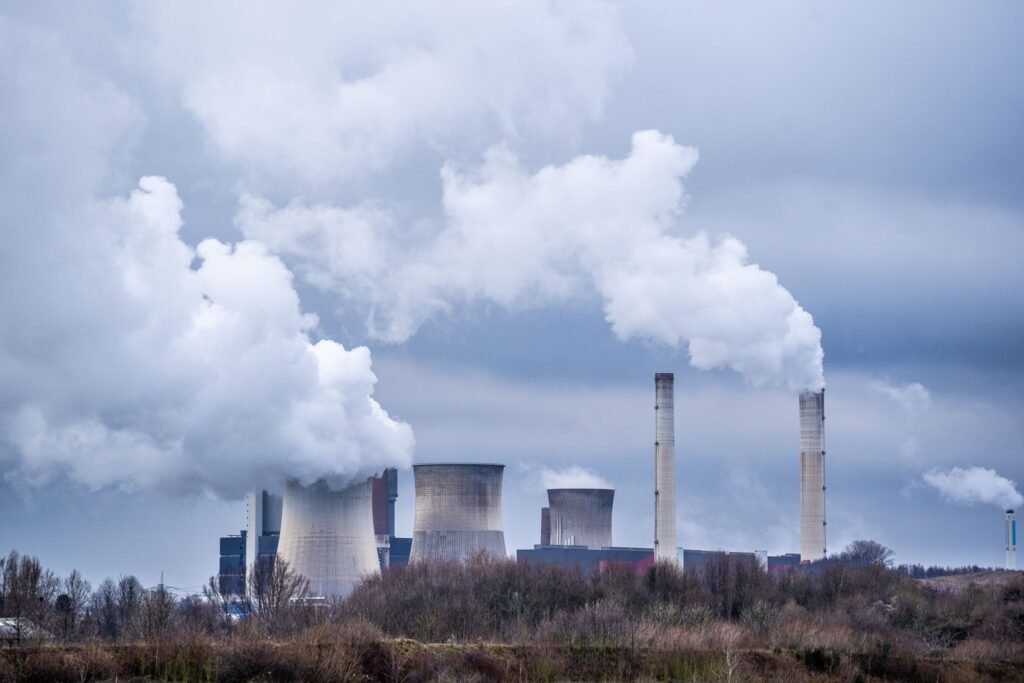
When looking at corporate balance sheets and municipal budgets, air pollution is often treated as an unfortunate, abstract externality rather than a direct fiscal drain. That is a critical miscalculation. During my research at the London School of Economics, it became glaringly evident that clean air is not merely an ecological luxury—it is fundamental economic infrastructure. Whenever I cycle through dense metropolitan corridors, the reality of urban air quality is impossible to ignore. Every exhaust plume and industrial haze layer represents wasted resources, uncaptured energy, and looming financial liability.
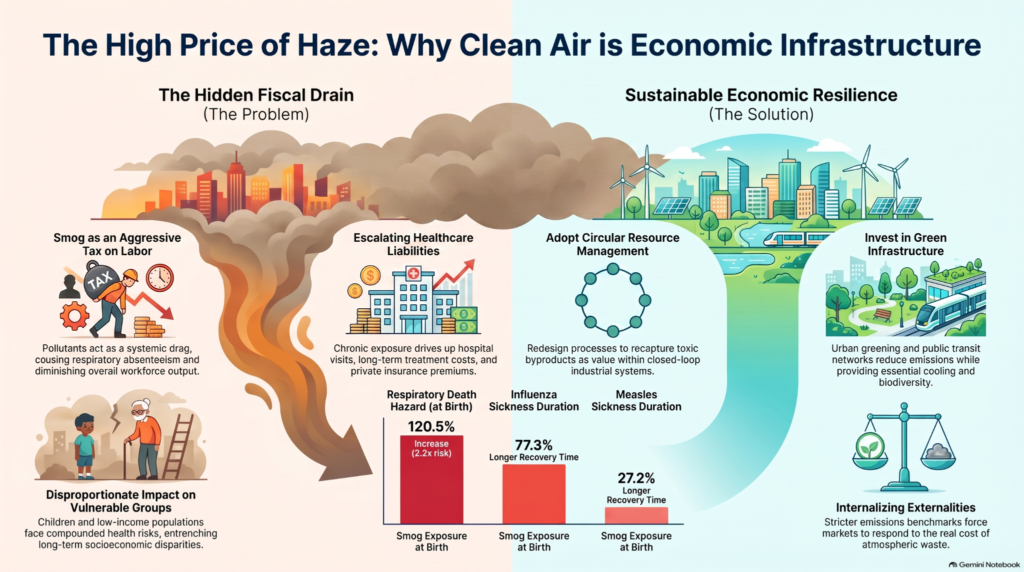
Historically, industrial expansion operated under the flawed premise that environmental degradation was simply the baseline cost of economic growth. Today, empirical data shows the reverse is true: the accumulation of smog-forming chemicals acts as an aggressive tax on labor productivity, strains healthcare funding, and stifles long-term urban competitiveness.
Smog is a visible failure of circular resource management, marking points where chemical processes leak toxic byproducts instead of recapturing value within closed-loop systems. Framing air quality management as an antagonistic trade-off against profitability misses the real issue. By quantifying the macroeconomic costs of degraded air, industry leaders and policymakers can turn environmental compliance into a catalyst for operational efficiency and resilient, eco-effective value creation.
Smog-forming chemicals can severely impact public health and economic stability around the world. Prolonged exposure leads to increased rates of respiratory diseases, especially among vulnerable populations. This translates to higher healthcare costs and lost productivity, straining both individuals and communities. Additionally, industries face stricter regulations, driving up costs and necessitating investments in cleaner technologies. Understanding these effects reveals the urgent need for collective action and innovative solutions to address air quality challenges effectively. There’s more to explore on this critical issue.
KEY TAKEAWAYS
- Long-term exposure to smog-forming chemicals increases respiratory diseases, leading to higher healthcare costs and economic instability.
- Vulnerable populations face greater health risks, compounding healthcare expenses and reducing productivity in affected communities.
- Chronic conditions related to air pollution result in frequent hospital visits, escalating long-term treatment costs and insurance premiums.
- Stricter emissions regulations are necessary to mitigate economic damage and promote cleaner technologies for sustainable growth.
- Community engagement and awareness initiatives are vital in addressing health disparities and fostering resilience against air quality deterioration.
UNDERSTANDING AIR POLLUTION: SMOG-FORMING CHEMICALS AND THEIR SOURCES
Smog, community-wide polluted air. Its composition is variable. The term is derived from the words smoke and fog, but it is commonly used to describe the pall of automotive or industrial origin that lies over many cities. The term was probably first used in 1905 by H.A. Des Voeux to describe atmospheric conditions over many British towns. It was popularized in 1911 by Des Voeux’s report to the Manchester Conference of the Smoke Abatement League of Great Britain on the more than 1,000 “smoke-fog” deaths that occurred in Glasgow and Edinburgh during the autumn of 1909.
As you navigate the complex landscape of air pollution, it’s crucial to understand the smog-forming chemicals that contribute to this pervasive issue.
Major smog sources include industrial emissions and transportation pollutants, which undergo chemical reactions in the atmosphere, leading to the formation of ground-level ozone and particulate matter.
Urbanization effects exacerbate these problems, as densely populated areas generate higher concentrations of pollutants.
Regulatory measures and environmental policies play critical roles in mitigating these impacts, demanding stricter emissions standards and promoting cleaner technologies.
By analyzing these smog-forming chemicals and their origins, you gain insight into how air quality deteriorates and the innovative solutions needed to combat this challenge.
Understanding the interplay of these factors empowers you to advocate for systemic changes that can enhance air quality and protect public health.
Ultimately, addressing smog sources is crucial for fostering sustainable urban environments.
The Health Impacts of Air Pollution on Communities
EPA determined in 2009 that emissions of carbon dioxide and other long-lived greenhouse gases that build up in the atmosphere endanger the health and welfare of current and future generations by causing climate change and ocean acidification. Long-lived greenhouse gases, which trap heat in the atmosphere, include carbon dioxide, methane, nitrous oxide, and fluorinated gases. These gases are produced by a numerous and diverse human activities.
Air pollution considerably affects respiratory health, leading to increased rates of asthma and other chronic illnesses in communities.
Vulnerable populations, such as children and the elderly, often bear the brunt of these impacts, suffering more severe health consequences.
Over time, exposure to smog-forming chemicals raises the risk of long-term diseases, prompting urgent discussions on public health and environmental policies.
Respiratory Health Issues
While many might overlook the invisible dangers lurking in urban environments, smog-forming chemicals greatly compromise respiratory health within affected communities.
Exposure to these pollutants can lead to a range of respiratory diseases, from asthma to chronic obstructive pulmonary disease (COPD). Poor air quality exacerbates these conditions, often resulting in increased hospital visits and healthcare costs.
Innovative research has shown that reducing exposure to smog can markedly improve lung function and overall health. Communities investing in cleaner technologies and regulatory policies can witness marked improvements in public health outcomes.
It’s crucial to recognize the direct correlation between air quality and respiratory health, as effective interventions can foster healthier environments for everyone.
Prioritizing air quality isn’t just a necessity; it’s an opportunity for innovation.
Vulnerable Populations Affected
Although many people recognize that air pollution poses a risk to health, vulnerable populations bear the brunt of its impacts more acutely.
At-risk groups, including children, the elderly, and low-income communities, often face compounded challenges due to socioeconomic factors. These individuals may lack access to healthcare, live in areas with higher pollution levels, and suffer from pre-existing health conditions.
Consider these key aspects:
- Limited resources for preventive care
- Higher exposure rates due to geographic location
- Increased stress from economic instability
- Greater susceptibility to air pollution-related illnesses
These factors create a cycle of vulnerability, making it essential to address air quality issues through innovative policies and community-focused interventions to protect those most affected.
Long-Term Disease Risks
The health impacts of air pollution extend far beyond immediate discomfort, greatly increasing the risk of long-term diseases within affected communities. Chronic illnesses such as asthma, cardiovascular disease, and lung cancer are directly linked to pollution exposure, with studies showing a significant rise in these conditions in areas with high smog levels.
Prolonged exposure to pollutants can cause irreversible damage, leading to decreased quality of life and increased healthcare costs. As communities grapple with these challenges, innovative solutions focusing on reducing emissions and improving air quality become essential.
You must understand that addressing air pollution isn’t just an environmental necessity; it’s a public health imperative that requires immediate action to safeguard future generations.
How Smog Hurts Our Health and Wallets
Smog creates a dense layer in the atmosphere that reduces the amount of ultraviolet (UV) radiation reaching the Earth’s surface. This might sound like a protective feature, but the decreased UV light has unintended consequences. For example, UV radiation plays a crucial role in natural processes like sterilizing harmful pathogens in water and soil. Its reduction may disrupt ecosystems by allowing harmful microorganisms to thrive unchecked.
Smog poses significant health risks, including respiratory issues and cardiovascular diseases that can impact your daily life.
Beyond health, the economic burden of smog manifests in increased healthcare costs and lost productivity, affecting your wallet.
Understanding these intertwined effects is essential for making informed decisions about air quality and public health policies.
Health Risks Associated
While many people mightn’t realize it, exposure to smog can lead to serious health complications that extend far beyond respiratory issues. Increased pollution awareness is fundamental for effective health education, as smog poses various risks, including:
- Chronic respiratory diseases, such as asthma and bronchitis
- Cardiovascular complications, increasing heart attack risk
- Neurological effects, potentially leading to cognitive decline
- Exacerbation of pre-existing health conditions, particularly in vulnerable populations
These health risks not only impact your well-being but can also strain healthcare systems and individual finances.
Understanding the implications of smog is essential for fostering a healthier community. By prioritizing pollution awareness, you can advocate for innovative solutions that protect your health and the environment, ultimately leading to a more sustainable future.
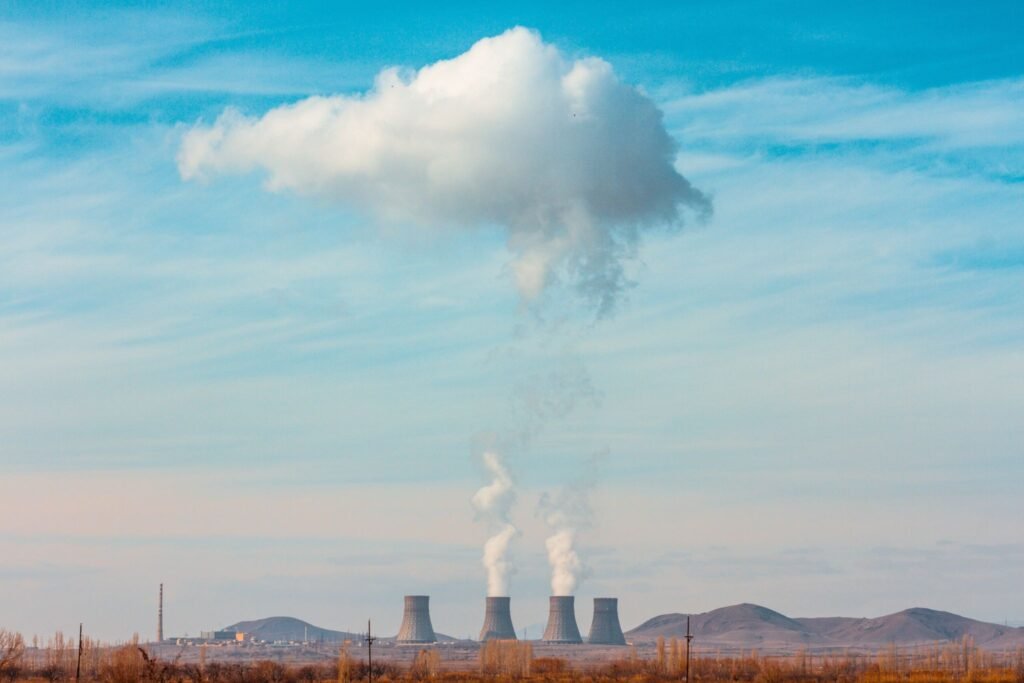
ECONOMIC BURDEN ANALYSIS
In advisory work with multinational enterprises, discussions around the capital expenditure required for emission controls often prompt significant pushback from executives who view scrubbers, electrified fleets, or catalytic converters purely as cost centers. However, evaluating capital allocation through a circular economy lens reveals that conventional accounting routinely ignores the massive downstream liabilities generated by smog precursors. When an industrial facility vents volatile organic compounds or nitrogen oxides, it does not eliminate those costs; it merely offloads them onto regional health systems, local labor markets, and neighboring communities.
The systemic economic drag caused by respiratory absenteeism, chronic healthcare management, and diminished workforce output rapidly outstrips the upfront price tag of clean-tech retrofits. Furthermore, treating atmospheric disposal as a free waste stream exposes businesses to substantial regulatory, legal, and operational vulnerabilities as carbon and pollutant pricing mechanisms become more sophisticated globally.
The most innovative, high-performing businesses understand this transition: eliminating smog-forming emissions is ultimately an exercise in optimizing input efficiency. By preventing chemical loss at the source, redesigning thermal processes, and integrating secondary waste loops, organizations not only shield themselves from escalating health-related economic damages but also build lean, future-proof operational models that consistently outperform linear competitors.
As pollution levels rise, the economic burden linked to smog becomes increasingly apparent. The economic impact of chemical pollutants is profound, affecting both public health systems and individual wallets.
The economic impact of smog is profound, affecting both public health systems and individual wallets. Direct pollution costs arise from increased healthcare expenses due to respiratory diseases and other ailments exacerbated by smog.
Furthermore, lost productivity from sick days adds another layer to this burden, straining businesses and the economy at large. You mightn’t realize that industries also suffer, facing stricter regulations and potential fines related to emissions.
As companies invest in cleaner technologies, these initial costs can seem overwhelming, yet they’re necessary for long-term sustainability.
Ultimately, ignoring the economic implications of smog only escalates the financial strain on society, making proactive measures essential.
Long-Term Healthcare Costs
The hidden costs of smog extend far beyond immediate health issues, accumulating into significant long-term healthcare expenses. You may not realize how smog impacts not just your lungs but your wallet too.
Over time, the burden on healthcare funding becomes unsustainable, affecting treatment accessibility for everyone. Consider the following:
- Increased respiratory diseases leading to more frequent hospital visits.
- Long-term medication costs for chronic conditions exacerbated by smog.
- Loss of productivity due to health-related absences, impacting economic stability.
- Higher insurance premiums as healthcare providers adjust to rising treatment costs.
Addressing these issues is vital for sustainable growth, ensuring that you and your community can access the necessary healthcare without undue financial strain.
The Impact of Smog on Vulnerable Communities
Smog’s pervasive presence in urban environments disproportionately affects vulnerable communities, particularly those with limited resources and access to healthcare. These populations often lack the means to mitigate exposure or seek preventive measures, leading to heightened health risks. Research shows that children and the elderly in these areas suffer from increased respiratory issues, exacerbated by smog conditions.
Moreover, low-income neighborhoods frequently correlate with higher pollution levels, further entrenching health disparities. This reality underscores the necessity for smog awareness initiatives aimed at educating residents about both immediate dangers and long-term effects.
Building community resilience is essential; empowered individuals can advocate for cleaner air and better health resources. Innovative solutions, such as community gardens or green spaces, can also foster resilience, improving air quality while enhancing social cohesion.
Prioritizing these strategies not only addresses health inequities but also promotes a sustainable future for vulnerable communities.
Successful City Strategies for Reducing Smog
While cities grapple with the persistent challenge of smog, many have implemented innovative strategies that considerably reduce air pollution and improve public health.
These successful city strategies often hinge on a combination of urban policy and community engagement, emphasizing the need for collective action.
- Transportation initiatives: Expanding public transit and promoting electric vehicles cut down on emissions, supporting efforts to reduce petrochemical emissions and economy-related pressures.
- Green infrastructure: Planting trees and creating green roofs enhance air quality while providing urban cooling.
- Regulatory measures: Enforcing stricter emissions standards pushes industries toward sustainable practices.
- Public awareness campaigns: Educating residents on pollution’s effects fosters community involvement in air quality improvement.
Identifying Effective Solutions for Air Pollution
To effectively tackle air pollution, it’s essential to identify solutions that leverage both technology and community engagement. Implementing clean technology can notably reduce harmful emissions, while policy innovation guarantees that emission regulations are both effective and enforceable.
Engaging the community through awareness campaigns fosters a culture of sustainability, encouraging individuals to adopt sustainable practices and choose eco friendly products that help reduce environmental pollution.
Investing in green infrastructure not only enhances air quality but also promotes biodiversity. Expanding public transportation networks reduces reliance on personal vehicles, thereby cutting down on traffic-related pollution.
Shifting to renewable energy sources, like solar and wind, further mitigates air pollution by decreasing fossil fuel dependency.
The synergy of these strategies creates a thorough approach, integrating technological advancements with grassroots involvement. By prioritizing these solutions, you can contribute to cleaner air and a healthier environment for future generations.
The Future of Our Air: Protecting Public Health and Economic Stability
As air quality continues to decline in many urban areas, understanding its implications for public health and economic stability becomes paramount.
Poor air quality not only affects your health but can also undermine economic growth. To foster a healthier future, innovative public policy solutions are essential.
Consider the following strategies:
- Implement stricter emissions regulations to lower pollution levels.
- Invest in green infrastructure to enhance urban air quality.
- Promote public transportation to reduce reliance on vehicles.
- Encourage community awareness campaigns to educate citizens on air quality issues.

RELATED STUDIES ABOUT SMOG FORMING CHEMICALS AND ECONOMIC DAMAGE
In summary, addressing the long-term effects of smog-forming chemicals is essential for both public health and economic stability. By implementing effective strategies, cities can considerably reduce air pollution and its impacts on vulnerable communities. As we consider the future of our air, ask yourself: what steps can you take to advocate for cleaner air in your community? Together, we can create a healthier environment and mitigate the economic damage caused by smog.
Smog: Lahore needs global attention to fix it
The review article “Smog: Lahore needs global attention to fix it” (published in Environmental Challenges, August 2024 by Abdul Razzaq et al.) analyzes the escalating air pollution crisis in Lahore, Pakistan. The study examines the root causes of smog formation, evaluates its repercussions on public health and agriculture, and outlines key mitigation frameworks.
- Drivers of Smog Formation: The severe smog episodes in Lahore result from a combination of anthropogenic emissions and seasonal meteorological conditions. Key contributors include industrial emissions, heavy vehicular pollution, extensive crop residue burning, and stagnant atmospheric conditions that trap pollutants near the surface.
- Public Health Impacts: Prolonged exposure to hazardous air quality significantly escalates respiratory illnesses and cardiovascular diseases. It exacerbates pre-existing chronic conditions and poses acute health risks, particularly for vulnerable demographics such as children, the elderly, and outdoor laborers.
- Agricultural Repercussions: Persistent smog causes notable reductions in crop yields, accelerates soil degradation, and severely impacts the health, safety, and field productivity of agricultural workers.
- Mitigation Strategies & Recommendations: Addressing the smog crisis requires an interdisciplinary approach spanning stringent regulatory enforcement, sustainable agricultural waste management (to curb crop burning), technological innovations in emission controls, and public awareness campaigns to foster sustainable practices.
| REFERENCE: Abdul Razzaq, Muhammad Mubashar Zafar, Laviza Tuz Zahra, Fariha Qadir, Fei Qiao, Muhammad Haseeb Ullah, Saadia Shehzad, Ghulam Rasool, Xuefei Jiang, Smog: Lahore needs global attention to fix it, Environmental Challenges, Volume 16, 2024, 100999, ISSN 2667-0100, https://doi.org/10.1016/j.envc.2024.100999. (https://www.sciencedirect.com/science/article/pii/S2667010024001653) |
Born in Smog: Immediate and persistent health consequences of acute air pollution exposure in historical London, 1892–1919
The study “Born in Smog: Immediate and persistent health consequences of acute air pollution exposure in historical London, 1892–1919” by Eric B. Schneider (Explorations in Economic History, 2026) evaluates how acute, extreme pollution events affected child health across birth, childhood, and adolescence.
The investigation proxies acute pollution spikes using daily records of radiation fog events from the Greenwich Observatory and pairs them with two rich microdata sources: inpatient maternity records from the Queen Charlotte Hospital (1892–1913) and longitudinal cohort records from the London Foundling Hospital (1893–1919).
Key findings across health dimensions include:
- Birth Outcomes: Fog exposure at birth, in the days immediately prior, or across each trimester in utero had no statistically significant or historically meaningful negative effects on birth weight, birth length, prematurity, stillbirths, or neonatal mortality within the first two weeks of life. These precise null results rule out acute pollution triggering early labor or causing acute intrapartum complications.
- Child and Adolescent Growth: Exposure to acute pollution in utero, on the day of birth, or during the first 28 days of life produced no persistent, statistically significant effects on height, weight, or BMI Z-scores measured at ages 5 or 15.
- Mortality Risk: Cause-specific proportional hazards models indicate that children born on a fog day faced more than double the hazard of dying from respiratory causes in childhood and adolescence compared to those born on non-fog days (hazard ratio of 2.205). Cumulative exposure during the first 28 days after birth also increased respiratory mortality risk by 41% per standard deviation increase in fog days. All-cause mortality showed no significant association due to competing risk dynamics.
- Sickness Incidence and Prevalence (Ages 5–10): Being born on a fog day doubled individual-level influenza incidence and significantly raised influenza prevalence during childhood. In contrast, it had no significant impact on upper respiratory infections like catarrh or tonsillitis.
- Sickness Duration (Persistent Effects): Among children contracting diseases between ages 5 and 15, being born on a fog day resulted in 77.3% longer influenza sickness durations (~7 additional days) and 27.2% longer measles sickness durations (~4 additional days). Upper respiratory tract infections showed no duration differences.
- Sickness Duration (Immediate Effects): Acute pollution exposure at the onset of illness also prolonged recovery. Experiencing a fog day on the date of infirmary admission increased influenza duration by 34.1%, while each additional fog event 1 to 3 days prior to admission increased measles duration by 14.2%.
- Biological Mechanisms and Historical Implications: The pronounced impact localized specifically to the day of birth suggests that taking a first breath in heavily polluted air may disrupt alveolar expansion, impair surfactant development, or prime neonatal immune pathways for hyper-reactive inflammatory responses later in life. The findings reconcile historical demographic debates by showing that elevated infant mortality in polluted industrial cities was driven largely by post-neonatal susceptibility to severe lower respiratory disease rather than acute fetal or neonatal death.
| REFERENCE: Eric B. Schneider, Born in Smog: Immediate and persistent health consequences of acute air pollution exposure in historical London, 1892–1919, Explorations in Economic History, Volume 101, 2026, 101773, ISSN 0014-4983, https://doi.org/10.1016/j.eeh.2026.101773. (https://www.sciencedirect.com/science/article/pii/S0014498326000343) |
Fog or smog? The impact of uncensored reporting on pollution on individuals’ environmental preferences
The study “Fog or smog? The impact of uncensored reporting on pollution on individuals’ environmental preferences” by Sven A. Hartmann (Journal of Environmental Economics and Management, 2026) evaluates how access to uncensored environmental reporting shapes environmental awareness, institutional trust, and pro-environmental behavior.
The paper exploits a natural experiment in the former German Democratic Republic (GDR), where the socialist government censored environmental pollution data and downplayed severe industrial degradation. While most GDR citizens could receive West German public broadcasts (ARD and ZDF) that openly covered pollution and smog, geographic barriers prevented reception in certain northeastern and southeastern areas (such as Dresden).
Key findings across preferences, civic actions, and voting outcomes include:
- Environmental Preferences and Concerns: Survey data from the German Socio-Economic Panel (SOEP 1990) show that individuals living in areas with Western TV access were 9.2 percentage points more likely to express strong concern about environmental protection (a 15.6% increase over the sample mean). They were also 9.3 percentage points more likely to view environmental protection as essential to their personal well-being.
- Civic Participation: By 1998, individuals from former Western TV regions were 2.3 percentage points more likely to be active members of environmental interest groups.
- Regime Distrust and Policy Attitudes: Instrumental variable estimations using pre-reunification youth surveys reveal that watching Western TV significantly increased the perceived threat of environmental pollution, decreased trust in the state’s environmental policies, and heightened concern over nuclear energy while lowering support for its expansion.
- Citizen Complaints (Eingaben): Administrative records from 1980 to 1988 show that Western TV access increased the share of environmental complaint letters submitted to local GDR authorities by 1.1 percentage points (a 29% increase relative to the mean), demonstrating that media exposure translated into direct civic action under authoritarian rule.
- Electoral Outcomes: In the first post-reunification federal election in 1990, counties with former Western TV access exhibited a 0.59 percentage point higher vote share for the Green Party (Bündnis 90/Die Grünen), representing a 10.9% increase and contributing to the party surpassing the 5% parliamentary representation threshold.
- Mechanisms and Dynamics: Placebo checks show that the effect was driven by specific environmental information rather than general media pessimism, broader political mobilization, or changes in baseline risk or time preferences. The informational impact was most pronounced among individuals with lower socioeconomic status and those in less polluted areas where degradation was not immediately visible. Longitudinal panel tracking shows that the gap between treated and untreated regions gradually narrowed and converged within the first decade following reunification as media access equalized.
| REFERENCE: Sven A. Hartmann, Fog or smog? The impact of uncensored reporting on pollution on individuals’ environmental preferences, Journal of Environmental Economics and Management, Volume 138, 2026, 103325, ISSN 0095-0696, https://doi.org/10.1016/j.jeem.2026.103325. (https://www.sciencedirect.com/science/article/pii/S0095069626000458) |
CONCLUSION
Realizing clean air across global industrial hubs will not happen through goodwill alone; it requires aligning economic self-interest with ecological balance. Whether reviewing historical pollution datasets or advising contemporary enterprises on decarbonization, one principle remains consistent: market systems respond directly to price signals and regulatory boundaries. When policy frameworks internalize the true healthcare and productivity costs of smog-forming emissions, sustainable business models shift rapidly from niche ideals to competitive imperatives.
The transition toward circular industrial design, renewable energy integration, and smart urban transit is already demonstrating that aggressive pollution mitigation and sustained economic vitality are mutually reinforcing goals. Moving forward, closing the loop on atmospheric waste requires decisive leadership from both the public sector and private boardrooms.
Embracing cleaner technologies, enforcing rigorous emissions benchmarks, and investing in regenerative urban infrastructure are not burdens to endure—they are strategic investments in human capital and long-term economic resilience. Smog is a symptom of an inefficient, linear economy; eliminating it is our greatest opportunity to design an industrial system built to thrive for generations to come.