When analyzing corporate balance sheets through an ecological economics lens, traditional accounting treats atmospheric carbon as an unpriced externality—a free dumping ground for industrial byproduct. That era of economic fiction has ended. From carbon pricing mechanisms to stringent ESG reporting frameworks, the physical constraints of our planetary boundaries are rapidly materializing as direct balance-sheet liabilities.
In my academic research and public webinars, I often stress that carbon compliance is no longer a peripheral corporate social responsibility footnote; it is a core determinant of capital preservation and enterprise valuation. When companies fail to account for rising compliance audits, supply chain vulnerabilities, and the true cost of their emissions, they expose themselves to immense regulatory and transition risks. However, viewing decarbonization purely as an operational penalty misses the broader structural transformation underway.
Market participants who proactively internalize these costs, invest in genuine technological efficiency, and realign their operations with planetary realities are building durable competitive moats. Understanding the financial implications of greenhouse gases is fundamentally about understanding how your business will navigate the defining economic transition of the 21st century.
The financial impact of greenhouse gases on businesses is significant, as regulatory compliance costs are rising sharply, straining operational budgets. You’ll face increased expenses from audits and adapting to new standards, while market demand shifts towards sustainability can enhance brand loyalty and open new revenue streams. Companies that invest in innovative technologies and sustainable practices not only mitigate risks but also boost long-term profitability. Discover how proactive strategies can improve your bottom line in a changing market landscape.
KEY TAKEAWAYS
- Carbon pricing encourages businesses to adopt emission reduction strategies, leading to potential cost savings and improved competitiveness.
- Compliance with evolving regulations increases operational costs, diverting resources from innovation and impacting profit margins.
- Market demand for sustainable products influences consumer behavior, with 66% willing to pay more for eco-friendly options.
- Investing in renewable energy and carbon capture technologies mitigates financial risks while enhancing brand reputation and profitability.
- Sustainable business practices foster corporate responsibility, attracting investors and improving long-term financial performance.
UNDERSTANDING THE FINANCIAL IMPACT OF CARBON EMISSIONS
As businesses increasingly recognize their role in climate change, understanding the financial impact of carbon emissions becomes essential. Carbon pricing is emerging as a critical tool that places a monetary value on these emissions, incentivizing emission reduction strategies.
By adopting carbon pricing, you’re not just complying with regulations; you’re also strategically positioning your business to capitalize on potential market advantages.
Research shows that companies with proactive emission reduction plans can see significant cost savings, improve their competitive edge, and attract environmentally-conscious investors.
Increasingly, stakeholders demand transparency regarding carbon footprints, and failing to address this can lead to reputational damage and loss of market share.
Moreover, innovative technologies in carbon capture and renewable energy can further mitigate financial risks associated with carbon emissions.
Ultimately, embracing carbon pricing and emission reduction isn’t just a regulatory obligation; it’s a pathway to sustainable financial growth.
The Economic Costs of Greenhouse Gas Emissions
As you analyze the economic costs of greenhouse gas emissions, consider the financial burden of regulatory compliance and how the petrochemical emissions and economy relationship impacts business operations.
Investing in mitigation technologies can also strain budgets, yet it’s essential for long-term sustainability.
Additionally, shifts in market demand require you to adapt quickly, influencing profitability and growth prospects.
Regulatory Compliance Costs
While businesses endeavor to innovate and grow, they often face mounting regulatory compliance costs associated with greenhouse gas emissions.
As regulatory frameworks evolve, you may encounter more stringent requirements, driving up the cost of compliance audits and operational adjustments. These costs can considerably impact your bottom line, diverting resources that could otherwise fuel innovation.
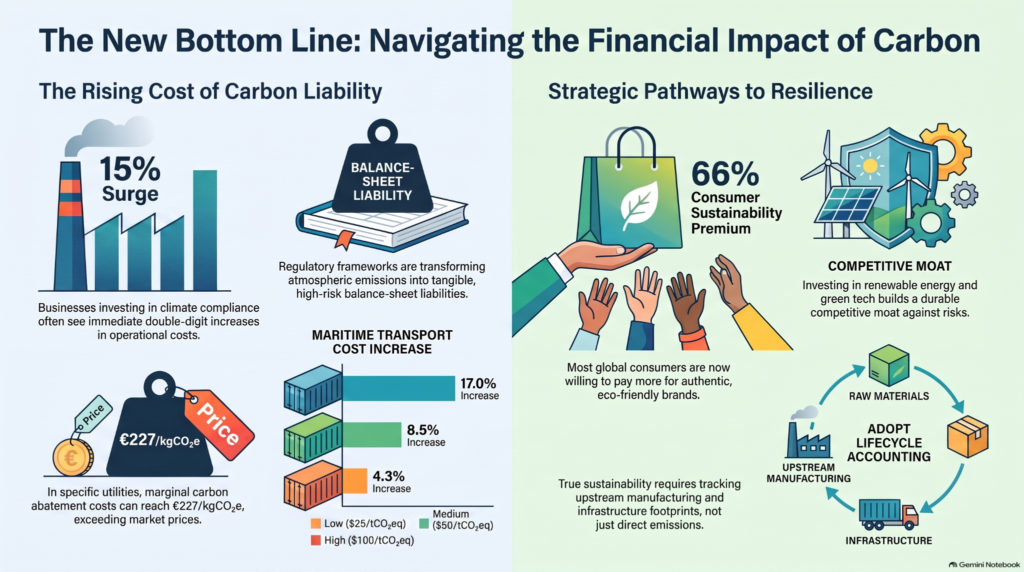
Data from industry reports indicate that businesses investing in compliance often see a 15% increase in operational expenses.
However, maneuvering through these regulatory landscapes effectively can provide strategic advantages, positioning your company as a leader in sustainability.
Mitigation Technology Investments
Regulatory compliance costs can serve as a catalyst for businesses to invest in mitigation technologies aimed at reducing greenhouse gas emissions.
By adopting innovative strategies, you can’t only meet regulations but also harness financial opportunities while addressing the broader smog forming chemicals and economic damage affecting businesses and communities.
Consider these aspects of investment:
- Green technology for energy efficiency
- Investment strategies focused on sustainability financing
- Carbon offsetting initiatives to balance emissions
- Renewable energy projects to shift from fossil fuels
- Green bonds to fund environmental innovations
These approaches promote clean tech development while mitigating costs associated with compliance.
Investing in such technologies enhances your market position and demonstrates a commitment to sustainability, ultimately leading to a more resilient and environmentally responsible business model.
Market Demand Shifts
Market demand is increasingly influenced by consumer awareness and regulatory pressures surrounding greenhouse gas emissions, compelling businesses to adapt or risk losing market share.
As you navigate this evolving landscape, understanding market trends becomes essential. Consumers are prioritizing sustainability, driving a shift in their buying behavior. Data shows that 66% of consumers are willing to pay more for eco-friendly products, highlighting the economic implications of greenhouse gas emissions on purchasing decisions.
This shift forces companies to innovate, integrating greener practices and transparent supply chains to capture eco-conscious consumers. Adapting to these demands isn’t just a compliance issue; it’s a strategic move that can enhance brand loyalty and open new revenue streams, ensuring long-term profitability in a rapidly changing market.
How Regulations Impact Greenhouse Gas Emissions Costs?
Greenhouse gases, such as carbon dioxide, methane, nitrous oxide, and certain synthetic chemicals, trap some of the Earth’s outgoing energy, thus retaining heat in the atmosphere. This heat trapping causes changes in the radiative balance of the Earth—the balance between energy received from the sun and emitted from Earth—that alter climate and weather patterns at global and regional scales.
When you consider regulations on greenhouse gas emissions, you’ll notice that compliance costs can greatly rise for businesses.
Emission trading systems often create market dynamics that can either alleviate or exacerbate these costs, depending on how they’re structured.
Moreover, incentives for emissions reduction can shift financial burdens, encouraging you to adopt greener practices while potentially offsetting some of those compliance expenses.
Compliance Cost Increases
As businesses endeavor to meet increasing environmental standards, compliance costs related to greenhouse gas emissions have surged, greatly impacting their bottom lines.
You need to adopt innovative compliance strategies to navigate this evolving landscape effectively. Here’s what you might face:
- Rising costs of monitoring and reporting emissions
- Investment in cleaner technologies and practices
- Potential penalties for non-compliance
- Increased operational costs due to regulatory changes
- Need for specialized personnel to manage compliance
Conducting a cost benefit analysis can help you assess the financial implications of these strategies.

EMISSION TRADING SYSTEMS
A critical blind spot in current business strategy is treating decarbonization as a uniform, linear equation. As recent empirical studies demonstrate, the true marginal cost of abatement varies wildly depending on sector characteristics, baseline technology, and regulatory mechanics.
For example, when examining municipal utilities like wastewater treatment, marginal carbon abatement costs can skyrocket far beyond average market prices on systems like the EU ETS, creating severe operational expenditure pressures that rigid mandates fail to accommodate. Similarly, in global logistics, maritime carbon pricing impacts low-value bulk commodities and trade-dependent island economies with disproportionate severity. Furthermore, many corporate models rely on production-based emissions data while ignoring complete lifecycle footprints—overlooking the upstream manufacturing and infrastructure replacement emissions inherent even in renewable energy assets and storage systems.
To build genuine economic resilience, business leaders and policymakers must look past generic offsets and high-level targets. True sustainability requires rigorous life-cycle accounting, granular capital expenditure planning, and an understanding of how local resource constraints interact with regulatory instruments. Navigating emissions trading, green bonds, and technological investments requires sophisticated, phased economic modeling rather than surface-level compliance.
While businesses endeavor to reduce their greenhouse gas emissions, Emission Trading Systems (ETS) play an essential role in shaping the financial landscape of compliance costs. These systems facilitate emission trading, allowing market participants to buy and sell carbon credits, creating economic incentives for reducing emissions. However, price volatility and market fluctuations inherent in trading platforms can pose investment risks. Companies must develop compliance strategies that align with regulatory frameworks while maneuvering through these uncertainties.
| Aspect | Impact on Businesses |
| Carbon Credits | Cost savings or expenses |
| Market Fluctuations | Price volatility risks |
| Regulatory Frameworks | Compliance obligations |
Incentives for Reduction
Regulations designed to curb greenhouse gas emissions create a complex landscape of financial incentives that can greatly impact your business costs.
By leveraging these incentives, you can enhance your bottom line while contributing to environmental sustainability.
Consider the following:
- Tax credits for implementing renewable energy solutions
- Grants for upgrading to energy-efficient systems
- Reduced compliance costs through emission reduction initiatives
- Access to low-interest financing for green projects
- Enhanced brand reputation through sustainable practices
Consumer Preferences and Business Sustainability
Greenhouse gases trap heat and make the planet warmer. Human activities are responsible for almost all of the increase in greenhouse gases in the atmosphere over the last 150 years.1 The largest source of greenhouse gas emissions from human activities in the United States is from burning fossil fuels for electricity, heat, and transportation.
Consumer preferences are increasingly shifting towards sustainability, prompting businesses to adapt or risk losing market share. Data shows that 66% of global consumers are willing to pay more for sustainable brands, particularly those offering eco friendly products, illustrating the direct link between sustainable branding and consumer loyalty.
In this evolving landscape, companies that prioritize eco-friendly practices not only attract conscientious consumers but also differentiate themselves in a crowded market.
Investing in sustainable operations can yield long-term financial benefits. For instance, businesses that focus on reducing waste and energy consumption often see lower operational costs, which can be funneled back into innovative product development.
Additionally, adopting transparent sustainability policies can enhance brand reputation, fostering trust and loyalty among consumers.
To remain competitive, businesses must track consumer trends and align their strategies with sustainability goals. The ability to innovate while addressing these preferences is essential for future growth and resilience in an environmentally conscious economy.
Innovative Strategies for Reducing Carbon Footprint
To effectively reduce their carbon footprint, businesses must implement innovative strategies that not only comply with environmental regulations but also drive operational efficiency.
Embracing sustainable practices can greatly impact both the environment and the bottom line. Here are five strategies to reflect upon:
- Energy Efficiency Audits: Identify and eliminate energy waste within operations.
- Renewable Energy Adoption: Invest in solar or wind power to reduce reliance on fossil fuels.
- Sustainable Supply Chains: Work with suppliers committed to reducing emissions.
- Carbon Offsetting Initiatives: Invest in projects that absorb CO2, such as reforestation.
- Waste Reduction Programs: Implement recycling and composting to minimize landfill contributions.
Real-World Innovations: Case Studies on Carbon Emissions
As businesses increasingly recognize the urgency of addressing climate change, real-world innovations in carbon emissions reduction are becoming essential in shaping sustainable practices across industries. Companies like Microsoft and Shell are investing heavily in carbon capture technologies, aiming to remove millions of tons of CO2 from the atmosphere annually.
These initiatives not only mitigate environmental impacts but also position businesses as leaders in sustainability.
Additionally, the shift towards renewable energy sources, such as solar and wind, is transforming operational landscapes. For instance, Walmart has committed to sourcing 50% of its energy from renewables by 2025, greatly reducing its carbon footprint.
These case studies illustrate that integrating carbon capture and renewable energy isn’t just a moral imperative; it’s a strategic move that can enhance brand reputation and drive long-term profitability.
Embracing these innovations will be vital as you navigate the evolving landscape of environmental policy and consumer expectations.
Strengthening Financial Performance Through Corporate Responsibility
As greenhouse gas emissions blanket the Earth, they trap the sun’s heat. Because of this, the planet is warming up and the climate is changing. The world is now warming faster than at any point in recorded history. Warmer temperatures over time are changing weather patterns and disrupting the usual balance of nature. This poses many risks to human beings and all other forms of life on Earth.
While many companies view corporate responsibility as a mere obligation, data increasingly shows that it can greatly enhance financial performance.
Adopting a strategy focused on corporate sustainability not only fosters goodwill but also attracts ethical investing, leading to tangible benefits.
Here’s how you can strengthen your financial performance:
- Increased Brand Loyalty: Customers prefer brands that demonstrate social and environmental responsibility.
- Cost Savings: Sustainable practices often reduce waste and energy costs.
- Enhanced Risk Management: Proactively addressing environmental issues can mitigate regulatory and reputational risks.
- Attraction of Top Talent: Employees seek companies with a commitment to ethical practices.
- Access to Capital: Investors are increasingly looking for companies that prioritize sustainability.
RELATED STUDIES ABOUT GREENHOUSE GASES ECONOMIC IMPLICATIONS
In summary, understanding the financial impact of greenhouse gases isn’t just an academic exercise; it’s essential for your business’s sustainability and profitability. While some may argue that reducing emissions can be costly, consider the long-term savings and increased consumer loyalty that come from embracing eco-friendly practices. By prioritizing corporate responsibility, you not only align with regulatory trends but also position your business for financial growth in a rapidly evolving market. Investing in sustainability is investing in your future.
Modeling global and regional economic impacts of greenhouse gas pricing on international shipping and policy implications
The study “Modeling global and regional economic impacts of greenhouse gas pricing on international shipping and policy implications” by Trang Tran, Seijiro Morimoto, and Ryuichi Shibasaki (Ocean and Coastal Management, 2025) assesses the economy-wide impacts of maritime greenhouse gas (GHG) pricing and evaluates how economic models should inform International Maritime Organization (IMO) policymaking.
The authors utilize a two-step framework for the 2030 baseline year, first calculating route-level maritime transport cost increases across container, dry bulk, and tanker segments under three carbon prices: Low ($25/tCO2eq), Medium ($50/tCO2eq), and High ($100/tCO2eq). These cost shocks are then integrated into the standard Global Trade Analysis Project (GTAP Version 11) computable general equilibrium (CGE) model across 22 regions and 17 commodity aggregates.
Key findings across economic dimensions and policy mechanisms include:
- Maritime Transport Costs: Fuel costs represent an average of 36.4% of operating costs in dry bulk, 32.6% in liquid bulk, and 27.5% in container shipping. Consequently, average maritime transport costs increase by 4.3% under the low scenario, 8.5% under the medium scenario, and 17.0% under the high scenario.
- Global Macroeconomic Impacts: Overall impacts on the global economy remain minimal. Under the medium ($50/tCO2eq) scenario, global trade growth contracts by 0.10% and global GDP contracts by 0.03% (reaching -0.22% for trade and -0.06% for GDP under the $100/tCO2eq scenario).
- Commodity Disparities: Dry bulk commodities (such as agricultural products, ores, and coal) experience larger trade reductions than containerized manufactured goods because transport costs represent a higher share of the final delivered value of low-value, high-volume bulk commodities.
- Regional Distribution and Vulnerabilities: The economic impacts are distributed unevenly. Developing and remote economies—notably Pacific Island countries (-0.21% GDP; -0.43% imports), Northern Africa (-0.12% GDP), and Eastern Africa (-0.11% GDP)—experience the highest relative losses in GDP and trade. Import contractions consistently exceed export reductions across most regions due to higher delivered import costs.
- Determinants of Impact: Real GDP losses correlate strongly with high maritime dependency (seaborne trade value relative to GDP, correlation = 0.83) and low baseline GDP (economic scale, correlation = -0.61). In contrast, trade distance and remoteness indices exhibit weak direct correlations with GDP reductions. Larger economies can buffer trade shocks through domestic market substitution, while small and developing island economies lack domestic alternatives.
- Policy Implications for the IMO: Economic models demonstrate that moderate carbon price levels avoid severe global economic disruption, but mechanisms must be established to address disproportionate negative impacts on vulnerable nations. Revenue redistribution from a GHG levy or feebate system should prioritize Small Island Developing States (SIDS) and Least Developed Countries (LDCs) through grant-based funding for port efficiency, domestic logistics, and low-carbon infrastructure rather than relying solely on distance-based exemption criteria.
| REFERENCE: Trang Tran, Seijiro Morimoto, Ryuichi Shibasaki, Modeling global and regional economic impacts of greenhouse gas pricing on international shipping and policy implications, Ocean & Coastal Management, Volume 269, 2025, 107804, ISSN 0964-5691, https://doi.org/10.1016/j.ocecoaman.2025.107804. (https://www.sciencedirect.com/science/article/pii/S0964569125002662) |
The economic impact of reducing greenhouse gas emissions in wastewater treatment plants: An inverse optimization approach
The study “The economic impact of reducing greenhouse gas emissions in wastewater treatment plants: An inverse optimization approach” by Alexandros Maziotis et al. (Environmental and Sustainability Indicators, 2025) examines the operational cost increases and marginal carbon abatement costs of decarbonizing wastewater treatment plants (WWTPs).
The authors employ an inverse Data Envelopment Analysis (inverse DEA) model under variable returns to scale and weak disposability to estimate the cost increases required to meet specific greenhouse gas (GHG) reduction targets without degrading effluent quality or reducing baseline eco-efficiency. The model was applied to a sample of 260 Spanish WWTPs using activated sludge processes, evaluating indirect Scope 2 emissions from electricity use across five target scenarios: 5% reduction (R5%), 15% reduction (R15%), 25% reduction (R25%), 50% reduction (R50%), and a benchmark requiring above-average emitting plants to meet the sample mean (Ra).
Key findings and policy implications include:
- Baseline Eco-Efficiency: The evaluated facilities demonstrated an average baseline eco-efficiency score of 0.258, indicating a 74.2% potential for operational and environmental optimization. Roughly 80% of plants scored below 0.4, while only 5% (13 facilities) operated at the frontier benchmark of 1.0. Poor performance was heavily associated with above-average electricity consumption and emissions.
- Operational Feasibility and Trade-Offs: Imposing strict emission reduction targets created mathematical infeasibilities for certain facilities. While only 2 plants failed to meet the Ra scenario, 11 plants under R5% and 52 plants (20% of the sample) under R50% could not meet carbon targets without lowering wastewater treatment standards or failing to maintain their eco-efficiency scores.
- Escalation of Operating Costs: Meeting reduction targets requires substantial operational expenditure. Across the 260 facilities, annual operating costs rose from the baseline of €66.92 million (€0.68/m³) to €83.72 million (€1.75/m³) under Ra, €122.17 million (€1.87/m³) under R5%, and up to €203.43 million (€3.03/m³) under R50%.
- High Facility-Level Cost Dispersion: The financial impact varied widely across individual plants. In the R50% scenario, operational cost increases ranged from 2% to 1,277%, reflecting significant differences in plant scale, facility age, and treatment technology.
- Elevated Carbon Abatement Costs: Average marginal abatement costs ranged from €97/kgCO2e in the Ra scenario to €227/kgCO2e in the R5% scenario. These abatement costs are substantially higher than typical carbon market prices (such as the EU ETS at ~€83.47/tonCO2e in 2023), illustrating the high marginal cost of abating emissions within non-market public utility operations.
- Tariff Impacts and Regulatory Strategy: Under “polluter pays” and full-cost-recovery principles, passing these expenditures onto consumers could drive municipal water and sanitation tariffs from approximately €2.4/m³ up to €4.15–€5.43/m³. This risks violating the recommended 3% household income threshold for water affordability. Consequently, regulators must avoid uniform, rigid decarbonization mandates and instead implement phased, facility-specific reduction goals paired with social support mechanisms.
| REFERENCE: Alexandros Maziotis, Ramon Sala-Garrido, Manuel Mocholi-Arce, Maria Molinos-Senante, The economic impact of reducing greenhouse gas emissions in wastewater treatment plants: An inverse optimization approach, Environmental and Sustainability Indicators, Volume 28, 2025, 101003, ISSN 2665-9727, https://doi.org/10.1016/j.indic.2025.101003. (https://www.sciencedirect.com/science/article/pii/S2665972725004246) |
California’s plan to decarbonize electricity omits key greenhouse gas emissions
California’s 2022 Scoping Plan for Achieving Carbon Neutrality aims for net-zero emissions across the economy by 2045, anticipating a 68% growth in electricity demand to power extensive electrification across transportation, heating, and industry. However, the state’s official inventory restricts its scope to direct, in-state operational emissions and treats renewable power generation as “zero-emission”. A geospatial life cycle assessment (LCA) demonstrates that omitting out-of-state emissions, upstream manufacturing, routine infrastructure replacements, and energy storage lifecycle burdens results in underestimating the power sector’s cumulative greenhouse gas (GHG) footprint by over 30% through 2045.
Key findings across emissions accounting, grid intensity, and policy implications include:
- Scale of Excluded Emissions: Between 2023 and 2045, the excluded life cycle emissions of California’s planned electric sector total 225 million metric tons (MMT) CO2eq. This omitted total is equivalent to more than half of the state’s entire direct annual GHG emissions across all economic sectors in 2022.
- Impact on Sector Totals: The Scoping Plan projects 745.41 MMT CO2eq in electric sector emissions through 2045. Incorporating life cycle emissions raises cumulative power sector emissions to over 970 MMT CO2eq (a 30.2% increase), even under optimal siting and technology selection designed to minimize carbon intensity.
- Primary Sources of Uncounted Emissions:
- Renewable Energy Infrastructure: Accounts for 78.8% of the omitted emissions, driven by the manufacturing and deployment of utility-scale solar PV (87.93 MMT CO2eq), offshore wind (35.24 MMT CO2eq), customer rooftop solar (34.30 MMT CO2eq), and land-based wind (9.62 MMT CO2eq).
- Energy Storage Systems: Comprises 20.0% of omitted emissions, including stand-alone battery storage (25.27 MMT CO2eq), hydrogen combustion turbine systems (15.26 MMT CO2eq), and pumped hydro storage infrastructure (4.47 MMT CO2eq).
- Facility Replacements: Over 34.6 MMT CO2eq stems from replacing retired solar, wind, and gas turbine assets over their operational lifecycles.
- Grid Carbon Intensity Underestimation: The official Scoping Plan reported an in-state grid emission intensity of 168 g CO2eq/kWh for 2022, whereas life cycle modeling shows an actual average carbon footprint of 216.37 g CO2eq/kWh. Across modeled years through 2045, the state’s plan underestimates the grid mix carbon intensity by 15% to 37%.
- Externalized Emissions from Imports: In 2022, imported electricity accounted for 32% of total state consumption and contributed 34.3% of the power sector’s life cycle emissions—burdens that remain externalized under production-based accounting.
- Geospatial Variability of Generation: Carbon footprints vary significantly based on installation location and local resource quality. For example, wind power carbon intensity ranges from 7.34 to 36.6 g CO2eq/kWh, while utility-scale solar PV ranges from 12.56 to 16.71 g CO2eq/kWh, demonstrating that generic literature averages fail to capture localized system performance.
- Unmodeled Emerging Power Loads: The Scoping Plan omits rapid electricity demand growth from artificial intelligence applications and data centers, which are projected to add 44 TWh of uncounted electricity demand on the California ISO grid by 2040.
- Limitations of Technological Offsets: Offsetting the uncounted power sector emissions through Direct Air Capture (DAC) would require expanding planned DAC capacity by nearly 39% by 2045, which is unviable given DAC’s high parasitic energy requirements and lack of commercial-scale deployment.
- The Upfront Emissions Pulse: Renewable transitions create a concentrated “pulse” of GHG emissions during initial component manufacturing and construction. Treating these assets as zero-emission ignores near-term emissions spikes that consume remaining carbon budgets during critical climate tipping-point windows. Comprehensive consumption-based life cycle accounting is essential to avoid geographic carbon leakage and ensure decarbonization targets achieve genuine climate mitigation.
| REFERENCE: Marie-Odile P. Fortier, Amir Sharafi, Alyssa R. Pfadt-Trilling, Samuel A. Markolf, California’s plan to decarbonize electricity omits key greenhouse gas emissions, Energy Policy, Volume 218, 2026, 115509, ISSN 0301-4215, https://doi.org/10.1016/j.enpol.2026.115509. (https://www.sciencedirect.com/science/article/pii/S030142152600443X) |
CONCLUSION
Economic systems do not operate in a vacuum—they are wholly nested subsystems within the finite biosphere of Earth. As the macroeconomic data clearly shows, the cost of systemic inaction and atmospheric instability far outstrips the capital required to decarbonize our commercial models.
The transition ahead requires bridging the gap between high-level ecological science and practical corporate finance. While the initial upfront investments in clean technologies, operational redesign, and emissions compliance can appear daunting, they represent essential risk mitigation against inevitable policy tightening and resource shocks. Market demand is already shifting decisively toward authentic sustainability, and capital markets are progressively penalizing carbon-intensive laggards.
By embracing transparent carbon accounting, investing in circular and low-emission solutions, and viewing natural systems as vital capital to be preserved, businesses can protect their margins while actively securing the ecological foundations that make human enterprise possible. Sustainable economic stewardship is not just viable; it is the only viable foundation for long-term prosperity.