Throughout my twelve years analyzing environmental policy and urban systems, I have reviewed countless multilateral treaties that read magnificently on parchment but stumble over municipal realities. The Basel Convention is arguably one of our most critical international safeguards, yet its real-world execution reveals the friction between diplomatic intent and operational feasibility. When negotiating tables produce grand frameworks to curb the “toxic trade,” local governments and regional districts are left to handle the logistics. I have sat in municipal policy briefings where urban planners and waste administrators simply lacked the administrative apparatus, testing infrastructure, or budget to track what crosses their borders.
Treaties like Basel were designed to halt the practice of treating developing nations as dumping grounds for wealthier industrial consumption. Yet, true protection cannot exist in legal silos. As someone who focuses on tangible implementation, I see waste management not as an isolated disposal issue, but as a systemic symptom of urban planning and consumption models.
If an agreement does not translate into verifiable local tracking, regional enforcement, and practical community safeguards, it risks becoming mere symbolic diplomacy. As we unpack the mechanics of the Basel Convention, we must evaluate its legal terminology against the actual baseline capacities of the towns, ports, and ecosystems bearing the brunt of industrial outputs.
The Basel Convention is essential for regulating hazardous waste and enhancing global environmental protection strategies. It sets standards for safe waste management and encourages international cooperation. However, challenges like legal compliance and resource allocation hinder effective implementation. Countries are exploring innovative solutions, such as recycling technologies and public awareness campaigns, to improve waste management. Engaging in partnerships and community initiatives can amplify these efforts. Discover how emerging strategies could transform global waste governance and foster sustainability.
KEY TAKEAWAYS
- The Basel Convention regulates hazardous waste transboundary movement, ensuring environmentally sound management and promoting sustainable practices globally.
- Effective governance requires addressing legal compliance challenges and resource allocation issues to enhance enforcement capabilities and infrastructure investment.
- International cooperation and innovative strategies, such as recycling technologies and public awareness campaigns, drive responsible waste management practices.
- Successful case studies highlight collaborative efforts between governments, NGOs, and private sectors, showcasing practical solutions for hazardous waste management.
- Future directions focus on strengthening global partnerships, integrating digital tracking systems, and enhancing public participation in environmental stewardship initiatives.
WHAT IS THE BASEL CONVENTION AND WHY DOES IT MATTER?
The Basel Convention stands as a vital framework in the global effort to manage hazardous waste effectively. You might wonder why its significance extends beyond borders. This treaty not only regulates the transboundary movement of hazardous waste but also sets standards for environmentally sound management.
By fostering international cooperation, it empowers nations to tackle waste issues collectively, minimizing the risk of pollution and health hazards.
The global implications of the Basel Convention are profound. It encourages innovation in waste management technologies, pushing industries to adopt safer, sustainable practices. You become part of a larger movement that prioritizes environmental protection and public health.
As new challenges emerge, the Convention’s adaptability becomes essential, ensuring that it remains relevant in a rapidly changing world. By understanding and supporting its objectives, you contribute to a more sustainable future where hazardous waste is managed responsibly, benefiting both current and future generations.
Challenges in Implementing the Basel Convention
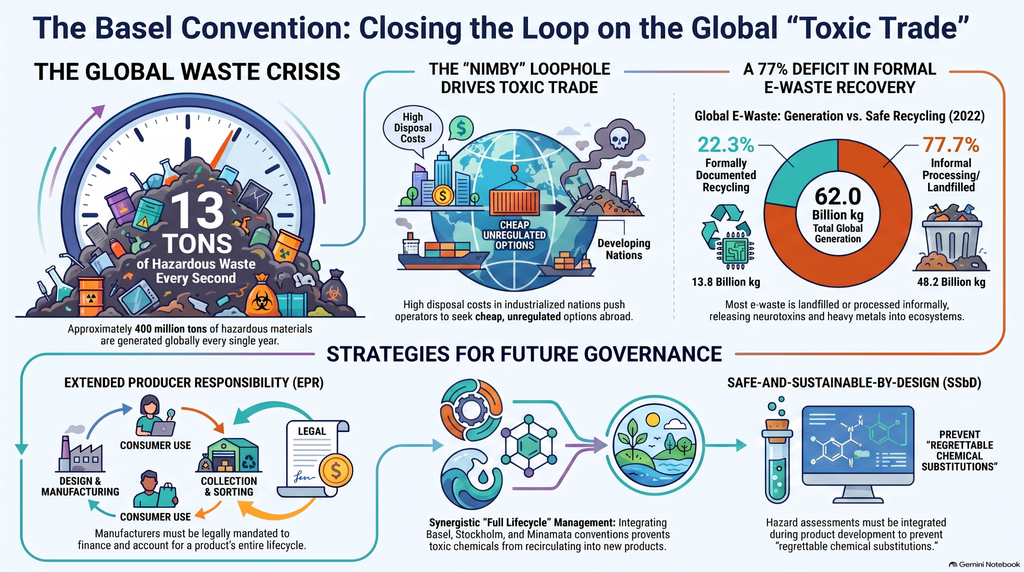
Awakening environmental awareness and corresponding tightening of environmental regulations in the industrialized world in the 1970s and 1980s had led to increasing public resistance to the disposal of hazardous wastes – in accordance with what became known as the NIMBY (Not In My Back Yard) syndrome – and to an escalation of disposal costs. This in turn led some operators to seek cheap disposal options for hazardous wastes in Eastern Europe and the developing world, where environmental awareness was much less developed and regulations and enforcement mechanisms were lacking. It was against this background that the Basel Convention was negotiated in the late 1980s, and its thrust at the time of its adoption was to combat the “toxic trade”, as it was termed. The Convention entered into force in 1992.
Implementing the Basel Convention isn’t as straightforward as it seems, and you’ll find legal compliance challenges often stand in the way of effective governance.
Resource allocation issues further complicate the situation, making it difficult for countries to prioritize hazardous waste management.
Additionally, without strong international cooperation, achieving the Convention’s goals becomes an uphill battle that threatens global environmental protection efforts.
Legal Compliance Challenges
While many countries recognize the importance of the Basel Convention in managing hazardous waste, significant legal compliance challenges persist. You’ll often find that disparate legal frameworks complicate enforcement. Different nations interpret compliance mechanisms variably, which can lead to loopholes and inadequate regulatory measures.
Here’s a quick overview of key compliance challenges:
| Challenge | Impact |
| Inconsistent Regulations | Confusion among stakeholders |
| Lack of Training | Poor implementation of laws |
| Insufficient Resources | Limited enforcement capabilities |
| Varied Public Awareness | Ineffective community engagement |
Addressing these challenges is essential for fostering a unified approach to hazardous waste management, ensuring that the spirit of the Basel Convention is truly upheld through effective types of environmental policies.
Resource Allocation Issues
Resource allocation issues greatly hinder effective implementation of the Basel Convention, compounding the legal compliance challenges previously discussed.
You’ll find that funding disparities among nations create significant barriers to achieving environmental protection goals. Countries with limited resources struggle to invest in the necessary infrastructure and technology to manage hazardous waste effectively.
This imbalance not only affects local compliance but also undermines collective global efforts to mitigate environmental harm.
To address these challenges, it’s essential to develop innovative funding mechanisms that promote equitable resource allocation.
International Cooperation Difficulties
Despite the clear need for robust international cooperation, significant difficulties arise in implementing the Basel Convention effectively. You’ll encounter numerous diplomatic challenges that hinder progress in adhering to international treaties.
Countries often struggle to align their national policies with the Convention’s requirements, leading to inconsistent enforcement and compliance. This lack of harmonization creates loopholes that allow hazardous waste to cross borders unchecked.
Additionally, varying levels of political will can stifle collaborative efforts, as nations prioritize their economic interests over environmental protection.
To overcome these hurdles, innovative strategies must be adopted, fostering dialogue and shared responsibility. Only through strengthened partnerships and commitment to mutual goals can we hope to navigate the complexities of hazardous waste governance and protect our planet’s future. International cooperation can also benefit from lessons on chemical control and waste reduction, particularly by considering Stockholm Convention persistent organic pollutants policy effects when developing coordinated strategies for hazardous waste management.
The Importance of Hazardous Waste Management in Global Context
The Basel Convention on the Control of Transboundary Movements of Hazardous Wastes and their Disposal was adopted in 1989 and it came into force in 1992. It is the most comprehensive global environmental agreement on hazardous wastes and other wastes. With 175 Parties (as of 31 March 2011), it has nearly universal membership. The Convention aims to protect human health and the environment against the adverse effects resulting from the generation, transboundary movements and management of hazardous wastes and other wastes. The Basel Convention regulates the transboundary movements of hazardous wastes and other wastes and obliges its Parties to ensure that such wastes are managed and disposed of in an environmentally sound manner. The Convention covers toxic, poisonous, explosive, corrosive, flammable, ecotoxic and infectious wastes. Parties also have an obligation to minimize the quantities that are transported, to treat and dispose of wastes as close as possible to their place of generation and to prevent or minimize the generation of wastes at source.
As global industrialization accelerates, the effective management of hazardous waste has become critical for safeguarding both human health and the environment.
You mightn’t realize it, but improper hazardous waste management can have a catastrophic hazardous impact on your community and future generations. It’s imperative that we adopt innovative strategies to minimize these risks.
Consider the following:
- Your children deserve a clean, safe environment.
- Contaminated water supplies threaten our health.
- Wildlife is suffering due to our negligence.
- Landfills overflowing with toxic materials endanger ecosystems.
- Economic stability is at risk without waste reduction efforts.
HOW DO COUNTRIES INNOVATE IN HAZARDOUS WASTE MANAGEMENT?
Examining global waste trade dynamics exposes an uncomfortable truth: international environmental governance is frequently outpaced by economic incentives. On forums like Reddit and Quora, industry observers and former recycling workers often describe a continuous “cat-and-mouse” shell game. When one jurisdiction enacts stringent import bans, scrap shipments simply divert toward regions with weaker administrative enforcement and lower environmental standards. This matches what policy analysts observe in the field.
My academic research into watershed integrity and carbon reduction has repeatedly confirmed that down-gradient ecosystems always pay the ultimate price for fragmented regulations. When electronic waste or hazardous industrial residues are exported under the guise of “recycling,” uncontrolled extraction processes—such as open-pit acid leaching or low-temperature burning—release persistent organic pollutants and toxic heavy metals directly into underlying aquifers and alluvial soil.
A circular economy cannot succeed if it merely shifts toxic liabilities off national balance sheets. We cannot treat recycling as a guilt-free license for unsustainable upstream consumption. Real progress demands harmonized legal structures, binding Extended Producer Responsibility (EPR) mandates that force manufacturers to account for true lifecycle toxicity, and direct capital investments in regional processing infrastructure. Without mandatory accountability from point of origin to final recovery, the global waste stream will continue following the path of least regulatory resistance.
Hazardous wastes are discarded materials that can damage human health or the environment. This includes wastes that contain heavy metals, toxic chemicals, infectious medical wastes, electronics, plastics, and corrosive, flammable, explosive, or radioactive substances. Estimates vary, but approximately 400 million tons of hazardous wastes are generated each year—almost 13 tons a second. Industrialized countries generate most of this waste, but quantities have increased rapidly in many developing countries. Most hazardous waste remains in the country where it was produced, but some is shipped across international boundaries for disposal or recycling.
Countries are rethinking hazardous waste management through innovative recycling technologies that make processes more efficient and sustainable.
By enhancing policy frameworks, they’re creating robust regulations that encourage responsible waste handling.
Public awareness campaigns also play a vital role, educating citizens about their responsibilities and fostering a culture of environmental stewardship.
Innovative Recycling Technologies
While many nations grapple with the complexities of hazardous waste management, innovative recycling technologies have emerged as an essential solution in this ongoing battle.
By leveraging advanced materials and implementing recycling incentives, countries are finding new ways to turn hazardous waste into valuable resources. These technologies not only reduce environmental impact but also foster economic growth and sustainability.
- Transforming waste into energy
- Creating safe, reusable materials
- Reducing landfill dependence
- Encouraging community involvement
- Advancing public health initiatives
You can see how these innovations create a more sustainable future, making it imperative for nations to invest in and adopt these groundbreaking solutions.
Ultimately, embracing innovative recycling technologies isn’t just an option; it’s a necessity for a healthier planet.
Policy Framework Enhancements
Innovative recycling technologies have sparked a wave of change in hazardous waste management, prompting nations to rethink their policy frameworks. Countries are now implementing policy enhancements that prioritize sustainable practices and innovative governance strategies. By embracing advanced technologies and fostering collaboration among stakeholders, they can considerably reduce environmental impacts.
Here’s a quick overview of some effective strategies:
| Country | Policy Enhancement | Governance Strategy |
| Germany | Extended Producer Responsibility | Collaborative Waste Management |
| Japan | Circular Economy Initiatives | Public-Private Partnerships |
| Sweden | Zero Waste Policies | Community Involvement Programs |
| Canada | Hazardous Waste Diversion Plans | all-encompassing Regulatory Frameworks |
These approaches not only mitigate risks but also encourage a culture of responsibility and innovation in hazardous waste management, including the use of eco friendly products.
Public Awareness Campaigns
How can effective public awareness campaigns transform hazardous waste management? By fostering public engagement and implementing innovative awareness strategies, countries can greatly influence how communities handle hazardous waste. Engaging the public not only informs them about risks but empowers them to take action.
- Informed citizens become proactive protectors of their environment.
- Communities unite for cleaner, safer surroundings.
- Children learn sustainable practices, shaping future generations.
- Local businesses thrive through responsible waste management.
- A culture of accountability develops, reducing hazardous waste.
These emotional connections strengthen societal commitment to environmental stewardship, showcasing that when people are informed, they’re more likely to participate in sustainable practices.
Consequently, innovation in hazardous waste management hinges on effective communication and awareness.
Real-World Examples of Innovative Basel Convention Strategies
The Basel Convention has spurred a range of innovative strategies that demonstrate effective governance in hazardous waste management.
One notable example is the formation of innovative partnerships between governments, NGOs, and private sectors. These collaborations create sustainable solutions by pooling resources, expertise, and technology to tackle the challenges of hazardous waste disposal and recycling.
For instance, a partnership between an African country and a European firm has led to the development of a mobile waste treatment unit, greatly reducing the environmental impact of hazardous waste.
Additionally, initiatives like the “Green Customs Initiative” empower customs officials worldwide to identify and manage hazardous waste more effectively, enhancing compliance with the Convention.
Successful Case Studies in Hazardous Waste Management
While hazardous waste management poses significant challenges, successful case studies worldwide illustrate effective strategies that can be adopted. By examining these examples, you can discover successful practices and forge effective partnerships that lead to sustainable solutions.
- Communities transforming waste into resources
- Innovative technologies minimizing environmental impact
- Collaborative frameworks enhancing regulatory compliance
- Education initiatives driving public awareness and participation
- Economic benefits through circular economy models
These case studies demonstrate that when stakeholders unite, they can overcome barriers and create impactful change.
As you explore these examples, consider how you can implement similar strategies in your context. Embracing these successful practices not only protects the environment but also fosters community resilience and innovation.
What’s Next for the Basel Convention and Global Partnerships?
As communities and organizations embrace successful hazardous waste management strategies, the focus now shifts to the future of global governance frameworks like the Basel Convention. You’ll find that strengthening global partnerships is essential for advancing future strategies in hazardous waste management. Collaborative efforts between nations can foster innovative solutions that address the complexities of waste disposal and recycling.
To guarantee the Basel Convention remains relevant, it must adapt to emerging environmental challenges and technological advancements. This could include integrating digital tracking systems for waste and enhancing regulatory frameworks to include new waste types.
Engaging stakeholders from various sectors—government, private, and civil society—will drive the development of all-encompassing strategies that are both effective and sustainable.

RELATED STUDIES ABOUT BASEL CONVENTION HAZARDOUS WASTE CHEMICAL GOVERNANCE
In summary, the Basel Convention is like a lifeline for our planet, tethering nations together in the fight against hazardous waste. As you’ve seen, while challenges persist, innovative strategies and successful case studies demonstrate that progress is possible. By continuing to strengthen global partnerships and sharing best practices, we can turn the tide on environmental degradation. It’s essential that you advocate for and support these initiatives, ensuring a safer, cleaner world for future generations.
Electronic waste and environmental diplomacy: How GCC E-waste management interfaces with the Stockholm Convention
Overview & Regional Context
Driven by high economic growth, rapid urbanization, and short consumer electronics replacement lifecycles, the Gulf Cooperation Council (GCC) nations face an escalating volume of electronic waste (e-waste). The region records some of the highest per capita e-waste generation rates globally. Because obsolete electronics contain persistent organic pollutants (POPs)—notably brominated flame retardants (BFRs) and polychlorinated biphenyls (PCBs)—as well as heavy metals like lead and mercury, local e-waste disposal intersects directly with international commitments under the Stockholm Convention. In the GCC’s arid environment, improper management poses heightened risks to scarce arable land and critical groundwater reservoirs through toxic leachate.
National Generation & Management Profiles
- Saudi Arabia: The largest generator in the GCC, producing roughly 595,000 tons annually (17.6 kg/capita), which constitutes 21% of the region’s total e-waste. Vision 2030 and the National Transformation Program target significant waste reduction and recycling. The Kingdom is implementing Extended Producer Responsibility (EPR) mandates and developing facilities such as the Riyadh Recycling Hub.
- United Arab Emirates (UAE): Generated approximately 162,000 tons in 2019 (17.2 kg/capita). While leading the region in e-waste export trade (accounting for 57.7% in 2014) and introducing advanced municipal frameworks in Dubai, domestic recycling capacity is still developing relative to generation.
- Kuwait: Produces approximately 74,000 tons annually (15.8 kg/capita), with generation growing at 5% to 7% per year. E-waste is predominantly routed to municipal landfills without segregation, despite assessments indicating that 76% of municipal waste is recyclable.
- Oman: Generates approximately 69,000 tons per year (15.8 kg/capita). Specific e-waste legislation remains in the early stages, with e-waste handled under general waste guidelines.
- Bahrain: Generates approximately 24,000 tons annually (15.9 kg/capita). Lacking dedicated internal processing and treatment facilities, it relies on exporting e-waste for materials recovery.
- Qatar: Generated roughly 40,000 tons in 2019 (13.6 kg/capita), with an annual growth rate of 3% to 4%. Strategy focuses on public awareness campaigns alongside gradual formalization of recycling infrastructure.
Key Challenges
- Export Reliance: The region historically exports substantial e-waste volumes due to limited domestic high-tech processing capacity.
- Regulatory Fragmentation: While Saudi Arabia and the UAE have introduced specific legislation, Kuwait, Bahrain, and Oman continue to treat e-waste under broad municipal waste regulations.
- Informal Processing: Unregulated recycling (e.g., open burning and acid leaching) exposes workers to neurotoxins and releases dioxins and furans into the atmosphere.
- Public Awareness: High disposable income coupled with a throwaway culture leads consumers to discard electronics with general trash.
Technological Landscape
- Mechanical & Manual Methods: Manual dismantling offers high separation precision but carries occupational health hazards. Mechanical shredding and magnetic/eddy-current sorting effectively separate bulk metals but suffer from high energy costs and loss of precious metal fines.
- Chemical & Thermal Treatment: Hydrometallurgy and pyrometallurgy yield high precious metal recoveries; however, hydrometallurgy produces toxic liquid effluent, while pyrometallurgy generates heavy emissions, dioxins, and furans.
- Emerging Alternatives: Bioleaching, electrochemical separation, and cryogenic processing offer lower toxic emissions but remain restricted by slow processing rates, high capital costs, and scalability barriers.
Strategic Policy Directions
- Regional Standardization: Align domestic legal frameworks across all member states with international treaties, specifically the Stockholm and Basel Conventions.
- Producer Accountability: Broaden Extended Producer Responsibility (EPR) programs and take-back mandates across the entire GCC to ensure manufacturers finance and design for end-of-life recycling.
- Infrastructure Investment: Form Public-Private Partnerships (PPPs) to construct shared, regional multi-state processing facilities to treat hazardous residues internally and retain recovered materials.
- Informal Sector Integration: Formally license and train informal recyclers to reduce occupational hazards and eliminate open-air burning.
| REFERENCE: Yasar N Kavil, Hassan Alshemmari, Mohammed M Alkasbi, Saeed Saad Alelyani, Mohammed I Orif, Radwan Kh Al-Farawati, Electronic waste and environmental diplomacy: How GCC E-waste management interfaces with the Stockholm Convention, Journal of Hazardous Materials Advances, Volume 17, 2025, 100610, ISSN 2772-4166, https://doi.org/10.1016/j.hazadv.2025.100610. (https://www.sciencedirect.com/science/article/pii/S2772416625000221) |
China’s synergy in the implementation of international conventions on chemicals and waste
Overview & Strategic Context
Multilateral Environmental Agreements (MEAs) serve as the primary global governance framework for environmental and chemical risk management. China has signed or acceded to over 50 international environmental treaties, prominently participating in four highly interconnected chemical and waste agreements: the Basel, Rotterdam, Stockholm, and Minamata Conventions. Together, these conventions align with the United Nations Sustainable Development Goal 12 (Responsible Consumption and Production). While each treaty retains its legal autonomy, international momentum—termed “SYNERGIES”—and domestic policy needs demand integrated, coordinated cross-convention management.
Summary of Target Conventions & Global Scope
- Basel Convention (Effective 1992; 188 Parties): Regulates the transboundary movement and disposal of hazardous wastes, household wastes, and incinerator ash.
- Stockholm Convention (Effective 2004; 184 Parties): Restricts and eliminates Persistent Organic Pollutants (POPs) across 30 controlled substance groups.
- Rotterdam Convention (Effective 2004; 161 Parties): Enforces Prior Informed Consent (PIC) procedures for international trade across 50 listed hazardous chemicals and pesticides.
- Minamata Convention (Effective 2017; 127 Parties): Governs the full lifecycle of anthropogenic mercury emissions, supply phasing, mining, product manufacturing, and waste disposal.
Domestic Implementation Progress & Synergies
- Elimination of Pesticides and POPs: China has approved about 23 of the 30 controlled POPs substances under the Stockholm Convention, eliminating initial legacy pesticides (such as DDT, chlordane, and mirex) by 2009, followed by phase-outs of lindane, endosulfan, and alpha/beta-HCH. This has simultaneously reinforced Rotterdam Convention compliance by banning most chemicals on its Annex III list domestically.
- POPs Waste Remediation: Joint implementation between the Basel and Stockholm frameworks eliminated 6,352 tons of pesticide POPs and 42,000 tons of contaminated soil, significantly mitigating health risks for 4.3 to 15 million people. Electrical equipment containing PCBs was completely cleared across more than 30 provinces, meeting treaty targets ahead of schedule. Additionally, over 284,890 tons of PBDE-containing plastics and 13,500 tons of CRT glass were safely co-processed.
- Synergistic Mercury Reductions: China leveraged industrial flue-gas cleanup equipment deployed for Stockholm dioxin control (e.g., activated carbon injection and baghouse filters) to achieve co-benefit mercury reductions. Furthermore, mercury and its compounds were integrated into the national restricted toxic chemical import/export list and cataloged under code HW29 in the National Hazardous Waste List.
Strategic Value of a Full Lifecycle Environmental Management System
- Mitigating Trade Disputes and Green Barriers: Developed countries increasingly utilize environmental exception rights and trade barriers. Implementing full lifecycle chemicals management shields developing economies from unequal trade friction and supports evidence-based dispute resolution.
- Internalizing Enterprise Environmental Costs: Full lifecycle accounting prevents the external diseconomy of industrial pollution, shifting accountability upstream via cleaner production and eco-design rather than relying solely on end-of-pipe treatment.
- Data-Driven Governance & Compliance: Improved data disclosure and transparent indicators across chemicals’ entire lifecycles provide critical domestic baseline data and strengthen China’s negotiating position in global environmental politics.
Key Policy Recommendations
- Institute Full Lifecycle Legal Frameworks: Transition from fragmented waste controls to a unified, hard-law regulatory system covering chemical R&D, manufacturing, transport, usage, and disposal.
- Strengthen Multilateral Coordination: Form strategic legal alliances with developing nations to promote balanced international trade and environmental standards during convention negotiations.
- Enhance Implementation Investments: Direct national capital toward domestic capacity building, clarify enforcement responsibility across governing bodies, and refine technical implementation rules.
| REFERENCE: Liyuan Liu, Guanglong Wu, Yong Ren, Yang Chen, Qinzhong Feng, China’s synergy in the implementation of international conventions on chemicals and waste, Emerging Contaminants, Volume 7, 2021, Pages 132-138, ISSN 2405-6650, https://doi.org/10.1016/j.emcon.2021.03.002. (https://www.sciencedirect.com/science/article/pii/S2405665021000081) |
Integrating Toxicological Intelligence into Global E-waste Governance: From Material Recovery to Health-protective Circularity
Context and the Global Deficit
Global electronic waste (e-waste) generation escalated from 34 billion kg in 2010 to 62 billion kg in 2022—an average of 7.8 kg per capita annually—and is on track to reach 82 billion kg by 2030. Over the same period, electrical and electronic equipment (EEE) placed on the market expanded from 62 billion kg to 96 billion kg. Only 13.8 billion kg (22.3%) of the e-waste generated in 2022 was formally collected and documented as recycled under environmentally sound management. The remaining volume is either handled outside formal systems in lower-income countries (18 billion kg), managed outside formal systems in developed countries (16 billion kg), or landfilled directly as residual municipal waste (14 billion kg).
Cross-Compartment Environmental Contamination and Exposure Hotspots
- Soil and Sediments: Serve as major environmental sinks for persistent organic pollutants (POPs)—such as polybrominated diphenyl ethers (PBDEs) and novel brominated flame retardants (NBFRs)—as well as heavy metals. Contaminants bioaccumulate in staple crops and forage grasses, facilitating entry into terrestrial food chains.
- Aquatic Systems: Uncontrolled dumping and acid-leaching runoff discharge heavy metals (Pb, Cd, Hg) and halogenated compounds into surface waters and groundwater. This runoff induces cellular DNA damage in fish species such as tilapia and drives widespread aquatic toxicity.
- Atmosphere and Inhalable Dust: Open burning of cables, circuit boards, and casing plastics releases toxic fine particulate matter (PM2.5), volatile organic compounds (VOCs), polycyclic aromatic hydrocarbons (PAHs), and chlorinated/brominated dioxins and furans into the ambient air and indoor dust.
Biomonitoring Evidence and Adverse Health Outcomes Biomonitoring of residents and workers in prominent recycling areas demonstrates direct exposure burdens linked to severe physiological endpoints:
- Fetal and Neonatal Development: Prenatal exposure to Pb, Cd, and PBDEs correlates with reduced birth weight (e.g., reductions of over 200 g), decreased head circumference, lower Apgar scores, and impaired placental hormone function.
- Neurodevelopment: Elevated childhood blood lead levels (≥ 10 ug/dL) double the odds of attention-deficit/hyperactivity disorder (ADHD) symptoms, in addition to contributing to sensory integration and memory impairments.
- Endocrine Disruption: Hydroxylated PBDE metabolites structurally mimic thyroid hormones, binding to transthyretin transport proteins and disrupting thyroid receptor homeostasis.
- Systemic Toxicity: Chronic multi-pollutant exposure induces oxidative DNA damage (marked by 8-OHdG), immune suppression (such as reduced vaccine antibody titers for measles, mumps, and rubella), cardiovascular endothelial inflammation, and diminished semen quality.
Circular Economy Blind Spots and Process-Induced Hazards
Current circular economy strategies focus primarily on material recovery efficiency while overlooking underlying toxicological risks:
- Process-Induced Hazards: Polymers considered safe during the consumer use phase can generate severe hazards under uncontrolled recycling conditions. For instance, intact acrylonitrile butadiene styrene (ABS) produces hydrogen cyanide (HCN) during open burning, while polyvinyl chloride (PVC) acts as a chlorine source for the formation of carcinogenic dioxins and furans.
- Recycling Technology Trade-Offs: Industrial pyrometallurgical recovery emits toxic metal fumes and acid gases, whereas hydrometallurgical leaching produces substantial volumes of hazardous spent reagents, chemical effluent, and toxic sludge.
- Hazardous Substance Recirculation: Mechanical recycling of e-waste plastics without chemical sorting risks reintroducing restricted legacy additives (such as decaBDE) into new consumer products.
Strategic Solutions and Policy Directions
- Safe-and-Sustainable-by-Design (SSbD): Upstream integration of hazard assessments during the product design phase to prevent regrettable chemical substitutions and ensure materials can be safely circulated.
- New Approach Methodologies (NAMs): Implementation of non-animal predictive tools—including high-throughput human cell assays, 3D organoids, organ-on-chip systems, quantitative structure-activity relationship (QSAR) models, and physiologically based toxicokinetic (PBTK) modeling—to screen complex mixture toxicities and transformation products.
- Tiered Lifecycle Framework: A four-tier assessment structure that links material mapping (Tier 0), in vitro hazard screening (Tier 1), mixture effect-directed analysis (Tier 2), and lifecycle exposure modeling (Tier 3) directly to practical containment, substitution, or non-recirculation decisions.
- Bridging Global Governance Disparities: Harmonizing chemical oversight (e.g., EU REACH, RoHS) with waste management frameworks (Basel and Stockholm Conventions) to prevent the illegal transboundary shipment of e-waste (estimated at USD 10–12 billion annually) to jurisdictions lacking formal infrastructure. Policy priorities must focus on digital product passports for traceability, technology transfer, and the formalization and occupational protection of informal recycling labor.
| REFERENCE: Chukwuebuka Thankgod Eze, Obianuju Oluchukwu Eze, Emmanuel Sunday Okeke, Timothy Prince Chidike Ezeorba, Solomon Akatakpo, Emeka Bright Ogbuene, Tochukwu Ernest Ugochukwu, Ruth Onyinyechi Nwagwe, Adebayo Akeem Otitoloju, Peng Gao, Francesco Michelangeli, Helga Stopper, Raimo Pohjanvirta, Hermann J. Heipieper, Günther Weindl, Mathieu Vinken, Integrating Toxicological Intelligence into Global E-waste Governance: From Material Recovery to Health-protective Circularity, Journal of Hazardous Materials Advances, Volume 23, 2026, 101352, ISSN 2772-4166, https://doi.org/10.1016/j.hazadv.2026.101352. (https://www.sciencedirect.com/science/article/pii/S2772416626003487) |
CONCLUSION
Reflecting on the future trajectory of chemical governance and environmental safety, fragmented policies must give way to full lifecycle integration. Throughout my career translating complex statutory language into actionable community programs, I have learned that genuine sustainability is achieved when legal standards meet practical enforcement. The Basel Convention provides a necessary foundation, but keeping hazardous materials out of vulnerable ecosystems requires systematic alignment across all environmental accords—linking toxic substance phase-outs, trade consent rules, and local watershed protections.
True ecological stewardship extends beyond closed-door diplomatic summits. When I spend time outdoors or mentor young participants in local watershed education initiatives, I am reminded that policy decisions ultimately affect the air our children breathe and the water sustaining our landscapes. We must move away from reactive, end-of-pipe mitigation and prioritize toxicological screening, transparent material tracking, and safe design at the product development stage.
International cooperation only succeeds when member states provide emerging economies with the technical capacity and financial resources needed for rigorous compliance. Closing the loop on global waste requires courage from lawmakers, accountability from industrial producers, and continuous advocacy from informed citizens to turn these vital commitments into permanent ecological protection.