Whenever I lead climate action workshops or consult on urban planning, the conversation almost inevitably gravitates toward clean energy grids, solar rollouts, and emissions targets. Those are indispensable, of course, but true environmental resilience doesn’t stop at the skyline—it begins beneath our feet. Working on environmental policy taught me early on that soil is not an inert substrate; it is a complex, living shield. When historical industrial operations, smelting, and careless mining release persistent heavy metals like lead, cadmium, or arsenic into the ground, they don’t simply stay quiet. They disrupt delicate microbial networks, contaminate groundwater runoff, and slowly climb the food chain into community backyards.
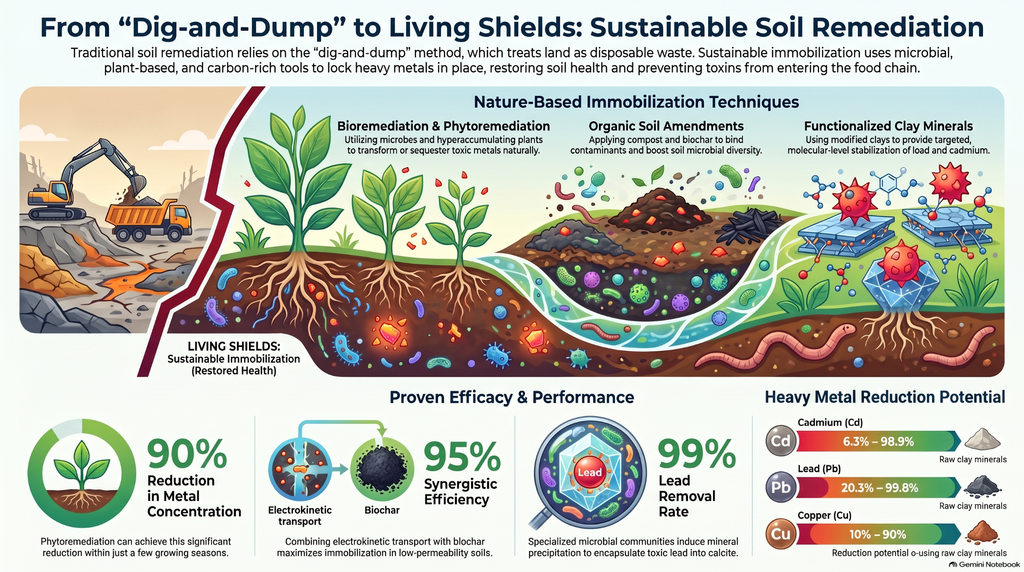
For years, conventional remediation took a crude “dig-and-dump” approach, scraping away contaminated earth and treating land like disposable industrial waste. That is neither ecological stewardship nor sustainable urban development. True sustainability requires regenerative solutions: nature-based strategies that respect soil biology while locking down toxic hazards.
Techniques like bioremediation, biochar application, and targeted phytostabilization don’t just reduce bioavailable toxicity—they protect living ecosystems and restore degraded land for future generations. As advocates and community builders, we must champion soil rehabilitation as a frontline pillar of public health and long-term climate adaptation.
Sustainable methods for heavy metal immobilization in soil treatment include bioremediation and phytoremediation, which utilize microbial processes and plant capabilities, respectively. Incorporating organic amendments like compost enriches soil and immobilizes contaminants, while biochar and nanomaterials enhance stabilization efficiency. These strategies not only minimize environmental impact but also promote soil health and biodiversity. Exploring innovative techniques and long-term monitoring can further improve the effectiveness of these methods in addressing heavy metal contamination challenges. There’s much more to uncover.
KEY TAKEAWAYS
- Utilize bioremediation techniques to leverage microbial activity for transforming toxic heavy metals into less harmful forms in soil.
- Implement phytoremediation by selecting specific plants that absorb and stabilize heavy metals, preventing their entry into the food chain.
- Apply organic amendments, such as compost and biochar, to enhance soil structure, microbial activity, and immobilization of heavy metals.
- Integrate sustainable agricultural practices, including cover cropping, to improve soil health and promote biodiversity, aiding in long-term remediation efforts.
- Employ innovative technologies like nanomaterials for efficient immobilization and enhanced effectiveness in heavy metal treatment strategies.
WHY HEAVY METAL CONTAMINATION IN SOIL IS A MAJOR ENVIRONMENTAL CONCERN
Heavy metal contamination in soil poses significant risks to both human health and the environment, as these toxic elements can persist for decades, if not centuries.
You need to recognize that heavy metal sources, such as industrial discharges, agricultural runoff, and mining activities, contribute to the degradation of soil quality. This contamination can lead to soil health risks, including the disruption of microbial communities and reduced fertility.
Furthermore, these metals can bioaccumulate in plants, entering the food chain and posing direct threats to human health through consumption, highlighting the importance of complementary approaches such as removal of heavy metals in water treatment.
The long-term presence of heavy metals creates an urgent need for innovative approaches to address these environmental challenges.
Understanding the implications of heavy metal contamination is essential for developing effective strategies to mitigate its effects.
The Importance of Sustainable Remediation Strategies for Soil Health
Addressing heavy metal contamination in soil requires effective remediation strategies that prioritize sustainability and long-term soil health.
Sustainable remediation not only mitigates pollution but also enhances soil biodiversity, which is essential for maintaining ecosystem balance. By integrating practices from sustainable agriculture, you can foster a resilient soil environment, promoting the recovery of beneficial microorganisms and improving nutrient cycling.
Innovative approaches, such as using organic amendments or cover crops, can help immobilize heavy metals while enriching soil structure and fertility. These methods reduce reliance on chemical treatments, ensuring that you’re not only treating contamination but also building a healthier soil profile for future generations.
Ultimately, adopting sustainable remediation strategies is vital for restoring contaminated sites. By focusing on soil health, you contribute to a broader goal of environmental sustainability, supporting agricultural productivity and enhancing the resilience of ecosystems against future contamination challenges.
Bioremediation and Phytoremediation: Nature’s Solutions for Soil Recovery
While traditional remediation methods can be effective, bioremediation and phytoremediation offer innovative, nature-based solutions for soil recovery.
These techniques leverage microbial activity and strategic plant selection to immobilize heavy metals, making them a sustainable choice.
Here are key benefits:
- Enhanced Microbial Activity: Specific microbes can transform toxic metals into less harmful forms, promoting soil health.
- Targeted Plant Selection: Choosing hyperaccumulator plants enables effective uptake of heavy metals, reducing contamination levels.
- Cost-Effectiveness: Utilizing natural processes minimizes the need for expensive chemical treatments, making it economically viable.
- Eco-Friendly: Both methods promote biodiversity and restore ecological balance, harmonizing with the environment.
Soil Amendments for Healthier, Metal-Stabilized Soil
When considering soil amendments for healthier, metal-stabilized soil, you should evaluate both organic and inorganic options.
Organic amendments can enhance soil structure and microbial activity, while inorganic stabilizers provide immediate immobilization of metals.
Additionally, integrating phytoremediation techniques can further improve the overall health of contaminated soils.
Organic Soil Amendments Benefits
Soil pollution by heavy metals (HMs) is a significant global problem that threatens sustainable development, particularly in developing countries such as China and India, where 36% of the global population resides. Anthropogenic activities such as mining and smelting, industrial operations, and agricultural activities accelerate HM contamination in soils. Ultimately, these HMs enter the food chain and cause diseases such as cancer, renal failure, cardiovascular disorders, and neurological and cognitive impairment. Various in situ and ex situ techniques have been used to remediate HM-contaminated soils. Among these techniques, in situ HM immobilization using biological waste has become well established owing to its efficiency, economic feasibility, and ease of adaptation. In situ HM immobilization is a risk-based remediation strategy in which HM bioavailability is reduced to a level considered safe for the intended land use. Appropriate HM immobilizing agents can facilitate environmentally sustainable remediation because of their reduced environmental footprint.
Organic soil amendments offer significant benefits in enhancing soil health and stabilizing heavy metals, which is essential for sustainable agriculture.
By integrating these amendments, you can optimize soil quality while promoting nutrient cycling.
Here are four key benefits:
- Compost Benefits: They improve soil structure, enhancing aeration and water retention.
- Heavy Metal Stabilization: Organic matter binds to heavy metals, reducing their bioavailability and leaching.
- Enhanced Microbial Activity**: Amendments foster diverse microbial communities that contribute to nutrient cycling and organic matter decomposition.
- Improved Plant Growth: Healthier soil supports robust root systems, leading to increased crop yields.
Utilizing organic soil amendments not only mitigates heavy metal toxicity but also promotes a sustainable agricultural approach that supports the use of eco friendly products for healthier soil management.
Inorganic Stabilizers Overview
In addition to organic amendments, inorganic stabilizers play a vital role in soil treatment for heavy metal immobilization.
You’ll encounter various inorganic stabilizers types, including lime, zeolites, and phosphate compounds. These materials function through different inorganic stabilizers mechanisms, such as precipitation, adsorption, and ion exchange.
For instance, lime increases soil pH, promoting the formation of insoluble metal hydroxides, while phosphate compounds can form stable metal-phosphate complexes.
Zeolites, with their high cation-exchange capacity, effectively capture heavy metals, reducing their mobility.
Phytoremediation Techniques Explored
Phytoremediation techniques offer innovative solutions for addressing heavy metal contamination in soil, leveraging the natural capabilities of plants to stabilize and extract pollutants. By selecting appropriate phytoremediation species, you can considerably improve soil health and reduce metal bioavailability.
Here are key approaches to take into account:
- Phytostabilization: Plants immobilize metals in the root zone, preventing their movement.
- Phytoextraction: Some species absorb heavy metals, which can later be harvested.
- Phytovolatilization: Certain plants convert heavy metals into volatile forms, releasing them into the atmosphere.
- Rhizodegradation: Roots stimulate microbial activity, enhancing the degradation of contaminants.
Conducting a soil health assessment before and after treatment is essential to evaluate the effectiveness of these techniques and guarantee long-term sustainability.
USING BIOCHAR AND NANOMATERIALS FOR HEAVY METAL SOIL STABILIZATION
Out on the trails or tending my own garden, I’m constantly reminded of the natural world’s innate elegance. Chemistry and ecology possess mechanisms far more sophisticated than our heaviest machinery, provided we know how to partner with them. That is precisely why the shift toward in-situ heavy metal immobilization is so compelling. Take biochar and functionalized minerals, for example: instead of attempting to strip every microscopic toxic cation out of hundreds of acres of terrain, we can introduce porous, carbon-rich amendments and modified clays that actively bind contaminants at the molecular level through surface complexation, ion exchange, and mineral precipitation.
When we integrate living tools—like hyperaccumulating root zones or specialized ureolytic bacterial communities that induce calcite precipitation—we turn the soil matrix into its own protective vault. Instead of leaving cadmium or lead free to leach into edible crops or poison soil microflora, these methods sequester pollutants tightly in place.
What excites me most from an advocacy standpoint is that these aren’t merely high-tech laboratory theories; they represent practical, circular-economy solutions. Transforming agricultural wastes into biochar or harnessing native microbes gives local communities scalable, cost-effective tools to heal degraded ground without relying on aggressive, carbon-heavy chemical overhauls.
While traditional methods for heavy metal remediation often fall short, integrating biochar and nanomaterials presents a promising alternative for enhancing soil stabilization.
Biochar properties, such as its high surface area and porous structure, enable it to effectively adsorb heavy metals, reducing their bioavailability and potential toxicity. When combined with nanomaterials applications—like nanoscale zero-valent iron or graphene oxide—the synergistic effects can considerably improve immobilization efficiency.
These nanomaterials can enhance the reactivity of biochar, leading to stronger binding interactions with contaminants. Furthermore, incorporating biochar into soil can enhance its physical and chemical characteristics, promoting microbial activity and nutrient retention.
How Well Do Heavy Metal Immobilization Methods Work?
When evaluating heavy metal immobilization methods, you need to take into account their effectiveness and long-term stability in soil.
It’s essential to assess how these techniques impact the environment over time. Understanding these factors will help you determine the most sustainable approaches for soil treatment.
Effectiveness of Immobilization Techniques
Effective immobilization techniques for heavy metals in soil play an essential role in mitigating environmental contamination and protecting human health. You’ll find that various methods demonstrate varying levels of effectiveness.
Here are four notable techniques:
- Chemical Immobilization: Utilizes agents like phosphates and carbonates to stabilize heavy metals.
- Microbial Interactions: Leverages bacteria and fungi to transform toxic metals into less soluble forms.
- Phytoremediation: Involves the use of plants to absorb and sequester heavy metals from the soil.
- Soil Amendments: Incorporates organic materials that improve soil structure and reduce metal bioavailability.
Each of these techniques offers unique advantages and can be tailored to specific contaminants, making them valuable for sustainable soil treatment practices.
Long-Term Soil Stability
Soil is the main sink for metals and acts as a barrier to prevent their entry into the food chain. However, human activities such as mining and metal smelting have gradually transferred many toxic metals from the earth’s crust to the environment, resulting in the spread and contamination of heavy metals. In recent decades, heavy metal pollution has become a serious problem worldwide. In China, it was reported that 13.33% of all soil samples collected from 6.3 million square kilometres of land were polluted with high levels of metals. Cadmium pollution has been detected in all agricultural areas. Cadmium is chemically stable and does not undergo chemical or microbial degradation. Moreover, cadmium is not an essential element for living organisms. Generally, it is regarded as the most toxic among heavy metals. Cadmium in the soil harms plant cells by altering metabolic pathways, damaging chloroplasts and mitochondria, and causing oxidative damage to lipids and proteins, and cadmium also interferes with the uptake and transport of essential elements, e.g., P and K9. Excessive Cd can reduce iron uptake by plants, affecting their photosynthesis. Cadmium can also accumulate in plants and animals and thus enters the human body through the food chain, threatening health. Thus, it is an enormous challenge to remediate heavy metal-contaminated soils worldwide.
Although various immobilization methods show promise in reducing heavy metal bioavailability, their long-term effectiveness hinges on several factors, including soil composition and environmental conditions.
You’ll need to take into account how soil erosion can exacerbate heavy metal mobility, potentially undermining immobilization efforts.
Moreover, nutrient cycling plays a critical role in maintaining soil health; disrupted cycles can lead to reduced microbial activity and plant growth, which are crucial for sustaining immobilization.
Techniques like the application of organic amendments can enhance nutrient cycling and improve soil structure, promoting stability.
Ultimately, to guarantee effective long-term immobilization, a thorough understanding of these dynamics is essential.
Innovations in monitoring and adaptive management strategies will additionally enhance the resilience of these methods against environmental fluctuations.
Environmental Impact Assessment
To assess the environmental impact of heavy metal immobilization methods, it’s essential to analyze their efficacy in various soil types and conditions.
You’ll need to evaluate the following factors in your evaluation:
- Effectiveness of the method: How well does it reduce bioavailability of heavy metals?
- Soil type specificity: Does the method work uniformly across different soil compositions?
- Regulatory frameworks: Are the methods compliant with local and international environmental guidelines?
- Risk assessment: What potential risks do these methods pose to human health and ecosystems, particularly when compared with other environmental technologies such as catalytic reduction of air pollutants?
Future Directions in Sustainable Heavy Metal Remediation Techniques
Soil contamination resulting from the presence of heavy metals such as Pb, Cd, Fe, Mn, Cr, and Cu represents a prevalent environmental issue that is intrinsically associated with activities related to the mining sector. Mining activities are a significant source of these pollutants, with metals being released during various stages, such as ore extraction, processing, and waste disposal. Lead contamination often arises from using lead-based
chemicals to extract and process lead sulfide ores. At the same time, Cadmium is typically associated with zinc ores and is released during smelting and refining of zinc.
As researchers explore innovative approaches to heavy metal remediation, the focus has shifted toward sustainable techniques that balance environmental integrity with effective immobilization. Advanced technologies, such as biochar amendments and phytoremediation, are gaining traction for their efficiency and lower environmental costs.
You’ll notice that integrating microbial processes can enhance the natural attenuation of contaminants, offering a dual benefit of remediation and soil health improvement.
Moreover, it’s crucial to take into account the policy implications of these emerging techniques. Adopting frameworks that promote sustainable practices won’t only facilitate the deployment of these advanced technologies but also encourage collaboration among stakeholders.
As you engage with these developments, recognize that future directions in heavy metal remediation must prioritize both innovation and regulatory support. This approach guarantees that sustainable solutions can be effectively implemented, leading to healthier ecosystems and safer agricultural practices.
RELATED STUDIES ABOUT HEAVY METAL IMMOBILIZATION IN SOIL TREATMENT
In addressing heavy metal contamination, sustainable methods like bioremediation and the use of biochar are proving effective. For instance, studies show that phytoremediation can reduce metal concentrations in contaminated soil by up to 90% within a few growing seasons. This statistic highlights the potential of natural solutions to restore soil health while minimizing environmental impact. As we continue to explore and refine these techniques, our approach to soil remediation can become more effective and sustainable, ensuring a healthier ecosystem for future generations.
Synergistic electrokinetic biochar remediation for heavy metal immobilization and agroecological treatment of contaminated soils
This study evaluates a sequential remediation approach combining electrokinetic (EK) treatment and rice husk biochar augmentation to immobilize heavy metals (Cd, Pb, Cu, Zn) and restore soil biological productivity across three distinct arid soil types in Kazakhstan: Chernozem, Light Chestnut soil, and Light Gray soil.
Sequential Remediation Strategy
- Phase 1 (Electrokinetic Transport): Contaminated soils were treated under a direct current electric field of 30 V for 12 hours using inert graphite electrodes and 0.01 M citric acid as a chelating electrolyte to induce electromigration and electroosmotic mobilization of mobile metal cations toward the cathode.
- Phase 2 (Biochar Augmentation): Slow-pyrolysis rice husk biochar (produced at 450 deg C for 8 hours) was incorporated into treated soils at dosages of 0, 15, 25, and 35 t/ha to permanently stabilize remaining and mobilized metal ions via surface complexation (-COOH, -OH groups), ion exchange, and precipitation.
- Phase 3 (Phytomelioration Assessment): A multi-species seed blend (Bromus inermis, Elymus cristatum, Onobrychis viciifolia, Trifolium repens) was cultivated under controlled conditions to assess toxicity alleviation, plant emergence, and biomass recovery.
Heavy Metal Immobilization & Soil-Specific Dynamics
- Synergistic Efficiency: EK treatment alone diminished mobile metal fractions by 20% to 60%, whereas the combined EK + biochar system enhanced immobilization efficiency to 60% to 95%.
- Metal-Specific Reductions: The most pronounced mobile-fraction immobilization occurred for Cu (61% to 95%) and Zn (76% to 80% in Light Gray and Chernozem soils; up to 87.9% in Light Chestnut soil), while mobile Pb and Cd were reduced by 65% to 80%.
- Soil Typology Influence: Chernozem exhibited the highest baseline buffering capacity, organic matter content (4.11% humus), and cation exchange capacity, driving rapid baseline immobilization that reached peak mobile Cu reduction (95.2% at 35 t/ha). In low-organic Light Gray soil (0.65% humus) and Light Chestnut soil (2.40% humus), metal immobilization responded in a clear, proportional, dose-dependent manner across all tested application rates.
- Statistical Significance: Multifactorial ANOVA confirmed that biochar dosage, soil type, and contamination severity exerted a statistically significant impact on all parameters (p < 0.001; eta-squared = 0.75 to 0.93), with Tukey’s HSD test confirming significant differences across all biochar application levels.
Agroecological Recovery & Phytomelioration
- Toxicity Alleviation: Unamended control soils with severe contamination exhibited near-complete inhibition of plant growth (0% survival at high pollution levels).
- Biomass & Yield Recovery: Sequential EK + biochar treatment triggered a 3- to 10-fold increase in plant numbers and a 2- to 5-fold increase in plant height across all soil types.
- Productivity Index (PI): The integral Productivity Index (plant number multiplied by plant height) peaked between 7000 and 7500 in amended Chernozem soils. Cereals displayed the highest absolute productivity surge, while legumes demonstrated consistent recovery, confirming substantial alleviation of heavy metal phytotoxicity.
Combining electrokinetic mobilization with post-treatment biochar stabilization provides a practical, scalable engineering framework for decontaminating fine-textured, low-permeability soils and recovering agricultural land in arid and anthropogenically degraded regions.
| REFERENCE: Altynbek Kazez, Murat Toktar, Kalampyr Bexeitova, Ulan Zhantikeyev, Jechan Lee, Seitkhan Azat, Synergistic electrokinetic biochar remediation for heavy metal immobilization and agroecological treatment of contaminated soils, Carbon Trends, Volume 23, 2026, 100659, ISSN 2667-0569, https://doi.org/10.1016/j.cartre.2026.100659. (https://www.sciencedirect.com/science/article/pii/S266705692600057X) |
Ureolytic Consortium enriched from contaminated soil: Identification, acclimatization and its potential for immobilization of heavy metals
This study evaluates the enrichment, acclimatization, and heavy metal remediation performance of a ureolytic microbial consortium—Consortium HMsoil-01—isolated from contaminated soil in Ningbo, China. By leveraging microbially induced calcite precipitation (MICP), the researchers addressed the limitations of single-strain isolates (such as non-native Sporosarcina pasteurii) through stepwise acclimatization against high concentrations of copper (Cu2+), cadmium (Cd2+), and lead (Pb2+).
Microbial Restructuring & Acclimatization
- Taxonomic Shift: Stepwise exposure to heavy metal concentrations from 100 to 800 mg/L concentrated the consortium from diverse genera into a specialized community. The relative genus abundance of Bacillus increased from 51.27% to 97.51%. At the species level, the acclimatized community was dominated by Bacillus horneckiae (55.41%) and Bacillus firmus (31.53%).
- Functional Adaptations: PICRUSt2 functional predictions revealed significant enrichment in stress-resistance and energy-metabolism pathways, notably genes related to DNA repair, acetyl-CoA metabolism, fatty acid beta-oxidation, and metal-dependent amidases/peptidases. These adaptations help mitigate metal-induced oxidative stress and preserve cellular integrity during biomineralization.
Optimal Growth Parameters
Using single-factor testing and Box-Behnken Response Surface Methodology (RSM), the operational window for HMsoil-01 was established:
- Temperature: 31 deg C
- pH: 7.0 (neutral)
- Incubation Time: 28 hours (reaching late logarithmic phase)
Remediation Performance & Mineralization Mechanisms
- Aqueous Phase: Removal efficiencies across 100 to 800 mg/L concentrations reached greater than 99.0% for Pb2+, greater than 74.5% for Cd2+, and greater than 74.3% for Cu2+. SEM and XRD characterization demonstrated that heavy metals were co-precipitated and structurally incorporated into calcite and metastable vaterite crystals, with microbial cells providing primary nucleation sites.
- Soil Matrix: Following a 14-day curing period of multi-metal contaminated soil (400 mg/kg each of Cu, Cd, and Pb), TCLP leaching concentrations decreased by 28.2% for Pb2+, 18.9% for Cu2+, and 8.3% for Cd2+ relative to Day 1.
- Speciation Redistribution: In BCR sequential extractions, weak acid-extractable (bioavailable and mobile) fractions dropped by 81.7% (Pb), 50.2% (Cu), and 44.7% (Cd), shifting substantially into stable residual fractions.
- Mineral Morphology: Mineral growth within soil pores formed nano-sized calcite crystals rather than the micron-sized crystals seen in solution. Heavy metal immobilization occurred via physical encapsulation, pore clog-induced reduction of mobility, and isomorphous lattice substitution of Ca2+ by Cu2+, Cd2+, and Pb2+.
Environmental Consideration
While HMsoil-01 exhibits robust potential as an indigenous bioremediation agent for multi-metal contaminated sites, large-scale implementation must address ammonia/ammonium (NH4+) byproduct generation from urea hydrolysis to avoid secondary ecological risks.
| REFERENCE: Peng Zhu, Yan Wang, Jiajie Tang, Jiaqi Ni, Chen Chen, Ureolytic consortium enriched from contaminated soil: identification, acclimatization and its potential for immobilization of heavy metals, Biogeotechnics, 2026, 100258, ISSN 2949-9291, https://doi.org/10.1016/j.bgtech.2026.100258. (https://www.sciencedirect.com/science/article/pii/S2949929126000343) |
From natural adsorption to targeted immobilization: Efficacy and mechanisms of clay minerals in remediating soil heavy metals
This review systematically analyzes the mechanisms, performance, and environmental controls governing the in-situ immobilization of toxic heavy metals in contaminated soils using raw clay minerals (CMs) and modified clay minerals (MCMs). It establishes a “structure–functionalization–targeted immobilization” framework to transition clay remediation from non-specific natural adsorption to targeted stabilization.
Raw Clay Mineral Performance & Limitations
- Natural Abatement Capacity: Raw phyllosilicates (including bentonite, attapulgite, montmorillonite, sepiolite, and diatomite) diminish the bioavailable pool of heavy metal cations in soils: Cd by 6.3% to 98.9%, Pb by 20.3% to 99.8%, Cu by 10% to 90%, Zn by 10% to 69%, and Ni by 23% to 71%. Consequently, heavy metal uptake into agricultural crops drops by 1.6% to 92.2%. The relative immobilization affinity generally follows the order Pb approximately equals Cd, which is greater than Cu, which is greater than Ni, which is greater than Zn.
- Primary Cation Mechanisms: Retention occurs through cation exchange within interlayer galleries, surface complexation with silanol groups (Si–OH), and pH-induced precipitation of metal hydroxides and carbonates.
- The Anionic Metal Risk: Because pristine clay mineral layers carry a permanent negative lattice charge from isomorphic substitution, raw clays exhibit electrostatic repulsion toward heavy metal oxyanions. Furthermore, natural clays raise the soil pH, triggering the competitive desorption and mobilization of As and Cr(VI) into pore water.
Targeted Functionalization Strategies
- Soft-Base Thiol (-SH) Grafting: Exploiting Hard-Soft Acid-Base (HSAB) theory, grafting soft-base mercapto groups onto attapulgite, palygorskite, or sepiolite establishes strong covalent coordination with the soft-acid cation Cd2+, achieving soil Cd bioavailability reductions of up to 89.5%. Unlike raw clays, this mechanism remains stable across broad pH fluctuations.
- Nanoscale Zero-Valent Iron (nZVI) Loading: Dispersing nZVI across clay matrices mitigates nanoparticle agglomeration while leveraging high reduction capacity. nZVI supplies electrons to reduce mobile, toxic Cr(VI) to Cr(III), precipitating stable FeCr2O4 spinels and Cr(OH)3, while oxidizing into amorphous FeOOH that co-precipitates As(III) and As(V).
- Iron/Manganese Oxides & Green Polyphenols: Goethite- and Fe-Mn-modified clays immobilize As via inner-sphere ligand exchange, while Mn(IV) oxidizes toxic As(III) into less mobile As(V). Green tea waste impregnation introduces bio-polyphenols that donate electrons to drive Cr(VI) reduction without synthetic reagents.
- Cationic Surfactant Tailoring: Intercalating quaternary ammonium surfactants (e.g., HDTMA-Br) reverses the clay surface charge from negative to positive, establishing electrostatic capture of arsenic oxyanions.
Key Environmental Driving Factors
- Soil pH & Charge Reversal: Rising pH reduces H+ competition, enhancing cation precipitation, but exacerbates OH- competition against oxyanions. Clays immobilize cations when soil pH exceeds the material point of zero charge (pHpzc) and favor anions below pHpzc.
- Redox Potential (Eh) & Moisture Cycles: Waterlogged anaerobic regimes deplete soil oxygen, prompting microbial reduction of Fe/Mn oxides that can trigger the sudden re-release of previously bound Cd and As.
- Soil Organic Matter (SOM) Interference: Solid SOM supplies cation exchange and complexation sites, but dissolved organic matter (DOM) forms soluble organo-metal complexes and physically blocks clay micropores, lowering sorption efficiency.
Advanced Characterization & Future Challenges
- Multiscale Mechanistic Characterization: Resolving immobilization pathways relies on coupling electron microscopy (SEM/HRTEM-EDS), mineral phase diffraction (XRD), and surface state spectroscopy (XPS, FTIR) with synchrotron X-ray Absorption Near-Edge Structure (XANES). Integrating First-Principles Molecular Dynamics (FPMD) and Density Functional Theory (DFT) with spectroscopic data allows atomic-scale differentiation of inner-sphere vs. outer-sphere complexes.
- Critical Research Gaps: Current literature remains constrained to short-term laboratory simulations. There is an urgent need to verify long-term stability against weathering and redox cycling, evaluate secondary ecotoxicity from nZVI or surfactant degradation, and formulate multi-functional composites for the simultaneous co-remediation of cationic and anionic pollutants in field-scale agricultural soils.
| REFERENCE: Tianhong Fu, Jinlan Shi, Xiaomin Wang, Ling Tang, Zhen Yang, Bo Chen, Yujin Zhang, Bangxi Zhang, From natural adsorption to targeted immobilization: Efficacy and mechanisms of clay minerals in remediating soil heavy metals, Journal of Hazardous Materials Advances, Volume 22, 2026, 101178, ISSN 2772-4166, https://doi.org/10.1016/j.hazadv.2026.101178. (https://www.sciencedirect.com/science/article/pii/S2772416626001774) |
CONCLUSION
Remediating contaminated soil isn’t just an academic exercise in biogeochemistry; it’s an urgent environmental justice imperative. Across post-industrial neighborhoods, mining towns, and rapidly growing urban perimeters, families frequently garden and raise children near land bearing silent toxic legacies. When mentoring emerging activists, I always stress that cutting-edge science means very little if it remains trapped in research journals. The breakthrough data we see today—from electrokinetic-biochar pairings to advanced functionalized clay matrices—must be translated into enforceable municipal standards, zoning guidelines, and state-funded brownfield rehabilitation programs.
We need regulatory frameworks that incentivize developers and public works agencies to prioritize natural immobilization and long-term soil health over quick, cosmetic fixes. That means establishing continuous soil monitoring protocols, supporting regional testing hubs, and funding decentralized, nature-based cleanup initiatives.
If we are serious about building sustainable, climate-resilient cities, we have to treat living soil as critical public infrastructure. By combining community education, decisive policy reform, and ecologically sound remediation, we can close the book on legacy industrial contamination and ensure that every community rests on clean, fertile, and thriving ground.