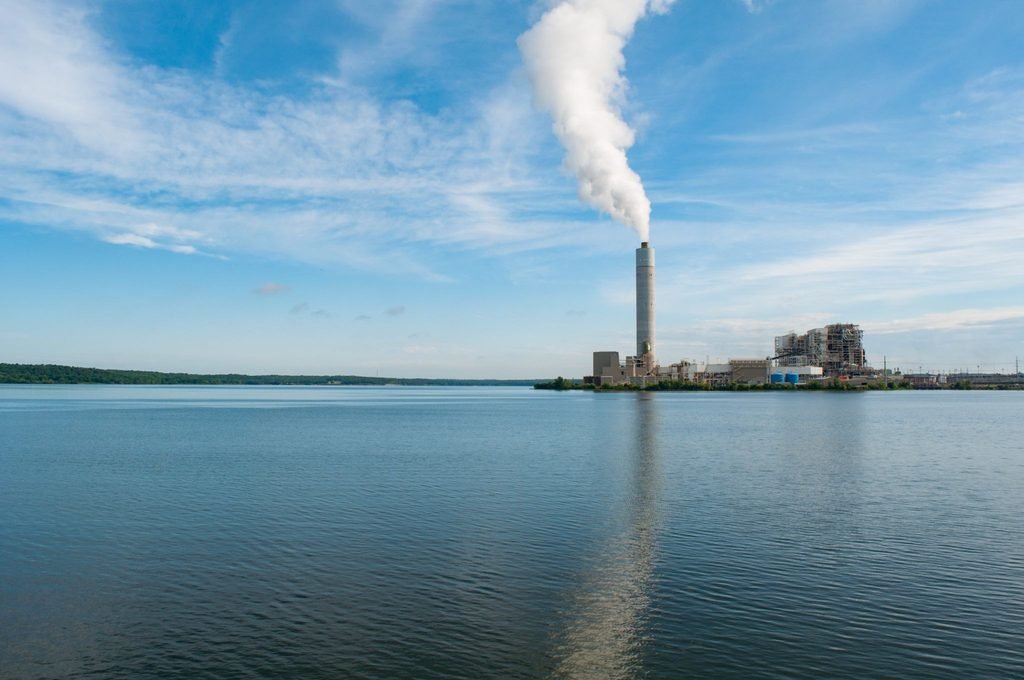
When we evaluate industrial emissions, conversations tend to veer rapidly into corporate compliance, complex chemistry, or economic balance sheets. As an environmental sociologist who has spent over a decade working alongside grassroots coalitions and frontline communities, I view catalytic reduction through a distinctly human lens. The chemical transformation of toxic exhaust gases into nitrogen, water vapor, and carbon dioxide is not merely an engineering feat; it is a fundamental public health intervention.
Communities situated near transit corridors, power plants, and industrial clusters carry a disproportionate burden of respiratory ailments, childhood asthma, and systemic health crises driven by nitrogen oxides and unburned hydrocarbons. In academic research and community organizing, we consistently see that clean air is an environmental justice issue before it is an industrial metric. Catalytic technology represents a vital mechanism where laboratory innovation directly intersects with social equity.
However, technological feasibility alone never cleans the air—it requires robust public policy, transparency, and civic accountability to ensure facilities implement and maintain these systems properly. As you read through the mechanics of catalytic reduction, consider not just the efficiency of the catalysts inside the exhaust stack, but the tangible breath of fresh air delivered to fence-line neighborhoods just beyond the facility perimeter.
Catalytic reduction effectively reduces industrial emissions by transforming harmful air pollutants into less toxic substances. Using catalysts like platinum and palladium, this process converts pollutants such as nitrogen oxides and volatile organic compounds into harmless gases like nitrogen and carbon dioxide. This approach not only enhances air quality but also supports compliance with stringent regulations. By adopting these technologies, you not only improve operational efficiency but also position your organization as a leader in sustainability and innovation. Learn more about the latest advancements in this field.
KEY TAKEAWAYS
- Catalytic reduction transforms harmful pollutants into less toxic substances, significantly lowering industrial emissions in exhaust gases.
- Utilizing precious metal catalysts like platinum and palladium enhances the efficiency of chemical reactions, leading to reduced toxic gas emissions.
- Advanced catalytic materials and systems optimize emission control, ensuring compliance with regulatory standards and minimizing potential penalties.
- Real-time emission monitoring systems help identify inefficiencies, enabling quick adjustments to further reduce industrial emissions.
- Implementing sustainable catalytic reduction technologies supports corporate social responsibility and enhances brand reputation while reducing overall environmental impact.
WHAT IS CATALYTIC REDUCTION AND HOW DOES IT WORK?
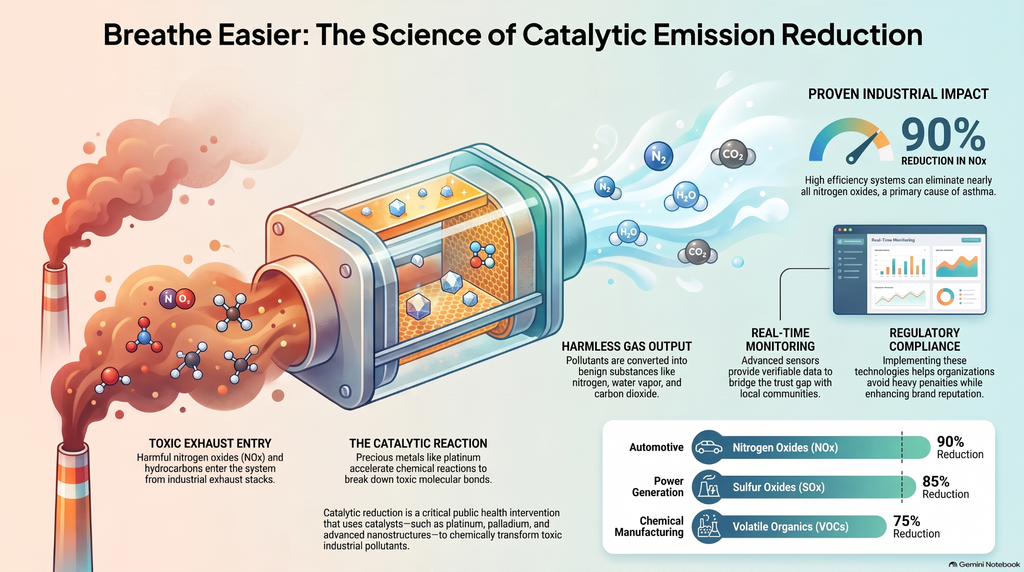
Selective Catalytic Reduction (SCR) is an advanced active emissions control technology system that reduces tailpipe emissions of nitrogen oxides (NOx) down to near-zero levels in newer generation diesel-powered vehicles and equipment. The SCR system involves several components packaged together with other parts of the emissions control system. Each manufacturer has its own variations of the type and sequencing of different components in the system.
Catalytic reduction is a crucial process in mitigating air pollutants, as it utilizes catalysts to convert harmful emissions into less harmful substances.
At the core of this process are catalytic converters, devices designed to facilitate chemical reactions that reduce toxic gases such as nitrogen oxides (NOx) and unburned hydrocarbons.
When exhaust gases pass through the catalytic converter, they encounter precious metals like platinum, palladium, or rhodium, which serve as catalysts.
These metals accelerate the necessary chemical reactions, transforming harmful compounds into nitrogen, carbon dioxide, and water vapor.
How Catalytic Reduction Mitigates Environmental Impact
A catalytic converter is an essential component in internal combustion engines designed to reduce toxic emissions from vehicles. Developed in response to regulatory efforts by the Environmental Protection Agency (EPA) in the early 1970s, catalytic converters became standard in cars starting in 1975. These devices primarily function by converting harmful substances in exhaust gases, such as carbon monoxide (CO), nitrogen oxides (NOx), and unburnt hydrocarbons, into less harmful emissions like carbon dioxide (CO2) and nitrogen.
Catalytic reduction plays an essential role in enhancing air quality by effectively converting harmful pollutants into less toxic substances.
By implementing this technology, you can greatly reduce greenhouse gas emissions, contributing to a healthier environment.
Understanding these benefits empowers you to support sustainable practices that mitigate environmental impact.
Enhanced Air Quality
As air quality continues to decline due to increasing industrial activity and vehicle emissions, implementing catalytic reduction technologies offers a practical solution to mitigate these environmental impacts.
These advanced systems enhance air purification by effectively transforming harmful pollutants into less toxic substances. By integrating catalytic converters into industrial processes, you can markedly reduce nitrogen oxides and volatile organic compounds, which are primary contributors to air pollution.
This not only leads to improved air quality but also delivers substantial health benefits, reducing respiratory issues and other pollution-related ailments among the population.
Investing in catalytic reduction technologies demonstrates a commitment to innovation while fostering a healthier environment, ultimately enhancing your organization’s sustainability profile and protecting community well-being.
Reduced Greenhouse Gas Emissions
While many industries focus on reducing air pollutants, a notable aspect of their environmental footprint lies in greenhouse gas emissions.
Catalytic reduction technologies play an essential role in this scenario, enabling you to considerably lower your carbon footprint. By converting harmful nitrogen oxides into nitrogen and water vapor, these systems not only enhance air quality but also mitigate greenhouse gas outputs.
Implementing such sustainable practices helps industries comply with stringent regulations while demonstrating a commitment to removal of heavy metals in water treatment and environmental stewardship. The integration of advanced catalytic converters can optimize energy use, further reducing emissions.
As you adopt these innovative solutions, you’ll position your organization as a leader in sustainability, paving the way for a cleaner, more responsible industrial future.
Benefits of Catalytic Reduction for Industries
Industries can substantially enhance their environmental performance by implementing catalytic reduction technologies. By adopting these innovative solutions, you’re not only contributing to a cleaner environment but also revealing significant cost savings and process optimization. Catalytic reduction effectively reduces hazardous emissions, allowing you to meet regulatory standards while minimizing operational costs.
Here’s a brief overview of the benefits:
| Benefit | Description | Impact |
| Cost Savings | Reduces energy consumption and waste | Lower operational costs |
| Process Optimization | Improves efficiency of emission control units | Enhanced productivity |
| Regulatory Compliance | Meets stringent environmental regulations | Avoids penalties |
| Brand Reputation | Enhances corporate social responsibility | Attracts eco-conscious customers |
| Innovation Leadership | Positions your company as a market leader | Competitive advantage |

INNOVATIVE TECHNOLOGIES DRIVING CATALYTIC REDUCTION
Integrating advanced catalytic converters and monitoring systems is frequently framed as an operational expense, but grassroots research reveals it as a cornerstone of corporate accountability. Throughout my fieldwork with local non-profits, one recurring friction point has been the opacity of factory emissions. When communities suspect air quality violations, they are often met with lagging, self-reported reports that do little to protect residents in real time. This is why advancements like continuous, real-time emission monitoring and high-efficiency nanostructured catalysts excite me from both an academic and an activist standpoint.
Real-time tracking strips away ambiguity, creating verifiable data that bridges the historic trust gap between industrial plant managers, regulatory bodies, and neighboring households. Furthermore, seeing green synthesis methods emerge—such as utilizing plant extracts or natural zeolites to create catalytic materials—signals that environmental remediation itself is becoming more regenerative rather than resource-intensive.
Yet, technology must never serve as a shield for complacency. A catalytic converter does not eliminate carbon emissions entirely, and it cannot replace a broader transition toward low-impact industrial processes. What it does offer right now is an immediate, measurable harm-reduction tool that shields workers and surrounding communities from acute toxic exposure while larger infrastructural transitions unfold.
A catalytic converter is an exhaust emission control device which converts toxic gases and pollutants in exhaust gas from an internal combustion engine into less-toxic pollutants by catalyzing a redox reaction. Catalytic converters are usually used with internal combustion engines fueled by gasoline (petrol) or diesel, including lean-burn engines, and sometimes on kerosene heaters and stoves.
As you explore innovative technologies driving catalytic reduction, advanced catalytic materials emerge as key players in enhancing efficiency and effectiveness.
By integrating real-time emission monitoring systems, you can optimize performance and guarantee compliance with environmental standards.
These advancements not only reduce pollutants but also pave the way for sustainable industrial practices.
Advanced Catalytic Materials
Advanced catalytic materials are at the forefront of innovative technologies driving the reduction of air pollutants. These cutting-edge materials enhance the efficiency of catalytic processes, enabling you to tackle emissions more effectively in industrial settings.
With advanced applications like nanostructured catalysts and metal-organic frameworks, you can achieve superior reaction rates and selectivity. By optimizing surface area and reactivity, these materials facilitate the breakdown of harmful pollutants, transforming them into benign substances.
You’re not just improving performance; you’re also minimizing costs and resource consumption. Investing in advanced catalytic materials can greatly lower your environmental impact while meeting regulatory standards and supporting the development and adoption of eco friendly products.
Embracing these innovations positions your operations at the leading edge of sustainability and industrial responsibility.
Real-Time Emission Monitoring
How can you guarantee compliance with air quality regulations while optimizing catalytic reduction processes?
Implementing advanced real-time emission monitoring systems is key. These innovative technologies provide you with real-time data, enabling immediate adjustments to your catalytic reduction processes. By continuously tracking emissions, you can identify inefficiencies and enhance catalyst performance, ensuring that you stay within regulatory limits.
Moreover, integrating machine learning algorithms into your monitoring systems allows for predictive analytics, helping you foresee potential compliance issues before they arise.
This proactive approach not only safeguards your operation from costly fines but also boosts overall efficiency while strengthening collaboration with environmental advocacy groups to promote cleaner industrial practices. Embracing these cutting-edge solutions positions your facility as a leader in sustainable practices, driving down emissions while maintaining operational excellence.
Navigating Emission Control Regulations
Maneuvering emission control regulations can feel overwhelming, but understanding the framework is essential for compliance and environmental stewardship.
To guarantee regulatory compliance with emission standards, you need to stay informed and proactive. Here are three key strategies to simplify the process:
- Stay Updated: Regularly review local, state, and federal regulations to remain compliant with evolving emission standards.
- Implement Technology: Invest in advanced monitoring systems that provide real-time data, helping you adjust operations swiftly to meet regulatory requirements.
- Engage Experts: Collaborate with environmental consultants who specialize in emission control to navigate complex regulations effectively.
Success Stories of Catalytic Reduction
As emission control regulations become more stringent, industries are increasingly turning to catalytic reduction technologies to meet compliance and improve air quality. Numerous success stories highlight the effectiveness of these technologies in reducing emissions while fostering innovative industry partnerships.
| Case Study | Impact |
| Automotive Industry | 90% reduction in NOx emissions |
| Power Generation | 85% reduction in SOx emissions |
| Chemical Manufacturing | 75% reduction in VOCs |
| Oil and Gas Sector | 80% reduction in particulate matter |
These case studies illustrate how businesses leverage catalytic reduction to not only comply with regulations but also enhance operational efficiency. By collaborating with technology providers, industries can implement tailored solutions that drive significant improvements. Such partnerships pave the way for continuous innovation, ensuring that air quality standards are met while supporting sustainable practices in industrial operations.
Future Trends in Catalytic Reduction Technologies
While industries have made significant strides in catalytic reduction technologies, the future promises even more advanced solutions to tackle air pollution.
You’ll witness the emergence of innovative catalysts designed for enhanced efficiency and reduced costs. These advancements align perfectly with sustainable practices, ensuring that environmental responsibility becomes a core component of your operations.
Consider these future trends:
- Emerging Catalysts: Novel materials with superior activity and selectivity will revolutionize pollutant conversion.
- Integration with Renewable Energy**: Combining catalytic systems with renewable energy sources will enhance overall system efficiency.
- Smart Technologies: Implementing AI and IoT will allow real-time monitoring and optimization of catalytic processes.

RELATED STUDIES ABOUT CATALYTIC REDUCTION OF AIR POLLUTANTS
Incorporating catalytic reduction technologies can greatly lower industrial emissions, with studies showing up to a 90% reduction in nitrogen oxides (NOx), a major contributor to air pollution. By adopting these innovative solutions, you not only comply with stringent regulations but also enhance your operational efficiency. As industries increasingly prioritize sustainability, embracing catalytic reduction not only mitigates environmental impact but also positions you as a leader in the shift towards greener practices. The future of clean industry is here—are you ready to join?
MOFs@aerogel composite materials for air pollutant control: Preparation strategies, interfacial synergistic mechanisms and governance applications
This review systematically examines the rational design, interfacial mechanisms, and environmental applications of metal-organic framework (MOF) and aerogel composites (MOFs@aerogel) for controlling airborne pollutants, specifically carbon dioxide (CO2), nitrogen oxides (NOx), and volatile organic compounds (VOCs). Combining these two distinct porous classes resolves the core operational bottlenecks of individual materials: the dense microporosity, poor mechanical processability, and powder loss of pristine MOFs, as well as the chemical inertness and lack of catalytic active centers in pure aerogels.
Material Design and Interfacial Synergy
- Hierarchical Porosity and Mass Transfer: Aerogels contribute an interconnected macroporous and mesoporous three-dimensional skeleton that acts as a rapid diffusion pathway, while MOFs provide tunable nanopores and dense molecular active sites. This hierarchical architecture minimizes mass-transfer resistance and accelerates kinetic equilibrium.
- Interfacial Electronic Coupling: Density Functional Theory (DFT) calculations and Independent Gradient Model with Hirshfeld partitioning (IGMH) confirm that coordinate bonding and hydrogen-bonding networks facilitate electron delocalization across the MOF-aerogel interface. In catalytic systems, this creates heterojunction charge-transfer channels that promote the generation of active radical species (such as superoxide and hydroxyl radicals), verified via in situ electron paramagnetic resonance (EPR) spectroscopy.
- Synthesis and Drying Pathways: Primary construction routes include direct physical mixing (cost-effective but prone to aggregation), in situ solvothermal/hydrothermal growth (delivering uniform dispersion and tight interfacial anchoring), and template-assisted assembly. Supercritical drying preserves intact pore structures and high surface area, while freeze-drying and emerging supercritical CO2-assisted drying offer scalable processing options.
Environmental Governance Applications
- Adsorption-Oriented CO2 Capture: Engineered composites overcome moisture-induced deactivation through pore-surface tuning. For example, fluorinated UiO-66-NH2-F4 aerogels achieve a CO2 uptake of 5.18 mmol/g at 298 K and retain 4.48 mmol/g under 70% relative humidity, leveraging hydrophobic microenvironments to shield active sites from water vapor.
- Catalytic Low-Temperature NOx Reduction: In selective catalytic reduction (NH3-SCR), MOF-templated aerogels and bimetallic derivatives (e.g., MnCe nanowires and MnCo-BTC-derived spinels) achieve greater than 90% NOx conversion across 100 to 400 deg C. The aerogel structure increases Lewis and Bronsted acid site density, promoting NH3 activation and suppressing sulfate deposition from SO2 poisoning.
- Synergistic “Capture-and-Degrade” VOC Treatment: Composites integrate rapid molecular capture with subsequent room-temperature oxidation. Hierarchical systems such as 2D CoFe-MOF/N-doped graphene aerogels (CLGM-A) achieve 95.4% toluene removal and 83.6% mineralization within 120 minutes under visible light, maintaining cycling stability via 2D-2D face contact.
Industrial Challenges and Future Perspectives
- Scale-Up Economics and Green Synthesis: Replacing toxic organic solvents with green alternatives (such as ionic liquids or aqueous systems) and adopting biomass aerogel carriers (cellulose, chitosan) with ambient pressure drying are essential to lower manufacturing costs and life-cycle carbon footprints.
- Dynamic Operational Stability: Real-world flue gases expose materials to thermal degradation, acid-gas poisoning (sulfation), and mechanical attrition. Resolving these issues requires advanced in situ operando characterization to track dynamic active-site evolution, coupled with modular reactor engineering to integrate multi-pollutant abatement systems.
| REFERENCE: Chaofan Xiao, Fengyu Gao, Yu Xia, Tingkai Xiong, Honghong Yi, Qingjun Yu, Shunzheng Zhao, Yuansong Zhou, Xiaolong Tang, MOFs@aerogel composite materials for air pollutant control: Preparation strategies, interfacial synergistic mechanisms and governance applications, Green Energy & Environment, Volume 11, Issue 4, 2026, Pages 899-939, ISSN 2468-0257, https://doi.org/10.1016/j.gee.2026.01.009. (https://www.sciencedirect.com/science/article/pii/S2468025726000130) |
Boosting silver loading and functionality in Clinoptilolite via tannic acid reduction: a comparative study of ionic and metallic silver for air purification
This study evaluates the functionalization of natural clinoptilolite zeolite with silver to develop low-cost, multifunctional materials for indoor air decontamination, combining catalytic oxidation of toxic gases with antimicrobial bioaerosol control. The researchers compared two eco-friendly synthesis pathways using an identical initial silver precursor concentration (0.5 M AgNO3): standard aqueous ion exchange to incorporate ionic silver (Clino-Ag) versus green in situ reduction using plant-derived tannic acid to deposit metallic silver nanoparticles (Clino-AgNPs).
Physicochemical and Textural Properties
- Silver Speciation and Loading: Tannic acid functionalization facilitated a three-fold increase in total silver loading (30.4 wt% Ag in Clino-AgNPs vs. 11.1 wt% Ag in Clino-Ag).
- Structural Characterization: Scanning Transmission Electron Microscopy (STEM) and X-ray Diffraction (XRD) confirmed that Clino-AgNPs formed discrete, well-dispersed metallic silver nanoparticles (Ag0) on the crystal surfaces, exhibiting characteristic face-centered cubic Ag reflections. In contrast, Clino-Ag exhibited a diffuse silver distribution confined as ionic species (Ag+) within the aluminosilicate micropores.
- Porosity Analysis: Carbon dioxide adsorption isotherms at 273 K overcame the diffusion limitations of standard liquid nitrogen physisorption at 77 K. The Langmuir specific surface areas were measured at 130 m2/g for bare clinoptilolite, 122 m2/g for Clino-AgNPs, and 109 m2/g for Clino-Ag. The slight reduction in Clino-Ag reflects the placement of large Ag+ cations near the narrow 8-membered ring apertures of the HEU framework without causing pore blockage.
Catalytic Oxidation Performance
- Low-Temperature Carbon Monoxide Oxidation: Clino-AgNPs completely oxidized 100 ppm CO to CO2 below 125 deg C. Bare clinoptilolite achieved only around 60% conversion at 250 deg C, while Clino-Ag reached approximately 80% at 250 deg C. The silver-mass-normalized reaction rate for Clino-AgNPs was more than double that of Clino-Ag (318.4 vs. 141.9 umol/h/g Ag).
- Volatile Hydrocarbon (Ethylene) Abatement: As a model unsaturated volatile organic compound (VOC), ethylene oxidation reached over 60% at 250 deg C over Clino-AgNPs (213.0 umol/h/g Ag), whereas both bare zeolite and Clino-Ag showed under 10% conversion. The superior activity of Clino-AgNPs stems from accessible surface metallic sites that circumvent the steric and diffusion barriers ethylene faces within the internal zeolite channels.
- Operational Durability: Time-on-stream (TOS) testing of Clino-AgNPs over 8 hours demonstrated stable CO conversion at 91.7% (+/- 0.3%) without deactivation. Ethylene conversion stabilized at 29.4% (+/- 7.9%), influenced by slower surface reaction kinetics and active site replenishment dynamics. Post-reaction XRD verified that the crystalline phases and metallic silver speciation remained intact.
Bioaerosol Antimicrobial Inactivation
- Broad-Spectrum Pathogen Suppression: Standardized bioaerosol testing with nebulized suspensions demonstrated that unfunctionalized clinoptilolite permitted rampant proliferation of both Staphylococcus epidermidis (Gram-positive) and Escherichia coli (Gram-negative).
- Equivalent Antibacterial Efficacy: Both Clino-AgNPs and Clino-Ag achieved 100% bacterial suppression after 24 and 48 hours of incubation. Antibacterial action was mediated via direct contact: surface-exposed nanoparticles induced cell membrane disruption and oxidative stress, while near-surface Ag+ ions released locally from exchange sites disrupted bacterial enzymatic systems.
- Post-Catalytic Activity Retention: Spent catalysts recovered after high-temperature gas oxidation fully retained their antibacterial efficacy, confirming that the supported nanoparticles did not agglomerate or deactivate under reaction conditions.
Tannic-acid-assisted reduction creates an active, multifunctional air purification platform on natural clinoptilolite. While ionic silver satisfies antibacterial objectives, metallic silver nanoparticles are necessary to achieve continuous, low-temperature catalytic oxidation of gaseous indoor pollutants.
| REFERENCE: Francesca Gattucci, Mari Sofia Lallukka, Nadia Grifasi, Marco Armandi, Marco Piumetti, Marta Miola, Boosting silver loading and functionality in Clinoptilolite via tannic acid reduction: a comparative study of ionic and metallic silver for air purification, Materials Research Bulletin, Volume 204, 2026, 114305, ISSN 0025-5408, https://doi.org/10.1016/j.materresbull.2026.114305. (https://www.sciencedirect.com/science/article/pii/S0025540826003168) |
Comparative catalytic insights into green and commercial gold nanoparticles: synergistic catalytic reduction of organic pollutants
This study presents a microwave-assisted green synthesis route for gold nanoparticles (AuNPs) using Azadirachta indica (neem) leaf extract as a dual reducing and stabilizing agent, providing a direct comparative evaluation against commercial AuNPs for the catalytic reduction of methyl orange (MO) and 4-nitrophenol (4-NP).
Synthesis Optimization & Material Characterization
- Optimal Green Synthesis: Systematic optimization via UV-Vis spectroscopy identified 720 W microwave power, 60 seconds of irradiation, and 1.0 mM AuCl3 precursor as ideal reaction parameters, yielding intense, sharp surface plasmon resonance (SPR) centered at 535 nm.
- Nanoscale Morphology & Crystal Phase: Transmission electron microscopy (TEM) and field-emission scanning electron microscopy (FE-SEM) revealed well-dispersed, quasi-spherical nanoparticles with an average core diameter of 11.90 +/- 2.84 nm (TEM) and 18.40 +/- 1.39 nm (FE-SEM). X-ray diffraction (XRD) confirmed a face-centered cubic (FCC) polycrystalline structure with preferential orientation along the (111) plane.
- Surface Capping & Hydrodynamic Behavior: FTIR spectroscopy identified hydroxyl (3338.67 cm-1), carbonyl (1633.86 cm-1), and metal-ligand (Au-O at 458.91 cm-1) vibrations, confirming the active capping of flavonoids, polyphenols, and terpenoids on the nanoparticle surface. Dynamic light scattering (DLS) showed an average hydrodynamic diameter of 28.50 +/- 1.42 nm with a low polydispersity index (0.173 +/- 0.008) under diluted conditions, reflecting a stable bio-corona without severe agglomeration.
Comparative Catalytic Reduction Performance
- Azo Dye Degradation (Methyl Orange): In the presence of NaBH4, green-synthesized AuNPs achieved greater than 75% reduction of 15 ppm MO within 10 minutes with an apparent rate constant (k) of 0.059 +/- 0.002 min-1 (R2 = 0.894). While commercial citrate-stabilized AuNPs (20 nm) displayed a higher calculated numerical reduction (92.6%, k = 0.237 +/- 0.045 min-1), green AuNPs induced the complete disappearance of the characteristic 465 nm azo chromophore peak without leaving residual spectral shoulders.
- Nitroarene Conversion (4-Nitrophenol): Green AuNPs catalyzed the reduction of 4-nitrophenol to 4-aminophenol (monitored by the shift and depletion of the 400 nm nitrophenolate peak), achieving 69.4% reduction in 10 minutes (k = 0.133 +/- 0.066 min-1, R2 = 0.802) versus 90.3% (k = 0.279 +/- 0.011 min-1) for commercial AuNPs. Green AuNPs exhibited faster initial reduction rates within the first 2 minutes (~0.34 min-1 vs. ~0.09 min-1 for commercial AuNPs).
- Synergistic Mechanism: Control reactions confirmed that NaBH4, plant extract, or AuNPs alone produced negligible catalytic reduction. The enhanced performance of the green system relies on a three-way synergy where NaBH4 acts as the hydride donor, the metallic gold core serves as a conductive electron relay, and the phytochemical capping layer supplies surface functional groups (-OH, -COOH) that facilitate substrate adsorption and electron shuttling.
Durability & Technical Feasibility
- Reusability & Integrity: The biogenic AuNPs retained over 80% of their initial catalytic efficiency across three successive reaction cycles (dropping to 66.4% for MO and 56.0% for 4-NP due to minor handling losses and surface intermediate fouling). Post-catalysis XRD and FTIR confirmed structural preservation and retention of surface-bound phytochemical ligands without phase degradation or gold oxide formation.
- Process Scalability: Combining rapid volumetric microwave heating with renewable Azadirachta indica extracts establishes an energy-efficient, chemical-waste-free production route for noble metal nanocatalysts applicable to industrial wastewater remediation.
| REFERENCE: Md. Abdus Sabur, Ishraque Karim, Aninda Nafis Ahmed, Comparative catalytic insights into green and commercial gold nanoparticles: synergistic catalytic reduction of organic pollutants, RSC Advances, Volume 16, Issue 13, 2026, Pages 11324-11347, ISSN 2046-2069, https://doi.org/10.1039/d5ra09335j. (https://www.sciencedirect.com/science/article/pii/S2046206926007564) |
CONCLUSION
Achieving true sustainability requires measurable, community-validated impact rather than empty corporate pledges. While catalytic reduction technologies boast impressive performance figures—often exceeding 80% to 90% reductions in key airborne toxins across heavy industries—their ultimate success depends on human implementation and regulatory vigilance. In my own plant-growing trials and soil research, I am constantly reminded that healthy growth relies entirely on the quality of surrounding air, soil, and water; industrial systems operate within that exact same ecological web.
We cannot view end-of-pipe solutions like catalytic converters as a final destination or an excuse to avoid broader ecological responsibility. Instead, they are indispensable immediate tools within a multifaceted climate justice framework. For industrial leaders, investing in cutting-edge catalytic systems, rigorous third-party monitoring, and cleaner material synthesis is a moral obligation to the shared airshed.
For researchers, advocates, and grassroots organizers, our responsibility is to keep pushing the boundaries of policy, demanding that every advancement in chemical engineering translates directly into healthier, more equitable living conditions for the neighborhoods living downwind. Sustainable industry is not defined by intent, but by the tangible safety and vitality of the ecosystems and people it affects every day.