
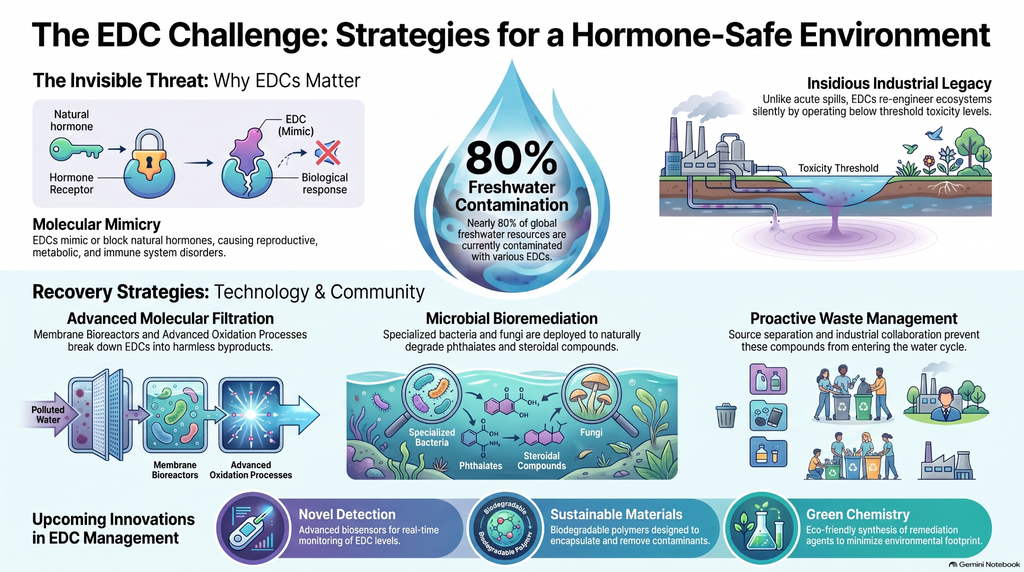
When people ask me why an atmospheric scientist spends so much energy tracking endocrine-disrupting compounds, I point to the sheer connectivity of our planet’s environmental systems. During my doctoral research at MIT, I spent countless hours analyzing urban air samples, watching how airborne pollutants don’t simply vanish into the ether—they settle into urban soils, wash into municipal runoff, and infiltrate our water supplies. EDCs represent one of the most insidious threats of our industrial legacy because they operate below the threshold of immediate toxicity.
Unlike acute chemical spills that cause visible die-offs, these microscopic disruptors mimic our bodies’ most fundamental signaling molecules, silently re-engineering endocrine pathways across entire ecosystems. As someone who divides time between rigorous data modeling and grassroots environmental campaigns, I find the scale of this contamination alarming.
When I escape the city to go rock climbing or hike through natural reserves, I am constantly reminded of how fragile these ecological balances are; the pristine mountain streams we admire are downstream from agricultural runoff and synthetic waste streams laden with phthalates and synthetic estrogens. We can no longer afford to treat chemical contamination and planetary health as separate crises. Understanding the molecular behavior of EDCs is the first real step toward holding our industrial infrastructure accountable and protecting biological communities that cannot speak for themselves.
Endocrine disrupting compounds (EDCs) threaten both environmental and human health, but effective removal strategies exist. Innovative technologies like membrane bioreactors and advanced oxidation processes can efficiently break down EDCs. Bioremediation using microbes, such as bacteria and fungi, shows promise in degrading these harmful compounds. Implementing strong waste management practices and community education enhances ecological safety as well. For a deeper understanding of specific policies and future innovations addressing EDCs, there’s more to explore.
KEY TAKEAWAYS
- Innovative technologies like membrane bioreactors and advanced oxidation processes effectively remove EDCs from water sources.
- Bioremediation strategies utilize diverse microbes to degrade EDCs in contaminated environments, promoting ecological safety.
- Effective waste management, including source separation and recycling programs, minimizes EDC exposure and environmental impact.
- Community involvement through clean-up initiatives raises awareness and fosters responsibility in addressing EDC sources.
- Collaborative research efforts and future innovations, such as advanced biosensors, enhance EDC monitoring and management strategies.
UNDERSTANDING ENDOCRINE DISRUPTING COMPOUNDS AND THEIR HEALTH EFFECTS
As you explore the topic of endocrine disrupting compounds (EDCs), it’s vital to recognize how these substances can interfere with hormonal functions in both humans and wildlife.
EDCs, commonly found in pesticides, plastics, and personal care products, can lead to significant health impacts. Research highlights their capacity to mimic or block hormones, resulting in hormonal disruption that affects reproductive health, metabolism, and immunity.
For instance, exposure during critical developmental periods can lead to long-term consequences, including fertility issues and developmental disorders in children. Studies have linked EDC exposure to increased risks of certain cancers and metabolic disorders, underlining the urgency of understanding these compounds.
As you consider innovative solutions to mitigate these risks, it’s necessary to prioritize strategies that effectively address EDCs, protecting both human health and ecological integrity. This understanding is a vital step toward fostering a healthier environment for future generations.
How Innovative Technologies Remove EDCS From Water
While traditional water treatment methods often fall short in removing endocrine disrupting compounds (EDCs), innovative technologies have emerged to tackle this pressing issue effectively.
Advanced filtration methods and nanotechnology applications are at the forefront of this battle, providing enhanced solutions that traditional techniques can’t match.
- Membrane Bioreactors: Combine biological treatment with advanced filtration for superior EDC removal.
- Nanoparticle Technology: Utilizes engineered nanoparticles to capture and degrade EDCs at the molecular level.
- Advanced Oxidation Processes (AOPs): Generate hydroxyl radicals that break down EDCs into harmless byproducts.
- Activated Carbon Filtration: Enhanced with nanomaterials, it increases adsorption capacity for EDCs.
- Electrochemical Treatment: Employs electric currents to facilitate the breakdown of harmful compounds.
These innovative approaches not only improve efficacy but also complement strategies such as catalytic reduction of air pollutants, supporting broader environmental safety and cleaner ecosystems.
Bioremediation: Using Microbes to Combat EDCs
Bioremediation harnesses the power of microbes to effectively degrade endocrine disrupting compounds (EDCs) in contaminated environments. By utilizing microbial diversity, you can tap into various biodegradation pathways that transform harmful substances into less toxic compounds. This approach not only mitigates environmental impacts but also promotes ecological safety.
| Microbe Type | EDCs Targeted | Biodegradation Pathway |
| Bacteria | Phthalates | Aerobic degradation |
| Fungi | PCBs | Enzymatic breakdown |
| Algae | Hormonal disruptors | Photodegradation |
| Archaea | Heavy metals | Methanogenesis |
| Yeasts | Steroidal compounds | Fermentation pathways |
Harnessing these microbial capabilities offers innovative solutions to combat EDCs, while heavy metal immobilization in soil treatment provides another approach to sustainable environmental management. As you explore these methodologies, you’ll find that they can considerably contribute to a cleaner, safer ecosystem.
Implement Effective Waste Management to Minimize EDCs
Effective waste management plays a pivotal role in minimizing the release of endocrine disrupting compounds (EDCs) into the environment.
By implementing strategic waste reduction and recycling initiatives, you can markedly decrease EDC contamination. Here are key strategies to take into account:
- Source separation: Sort waste at the source to guarantee hazardous materials are handled properly.
- Composting: Transform organic waste to reduce landfill contributions and associated EDC leachate.
- Education and outreach: Raise awareness about the dangers of EDCs and promote responsible disposal practices.
- Innovative recycling programs: Develop initiatives that focus on recycling products containing EDCs, thereby mitigating their environmental impact.
- Collaboration with industries: Partner with businesses to establish sustainable practices that prioritize EDC reduction.
What Are the Key Policies for Controlling EDCs?
The endocrine system is known as one of the three major information transmission systems of human beings and plays a key role in regulating various functions of the body and maintaining the relative stability of the internal environment. Disorders of the endocrine system may cause disease. Many natural and synthetic compounds, endocrine-disrupting chemicals (EDCs), can alter normal endocrine function by removing or binding to endogenous hormone receptors, altering processes such as synthesis, storage, release, metabolism and transport. These so-called EDCs are a large group of emerging contaminants found in water environments and process effluents at low concentrations and are also termed “endocrine disruptors” or “environmental hormones”. According to the definition of the World Health Organization (WHO), an EDC is “an exogenous substance or mixture that can alter normal hormonal functions in humans and animals, and consequently affects the endocrine system of living organisms”. These contaminants have different classifications due to their usage or origin and effects. EDCs mainly originate from (1) pharmaceuticals; (2) personal care products; (3) pesticides such as herbicides, dicofol, dichlorodiphenyltrichloroethane (DDT) and its metabolite; (4) plastics and food preservatives; (5) hormonal agents and phytoestrogens; etc. It was reported that there are two typical EDCs in the water environment: the first class is estrogen, and the second one is endocrine-disrupting phenolic compounds. Estrogen is found at low concentrations in sewage (ng/L) but has high estrogen activity, including natural steroidal estrogens such as 17β-estradiol (E2) and the synthetic contraceptive 17α-ethynylestradiol (EE2). As for endocrine-disrupting phenolic compounds such as nonylphenol (NP) and bisphenol A (BPA), they have the characteristics of low estrogenic activity, but their concentration in wastewater is relatively high, reaching micrograms per liter.
To effectively control endocrine disrupting compounds (EDCs), you need to understand the importance of robust regulatory frameworks and their implementation.
Monitoring and assessment programs play a vital role in tracking EDC levels and their impacts on public health.
Additionally, raising public awareness through targeted campaigns can empower communities to advocate for safer practices and policies.
Regulatory Frameworks Implementation
Endocrine-disrupting chemicals (EDCs) are natural or human-made chemicals that may mimic, block, or interfere with the body’s hormones, which are part of the endocrine system. These chemicals are associated with a wide array of health issues.
While the presence of endocrine disrupting compounds (EDCs) poses significant risks to human health and ecosystems, regulatory frameworks are vital for mitigating these dangers.
You should understand key policies that drive regulatory compliance and enhance policy effectiveness:
- Establishment of risk assessment protocols
- Implementation of stringent chemical testing requirements
- Promotion of alternative substances to reduce EDC reliance
- Development of public awareness campaigns to inform stakeholders
- Collaboration between governments and industries for sustainable practices
These components collectively guarantee that EDCs are effectively managed.
Monitoring and Assessment Programs
Given the pervasive nature of endocrine disrupting compounds (EDCs), implementing robust monitoring and assessment programs is essential for effective control. These programs rely on precise data collection and trend analysis to identify contamination sources and track EDC levels over time.
| Key Components | Description |
| Data Collection | Systematic gathering of EDC data |
| Trend Analysis | Identifying patterns in EDC exposure |
| Risk Assessment | Evaluating potential ecological impacts |
| Regulatory Compliance | Ensuring adherence to safety standards |
Public Awareness Campaigns
Public awareness campaigns play an essential role in addressing the risks associated with endocrine disrupting compounds (EDCs), as they empower individuals and communities to make informed decisions about their exposure.
Effective public outreach can greatly reduce EDC-related health issues by providing essential knowledge through engaging awareness materials.
- Highlight the dangers of EDCs in everyday products
- Promote eco friendly products as safer alternatives to common household items.
- Educate on the importance of proper disposal of hazardous materials
- Share success stories from communities reducing EDC exposure
- Encourage participation in local initiatives targeting pollution control

COMMUNITY ENGAGEMENT FOR EDC AWARENESS AND SAFETY
Looking at modern remediation technologies, I see both immense engineering promise and the clear limits of relying solely on end-of-pipe solutions. In our lab work, seeing microbial consortia and advanced oxidation break down complex aromatic rings feels revolutionary. We are observing genuine breakthroughs—whether harnessing biochar-augmented bacterial systems to lock down heavy metals or deploying targeted microbes to degrade persistent phthalates. Yet, standing before parliamentary committees and climate assemblies to advocate for chemical regulation, I always deliver an uncomfortable truth: technological filtration cannot clean up after an economy designed around endless petrochemical production.
It is exhilarating from an academic standpoint to study how engineered biosensors and electrokinetic stabilization can remediate compromised sites. But relying on high-tech bioremediation while synthetic phenols and nonylphenols continue pouring into waterways at microgram levels is akin to mopping the floor while leaving the faucet running wide open. Regulatory inertia often stems from treating these compounds as isolated industrial byproducts rather than systemic urban contaminants.
True ecological safety requires pairing microbial biotechnology with aggressive policy mandates—specifically phase-outs, extended producer responsibility, and stringent water quality thresholds. Our technological toolkit gives us the ability to heal damaged waterways, but only decisive policy interventions will prevent them from becoming toxic reservoirs in the first place.
Community engagement is vital for raising awareness about endocrine disrupting compounds (EDCs) and promoting safety.
Educational workshops and seminars can equip you with essential knowledge, while community clean-up initiatives foster a collective responsibility for environmental health.
Collaborative research projects further enhance understanding and empower you to advocate for effective solutions.
Educational Workshops and Seminars
How can we effectively raise awareness about endocrine disrupting compounds (EDCs) within our neighborhoods? One innovative approach is through educational workshops and seminars that engage community members.
These events can take various workshop formats and cover essential seminar topics, fostering a deeper understanding of EDCs.
- Interactive demonstrations on EDC sources
- Expert panels discussing health impacts
- DIY strategies for reducing EDC exposure
- Q&A sessions to address community concerns
- Resource distribution for ongoing education
Community Clean-Up Initiatives
Engaging in community clean-up initiatives serves as an effective method to raise awareness about endocrine disrupting compounds (EDCs) while simultaneously enhancing local environments.
By participating in these activities, you foster community involvement, encouraging residents to understand the sources and impacts of EDCs. Collaborating with local partnerships, such as schools, businesses, and environmental organizations, amplifies the reach and effectiveness of these initiatives.
Evidence shows that cleaner public spaces not only reduce EDC exposure but also promote a sense of ownership and responsibility among community members. Additionally, these initiatives can spark innovative solutions to environmental challenges, driving ongoing discussions about safety and sustainability.
Together, you can create informed communities that actively participate in safeguarding ecological health.
Collaborative Research Projects
Endocrine-disrupting chemicals (EDCs) are substances in the environment (air, soil, or water supply), food sources, personal care products, and manufactured products that interfere with the normal function of your body’s endocrine system. Since EDCs come from many different sources, people are exposed in several ways, including the air we breathe, the food we eat, and the water we drink. EDCs also can enter the body through the skin.
While awareness of endocrine disrupting compounds (EDCs) is essential, collaborative research projects can greatly enhance community engagement and understanding of these environmental hazards.
By pooling resources and expertise, interdisciplinary teams can tackle EDC challenges more effectively through innovative approaches.
Consider the benefits of these collaborative efforts:
- Increased funding through collaborative funding initiatives
- Diverse perspectives leading to holistic solutions
- Enhanced public trust and participation in research
- Development of educational programs tailored for community needs
- Creation of sustainable strategies for EDC monitoring and removal
Engaging communities in these projects not only raises awareness but also fosters a sense of ownership and responsibility towards ecological safety.
Together, you can lead the charge against the impacts of EDCs in your environment.
Future Innovations and Research Directions in EDC Management
As researchers continue to uncover the pervasive effects of endocrine disrupting compounds (EDCs) on human health and the environment, innovative strategies for their management are emerging. Future innovations will likely focus on novel detection methods and the use of sustainable materials for remediation. You can expect advancements in biosensors that provide real-time monitoring of EDC levels, enabling quicker responses to contamination.
| Innovation Type | Description |
| Novel Detection | Advanced biosensors for real-time EDC monitoring. |
| Sustainable Materials | Biodegradable polymers to encapsulate and remove EDCs. |
| Green Chemistry | Eco-friendly methods to synthesize effective remediation agents. |
| Policy Integration | Collaborative frameworks for regulating EDCs through technology adoption. |

RELATED STUDIES ABOUT ENDOCRINE DISRUPTING COMPOUNDS ENVIRONMENTAL REMOVAL
In summary, addressing endocrine disrupting compounds (EDCs) is essential for both environmental health and human safety. Did you know that nearly 80% of the world’s freshwater resources are contaminated with various EDCs? By leveraging innovative technologies, bioremediation, and effective waste management, we can greatly reduce these harmful substances. Engaging communities and implementing robust policies will further enhance our efforts. Together, we can create a safer ecosystem and safeguard future generations from the adverse effects of EDC exposure.
Synergistic electrokinetic biochar remediation for heavy metal immobilization and agroecological treatment of contaminated soils
This study evaluates a sequential remediation approach combining electrokinetic (EK) treatment and rice husk biochar augmentation to immobilize heavy metals (Cd, Pb, Cu, Zn) and restore soil biological productivity across three distinct arid soil types in Kazakhstan: Chernozem, Light Chestnut soil, and Light Gray soil.
Sequential Remediation Strategy
- Phase 1 (Electrokinetic Transport): Contaminated soils were treated under a direct current electric field of 30 V for 12 hours using inert graphite electrodes and 0.01 M citric acid as a chelating electrolyte to induce electromigration and electroosmotic mobilization of mobile metal cations toward the cathode.
- Phase 2 (Biochar Augmentation): Slow-pyrolysis rice husk biochar (produced at 450 deg C for 8 hours) was incorporated into treated soils at dosages of 0, 15, 25, and 35 t/ha to permanently stabilize remaining and mobilized metal ions via surface complexation (-COOH, -OH groups), ion exchange, and precipitation.
- Phase 3 (Phytomelioration Assessment): A multi-species seed blend (Bromus inermis, Elymus cristatum, Onobrychis viciifolia, Trifolium repens) was cultivated under controlled conditions to assess toxicity alleviation, plant emergence, and biomass recovery.
Heavy Metal Immobilization & Soil-Specific Dynamics
- Synergistic Efficiency: EK treatment alone diminished mobile metal fractions by 20% to 60%, whereas the combined EK + biochar system enhanced immobilization efficiency to 60% to 95%.
- Metal-Specific Reductions: The most pronounced mobile-fraction immobilization occurred for Cu (61% to 95%) and Zn (76% to 80% in Light Gray and Chernozem soils; up to 87.9% in Light Chestnut soil), while mobile Pb and Cd were reduced by 65% to 80%.
- Soil Typology Influence: Chernozem exhibited the highest baseline buffering capacity, organic matter content (4.11% humus), and cation exchange capacity, driving rapid baseline immobilization that reached peak mobile Cu reduction (95.2% at 35 t/ha). In low-organic Light Gray soil (0.65% humus) and Light Chestnut soil (2.40% humus), metal immobilization responded in a clear, proportional, dose-dependent manner across all tested application rates.
- Statistical Significance: Multifactorial ANOVA confirmed that biochar dosage, soil type, and contamination severity exerted a statistically significant impact on all parameters (p < 0.001; eta-squared = 0.75 to 0.93), with Tukey’s HSD test confirming significant differences across all biochar application levels.
Agroecological Recovery & Phytomelioration
- Toxicity Alleviation: Unamended control soils with severe contamination exhibited near-complete inhibition of plant growth (0% survival at high pollution levels).
- Biomass & Yield Recovery: Sequential EK + biochar treatment triggered a 3- to 10-fold increase in plant numbers and a 2- to 5-fold increase in plant height across all soil types.
- Productivity Index (PI): The integral Productivity Index (plant number multiplied by plant height) peaked between 7000 and 7500 in amended Chernozem soils. Cereals displayed the highest absolute productivity surge, while legumes demonstrated consistent recovery, confirming substantial alleviation of heavy metal phytotoxicity.
Combining electrokinetic mobilization with post-treatment biochar stabilization provides a practical, scalable engineering framework for decontaminating fine-textured, low-permeability soils and recovering agricultural land in arid and anthropogenically degraded regions.
| REFERENCE: Altynbek Kazez, Murat Toktar, Kalampyr Bexeitova, Ulan Zhantikeyev, Jechan Lee, Seitkhan Azat, Synergistic electrokinetic biochar remediation for heavy metal immobilization and agroecological treatment of contaminated soils, Carbon Trends, Volume 23, 2026, 100659, ISSN 2667-0569, https://doi.org/10.1016/j.cartre.2026.100659. (https://www.sciencedirect.com/science/article/pii/S266705692600057X) |
Synergistic effect of biochar-immobilized plant growth-promoting bacterium on multi-heavy metal phytoremediation by Zinnia elegans L. in landfill soil
This study examines the role of Micrococcus yunnanensis MU1—a heavy metal-resistant, indole-3-acetic acid (IAA)-producing plant growth-promoting bacterium (PGPB)—in enhancing the growth and phytoremediation efficiency of the ornamental flowering plant Zinnia elegans L. cultivated in multi-heavy metal-contaminated municipal solid waste landfill soil. The research evaluated two bacterial delivery methods: cells immobilized on bamboo-derived biochar (BC-MY) and free cell suspensions (CS-MY), comparing them against biochar alone and uninoculated controls.
In Vitro Heavy Metal Tolerance and Root Elongation
- Exposure to increasing concentrations of cadmium (Cd), copper (Cu), and lead (Pb) severely inhibited Z. elegans root development, with phytotoxicity following the order Cd > Cu > Pb.
- Seed inoculation with M. yunnanensis alleviated metal-induced growth suppression, enhancing seedling root elongation 2.0-fold under Cd, 1.7-fold under Cu, and 1.4-fold under Pb at 25 mg/L compared to untreated controls.
Plant Growth and Rhizosphere Dynamics in Landfill Soil
- In pot experiments using landfill soil (containing 0.89 mg/kg Cd, 5.91 mg/kg Cu, and 55.05 mg/kg Pb), both BC-MY and CS-MY inoculation significantly increased root length, shoot length, and dry biomass yield relative to uninoculated and biochar-only treatments. Growth metrics did not differ significantly between BC-MY and CS-MY.
- Leaf chlorophyll content (SPAD) increased steadily over the 4-week cultivation period without significant divergence across treatments, demonstrating plant tolerance to the ambient soil metal concentrations.
- Soil microbial activity (measured via fluorescein diacetate hydrolysis) increased post-cultivation across all vegetated pots, peaking in BC-MY (1.50 ug/g/h) and CS-MY (1.23 ug/g/h) treatments, outperforming both the uninoculated control (0.88 ug/g/h) and baseline fallow soil (0.74 ug/g/h).
Heavy Metal Accumulation and Tissue Partitioning
- Metal concentrations were higher in roots than shoots across all treatments (by 2.5-fold for Cd, 1.6-fold for Cu, and 3.7-fold for Pb).
- Inoculation with BC-MY and CS-MY significantly enhanced Cd and Cu concentrations in both roots and shoots. In BC-MY plants, Cd concentrations rose 1.4-fold in roots and 1.6-fold in shoots, while Cu rose 1.4-fold in roots and 1.7-fold in shoots.
- Pb accumulation remained statistically unaffected by bacterial inoculation due to its low baseline bioavailability in the soil matrix (2.3% bioavailable vs. 11.2% for Cd) and strong root cell wall precipitation.
- Micro-X-ray fluorescence (micro-XRF) mapping confirmed spatial tissue localization, revealing dense accumulations of Pb, Cu, and Cd across root cross-sections and shoot vascular tissues.
Phytoremediation Performance and Practical Feasibility
- Both BC-MY and CS-MY significantly increased root uptake, shoot uptake, phytoextraction efficiency, and uptake efficiency for all target metals.
- Accumulation factors (AF) for Cd and Cu exceeded 1.0 in inoculated plants, and the translocation factor (TF) for Cu approached 1.0 (0.80 in BC-MY; 0.98 in CS-MY), indicating efficient phytoextraction and upward movement into harvestable tissues. Conversely, low TF values for Pb (0.25 to 0.27) confirmed root-confined phytostabilization.
- While CS-MY exhibited slightly higher shoot uptake for Cu, BC-MY delivered comparable overall performance while offering critical logistical advantages: the porous biochar carrier protects bacterial cells, simplifies handling, and extends shelf life at room temperature, making biochar-immobilized PGPB a practical formulation for field-scale ecological restoration of landfill sites.
Effect of biochars derived from plant and animal manure on heavy metal immobilization in sewage sludge during composting
This study evaluates the comparative efficacy and mechanisms of plant-derived biochar (wheat straw biochar, WSB) and animal manure-derived biochar (chicken manure biochar, CMB) for immobilizing cadmium (Cd), copper (Cu), and zinc (Zn) during a 20-day aerobic composting process of municipal sewage sludge amended with maize straw.
Physicochemical Properties and Compost Optimization
- Feedstock Discrepancies: Both biochars produced at 500 °C were alkaline, but WSB exhibited a higher pH (10.1 vs. 9.7), higher organic carbon content (67.61% vs. 8.35%), and greater cation exchange capacity (CEC; 16.1 vs. 8.2 cmol+/kg). Conversely, CMB possessed a higher specific surface area (11.26 vs. 4.28 m2/g), higher ash content (80.69% vs. 16.27%), and richer mineral phases, including calcite and whitlockite.
- Composting Parameters: Biochar amendment elevated compost pH by 0.95 to 1.37 units, driven by alkaline functional groups and ammonia absorption, while increasing CEC from 49.6 cmol+/kg (control) to 57.7 cmol+/kg (WSB) and 65.8 cmol+/kg (CMB).
- Nutrient Retention: WSB reduced total nitrogen (TN) losses during composting to 20.6% compared to 29.5% in unamended control sludge, retaining 1.72% TN in the finished compost. Total phosphorus (2.15% to 2.39%) and total potassium (2.51% to 2.54%) were enriched across both biochar treatments, optimizing the agronomic profile of the final compost product.
Heavy Metal Fractionation and Redistribution
- Chemical Speciation Shifts: Tessier sequential extraction revealed that 20 days of composting with biochar shifted target metals from bioavailable exchangeable (F1) and carbonate-bound (F2) pools toward stable organic-bound (F4) and residual (F5) fractions.
- Cadmium Passivation: The residual fraction (F5) of Cd increased by 334.8% in the WSB-amended compost (C1) and by 20.5% in the CMB treatment (C2), while exchangeable Cd (F1) dropped by 67.3% and 76.9%, respectively. Soft-acid Cd2+ formed strong covalent coordination with soft-base functional groups on the biochar surface.
- Copper and Zinc Stabilization: Residual Cu fractions rose by 172.1% in WSB-treated compost, aided by high aromaticity and pi-electron coordination, compared to 36.8% in CMB. For Zn, the most abundant metal in the sludge, exchangeable F1 dropped by 93.8% (WSB) and 96.7% (CMB), while stable residual F5 increased by up to 89.1%.
Environmental Risk and Mechanistic Pathways
- Risk Assessment Code (RAC): Both biochar amendments successfully downgraded Cd from medium environmental risk (18.1% in raw sludge) to low risk (9.0% with WSB; 9.7% with CMB). Zn was downgraded from high risk (31.2%) to medium risk (28.0% with WSB; 20.0% with CMB). Cu maintained low-risk status throughout the process (4.4% to 6.1%).
- Core Immobilization Mechanisms: Metal passivation was driven indirectly by biochar-induced pH elevation (favoring oxide and hydroxide precipitation) and increased CEC, and directly through cation exchange with K+, Ca2+, and Mg2+, surface complexation with phenolic and carboxyl groups, and mineral precipitation with carbonates and phosphates.
- Feedstock Superiority: Wheat straw biochar outperformed chicken manure biochar in converting labile metal fractions into stable residual forms, establishing crop residue biochar as an effective, sustainable amendment for municipal sludge valorization.
| REFERENCE: Weici Quan, Jiawen Zhang, Yuxi Wu, Yiwei Gong, Kaiming Yang, Lu Li, Jin Gao, Kai Yang, Hongguang Cheng, Effect of biochars derived from plant and animal manure on heavy metal immobilization in sewage sludge during composting, Environmental Technology & Innovation, Volume 41, 2026, 104791, ISSN 2352-1864, https://doi.org/10.1016/j.eti.2026.104791. (https://www.sciencedirect.com/science/article/pii/S2352186426000489) |
CONCLUSION
Whenever I set up my easel in a quiet reserve to paint landscapes after weeks of climate advocacy, I am struck by the stark contrast between ecological resilience and human complacency. Nature possesses an astonishing capacity to regenerate, provided we stop overwhelming its self-cleansing mechanisms. The scientific consensus around endocrine disruptors is no longer speculative; the empirical evidence tracking their reproductive, metabolic, and immunological tolls across species is irrefutable.
Addressing this crisis demands an integrated strategy that bridges the divide between specialized laboratory research and community mobilization. We need urban planners who integrate passive bioremediation zones, regulatory bodies willing to set hard legal caps on synthetic estrogens and industrial plasticizers, and engaged citizens who hold municipal systems accountable. Clean water and endocrine integrity should never be negotiated as privileges of geographic luck or wealth.
Defending our waterways from pervasive chemical burdens is a direct continuation of the broader fight for climate and environmental justice. As scientists, our data must serve as an active catalyst for public empowerment, moving communities from passive concern to coordinated action. The solutions outlined here prove that technical remedies exist; what remains is gathering the collective, uncompromising political will to put them into practice and safeguard our living ecosystems for generations to come.