
Whenever I look at an aquifer cross-section or monitor wellhead data, I am reminded of how easy it is to take groundwater for granted. Beneath our feet lies an invisible reservoir that millions rely on every single day for drinking, agriculture, and daily survival. Yet, throughout my fifteen years working in water systems and hydrological research, few contaminants have challenged our profession quite like per- and polyfluoroalkyl substances (PFAS).
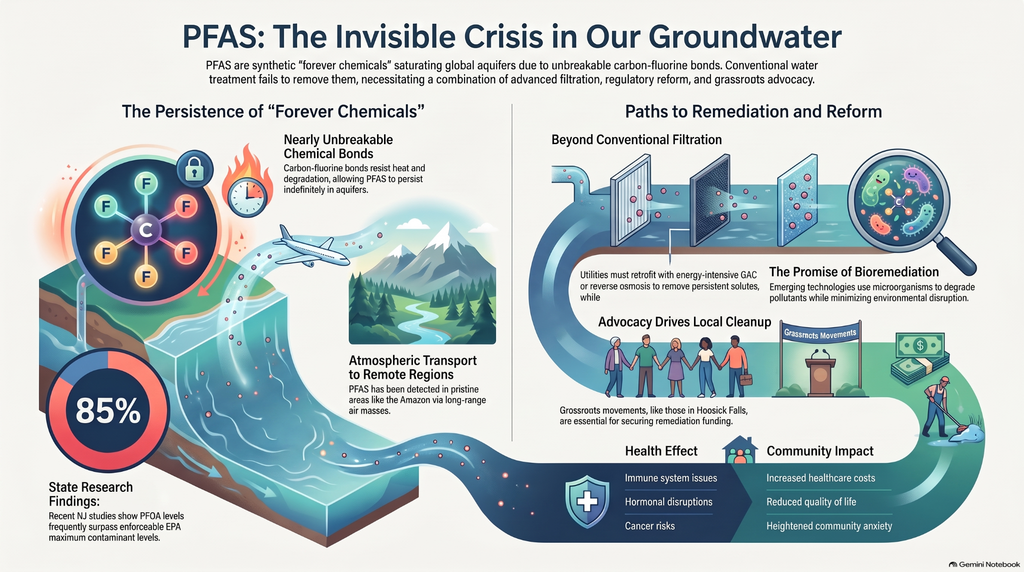
These synthetic compounds were engineered to resist heat, grease, and degradation, but that exact structural brilliance—anchored by nearly unbreakable carbon-fluorine bonds—has turned them into an environmental nightmare. When rain falls or surface runoff percolates through the soil, it does not leave synthetic pollution behind; instead, it slowly carries these persistent solutes deep into unconfined aquifers where communities draw municipal tap water. We are not merely looking at isolated industrial spill sites anymore.
From urban stormwater and sewer overflows to atmospheric deposition that reaches the most remote wilderness on the planet, forever chemicals have thoroughly penetrated the global hydrological cycle. Solving this problem is not just about measuring parts per trillion in a laboratory flask. It is about recognizing that clean, safe water is a finite baseline for human dignity, and letting persistent contaminants saturate our deep water tables is a hydrogeological debt our communities cannot afford to carry.
The growing crisis of PFAS, known as “forever chemicals,” is contaminating groundwater supplies worldwide, presenting serious health risks. These synthetic compounds accumulate, causing issues like liver damage, immune dysfunction, and reproductive problems. Vulnerable communities face heightened challenges due to limited resources and increased healthcare costs. Regulatory frameworks struggle to keep pace with scientific understanding, leaving significant gaps. Innovative remediation and grassroots advocacy are essential for effective change. Explore the ways communities can protect their water supplies and drive reform.
KEY TAKEAWAYS
- PFAS contamination in groundwater poses severe health risks, including liver damage, immune dysfunction, and increased cancer rates.
- Communities with limited resources face heightened health disparities due to prolonged exposure to PFAS in drinking water.
- Regulatory frameworks often fail to keep pace with scientific findings, resulting in inconsistent policies and enforcement regarding PFAS.
- Innovative remediation technologies, such as bioremediation and advanced filtration, offer promising solutions to address PFAS contamination in groundwater.
- Grassroots movements and community engagement are essential for advocating stricter regulations and ensuring cleaner water supplies.
WHAT ARE FOREVER CHEMICALS (PFAS)?
Potentially toxic chemicals called PFAS (perfluoroalkyl and polyfluoroalkyl substances) are found in surface and groundwaters around the world at levels much higher than many international regulators allow, a new study found. Called “forever chemicals” because they fail to break down fully in the environment, PFAS have been used since the 1950s to make consumer products nonstick, oil- and water-repellent and resistant to temperature change.
Forever chemicals, scientifically known as per- and polyfluoroalkyl substances (PFAS), are a group of synthetic compounds that resist degradation in the environment and the human body.
You’ll find PFAS in a variety of everyday products, making them pervasive in our lives. Common PFAS sources include non-stick cookware, water-repellent fabrics, and firefighting foam. Their unique chemical properties contribute to their longevity, but this persistence raises significant environmental concerns.
As awareness of PFAS contamination grows, so does the urgency for viable PFAS alternatives. Innovations in materials science are leading to the development of safer substitutes that don’t compromise performance while minimizing environmental impact.
For instance, bio-based coatings and natural fibers are emerging as promising options. Understanding PFAS and their sources empowers you to make informed choices about eco friendly products and alternatives, ultimately contributing to a healthier ecosystem and sustainable future. Understanding PFAS and their sources empowers you to make informed choices about alternatives, ultimately contributing to a healthier ecosystem and sustainable future.
What Are the Health Risks of PFAS Exposure?
Exposure to PFAS can pose significant health risks, impacting various systems within the body. Research indicates that long-term exposure to these chemicals is linked to serious health concerns, including liver damage, immune system dysfunction, and certain cancers.
PFAS effects can disrupt hormonal balance, leading to reproductive issues and developmental delays in children. Studies also show a correlation between PFAS exposure and increased cholesterol levels, which can heighten cardiovascular risk.
As you consider the implications of PFAS in your environment, it’s vital to understand that even low levels of these substances can accumulate over time, exacerbating health risks.
The persistence of PFAS in groundwater further complicates the issue,as it means that exposure can be both prolonged and widespread. PFAS contamination in drinking water can increase the risk of long-term exposure, making regular water-quality monitoring and effective treatment especially important for affected communities.
Global Case Studies: How PFAS Affects Communities
Rain and water in ponds and lakes slowly seeps into the soil, moving through minute cracks to refill underground aquifers. Per- and polyfluoroalkyl substances (PFAS), often described as forever chemicals, can tag along into groundwater that’s later removed for drinking. Researchers in ACS’ Environmental Science & Technology Letters analyzed water from over 100 wells in Denmark for one particularly persistent PFAS: trifluoroacetate. They report steadily increasing levels of the forever chemical in recent decades.
PFAS contamination has significant health impacts on residents in affected areas, leading to various long-term health complications.
Communities worldwide are grappling with the challenge of remediation efforts to restore their water supplies.
Understanding these case studies reveals the urgent need for effective strategies to combat this pervasive issue.
Health Impacts on Residents
How do chemicals that linger in the environment impact your health? The presence of PFAS in groundwater poses significant health risks, particularly in communities with limited resources. Studies link these chemicals to various health disparities, affecting vulnerable populations disproportionately. Increased community awareness is crucial for addressing these issues.
| Health Effects | Community Impact |
| Immune system issues | Increased healthcare costs |
| Hormonal disruptions | Reduced quality of life |
| Cancer risks | Heightened community anxiety |
Understanding these connections helps you advocate for better environmental policies and health monitoring. By fostering discussions about PFAS awareness, you can empower your community to demand safer water supplies and protect public health from these persistent contaminants.
Contamination Remediation Efforts
While ongoing contamination from PFAS poses serious challenges, various global case studies illustrate effective remediation efforts that can restore community trust and improve water quality.
Innovative remediation techniques like activated carbon adsorption and advanced oxidation processes have shown promise in treating contaminated groundwater.
In communities across the globe, active community involvement has been vital; residents participate in decision-making and implementation of cleanup strategies, ensuring their needs are prioritized.
For instance, in Hoosick Falls, New York, local advocacy led to successful remediation initiatives, demonstrating that collaborative efforts can yield significant results.
UNDERSTANDING REGULATORY CHALLENGES SURROUNDING PFAS USE
From an environmental engineering standpoint, confronting PFAS in groundwater demands complete transparency about what our current technologies can and cannot achieve. In the field, you quickly discover that standard conventional water treatment setups—such as standard aeration, sand filtration, or basic sedimentation—offer practically zero removal capability against these persistent fluorinated chains. To intercept them before they reach a consumer’s glass, utilities are forced to retrofit centralized facilities with energy-intensive, capital-heavy solutions like granular activated carbon (GAC), specialized ion-exchange resins, and high-pressure membrane systems like reverse osmosis.
While emerging research around bioremediation and advanced oxidation processes looks promising on bench-scale studies, the operational reality on the ground is stark: filtering out PFAS does not automatically destroy them; it merely concentrates them into a spent media or hazardous waste stream that still requires secure destruction. Compounding this challenge is the rapid migration of mobile, short-chain homologues like PFBA and PFPeA, which slip past traditional media far faster than legacy long-chain compounds.
Relying solely on downstream treatment at the wellhead is an unsustainable defensive posture. True groundwater protection requires tracing plumes directly back to their point sources, replacing aging collection infrastructure, eliminating toxic precursors before they reach aquifers, and deploying decentralized, low-energy barrier systems that protect vulnerable rural and municipal supplies alike.
When it comes to regulating PFAS, you’re faced with a complex landscape shaped by existing frameworks that often lag behind scientific understanding.
Enforcement challenges complicate efforts to hold industries accountable, while health impact assessments struggle to keep pace with emerging data on these chemicals.
Maneuvering through these regulatory hurdles is essential for protecting public health and ensuring clean groundwater supplies.
Current Regulatory Frameworks
As awareness of the dangers posed by per- and polyfluoroalkyl substances (PFAS) grows, steering through the current regulatory frameworks surrounding their use becomes increasingly complex.
You’ll find that various countries have developed inconsistent policies, leading to significant regulatory gaps. These gaps hinder effective management and remediation of PFAS contamination in groundwater supplies.
While some regions are beginning to implement stricter regulations, many still lack thorough guidelines, making it difficult for industries to comply.
Innovative policy reforms are essential to address these challenges, ensuring that regulations keep pace with scientific understanding.
Challenges in Enforcement
Despite the growing recognition of PFAS contamination, enforcing regulations remains a formidable challenge for authorities. You’ll find that enforcement challenges stem from a lack of standardized testing methods, insufficient funding, and the complexities of regulatory compliance. These hurdles hinder proactive measures to address PFAS pollution effectively.
| Challenge | Impact on Enforcement | Potential Solutions |
| Lack of standardized methods | Inconsistent data across regions | Develop universal testing protocols |
| Insufficient funding | Limited monitoring and remediation | Increase government and private investments |
| Complex regulatory landscape | Confusion among stakeholders | Simplify regulations and processes |
| Resistance from industries | Delayed action on compliance | Foster collaboration and transparency |
| Limited public awareness | Low pressure for accountability | Enhance education and outreach initiatives |
Enhancing enforcement strategies is vital for mitigating the risks associated with PFAS.
Health Impact Assessments
The challenges in enforcing regulations around PFAS are closely linked to the complexities of conducting health impact assessments. These assessments are essential for understanding the potential risks associated with forever chemicals in groundwater supplies. However, the variability in assessment methods complicates the regulatory landscape.
- Diverse health impacts: PFAS exposure can lead to a range of health issues, necessitating thorough evaluations.
- Inconsistent methodologies: Different assessment methods can yield varying results, hindering consensus on safety levels.
- Regulatory gaps: Existing regulations often don’t account for emerging data on PFAS toxicity.
Navigating these intricacies requires innovative approaches to health impact assessments, ensuring that they accurately reflect the dangers posed by PFAS and guide effective policy-making to safeguard public health.
Innovative Solutions for PFAS Contamination
While addressing PFAS contamination in groundwater may seem intimidating, innovative solutions are emerging that offer hope for affected communities.
Bioremediation technologies, which harness the natural capacity of microorganisms to degrade pollutants, are gaining traction. These methods can effectively break down PFAS compounds, restoring groundwater quality while minimizing environmental disruption.
Advanced filtration systems also play an essential role in tackling PFAS. These systems utilize cutting-edge materials and processes, such as activated carbon, ion exchange, and water softener technologies, to remove these persistent chemicals from water supplies.
By incorporating these technologies, communities can achieve significant reductions in PFAS levels, ensuring safer drinking water.
Furthermore, ongoing research into hybrid approaches, combining bioremediation with advanced filtration, may enhance effectiveness and efficiency.
As you explore these innovative solutions, consider how they can be tailored to fit specific local contexts, paving the way for cleaner, healthier groundwater supplies and a more sustainable future.
The Future of Groundwater: Protecting Our Water Supply
PFAS are typically described as comprising a group of compounds having carbon atoms linked to each other and bonded to fluorine atoms at most, or all the carbon bonding sites. These can be classified as polymers and non-polymers.
Emerging solutions for PFAS contamination highlight the urgent need to safeguard our groundwater supplies for the future.
To tackle this crisis effectively, you must embrace sustainable practices and foster community engagement. By prioritizing these strategies, you’re not just protecting water; you’re investing in a healthier environment.
Here are some innovative approaches:
- Advanced filtration technologies that can remove PFAS from water sources.
- Public awareness campaigns that educate communities about the importance of safeguarding their groundwater.
- Collaborative efforts with local governments and organizations to create and implement effective water management policies.
How to Advocate for Change Regarding PFAS Regulation
As communities grapple with the pervasive issue of PFAS contamination, advocating for stronger regulations becomes essential for safeguarding public health and the environment.
To drive effective change, you should employ targeted advocacy strategies that resonate with lawmakers and the public. Start by educating yourself and your community about PFAS risks and the current regulatory landscape. Organize workshops or forums to foster community engagement, creating a platform for discussions that highlight local concerns.
Collaborate with environmental organizations to amplify your voice, leveraging their expertise to craft compelling arguments for stricter regulations. Engage with local officials, presenting data-driven evidence that underscores the urgency of action.
Mobilizing community members to participate in public hearings or write letters to representatives can greatly influence policy decisions. By building a grassroots movement, you can advocate effectively for change, ensuring that regulatory measures keep pace with the growing understanding of PFAS hazards.
The Growing Crisis of Forever Chemicals in Groundwater Supplies Worldwide
RELATED STUDIES ABOUT FOREVER CHEMICALS IN GROUNDWATER
In a world where we crave clean water, it’s ironic that our own creations—forever chemicals—are poisoning it. As PFAS seep into groundwater, the health risks multiply, threatening communities globally. We can’t just sit back and hope for the best. It’s time to demand robust regulations and innovative solutions. Protecting our water supply isn’t just a necessity; it’s our responsibility. If we ignore this crisis, we might as well toast to our own demise with a glass of contaminated water.
Forever legacies? Profiling historical PFAS contamination and current influence on groundwater used for drinking water
This study profiles the decadal migration and vertical transport of per- and polyfluoroalkyl substances (PFAS) in a vulnerable phreatic drinking water aquifer in the central Netherlands (near Soestduinen), using high-resolution target profiling and linear/branched isomer ratios to fingerprint historical sources.
Study Overview & Methodology:
- Field Sampling: In October 2021, researchers sampled groundwater across two multi-depth monitoring wells near known contamination sources—MW1 (closest to a former landfill, sampled across 6 depths from 33 to 131 m) and MW2 (further downgradient, sampled across 5 depths from 60 to 147 m)—one unimpacted reference well (RMW; 59 and 101 m), four shallow public drinking water pumping wells (PW1–PW4; 7 to 57 m), raw untreated water, and finished drinking water.
- Analytical Scope: Evaluated 57 target PFAS, including ultrashort-chain compounds (C2–C3), legacy perfluoroalkyl carboxylic acids (PFCAs, C4–C14), sulfonic acids (PFSAs, C4–C10), precursors (C4–C24), and branched/linear structural isomer ratios for 8 compounds using UHPLC–HRMS and HPLC-MS/MS.
- Decadal Comparison: Results were benchmarked against a 2011 baseline study (16 PFAS analytes) to evaluate 10-year subsurface plume movement.
Key Findings:
- Decadal Plume Migration and Attenuation: Over the 10-year window, the core contaminant plume migrated downward and downgradient. Shallow groundwater near the landfill (MW1 at 33–65 m) showed substantial concentration declines (dropping from a 2011 peak of 4,400 ng/L at 65 m to 736 ng/L), aided by landfill mitigation run-off ditches and drainage installed in 2014. Conversely, downgradient monitoring well MW2 exhibited marked concentration increases at deeper intervals (60, 92, and 125 m), reflecting the advancing plume toward the drinking water abstraction zone.
- Multi-Source Fingerprinting via Profiles and Isomers:
- Landfill Impact: Shallow-to-intermediate depths at MW1 (33–65 m) and most of MW2 were dominated by legacy PFCAs (PFBA, PFOA) and PFSAs, alongside cyclic PFECHS, confirming landfill leachate as the primary source.
- Military Camp Influence: At deep intervals in MW1 (89–131 m), a distinct chemical shift emerged: concentrations dropped to ~86 ng/L, PFECHS was absent, and specific compounds like PFOA, PFNA, PFBS, PFOS, and PFHxS dominated. Furthermore, branched isomers of PFOS (40–57%) and PFHxS (32–42%) were substantially higher than in shallow depths, confirming an independent, slow-moving plume originating from an adjacent former military base.
- Isomer Mobility: Branched isomers were consistently enriched with increasing depth and transport distance (higher in MW2 than MW1), consistent with the higher environmental mobility and lower sorption of branched PFAS compared to linear forms.
- Current Status of Municipal Abstraction Wells:
- The main landfill and military plumes have not yet broken through into the operational drinking water pumping wells (predicted travel times range from 50 to 100 years, with historical estimates projecting potential breakthrough around 2026).
- Most pumping wells (PW1, PW3, PW4) showed low total PFAS concentrations dominated by trifluoroacetic acid (TFA, 25–70 ng/L), consistent with ambient atmospheric deposition.
- However, pumping well PW2 exhibited an unexpected contamination profile enriched in PFPeA, PFHxA, and 6:2 fluorotelomer sulfonate (6:2 FTS at 7.19 ng/L), indicating a separate, localized, and currently unidentified contamination source (e.g., AFFF use or industrial discharge).
- Finished Drinking Water Safety: Total concentrations of four EU-regulated critical PFAS (sum of 4 PFAS: PFOA, PFOS, PFHxS, PFNA) in finished water were 1.89 ng/L, below the European Food Safety Authority (EFSA) guidance threshold equivalent of 3.7 ng/L. Standard conventional aeration treatment provided no removal of PFAS.
Core Implications:
- Routine Profiling Beyond Legacy Analytes: Regulatory monitoring must expand beyond standard PFCAs and PFSAs to include ultrashort-chain compounds, emerging precursors (e.g., 6:2 FTS), and isomer patterns to pinpoint distinct point sources and track complex groundwater plumes.
- Proactive Wellfield Protection: Because natural subsurface attenuation cannot eliminate persistent PFAS and plume breakthrough threatens abstraction wells over multi-decade horizons, water utilities must maintain regular early-warning perimeter screening to plan targeted remediation or advanced treatment (e.g., activated carbon or ion exchange) before contamination reaches drinking water supply taps.
| REFERENCE: Mohammad Sadia, Marlene Kunz, Thomas ter Laak, Martin De Jonge, Merijn Schriks, Annemarie P. van Wezel, Forever legacies? Profiling historical PFAS contamination and current influence on groundwater used for drinking water, Science of The Total Environment, Volume 890, 2023, 164420, ISSN 0048-9697, https://doi.org/10.1016/j.scitotenv.2023.164420. (https://www.sciencedirect.com/science/article/pii/S0048969723030413) |
New Jersey’s forever chemicals crisis: A watershed-by-watershed statewide investigation
This study presents a statewide, watershed-scale investigation into the occurrence, spatial distribution, land-use drivers, and contamination sources of per- and polyfluoroalkyl substances (PFAS) across New Jersey (NJ).
Study Design & Methodology:
- Sampling Network: Evaluated groundwater quality data collected between 2020 and 2022 from 149 ambient groundwater-quality monitoring network (AGWQMN) wells across all 20 Watershed Management Areas (WMAs) and five watershed regions in New Jersey, with well depths spanning 4 to 186 feet.
- Chemical Coverage: Focused on 12 target PFAS compounds that met a greater than 3% detection threshold (PFOA, PFOS, PFNA, PFBA, PFBS, PFHxA, PFHxS, PFHpA, PFPeA, PFDA, PFPeS, and 6:2 FTS), measured via LC-MS/MS under standardized USGS/NJDEP protocols.
- Analytical & Geospatial Methods: Integrated non-parametric tests (Kruskal-Wallis, Dunn’s test, Spearman correlation), varimax-rotated principal component analysis (PCA), and GIS proximity buffer modeling (1,876 m and 2,966 m radii) across ten potential point and non-point source classes.
Key Findings:
- Broad Regulatory Exceedances: PFOA and PFOS exceeded the enforceable EPA Maximum Contaminant Level (MCL) of 4 ng/L in 85% and 50% of NJ’s WMAs, respectively. PFOA was the dominant compound statewide, accounting for 23.1% of total PFAS concentrations and detected in 67.8% of wells, followed closely by short-chain homologues (PFBA, PFHxA, PFHpA, and PFPeA, all detected in greater than 63% of wells).
- Regional & Watershed Disparities: Contamination was heavily skewed toward northern, industrialized basins. The Northeast region was the most contaminated (average total PFAS of 323 ng/L, contributing 27% of the state’s total burden), followed closely by the Raritan region (309.83 ng/L; 25.9%), whereas the Northwest was the least impacted (96.36 ng/L; 6.0%). At the watershed level, Arthur Kill (AK) had the highest average total PFAS concentration (186.61 ng/L; 15.9% of statewide load), while Assiscunk, Crosswicks, and Doctors (ACD) was the least threatened (18.63 ng/L; 1.6%).
- Leading Contamination Sources: Proximity and PCA source apportionments identified combined sewer overflows (CSOs) as the single most influential driver of PFAS groundwater contamination statewide, outranking airports, landfills, Superfund sites, and hazardous waste facilities. CSOs and aging wastewater networks carry high loads of consumer and industrial PFAS-laden runoff directly into vulnerable aquifers.
- Hydrogeology & Land Use Vulnerability: Urbanized land use was the primary driver of elevated PFAS concentrations, particularly for carboxylate species and short-chain compounds. High-risk wells were predominantly completed in shallow, unconfined stratified drift and fractured Passaic formation aquifers, which provide minimal geochemical retardation against mobile fluorinated solutes. Agricultural areas showed elevated PFNA and PFDA linked to historical biosolid applications and pesticide formulations.
Policy & Management Implications:
- Prioritize Sewer Infrastructure Upgrades: Water resource managers must target capital improvements and monitoring at combined sewer outfalls and aging collection systems, which represent the largest conduits of PFAS to subsurface drinking water supplies.
- Adopt Watershed-Specific Action Plans: Uniform statewide mitigation is inefficient; resources should be concentrated in high-risk basins (Arthur Kill, Upper Passaic, Rancocas) and unconfined aquifers.
- Address Short-Chain Replacements: The widespread prevalence of short-chain compounds (PFBA, PFPeA, PFHxA, PFBS) highlights that industrial substitution strategies have merely shifted the chemical profile rather than eliminated groundwater contamination, warranting broader class-based standards.
| REFERENCE: Odera R. Umeh, Bebe Alfred Dembele, Tinotenda Muchenje, Eziafakaego M. Ibo, Chima I. Eke, Duke U. Ophori, New Jersey’s forever chemicals crisis: A watershed-by-watershed statewide investigation, Journal of Hazardous Materials: Organics, Volume 3, 2026, 100031, ISSN 3051-0597, https://doi.org/10.1016/j.hazmo.2026.100031. (https://www.sciencedirect.com/science/article/pii/S3051059726000217) |
Occurrence of a “forever chemical” in the atmosphere above pristine Amazon Forest
This study presents the first atmospheric detection of perfluorooctanoic acid (PFOA)—a persistent, bioaccumulative “forever chemical”—in the atmosphere above the pristine Amazon rainforest, providing direct evidence of long-range transport into remote continental ecosystems.
Study Overview & Methodology:
- Sampling Platform & Setting: Total suspended particulate (TSP) samples were collected at the Amazonian Tall Tower Observatory (ATTO), located in central Amazonia approximately 150 km northeast of Manaus, Brazil, and over 800 km from coastal marine environments.
- Vertical Profile Design: Samples were gathered over 24-hour intervals using parallel high-volume aerosol samplers operating at 1,000 L/min across two distinct measurement heights: 42 m (immediately above the forest canopy) and 320 m (well above the surface roughness layer). Sampling was conducted between May 7 and May 21, 2022, during the historically clean wet season.
- Analytical Screening: Aerosol extracts were screened for 17 target PFAS compounds and telomer sulfonates using online solid-phase extraction paired with ultra-high-performance liquid chromatography and high-resolution Orbitrap mass spectrometry (UHPLC-HRMS), alongside direct-infusion screening for the volatile precursor 8:2 fluorotelomer alcohol (8:2 FTOH).
Key Findings:
- Atmospheric Detection of PFOA: PFOA was the only target analyte detected consistently above the method limit of detection, with 24-hour average concentrations ranging from 0.01 to 2.0 pg/m³. These levels align with observations from other remote baseline environments, such as the Arctic, but unexpectedly exceeded recent urban PM2.5 measurements from Curitiba, Brazil.
- Strong Vertical Concentration Gradient: PFOA concentrations were consistently higher at 320 m than at 42 m. Because pollutants emitted locally typically decrease in concentration with altitude due to surface dispersion, this inverted gradient demonstrates that the measured PFOA did not originate from local forest or tower sources, but rather arrived via elevated, long-range air masses.
- Source Attribution via Southerly Air Masses: Significant spikes in atmospheric PFOA (observed between May 17 and May 21) directly coincided with a regional cold-air intrusion (Friagem event) that altered regional winds from the typical northeast/east trajectory to southerly flows passing over the urban and industrial center of Manaus. Manaus hosts chemical and manufacturing industries known historically to utilize PFAS.
- Evaluation of Alternative Transport Pathways: Because the site is situated hundreds of kilometers inland, marine sea-spray aerosolization was ruled out as the primary vector. While historical use of firefighting foams (AFFF) or flame retardants in Amazonian wildfire management remains a possible contributor, backward trajectory and fire-monitoring data indicate that long-range advection of urban-industrial air pollution is the primary driver of continental atmospheric transport. Tests for the airborne precursor 8:2 FTOH yielded no conclusive detections, likely due to high volatility and analytical matrix interference.
Environmental & Policy Implications:
- Atmospheric Deposition Risks to Pristine Biota: Atmospheric PFOA has an estimated depositional lifetime of 10 to 12 days. Atmospheric transport and subsequent wet/dry deposition threaten to introduce toxic, endocrine-disrupting fluorinated pollutants into remote forest canopies, soil, and aquatic food webs, posing ecotoxicological risks to sensitive Amazonian biodiversity and indigenous communities.
- Beyond Coastal and Ingestion Regimes: These findings challenge the paradigm that remote PFAS occurrence is limited to marine/polar coasts or primary water ingestion routes, underscoring the urgent need to expand atmospheric monitoring and incorporate airborne PFAS transport into global chemical conventions and air quality frameworks.
| REFERENCE: Ivan Kourtchev, Bruna G. Sebben, Sebastian Brill, Cybelli, G.G. Barbosa, Bettina Weber, Rosaria R. Ferreira, Flávio Augusto Farias D’Oliveira, Cléo Q. Dias-Junior, Olalekan A.M. Popoola, Jonathan Williams, Christopher Pöhlker, Ricardo H.M. Godoi, Occurrence of a “forever chemical” in the atmosphere above pristine Amazon Forest, Science of The Total Environment, Volume 944, 2024, 173918, ISSN 0048-9697, https://doi.org/10.1016/j.scitotenv.2024.173918. (https://www.sciencedirect.com/science/article/pii/S004896972404066X) |
CONCLUSION
Standing beside freshwater lakes or examining groundwater testing logs, the urgency of this crisis always becomes personal. We can no longer treat our subsurface aquifers as out-of-sight dumping grounds where nature will magically dilute synthetic waste over time. The peer-reviewed science has made it overwhelmingly clear: PFAS plumes can migrate across deep geological strata for decades, moving quietly toward public drinking wells while regulatory frameworks and testing standards struggle to catch up. Shifting the chemical formulation from one fluorinated chain to another without class-based oversight is simply passing the burden down to the next generation of engineers, operators, and families.
Protecting our global water supply will not happen through isolated lab breakthroughs alone. It requires an uncompromising convergence of aggressive source-water policies, robust utility funding, and grassroots advocacy from the very communities whose health is on the line. Every municipal water manager, civil planner, student, and resident has a stake in the outcome.
Clean, secure drinking water is neither a luxury nor an insurmountable engineering hurdle—it is our fundamental collective responsibility. We have the diagnostic tools and the hydrological knowledge to protect our aquifers; what we must summon now is the shared resolve to safeguard them before our most vital water sources are irreversibly compromised.