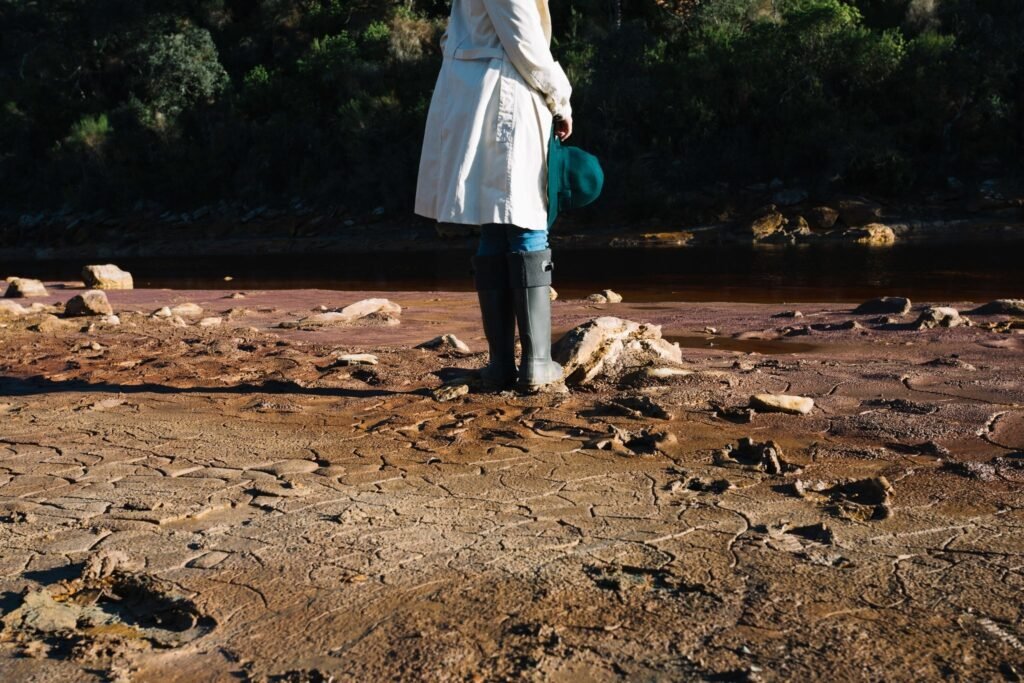
When most people think about food security, they picture crop yields, weather patterns, or supermarket supply chains. As a soil specialist, my mind immediately goes deeper—straight to the living biogeochemical matrix beneath our feet. Heavy metal contamination, particularly arsenic pollution, is one of the most silent yet pervasive threats to our food systems. It doesn’t present itself with obvious signs at the surface; instead, it operates invisibly through complex root transport mechanisms and soil solution dynamics.
Working in environmental science, I’ve seen how easy it is to treat soil as an inert medium rather than a dynamic ecosystem tied directly to human health. Arsenic enters our soils through both natural geological processes and heavy human activity—ranging from historical industrial smelting to legacy pesticides. Once present, its behavior shifts dramatically depending on moisture, pH, and redox conditions. Rice, for example, is uniquely vulnerable due to flooded cultivation practices that convert arsenic into its highly soluble, toxic inorganic form.
For me, addressing arsenic soil pollution isn’t just an abstract scientific exercise. Healthy soil is fundamentally a social issue. When vulnerable agricultural communities rely on contaminated land, food safety and long-term public health are directly compromised. Bridging the gap between peer-reviewed biogeochemistry and practical, community-level awareness is the first crucial step toward protecting our food chain.
Arsenic soil pollution enters the food chain primarily through crop uptake, as plants absorb dissolved arsenic from contaminated soil. Industrial emissions, historical mining, and the use of arsenic-laden fertilizers contribute to soil contamination. Certain crops, particularly rice, are more susceptible due to their flooded growing conditions. Chronic exposure to arsenic in food can lead to serious health risks, including cancer. If you want to uncover effective strategies for reducing arsenic levels, there’s more to explore.
KEY TAKEAWAYS
- Arsenic in soil is absorbed by crops through root uptake, particularly in flooded conditions like those affecting rice.
- Soil moisture dissolves arsenic particles, making them available for plant absorption, with factors like pH influencing uptake.
- Certain crops, especially rice and root vegetables, are more prone to high arsenic concentrations due to their growing conditions.
- Accumulated arsenic in plant tissues can enter the human food chain, posing health risks like cancer and cardiovascular diseases.
- Regular soil testing and innovative farming practices are essential to manage arsenic levels and protect food safety.
WHAT CAUSES ARSENIC SOIL CONTAMINATION?
Arsenic is a natural component of the earth’s crust and is widely distributed throughout the environment in the air, water and land. It is highly toxic in its inorganic form.
Although arsenic naturally occurs in the Earth’s crust, its concentration in soil can increase due to various human activities. Key sources of contamination include industrial activities, where arsenic is often released as a byproduct of smelting and other processes. This release can lead to significant soil accumulation, affecting nearby agricultural lands.
Additionally, specific agricultural practices, such as the use of arsenic-laden pesticides and fertilizers, further exacerbate soil contamination. Historical mining operations also play a vital role; abandoned mines frequently leach arsenic into surrounding soils, creating long-term pollution hotspots.
The cumulative impact of these practices can lead to elevated arsenic levels in the soil, alongside lead contamination in soil, which poses serious implications for crop health and food safety. Understanding these sources is essential for developing innovative remediation strategies and improving agricultural sustainability, ensuring that soil health is prioritized for both current and future generations.
Health Risks of Arsenic in Our Food Supply
As arsenic levels in soil rise due to contamination, the health risks associated with its presence in our food supply become increasingly concerning.
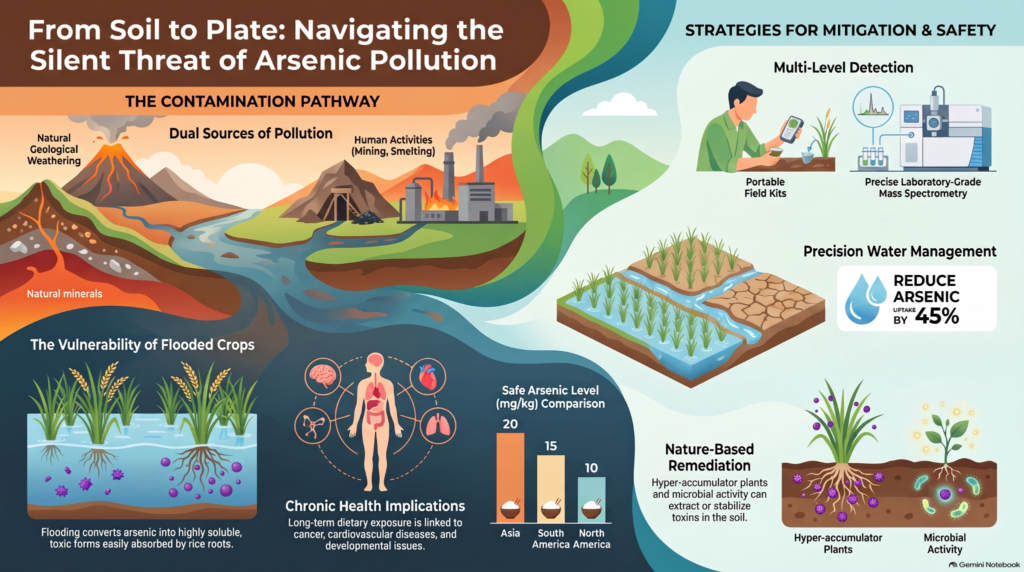
Studies indicate that chronic exposure to arsenic can lead to serious health implications, including cancer, cardiovascular diseases, and developmental issues. Dietary sources, particularly rice and root vegetables, often show alarming arsenic concentrations, raising red flags about their safety.
Research has revealed that arsenic can accumulate in plant tissues, making it difficult to eliminate once absorbed. Furthermore, the potential for bioaccumulation in the human body poses additional risks, especially for vulnerable populations like children and pregnant women.
Understanding these health implications is essential as you make informed dietary choices. By being aware of arsenic contamination in food, you can better navigate your nutrition and prioritize safer alternatives, thereby reducing exposure and protecting your long-term health.
Embracing innovative agricultural practices can also help mitigate these risks in the future.
How Does Arsenic Move From Soil to Crops?
Arsenic moves from contaminated soil into crops through several pathways, primarily via root uptake and soil solution. When soil particles dissolve in moisture, arsenic becomes available for plants through the soil solution. This process is influenced by soil pH, organic matter, and microbial activity, which can enhance or inhibit arsenic uptake.
As roots absorb water, they inadvertently take in arsenic, leading to crop absorption that can vary greatly among different species. Research indicates that certain crops, like rice, show higher susceptibility to arsenic uptake due to their growth in flooded conditions, which increase solubility.
Additionally, the presence of other heavy metals, such as cadmium in agricultural soil, can affect nutrient transport mechanisms within plants, potentially exacerbating the issue. Understanding these dynamics is vital for developing strategies to mitigate arsenic’s impact on food safety and crop health, fostering innovation in agricultural practices that minimize contamination.
How to Detect Arsenic in Your Food Supply?
Arsenic and its compounds occur naturally in the earth’s crust in ores and minerals. These are generally found in the environment in small amounts. Arsenic is released into the atmosphere by volcanoes as they erupt, and when rocks and minerals containing arsenic are broken down by rain and wind.
To guarantee your food supply is free from arsenic, you can utilize testing kits that are readily available on the market.
For more accurate results, consider sending samples to a laboratory for thorough analysis.
Additionally, visual inspection techniques can help identify potential contamination in crops and products.
Testing Kits Availability
While testing for arsenic in your food supply may seem intimidating, various testing kits are readily available to simplify the process. You can choose from several testing kit types, including portable field kits and laboratory-grade options.
These kits often utilize advanced detection methods, such as colorimetric analysis or inductively coupled plasma mass spectrometry (ICP-MS), ensuring reliable results. Accessibility options are increasing, with many kits available online and at local agricultural supply stores, making it easier for you to take action.
Some kits even come with user-friendly instructions and smartphone apps to streamline the testing process. By utilizing these innovative tools, you can proactively safeguard your food supply from arsenic contamination and better protect your health.
Laboratory Analysis Procedures
After evaluating the arsenic levels in your food supply using testing kits, you may want to confirm those findings through laboratory analysis.
Employing advanced laboratory techniques is essential for accurate measurement. Initially, sample preparation is key; collect representative samples and guarantee they’re free of contaminants. Techniques such as digestion, where samples are treated with acids, can effectively extract arsenic for analysis.
Following this, methods like atomic absorption spectroscopy or inductively coupled plasma mass spectrometry provide precise quantification of arsenic concentrations.
These sophisticated approaches not only validate initial findings but also reveal potential arsenic forms, which could impact health differently. Understanding these results empowers you to make informed decisions regarding your food supply and mitigate risks effectively.
Visual Inspection Techniques
Identifying arsenic in your food supply can be aided by several visual inspection techniques that highlight potential contamination.
Begin with a soil assessment, examining the color and texture of the soil. Darker, clay-rich soils often indicate higher arsenic levels.
Inspect your crops for unusual discoloration or stunted growth, which can signal arsenic uptake. Additionally, check for any visible signs of stress in plants, such as wilting or leaf burn. These symptoms may suggest that the plants are absorbing toxins from the soil.
Finally, consider the surrounding environment; proximity to industrial sites or agricultural runoff can increase contamination risk.

WHAT ARE EFFECTIVE STRATEGIES TO REDUCE ARSENIC IN FARMING?
In the lab, analyzing arsenic dynamics across varying soil horizons reveals fascinating science; in the field, it reveals a delicate balancing act. Managing arsenic is extraordinarily tricky because soil chemistry doesn’t operate in isolation. For instance, when dealing with co-contaminated agricultural land—where both arsenic and cadmium are present—fixing one problem can inadvertently trigger another. Continuous flooding reduces cadmium availability but causes inorganic arsenite levels to surge in the soil solution, making it far more bioavailable to crop roots. Conversely, drying the field immobilizes arsenic but mobilizes cadmium.
This complex duality is why rigid, single-solution approaches rarely work. Nature-based engineering and eco-friendly soil amendments offer the most sustainable path forward. By leveraging biochar, iron-manganese oxides, and targeted organic matter, we can alter the surface charges of soil particles and bind toxic metalloids before they ever reach plant tissues. Furthermore, integrating phytoremediation—using hyperaccumulator plants alongside root-colonizing beneficial microbes—allows us to restore soil naturally without destroying its organic architecture.
From home garden testing kits to advanced machine-learning spatial mapping, having accurate data empowers farmers and local growers to make targeted decisions. Whether through precision water management, strategic crop rotations, or engineered bio-amendments, engineering smart, ecological intervention directly into everyday farming practices is how we reclaim contaminated land safely and sustainably.
To effectively reduce arsenic levels in farming, implementing a combination of soil management practices and crop selection is essential.
Adopting innovative strategies can profoundly mitigate the impact of arsenic on crops. Here are some effective approaches:
- Practice organic farming: Utilize natural fertilizers, eco friendly products, and pest control methods to minimize arsenic uptake by plants.
- Implement crop rotation: Rotate crops with varying root depths to disrupt arsenic accumulation and improve soil health.
- Enhance soil testing: Regularly analyze soil for arsenic levels, allowing for targeted interventions based on data.
- Incorporate cover crops: Use cover crops to improve soil structure and reduce arsenic leaching into the food chain.
Guidelines for Safe Arsenic Levels
Arsenic is a metal element that is widely distributed in the earth’s crust (soil and rocks), air and water. Arsenic may be found as the metal element or as a compound where it is combined with other elements, such as with oxygen to form arsenic trioxide. The type of arsenic compound is important when assessing the risk to health, as some forms are less harmful than others. Inorganic arsenic is produced primarily as a by-product from copper, lead and other metal smelting processes.
When considering safe arsenic levels in soil, you need to understand the specific concentration thresholds established by various regions.
These guidelines not only help in evaluating the safety of agricultural practices but also facilitate effective monitoring of soil quality.
Safe Arsenic Concentration Levels
While guidelines for safe arsenic concentration levels can vary by region and regulatory body, understanding these limits is essential for protecting public health and the environment.
You should be aware of the following arsenic thresholds to guarantee safe consumption:
- Soil Concentration: Typically, safe levels range from 0 to 20 mg/kg, depending on local regulations.
- Drinking Water: The WHO recommends a maximum of 0.01 mg/L to minimize health risks.
- Crops: Safe levels in agricultural produce often sit below 0.1 mg/kg to prevent accumulation in the food chain.
- Long-term Exposure: Chronic exposure shouldn’t exceed defined limits to mitigate potential health issues.
Regional Guidelines Overview
Numerous regional guidelines exist to regulate safe arsenic levels, reflecting the varying environmental conditions and public health priorities across different areas. Understanding these regulations is essential for effective soil management and minimizing arsenic exposure. Below is a summary of common guidelines:
| Region | Safe Arsenic Level (mg/kg) |
| North America | 10 |
| Europe | 5 |
| Asia | 20 |
| Australia | 12 |
| South America | 15 |
These regional regulations often stem from extensive research and aim to balance agricultural productivity with health risks. By adhering to these guidelines, you can make informed decisions that protect both crops and consumer health, fostering sustainable practices in your farming operations.
Monitoring Soil Quality Standards
To guarantee safe arsenic levels in soil, monitoring quality standards is essential for effective agricultural practices. Regular soil testing and quality assessment help identify arsenic contamination, allowing you to implement necessary interventions.
Here are key components to reflect upon:
- Establish baseline arsenic levels to identify changes over time.
- Conduct soil tests regularly to monitor fluctuations in arsenic concentration.
- Utilize innovative remediation techniques to reduce arsenic levels when necessary.
- Engage with local agricultural agencies to stay updated on regulatory standards and best practices.
Future Innovations in Soil Remediation for Arsenic Pollution
As researchers explore deeper into the complexities of arsenic soil pollution, innovative strategies for remediation are emerging that promise to enhance effectiveness and efficiency. Among these, bioremediation techniques leveraging microbial activity show considerable potential. For instance, specific bacteria can metabolize arsenic, reducing its bioavailability and toxicity in the soil.
Simultaneously, phytoremediation strategies are gaining traction. Certain hyperaccumulator plants can absorb arsenic from contaminated soil, effectively extracting it through their root systems. By integrating these plant species into agricultural practices, you can’t only mitigate soil pollution but also improve soil health.
Emerging technologies, such as nanomaterials and genetically engineered plants, may further amplify these methods, offering rapid and targeted remediation solutions. By investing in these innovative approaches, you can considerably decrease arsenic levels in agricultural soils, safeguarding both crop yield and human health for the future.
RELATED STUDIES ABOUT ARSENIC SOIL POLLUTION
In understanding arsenic soil pollution, you’re not just uncovering a hidden threat; you’re peeling back layers of a complex web that connects soil, crops, and ultimately, your dinner plate. As you navigate this intricate landscape, armed with knowledge and effective strategies, you can cultivate safer farming practices. Imagine a vibrant field, flourishing without the shadow of arsenic, where healthy crops thrive, nourishing communities and securing a cleaner, brighter future for all.
A critical review of soil pollution sources and advances in the remediation of arsenic-contaminated soil
Overview & Context
Arsenic (As) is a non-essential, highly hazardous metalloid that presents severe carcinogenic risks to humans, animals, and agricultural ecosystems. Global levels of soil and water contamination have escalated due to a combination of geological weathering and intensified human activities. High-exposure regions—such as Bangladesh and parts of India (e.g., West Bengal, Bihar)—face critical public health crises where groundwater used for irrigation exceeds the World Health Organization (WHO) safety limit of 10 ug/L. This review synthesizes current knowledge on arsenic pollution sources, environmental dynamics, crop uptake, and remediation strategies.
Key Sources & Pathways of Arsenic Contamination
Arsenic enters soil and water systems through two primary pathways:
- Natural Sources: Mineral and rock weathering (e.g., arsenopyrite decomposition), volcanic activity and ash, geothermal fluid interactions, and dust storms.
- Anthropogenic Sources: Agricultural practices (pesticides, herbicides, fertilizers), industrial emissions (glass, ceramics), fossil fuel combustion, mining and smelting operations, landfill leachate, and wastewater discharge.
Exposure & Health Impacts
- Exposure Routes: Humans ingest arsenic primarily through contaminated drinking water and dietary staples (e.g., paddy rice, vegetables) irrigated with polluted water. Direct inhalation of dust or smoke near industrial/mining operations also contributes.
- Systemic Toxicity: Prolonged exposure causes severe multisystem pathologies:
- Cardiovascular System: Coronary heart disease, hypertension, and heightened risk of heart attacks.
- Respiratory System: Pulmonary diseases and elevated lung cancer risk.
- Neurological System: Central and peripheral nervous system impairment, including neuropathy, impaired motor function, and cognitive deficits.
- Gastrointestinal System: Abdominal pain, severe burning sensations in the stomach and esophagus, and gastrointestinal disturbances.
Factors Influencing Arsenic Dynamics in Soil
The mobility, toxicity, and bioaccessibility of arsenic in soil are governed by several key biogeochemical factors:
- Soil pH: In acidic soils, As binds strongly to iron and aluminum oxides, reducing mobility. High pH (alkaline) conditions promote desorption, increasing bioavailability and plant uptake.
- Redox Potential (Eh): Under oxidizing conditions, less toxic and less mobile Arsenate (As-V) predominates. Under reducing/flooded conditions (e.g., paddy fields), Arsenite (As-III) forms, which is significantly more soluble, toxic, and bioavailable.
- Soil Texture: Fine-textured clay soils retain As via adsorption, whereas coarse sandy soils facilitate leaching and transmission due to lower binding capacity.
- Iron and Aluminum Oxides: Provide primary binding surface sites (e.g., Fe2O3, Al2O3), immobilizing As through ligand exchange.
- Phosphate Levels: Phosphate ions compete directly with arsenate for adsorption sites on soil particles, displacing As into soil solution and raising uptake risks.
- Microbial Activity: Microbes drive redox transformations, volatilization, and methylation, altering As chemical species, solubility, and mobility.
Analysis of Soil Remediation Technologies
Remediation methodologies are categorized into four major approaches:
A. Physical Techniques
- Methods: Soil washing, excavation and replacement, containment/encapsulation, vitrification, and soil blending.
- Key Insights: Soil washing uses chemical agents to dissolve As, but creates secondary wastewater challenges. Vitrification uses high temperatures (>1500°C) to lock contaminants into a stable glass-like matrix. Overall, physical methods are often expensive, ecologically disruptive, and inefficient in soils with high silt/clay content.
B. Chemical Treatments
- Methods: Lime application, phosphate amendments, iron oxide additions, biochar/activated carbon, and redox manipulation.
- Key Insights: Lime increases pH to precipitate As into less soluble forms. Iron oxide additions strongly adsorb As(III) and As(V). Biochar offers a porous, cost-effective adsorption surface while enhancing soil quality. Redox manipulation shifts hazardous As(III) into less mobile As(V).
C. Biological Strategies
- Methods: Phytoremediation, mycoremediation, bioaugmentation, and rhizoremediation.
- Key Insights: Hyper-accumulating plants (such as the Chinese brake fern, Pteris vittata) extract As into shoot tissues without suffering damage. Fungi (e.g., Aspergillus, Penicillium) and bacteria (e.g., Bacillus, Geobacter) transform As via methylation, oxidation, or precipitation. These methods are cost-effective and environmentally friendly, though process rates are generally slower.
D. Innovative / Other Approaches
- Methods: Electrokinetic remediation and Permeable Reactive Barriers (PRBs).
- Key Insights: Electrokinetic technology applies electric fields to move As in fine-grained soils where conventional methods fail. Underground PRBs passively treat migrating contaminated groundwater before it contaminates surface soil.
Strategic Recommendations & Future Outlook
- Integrated Multi-Technology Approaches: Combining methods (e.g., biochar amendments alongside hyper-accumulating plants and root-colonizing rhizobacteria) optimizes remediation efficiency while improving overall soil organic matter.
- Advanced Materials & Nanotechnology: Utilizing engineered biochar, compost, and functionalized nanoparticles (NPs) can drastically increase adsorption capacity and long-term stabilization in field applications.
- Genetic Engineering: Developing transgenic crop varieties and hyper-accumulators with enhanced vacuolar sequestration capacities and metabolic tolerance will improve phytoremediation feasibility.
- Long-Term Monitoring & Policy Support: Collaborative research focusing on the soil-plant-microbe continuum is essential to bridge laboratory findings with scalable field applications and robust regulatory frameworks.
| REFERENCE: Fei He, Fukang Liu, Shehong Li, Xiaomin Mu, Qiao Han, Lian Song, Jen-How Huang, A critical review of soil pollution sources and advances in the remediation of arsenic-contaminated soil, Ecotoxicology and Environmental Safety, Volume 302, 2025, 118504, ISSN 0147-6513, https://doi.org/10.1016/j.ecoenv.2025.118504. (https://www.sciencedirect.com/science/article/pii/S0147651325008498) |
A review of research progress on prevention and control technologies for arsenic and cadmium composite pollution in paddy soil
Overview and Problem Context
Arsenic (As) and cadmium (Cd) represent two of the most prevalent potentially toxic elements (PTEs) contaminating farmland across China. Rice (Oryza sativa L.)—a primary staple crop grown on nearly 25% of China’s cultivated land—possesses a strong capacity to accumulate both metals into its edible grains. Elevated concentrations in rice pose serious threats to national food security and public health.
- Arsenic (As) Impacts: Accumulates predominantly under flooded, anaerobic conditions. Sequestered mostly in root cell walls, high concentrations (>0.8 mg/L) severely impair seed germination, nutrient uptake, and plant survival.
- Cadmium (Cd) Impacts: Exceeds safety standards in 10.3% of Chinese rice samples. Causes root cortex degradation, disruption of cellular ultrastructure, reduced plant height, and crop yield failure.
Managing As-Cd co-contamination is a major technological challenge because the biogeochemical behaviors of As and Cd in paddy soils are fundamentally opposite:
- Flooding Stage (Anaerobic / Reducing): Sulfate-reducing bacteria convert sulfate to sulfide, forming insoluble CdS, which decreases Cd mobility. However, reducing conditions convert inorganic arsenic to arsenite [As(III)], which dissolves and increases As bioavailability.
- Drying Stage (Aerobic / Oxidizing): CdS oxidizes and releases soluble Cd2+, increasing Cd bioavailability. Conversely, As(III) oxidizes to As(V) and binds strongly to iron/manganese oxides, decreasing As mobility.
Practical Control and Remediation Technologies
The study synthesizes several core field-applicable and laboratory-stage technologies designed to mitigate As and Cd uptake in rice plants:
A. Water Management
- Mechanism: Adjusts soil redox potential (Eh) and pH via controlled irrigation cycles.
- Performance & Limits: Alternating wet and dry periods can cut brown rice As content by 41%–45%, but can simultaneously increase Cd availability by over 30%. Precision water management targeting Eh = -73 mV and pH = 6.2 achieves dual stabilization, but precise field control at a large scale remains difficult.
B. In Situ Soil Passivation (Immobilization)
- Inorganic Amendments: Silicon (Si), selenium (Se), iron-manganese (Fe-Mn) oxides, and modified nano-silica. Silicon forms physical barriers and precipitates Cd2+, while Fe-Mn oxides provide positive surface charges to adsorb As anions. Nano-silica modified with mercapto groups and ferrous salts reduced soil Cd, Pb, and As bioavailabilities by 85.0%, 97.1%, and 80.1%, respectively.
- Organic Amendments: Humic acid (HA) efficacy depends on molecular weight and humic-to-fulvic acid ratios (H/F). High molecular weight HA (>1000) and H/F >= 7/3 shift Cd into organically bound, low-activity states.
- Limitations: Passivation alters metal bioavailability but does not reduce total soil pollutant load, leaving a long-term risk of secondary release.
C. Foliar Inhibitors and Resistance Agents
- Solution-Based Sprays: Direct application of Si, Se, Zn, P, and B during seedling, tillering, or flowering stages. Enhances cell wall binding and boosts antioxidant defenses. Applying Zn/Ge or Si sprays decreased grain Cd by up to 62%. However, standard ionic solutions suffer from >95% waste due to leaf waxy cuticles.
- Nanometer-Scale Solid Sprays: Engineered nanoparticles (ZnO, CuO, CeO2) adhere to leaf mesophyll and provide sustained release of active elements, avoiding the rapid wash-off or leaf-burn typical of traditional sprays.
D. Phytoremediation & Agronomic Systems
- Hyperaccumulators: Plants like Sedum alfredii (Cd) and Pteris vittata (As) extract metals into harvestable shoots.
- Intercropping & Relay Systems: Intercropping Cd-hyperaccumulating plants with high-value crops or medicinal herbs (e.g., Bletilla striata, Radix Paeoniae Alba) achieves soil cleanup while doubling agricultural income relative to traditional grain farming.
- Genetic & Microbial Synergies: Transgenic approaches (e.g., PVACR3 overexpression or miR156 regulation) and arbuscular mycorrhizal fungi (AMF) enhance plant stress tolerance and dual-metal extraction.
E. Ex Situ Engineering and Electrochemical Methods
- Soil Replacement & Deep Plowing: Replaces contaminated topsoil or dilutes it with clean subsoil (typically 15–30 cm thick). Highly effective but constrained by high costs and topsoil shortages.
- Electrokinetic Remediation: Uses direct electric currents to drive electromigration of metal ions. Cathodic buffers (e.g., citric acid) or humic/fulvic acid enhancers improve mobility, achieving up to 95% exchangeable metal extraction in controlled settings. Field implementation remains limited due to high energy consumption.
Comprehensive Evaluation of Control Technologies
- Water Management: Regulates soil Eh and pH to shift metal speciation. It is low cost and a standard agronomic practice. However, opposite As/Cd responses make dual control hard to maintain in large fields.
- Soil Passivants: Operates via adsorption, complexation, co-precipitation, and pH elevation. It is convenient, fast-acting, and suitable for large-scale field application. However, there is a risk of metal re-release and it does not remove the total heavy metal load.
- Foliar Spraying: Blocks translocation and strengthens plant cell wall binding. It is low cost with drone application and offers high inhibition efficiency. However, ionic sprays suffer from poor cuticle penetration, and nano-sprays require further safety trials.
- Phytoremediation: Utilizes plant extraction and rhizosphere microbial degradation. It is eco-friendly, restores soil health, and is sustainable. However, cleanup cycles are long, and it is rare to find single hyperaccumulators for both As & Cd.
- Electrokinetic / Leaching: Employs direct current electromigration and chemical chelation (e.g., EDTA). It provides rapid, high-efficiency removal of total metal content. However, energy and chemical costs are high, and the process disrupts soil structure and microbial ecology.
Strategic Outlook and Future Directions
- Regionally Adaptive Technology Models: Because soil types, climate, and pollution profiles vary widely across grain-producing regions, single-technology solutions are rarely sufficient. Integrated, region-specific strategies combining low-accumulation rice varieties, passivators, and precision water management are required.
- Advanced Multi-Target Materials: Future research should focus on modifying composite and nano-materials (e.g., sulfur-iron-silica biochars) that can simultaneously immobilize both cationic metals (Cd2+) and anionic species (AsO4 3-) across varying redox states.
- Optimized Nanotechnology Sprays: Development must prioritize enhancing the adhesion and slow-release capabilities of foliar nano-inhibitors while assessing their long-term environmental safety and eco-toxicity.
- Economic-Agronomic Synergies: Expanding intercropping and crop-rotation systems with economic non-food crops will allow continuous soil remediation without sacrificing farmland productivity or farmer livelihoods.
| REFERENCE: Hao Cui, Bingbing Chen, Fan Yang, Tao Han, Rui Zeng, Lidan Lei, Songqing Liu, A review of research progress on prevention and control technologies for arsenic and cadmium composite pollution in paddy soil††Electronic supplementary information (ESI) available. See DOI: https://doi.org/10.1039/d4va00293h, Environmental Science Advances, Volume 4, Issue 4, 2025, Pages 571-583, ISSN 2754-7000, https://doi.org/10.1039/d4va00293h. (https://www.sciencedirect.com/science/article/pii/S2754700024001536) |
Drivers and distribution of soil arsenic in China’s yellow river irrigation area by machine learning
Overview & Study Context
Arsenic (As) contamination in agricultural soils poses significant risks to human health and global food security. In dryland agricultural regions like China’s Yellow River Irrigation District (Ningxia)—a historic farming oasis spanning ~350,000 hectares across 13 counties—soil arsenic risks have exhibited a cumulative increasing trend.
Traditional monitoring methods (such as grid sampling or standard kriging) are labor-intensive and frequently suffer from interpolation artifacts like the “bull’s-eye effect,” failing to capture local spatial heterogeneity. To overcome these challenges, this study developed an interpretable, high-precision machine learning (ML) framework (“model screening–spatial prediction–driver analysis”) integrated with SHAP (Shapley Additive exPlanations) theory and local spatial autocorrelation (LISA) analysis.
Key Findings & Model Performance
A. Model Evaluation & Comparison
Five distinct predictive models were evaluated using 193 soil monitoring points and 46 environmental covariates covering geographic, soil, climatic, natural, and anthropogenic factors:
- XGBoost (Optimal Model): Achieved the highest predictive accuracy and stability (R2 = 0.83, RMSE = 0.55 mg/kg). Cross-validation confirmed model stability (R2 = 0.81 +/- 0.03), demonstrating an 8.4% improvement over Random Forest and a 22.9% improvement over Multiple Linear Regression.
- Random Forest (RF): R2 = 0.76, RMSE = 0.86 mg/kg.
- Multi-Layer Perceptron (MLP): R2 = 0.74, RMSE = 0.58 mg/kg.
- Support Vector Machine (SVM): R2 = 0.70, RMSE = 0.62 mg/kg.
- Multiple Linear Regression (MLR): R2 = 0.64, RMSE = 0.79 mg/kg (performed poorest due to an inability to capture complex non-linear relationships).
B. High-Resolution Mapping
By combining XGBoost predictions across 23,480 grid points with ordinary kriging, the researchers produced a high-resolution (1 km x 1 km) regional map of soil arsenic. This approach eliminated the traditional “bull’s-eye” artifacts, producing smooth, continuous gradient transitions.
Dominant Environmental Drivers (SHAP Analysis)
Feature contribution ranking via SHAP identified soil physicochemical properties and climate variables as the primary drivers of arsenic accumulation, whereas geographic and vegetation indices played minor roles:
- Cation Exchange Capacity (CEC) [Top Driver, SHAP = 0.299]: Shows a strong positive correlation with soil As. Soils with high CEC (rich in clay minerals like montmorillonite/illite and organic matter) facilitate arsenic retention and fixation via cation exchange and surface complexation.
- Population Density (POP) [SHAP = 0.268]: Exhibits a strong negative correlation with soil As. Densely populated urbanized areas benefit from improved water treatment and infrastructure, reducing localized arsenic inputs compared to sparsely populated rural zones relying on shallow natural water.
- Soil pH [SHAP = 0.198]: Shows a significant negative correlation. In alkaline conditions (mean study area pH = 8.19), higher pH reduces positive surface charges on soil particles, weakening electrostatic adsorption of arsenate (AsO4 3-) and promoting leaching/desorption into deeper soil layers.
- Climatic Factors (AAW & AAGT): Annual average ground temperature (AAGT) and wind speed (AAW) positively correlate with As accumulation. Elevated ground temperatures promote organic matter decomposition, microbial-mediated arsenic reduction (As5+ to As3+), and accelerated surface water evaporation.
Spatial Autocorrelation & Hotspot Patterns
- Measured vs. Predicted Moran’s I: Measured sampling points yielded a Moran’s I of 0.516, whereas XGBoost predicted values yielded a Moran’s I of 0.929, showing strong spatial dependency.
- Hotspot Aggregation: Bivariate LISA analysis revealed that High-High arsenic clusters are primarily concentrated in the central and northern regions of the irrigation district. These hotspots spatially co-aggregated with high CEC clusters and low population density zones.
Study Limitations & Future Research Directions
- Extreme Value Bias: The XGBoost model displayed a minor tendency to overestimate low arsenic concentrations and underestimate high extreme values due to underrepresentation of extreme samples in the dataset (7.21 to 12.80 mg/kg).
- Future Optimization Strategies:
- Conduct targeted/stratified sampling in extreme boundary regions.
- Implement hierarchical modeling or algorithms sensitive to extreme quantiles (e.g., Quantile Random Forest).
- Integrate multi-source real-time data, such as UAV hyperspectral imagery and real-time meteorological monitoring, to track dynamic arsenic mobilization.
| REFERENCE: Jinghao Guo, Tiantian Ma, Rongguang Shi, Yilong Yu, Ke Yang, Xiangyu Liang, Junhua Ma, Drivers and distribution of soil arsenic in China’s yellow river irrigation area by machine learning, iScience, Volume 29, Issue 8, 2026, 116693, ISSN 2589-0042, https://doi.org/10.1016/j.isci.2026.116693. (https://www.sciencedirect.com/science/article/pii/S2589004226020699) |
CONCLUSION
Looking toward the future of soil restoration, it’s clear that technology alone won’t solve our environmental challenges unless it connects directly with community action. While emerging innovations like bio-nano materials, genetic crop selection, and machine-learning spatial predictive models are game-changers, their true value lies in how effectively they can be applied on the ground. Soil remediation shouldn’t be an expensive, inaccessible luxury reserved only for large industrial farms.
Throughout my work with community-driven agricultural projects, I’ve seen how transformative simple, ecologically sound soil stewardship can be. Combining sound soil engineering with local knowledge allows us to build decentralized, highly resilient farming systems. Practices like cover cropping, organic amendment applications, and accessible soil testing give small-scale farmers the tools they need to protect their yields and safeguard their communities from chronic toxicity.
Arsenic pollution in our food chain is a serious challenge, but it is not an insurmountable one. When we invest in restoring soil biology, understanding localized geochemical drivers, and treating soil health as a core foundation of public safety, we build more than just clean farmland. We build stronger, healthier, and more equitable communities from the ground up. Healthy soil fuels healthy food systems, and protecting it is a shared responsibility we all benefit from.