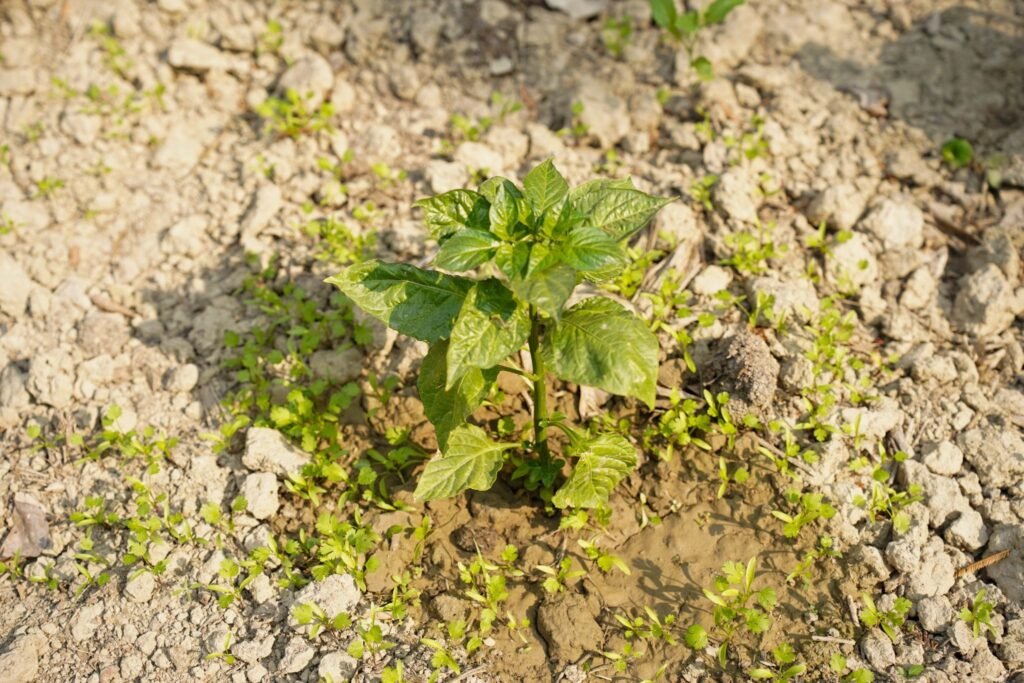
In my years of working with soil mechanics and site engineering, I’ve learned that soil is far more than a simple structural substrate to compact, grade, and pour concrete over. It’s a living, breathing foundation that balances geotechnical stability with biological vitality. When I review site data, elevated copper isn’t just a line item on an environmental report—it’s a major flag indicating that the soil matrix is fundamentally compromised.
Copper is tricky because plants actually need trace amounts of it to survive. But when historical land use, whether from years of heavy copper fungicide applications in orchards or runoff from industrial operations, pushes those levels beyond safe thresholds, the soil’s natural web breaks down. The roots fail to thrive, essential soil microbes suffer, and you’re left with land that’s structurally stressed and ecologically dead.
Too often, I see project managers or landowners throw random soil amendments at a plot hoping for a quick fix, only to waste time and make the chemistry worse. Engineering a real solution requires understanding exactly how copper behaves in the soil matrix, how to accurately test for bioavailable concentrations, and how to apply targeted remediation methods that stabilize the ground without destroying its natural ecosystem. Let’s break down how we turn complex soil data into practical, sustainable field decisions.
Copper toxicity in soil can severely affect plant health, leading to stunted growth and poor crop yields. Detecting it usually involves traditional lab techniques like atomic absorption spectrometry and innovative field methods such as advanced sensors. Effective remediation strategies include soil amendments, phytoremediation with specific plants, and adjusting soil pH. By combining these approaches and implementing preventive measures, you can restore soil health and enhance agricultural sustainability. There are practical case studies that demonstrate these strategies in action.
KEY TAKEAWAYS
- Soil sampling and laboratory assays like AAS and ICP-MS are effective for accurately detecting copper toxicity levels in soil.
- Colorimetric assays provide quick assessments of copper presence, though they are less sensitive than advanced methods.
- Remediation strategies include using organic amendments, calcium carbonate, and phosphate fertilizers to immobilize or neutralize copper in the soil.
- Phytoremediation with specific plants can absorb excess copper, improving soil health and restoring agricultural viability.
- Preventive measures like regular soil testing, crop rotation, and organic amendments are essential for managing and preventing copper toxicity.
WHAT CAUSES COPPER TOXICITY AND WHY IT MATTERS?
While copper is an essential micronutrient for plant growth, excessive levels can lead to toxicity, considerably disrupting soil health and agricultural productivity. Various copper sources contribute to this issue, including industrial waste, copper-based fungicides, and mining activities.
When these sources introduce high concentrations into the soil, they alter microbial communities and hinder nutrient availability, resulting in poor crop yields.
The environmental impact of copper toxicity extends beyond soil degradation. It can contaminate water systems, affecting aquatic life and disrupting ecosystems.
As you innovate agricultural practices, recognizing the causes of copper toxicity becomes crucial. Implementing strategies like soil testing and adopting sustainable practices can help mitigate risks associated with excess copper.
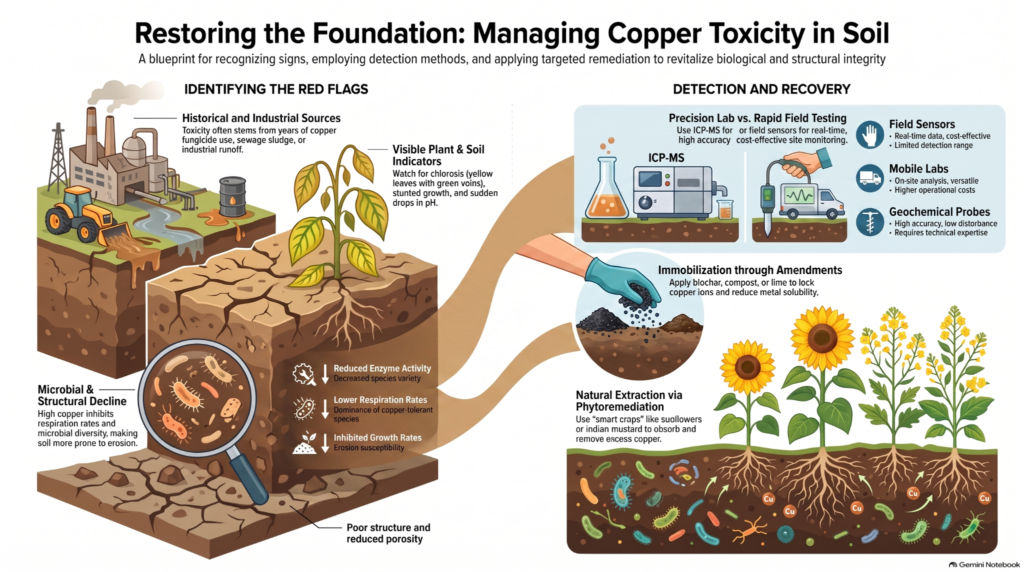
Signs of Copper Contamination in Soil
Copper (Cu) is one of eight essential plant micronutrients. Copper is required for many enzymatic activities in plants and for chlorophyll and seed production. Deficiency of copper can lead to increased susceptibility to diseases like ergot, which can cause significant yield loss in small grains. Most Minnesota soils supply adequate amounts of copper for crop production. However, copper deficiency can occur in high organic matter and sandy soils.
When evaluating soil for copper contamination, you should be on the lookout for visible plant damage, such as stunted growth or leaf discoloration.
Changes in soil pH can also indicate elevated copper levels, affecting nutrient availability.
Additionally, decreased microbial activity often accompanies copper toxicity, disrupting essential soil functions.
Visible Plant Damage
Copper is an essential element for plant growth. Soils naturally contain copper in some form or other, ranging anywhere from 2 to 100 parts per million (ppm) and averaging at about 30 ppm. Most plants contain about 8 to 20 ppm. Without adequate copper, plants will fail to grow properly. Therefore, maintaining fair amounts of copper for the garden is important.
Copper contamination in soil can manifest through distinct visible signs of plant damage, making it essential for gardeners and farmers to recognize these symptoms early.
When copper levels exceed specific thresholds, you might observe chlorosis, where leaves yellow while veins remain green, indicating nutrient deficiency. Stunted growth and wilting are also common plant symptoms, as copper toxicity disrupts cellular functions.
Additionally, you may notice necrosis, where leaf tips and edges turn brown and die off. These signs are critical indicators of excessive copper, and addressing them promptly can help mitigate further damage.
Soil pH Changes
As you assess soil health, changes in pH can signal copper contamination, potentially leading to detrimental effects on plant growth. Elevated copper levels often alter soil composition, pushing pH levels lower, which creates a nutrient imbalance.
This imbalance can hinder the availability of essential nutrients like nitrogen and phosphorus, vital for ideal plant development. You might notice that as pH drops, plants struggle to uptake these nutrients, resulting in stunted growth and poor yields.
Regular soil testing can help you monitor pH fluctuations and identify copper toxicity early, while also detecting related contaminants such as arsenic soil pollution. By understanding these dynamics, you can implement innovative remediation strategies to restore soil health, ensuring your crops thrive in a balanced environment.
Decreased Microbial Activity
While you monitor soil health, decreased microbial activity often serves as a clear indicator of copper contamination. High copper levels negatively impact microbial diversity, disrupting the delicate balance necessary for healthy soil structure. When microbial populations decline, essential processes like nutrient cycling and organic matter decomposition are hindered, leading to a less productive ecosystem.
| Sign of Contamination | Impact on Microbial Diversity | Effect on Soil Structure |
| Reduced enzyme activity | Decreased species variety | Compromised aggregation |
| Lower respiration rates | Dominance of copper-tolerant species | Erosion susceptibility |
| Altered community composition | Loss of functional groups | Decreased water retention |
| Inhibited growth rates | Impaired interactions | Reduced porosity |
Identifying these signs early can guide effective remediation strategies and restore microbial health.
Detecting Copper Toxicity: Traditional Laboratory Techniques
Detecting copper toxicity in soil requires the application of traditional laboratory techniques that provide reliable data on metal concentrations. The process begins with soil sampling, where you collect representative soil from various depths and locations to guarantee accuracy.
Once you’ve gathered your samples, laboratory assays, such as atomic absorption spectrometry (AAS) or inductively coupled plasma mass spectrometry (ICP-MS), become essential. These methods quantitatively analyze the metal content, offering insights into copper levels and other contaminants, such as cadmium in agricultural soil, that may be affecting soil health.
Additionally, employing colorimetric assays can be beneficial for quick assessments, although they might lack the sensitivity of more advanced techniques. By utilizing these traditional approaches, you can effectively determine copper toxicity and make informed decisions on remediation strategies.
Timely and precise detection is vital, as it enables you to address potential environmental impacts and maintain soil viability for future agricultural use.
INNOVATIVE FIELD APPROACHES TO DETECT COPPER LEVELS
When you’re managing soil health, getting accurate readings is half the battle. I often see folks panic after getting back an abnormally high test result, say 500 or 600 ppm of copper and immediately assume the site is beyond saving. My first question is always: How was that sample taken? If you’re sampling soil using cheap, brass-fitting equipment or zinc/copper-plated trowels, you can easily corrupt your data and trigger a false alarm. A proper site evaluation relies on clean stainless steel or plastic sampling tools, backed up by solid lab assays like ICP-MS or atomic absorption spectrometry to measure actual bioavailable fractions.
Once you know copper toxicity is genuinely present, the engineering response shouldn’t be a brute-force excavation unless absolutely necessary. From a ground improvement standpoint, in-situ remediation is almost always the smarter, eco-friendly path. I favor solutions that bind the heavy metals directly within the soil matrix. Applying organic amendments like high-quality biochar or compost creates chemical complexes that lock up copper ions, making them unavailable to plant roots.
Pairing that with targeted lime or calcium carbonate applications nudges soil pH back to neutral, drastically reducing metal solubility. By treating soil remediation as a precise chemical and physical stabilization process, we can restore structural and biological health without hauling thousands of tons of dirt to a landfill.
Traditional laboratory techniques provide a solid foundation for understanding copper toxicity, but innovative field approaches are increasingly gaining attention for their efficiency and practicality. You can leverage advanced field sensors that enable real-time monitoring of copper levels in soil, eliminating the delays associated with traditional soil sampling methods. These sensors provide immediate data, allowing you to make timely decisions regarding soil health.
Here’s a comparison of different innovative approaches:
| Approach | Advantages | Limitations |
| Field Sensors | Real-time data, cost-effective | Limited detection range |
| Mobile Labs | On-site analysis, versatile tools | Higher operational costs |
| Geochemical Probes | High accuracy, minimal disturbance | Requires technical expertise |
How to Remediate Copper Toxicity Effectively
Toxic levels of copper (Cu) rarely occur naturally in soils. However, copper may accumulate due to application of sewage sludge, pig slurries or mine slag, or more commonly through persistent use of copper-containing fungicides or fertilisers. Mild symptoms of copper toxicity have been observed on sweetpotato in northern Australia on land with a history of heavy fungicide use.
To effectively remediate copper toxicity in soil, you’ll want to evaluate soil amendments and additives that can bind or neutralize copper.
Incorporating phytoremediation techniques, like using specific plants that can absorb excess copper, can also enhance soil recovery.
These strategies not only improve soil health but can also restore its agricultural viability.
Soil Amendments and Additives
Although copper toxicity can severely impact soil health and crop productivity, effective remediation strategies using soil amendments and additives can markedly mitigate these effects.
To address copper contamination, consider these innovative approaches:
- Organic Additives: Incorporating materials like compost, biochar, or eco friendly products can enhance microbial activity, promoting copper immobilization.
- Calcium Carbonate: This amendment can help neutralize acidity and reduce copper solubility, making it less available for plant uptake.
- Phosphate Fertilizers: Applying phosphate can form insoluble copper-phosphate complexes, thereby reducing copper mobility and toxicity in the soil.
Utilizing these soil amendments not only improves soil structure but also fosters healthier crop growth by minimizing copper’s detrimental effects.
Embrace these strategies to enhance your soil’s resilience against copper toxicity effectively.
Phytoremediation Techniques Utilization
Phytoremediation techniques offer a promising and eco-friendly approach to effectively manage copper toxicity in contaminated soils. By utilizing specific phytoremediation species, you can enhance plant growth while simultaneously extracting heavy metals like copper from the soil.
Fast-growing species, such as sunflowers and certain legumes, have shown remarkable abilities to accumulate copper, reducing its bioavailability. Additionally, optimizing growth conditions—like soil pH and nutrient availability—can greatly improve the efficacy of these plants.
It’s crucial to monitor plant health and copper concentrations regularly to guarantee successful remediation. Combining phytoremediation with other strategies, such as soil amendments, can further enhance results.
This innovative approach not only restores soil health but also promotes sustainable agricultural practices, making it a valuable tool in environmental management.
Preventing Copper Toxicity in the Long Run
Preventing copper toxicity in soil requires a proactive approach that incorporates effective management practices and soil health monitoring.
By adopting preventive measures and sustainable practices, you can mitigate the risks associated with copper accumulation.
Here are three key strategies:
- Regular Soil Testing: Conduct routine soil tests to monitor copper levels, ensuring you catch any potential toxicity early.
- Crop Rotation and Diversity: Implement crop rotation and diversify plant species to enhance soil health and reduce copper buildup, as different plants absorb varying amounts of nutrients.
- Organic Amendments: Use organic matter, such as compost or green manure, to improve soil structure and promote microbial activity, which can help stabilize copper levels.
Integrating these approaches not only safeguards soil health but also fosters long-term agricultural sustainability, ensuring your land remains productive and resilient against copper toxicity.
Real-Life Examples of Successful Copper Toxicity Remediation
As soil health increasingly becomes a focal point in sustainable agriculture, several real-life cases demonstrate effective strategies for remediating copper toxicity.
For instance, a successful case study in a vineyard used phytoremediation techniques, employing hyperaccumulator plants like Indian mustard to extract excess copper from the soil. This method not only reduced toxicity but also improved soil structure and biodiversity.
Another remarkable example is a community garden that implemented soil amendments, such as biochar and compost, to chelate copper ions, effectively lowering their bioavailability. This innovative approach restored soil health while promoting sustainable practices.
These successful case studies highlight the importance of tailored remediation techniques. By combining biological and chemical methods, you can enhance soil functionality, ultimately leading to healthier crops and a more sustainable agricultural ecosystem.
Adopting these strategies can considerably mitigate the adverse effects of copper toxicity in your soil.
RELATED STUDIES ABOUT COPPER TOXICITY IN SOIL
Just as a vigilant gardener tends to his soil, you must nurture your land by addressing copper toxicity. By employing detection methods and remediation strategies, you can restore balance to your ecosystem. Think of copper as a stubborn weed; if left unchecked, it can choke the life out of your crops. By actively managing this challenge, you pave the way for a healthier environment, ensuring that future generations can reap the fruits of a flourishing landscape.
The overlooked challenge in coastal saline-alkaline soils: Potential risk of copper toxicity constraining rice production
Overview & Core Discovery
This study investigates the physiological and molecular constraints on rice (Oryza sativa L.) grown in coastal saline-alkaline soils (SAS). While salt, alkaline pH, and essential nutrient deficiencies are recognized stressors in these soils, the authors identify copper (Cu) toxicity as a critical, previously overlooked factor that severely impairs rice growth and grain yield.
Key Findings
1. Agronomic Impact
- Growth Retardation: Saline-alkaline stress significantly inhibited tillering and reduced shoot dry weight across all tested cultivars (Miyang 46, Zhenshan 97B, Erjiunan 1, and Fupin 36) by 40.15% to 81.52%.
- Yield Loss: At maturity, stress reduced the number of effective panicles and seed-setting rates, driving overall grain yield losses between 53.42% and 67.74%.
2. Nutrient Disruption & High Cu Accumulation
- Essential Micronutrient Deficiencies: Concentration levels of iron (Fe), manganese (Mn), and zinc (Zn) declined significantly in plant tissues due to low soil availability.
- Selective Cu Accumulation: Conversely, Cu levels surged. Tissue Cu concentrations rose 3.10–4.05 times in roots and 1.95–2.43 times in shoots compared to plants in normal soil.
3. Soil Bioavailability Dynamics
- Soil analysis revealed that although total Cu was lower in SAS, the readily exchangeable, bioavailable fraction (CaCl2-extractable Cu) was 1.27–1.42 times higher.
- This elevated mobility is attributed to low organic matter in coastal saline-alkaline soils, which limits the soil’s capacity to complex and immobilize free Cu ions.
4. Molecular Responses & Gene Regulation
- Detoxification Activation: To cope with heavy metal stress, plants up-regulated metal-chelating compounds—phytochelatins (PCs) and metallothioneins (MTs)—and their synthesis genes (OsPCS1, OsPCS2, and OsMT1a).
- The Transporter Paradox:
- Genes involved in acquiring scarce nutrients (OsIRT1, OsNRAMP5, OsYSL6) were up-regulated.
- Paradoxically, OsCOPT1—a high-affinity Cu uptake gene typically suppressed under high Cu environments—was significantly up-regulated. This indicates that uptake pathways were accidentally stimulated by deficiencies in other metals ($\text{Fe}, \text{Mn}, \text{Zn}$), creating a conduit for toxic Cu influx.
- Detoxification transport genes showed divergent responses: the efflux transporter OsHMA5 was up-regulated to sequester/expel Cu, while the translocation gene OsYSL16 was down-regulated to restrict Cu transport to shoots.
Conclusions & Practical Implications
- Comprehensive Stress Profile: Reclamation strategies for coastal saline-alkaline soils must account for heavy metal toxicity alongside traditional salinity and high pH management.
- Mitigation Strategies: Mitigating Cu toxicity will require targeted soil amendments (e.g., adding organic matter to immobilize free Cu) or breeding/engineering “smart crops” with modulated transporter expression (such as regulating OsCOPT1) to balance essential micronutrient uptake without over-accumulating heavy metals.
| REFERENCE: Yan Zhang, Wangda Cheng, Guosheng Shao, The overlooked challenge in coastal saline-alkaline soils: Potential risk of copper toxicity constraining rice production, Plant Stress, Volume 21, 2026, 101420, ISSN 2667-064X, https://doi.org/10.1016/j.stress.2026.101420. (https://www.sciencedirect.com/science/article/pii/S2667064X26002022) |
Green-synthesized iron oxide nanoparticles alleviates copper toxicity and enhance the morpho-physiological growth and tuber quality of potato (Solanum tuberosum L.) grown in contaminated soil
Overview and Core Objective
This study investigates the efficacy of green-synthesized iron oxide nanoparticles (FeO-NPs) in mitigating copper (Cu) toxicity and improving the growth, antioxidant response, and tuber quality of potato (Solanum tuberosum L.) cultivated in metal-contaminated soils. Using pot experiments with soil sourced from two distinct contaminated sites in Yunnan, China (Site 1 and Site 2), the authors evaluated varying foliar concentrations of FeO-NPs (0, 3, 6, 9, and 12 mM) to establish an eco-friendly approach for crop protection and food safety.
Key Findings
1. Morpho-Physiological and Biomass Enhancement
- Growth Restoration: While Cu contamination severely stunted untreated potato plants, foliar application of 9 mM FeO-NPs produced the highest gains in plant height, stem diameter, number of branches, and fresh/dry tissue biomass across both soil types.
- Photosynthetic Boost: The 9 mM dose significantly increased Chlorophyll a, Chlorophyll b, and total chlorophyll levels compared to untreated controls, reversing the chlorophyll degradation typically caused by Cu-induced enzymatic disruption.
2. Oxidative Stress Alleviation and Antioxidant Defense
- Reduction of Lipid Peroxidation: Malondialdehyde (MDA) content—a key biomarker for cellular membrane damage—peaked in untreated plants under high Cu stress (37.70 nmol/g in Site 2 soil). Treatment with 9 mM FeO-NPs successfully reduced MDA to minimal levels (10.19 nmol/g).
- Enzyme Activation: Superoxide dismutase (SOD) and catalase (CAT) activities were markedly boosted in the 9 mM treatment (increasing by up to 167.4% to 308.6% and 168.3% to 169.2% at budding and flowering stages, respectively), equipping the plants to scavenge reactive oxygen species (ROS) effectively.
3. Copper Immobilization and Tissue Accumulation
- Reduced Plant Uptake: The 9 mM FeO-NPs application achieved the maximum reduction of Cu accumulation across plant organs: 56.8% in shoots, 84.1% in leaves, and 86.9% in edible tubers.
- Soil Dynamics: Treatment reduced total soil Cu by up to 46.9%. The surface complexation, adsorption, and ion-exchange capabilities of the FeO-NPs immobilized free Cu ions, restricting their uptake and translocation through plant tissues.
4. Tuber Quality Improvements
- Nutritional Attributes: 9 mM FeO-NPs significantly enhanced commercial quality parameters in tubers grown under Cu stress, increasing reducing sugars (82%), soluble sugars (66.2%), starch (30%), soluble proteins (113.9%), sucrose (244.3%), amylopectin (12.9%), and amylose (39.2%) relative to untreated controls.
5. Biphasic / Dose-Dependent Response
- The benefits of FeO-NPs followed a dose-dependent threshold. While 9 mM was optimal, the highest concentration tested (12 mM) led to a noticeable decline in growth, antioxidant activity, and tuber quality compared to 9 mM, while increasing tissue Cu uptake.
Conclusion and Practical Implications
- Dual Action Mechanism: Green-synthesized FeO-NPs protect potato plants through a two-pronged mechanism: (1) immobilizing soil Cu to limit root uptake and translocation to edible tissues, and (2) activating internal antioxidant defense pathways to mitigate ROS-driven oxidative stress.
- Optimal Application Rate: 9 mM is identified as the optimal foliar concentration for mitigating Cu toxicity in potatoes without causing nanoparticle overload.
- Agricultural Relevance: The study demonstrates that green-synthesized FeO-NPs provide a sustainable, eco-friendly nanotechnology solution to restore crop productivity, preserve food quality, and lower heavy metal contamination risks in polluted agricultural soils.
| REFERENCE: Hongyang Wang, Youhong Feng, Yan Yang, Rui Shi, Jiali Geng, Yunxin Kong, Muzammal Rehman, Zahid Maqbool, Shah Saud, Shah Fahad, Gang Deng, Green-synthesized iron oxide nanoparticles alleviates copper toxicity and enhance the morpho-physiological growth and tuber quality of potato (Solanum tuberosum L.) grown in contaminated soil, Journal of Agriculture and Food Research, Volume 22, 2025, 102102, ISSN 2666-1543, https://doi.org/10.1016/j.jafr.2025.102102. (https://www.sciencedirect.com/science/article/pii/S2666154325004739) |
Oenothera biennis with strong copper toxicity resistance enriches trace copper in seeds under copper pollution soil
Overview and Core Objective
This study evaluates the potential of evening primrose (Oenothera biennis L.) for managing and remediating copper-polluted (Cu-polluted) soils while maintaining its economic and agricultural value as an oilseed crop. The researchers investigated the impact of excessive exogenous Cu on seed germination, seedling growth, seed yield, oil quality, tissue-specific Cu accumulation, and the expression of key Cu transport genes.
Key Findings
1. Stage-Dependent Sensitivity
- Seed Stage Sensitivity: Seeds were highly sensitive to Cu pollution. Exogenous application of 25 mg/kg CuSO4 reduced primary root length, fresh weight, and germination speed, while 50 mg/kg severely suppressed germination and 100 mg/kg proved completely lethal.
- Seedling & Adult Resilience: Once established (post-rosette formation), O. biennis plants exhibited high resistance to Cu toxicity. Four months of continuous exposure to soil Cu levels up to 900 mg/kg did not cause fatal damage.
2. Growth and Yield Responses
- Physiological Adjustments: High Cu stress slightly slowed plant growth, decreased leaf water content and chlorophyll levels, and elevated stress indicators including soluble sugars, proline, malondialdehyde (MDA), and hydrogen peroxide (H2O2).
- Yield Impact: Moderate Cu stress (300 mg/kg) caused almost no reduction in plant height, canopy size, or capsule production, though seed yield and oil content slightly decreased under higher stress levels (600 and 900 mg/kg). Under 900 mg/kg Cu exposure, plants still produced roughly 50% to 90% of the seed yield observed in unpolluted control soils.
3. Organ-Specific Cu Enrichment and Food Safety
- Stem as Primary Storage Organ: Under normal conditions, Cu concentrated mainly in the roots. Under high Cu pollution (900 mg/kg), the stem replaced the root as the primary organ for absorbing and storing excess Cu, rising from 3.73 mg/kg to 167.29 mg/kg.
- Safe Edible Portions: Critically, high soil Cu concentrations did not lead to excessive Cu accumulation in peels, seeds, or extracted seed oil. Cu levels in seeds remained under 10 mg/kg and in seed oil remained under 1.1 mg/kg, staying well within Chinese National Food Safety Standards.
4. Molecular Regulation of Cu Transporters
- Uptake vs. Efflux Dynamics: The expression of Cu-uptake transporter genes (ObCOPT5, ObZIP4, and ObYSL2) and Cu-efflux transporter genes (ObHMA1) was significantly upregulated in response to high Cu exposure.
- Homeostatic Control: In stems and roots exposed to heavy metal stress, influx and efflux genes continued to function actively to balance intracellular Cu. In mature seeds, reduced expression of efflux genes correlated with a controlled stabilization of endogenous Cu.
Conclusion and Practical Applications
- Dual Environmental and Economic Value: O. biennis is an ideal candidate for cultivation on Cu-contaminated marginal soils.
- Soil Remediation: Because the plant safely accumulates large amounts of Cu in its harvestable stems rather than its seeds, stems can be harvested after seed collection to extract excess Cu from the soil or use for industrial Cu recovery.
- Preserved Crop Safety: Farmers can utilize Cu-polluted lands to produce commercially viable evening primrose seed oil without exceeding safety standard thresholds for heavy metals.
| REFERENCE: Jie Dong, Shuchang Yang, Zhiling Kou, Yunting Chen, Tao Yang, Peng Gao, Wuhua Zhang, Jinzhu Zhang, Daidi Che, Aoxue Wang, Oenothera biennis with strong copper toxicity resistance enriches trace copper in seeds under copper pollution soil, Ecotoxicology and Environmental Safety, Volume 277, 2024, 116382, ISSN 0147-6513, https://doi.org/10.1016/j.ecoenv.2024.116382. (https://www.sciencedirect.com/science/article/pii/S0147651324004585) |
CONCLUSION
Restoring a site hit by heavy metal contamination isn’t a “one-and-done” job; it’s an ongoing commitment to craftsmanship, stewardship, and practical monitoring. Just like building a custom timber framework or restoring a vintage hand tool, doing the job right means paying attention to the long-term integrity of your materials and in this case, that material is the earth beneath our feet.
Whether you’re reclaiming a historical agricultural plot using phytoremediation plants like sunflowers to draw out excess metals, or incorporating foliar nanoparticles and biochar to immobilize contaminants, the ultimate goal is sustainable stability. You want to leave the land in a state where it can naturally buffer against future stress.
As engineers, growers, and land managers, our responsibility goes beyond immediate crop yields or quick construction turnarounds. By pairing rigorous diagnostic testing with low-impact, eco-friendly soil management practices like regular sampling, strategic crop diversity, and balanced organic inputs we ensure that our soils remain functional, safe, and productive for decades to come. When you respect the mechanics and the ecology of the soil, you build a foundation that truly lasts.