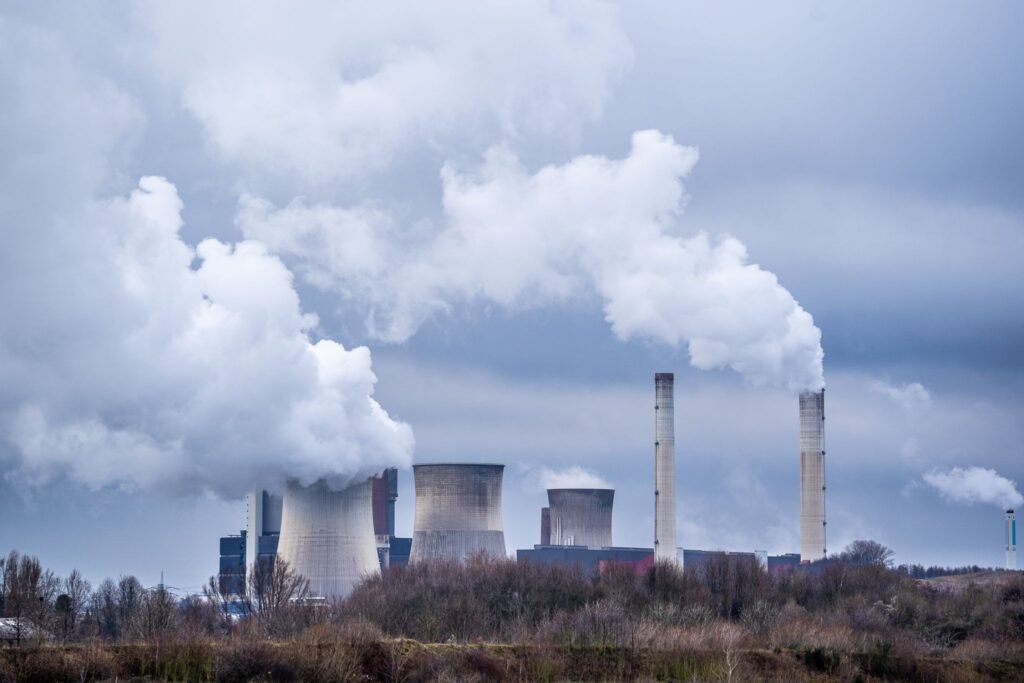
Whenever I conduct an environmental audit or walk the floor of a manufacturing plant, my focus goes straight to the effluent stacks and ductwork. Throughout my career in sustainable systems engineering, I’ve viewed air quality control as far more than a compliance checkbox—it’s a direct public health duty. Sulfur dioxide (SO2) has always been one of the most tricky pollutants in industrial spaces because of its destructive chemical behavior.
Beyond the sharp, matchstick-like odor that signals immediate exposure, it acts as a precursor to fine particulate matter (PM2.5) and acid rain, corroding equipment, damaging local ecosystems, and causing severe respiratory issues in surrounding communities. In the engineering world, we often talk about compliance in terms of parts per million, regulatory caps, and regional implementation plans. But on the factory floor, controlling SO2 is a practical balance of economics, capital investment, and smart facility design.
The debate over mitigation strategies from flue gas desulfurization systems to shifting fuel stocks shows a clear reality: effective emission control requires aligning policy with scalable technology. As we examine how modern facilities manage these emissions, we need to treat sulfur dioxide reduction not as an operational burden, but as a core requirement for clean manufacturing and sustainable plant operation.
Controlling sulfur dioxide (SO₂) emissions is vital for improving air quality and safeguarding public health. Exposure to SO₂ can lead to serious respiratory issues, especially among vulnerable populations. Regulations, like the Clean Air Act, set standards to limit emissions, while innovative technologies, such as scrubbing systems, enhance mitigation efforts. Successful global initiatives show marked improvements in air quality, demonstrating the economic and environmental benefits of these controls. You might find it interesting to explore further advancements in this area.
KEY TAKEAWAYS
- Reducing sulfur dioxide (SO₂) emissions significantly improves air quality, benefiting public health and reducing respiratory illnesses among vulnerable populations.
- Effective control technologies, such as advanced scrubbing systems, enhance SO₂ removal, contributing to cleaner air and healthier environments.
- Regulatory frameworks, like the Clean Air Act, establish standards that drive emissions reductions and promote accountability among industries.
- Successful case studies globally demonstrate that innovative approaches to SO₂ control can lead to substantial air quality improvements and ecosystem protection.
- Lower SO₂ emissions foster community investment and enhance quality of life, creating healthier living conditions and promoting economic growth.
WHAT IS SULFUR DIOXIDE AND WHY DOES IT MATTER?
Sulfur dioxide (SO₂) is a colorless gas with a pungent odor, primarily produced from burning fossil fuels and industrial processes. You should understand that SO₂ is a significant contributor to various sulfur compounds in the atmosphere, which can lead to acid rain and environmental degradation.
Its presence in the air can result in harmful effects on ecosystems, including soil and water quality deterioration. The environmental impact of SO₂ is profound, affecting not just air quality but also biodiversity.
When sulfur compounds settle on the earth, they can alter nutrient cycles and weaken plant health. Addressing SO₂ emissions is vital for fostering sustainable innovation and ensuring a cleaner environment.
The Health Risks of SO2 Emissions
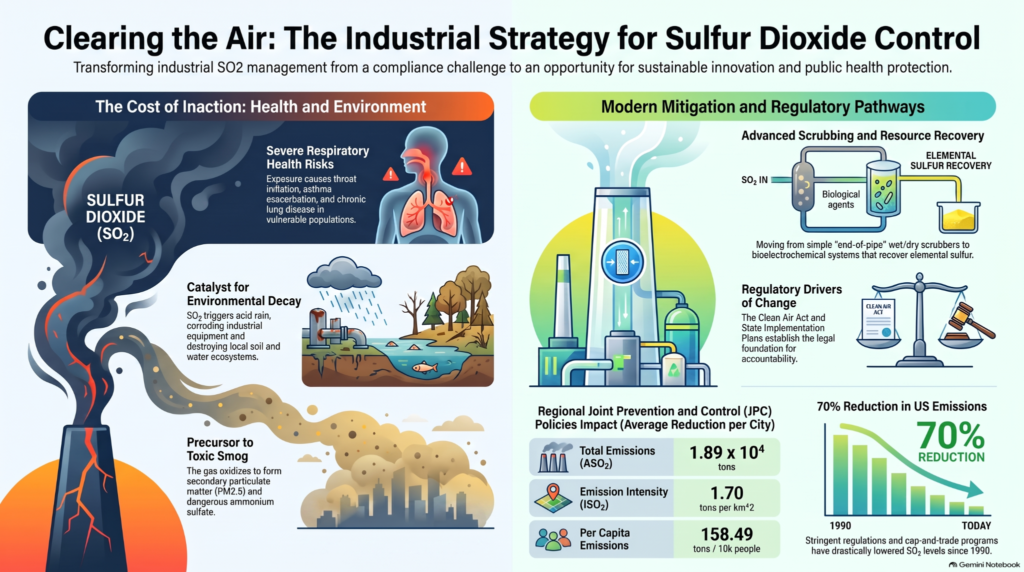
When exposed to sulfur dioxide (SO₂) emissions, individuals can face serious health risks that extend beyond mere discomfort, including nitrogen dioxide health effects and other respiratory concerns. The health impacts of SO₂ are particularly concerning, especially for those with pre-existing respiratory issues. Even short-term exposure can lead to throat irritation, coughing, and exacerbation of asthma symptoms.
Long-term exposure may result in chronic respiratory diseases and reduced lung function, which can greatly affect your quality of life. Moreover, vulnerable populations, such as children and the elderly, are at a heightened risk. They may experience increased hospital visits and medication use due to SO₂-related complications.
It’s essential to recognize that these emissions not only harm individual health but also contribute to broader public health challenges. As awareness grows, the push for innovative solutions to reduce SO₂ emissions becomes more urgent, highlighting the need for effective policies and technologies to safeguard our health and environment.
How Are SO2 Emissions Regulated?
The largest source of SO2 in the atmosphere is the burning of fossil fuels by power plants and other industrial facilities. Smaller sources of SO2 emissions include: industrial processes such as extracting metal from ore; natural sources such as volcanoes; and locomotives, ships and other vehicles and heavy equipment that burn fuel with a high sulfur content.
When it comes to regulating sulfur dioxide (SO2) emissions, federal regulations set the groundwork for compliance.
You’ll find that state implementation plans play an essential role in tailoring these regulations to specific local conditions.
Additionally, emission trading programs provide a market-based approach to control emissions while encouraging innovation and cost-efficiency.
Federal Regulations Overview
Although air pollution regulations can often seem complex, understanding how sulfur dioxide (SO2) emissions are controlled at the federal level is vital for comprehending air quality improvements.
Federal policies and regulatory frameworks play an important role in limiting these emissions through several key mechanisms:
- National Ambient Air Quality Standards (NAAQS) – Establishes health-based standards for SO2.
- The Clean Air Act – Provides the legal foundation for regulating pollutants, including SO2.
- Emission Standards – Sets limits on the amount of SO2 that facilities can emit.
- Monitoring and Reporting Requirements – Mandates regular reporting of emissions to guarantee compliance.
These frameworks not only enhance air quality but also drive innovation in pollution control technologies, leading to cleaner, healthier environments.
State Implementation Plans
To effectively regulate sulfur dioxide (SO2) emissions, states must develop their own State Implementation Plans (SIPs) that align with federal guidelines.
These SIPs serve as essential regulatory frameworks, detailing how you’ll achieve the National Ambient Air Quality Standards. By incorporating innovative state initiatives, you can address specific regional challenges and leverage local resources.
Each plan must outline emission limits, monitoring strategies, and enforcement mechanisms, ensuring compliance with air quality standards.
Additionally, states can adapt their SIPs over time, responding to technological advancements and changing environmental conditions.
This flexibility enables you to foster a proactive approach to SO2 emissions control, ultimately enhancing air quality and public health while contributing to broader environmental goals.
Emission Trading Programs
State Implementation Plans (SIPs) provide a foundation for regulating sulfur dioxide (SO2) emissions, but emission trading programs (ETPs) introduce a market-based approach that can enhance these efforts.
By utilizing emission trading, you can leverage market mechanisms to incentivize reductions in SO2 emissions effectively.
Here are four key aspects of ETPs:
- Flexibility: Companies can buy and sell emission allowances, allowing for cost-effective compliance.
- Incentives for Innovation: Firms are encouraged to develop cleaner technologies to reduce emissions and sell excess allowances.
- Market Efficiency: ETPs create a competitive environment, driving down compliance costs.
- Environmental Integrity: Overall emissions caps guarantee that reductions are achieved, protecting air quality.
This innovative approach can greatly improve air quality while promoting economic efficiency.
INNOVATIVE TECHNOLOGIES FOR CUTTING SULFUR DIOXIDE EMISSIONS
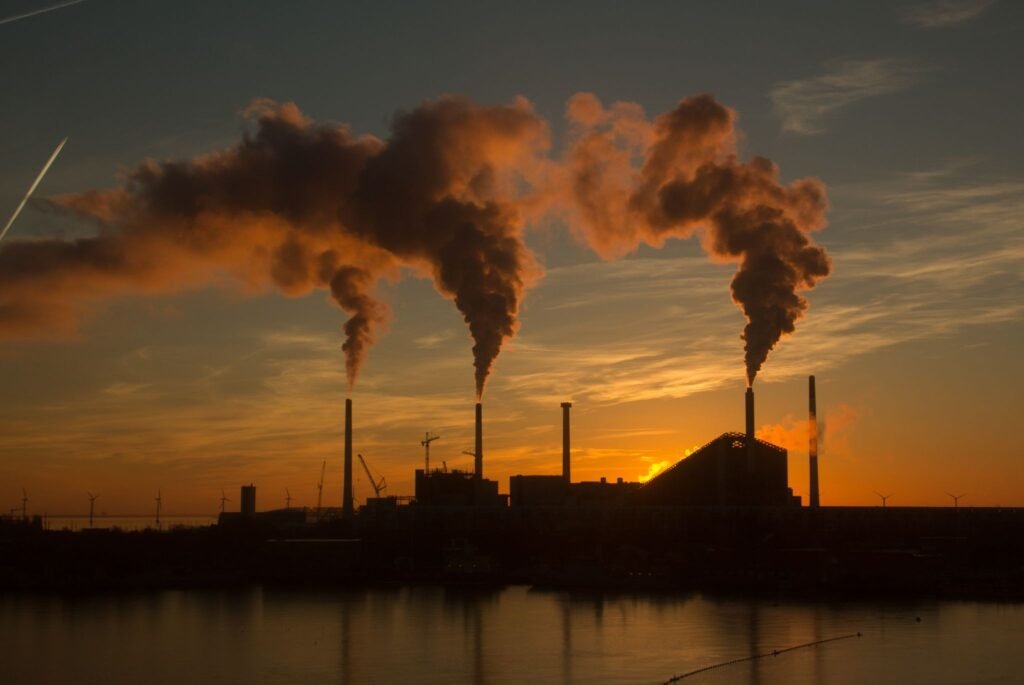
From an engineering perspective, tackling sulfur dioxide requires looking at both end-of-pipe controls and process-level upgrades. On paper, installing wet or dry scrubbers seems straightforward, but real-world retrofits always bring complex design decisions. I’ve evaluated facilities where adding a multi-million dollar scrubbing system was the only path to regulatory compliance. Yet, for many plant operators, high capital expenditures and ongoing maintenance make these systems a tough sell unless forced by strict performance standards or offset by clear market incentives, like emission trading allowances.
What excites me most as a systems designer is how the industry is moving beyond traditional end-of-pipe scrubbing toward integrated resource recovery and process optimization. Look at recent advancements in bioelectrochemical systems: researchers are finding ways to apply low voltages to co-process hazardous gaseous $\text{SO}_2$ and aromatic pollutants like benzene, converting air and water contaminants into solid, recoverable elemental sulfur ($\text{S}^0$) right at the anode. That is a major shift from seeing emissions as waste to handling them as reusable resources.
Similarly, in mobile combustion and heavy machinery, simple fuel switches aren’t always a silver bullet. While substituting high-sulfur diesel with waste-cooking-oil biodiesel blends can cut particulate emissions and lower sulfur output without requiring complete engine overhauls, it comes with operational trade-offs—like slight fuel consumption penalties and subtle changes in thermodynamic efficiency. Optimizing fuel injection timing helps balance these trade-offs, showing that clean air solutions don’t always require redesigning entire systems from scratch. They succeed through deliberate, step-by-step engineering tweaks that make industrial systems cleaner and more efficient.
The first level of control in this respect is therefore on the actual sulphur content of the fuel oils as bunkered. This value is to be stated by the fuel oil supplier on the bunker delivery note and hence this, together with other related aspects, is directly linked to the fuel oil quality requirements as covered under regulation 18. Thereafter it is for the ship’s crew to ensure, in respect of the ECA compliant fuel oils, that through avoiding loading into otherwise part filled storage, settling or service tanks, or in the course of transfer operations, that such fuel oils do not become mixed with other, higher sulphur content fuel oils, so that the fuel oil as actually used within an ECA exceeds the applicable limit.
To effectively reduce sulfur dioxide emissions, you need to explore advanced scrubbing technologies and robust emission monitoring systems.
These innovations not only enhance the efficiency of emission control but also provide real-time data for better compliance.
Advanced Scrubbing Technologies
As industries face increasing pressure to reduce sulfur dioxide emissions, advanced scrubbing technologies have emerged as an essential solution in air quality improvement efforts.
These innovations focus on enhancing scrubber efficiency through technology advancements. Here are four key components driving this evolution:
- Wet Scrubbing: Utilizes liquid solutions to absorb sulfur dioxide effectively.
- Dry Scrubbing: Employs dry reagents that react with sulfur dioxide, minimizing wastewater.
- Hybrid Systems: Combine wet and dry methods for optimized performance across varying conditions.
- Real-Time Monitoring: Integrates sensors and software to analyze and improve scrubbing processes continuously.
Emission Monitoring Systems
While advanced scrubbing technologies play a vital role in reducing sulfur dioxide emissions, effective emission monitoring systems are equally important for ensuring compliance and optimizing performance.
You’ll find that innovative monitoring technologies enhance emission accuracy, allowing real-time data collection and analysis. These systems utilize cutting-edge sensors and data analytics to track emissions continuously, providing immediate feedback on compliance status.
By integrating machine learning algorithms, these technologies can predict potential exceedances, enabling proactive adjustments. Additionally, advanced monitoring systems facilitate transparency and accountability, helping industries address carbon monoxide indoor air pollution concerns while meeting regulatory requirements.
Embracing these innovations not only supports environmental goals but also positions your organization as a leader in sustainable practices, demonstrating a commitment to air quality improvement.
Real-World Success Stories in SO2 Control
Successful reductions in sulfur dioxide (SO2) emissions have been achieved in various locations around the globe, demonstrating effective strategies for air quality improvement.
These success stories and case studies highlight innovative approaches that can serve as models for other regions. Here are four notable examples:
- United States: The Clean Air Act led to a 70% reduction in SO2 emissions since 1990 through stringent regulations and cap-and-trade programs.
- Canada: The implementation of scrubbers in coal-fired power plants has greatly decreased SO2 emissions, contributing to cleaner air in urban areas.
- Germany: Shifting to renewable energy sources has drastically lowered SO2 emissions, showcasing a sustainable path forward.
- South Korea: Strict industrial regulations and investment in cleaner technologies have improved air quality and reduced emissions by over 30%.
These examples illustrate the potential for effective SO2 control strategies, paving the way for enhanced air quality globally.
Economic Gains From Reducing SO2 Pollution
Reducing sulfur dioxide (SO2) pollution not only enhances air quality but also brings significant economic benefits. By investing in pollution reduction strategies, businesses can lower healthcare costs associated with respiratory illnesses exacerbated by SO2 exposure. Improved air quality means fewer sick days for employees, leading to increased productivity and reduced absenteeism.
Additionally, cleaner air can enhance property values, making neighborhoods more attractive for residential and commercial investments.
Moreover, industries that adopt innovative technologies for SO2 emissions control often experience operational efficiencies, ultimately reducing production costs. As consumers become more environmentally conscious, companies committed to sustainability can capture market share by differentiating themselves through eco friendly products and eco-friendly practices.
The shift to cleaner energy sources also fosters job creation in emerging sectors, further stimulating economic growth.
To conclude, the economic benefits of reducing SO2 pollution extend beyond immediate costs, offering long-term gains for both businesses and communities alike.
Future Directions for SO2 Emissions Control and Air Quality Improvement
Sulphur dioxide (SO2) is a heavy, colourless, and poisonous gas with a pungent and irritating odour. Its smell is often described similar to that of a burnt matchstick. The gas forms secondary particulate matter (PM2.5) when it oxidizes to sulphuric acid (H2SO4) by combining with water vapour. It also reacts with ammonia (NH3) to create another dangerous compound called ammonium sulphate ((NH4)2SO4). SO2 also contributes to sulphurous smog, which results from a high concentration of sulfur oxides (SOx) in the atmosphere and is exacerbated by dampness and particulate matter (PM).
The path forward for sulfur dioxide (SO2) emissions control is increasingly focused on innovative technologies and regulatory frameworks that improve air quality.
Future technologies and policy advancements will be pivotal in achieving sustainable improvements. Here are some key directions to contemplate:
- Carbon Capture and Storage (CCS): Implementing CCS can notably reduce emissions from industrial sources while repurposing SO2 for beneficial uses.
- Advanced Monitoring Systems: Utilizing real-time data analytics can help track emissions and guarantee compliance with regulations more effectively.
- Transition to Cleaner Fuels: Encouraging the use of low-sulfur fuels can drastically diminish SO2 emissions from transportation and energy sectors.
- Stronger Regulatory Frameworks: Developing extensive policies that incentivize emissions reductions will drive innovation and compliance across industries.
RELATED STUDIES ABOUT SULFUR DIOXIDE EMISSIONS CONTROL
In the battle for cleaner air, controlling sulfur dioxide emissions is like tuning a musical instrument; when each note aligns, the symphony of our environment flourishes. Just as a single off-key note can disrupt harmony, a small reduction in SO2 can lead to significant health improvements. With innovative technologies and successful regulations in place, we can continue to refine this melody, ensuring a healthier future for generations. The time to act is now—every effort counts in this concert for clean air.
An assessment of China’s joint prevention and control policy on sulfur dioxide emissions reduction: A spatial econometric analysis
Research Overview
This study evaluates the effectiveness of China’s 2010 Joint Prevention and Control (JPC) policy in reducing sulfur dioxide (SO2) emissions across 116 key Chinese cities from 2003 to 2017. Moving beyond traditional single-city management approaches, the JPC policy established a regional framework to target complex, transboundary air pollution complex issues. The authors utilize spatial econometric models (SLM, SEM, SDM, and SAC) along with global and local Moran’s I indices to measure spatial autocorrelation, policy impact, and socio-economic drivers.
Key Findings
1. Significant Mitigation Impact
The implementation of the JPC mechanism had a statistically significant, negative impact on SO2 emissions across all measured metrics:
- Total Emissions (ASO2): Decreased by an average of 1.89 x 10^4 tons per city.
- Emission Intensity (ISO2): Decreased by 1.70 tons per km^2.
- Per Capita Emissions (PSO2): Decreased by 158.49 tons per 10,000 people.
2. Spatial Autocorrelation & Regional Heterogeneity
- Spatial Spillover Effects: Global Moran’s I values for total, intensity, and per capita SO2 emissions were consistently positive, demonstrating that a city’s SO2 levels are directly influenced by the emissions of neighboring cities.
- Emergence of “Low-Low” Agglomeration: After the nationwide adoption target year of 2015, an increasing number of cities transitioned into “low-low” spatial clusters (low local emissions surrounded by low-emission neighbors), signaling widespread air quality improvements.
- Persistent Hotspots: Despite national declines, regional variances remain. Cities such as Chongqing (high total volume), Tangshan, Zibo, Laiwu, Wuxi, and Suzhou (high intensity), and Dongguan (high per capita) continued to experience severe pollution issues during the study period.
3. Socio-Economic and Environmental Drivers
- Population Growth (Pop): Showed a negative relationship with total emissions (ASO2), dropping volume by 0.52 x 10^4 tons per additional million residents, likely driven by urban agglomeration efficiencies.
- Economic Growth (EG): Higher per capita GDP significantly reduced total emissions and emission intensity, reflecting improved energy efficiency, technological advancements, and industrial upgrades as cities pass economic thresholds.
- Environmental Protection (EP): Expanding green coverage significantly reduced SO2 across all metrics (1.32 tons per 10,000 people per hectare of green space added), pointing to plant absorption and strict local environmental governance.
- Economic Structure (ES): A higher proportion of secondary industry value-added positively correlated with higher SO2 output and exerted strong spatial spillover effects on adjacent regions.
Policy Recommendations
- Refine JPC Frameworks & Governance Authority: Institutionalize regional JPC agencies with formal legislative, enforcement, and sanctioning powers to move beyond macro-level guidance toward clear regional targets.
- Establish City-Level Inter-Regional Coordination: Create long-term mechanisms that align regional control policies with city-level economic structures, promoting joint governance, technology exchanges, and coordinated industrial planning.
- Incorporate Market-Based Instruments: Complement command-and-control regulations with market-based approaches—such as environmental taxation, specialized financing, and emissions trading schemes—to sustain long-term reduction incentives.
| REFERENCE: Dong Cao, Yanrui Sun, Jian Chai, JinJun Xue, Qian Sun, An assessment of China’s joint prevention and control policy on sulfur dioxide emissions reduction: A spatial econometric analysis, Journal of Management Science and Engineering, Volume 8, Issue 4, 2023, Pages 498-511, ISSN 2096-2320, https://doi.org/10.1016/j.jmse.2023.03.003. (https://www.sciencedirect.com/science/article/pii/S2096232023000343) |
Mitigating particulate matter from a multi-cylinder high-sulfur diesel engine using waste-cooking-oil biodiesel blends: Emissions and efficiency assessment
Background and Objective
- High-sulfur diesel engines—operating with fuel sulfur levels significantly above standard limits (such as baseline tests at 12,890 ppm)—emit high quantities of toxic diesel particulate matter (PM) and sulfur compounds that present serious environmental and public health hazards.
- This study evaluates the efficacy of waste-cooking-oil biodiesel blends (B20, B50, and B100) in mitigating PM emissions from a multi-cylinder diesel engine while assessing overarching impacts on brake-specific fuel consumption (BSFC), brake thermal efficiency (BTE), and exergy efficiency.
- Addressing a critical gap in existing literature that predominantly relies on single-cylinder or low-sulfur configurations, this research establishes a real-world framework using a four-cylinder direct-injection engine across varied loads, speeds, and injection timing conditions.
Methodology
- Biodiesel was synthesized through transesterification utilizing local waste cooking sunflower oil, methanol, and potassium hydroxide (KOH) as a catalyst.
- Experimental trials were executed on a four-cylinder Fiat 4D68 direct-injection diesel engine coupled with a hydraulic dynamometer.
- Testing protocols evaluated fuel blends of pure diesel, B20, and B50 under varying engine loads, speeds (1250 to 2500 rpm), and fuel injection timings (20° to 45° before top dead centre [BTDC]).
- Performance metrics combined first-law energy balances, second-law exergy evaluations, and multi-species exhaust gas analysis with an overall experimental uncertainty of pm 2.13%.
Key Findings
- Particulate Matter Reduction:
- Integrating biodiesel into high-sulfur diesel substantially decreased PM emissions due to the fuel’s higher oxygen content improving soot oxidation.
- At idle operation, PM concentrations dropped by approximately 8.6% for B20 and 18% for B50 (reaching up to a 39.75% reduction for pure B100) compared to baseline diesel.
- Tailoring the injection timing to the optimal setting for each specific blend (such as advancing to 45° BTDC) enabled further PM reductions of up to 27.27%.
- Performance Trade-offs (BSFC and BTE):
- Biodiesel utilization resulted in a modest increase in brake-specific fuel consumption (BSFC) and a slight reduction in brake thermal efficiency (BTE).
- These penalties are primarily driven by biodiesel’s lower heating value and higher heat of vaporization, which lengthen ignition delay; for instance, high-load BSFC increased by up to 10% for B20 and 17.1% for B50.
- Combustion and Emissions Trade-offs (NOx):
- Higher biodiesel ratios improved in-cylinder peak pressures and accelerated heat release rates during the premixed combustion phase.
- However, enhanced combustion temperatures created a traditional NOx-PM trade-off, causing a slight elevation in nitrogen oxide emissions under advanced injection timings and high loads.
- Exergy Efficiency:
- Thermodynamic exergy analysis demonstrated that B20 and B50 achieved slightly superior exergy efficiencies compared to conventional diesel across operational loads.
- This gain is attributed to reduced chemical irreversibilities and lower energy wastage from incomplete combustion, enabled by oxygen-assisted soot and carbon monoxide oxidation.
Strategic Implications
- Waste-cooking-oil biodiesel blends present an operationally viable, sustainable retrofitting strategy for developing regions reliant on high-sulfur, multi-cylinder diesel fleets.
- Although fuel consumption penalties occur, optimizing engine injection timing successfully neutralizes trade-offs and maximizes particulate emission reduction without requiring costly engine hardware redesigns.
| REFERENCE: Hashim Sh. Neama, Lina J. Talib, Raid Saleh Jawad, Miqdam T. Chaichan, Hamid Abdallah Dhaher, Hasanain A. Abdul Wahhab, Mitigating particulate matter from a multi-cylinder high-sulfur diesel engine using waste-cooking-oil biodiesel blends: Emissions and efficiency assessment, International Journal of Thermofluids, Volume 33, 2026, 101596, ISSN 2666-2027, https://doi.org/10.1016/j.ijft.2026.101596. (https://www.sciencedirect.com/science/article/pii/S2666202726000522) |
Electro-Stimulation Modulates Synergistic Microbe-Electrode Interactions for Sulfur Recovery in Co-Conversion of Benzene and SO₂
Background and Research Objective
- Industrial wastewater containing benzene and gaseous sulfur dioxide (SO2) emissions pose severe public health and environmental hazards.
- Traditional physical and chemical remediation methods often generate harmful secondary by-products, whereas biological approaches offer a cleaner, cost-effective alternative.
- This study introduces a single-chamber bioelectrochemical system (BES) designed to achieve simultaneous anaerobic/micro-aerobic oxidation of recalcitrant benzene (acting as an electron donor) and reduction of SO2 (acting as an electron acceptor), alongside the recovery of high-value elemental sulfur (S^0).
Experimental Methodology
- Single-chamber BES reactors were set up under three distinct voltage conditions:
- EBS-0: 0 V (unenergized baseline control)
- EBS-0.5: 0.5 V (low-voltage electrical stimulation)
- EBS-1.6: 1.6 V (applied voltage exceeding the water hydrolysis threshold of 1.23 V)
- Synthetic industrial media were fed with approximately 350mg L^-1 benzene and $720 – 1100mg-S L^-1 SO2.
- Performance metrics were mapped across sequential batch operating stages, evaluating gas/liquid phase chemical transformations, microbial community dynamics (16S rRNA sequencing), functional gene abundance (metagenomics), and electrode surface crystal morphology (SEM-EDS).
Key Findings
1. Voltage-Dependent Co-Conversion Kinetics
- Optimal Degradation at 1.6 V: The EBS-1.6 reactor achieved the maximum benzene consumption rate of 42.93mg L^-1 d^-1, which is 1.28 times higher than the control group without applied voltage (33.65mg L^-1 d^-1).
- Low-Voltage Suppression (0.5 V): Applying 0.5 V suppressed benzene degradation (27.91mg L^-1 d^-1) due to excessive electrode potentials hindering electron transfer and inhibiting specific benzene-degrading microbial pathways.
- Enhanced Mineralization: Carbon dioxide (CO2) generation rates peaked in EBS-1.6 at 10.78mg L^-1 d^-1, verifying complete mineralization of the aromatic structure.
2. Synchronous Elemental Sulfur Recovery
- High-Purity Sulfur Precipitation: In the EBS-1.6 system, substantial elemental sulfur (S^0) crystals precipitated directly onto the anode surface, as confirmed by SEM-EDS energy spectrum analysis.
- Mechanisms of Recovery: Applied voltage exceeding the water hydrolysis threshold produced trace amounts of in-situ dissolved oxygen (0.12 pm 0.1mg L^-1). This trace oxygen, combined with direct bioelectrochemical anodic oxidation, catalyzed the conversion of reduced sulfides (S^2-) into recoverable elemental sulfur (S^0).
3. Microbial Community Dynamics & Functional Pathways
- Dominant Genera: Three genera accounted for over 85% of the total microbial community across all systems:
- Pseudomonas sp. (50.57%–54.81% abundance): Primarily localized on the anode to drive initial benzene ring cleavage and extracellular electron transfer.
- Aquamicrobium sp. & Stenotrophomonas sp.: Utilized simple organic intermediates (e.g., acetate, butyrate) excreted during benzene fermentation to power sulfur reduction cycles.
- Metagenomic Insights:
- Anaerobic Activation: Anaerobic ring-activating genes (ppsABC, ubiX, ubiD, hbaA) were detected in all reactors, utilizing hydroxyl addition and carboxylation pathways to yield benzoyl-CoA.
- Upregulated Aerobic Pathways: In EBS-1.6, aerobic benzene monooxygenase genes (dmpB, tmoCF) and sulfur-oxidation complex genes (soxY, fccB, sqr) were significantly enriched, confirming that in-situ micro-oxygenation creates a hybrid aerobic-anaerobic synergistic pathway.
Key Conclusions and Practical Applications
- Mechanistic Breakthrough: Applying an auxiliary voltage above the hydrolysis threshold (1.6 V) introduces trace in-situ oxygen without disrupting anaerobic microbial activity, dramatically accelerating both benzene ring opening and sulfide-to-sulfur oxidation.
- Resource-Recovery Potential: The single-chamber BES configuration eliminates the need for expensive proton exchange membranes while simultaneously solving water and air pollution issues and generating a valuable chemical byproduct (elemental sulfur).
- Industrial Application: This technology offers strong potential for treating complex sulfur- and aromatic-laden wastewater streams, such as those generated by coke-oven gas washing, petrochemical plants, and leather production facilities.
| REFERENCE: Fengguang Chai, Ruiyan Lang, Yunpeng Liu, Wenwen Wang, Xiaoli Ma, Yanjie Wang, Yunping Han, Shunyi Li, Lin Li, Electro-stimulation modulates the synergistic interaction of microbe and electrode for sulfur recovery in the co-conversion of benzene and sulfur dioxide, Environmental Technology & Innovation, Volume 40, 2025, 104589, ISSN 2352-1864, https://doi.org/10.1016/j.eti.2025.104589. (https://www.sciencedirect.com/science/article/pii/S2352186425005759) |
CONCLUSION
Looking ahead at industrial air quality management, it’s clear that single-point emission controls are giving way to integrated, region-wide strategies. My work auditing industrial sites and reviewing clean manufacturing frameworks has shown me that sustainable progress happens when technology, policy, and market mechanisms work together. Regional policies, like joint prevention and control models, demonstrate how coordinating air quality targets across neighboring industrial zones stops pollution from simply shifting across borders, creating measurable improvements in ambient air quality.
As engineers, plant managers, and environmental specialists, our job is to stay ahead of regulatory requirements by integrating pollution control directly into early-stage facility design. Whether through advanced continuous monitoring networks, real-time sensor arrays, low-sulfur fuel transitions, or circular recovery technologies that extract value from waste streams, the tools to control sulfur dioxide are more effective than ever.
Clean air is never an accidental outcome; it is the result of deliberate engineering, rigorous monitoring, and an unyielding commitment to public health. By taking ownership of these choices today, we can build industrial infrastructure that drives economic growth while protecting the air our communities breathe.