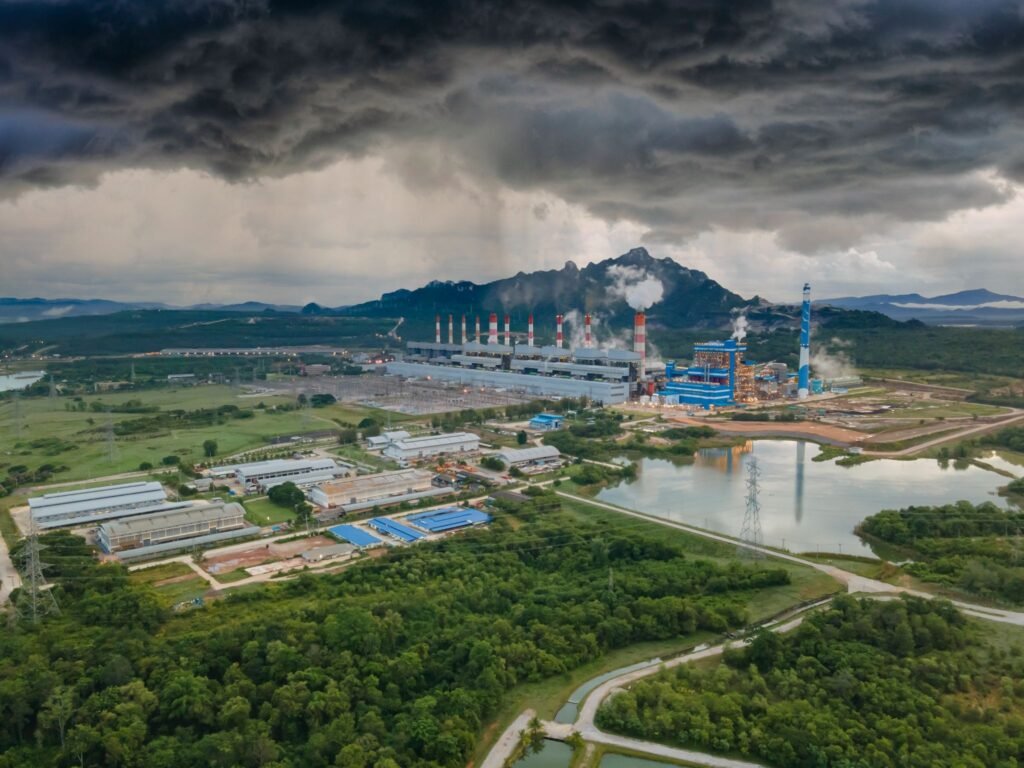
Whenever I look at energy policy documents or emissions models, it is easy to get caught up in the sheer scale of the global energy transition. But sulfur dioxide (SO2) emissions and acid rain remind us that electricity generation has immediate, regional consequences that cannot wait for distant net-zero targets. Throughout my work in energy consulting, I have seen how environmental engineering challenges quickly become economic and regulatory ones.
Acid rain is often treated like an environmental problem solved in the late twentieth century, yet the foundational mechanics remain identical today: burning sulfur-rich fossil fuels creates an atmospheric chain reaction that alters soil chemistry, corrodes infrastructure, and damages delicate aquatic systems. When we talk about shifting away from coal, the conversation usually focuses heavily on carbon reduction and greenhouse gases.
However, the immediate airborne culprits like SO2 and fine sulfate particles carry massive, unpriced health and environmental costs that neighboring communities bear every single day. Understanding the direct pipeline from power plant boilers to acidic precipitation is not just a scientific exercise; it is the fundamental baseline we need to evaluate whether our current energy regulations, grid modernization strategies, and industrial incentives are actually fit for the modern world.
Coal power pollution contributes markedly to acid rain through the emission of sulfur dioxide (SO2). When coal burns, it releases SO2 into the atmosphere, which then undergoes chemical reactions to form sulfuric acid. This acid mixes with moisture in the air, falling as acid rain. The consequences affect ecosystems, soil, and water quality, leading to detrimental impacts on wildlife. By exploring further, you can uncover more about the broader implications of acid rain and potential solutions.
KEY TAKEAWAYS
- Coal-fired power plants are major sources of sulfur dioxide (SO2) emissions, significantly contributing to acid rain formation.
- SO2 is released during coal combustion, where sulfur compounds in coal react and elevate atmospheric SO2 levels.
- In the atmosphere, SO2 oxidizes to form sulfur trioxide (SO3), which then reacts with water vapor to produce sulfuric acid.
- The resulting sulfuric acid mixes with atmospheric moisture, leading to acid rain that negatively impacts ecosystems and infrastructure.
- Reducing coal power pollution through cleaner energy sources can mitigate acid rain and its harmful effects.
WHAT IS ACID RAIN AND HOW DOES IT FORM?
Burning fossil fuels at power plants creates emissions of sulfur dioxide (SO2), nitrogen oxides (NOX), particulate matter (PM), carbon dioxide (CO2), mercury (Hg), and other pollutants. These emissions can have serious health and environmental impacts.
Acid rain refers to any form of precipitation—be it rain, snow, or fog—that has a lower pH than normal, making it more acidic.
The formation process begins when sulfur dioxide (SO2) and nitrogen oxides (NOx) are released into the atmosphere through industrial activities and combustion of fossil fuels.
Once these compounds are airborne, they react with water vapor, oxygen, and other trace chemicals in the atmosphere. This reaction produces sulfuric and nitric acids, which then mix with the moisture in the air.
As precipitation occurs, these acids fall to the ground, leading to acid rain.
You might wonder about the implications of this phenomenon. Acid rain can greatly harm ecosystems, corrode buildings, and affect water quality.
Understanding the formation process is vital for developing innovative strategies to mitigate its impact and improve air quality, fostering a healthier environment for future generations.
How Sulfur Dioxide Contributes to Acid Rain
Surface mines (sometimes called strip mines) were the source of about 63% of the coal mined in the United States in 2022. These mining operations remove the soil and rock above coal deposits, or seams. The largest surface mines in the United States are in Wyoming’s Powder River Basin, where coal deposits are close to the surface and are up to 70 feet thick.
Sulfur dioxide (SO₂) primarily comes from industrial emissions, vehicle exhaust, and natural sources like volcanic eruptions.
When released into the atmosphere, it undergoes chemical reactions that lead to the formation of sulfuric acid, a key component of acid rain.
Understanding these processes and their environmental impacts is essential for addressing the broader issue of acid precipitation.
Sources of Sulfur Dioxide
Many human activities contribute to the release of sulfur dioxide (SO2) into the atmosphere, considerably impacting the formation of acid rain. The primary source is industrial emissions, particularly from coal-fired power plants and oil refineries, where fossil fuels are combusted, releasing SO2 as a byproduct.
Transportation also plays a significant role, with vehicles emitting sulfur compounds during fuel combustion. Additionally, natural sources like volcanic eruptions and wildfires contribute to sulfur dioxide levels, albeit to a lesser extent.
Understanding these sources is essential for innovators seeking sustainable solutions to reduce SO2 emissions and mitigate acid rain’s environmental effects. By targeting both industrial and natural sources, we can foster a healthier ecosystem and promote cleaner air quality for future generations.
Chemical Reaction Process
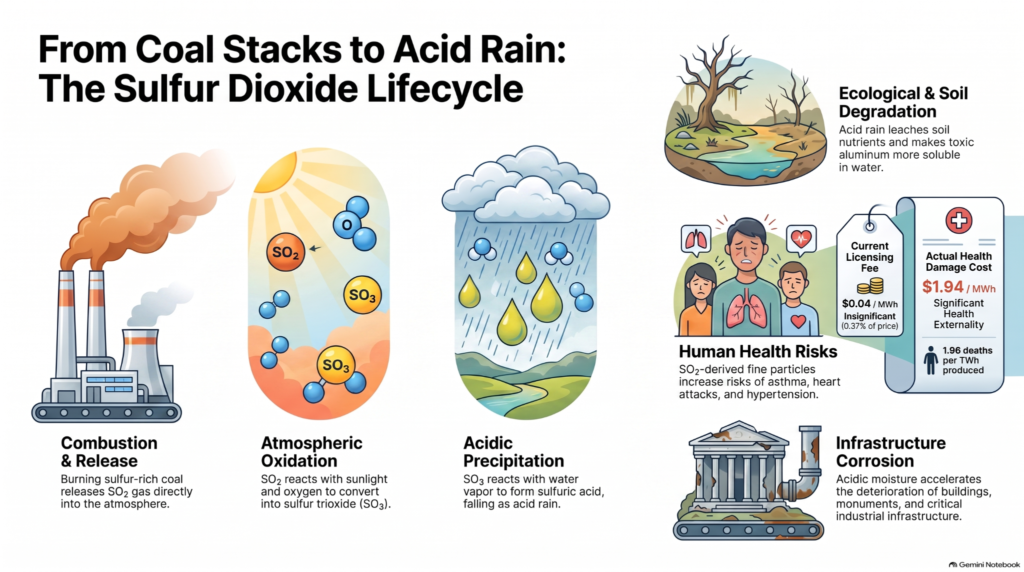
When sulfur dioxide (SO2) enters the atmosphere, it undergoes a series of chemical reactions that lead to the formation of acid rain.
Initially, SO2 experiences an oxidation process, converting it into sulfur trioxide (SO3). This reaction is influenced by sunlight and other atmospheric conditions, creating a state of chemical equilibrium.
The SO3 then reacts with water vapor, producing sulfuric acid (H2SO4). This acid can remain suspended in the atmosphere or deposit as acid rain when it falls to the ground.
The entire sequence illustrates how a single pollutant can disrupt environmental balance. Understanding this chemical reaction process is essential for developing innovative solutions to mitigate acid rain and its subsequent effects on ecosystems and human health.
Environmental Impact Overview
Although it might seem like a distant issue, sulfur dioxide (SO2) considerably impacts our environment by contributing to acid rain formation.
The sulfur dioxide effects extend beyond mere air pollution, leading to significant ecological consequences. Understanding these impacts can drive innovation in pollution control strategies.
Here are three key effects of acid rain caused by SO2:
- Soil Degradation: Acid rain leaches essential nutrients from the soil, disrupting plant growth.
- Water Quality: Increased acidity in rivers and lakes harms aquatic life, threatening biodiversity.
- Infrastructure Damage: Acid rain accelerates the deterioration of buildings and monuments, leading to costly repairs.
How Coal Plants Contribute to Sulfur Dioxide Emissions
Coal-fired power plants are the largest human-caused source of sulfur dioxide, a pollutant gas that contributes to the production of acid rain and causes significant health problems, particularly through its role in forming particulates. Coal naturally contains sulfur, and when coal is burned, the sulfur combines with oxygen to form sulfur oxides. Although natural processes like volcanic eruptions, biological decomposition, and forest fires also produce sulfur dioxide, emissions caused by human activity far exceed natural production in developed countries.
Coal plants greatly contribute to sulfur dioxide emissions through their combustion processes.
When coal burns, it releases sulfur compounds, which directly impacts air quality and contributes to carbon dioxide emissions from power plants and acid rain formation.
Additionally, the quality of the coal used can further influence the amount of sulfur dioxide produced, with higher sulfur content resulting in greater emissions.
Combustion Process Emissions
The combustion of coal in power plants markedly elevates sulfur dioxide (SO₂) emissions, contributing to the formation of acid rain.
To address this issue, you can focus on the following aspects of the combustion process:
- Combustion Efficiency: Enhancing combustion efficiency reduces the amount of unburned carbon and sulfur in the flue gases, leading to lower SO₂ emissions.
- Emission Control Technologies: Implementing advanced technologies, such as flue gas desulfurization, effectively mitigates SO₂ release during coal combustion.
- Fuel Quality and Pre-Treatment**: Utilizing high-quality coal and adopting pre-treatment methods can markedly lower sulfur content, resulting in better emission reduction outcomes.
Coal Quality Impact
While many factors influence sulfur dioxide emissions from power plants, the quality of coal used plays an essential role in determining the extent of these emissions. Higher coal grades typically contain lower sulfur content, which directly correlates to reduced sulfur dioxide output during combustion.
When you opt for lower-grade coal, the sulfur content often spikes, leading to increased emissions that contribute to acid rain formation. By selecting higher-grade coal, you can greatly mitigate these harmful emissions.
Innovations in coal processing and selection techniques can further enhance this effect, promoting cleaner energy production and encouraging the use of eco friendly products that support more sustainable environmental practices. As you push for advancements in energy technology, remember that the choice of coal is a fundamental consideration for reducing sulfur dioxide emissions and protecting the environment.
EFFECTS OF ACID RAIN ON WATER QUALITY AND AQUATIC LIFE
From an engineering and regulatory perspective, addressing sulfur emissions reveals a glaring gap between technological capability and real-world implementation. The physical chemistry of SO2 oxidation and the resulting ecosystem degradation are well understood, and engineering controls like flue gas desulfurization (scrubbers) or coal pre-treatment have existed for decades. Yet, when you analyze utility operations and environmental compliance frameworks, technology is only half the battle.
If policy mechanisms fail to accurately price the real damage caused by these emissions, power plant operators have little financial incentive to invest in cleaner processes or upgrade legacy infrastructure. In consulting, we frequently see how market structures dictate environmental outcomes. When pollution fees are set at a fraction of wholesale electricity prices, paying a minor fine becomes cheaper than retrofitting a coal unit or accelerating its retirement.
This distorts grid economics, making high-polluting facilities appear far more economical on paper than they truly are when factoring in regional water damage and public health impacts. Bridging this divide requires clear, mandatory policy standards alongside aggressive clean energy integration, ensuring our regulatory tools actively encourage grid decarbonization rather than subsidizing hidden environmental liabilities.
Acid rain greatly impacts water quality and aquatic life, leading to a cascade of ecological consequences.
When sulfur dioxide from coal power plants enters the atmosphere, it transforms into sulfuric acid, which can drastically alter aquatic ecosystems.
Here’s how acid rain affects water quality and aquatic life:
- Decreased pH Levels: Lower pH levels in water bodies can harm fish and other aquatic organisms, disrupting their reproductive processes and survival rates.
- Nutrient Imbalance: Acid rain can leach essential nutrients like calcium from the soil, reducing their availability in water, which in turn affects plant growth and habitat quality.
- Increased Toxicity: Heavy metals, such as aluminum, become more soluble in acidic conditions, posing significant toxicity risks to aquatic species.
How Does Acid Rain Affect Ecosystems?
When ecosystems are exposed to acid rain, you’ll notice significant shifts in their health and functionality. Acid rain disrupts nutrient cycles, leading to decreased soil pH and limiting essential minerals necessary for plant growth. This directly impacts flora, reducing ecosystem resilience and weakening the foundation of food webs.
As plants struggle, herbivorous species face food shortages, leading to cascading effects on higher trophic levels.
Moreover, acid rain can cause biodiversity loss by favoring certain species over others, often eliminating sensitive organisms. This homogenization of species diminishes genetic diversity, making ecosystems more vulnerable to diseases and climate change.
Additionally, aquatic habitats suffer, as acidified waters can devastate fish populations and other aquatic organisms, further destabilizing interconnected ecosystems.
Human Health Risks Associated With Acid Rain
As you consider the broader implications of environmental issues, it’s crucial to recognize the human health risks tied to acid rain. This form of pollution, primarily driven by sulfur dioxide emissions, poses significant threats that extend beyond ecosystems.
- Respiratory Issues: Exposure to acid rain can exacerbate respiratory conditions, such as asthma and chronic bronchitis, due to the fine particulate matter it releases into the air.
- Cardiovascular Effects: Studies indicate that prolonged exposure to pollutants associated with acid rain can lead to increased cardiovascular problems, including heart attacks and hypertension.
- Ecosystem Disruption: While this primarily pertains to the environment, ecosystem disruption indirectly affects human health by diminishing the quality of food and water sources, leading to potential health risks.
What Can We Do About Acid Rain?
To combat the detrimental effects of acid rain, a multifaceted approach is essential. You can start by supporting policy initiatives aimed at reducing sulfur dioxide emissions from coal power plants. Advocate for stricter regulations that limit pollution while encouraging the adoption of green energy, such as wind and solar power.
Public awareness is equally vital. Educating your community about the causes and consequences of acid rain can foster a collective response. Engage in discussions, share information, and utilize social media platforms to spread knowledge.
Additionally, consider participating in local environmental groups that promote sustainability and conservation efforts. By advocating for greener practices in agriculture and industry, you can help mitigate acid rain’s impact on ecosystems.
Together, these strategies can create a robust framework to address the challenges posed by acid rain, ultimately leading to a healthier environment for all.
RELATED STUDIES ABOUT SULFUR DIOXIDE COAL POWER POLLUTION
In conclusion, while sulfur dioxide from coal power plants may seem like just another industrial byproduct, its role in acid rain is significant and far-reaching. This “gentle rain” isn’t as benign as it sounds; it disrupts water quality, harms aquatic life, and endangers ecosystems. You can help combat this issue by supporting cleaner energy sources and advocating for stricter emissions regulations. Together, we can work towards a healthier environment and protect our natural resources for future generations.
Electro-stimulation modulates the synergistic interaction of microbe and electrode for sulfur recovery in the co-conversion of benzene and sulfur dioxide
OVERVIEW AND OBJECTIVE
Industrial operations in petroleum refining, leather production, and flue gas treatment generate large volumes of carcinogenic benzene-containing wastewater and sulfur dioxide (SO2) emissions. Addressing these pollutants concurrently offers a sustainable remediation strategy by coupling benzene oxidation with SO2 reduction. This study investigated the synergistic co-conversion of benzene and SO2 alongside the recovery of elemental sulfur (S0) in single-chamber bioelectrochemical systems (BES) under auxiliary voltages of 0 V, 0.5 V, and 1.6 V.
KEY FINDINGS AND PERFORMANCE
- Enhanced Benzene Degradation: Benzene conversion peaked at an auxiliary voltage of 1.6 V (EBS-1.6), reaching a maximum rate of 42.93 mg/(L·d), which is 1.28 times the rate of the non-electrified control at 33.65 mg/(L·d).
- Voltage-Dependent Suppression: A lower auxiliary voltage of 0.5 V (EBS-0.5) inhibited benzene degradation by 16.90% to 27.91 mg/(L·d) and significantly suppressed mineralization to CO2, likely caused by excess electrons interfering with oxidation and potential-induced microbial stress.
- Elemental Sulfur Recovery: Operating at 1.6 V exceeded the water hydrolysis threshold (1.23 V), producing trace dissolved oxygen (0.12 ± 0.1 mg/L). This facilitated the oxidation of intermediate sulfides into high-purity elemental sulfur crystals on the anode surface, confirmed via SEM-EDS analysis.
MICROBIAL AND METABOLIC MECHANISMS
- Dominant Microbial Community: Pseudomonas sp., Aquamicrobium sp., and Stenotrophomonas sp. made up more than 85% of total bacterial abundance across all systems, preferentially colonizing electrode biofilms.
- Benzene Activation Pathways: Pseudomonas sp. activated the benzene ring anaerobically via hydroxyl addition and carboxylation (driven by ppsABC and ubiXD genes), while the 1.6 V system significantly enriched aerobic oxidation genes (dmpBCD and tmoCF) due to trace oxygen.
- Sulfur Reduction and Oxidation Cascade: Simple organic intermediates (such as acetate) produced from benzene fermentation served as electron donors for Aquamicrobium sp. and Stenotrophomonas sp. to reduce dissolved SO2 (sulfite and sulfate) to sulfides. Generated sulfides were then converted to recoverable elemental sulfur through trace oxygen, sulfur-oxidizing genes (fccB, sqr, and the SOX system), and abiotic anodic catalysis.
PRACTICAL APPLICATIONS
The single-chamber BES configuration eliminates the need for costly proton-exchange membranes while simultaneously degrading refractory benzene and treating gaseous SO2. This approach presents a viable option for industrial wastewater recycling—such as in coke-oven gas washing systems—allowing effluent reuse and valuable elemental sulfur recovery.
| REFERENCE: Fengguang Chai, Ruiyan Lang, Yunpeng Liu, Wenwen Wang, Xiaoli Ma, Yanjie Wang, Yunping Han, Shunyi Li, Lin Li, Electro-stimulation modulates the synergistic interaction of microbe and electrode for sulfur recovery in the co-conversion of benzene and sulfur dioxide, Environmental Technology & Innovation, Volume 40, 2025, 104589, ISSN 2352-1864, https://doi.org/10.1016/j.eti.2025.104589. https://www.sciencedirect.com/science/article/pii/S2352186425005759) |
The value of health damage due to sulphur dioxide emissions from coal‐fired electricity generation in NSW and implications for pollution licences
CONTEXT AND PURPOSE
Coal-fired power stations (CFPS) in New South Wales (NSW) release approximately 250 kilotonnes of sulfur dioxide (SO2) annually because none operate post-combustion scrubbers. Atmospheric chemical reactions convert gaseous SO2 into secondary sulfate particles, contributing substantially to respirable fine particulate matter (PM2.5) across major population centers such as Sydney. This study evaluates the health impacts and monetary health externalities attributable specifically to SO2-derived secondary sulfate particles in NSW to determine whether existing pollution licensing fees accurately reflect real-world health costs.
METHODOLOGY AND KEY METRICS
- Exposure Attribution: Atmospheric monitoring and back-trajectory analysis established that approximately 16% of Sydney’s ambient PM2.5 originates from NSW coal-fired power stations via secondary sulfate and aged industrial sulfur particles.
- Health Burden Modeling: Eliminating this 16% PM2.5 contribution would prevent an estimated 104 premature deaths, 560 years of life lost (YLL), and 112 cardiovascular/respiratory hospital admissions annually in Sydney.
- Mortality Rate: NSW coal generation causes an estimated 1.96 deaths per TWh of electricity produced based on SO2 emissions alone.
ECONOMIC VALUATION OF HEALTH DAMAGE
- Primary Estimate (Years of Life Lost + Hospital Admissions): 103.04 million in annual health benefits (102M YLL + 1.04M admissions), representing a damage cost of 1.94 per MWh (95% CI: 1.28 – 2.55).
- Statistical Lives Saved + Hospital Admissions: 438.04 million in annual health benefits (437M lives + 1.04M admissions), representing a damage cost of 8.26 per MWh (8.24 lives + 0.02 admissions).
- The conservative estimate of 1.94 per MWh is selected as the primary benchmark because cardiovascular and stroke fatalities caused by air pollution occur predominantly among older individuals with lower remaining life expectancy.
POLICY IMPLICATIONS AND LOAD-BASED LICENSING
- Inadequate Price Signals: Under the NSW Load-Based Licensing (LBL) scheme, generators currently pay an SO2 pollution fee of only 4.3 cents per MWh (with total air pollutant fees totaling 32.95 cents/MWh). At just 0.37% of the wholesale electricity price ($88/MWh), current fees provide zero economic incentive to abate emissions or install flue-gas scrubbers.
- Underestimated Total Costs: The 1.94/MWh health damage reflects only secondary sulfate particles from SO2 and excludes additional damage from NOx, primary fine particles, mercury, and direct gaseous SO2 irritation.
- Market-Driven Transition: Aligning load-based license fees with the true health externality (1.94/MWh) would penalize higher-polluting plants, incentivize cleaner production, generate corrective revenue, and provide an objective public health framework for prioritizing the sequence of plant retirements.
| REFERENCE: Ben Ewald, The value of health damage due to sulphur dioxide emissions from coal‐fired electricity generation in NSW and implications for pollution licences, Australian and New Zealand Journal of Public Health, Volume 42, Issue 3, 2018, Pages 227-229, ISSN 1326-0200, https://doi.org/10.1111/1753-6405.12785. (https://www.sciencedirect.com/science/article/pii/S1326020023002182) |
Impact of low-sulfur ships’ fuel oil regulation on air quality around Kaohsiung Port
CONTEXT AND OBJECTIVES
Maritime vessel activity is a major contributor to coastal air pollution, with ships operating within the port area accounting for 26.70% of total SOx emissions in Kaohsiung City. With over 206,000 residents living within 4 km of Kaohsiung Port and 1.25 million within 9 km, reducing sulfur dioxide (SO2) levels is essential to mitigate cardiorespiratory health risks in adjacent urban communities. Ahead of the International Maritime Organization (IMO) 2020 global sulfur cap (0.5% fuel sulfur limit), Taiwan introduced early regulatory actions: a voluntary financial incentive scheme in 2018, followed by advanced mandatory low-sulfur fuel enforcement across commercial ports in 2019. This study quantitatively evaluates the causal impact of these phased interventions on ambient SO2 concentrations using time series forecasting and econometric modeling.
METHODOLOGY
- Data Sources: Eight years (January 2015 to December 2022) of monthly SO2 monitoring data from Taiwan’s Ministry of Environment across five air quality monitoring stations.
- Quasi-Experimental Design: Xiaogang Station (located within 4 km of the port’s container entrance) served as the treatment group, while four inland stations (Fengshan, Qianjin, Qianzhen, and Fuxing) served as the control group.
- Analytical Modeling: A Seasonal Autoregressive Integrated Moving Average model—SARIMA(2,0,0)(1,1,0)12—was developed to estimate counterfactual trends without intervention, and Difference-in-Differences (DID) panel regressions (controlling for temperature, precipitation, wind speed, and vessel traffic) were used to isolate policy impacts.
KEY FINDINGS AND POLICY IMPACTS
- Overall Concentration Drop: Annual average SO2 concentrations at Xiaogang Station decreased by 56%, falling from 7.32 ppb in 2015 down to 3.21 ppb in 2021.
- Phase 1 Incentive Program (2018): The voluntary subsidy scheme (NT 50,000 to NT 400,000 per voyage) resulted in an estimated SO2 reduction of 1.716 ppb (p < 0.001).
- Phase 2 Advanced Mandatory Policy (2019): Mandatory enforcement of the 0.5% sulfur limit in Taiwan resulted in the largest reduction of 2.129 ppb (p < 0.001) and delivered the highest model explanatory power (R-squared = 0.7911).
- Phase 3 IMO 2020 Global Cap (2020): Official worldwide enforcement corresponded to an additional controlled reduction of 1.675 ppb (p < 0.001).
- Influence of Covariates: Vessel traffic volume was the only statistically significant covariate affecting SO2 variations (p < 0.001), while meteorological factors (temperature, wind speed, and rainfall) had no significant confounding impact on the policy effect size.
POLICY AND PRACTICAL IMPLICATIONS
- Mandatory vs. Voluntary Regulation: Mandatory regulatory mandates delivered larger, more reliable air quality improvements than early subsidy-based incentives.
- Exposure Reduction: The steep reduction in ambient SO2 successfully brought local concentrations below major international guideline thresholds, substantially lowering cardiorespiratory risks for surrounding urban populations.
- Future Regulatory Direction: These empirical results provide a foundation for subsequent environmental policies, such as formal Emission Control Area (ECA) designations, expanded shore power deployment, and vessel-specific operational speed reductions.
| REFERENCE: Pei-Chun Lin, Pei-Fen Kuo, Yun-Hsuan Liang, Impact of low-sulfur ships’ fuel oil regulation on air quality around Kaohsiung Port, International Journal of Sustainable Transportation, Volume 20, Issue 6, 2026, Pages 641-655, ISSN 1556-8318, https://doi.org/10.1080/15568318.2025.2609923. (https://www.sciencedirect.com/science/article/pii/S1556831825000966) |
CONCLUSION
Tackling acid rain and coal-derived sulfur pollution ultimately comes down to turning sound engineering analysis into decisive policy and practical action. We no longer have to accept sulfur emissions as an unavoidable byproduct of keeping the power grid reliable. The economics of utility-scale renewables, energy storage, and efficiency measures continue to outpace legacy fossil generation, providing a viable pathway to eliminate these emissions at the source rather than just managing downstream ecological damage.
True sustainability in our energy systems means designing infrastructure that accounts for its total footprint from the soil beneath our feet to the air surrounding our cities. As consumers and energy professionals, we have significant leverage in demanding stronger regulatory accountability, supporting transparent emissions pricing, and choosing cleaner energy options where possible.
Mitigating acid rain is not merely about preserving ecosystems in abstract terms; it is about building a resilient, modern grid that protects our shared water, soil, and human health for generations to come.