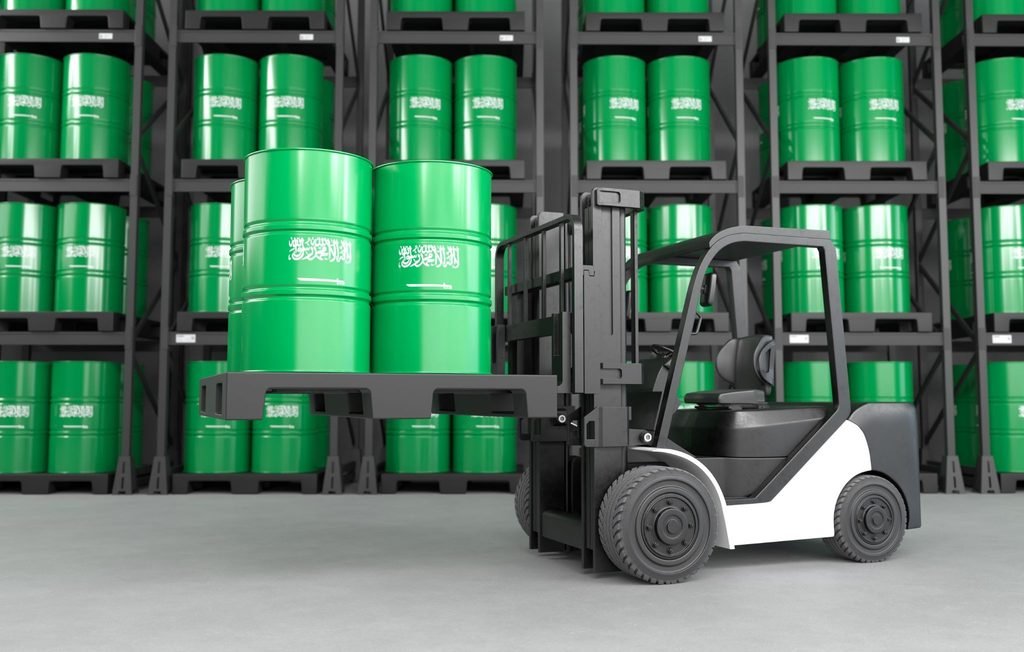
When I advise regional authorities and industrial operators on sustainability frameworks, I often find that international environmental treaties are treated like distant, bureaucratic hurdles meant only for legal departments. The Rotterdam Convention, however, is far from an abstract policy exercise; it directly touches the practical reality of our everyday material economy. Whenever I am out on my bicycle riding through mixed-use corridors—passing modern manufacturing hubs on one side and fragile agricultural fields on the other—the physical scale of our chemical footprint is impossible to ignore.
Managing a backyard apiary reinforces this lesson every single season: ecosystems operate without borders, and an unchecked hazardous pesticide applied miles away can swiftly collapse an entire hive. That delicate balance is precisely what agreements like Rotterdam strive to maintain through Prior Informed Consent.
From a policy standpoint, these trade controls are not mere red tape designed to strangle commercial supply lines. Rather, they act as an essential baseline of accountability that levels the international playing field. Recognizing the operational shifts mandated by the convention allows forward-thinking enterprises to move past reactionary firefighting and start establishing resilient, transparent procurement habits from day one.
The Rotterdam Convention’s chemical trade restrictions greatly impact industries reliant on hazardous substances. You’ll need to adapt your sourcing strategies and comply with stringent regulations, fostering innovation in safer alternatives like biodegradable materials. This compliance not only helps avoid legal penalties but also enhances your market reputation. As environmental standards tighten, companies are prompted to reassess supply chains for resilience and sustainability. Discover how these changes can reshape your operational practices and industry competitiveness.
KEY TAKEAWAYS
- The Rotterdam Convention enforces trade restrictions on hazardous chemicals, impacting sourcing strategies and operational costs for industries globally.
- Compliance with the Convention mandates frequent updates to practices, influencing supplier selection and market access for affected companies.
- Stricter regulations drive innovation, prompting industries to seek safer, biodegradable alternatives that align with environmental standards and consumer demand.
- Non-compliance can lead to legal penalties and reputational damage, making adherence crucial for maintaining competitiveness in the market.
- Enhanced supply chain resilience is necessary to navigate compliance challenges and mitigate risks associated with regulatory changes and market dynamics.
UNDERSTANDING THE ROTTERDAM CONVENTION AND ITS OBJECTIVES
While you may be familiar with international environmental agreements, the Rotterdam Convention specifically focuses on the trade of hazardous chemicals and pesticides. This treaty establishes a framework for trade restrictions that aim to enhance chemical safety on a global scale.
By promoting informed decision-making, it encourages countries to share information about the environmental impact of hazardous substances. Global cooperation is a cornerstone of the Rotterdam Convention, fostering dialogue between exporting and importing nations to guarantee industry compliance with safety standards.
As an industry professional, understanding these objectives is essential for maneuvering regulations and making sure that your operations align with international expectations. The Convention not only aims to protect human health and the environment but also drives innovation in safer chemical alternatives.
Key Chemicals Affected by Trade Restrictions
Chemicals are a vital part of people’s daily lives. They are used in the construction industry, in electronics, to make different sorts of plastics, in consumer care products, and in agriculture, where they are used to make fertilizers and pesticides. In fact, the chemical industry represents one of the largest sectors of the global economy. The dramatic growth in chemicals production and trade, especially during the 1960s and 1970s, raised both public and official concern about the potential risks posed by hazardous chemicals and pesticides.
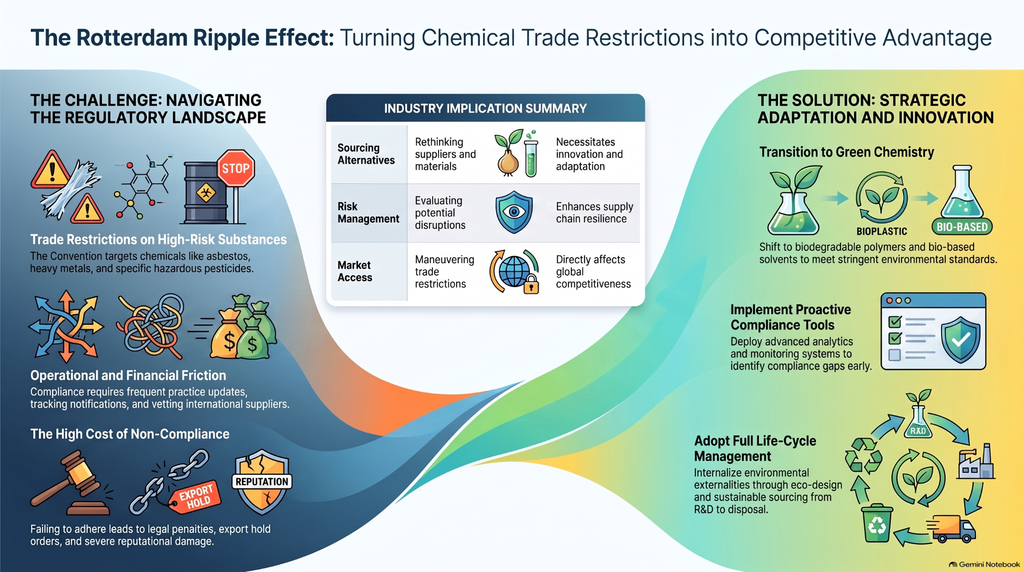
The Rotterdam Convention impacts several key chemicals that are subject to trade restrictions, considerably affecting industries involved in their production and use. Chemicals such as asbestos, certain pesticides, and heavy metals are prominently featured on the Convention’s list, creating significant trade impacts.
You’ll find that these restrictions are aimed at enhancing chemical safety, compelling manufacturers to reassess their supply chains and compliance strategies.
For instance, industries relying on restricted pesticides must navigate stringent regulations, influencing both their operational costs and market access. This can hinder innovation, as companies may be reluctant to invest in new products when faced with trade barriers.
Additionally, the negative repercussions ripple through the economy, impacting job security and industry growth. Overall, understanding the specific chemicals affected by these trade restrictions is vital for stakeholders aiming to adapt and thrive in a landscape increasingly focused on safety and compliance.
Innovations in Safer Alternatives to Restricted Chemicals
As industries adapt to the restrictions imposed by the Rotterdam Convention, you’ll see a growing emphasis on safer alternatives to restricted chemicals.
Emerging biodegradable materials and innovative chemical substitutes are becoming key players in this shift, offering both compliance and sustainability.
Exploring these innovations can reveal significant opportunities for companies looking to maintain competitiveness while prioritizing environmental safety.
Emerging Biodegradable Materials
With increasing restrictions on harmful chemicals under the Rotterdam Convention, industries are turning to emerging biodegradable materials as innovative alternatives.
These materials not only align with regulatory demands but also promote sustainability.
Consider the following benefits of biodegradable polymers in sustainable packaging:
- Environmental impact: They break down naturally, reducing landfill waste and pollution.
- Consumer appeal: Eco-conscious consumers are increasingly favoring products that minimize environmental harm.
- Regulatory compliance: Using biodegradable options helps industries meet stringent chemical regulations while maintaining product functionality.
Innovative Chemical Substitutes
This self-paced online course on the Rotterdam Convention primarily targets the Rotterdam Convention designated national authorities (DNAs) and Official Contact Points (OCPs). It also offers valuable knowledge for other governmental and non-governmental actors with a role in the implementation of the Convention, from customs authorities to chemical importers.
Emerging biodegradable materials are paving the way for industries to explore innovative chemical substitutes that comply with the restrictions set by the Rotterdam Convention.
By embracing green chemistry principles, you can develop safer alternatives that minimize environmental impact while meeting regulatory demands. These substitutes not only reduce reliance on harmful chemicals but also contribute to sustainable innovation across various sectors.
For instance, bio-based solvents and plant-derived polymers are gaining traction as effective replacements in manufacturing processes.
As you invest in research and development, consider collaborations with academic institutions to leverage cutting-edge technologies.
Ultimately, adopting these innovative chemical substitutes won’t only enhance your product offerings but also position your company as a leader in responsible and forward-thinking industry practices.
NAVIGATING COMPLIANCE CHALLENGES IN THE CHEMICAL INDUSTRY
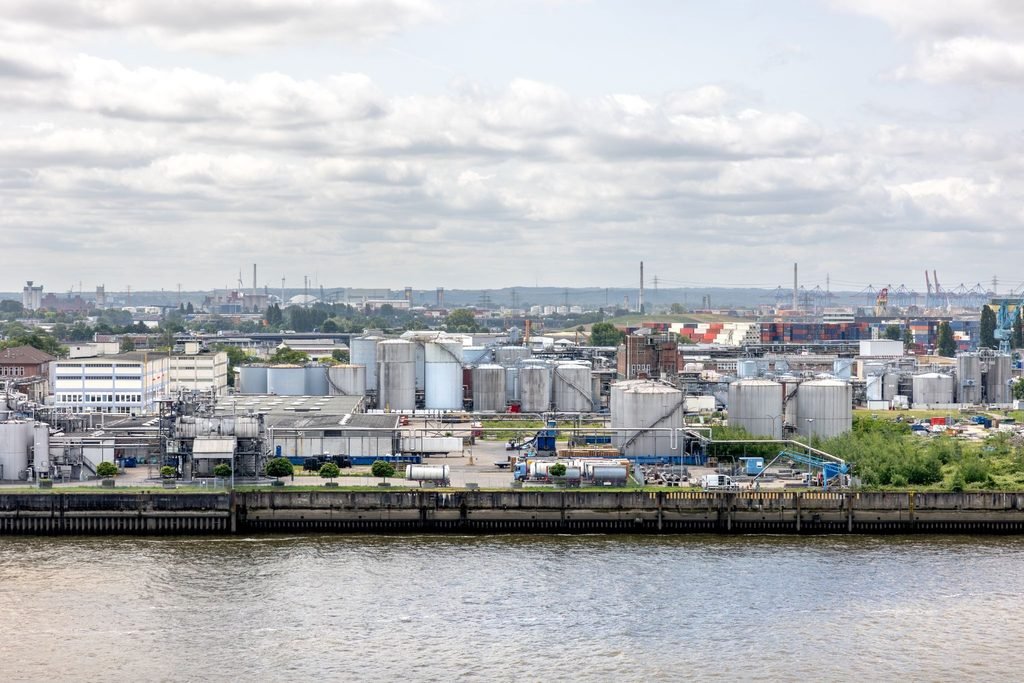
In public policy circles, we frequently analyze how statutory compliance costs ripple across market behaviors. In the boardroom, regulatory compliance under the Rotterdam Convention is frequently met with friction because adjusting chemical inventories, tracking notifications, and vetting international suppliers inevitably increases short-term overhead. Yet, looking through an analytical lens, treating compliance purely as a cost burden is a short-sighted strategy.
The most successful organizations I have partnered with recognize that trade restrictions are actually valuable market signals. If an enterprise waits for a blanket statutory ban before phasing out high-risk inputs, it exposes itself to catastrophic logistical bottlenecks and severe reputational damage. Conversely, deploying predictive risk management and embracing green chemistry early transforms regulatory pressure into a definitive competitive advantage.
Much like inspecting a beehive to spot systemic stress before a colony weakens, conducting proactive chemical supply chain audits catches non-compliance risks before border authorities issue export hold orders or levy steep fines. Investing in cleaner alternatives and agile compliance tools today builds lasting operational insulation against the inevitable tightening of global environmental standards tomorrow.
As you navigate the regulatory landscape shaped by the Rotterdam Convention, understanding the compliance framework is essential for your operations in the chemical industry.
You’ll need effective strategies and tools to meet these requirements, ensuring that your practices align with international standards.
Examining case studies can provide valuable insights and help you identify common challenges and successful approaches.
Regulatory Framework Overview
Maneuvering through the complexities of the regulatory framework established by the Rotterdam Convention can be intimidating for companies in the chemical industry.
Understanding the compliance frameworks is essential to navigate the regulatory challenges effectively. Here are three key areas to focus on:
- Notification Obligations: Familiarize yourself with the requirements for notifying authorities about hazardous chemicals to guarantee compliance.
- Risk Assessment: Conduct thorough risk assessments to evaluate the potential impacts of chemical trade restrictions on your operations.
- International Collaboration: Engage in dialogues with other companies and regulatory bodies to share best practices and stay updated on regulatory changes.
Compliance Strategies and Tools
Steering through the regulatory landscape set by the Rotterdam Convention requires not just understanding compliance obligations but also implementing effective strategies and tools to manage them.
To navigate these challenges, you should prioritize compliance monitoring systems that enable real-time tracking of regulatory changes and adherence. Incorporating advanced analytics can enhance your risk assessment processes, allowing you to identify potential compliance gaps before they escalate.
Leveraging software solutions tailored for the chemical industry can streamline documentation and reporting, ensuring you meet both local and international requirements.
Additionally, fostering a culture of compliance within your organization can drive innovation, as teams become proactive in addressing regulatory challenges.
Case Studies and Examples
Maneuvering compliance challenges in the chemical industry can be complex, but several case studies illustrate effective strategies that companies have employed.
Here are three industry examples that showcase innovative solutions:
- Proactive Risk Assessment: A major chemical firm integrated advanced analytics to evaluate the compliance risks associated with Rotterdam Convention restrictions, allowing for informed decision-making.
- Collaborative Partnerships: Another company formed alliances with NGOs and regulatory bodies, enhancing its understanding of compliance requirements and fostering transparency in its operations.
- Sustainable Innovation: A third example highlights a manufacturer that invested in green chemistry technologies, not only meeting compliance but also gaining a competitive edge through sustainable practices.
These case studies demonstrate that effective Basel Convention hazardous waste chemical governance can help industries strengthen compliance, improve waste management practices, and reduce environmental risks.
Effects on Global Supply Chains
As global trade evolves, the Rotterdam Convention greatly influences supply chains by imposing stringent regulations on hazardous chemicals and pesticides. This affects your chemical sourcing strategies, compelling you to adapt to new trade policy implications. You must consider supply chain resilience, ensuring that your operations remain efficient and compliant in a shifting landscape.
Here’s a snapshot of how these factors interplay in global market dynamics:
| Factor | Description | Implication for Industry |
| Regulatory Compliance | Adherence to Rotterdam Convention guidelines | Increased operational costs |
| Sourcing Alternatives | Rethinking suppliers and materials | Necessitates innovation and adaptation |
| Risk Management | evaluating potential disruptions | Enhances supply chain resilience |
| Market Access | maneuvering restrictions on trade | Affects competitiveness globally |
| Environmental Standards | Meeting sustainability criteria | Drives eco-friendly practices |
How to Implement Sustainable Practices in a Regulated Industry
The Rotterdam Convention on the Prior Informed Consent Procedure for Certain Hazardous Chemicals and Pesticides in International Trade (the Rotterdam Convention) is a multilateral agreement which establishes a procedure for obtaining and exchanging information between countries regarding certain hazardous chemicals. The Rotterdam convention covers pesticides and industrial chemicals that have been banned or severely restricted for health or environmental reasons by Parties.
While implementing sustainable practices in a regulated industry may seem intimidating, it’s essential for both compliance and long-term viability.
By adopting innovative strategies, you can enhance your operations while adhering to regulations. Here are three key steps to guide you:
- Sustainable Sourcing: Prioritize materials from suppliers who practice sustainability. This not only reduces environmental impact but also strengthens your supply chain’s resilience.
- Eco-Friendly Manufacturing: Invest in technologies that minimize waste and energy consumption while incorporating eco friendly products where appropriate. Shifting to greener processes can improve efficiency and lower operational costs.
- Employee Training and Engagement: Foster a culture of sustainability within your workforce. Equip employees with the knowledge and skills to implement eco-friendly practices, ensuring that everyone contributes to your sustainability goals.
Future Trends in Chemical Regulation and Industry Adaptation
The landscape of chemical regulation is evolving rapidly, driven by increasing environmental awareness and public demand for safer products. As you look ahead, future regulations will likely become more stringent, pushing the industry to innovate continually.
You’ll need to stay ahead of these changes by investing in research and development for safer alternatives to hazardous substances.
Sustainable practices are no longer just a trend; they’re becoming vital for compliance and market competitiveness. Companies that embrace industry innovation will find opportunities for growth and differentiation.
This shift calls for a proactive approach to regulatory compliance, where anticipating changes becomes as important as reacting to them.
Moreover, collaboration with stakeholders, including regulators and environmental groups, will be essential. By aligning your strategies with international environmental agreements, you can also consider Stockholm Convention persistent organic pollutants policy effects when strengthening chemical management practices and preparing for evolving regulatory requirements.
Adaptation is key in this evolving landscape.
RELATED STUDIES ABOUT ROTTERDAM CONVENTION CHEMICAL TRADE RESTRICTIONS ENVIRONMENT
In traversing the labyrinth of the Rotterdam Convention, you’ll find that adapting to chemical trade restrictions isn’t just a hurdle; it’s an opportunity for innovation and sustainability. By embracing safer alternatives and fostering compliance, you can transform challenges into stepping stones, paving the way for a greener industry. As regulations evolve, staying ahead of the curve will not only secure your position in the market but also contribute to a healthier planet for future generations.
China’s synergy in the implementation of international conventions on chemicals and waste
This paper examines how China coordinates the implementation of four major international chemicals and waste conventions: the Basel, Stockholm, Rotterdam, and Minamata conventions. It evaluates China’s policy measures, highlights existing compliance and trade challenges, and outlines strategic priorities for full life-cycle chemicals management.
Key Findings & Achievements
- Multilateral Synergies in Action: The four conventions share significant operational and chemical overlap. China has leveraged cross-convention coordination—particularly between Stockholm and Rotterdam on pesticide bans, and between Stockholm and Basel on hazardous waste disposal.
- Elimination of POPs: China approved around 23 of the 30 substances controlled under the Stockholm Convention (as of late 2020). It phased out early legacy POPs (e.g., DDT, chlordane, mirex) by 2009, ended the production and use of lindane and endosulfan by late 2019, and placed restrictions on PFOS and HBCD while adding them to national survey systems.
- Hazardous Waste Remediation: Through Global Environment Facility (GEF) partnerships, China disposed of 6,352 tons of POPs pesticides and 42,000 tons of contaminated soil, reducing health risks for up to 15 million people. It also cleared over 5,200 units of PCB-containing electrical equipment across 20 provinces by 2015, meeting Stockholm Convention targets ahead of schedule.
- Mercury Management Alignment: Implementing Best Available Techniques/Best Environmental Practices (BAT/BEP) to reduce dioxins under Stockholm concurrently lowered industrial mercury emissions. China also integrated mercury controls into the List of Strictly Restricted Toxic Chemicals (aligning with Rotterdam and Minamata) and updated its National Hazardous Waste List (code HW29) in accordance with Basel guidelines.
Strategic Drivers for Life-Cycle Management
- Trade & Global Environmental Governance: Developing nations face growing green trade barriers and stricter environmental thresholds imposed by developed countries. Establishing a full life-cycle chemical management framework enables China to defend the interests of developing nations, form legal alliances, and handle disputes under multilateral regimes.
- Cost Internalization: Shifting from end-of-pipe cleanup to full life-cycle management forces domestic enterprises to internalize environmental externalities through cleaner production and eco-design, strengthening long-term international competitiveness.
- Data-Driven Governance: Enhancing the transparency and standard reporting of chemical data throughout their life cycle is critical for meeting Sustainable Development Goal 12 and supporting evidence-based global decision-making.
Policy Recommendations
- Build a Full Life-Cycle Management System: Institutionalize comprehensive tracking and risk control covering R&D, production, storage, transport, trade, use, and disposal.
- Strengthen International Coordination: Form a robust multilateral coordination mechanism to enhance China’s public diplomacy and leadership during convention negotiations.
- Bolster Legal Binding & Domestic Investment: Support legally binding hard-law mechanisms internationally while increasing domestic financial investment, refining convention implementation rules, and clarifying institutional responsibilities.
| REFERENCE: Liyuan Liu, Guanglong Wu, Yong Ren, Yang Chen, Qinzhong Feng, China’s synergy in the implementation of international conventions on chemicals and waste, Emerging Contaminants, Volume 7, 2021, Pages 132-138, ISSN 2405-6650, https://doi.org/10.1016/j.emcon.2021.03.002. (https://www.sciencedirect.com/science/article/pii/S2405665021000081) |
Phasing-out of legacy brominated flame retardants: The UNEP Stockholm Convention and other legislative action worldwide
This study reviews the global phase-out of legacy brominated flame retardants (BFRs) listed under the UNEP Stockholm Convention—specifically polybrominated diphenyl ethers (PBDEs), hexabromocyclododecane (HBCDD), and hexabromobiphenyl (HBB). It evaluates international regulatory frameworks, analyzes technological bottlenecks in circular waste streams, and addresses the challenge of regrettable chemical substitutions.
The Stockholm Convention Framework & Exemptions
- Targeted POP-BFRs: Five legacy BFR groups are listed in Annex A (Elimination): HBB, HBCDD, commercial Octa-BDE, commercial Penta-BDE, and commercial Deca-BDE.
- PBDE Exemptions: Commercial Penta- and Octa-BDE include recycling exemptions for registered parties (e.g., Brazil, Japan, Turkey, and the Republic of Korea) that allow recycling of contaminated articles and downstream use under specific conditions; these exemptions are set to expire by 2030. Deca-BDE (listed in 2019) includes broader, time-limited exemptions for legacy vehicular parts, aviation components, electrical and electronic equipment (EEE) plastic housings (<10% by weight), and building foams, expiring by 2036.
- HBCDD & HBB: HBCDD restrictions took effect in 2014, with exemptions strictly limited to expanded and extruded polystyrene (EPS/XPS) foams in buildings (with China availing of production/use exemptions and the Republic of Korea for use). HBB, listed in 2004 without exemptions, has seen its commercial use almost entirely eliminated globally.
Regional Regulatory Implementation
- European Union: The EU represents the most comprehensive regime through Regulation (EU) 2019/1021 (POPs), Directive 2011/65/EU (RoHS), and REACH. It defines Unintentional Trace Contaminant (UTC) market limits (e.g., 500 mg/kg sum of PBDEs; 100 mg/kg for HBCDD) and enforces a 1,000 mg/kg threshold in waste streams, above which specialized disposal methods (physicochemical treatment, incineration on land, or use as fuel) are required.
- United States: The U.S. lacks a federal mandate for POP-BFR restrictions and has not ratified the relevant annexes. However, 13 states have enacted independent limits. Several states (including California, Maine, Minnesota, New Hampshire, and Rhode Island) have established broader restrictions on all halogenated flame retardants (HFRs) in specific product classes like children’s products, mattresses, and residential upholstered furniture.
- Asia-Pacific & South America: China enforces a 0.1% limit for Penta- and Octa-BDEs in electronic products and banned HBCDD (except for building insulation exemptions), but had not ratified the Deca-BDE listing as of the study’s writing. Japan regulates HBB and lower-brominated PBDEs as Class I Specified Chemical Substances. India bans trade and import of HBB, HBCDD, and Penta-/Octa-BDEs, restricting PBDEs in certain EEE. Brazil and Indonesia lack established domestic concentration limits in consumer goods or waste streams.
Waste Screening Limitations & Regrettable Substitutions
- Recycling and Waste Leakage: A primary failure in the circular economy is the unintentional recycling of BFR-treated plastics into new consumer articles due to a lack of industrial-scale sorting infrastructure. While lab-grade GC-MS and LC-MS offer high accuracy, they are too slow and expensive for mass waste streams. Fast screening methods like X-ray Fluorescence (XRF) show promise (>90% screening effectiveness; detection down to 0.001% bromine) but cannot distinguish between regulated POP-BFRs and unregulated replacements, while Fourier-Transform Infrared (FTIR) exhibits higher limits of detection (~1%).
- The Substitution Cycle: Phase-outs have driven the widespread adoption of novel BFRs (NBFRs) and alternative additives—such as decabromodiphenyl ethane (DBDPE) replacing Deca-BDE, and polymeric flame retardants (Poly-FRs) replacing HBCDD. Because NBFRs share similar structures, persistent properties, and potential hazards with legacy compounds, chemical bans without broader standards reform perpetuate a cycle of regrettable substitution.
Strategic Recommendations
- Reform Flammability Standards: Governments should reconsider the baseline necessity of chemical flame retardants in consumer products. Following regulatory models like California TB 117-2013, fire safety should prioritize smoke detection, public education, and smolder resistance over chemical additives.
- Deploy Rapid Waste Screening: Waste management facilities must adopt validated high-throughput screening technologies (such as portable XRF) to prevent contaminated feedstocks from entering secondary recycling chains.
- Adopt Class-Based Regulations: Regulators should shift from individual chemical bans toward class-based restrictions (e.g., prohibiting all organohalogen flame retardants in specific applications) to prevent immediate replacement with structurally similar, unstudied analogs.
| REFERENCE: Martin Sharkey, Stuart Harrad, Mohamed Abou-Elwafa Abdallah, Daniel S. Drage, Harald Berresheim, Phasing-out of legacy brominated flame retardants: The UNEP Stockholm Convention and other legislative action worldwide, Environment International, Volume 144, 2020, 106041, ISSN 0160-4120, https://doi.org/10.1016/j.envint.2020.106041. (https://www.sciencedirect.com/science/article/pii/S0160412020319966) |
Strategic forecasting of GHG intensity: Econometrically enhanced LCA for the Singapore-Rotterdam containership green corridor
This study provides a prospective life cycle assessment and econometric forecast of greenhouse gas intensity and regulatory compliance costs for an 8,000 TEU containership operating along the Singapore-Rotterdam green shipping corridor through 2050. By integrating time-series demand forecasting with well-to-wake lifecycle analysis, the authors evaluate Marine Diesel Oil, bio-methanol, and e-methanol against the FuelEU Maritime regulation and the EU Emissions Trading System.
Methodological Approach
- Demand and Fleet Forecasting: Historical trade and macroeconomic indicators from 2000 to 2023 were analyzed using Pearson correlation and linear regression, then projected through 2050 via the Holt-Winters additive exponential smoothing model. Under the primary forecast scenario, corridor container throughput increases from 5.73 million TEU (requiring 477 vessels) in 2025 to 9.171 million TEU (requiring 764 vessels) in 2050.
- Lifecycle Boundaries: Emissions are evaluated across both well-to-tank and tank-to-wake stages using CML 2001 global warming potential factors, normalized to grams of carbon dioxide equivalent per megajoule of fuel consumed.
- Upstream Supply Modeling: Production pathways reflect local industrial profiles, including municipal solid waste and biogas gasification in Delfzijl and Rotterdam powered by wind or natural gas, as well as direct air capture electrolysis in Singapore powered by solar photovoltaic electricity.
Key Environmental Findings
- Operational Tank-to-Wake Emissions: Deploying methanol dual-fuel engines with marine diesel pilot fuel reduces operational tank-to-wake emissions by 20 percent compared to conventional marine diesel oil engines, dropping from 94 million kilograms of carbon dioxide equivalent to 75.1 million kilograms.
- Grid Dependency in Well-to-Wake Emissions: Upstream electricity sources are the primary determinant of lifecycle carbon intensity. E-methanol produced using solar energy achieves negative well-to-tank emissions of negative 24.49 grams of carbon dioxide equivalent per megajoule, yielding the lowest net well-to-wake intensity at 47.76 grams. In 2050, solar e-methanol reduces lifecycle emissions by 26 percent relative to 2025 marine diesel oil levels and by 54 percent relative to 2050 marine diesel oil levels.
- Underperformance of Gas-Powered Bio-Methanol: Bio-methanol synthesized using natural gas-derived electricity exhibits a well-to-wake intensity between 94.01 and 94.87 grams of carbon dioxide equivalent per megajoule, performing worse than standard marine diesel oil at 90.62 grams. Wind-powered bio-methanol achieves a better intensity between 83.17 and 83.48 grams.
Economic and Regulatory Implications
- FuelEU Maritime Penalties: Solar e-methanol remains compliant with declining FuelEU carbon intensity targets through 2045, accumulating the lowest total non-compliance penalties at approximately 80.67 million euros through 2050. Wind-based bio-methanol complies until 2035, yielding cumulative penalties of 338.89 million to 340.91 million euros. Marine diesel oil and natural-gas-derived bio-methanol breach limits immediately in 2025, generating cumulative fines exceeding 678.58 million euros and 640 million euros, respectively.
- EU Emissions Trading System Costs: Because the Emissions Trading System applies strictly to operational tank-to-wake emissions, dual-fuel methanol vessels incur lower allowance costs than diesel vessels across all projected years. Under baseline projections, annual allowance costs peak in 2045 at 4.35 million euros for methanol versus 5.42 million euros for marine diesel oil.
- Sensitivity to Policy Mechanisms: FuelEU penalty structures represent 60 to 80 percent of total compliance expenses for marine diesel oil, making conventional fuel cost-prohibitive beyond 2040. Conversely, e-methanol is sensitive to allowance prices early on but gains economic insulation as carbon intensity requirements tighten.
Strategic Takeaways
- E-methanol synthesized via dedicated renewable electricity is the only evaluated pathway capable of serving as a viable, long-term net-zero fuel that avoids severe regulatory penalties through 2045.
- The environmental credibility of the Singapore-Rotterdam green corridor depends on massive dedicated investments in local solar and wind capacity, ensuring that alternative fuel production avoids shifting emissions to regional electric grids.
| REFERENCE: Ioannis Chalaris, Byongug Jeong, Jaehoon Jee, Strategic forecasting of GHG intensity: Econometrically enhanced LCA for the Singapore-Rotterdam containership green corridor, Results in Engineering, Volume 28, 2025, 107437, ISSN 2590-1230, https://doi.org/10.1016/j.rineng.2025.107437. (https://www.sciencedirect.com/science/article/pii/S2590123025034929) |
CONCLUSION
Looking at where global trade policy is heading, the trajectory is unmistakably clear: the days of operating outside strict environmental accountability are over. The multilateral mechanisms governing hazardous chemicals—whether Rotterdam, Stockholm, or cross-border shipping pacts—are converging toward a full life-cycle model where companies must account for an input’s entire ecological footprint.
Throughout my career advising on public policy, I have consistently seen that the most resilient operations are never those that fight regulation until the last statutory deadline; they are the organizations that adapt their business models to align with ecological reality. Sustainable governance is not about perfection overnight, but about pragmatic, continuous structural iteration.
By treating chemical trade restrictions as a catalyst to pioneer bio-based substitutes and streamline sourcing transparency, industry leaders do far more than avoid legal penalties—they future-proof their supply chains against market volatility. Aligning industrial productivity with robust environmental stewardship is the only viable path forward for long-term commercial longevity and broader planetary health.