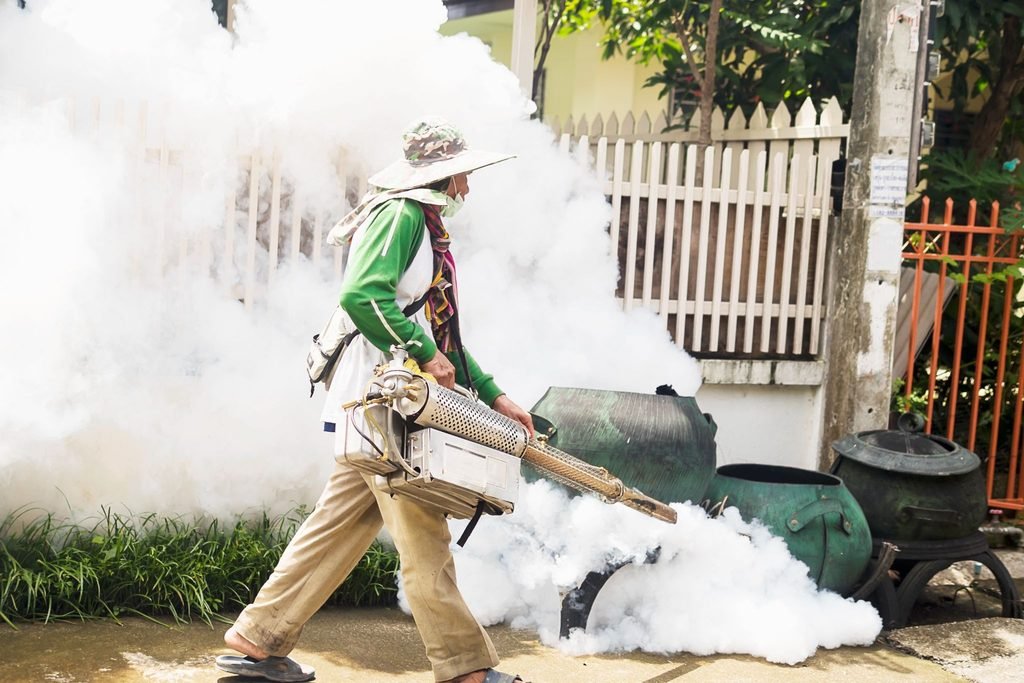
Whenever I head out into the field with my sketchpad and binoculars, I am constantly reminded that our ecosystems rely entirely on the smallest, often overlooked creatures. Early morning field surveys often reveal a stark truth: the quiet disappearance of our most vital pollinators. In both urban micro-habitats and broad agricultural landscapes, synthetic chemical applications have transformed essential foraging grounds into hazardous territory.
When we discuss pesticide contamination, we are not merely evaluating chemical application rates or isolated farm management metrics; we are witnessing a systemic breakdown of biodiversity that ripples across the entire web of life. As an urban ecologist and researcher, I have documented native bee nesting sites and insect corridors for years, and the sharp decline in species richness is impossible to ignore.
Chemicals engineered to eradicate specific crop pests inevitably spill over into wild spaces, poisoning non-target insects, eroding natural predator populations, and dulling the sensory navigation systems of our most hardworking pollinators. If we fail to recognize that insect decline is a direct precursor to ecological and agricultural failure, we risk unraveling the living foundations of our food systems and urban green spaces. Addressing this crisis demands that we confront our chemical dependence head-on.
Pesticide contamination greatly impacts insect biodiversity worldwide, driving alarming declines in various species. Herbicides and insecticides disrupt essential behaviors, contribute to habitat fragmentation, and worsen pollinator health, leading to decreased reproduction rates and impaired navigation. The resulting loss of insect diversity threatens entire ecosystems and agricultural productivity, as reduced pollination affects crop yields. Understanding these dynamics is vital for developing effective strategies. You’ll find more insights on sustainable practices and policies that can help combat these challenges.
KEY TAKEAWAYS
- Pesticides cause direct mortality and sublethal effects, disrupting essential behaviors in insect populations, leading to biodiversity loss.
- Habitat fragmentation from pesticide application isolates insect populations, reducing genetic diversity and overall ecosystem resilience.
- Pollinator health declines due to pesticide exposure, negatively impacting crop yields and threatening food security worldwide.
- Increased pesticide reliance raises costs for farmers, ultimately affecting economic stability and agricultural sustainability.
- Legislative reforms targeting pesticide use promote biodiversity recovery by encouraging sustainable practices and supporting ecological balance.
TYPES OF PESTICIDES AND THEIR USES
When you consider the various types of pesticides, it’s essential to understand their specific uses and potential impacts on ecosystems.
Herbicide types, for instance, are designed to target specific plant species, often disrupting local flora. By selectively eliminating weeds, they can enhance crop yields but may also inadvertently harm beneficial plants, leading to diminished biodiversity and highlighting the herbicide effects on plant species diversity.
Insecticide applications, on the other hand, focus on controlling pest populations that threaten agricultural productivity. However, these chemicals can have unintended consequences, such as affecting non-target insects, including pollinators and natural pest predators.
Innovative approaches are emerging, such as integrated pest management (IPM), which aims to minimize the reliance on chemical pesticides through biological controls and careful monitoring.
Understanding the nuanced roles of different pesticide types not only informs more sustainable agricultural practices but also highlights the critical need for ongoing research to mitigate their ecological impacts.
How Pesticides Affect Insect Populations
Pesticides affect a diverse range of non-target species and may be linked to global biodiversity loss. The magnitude of this hazard remains only partially understood. We present a synthesis of pesticide (insecticide, herbicide and fungicide) impacts on multiple non-target organisms across trophic levels based on 20,212 effect sizes from 1,705 studies. For non-target plants, animals (invertebrate and vertebrates) and microorganisms (bacteria and fungi), we show negative responses of the growth, reproduction, behaviour and other physiological biomarkers within terrestrial and aquatic systems. Pesticides formulated for specific taxa negatively affected non-target groups, e.g. insecticidal neonicotinoids affecting amphibians. Negative effects were more pronounced in temperate than tropical regions but were consistent between aquatic and terrestrial environments, even after correcting for field-realistic terrestrial and environmentally relevant exposure scenarios. Our results question the sustainability of current pesticide use and support the need for enhanced risk assessments to reduce risks to biodiversity and ecosystems.
Pesticides exert significant toxicity effects on insect populations, leading to direct mortality and sublethal impacts that disrupt behaviors essential for survival.
Additionally, habitat disruption mechanisms caused by pesticide application can alter ecosystems, making them less hospitable for diverse insect species.
Importantly, trends in pollinator decline highlight the urgent need to address these issues, as their loss poses serious consequences for agricultural productivity, urban biodiversity, and ecological balance.
Pesticide Toxicity Effects
Pesticides are designed to kill — but when they are widely used in agriculture, they don’t just target pests. Many of these chemicals also harm beneficial insects like bees, butterflies, beetles, and other pollinators critical for healthy ecosystems and food production.
Although they’re often touted for their effectiveness in pest control, the toxicity of pesticides can greatly disrupt insect populations. These chemicals create complex chemical exposure pathways that can lead to acute and chronic effects on non-target species.
Insects often develop pesticide resistance mechanisms, making them less susceptible to these toxins over time. However, this resistance can come at a cost; it may reduce genetic diversity and weaken overall population stability.
Additionally, the disruption of reproductive health, immune function, and behavior in affected insects can lead to cascading ecological impacts. As we innovate pest management strategies, understanding these toxicity effects is critical to preserving insect biodiversity and maintaining ecosystem balance.
Habitat Disruption Mechanisms
As agricultural practices intensify, the habitat disruption caused by pesticide use becomes increasingly evident.
Pesticides contribute to habitat fragmentation, isolating insect populations and reducing their ability to thrive. This fragmentation disrupts essential ecological processes and decreases ecosystem resilience, making it harder for ecosystems to recover from disturbances.
As you consider the implications, think about how these chemicals not only affect target pests but also non-target insects vital for maintaining biodiversity. The resulting decline in insect populations can lead to cascading effects throughout the food web, ultimately compromising ecosystem stability.
Pollinator Decline Trends
The ongoing fragmentation of habitats greatly contributes to the alarming trends in pollinator decline. Pesticides, particularly neonicotinoids, exacerbate this issue by impacting pollinator health directly and indirectly. To counteract these trends, innovative habitat restoration methods are essential.
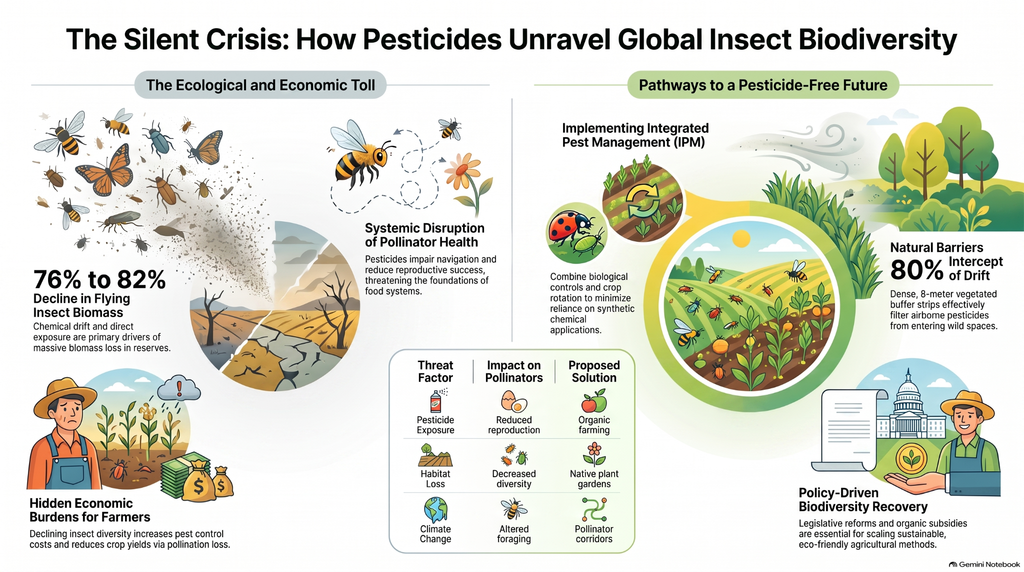
| Factor | Impact on Pollinators | Solution |
| Pesticide Exposure | Reduced reproduction | Organic farming |
| Habitat Loss | Decreased diversity | Native plant gardens |
| Climate Change | Altered foraging | Pollinator corridors |
The Impact of Pesticides on Pollinator Declines
Pesticides considerably contribute to the alarming decline of pollinator populations, primarily by disrupting their natural behaviors and reproductive cycles. Research highlights several critical effects of pesticide exposure on pollinators:
- Impaired Navigation: Pollinators struggle to locate food sources due to altered sensory perception.
- Reduced Reproductive Success: Exposure can lead to lower fertility rates, impacting population sustainability.
- Aggressive Foraging Behavior: Pollinators may forage more aggressively, increasing their risk of encountering harmful substances.
- Increased Mortality Rates: Chronic exposure can lead to higher death rates, diminishing overall population resilience.
These factors collectively compromise pollinator behavior, making it increasingly challenging for these essential species to thrive.
As innovative solutions emerge, understanding the intricate link between pesticides and pollinator decline must guide future agricultural practices and conservation efforts.
HOW PESTICIDES DISRUPT ECOSYSTEMS AND INSECT HABITATS
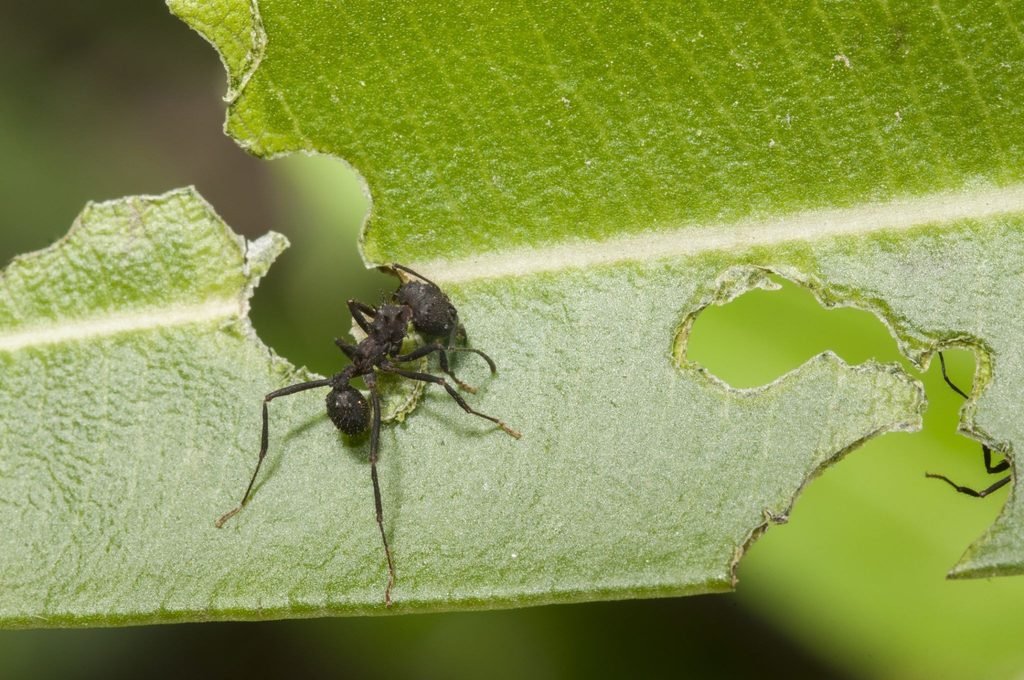
In my research on ecosystem resilience, one pattern stands out clearly: chemical interventions rarely stay confined to their intended targets. When an insecticide or broad-spectrum herbicide is sprayed, it sets off a cascading failure across multiple trophic levels. In the field, I frequently observe native solitary bees and hoverflies exhibiting sublethal distress—disoriented flight patterns, abandoned nests, and reduced foraging efficiency—after coming into contact with low-level chemical drift. When synthetic pesticides leach into the soil, they do not just eliminate target pests; they decimate the subterranean invertebrates and beneficial microbes that build soil structure and cycle critical nutrients.
Furthermore, chemical saturation creates fragmented biological dead zones where insect populations become genetically isolated, leaving them vulnerable to climate stress and disease. The economic irony is profound: by spraying broad-spectrum treatments to protect crops in the short term, we destroy the natural predators and wild pollinators that provide free, resilient ecosystem services year after year.
Restoring balance requires an intentional shift toward agroecological practices, integrated pest management, and dense native plant buffers that actively filter airborne drift. Without functional, biologically diverse insect communities providing pest regulation and pollination, the stability of both rural croplands and urban ecosystems simply collapses under its own weight.
Loss of pollinator populations is just one facet of a broader issue: the disruption of ecosystems and insect habitats caused by pesticide use. Pesticides alter ecosystem balance by targeting not only harmful pests but also beneficial insects essential for maintaining biodiversity. This chemical interference compromises habitats, leading to decreased availability of food sources and safe nesting sites.
As insect populations dwindle, the intricate relationships within ecosystems falter, resulting in cascading effects on flora and fauna alike.
You might consider the urgent need for habitat restoration initiatives that prioritize organic farming and integrated pest management. By adopting innovative strategies, you can help mitigate the adverse effects of pesticides.
These approaches encourage a healthier ecosystem balance, ultimately fostering resilience in insect populations. Emphasizing sustainable practices not only benefits biodiversity but also enhances the overall health of our ecosystems, paving the way for a more harmonious coexistence between agriculture and nature.
Economic Consequences of Declining Insect Populations for Farmers
As insect populations decline, farmers face significant economic repercussions that extend beyond mere crop yields.
The economic impact of this loss is profound, prompting farmers to rethink their strategies for sustainability and profitability. Here are some critical considerations:
- Reduced Pollination: Many crops depend on insect pollinators, leading to lower production rates.
- Increased Pest Control Costs: With fewer natural predators, farmers may need to rely more on chemical pesticides, raising expenses.
- Market Value Fluctuations: Crop scarcity can inflate prices, but reduced quality can lead to decreased consumer demand.
- Long-term Soil Health: Declining insect diversity can compromise soil ecosystems, affecting future planting cycles and yields.
Adapting farmer strategies to address these challenges is essential.
Emphasizing integrated pest management and seeking alternative agricultural practices can mitigate losses while promoting biodiversity.
The road ahead requires innovation and proactive approaches to sustain economic viability.
Sustainable Practices to Protect Insect Diversity
The decline in insect populations not only threatens agricultural profitability but also raises urgent questions about how to maintain biodiversity.
To address this, you must consider sustainable practices like organic farming and habitat restoration. Organic farming minimizes pesticide use, fostering healthier ecosystems that support diverse insect populations. By implementing crop rotation and polyculture, you can create a dynamic environment that encourages beneficial insects, which are essential for pollination and pest control. Choosing eco friendly products can also help reduce reliance on harmful chemicals and support more sustainable agricultural practices.
Simultaneously, habitat restoration plays a pivotal role. By revitalizing natural landscapes, such as wetlands and native meadows, you can provide essential resources for insects.
This not only enhances their habitats but also promotes a resilient ecosystem.
Policies for a Pesticide-Free Future
To achieve a pesticide-free future, you’ll need to contemplate implementing sustainable agricultural practices that prioritize ecological balance.
Legislative reform initiatives will play an essential role in regulating pesticide use and promoting safer alternatives.
Together, these strategies can greatly enhance insect biodiversity while ensuring agricultural productivity.
Sustainable Agricultural Practices
Soil biodiversity also reduces the impacts of extreme droughts and floods, which are becoming more common as the climate changes. Invertebrates like earthworms and ants are ecosystem engineers. They craft and maintain the structure of soils with their tunnels and burrows, allowing for the flow of nutrients, air and water throughout the ecosystems below ground. Healthy soil with good structure acts as a sponge — readily absorbing water during intense rains and holding on to it during dry times — improving farmers’ outcomes during weather extremes.
While many agricultural systems still rely heavily on pesticides, exploring sustainable practices can pave the way for a pesticide-free future.
Implementing innovative strategies not only enhances biodiversity but also promotes long-term soil health and productivity.
Consider these sustainable practices:
- Crop rotation: Alternating crops to disrupt pest cycles and improve soil nutrients.
- Organic farming: Utilizing natural inputs to foster healthy ecosystems without synthetic chemicals.
- Integrated pest management (IPM): Combining biological, cultural, and chemical tools to minimize pesticide use.
- Agroforestry: Incorporating trees and shrubs with crops to enhance biodiversity and provide habitat for beneficial insects.
Legislative Reform Initiatives
As nations recognize the urgent need to address pesticide-related challenges, legislative reform initiatives emerge as an essential step toward a pesticide-free future. Effective legislative priorities must focus on developing robust regulatory frameworks that limit pesticide use while promoting sustainable alternatives.
| Initiative | Description | Impact |
| Ban on Harmful Pesticides | Prohibiting the use of specific harmful chemicals | Reduces biodiversity loss |
| Subsidies for Organic Farming | Financial support for organic practices | Encourages sustainable agriculture |
| Education Programs | Training for farmers on eco-friendly methods | Enhances awareness and skills |
| Monitoring Systems | Establishing systems to track pesticide use | Informs policy adjustments |
RELATED STUDIES ABOUT PESTICIDE CONTAMINATION AND INSECT BIODIVERSITY LOSS
In the intricate web of our ecosystems, pesticides act as a double-edged sword, slicing through insect populations and threatening biodiversity. The decline of these essential species not only disrupts pollination but also jeopardizes agricultural stability. To safeguard our planet’s health and guarantee sustainable farming, embracing eco-friendly practices and advocating for stringent policies is imperative. By prioritizing insect diversity, we’re not just protecting nature; we’re securing our future. Now’s the time to act before the silence of the bees becomes our reality.
Multi-trophic biodiversity responses to pesticide residues in Mollisol croplands
Overview and Study Purpose
This study evaluates the occurrence of multi-class pesticide residues and their ecological effects across multi-trophic soil biodiversity (bacteria, fungi, protists, and metazoa) in Northeast China’s Mollisol (black-soil) croplands. Researchers surveyed 111 topsoil samples collected across maize-soybean cropping systems to quantify 22 target pesticides, assess screening-level ecological risks, and evaluate biological community responses using DNA metabarcoding.
Key Findings
- High Detection and Residue Profiles: Pesticides were widely detected across all sampled regions. The residue profile was led by herbicides such as nicosulfuron (79.3%), atrazine (52.3%), and acetochlor (49.5%); neonicotinoid insecticides including imidacloprid (70.3%) and clothianidin (64.9%); and fungicides including chloroneb (53.2%).
- Screening-Level Ecological Risk: Risk quotient (RQ) evaluations identified atrazine, clothianidin, and difenoconazole as major regional concerns with median RQ values greater than 1. At the mixture level, 85.6% of samples exceeded cumulative additive risk thresholds, though this cumulative risk was largely driven by individual predicted no-effect concentration (PNEC) exceedances from a few dominant compounds rather than uniform contributions across all residues.
- Trophic-Specific Biodiversity Responses:
- Metazoa: Exhibited the strongest negative association with pesticide burdens, with the pesticide block accounting for approximately 29.3% of independent model variance and ranking as the top predictor across 74% of bootstrap resamples.
- Bacteria: Primarily driven by edaphic factors, specifically soil pH, which accounted for 39.9% of independent model variance.
- Fungi: Strongly structured by cropping systems (32.2%) and spatial location (29.1%), with crop rotation supporting higher fungal diversity than continuous monoculture.
- Protists: Exhibited low overall explainable variation within the measured environmental parameters.
Core Takeaways and Management Implications
- Environmental Drivers of Retention: Field-to-field residue variations correlated with soil organic carbon and total nitrogen. The combination of high organic matter enhancing pesticide sorption and cold regional climates shortening microbial degradation windows fosters elevated persistence and retention of pesticide residues.
- Soil Health Assessment Gaps: Bio-monitoring frameworks focused solely on lower-trophic microbial groups (bacteria and fungi) can overlook chemical pressures. Incorporating higher-trophic soil fauna (metazoa) alongside compound-specific mixture risk metrics provides a more sensitive and ecologically realistic assessment for agrochemical risk management.
| REFERENCE: Hui Ju, Min Qiao, Multi-trophic biodiversity responses to pesticide residues in Mollisol croplands, Geoderma, Volume 472, 2026, 117944, ISSN 0016-7061, https://doi.org/10.1016/j.geoderma.2026.117944. (https://www.sciencedirect.com/science/article/pii/S0016706126002727) |
Beyond the field: How pesticide drift endangers biodiversity
Overview & Scope
This review examines the mechanisms, scale, and ecological ramifications of airborne pesticide drift (including direct spray drift and post-application volatilization). The authors synthesize evidence demonstrating that pesticide transport extends hundreds to thousands of kilometers beyond target agricultural sites, driving non-target biodiversity loss across terrestrial and aquatic ecosystems while exposing critical deficiencies in conventional environmental risk assessment (ERA) frameworks.
Key Drivers & Transport Dynamics
- Mass Loss and Volatilization: Up to 25% of applied pesticides drift into the atmosphere, with loss rates reaching up to 60% during summer peaks. Volatilization is up to 25 times more frequent than surface runoff and can result in chemical losses 130- to 150-fold greater (e.g., atrazine and metolachlor).
- Environmental & Atmospheric Factors: Drift and volatilization rates are governed by vapor pressure, ambient temperature, relative humidity, wind dynamics, and soil moisture (which releases bound residues from soil sorption sites).
- Deposition Pathways: Contaminants return to ecosystems via wet deposition (scavenging up to 80% of hydrophilic particles) and dry deposition (predominantly removing coarse particulate-bound compounds and semi-volatile organics). Secondary drift can also occur when pesticides bind to wind-lifted dry soil particles.
Biodiversity & Ecological Impacts
- Flora & Primary Producers: Herbicide drift has been linked to >50% reductions in wild plant diversity within 500 m of application edges, impairing non-target plant reproduction, reducing flowering rates, and degrading linear habitats such as ditch banks and hedgerows.
- Fauna & Cascading Food-Web Effects:
- Insects & Pollinators: Drift reduces floral resources and directly intoxicates non-target insects, contributing to major biomass declines in flying insects (up to 76–82% in central European reserves) and butterflies.
- Birds & Wildlife: Depletion of insect prey has driven a 17% decline in EU farmland bird indices (a loss of 560–620 million birds since 1980) alongside sublethal reproductive and behavioral disruptions.
- Aquatic & Amphibian Systems: Deposition in surface waters impairs aquatic invertebrates and endangers amphibians via direct dermal uptake across permeable skin.
- Soil Microbiome: Agrochemical deposition alters microbial interactions, reducing biomass and shifting communities away from efficient organic matter decomposers.
Mitigation Strategies & Recommendations
- Application Technology: Transitioning from aerial spraying (which produces 5–8 times more drift than ground rigs) to optimized ground application with low-drift nozzles and precisely calculated polymer drift retardants.
- Landscape Barriers: Implementing vegetated buffer strips (≥ 8 m) and dense, multi-layered hedgerows capable of intercepting up to 80% of spray drift.
- Regulatory & ERA Reform: Overhauling “presumed safe until proven hazardous” frameworks to account for long-range atmospheric movement, complex multi-compound mixtures, and sublethal endpoints on wild species.
- Ecological Pest Management: Accelerating adoption of Integrated Pest Management (IPM), biopesticides, and green toxicology predictive tools (e.g., machine learning-based toxicity screening) to reduce reliance on persistent synthetic chemistries.
| REFERENCE: Saeed S. Albaseer, Veerle L.B. Jaspers, Luisa Orsini, Penny Vlahos, Hussein E. Al-Hazmi, Henner Hollert, Beyond the field: How pesticide drift endangers biodiversity, Environmental Pollution, Volume 366, 2025, 125526, ISSN 0269-7491, https://doi.org/10.1016/j.envpol.2024.125526. (https://www.sciencedirect.com/science/article/pii/S0269749124022437) |
Understanding and counteracting the denial of insect biodiversity loss
Overview and Study Purpose
This study evaluates the occurrence of multi-class pesticide residues and their ecological effects across multi-trophic soil biodiversity (bacteria, fungi, protists, and metazoa) in Northeast China’s Mollisol (black-soil) croplands. Researchers surveyed 111 topsoil samples collected across maize-soybean cropping systems to quantify 22 target pesticides, assess screening-level ecological risks, and evaluate biological community responses using DNA metabarcoding.
Key Findings
- Pesticide Occurrence and Residue Profiles: Pesticides were widely detected across all sampled regions. The residue profile was led by herbicides such as nicosulfuron (79.3%), atrazine (52.3%), and acetochlor (49.5%); neonicotinoid insecticides including imidacloprid (70.3%) and clothianidin (64.9%); and fungicides including chloroneb (53.2%).
- Screening-Level Ecological Risk: Risk quotient (RQ) evaluations identified atrazine, clothianidin, and difenoconazole as major regional concerns with median RQ values greater than 1. At the mixture level, 85.6% of samples exceeded cumulative additive risk thresholds, though this cumulative risk was largely driven by individual predicted no-effect concentration (PNEC) exceedances from a few dominant compounds rather than uniform contributions across all residues.
- Trophic-Specific Biodiversity Responses:
- Metazoa: Exhibited the strongest negative association with pesticide burdens, with the pesticide block accounting for approximately 29.3% of independent model variance and ranking as the top predictor across 74% of bootstrap resamples.
- Bacteria: Primarily driven by edaphic factors, specifically soil pH, which accounted for 39.9% of independent model variance.
- Fungi: Strongly structured by cropping systems (32.2%) and spatial location (29.1%), with crop rotation supporting higher fungal diversity than continuous monoculture.
- Protists: Exhibited low overall explainable variation within the measured environmental parameters.
Core Takeaways and Management Implications
- Environmental Drivers of Retention: Field-to-field residue variations correlated with soil organic carbon and total nitrogen. The combination of high organic matter enhancing pesticide sorption and cold regional climates shortening microbial degradation windows fosters elevated persistence and retention of pesticide residues.
- Soil Health Assessment Gaps: Bio-monitoring frameworks focused solely on lower-trophic microbial groups (bacteria and fungi) can overlook chemical pressures. Incorporating higher-trophic soil fauna (metazoa) alongside compound-specific mixture risk metrics provides a more sensitive and ecologically realistic assessment for agrochemical risk management.
| REFERENCE: Manu E Saunders, Alexander C Lees, Eliza M Grames, Understanding and counteracting the denial of insect biodiversity loss, Current Opinion in Insect Science, Volume 68, 2025, 101338, ISSN 2214-5745, https://doi.org/10.1016/j.cois.2025.101338. (https://www.sciencedirect.com/science/article/pii/S2214574525000082) |
CONCLUSION
Looking at the broader trajectory of global biodiversity, it is easy to feel overwhelmed by the sheer scale of insect loss, but our response must be rooted in immediate, grounded action. Safeguarding insect biodiversity cannot remain an abstract scientific talking point; it requires decisive legislative reform alongside deep community engagement. While robust national policies and strict pesticide regulations are non-negotiable for large-scale recovery, we cannot afford to overlook the transformative power of localized ecological stewardship.
Every pesticide-free urban greenway, rooftop garden, community wildflower meadow, and backyard native plant border acts as a crucial refuge for stressed pollinators. As someone who spends hours observing and sketching these intricate creatures, I know firsthand that even a small, pesticide-free urban corridor can revive local insect diversity within a single breeding season.
When neighborhood communities eliminate synthetic garden chemicals, plant regional flora, and build connected habitat stepping stones across city boundaries, they create tangible ecological safety nets. Protecting our global biodiversity does not start in a vacuum—it begins the moment we replace chemical eradication with habitat restoration in our own backyards, parks, and agricultural borders.