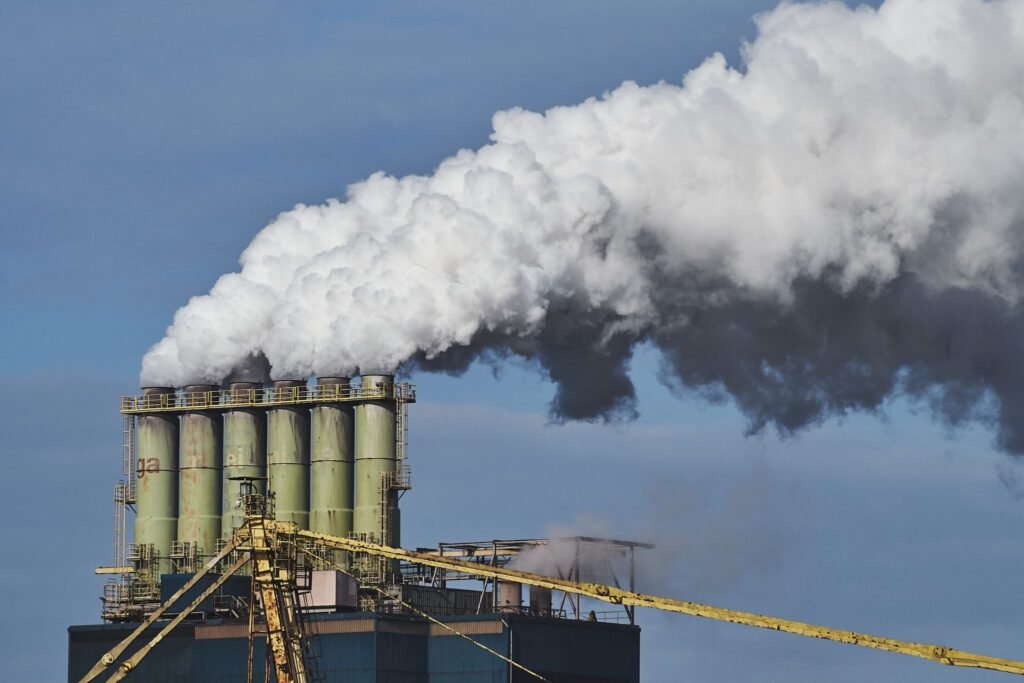
Throughout my years in the field designing and commissioning clean power systems, I have spent a lot of time working near conventional utility plants and heavy industrial hubs. When most people discuss the environmental toll of fossil fuel power generation, the conversation usually focuses almost entirely on carbon dioxide. While carbon management is critical, looking only at greenhouse gases misses the immediate, localized reality that communities face on the ground: the dense plumes of nitrogen oxides (NOx) coming off thermal generation assets.
NOx isn’t just an abstract regulatory parameter on an emissions monitoring sheet; it is an active byproduct of high-temperature combustion that directly degrades local air quality and compromises respiratory health. In dense urban settings and industrial corridors alike, these emissions settle into ground-level smog and acidify surrounding ecosystems before they ever reach the upper atmosphere. As an electrical engineer, I look at every power generation system through the lens of efficiency, reliability, and lifecycle impact.
The fundamental thermodynamic issue with conventional thermal generation is that whenever you burn fuel at high temperatures using atmospheric air, NOx formation is an inevitable mechanical penalty. Shifting our grid to non-combustion architectures isn’t just about meeting distant climate targets—it is about removing these harmful combustion byproducts from the air we breathe every day.
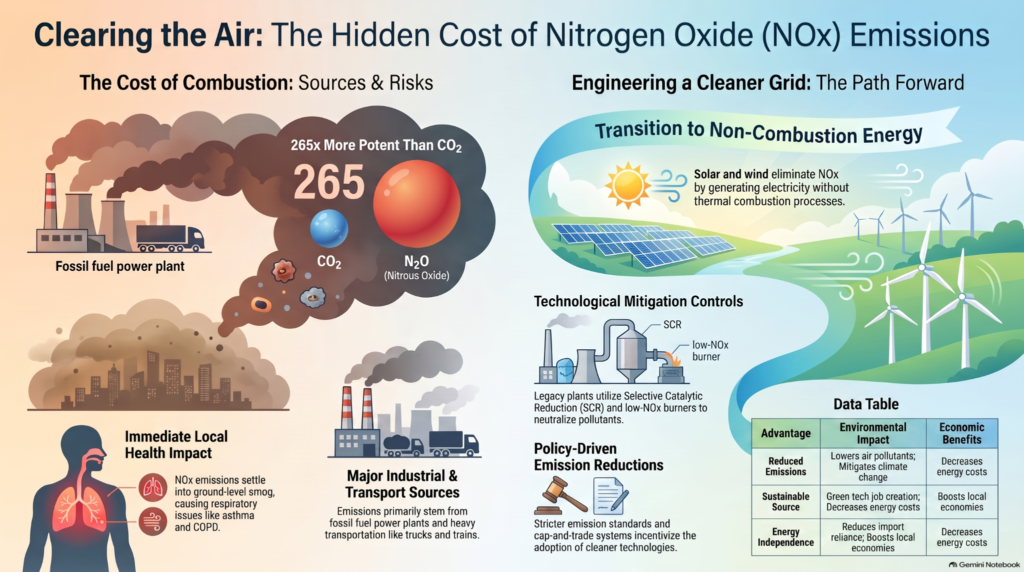
Nitrogen oxide emissions from energy generation largely stem from fossil fuel combustion in power plants and transportation vehicles. These emissions greatly degrade air quality, leading to public health issues like respiratory problems and environmental damage such as acid rain and smog formation. Reducing nitrogen oxide emissions is vital for protecting vulnerable populations and ecosystems. Exploring renewable energy solutions and effective policy measures can further mitigate these emissions and improve overall air quality, providing you with insights into sustainable energy practices.
KEY TAKEAWAYS
- Major sources of nitrogen oxide emissions include industrial power plants, fossil fuel combustion, and transportation vehicles, particularly trucks and trains.
- Nitrogen oxides contribute to air pollution, forming smog and acid rain, which adversely affects public health and ecosystems.
- Vulnerable populations, including children and the elderly, face heightened health risks from nitrogen oxide-related respiratory issues.
- Renewable energy sources like solar and wind significantly reduce nitrogen oxide emissions by avoiding combustion processes in electricity generation.
- Policy measures and technological innovations, such as stricter emission standards and cleaner technologies, are essential for mitigating nitrogen oxide emissions in energy generation.
MAJOR SOURCES OF NITROGEN OXIDE EMISSIONS IN ENERGY GENERATION
When you examine nitrogen oxide emissions in energy generation, you’ll find that several key sources contribute significantly to the overall output. Primarily, industrial emissions from power plants play a substantial role. These facilities, often reliant on fossil fuels, release high levels of nitrogen oxides during combustion processes.
Additionally, transportation sources, including trucks and trains that deliver fuel and raw materials, further compound the issue. The emissions from these vehicles are often underestimated, yet they contribute considerably to the nitrogen oxide levels in the atmosphere.
Innovations in cleaner technologies and efficient transport systems are essential for addressing these emissions. By focusing on reducing industrial output and optimizing transportation methods, you can help mitigate their environmental impact, paving the way for a more sustainable energy future.
Understanding these major sources is vital for developing strategies aimed at reducing overall nitrogen oxide emissions in energy generation.
How Fossil Fuel Combustion Contributes to Air Pollution
Although fossil fuel combustion is essential for energy generation, it greatly contributes to air pollution, primarily through the release of nitrogen oxides, sulfur dioxides, and particulate matter. These combustion byproducts, along with carbon dioxide emissions from power plants, result from burning coal, oil, and natural gas, which are often used in power plants and transportation.
The fossil fuel effects extend beyond immediate emissions; these pollutants can react in the atmosphere to form secondary pollutants, exacerbating air quality issues. You mightn’t realize that nitrogen oxides, for instance, can lead to the formation of smog and acid rain, which further harm ecosystems.
As you consider innovations in energy production, it’s vital to understand the implications of fossil fuel combustion. Shifting to cleaner alternatives not only reduces harmful emissions but also promotes a healthier environment.
The Impact of Nitrogen Oxides on Public Health and Ecosystems
Nitrogen oxides (NOx) pose significant risks to both public health and ecosystems, making their reduction a vital focus for environmental policy. Exposure to NOx can lead to serious health effects, particularly respiratory problems like asthma and chronic obstructive pulmonary disease. Vulnerable populations, such as children and the elderly, are at heightened risk, necessitating urgent action to mitigate these emissions.
On the ecosystem side, NOx contributes to harmful phenomena like acid rain, which can devastate plant life and aquatic systems. This ecosystem damage, along with sulfur dioxide coal power pollution, can disrupt food chains and reduce biodiversity, ultimately compromising ecological balance.
The interaction of NOx with other pollutants can exacerbate these effects, leading to complex health and environmental challenges. Thus, understanding and addressing the impact of nitrogen oxides is essential for both safeguarding public health and preserving the integrity of our ecosystems.
The pursuit of innovative solutions in emission reduction is vital for a sustainable future.
How Renewable Energy Can Reduce Nitrogen Oxide Emissions?
In 2022, nitrous oxide (N2O) accounted for 6% of all U.S. greenhouse gas emissions from human activities. Human activities such as agriculture, fuel combustion, wastewater management, and industrial processes are increasing the amount of N2O in the atmosphere. Nitrous oxide is also naturally present in the atmosphere as part of the Earth’s nitrogen cycle and has a variety of natural sources. Nitrous oxide molecules stay in the atmosphere for an average of 121 years before being removed by a sink or destroyed through chemical reactions. The impact of 1 pound of N2O on warming the atmosphere is 265 times that of 1 pound of carbon dioxide.
Renewable energy sources like solar and wind power play an essential role in reducing nitrogen oxide emissions.
By generating electricity without combustion, these technologies minimize the pollutants released into the atmosphere.
As you explore their benefits, you’ll see how shifting to renewables can greatly improve air quality and public health outcomes.
Solar Energy Benefits
As the world seeks sustainable solutions to mitigate environmental impacts, solar energy emerges as a compelling option to reduce nitrogen oxide emissions in energy generation. By harnessing the sun’s power, you can considerably lower pollution levels associated with traditional fossil fuels.
Here are some key benefits of solar energy in promoting environmental sustainability:
- Reduced Emissions: Solar panels generate electricity without releasing nitrogen oxides, making them a cleaner alternative to conventional energy sources and supporting the use of eco friendly products.
- Decentralized Energy Production: You can produce energy on-site, minimizing transmission losses and associated emissions.
- Job Creation: The solar industry fosters green jobs, contributing to a sustainable economy.
- Long-term Savings: Investing in solar energy can lead to lower utility bills, freeing up resources for further environmental initiatives.
These advantages position solar energy as a crucial player in combating nitrogen oxide emissions and achieving a sustainable future.
Wind Power Advantages
From an engineering perspective, mitigating NOx in legacy plants always feels like fighting against basic chemistry. Plant operators invest heavily in selective catalytic reduction (SCR) systems, low-NOx burners, and continuous flue gas monitoring to capture and neutralize these pollutants before they escape the stack. While these technological controls are necessary retrofit solutions for existing thermal facilities, they add substantial operational complexity, parasitic electrical loads, and recurring maintenance costs.
This is why my engineering focus has always centered on zero-combustion renewable alternatives. When you interconnect a utility-scale photovoltaic system or a distributed wind array, the emissions profile is radically simple: zero fuel consumption, zero thermal reaction, and exactly zero operational NOx output. When sizing solar arrays or integrating wind assets with battery energy storage systems (BESS), you eliminate the need to run fossil-peaker units during high-demand hours.
Those gas turbines and peaker plants are often the worst offenders for localized NOx spikes during hot summer afternoons. Replacing mechanical combustion with solid-state semiconductors and clean kinetic turbines is simply the most direct, elegant engineering method to systematically lower grid emissions and stabilize local distribution networks simultaneously.
While many energy sources contribute to nitrogen oxide emissions, wind power stands out as a clean alternative that greatly reduces these pollutants. By harnessing wind energy, you can substantially lower emissions while also enjoying economic benefits. Wind turbines produce electricity without burning fossil fuels, which means no nitrogen oxides are released during operation.
Here’s a breakdown of the advantages:
| Advantage | Environmental Impact | Economic Benefits |
| Reduced Emissions | Lowers air pollutants | Job creation in green tech |
| Sustainable Source | Mitigates climate change | Decreases energy costs |
| Minimal Land Use | Preserves ecosystems | Attracts investments |
| Energy Independence | Reduces reliance on imports | Boosts local economies |
| Technological Innovation | Advances in energy tech | Supports local industries |
Investing in wind energy is a step towards a sustainable future.
POLICY MEASURES TO REDUCE NITROGEN OXIDE EMISSIONS
Nitrous oxide is approximately 270 times more potent than carbon dioxide in terms of warming the planet, and currently responsible for approximately 10% of net global warming since the industrial revolution. Primarily emitted from agricultural practices such as the use of synthetic fertilizers and manure, N₂O is the third most significant greenhouse gas and the top ozone-depleting substance still being released into the atmosphere.
To effectively tackle nitrogen oxide emissions in energy generation, policymakers must implement a combination of regulatory measures, economic incentives, and technological advancements.
Establishing robust regulatory frameworks and stringent emission standards is vital to drive compliance across the energy sector. You can encourage innovation and efficiency by introducing economic incentives, which motivate companies to adopt cleaner practices.
Consider the following policy measures:
- Strengthen emission standards for existing power plants to guarantee they operate within safe limits.
- Offer tax credits or subsidies for businesses investing in cleaner technologies.
- Implement cap-and-trade systems that create a financial incentive to reduce emissions.
- Promote research funding for innovative solutions that address nitrogen oxide emissions.
Technologies for Mitigating Nitrogen Oxide Emissions
Innovative technologies play an essential role in mitigating nitrogen oxide emissions from energy generation processes. By implementing advanced methods like selective catalytic reduction and exhaust gas recirculation, you can markedly lower NOx levels. Low NOx burners further enhance combustion efficiency, while ammonia injection technology provides an effective means to reduce emissions.
Here’s a breakdown of these technologies:
| Technology | Benefits | Applications |
| Selective Catalytic Reduction | High reduction efficiency | Gas turbines, industrial boilers |
| Exhaust Gas Recirculation | Improved combustion stability | Internal combustion engines |
| Low NOx Burners | Minimized emissions during combustion | Power plants, commercial boilers |
| Ammonia Injection Technology | Effective NOx reduction | Various combustion systems |
Incorporating alternative fuels and optimizing combustion processes not only boosts energy efficiency but also guarantees regulatory compliance. Embracing these innovative technologies is vital for a sustainable energy future.
Future Trends in Energy Generation and Environmental Impact
NOx (oxides of nitrogen) refers to the cumulative emission of nitric oxide (NO), nitrogen dioxide (NO2), and trace quantities of other nitrogen-bearing species generated during combustion. Combustion of any fossil fuel generates some level of NOx due to high temperatures and the availability of oxygen and nitrogen from both air and fuel.
As the global demand for energy continues to rise, the future of energy generation is increasingly intertwined with environmental considerations.
You’ll notice that emerging technologies and sustainable practices are shaping this landscape, aiming to reduce nitrogen oxide emissions and enhance efficiency.
Key trends to watch include:
- Increased adoption of renewable energy sources: Solar, wind, and hydroelectric power are becoming mainstream.
- Advancements in energy storage solutions: Innovations in battery technology are essential for managing supply and demand.
- Integration of smart grid technologies: These systems optimize energy distribution and reduce waste.
- Carbon capture and storage (CCS): This technology is pivotal in mitigating emissions from fossil fuel-based generation.
These developments promise to create a cleaner energy future, balancing the need for power with environmental sustainability.

RELATED STUDIES ABOUT NITROGEN OXIDE EMISSIONS IN ENERGY GENERATION
To sum up, tackling nitrogen oxide emissions in energy generation isn’t just important; it’s absolutely critical for our survival! If we don’t act now, we risk choking our planet and jeopardizing public health on an unprecedented scale. By embracing renewable energy and innovative technologies, we can revolutionize our approach and breathe life back into our ecosystems. The future hinges on our choices today—let’s not just aim to reduce emissions; let’s obliterate them for the sake of our planet!
Optimum blending hydrogen ratio in spray combustion to reduce emissions of nitrogen oxides
Study Overview and Objective
This study numerically investigates the combustion and emission characteristics of liquid n-pentane spray enriched with hydrogen at varying mass fractions of 0%, 10%, 20%, and 30%. The primary objective is to assess the impact of hydrogen addition on flame structure, temperature distribution, and pollutant formation—specifically thermal nitrogen oxides (NOx) and carbon monoxide (CO)—to identify the optimal hydrogen blending ratio for liquid-fueled combustion systems.
Methodology and Modeling Framework
- Multiphase and Combustion Modeling: The continuous gas phase was simulated using Eulerian Navier-Stokes equations coupled with a standard two-equation k-epsilon turbulence model. The discrete liquid spray phase was modeled using a Lagrangian Discrete Phase Model (DPM) incorporating the Kelvin-Helmholtz breakup model and Rosin-Rammler droplet size distributions.
- Chemistry and Emissions Formulation: Combustion chemistry was evaluated using the Probability Density Function (PDF)/mixture fraction approach with a beta-function. Thermal NOx generation was modeled via the extended Zeldovich mechanism using quasi-equilibrium assumptions for atomic oxygen and nitrogen radicals.
- Validation: Numerical calculations were validated against benchmark experimental data for n-pentane spray flames, achieving strong agreement with less than 1% error under fine grid resolution.
Key Findings
- Flame Temperature and Structure: Hydrogen addition enhanced overall combustion performance, increasing core flame temperatures up to 2130 K due to hydrogen’s high calorific value and fast reaction rates. The spray flame length extended along the central axis while flame width narrowed relative to pure n-pentane, improving flame stability.
- Optimal 20% Hydrogen Blending Ratio: Although higher hydrogen fractions generally elevate thermal NOx due to increased temperatures, the 20% hydrogen blend displayed optimal non-linear behavior. At this ratio, CO emissions, local mixture fraction values, and NO2 mass fractions were noticeably lower than in the 10% and 30% cases. Reduced NOx levels decreased to approximately 11.3% in key reaction zones due to radical interaction and suppressed production rates.
- NOx Speciation Dynamics: NO remained the primary contributor to total NOx emissions along the central axis. NO2 accounted for a minor fraction (generally under 4% of total NOx) and formed mostly outside the high-temperature core. Nitrous oxide (N2O) formed further downstream (0.2 to 0.8 m from the injector) where hydrocarbon oxidation was complete and unreacted oxygen radicals remained.
Conclusions and Practical Implications
Adding hydrogen enhances the combustion efficiency and stability of liquid fuels. Operating at an optimal 20% hydrogen blending ratio provides the best balance by enhancing thermal performance while mitigating CO emissions and minimizing reaction-zone NOx formation, serving as a practical operational guideline for dual-fuel burners and industrial furnaces.
| REFERENCE: Ahmed Abed Al-Kadhem Majhool, Noor M. Jasim, Sara Falih Kareem, Mujtaba A. Flayyih, Faris Alqurashi, Optimum blending hydrogen ratio in spray combustion to reduce emissions of nitrogen oxides, International Journal of Thermofluids, Volume 30, 2025, 101425, ISSN 2666-2027, https://doi.org/10.1016/j.ijft.2025.101425. (https://www.sciencedirect.com/science/article/pii/S2666202725003714) |
The Impact of Hydrogen on Forced-Draft Gas Burners: A Numerical Investigation of Nitrogen Oxide Emissions
Study Overview and Objective
This study provides a computationally efficient numerical investigation mapping nitrogen oxide (NOx) emissions across the transition from pure natural gas to pure hydrogen combustion. The numerical framework was validated using experimental data from a full-scale, commercially available industrial boiler burner (Walter Dreizler GmbH MC601 series, hollowflame technology) operating at a constant thermal output of 358 kW and an air excess ratio of 1.2.
Key Numerical Methods and Model Setup
- Turbulence and Chemistry: Simulations were conducted in Ansys Fluent using the Realizable k-epsilon turbulence model with Enhanced Wall Treatment. The comprehensive San Diego reaction mechanism, augmented with nitrogen chemistry (69 species, 311 reactions), was utilized to model thermal and intermediate NOx pathways.
- Combustion Modeling: Two flamelet-based approaches were evaluated to maintain fast computation times (4.2 to 11.5 seconds per iteration):
- Steady Diffusion Flamelet (SDF) Model: Parameterized by mixture fraction and aerodynamic strain (scalar dissipation).
- Flamelet Generated Manifold (FGM) Model: Parameterized by mixture fraction and reaction progress.
- Radiation and Solver: Thermal radiation was simulated using the Discrete Ordinates (DO) model with the weighted-sum-of-gray-gases (WSGG) absorption model. A polyhedral-hexcore grid of 12.5 million cells was selected after establishing grid independence.
Core Findings
- Combustion Dynamics and Emission Trends: Transitioning from pure natural gas to 100% hydrogen increased measured NOx emissions from 83.8 mg/Nm3 to 230.8 mg/Nm3 due to higher flame temperatures and elevated OH radical concentrations driving thermal nitric oxide formation. Higher hydrogen content accelerated fuel jet velocities, strengthened internal flue gas recirculation, and shifted peak flame temperatures closer to the burner baffle plate.
- Model Performance Across Fuel Blends:
- Natural Gas up to 70 vol% Hydrogen: The standard SDF model accurately reproduced NOx emissions, residual O2, and flue gas CO2 across blends of 0%, 30%, 50%, and 70 vol% hydrogen, showing close agreement with experimental measurements.
- Pure Hydrogen Combustion: The default SDF model underpredicted NOx emissions by roughly 35% due to non-equilibrium effects and the assumption of equal diffusivities (unity Lewis number).
- Optimized Pure Hydrogen Prediction: By adjusting the Initial Scalar Dissipation (ISD) parameter, the FGM model with an ISD of 0.45 s-1 achieved optimal performance, deviating by only 1.3% from experimental measurements (227.8 mg/Nm3 simulated versus 230.8 mg/Nm3 measured).
Conclusions and Industrial Implications
Flamelet-based CFD modeling serves as an effective predictive tool for evaluating industrial burner transitions to hydrogen without requiring extensive physical test bench trials. While the SDF model handles blends up to 70 vol% hydrogen accurately, pure hydrogen operation requires a reaction-progress-based framework (FGM) with calibrated initial scalar dissipation to properly capture near-burner heat dissipation and thermal NOx formation. Transitioning industrial boilers to high hydrogen fractions will require active mitigation strategies, such as internal or external flue gas recirculation, to prevent thermal component fatigue and manage elevated NOx levels.
| REFERENCE: Fabian Weidinger, Georg Aichinger, Daniel Dreizler, Christoph Hochenauer, The impact of hydrogen on forced-draft gas burners: A numerical investigation of nitrogen oxide emissions, International Journal of Hydrogen Energy, Volume 143, 2025, Pages 582-595, ISSN 0360-3199, https://doi.org/10.1016/j.ijhydene.2025.03.417. (https://www.sciencedirect.com/science/article/pii/S0360319925015691) |
Coarse Bubble Mixing in Anoxic Zone Greatly Stimulates Nitrous Oxide Emissions from Biological Nitrogen Removal Process
Study Overview and Context
Biological nitrogen removal (BNR) in wastewater treatment is a major source of nitrous oxide (N2O), a potent greenhouse gas with a global warming potential 273 times that of CO2 and an atmospheric lifetime of 116 years. Coarse bubble mixing (bubbles larger than 2 mm) is widely used as a cost-effective method to mix anoxic tanks and suspend biofilm carriers in MBBR, IFAS, and MABR systems. This study investigated the overlooked impact of coarse bubble mixing on N2O emissions during a 50-day monitoring campaign in a pilot-scale (2 m3) mainstream nitrite shunt sequencing batch reactor (SBR) treating real domestic wastewater with a 94.8% total nitrogen removal efficiency.
Key Findings
- Extremely High Emission Factors with Coarse Bubbling:
- Operating with coarse bubble mixing during anoxic phases resulted in an exceptionally high mean N2O emission factor (EF) of 15.5 ± 3.5% of total Kjeldahl nitrogen (TKN) loading (with cycle peaks exceeding 22%), compared to typical baseline values of 1.5% to 3.3% for similar systems.
- Large emission spikes occurred at the start of subsequent aerobic phases due to the stripping of dissolved N2O that had accumulated in the liquid phase (reaching over 2.8 mg N/L, representing over 50% of reduced nitrite) during the preceding anoxic phases.
- Mechanism of N2O Accumulation:
- Isotopic Analysis: Dual-isotope mapping (delta-15N-N2O and Site Preference) confirmed that N2O accumulation during the anoxic phase originated primarily from incomplete heterotrophic denitrification, where N2O reduction to N2 was impaired.
- Oxygen Inhibition: The mass transfer coefficient of the coarse bubbling system was kLa = 1.34 1/h, introducing approximately 0.42 mg O2/L per anoxic phase. While chemical oxygen demand (COD) consumption from this oxygen was negligible relative to influent COD, the introduced oxygen was sufficient to inhibit oxygen-sensitive N2O reductase enzyme activity.
- Substantial Emission Reduction via Mechanical Mixing:
- Replacing coarse bubble mixing with a submersible mixing pump reduced N2O emission factors by nearly an order of magnitude to 1.2 ± 0.8%.
- With mechanical mixing, dissolved N2O formed during the anoxic phase was almost entirely consumed before the aerobic phase began, shifting the residual minor source of N2O to nitrifier denitrification by ammonia-oxidizing bacteria during aerobic aeration.
Conclusions and Operational Recommendations
Coarse bubble mixing in anoxic zones introduces micro-levels of dissolved oxygen that severely inhibit denitrification, leading to massive N2O accumulation and stripping emissions. Facilities utilizing or considering coarse bubble aeration in anoxic tanks (including activated sludge, MBBR, IFAS, and MABR processes) should exercise caution, actively measure off-gas N2O emissions, and optimize aeration intensity or transition to mechanical mixing to prevent large greenhouse gas footprints.
| REFERENCE: Haoran Duan, Shane Watt, Dirk Erler, Huijuan Li, Zhiyao Wang, Min Zheng, Shihu Hu, Liu Ye, Zhiguo Yuan, Coarse bubble mixing in anoxic zone greatly stimulates nitrous oxide emissions from biological nitrogen removal process, Water Research X, Volume 25, 2024, 100263, ISSN 2589-9147, https://doi.org/10.1016/j.wroa.2024.100263. (https://www.sciencedirect.com/science/article/pii/S2589914724000537) |
CONCLUSION
Transitioning away from NOx -heavy generation is entirely achievable with today’s commercial hardware, but it requires sensible, ground-level engineering execution. We cannot simply disconnect conventional generation overnight without building out the necessary electrical infrastructure to support it. To genuinely replace fossil fuel plants and their accompanying emissions, we need disciplined engineering: proper solar and wind system sizing, smart grid integration, robust battery storage, and proactive utility coordination.
Clean power systems must be designed for long-term reliability and economic viability so that communities and utilities can adopt them with total confidence. When we deploy well-engineered rooftop arrays, community solar fields, and wind farms, we achieve dual benefits: we build an independent, resilient power infrastructure and permanently clear the air of harmful combustion pollutants.
The technology is mature, the cost-benefit analysis is clear, and the path forward is straightforward. By prioritizing non-combustion renewables and modernized energy storage today, we ensure our electrical grid delivers reliable power without forcing neighboring communities to bear the environmental and health costs of dirty exhaust stacks.