
When I was studying environmental engineering at MIT, much of our work focused on large-scale chemical dynamics and life-cycle assessments. We evaluated industrial inputs, polymer stability, and chemical leaching under varying thermal conditions. But when you step out of the lab and into your everyday kitchen, those abstract chemical equations suddenly become deeply personal. You realize that the same synthetic resins engineered for shelf stability are sitting directly against the food you feed yourself and your family every single day.
BPA isn’t an invisible monster meant to cause panic, but it is a stubborn synthetic compound that demands our attention. We encounter it in the linings of our favorite pantry staples, takeout containers, and everyday beverage bottles. As someone who spends her days navigating both material science and low-impact lifestyle habits, I believe awareness is our best tool. It is entirely possible to care for our long-term wellness without feeling paralyzed by modern convenience.
The goal isn’t immediate perfection across every cabinet in your house, but understanding how packaging materials interact with what we consume. By learning where these compounds originate and why they migrate, we can make informed, practical decisions that steadily eliminate unwanted synthetic exposures from our homes.
BPA, or bisphenol A, is a synthetic compound found in various food packaging materials, including plastics and can linings. It can leach into food during storage or heating, especially with fatty or acidic items. This exposure is linked to health risks, including hormonal disruptions and possible reproductive issues. To reduce your risk, opt for BPA-free products, avoid microwaving plastic, and choose glass or fresh alternatives. Learn about ongoing regulatory changes and innovative packaging solutions next.
KEY TAKEAWAYS
- BPA is commonly found in plastic containers, canned goods, and thermal receipts, posing risks of contamination in food packaging.
- Exposure occurs when BPA leaches into food from storage, heating, or handling, especially with fatty or acidic foods.
- Health risks associated with BPA include hormonal disruptions, reproductive issues, and a potential link to certain cancers.
- Consumers can minimize BPA exposure by choosing BPA-free products, avoiding microwaving plastics, and selecting glass or fresh packaging options.
- Staying informed about BPA regulations and advocating for safer materials can help promote healthier food packaging practices.
WHAT IS BPA AND WHY IT MATTERS
BPA is a structural component in polycarbonate beverage bottles. It is also a component in metal can coatings, which protect the food from directly contacting metal surfaces. BPA has been used in food packaging since the 1960s.
BPA, or bisphenol A, is a synthetic compound commonly found in various food packaging materials, including plastics and epoxy resins. Understanding BPA’s significance is essential, as its widespread use raises concerns about human health and the environment.
You might be aware that BPA can leach into food, leading to potential hormonal disruptions. Consequently, the search for BPA alternatives has gained momentum, with innovative materials emerging to replace this compound without compromising safety or functionality.
These alternatives, such as bioplastics and other eco-friendly substances, not only aim to reduce health risks but also mitigate the environmental impact associated with traditional plastic production and disposal.
As you consider the implications of BPA in food packaging, exploring these alternatives provides a pathway toward sustainable innovation. By advocating for safer materials, you contribute to a healthier future for both consumers and the planet.
Common Sources of BPA in Food Packaging
Many consumers may not realize how prevalent BPA is in everyday food packaging. You’ll often find BPA in polycarbonate plastics, which are used for containers, bottles, and even baby products.
Additionally, epoxy resins containing BPA line cans, extending shelf life but also introducing potential health risks. Fast food and takeout packaging can contain BPA as well, especially in thermal receipts and food wrappers.
Fortunately, innovation in packaging is paving the way for safer alternatives. Many companies are now exploring BPA alternatives, such as plant-based plastics and other eco friendly products.
These innovations not only reduce BPA exposure but also promote sustainability. By staying informed and choosing products that prioritize BPA-free packaging, you can make a significant impact on your health and the environment.
It’s essential to evaluate these factors while maneuvering the modern landscape of food packaging.
Routes of BPA Exposure: From Packaging to Your Plate
Food packaging can be a hidden source of harmful chemicals, and understanding how BPA makes its way onto your plate is essential for safeguarding your health. When you store, heat, or even simply handle food in BPA-containing materials, the chemical can leach into your meals.
This happens more readily with acidic or fatty foods, as they can interact with the packaging, increasing the likelihood of BPA migration.
Innovative packaging solutions are emerging as viable BPA alternatives, such as plant-based plastics and glass containers that minimize chemical exposure. These advancements not only enhance food safety but also align with sustainability goals, much like efforts to reduce formaldehyde exposure in furniture and flooring through safer material choices.
Health Risks Associated With BPA Exposure
Bisphenol A, often abbreviated as ‘BPA’, is a synthetic organic chemical used to make clear, strong, and lightweight plastics known as polycarbonates. These polycarbonate plastics are very common – they are used in reusable water bottles, baby bottles, plates, cups, and containers for storing food. BPA is also used for creating epoxy resins that are used to line the inside of food and drink cans. Other than food packaging and containers, BPA is used for manufacturing electronics, construction materials, and medical devices among other things.
BPA exposure poses significant health risks, particularly regarding hormonal disruption.
Studies suggest it can interfere with endocrine functions, potentially leading to reproductive issues and developmental problems.
Additionally, emerging research indicates a possible link between BPA and certain types of cancer, raising further concerns about its safety in food packaging.
Hormonal Disruption Risks
While you mightn’t realize it, exposure to bisphenol A (BPA) can greatly disrupt hormonal balance in the human body.
As a known endocrine disruptor, BPA mimics estrogen, leading to potential imbalances in your hormonal system. This disruption can affect various bodily functions, including metabolism, reproductive health, and even mood regulation.
The chronic exposure to BPA found in food packaging may result in altered hormone levels, causing long-term health implications.
Understanding the sources of BPA and its impacts is essential for innovation in food safety and packaging alternatives.
Potential Cancer Links
Emerging research has raised alarms about the potential cancer links associated with BPA exposure, prompting serious scrutiny of its use in food packaging.
Recent BPA research indicates that this chemical may disrupt cellular processes, increasing the risk of tumor development. Cancer studies have identified correlations between BPA exposure and various malignancies, including breast and prostate cancer.
While causation remains complex, the data suggests that even low levels of BPA can influence cancerous cell growth.
As you navigate food choices, staying informed about BPA-laden products is essential. Opting for alternatives like glass or stainless steel containers can minimize your exposure.

CONDITIONS LINKED TO BPA EXPOSURE
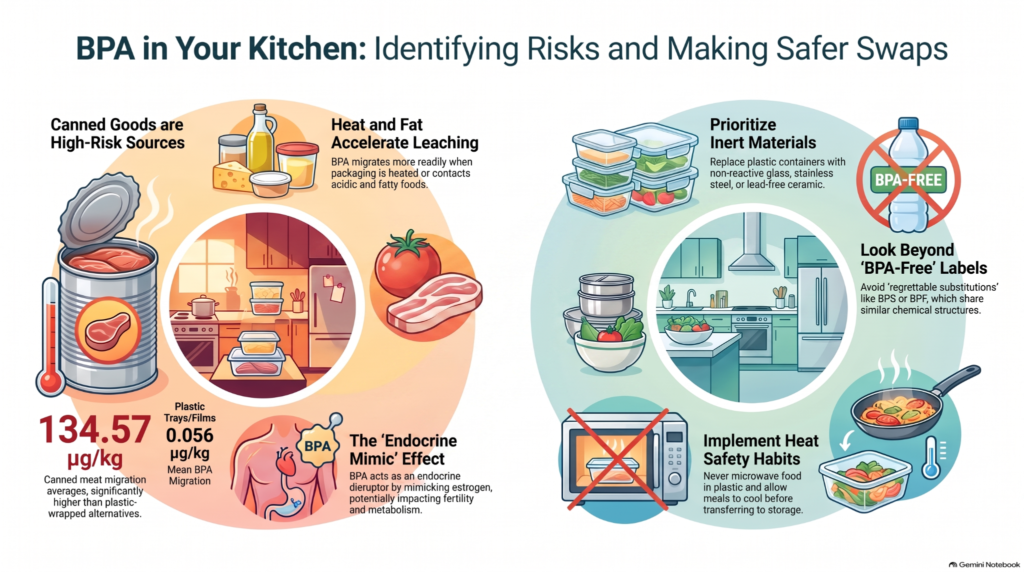
As an engineer and mindful living advocate, I often find myself looking past marketing claims to examine the actual chemistry of consumer products. When the public raised valid alarms about BPA, the packaging industry responded swiftly with prominent “BPA-Free” stickers. However, a major part of mindful stewardship is recognizing regrettable substitutions. Many manufacturers simply swapped bisphenol A for chemical analogues like BPS or BPF, compounds that share nearly identical molecular structures and present similar endocrine-disrupting behavior. True material safety requires moving away from the entire bisphenol backbone rather than celebrating a single compound’s removal.
This is why my personal approach focuses on simple, inert materials that bypass synthetic polymer concerns altogether. In my own home routines, whenever I prepare hot broths, acidic tomato sauces, or fatty leftovers, I reach for timeless, non-reactive options: lead-free ceramic bowls, stainless steel canisters, and glass jars.
Heat and surface contact remain the biggest drivers of chemical migration, meaning a few grounded habits such as never microwaving food in plastic containers and letting cooked meals cool before transferring them drastically reduce your exposure footprint. Embracing safer packaging doesn’t mean overcomplicating your life; it simply means choosing durable, transparent materials that respect both our personal biology and the planet’s ecosystems.
Bisphenol A (BPA) is a chemical used in the lining of some food and beverage packaging to protect food from contamination and extend shelf life. It’s also used in non-food products.
BPA exposure can lead to a range of concerning health issues, particularly regarding hormonal disruption.
You might notice that it’s linked to reproductive health challenges and developmental effects in children.
Understanding these conditions is essential for making informed choices about food packaging and its potential impact on your health.
Hormonal Disruption Risks
As scientific research continues to reveal the effects of various chemicals on human health, concerns over hormonal disruption linked to BPA exposure have gained considerable attention.
BPA acts as an endocrine disruptor, mimicking hormones and potentially leading to hormone imbalance. This disruption can interfere with normal hormonal functions, impacting everything from metabolism to mood regulation.
Studies suggest that prolonged exposure to BPA may increase the risk of developing conditions like obesity, diabetes, and even certain cancers due to its influence on hormone signaling pathways, similar to concerns surrounding phthalates in household products and their potential effects on endocrine function.
Reproductive Health Concerns
Research indicates that exposure to BPA can have significant implications for reproductive health.
As a consumer aware of these risks, you should understand the potential consequences:
- Fertility Issues: BPA exposure has been linked to reduced fertility in both men and women, affecting sperm quality and ovulation.
- Endocrine Disruption: BPA mimics estrogen, disrupting hormonal balance and leading to irregular menstrual cycles and reproductive disorders.
- Pregnancy Complications: Pregnant individuals exposed to BPA may face increased risks of miscarriage and developmental issues in fetuses.
Developmental Effects In Children
Exposure to BPA during critical developmental periods can lead to various conditions in children. Research indicates that BPA disrupts endocrine functions, potentially hindering cognitive development and affecting developmental milestones.
Children exposed to BPA may experience delays in language acquisition, learning disabilities, and behavioral issues. This chemical’s interference with neurotransmitter systems raises concerns about its long-term impact on mental health and academic performance.
In addition, studies suggest a correlation between BPA exposure and increased risks of attention-deficit hyperactivity disorder (ADHD). Understanding these risks is essential for parents and caregivers to safeguard children’s health.
Practical Tips to Reduce BPA Exposure in Your Diet
While maneuvering through the complexities of food packaging, you can take proactive steps to minimize BPA in your diet. By making informed dietary choices, you can effectively reduce your exposure to this chemical.
Consider the following tips:
- Opt for BPA-free alternatives**: Look for products labeled as BPA-free, especially in canned goods and plastics. Many brands now offer safer packaging options**.
- Limit canned foods**: Canned foods often contain BPA in their linings. Instead, choose fresh, frozen, or glass-packaged** items whenever possible.
- Avoid microwaving plastic: Heating plastic containers can cause BPA to leach into your food. Use glass or ceramic dishes for heating and storing food.
Implementing these strategies not only enhances your health but also supports innovative practices in food packaging, fostering a safer, more sustainable environment.
What’s Next for BPA Regulations?
As awareness of BPA’s potential health risks grows, regulatory bodies are increasingly pressured to reevaluate and strengthen regulations surrounding its use in food packaging.
Future legislation is likely to focus on limiting BPA in consumer products, especially as research highlights its endocrine-disrupting properties. You can expect significant regulatory updates aimed at reducing exposure, which may include stricter limits on BPA levels and enhanced labeling requirements for food packaging.
Innovations in alternative materials, such as bioplastics and plant-based resins, could also shape these regulations, creating safer options for manufacturers and consumers alike.
As stakeholders advocate for change, keep an eye on developments from agencies like the FDA and EPA. Participation in public comment periods can empower you to influence the conversation on BPA safety.
Ultimately, informed advocacy will be essential in pushing for a future where food packaging is free from harmful contaminants like BPA.

RELATED STUDIES ABOUT BPA CONTAMINATION IN FOOD PACKAGING
In summary, understanding BPA’s pervasive role in food packaging is essential for your health. With its potential to disrupt endocrine functions and link to serious health conditions, it’s no exaggeration to say that reducing your BPA exposure could be a game-changer for your well-being. By opting for BPA-free products and mindful food choices, you can greatly lower your risk. Stay informed and proactive—your health is worth every effort in this battle against BPA contamination.
A probabilistic approach to model bisphenol A (BPA) migration from packaging to meat products
Overview and Objectives
This study evaluated the migration of Bisphenol A (BPA) from food contact packaging into canned and non-canned meat products using probabilistic Monte Carlo simulation models. Researchers aimed to quantify the direct contribution of packaging materials—specifically polyethylene terephthalate (PET) trays, polyvinyl chloride (PVC) films, and epoxy/polyester can coatings—to total BPA contamination in meat and assess compliance with European Union Specific Migration Limits (SML).
Key Findings
- Plastic Packaging Migration: In non-canned meat products, simulated BPA migration from trays and films was minimal, yielding a mean concentration of 0.056 µg/kg (5th–95th percentile: 0.017–0.13 µg/kg).
- Low Relative Contribution: Plastic packaging accounted for only approximately 3.1% of the total BPA concentrations observed in non-canned meat products. Even under a worst-case scenario without temperature/storage uncertainty factors, plastic packaging contributed about 38%, indicating that plastic packaging is not the primary source of BPA in fresh meat.
- Can Coating Migration: In contrast, canned meat products exhibited a simulated mean migration concentration of 134.57 µg/kg (5th–95th percentile: 59.17–223.25 µg/kg), driven primarily by high-temperature industrial sterilization (121°C).
- Regulatory SML Compliance: The probability of BPA migration exceeding the EU SML of 50 µg/kg (0.05 mg/kg) was only 0.1% for plastic packaging, whereas canned meat exceeded this regulatory threshold across all modeled percentiles (ratio of 1.18 to 4.47 times the SML).
Sensitivity Analysis and Influencing Factors
- Primary Driver: The contact surface area between meat products and wrapping films (A2) was identified as the most sensitive parameter influencing BPA migration from plastic packaging, followed by meat weight (W), film migration ratio (R3), and tray contact area (A1).
- Thermal Impact: Thermal sterilization was confirmed as the critical factor releasing 80% to 100% of residual BPA from internal can coatings into food matrices.
Practical Recommendations
- Packaging Design: In plastic-wrapped fresh meats, incorporating small headspace gaps or modifying tray dimensions to reduce direct contact between plastic films and meat cuts can effectively lower chemical migration.
- Upstream Investigation: Because plastic packaging contributes negligibly (~3%) to fresh meat contamination, future food safety research and risk management should focus on upstream sources, including farm environments, animal feed contact materials, and industrial meat processing equipment.
- Can Lining Alternatives: The meat canning industry should continue prioritizing low-BPA or BPA-free coating alternatives (such as optimized polyester or acrylic-based lacquers) to ensure compliance with strict migration limits.
| REFERENCE: Xin Wang, Rajat Nag, Nigel P. Brunton, Md Abu Bakar Siddique, Sabine M. Harrison, Frank J. Monahan, Enda Cummins, A probabilistic approach to model bisphenol A (BPA) migration from packaging to meat products, Science of The Total Environment, Volume 854, 2023, 158815, ISSN 0048-9697, https://doi.org/10.1016/j.scitotenv.2022.158815. (https://www.sciencedirect.com/science/article/pii/S0048969722059149) |
Multi-scale evidence chain: Linking environmental BPA exposure to ovarian cancer through integrated omics and experimental models
Overview and Objectives
This study investigated the potential causal link and underlying molecular mechanisms between environmental Bisphenol A (BPA) exposure and ovarian cancer (OC) pathogenesis. The authors utilized an integrated multi-scale approach combining epidemiological analyses (NHANES 2005–2016), Mendelian randomization (MR), integrative multi-omics (bulk and single-cell RNA sequencing), machine learning, molecular docking and dynamics simulations, and in vitro experimental assays.
Key Findings
- Epidemiological Association: Propensity-score matching (66 OC cases vs. 291 matched controls) from NHANES demonstrated significantly elevated urinary BPA concentrations in ovarian cancer patients compared to controls (p = 0.04).
- Potential Causal Relationship: Two-sample Mendelian randomization using 12 instrumental SNPs confirmed that genetically predicted BPA exposure is significantly associated with an increased risk of ovarian cancer (OR = 1.25, 95% CI: 1.02–1.54, p = 0.029), with sensitivity analyses showing no significant pleiotropy or heterogeneity.
- Single-Cell Transcriptomics: Single-cell RNA sequencing revealed that BPA-associated gene signatures were most enriched in malignant epithelial cells (p = 0.009 compared to control epithelial cells). High-BPA malignant epithelial cells showed altered cell-cell communication networks with surrounding stromal and immune cells.
- Experimental In Vitro Validation: Exposure of SKOV3 ovarian cancer cells to environmentally relevant (1 nM) and experimental (10 µM) concentrations of BPA significantly promoted cell viability, clonogenic capacity, migration, and Matrigel invasion (p < 0.05).
Core Biomarkers and Molecular Mechanisms
- Hub Genes: Using LASSO regression, Support Vector Machines (SVM), and Random Forest algorithms, five consensus hub genes linking BPA exposure to OC progression were identified: LCN2, LIPA, NR3C1, NR3C2, and PGR.
- Functional Pathways: Gene Ontology and KEGG pathway enrichment indicated that these hub genes primarily disrupt steroid hormone signaling, nuclear receptor activity, xenobiotic response, and IL-17/Th17 immune-inflammatory pathways.
- Structural Interactions: Molecular docking and 100 ns molecular dynamics simulations confirmed stable, spontaneous binding between BPA and all five hub proteins (binding free energies < -5.0 kcal/mol).
- Diagnostic and Subtyping Utility: An interpretable Random Forest classifier based on these five genes yielded high diagnostic performance (AUC = 0.989), with NR3C2 and LCN2 identified as the most influential predictors. Consensus clustering defined two distinct molecular subtypes (C1 and C2) associated with specific oncogenic pathways and immune infiltration profiles.
Conclusions and Implications
The multi-scale evidence chain indicates that BPA acts not only as an exposure biomarker but also as a potential causal driver of ovarian cancer via hormone receptor perturbation, lipid metabolic reprogramming, and tumor immune microenvironment remodeling. These findings support the five identified hub genes as candidates for diagnostic biomarkers and therapeutic targets, underscoring the necessity for public health interventions and environmental policies aimed at reducing BPA exposure.
| REFERENCE: Yongjin Luo, Shipan Mo, Pengxia Song, Kaiyi Meng, Jie Zhou, Yiting Zou, Multi-scale evidence chain: Linking environmental BPA exposure to ovarian cancer through integrated omics and experimental models, Translational Oncology, Volume 69, 2026, 102791, ISSN 1936-5233, https://doi.org/10.1016/j.tranon.2026.102791. (https://www.sciencedirect.com/science/article/pii/S1936523326001282) |
The influence of BPA on isometric contraction, cholinergic activity, and antioxidant status in the crop gizzard of Lumbricus terrestris
Overview and Objectives
This study investigated the ecotoxicological impact of bisphenol A (BPA) contamination in soil on the digestive physiology, neuromuscular regulation, and redox status of earthworms (Lumbricus terrestris). Earthworms were exposed for 7 days to three environmentally relevant soil concentrations of BPA—71.4 mg/kg (BPA100), 142.9 mg/kg (BPA200), and 214.3 mg/kg (BPA300)—alongside uncontaminated controls to evaluate gastrointestinal motility, cholinergic neurotransmission markers, and antioxidant enzyme responses in isolated crop gizzards.
Key Findings
- Impaired Crop Gizzard Motility: BPA exposure exhibited a relaxant effect on smooth muscle tissue, significantly reducing the maximum force and frequency of spontaneous isometric contractions (ICs), with the most pronounced reductions observed in the medium-dose group (BPA200).
- Attenuated Cholinergic Contractile Response: Responsiveness to acetylcholine chloride (AChC) was impaired in BPA-exposed earthworms, showing statistically significant reductions in mean and minimum contractile forces and altered contraction patterns characterized by elevated baseline tension, high frequency, and low amplitude.
- Biphasic Cholinergic Activity: Acetylcholinesterase (AChE) activity and choline (Ch) levels displayed a non-monotonic response; AChE activity peaked significantly at medium BPA concentrations (BPA200) but decreased at the highest concentration (BPA300), signaling disrupted acetylcholine metabolism and potential muscarinic receptor desensitization.
- Antioxidant Exhaustion and Lipid Peroxidation: Superoxide dismutase (SOD) and glutathione peroxidase (GPx) activities, as well as reduced glutathione (GSH) concentrations, increased at low to medium BPA levels as an adaptive defense, but declined sharply at the highest BPA concentration (BPA300). Catalase (CAT) activity decreased progressively across all BPA groups, while malondialdehyde (MDA) increased in a concentration-dependent manner, confirming severe oxidative stress and membrane damage.
Mechanistic Insights and Ecological Implications
- Pathophysiological Mechanisms: BPA toxicity in the digestive tract appears to operate via a dual mechanism: mitochondrial dysfunction leading to ATP depletion and reactive oxygen species (ROS) overproduction, coupled with altered cholinergic signaling that diminishes smooth muscle excitability.
- Soil Ecosystem Impact: Reduced gastrointestinal motility impairs transit efficiency, food bolus fragmentation, and gut microbial dynamics in earthworms. Given their role as ecosystem engineers, BPA-induced digestive disruption in oligochaetes may degrade soil formation, nutrient cycling, and organic matter decomposition in contaminated terrestrial environments.
| REFERENCE: Zofia Goc, Zuzanna Mucha, Edyta Kapusta, Grzegorz Formicki, The influence of BPA on isometric contraction, cholinergic activity, and antioxidant status in the crop gizzard of Lumbricus terrestris, Chemosphere, Volume 393, 2025, 144771, ISSN 0045-6535, https://doi.org/10.1016/j.chemosphere.2025.144771. (https://www.sciencedirect.com/science/article/pii/S0045653525007192) |
CONCLUSION
At the end of the day, addressing BPA contamination isn’t about fostering environmental anxiety or obsessing over every takeaway container you encounter. Sustainable living is a continuous practice of mindful awareness, not a rigid set of impossible standards. As consumers, our purchasing choices send a loud, clear signal to the supply chain. Every time we choose whole, unpackaged produce, invest in durable glass or stainless steel storage, and support brands innovating with safer, non-toxic bio-resins, we push the packaging sector toward genuine circularity and safer chemistry.
Our responsibility also extends beyond individual kitchens to our wider communities. Packaging waste and chemical leachates don’t disappear when we toss them out; they cycle into our municipal soils, waters, and regional compost streams, impacting broader ecological health. By staying educated, supporting progressive regulatory standards, and steadily simplifying the materials in our domestic spaces, we build resilient, health-first households.
Take it one practical swap at a time: swap out a plastic food container for glass this week, prioritize fresh alternatives where accessible, and advocate for transparent labeling. Real stewardship begins with these steady, intentional shifts protecting our shared environment while nurturing the spaces we call home.