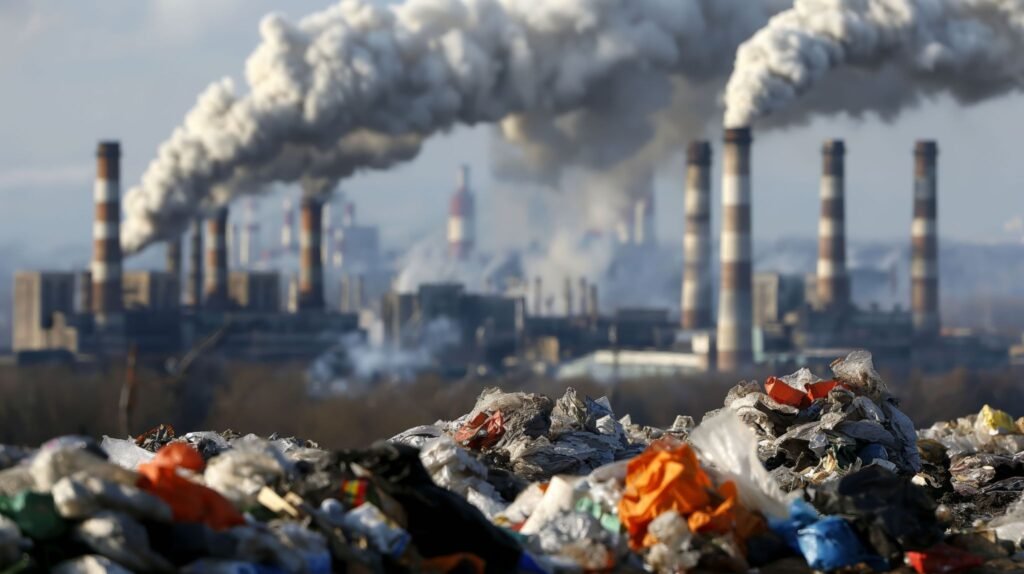
Whenever I walk through a material recovery facility or consult alongside an industrial thermal treatment plant, I’m constantly reminded of one hard truth: you cannot engineer your way out of bad chemistry through brute heat alone. In policy discussions, incineration is often neatly packaged as a clean “waste-to-energy” shortcut that makes our overwhelming plastic surplus vanish into megawatts. But from a materials engineering standpoint, matter doesn’t just disappear, it rearranges. The moment municipal solid waste enters an incinerator, we are essentially throwing a chaotic mix of polymers, heavy metals, and chlorinated organics into an uncontrolled thermodynamic reactor.
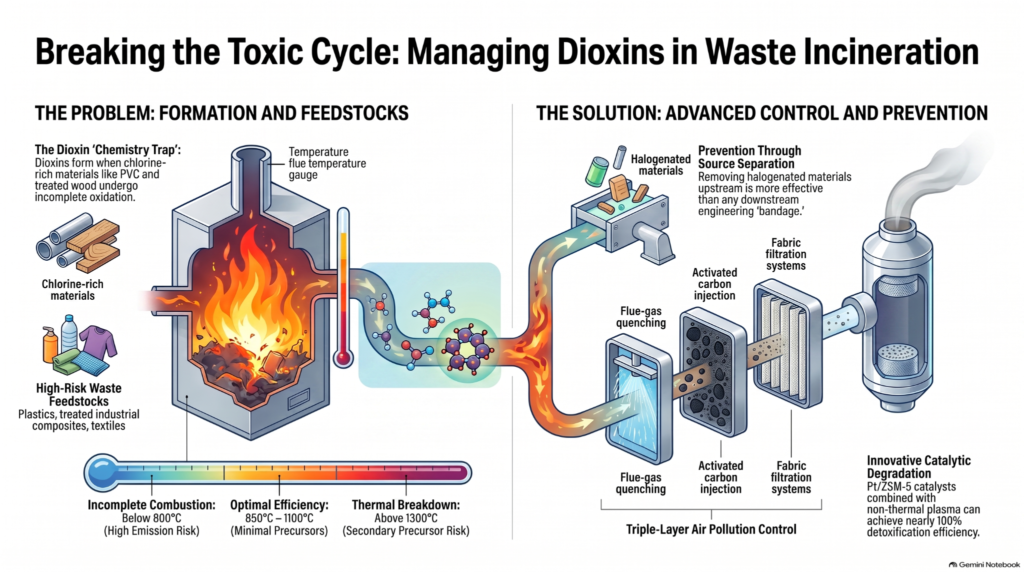
Dioxins aren’t some mysterious external byproduct; they are the direct chemical consequence of combusting chlorine donors like PVC and treated industrial composites in conditions where incomplete oxidation occurs. Having spent years looking at post-consumer recovery chains, I know that incineration facilities are only as reliable as their sorting upstream and their gas abatement downstream.
Treating incineration as a magic bullet ignores the tight process parameters and multi-million-dollar air pollution control systems required just to keep persistent organic pollutants from entering our local airsheds. We have to stop looking at combustion as a simple disposal method and start addressing the fundamental material flaws that create these toxic hazards in the first place.
Dioxins form during waste incineration due to high-temperature reactions involving chlorine and organic materials. Key sources include chlorine-containing plastics and hazardous waste like treated wood. To control emissions, maintaining ideal combustion temperatures and adequate oxygen levels is essential. Advanced filtration systems, continuous monitoring, and innovative waste management techniques further mitigate dioxin risks. Understanding these elements can help you grasp the complexities of dioxin emissions and their impact on health and the environment.
KEY TAKEAWAYS
- Dioxins are formed during high-temperature incineration through reactions involving chlorine, carbon, and organic materials, especially in incomplete combustion scenarios.
- Plastics containing chlorine, treated wood, and certain textiles are significant sources of dioxins during waste incineration.
- Maintaining optimal combustion temperatures between 850-1100°C and ensuring adequate oxygen levels can minimize dioxin formation.
- Advanced filtration systems, like activated carbon and high-efficiency particulate filters, effectively capture dioxins before they are released into the atmosphere.
- Regulatory frameworks set stringent limits on dioxin emissions and require regular monitoring to protect public health and the environment.
HOW DIOXINS FORM DURING WASTE INCINERATION
Dioxins are environmental pollutants. They belong to the so-called dirty dozen – a group of dangerous chemicals known as persistent organic pollutants (POPs). Dioxins are of concern because of their highly toxic potential. Experiments have shown they affect several organs and systems.
When waste materials are subjected to high-temperature incineration, various chemical reactions can lead to the formation of dioxins, which are highly toxic compounds.
These reactions primarily occur through formation mechanisms involving chlorine, carbon, and other organic materials present in the waste. Incomplete combustion and the presence of certain metals can catalyze these reactions, resulting in the creation of polychlorinated dibenzo-p-dioxins (PCDDs) and polychlorinated dibenzofurans (PCDFs).
Temperature, oxygen levels, and material composition greatly influence these chemical reactions. As temperatures rise, the breakdown of organic materials occurs, and chlorine can bond with carbon structures, forming dioxins.
Furthermore, the cooling phase post-incineration can further facilitate dioxin formation, as the compounds may condense onto particulate matter.
Understanding these formation mechanisms is essential for developing innovative strategies to minimize dioxin emissions from waste incineration processes.
Identifying Key Sources of Dioxins in Incineration
Dioxin is not produced or used commercially in the United States. It is a contaminant formed during the production of some chlorinated organic compounds, including a few herbicides such as Silvex. Over the past decade, EPA and industry have been working together to dramatically reduce the production of dioxin and its release to the environment.
To effectively identify key sources of dioxins in incineration, you need to analyze the composition of the waste being burned.
The operating temperature greatly influences dioxin formation, with varying levels leading to different emissions.
Additionally, understanding the effectiveness of emission control technologies plays an essential role in mitigating dioxin release into the environment.
Waste Composition Analysis
Understanding the composition of waste is crucial for identifying key sources of dioxins formed during incineration. By conducting thorough material analysis, you can pinpoint specific components that contribute to dioxin emissions.
For instance, plastics, particularly those containing chlorine, are notorious for generating harmful byproducts when burned. Additionally, hazardous waste materials, including treated wood and certain textiles, can exacerbate dioxin formation.wood and certain textiles, can exacerbate dioxin formation, while ammonia emissions from solid waste may also occur during the decomposition of nitrogen-rich organic materials.
Analyzing waste composition not only helps you recognize these essential sources but also informs strategies for waste reduction and management. Implementing innovative sorting and recycling techniques can considerably minimize the presence of dioxin precursors in the waste stream.
Ultimately, a proactive approach to waste composition analysis is crucial in mitigating the environmental impacts of incineration processes.
Operating Temperature Influence
While various factors contribute to dioxin formation during incineration, the operating temperature plays a pivotal role in determining the extent of emissions. Operating within specific temperature ranges influences both combustion efficiency and dioxin production.
Here are three critical temperature-related insights:
- Optimal Temperature: Maintaining temperatures around 850-1100°C can enhance combustion efficiency, reducing unburned materials that may lead to dioxin formation.
- Low-Temperature Risks: Operating below 800°C can result in incomplete combustion, increasing dioxin emissions due to the presence of organic compounds.
- High-Temperature Concerns: Exceeding 1300°C may also produce dioxins, as excessive thermal breakdown can create precursor conditions.
Understanding the temperature dynamics is essential for minimizing dioxin emissions and improving overall incineration effectiveness.
Emission Control Technologies
If you look closely at combustion kinetics, dioxin formation exposes the exact limits of thermal destruction. We know that maintaining strict thermal windows between 850°C and 1100°C minimizes precursors, but the real engineering nightmare happens downstream in the cooling zone between 200°C and 400°C. This is where de novo synthesis takes over: carbonaceous fly ash, residual chlorine, and trace metal catalysts rebuild stable polychlorinated dibenzo-p-dioxins right on the surface of particulate matter.
In plain English, the system reconstructs the very toxins you just spent immense thermal energy trying to destroy. From an operational standpoint, this is why end-of-pipe controls are so critical and expensive. Modern facilities rely heavily on rapid flue-gas quenching, activated carbon injection, and fabric filtration, but capturing these ultra-stable aromatics is an endless operational battle. That is why recent breakthroughs like non-thermal plasma (NTP) assisted degradation over Pt/ZSM-5 catalysts are so compelling from an engineering perspective.
By using catalytic oxidation to lower activation energy barriers and facilitate selective, deep bond destruction, we can target high-toxicity congeners like 2,3,7,8-TCDD without triggering unwanted re-chlorination. Until advanced catalytic and plasma-driven oxidation systems become standard across facilities, our reliance on brute-force filtration will continue to leave plants vulnerable to secondary toxic ash buildup and operational drift.
Operating temperature greatly impacts dioxin emissions, but effective emission control technologies are essential for managing these pollutants during waste incineration.
Advanced filtration systems, such as activated carbon and ceramic filters, play an important role in emission reduction by capturing dioxins before they escape into the atmosphere.
Additionally, catalytic oxidation technologies are emerging, utilizing innovative catalysts to decompose dioxins at lower temperatures, thereby enhancing efficiency.
Continuous monitoring systems are also essential; they provide real-time data on dioxin levels, allowing for immediate adjustments in incineration processes.
As technology advancements continue, integrating these systems can considerably minimize dioxin emissions, ensuring compliance with environmental regulations and promoting sustainable waste management practices.
Investing in these technologies is vital for a cleaner, healthier environment.
WHAT ARE THE HEALTH RISKS OF DIOXIN EXPOSURE?
Waste incineration remains an essential tool for reducing the volume and hazard of municipal and industrial residues, yet it can generate polychlorinated dibenzo-p-dioxins and dibenzofurans (PCDD/Fs), a group of persistent organic pollutants of high toxicity. Formation arises primarily through two pathways: de novo synthesis on carbonaceous fly ash at moderate temperatures (200–400 °C) and precursor‐mediated routes involving chlorinated aromatics and metal chlorides. Emission levels depend on feedstock composition, combustion conditions and the efficiency of downstream air pollution control devices (APCDs). Modern control strategies combine thermal optimisation, rapid quenching, catalytic destruction and adsorption techniques. Recent advances also include mechanochemical treatments of ash and chemical inhibitors that disrupt chlorine transfer. Globally, stringent regulations have driven technological improvements in flue‐gas cleaning—encompassing fabric filters, activated carbon injection, selective catalytic reduction and scrubbers—yet regional disparities persist. Practical applications range from full-scale municipal solid waste incinerators to small-scale facilities in rural settings, where cost-effective retrofits can achieve removal efficiencies exceeding 99 percent. Understanding the interplay between process parameters, materials science and reaction mechanisms is critical to further reduce dioxin yields and to safeguard public health.
Exposure to dioxins can lead to significant long-term health effects, including immune system damage and increased cancer risk.
Vulnerable populations, such as children and pregnant women, face even greater risks due to their developing bodies.
Understanding these health implications is essential for evaluating the dangers associated with waste incineration.
Long-Term Health Effects
Dioxins, which can accumulate in the food chain and persist in the environment, pose considerable long-term health risks to those exposed.
Chronic exposure to these toxic compounds has been linked to various health issues, including:
- Cancer: Increased risk of several types, particularly soft tissue sarcoma and non-Hodgkin lymphoma.
- Endocrine Disorders: Disruption of hormonal systems can lead to reproductive and developmental issues.
- Immune System Impairment: Dioxin toxicity can weaken your immune response, making you more susceptible to infections.
Understanding these risks is critical for developing effective strategies to mitigate exposure.
Vulnerable Populations At Risk
While many people may not realize it, certain populations are particularly vulnerable to the health risks associated with dioxin exposure.
Sensitive populations, including children, pregnant women, and those with pre-existing health conditions, face heightened risks due to dioxins’ endocrine-disrupting properties. These toxins can lead to developmental issues, reproductive problems, and immune system impairments.
At-risk communities, often located near waste incineration sites, may experience increased exposure through contaminated air, soil, and water. Research indicates that long-term exposure can elevate the likelihood of chronic diseases, including cancer.
Addressing these disparities requires innovative public health strategies and robust regulatory frameworks to protect vulnerable individuals from the detrimental effects of dioxins, ensuring a healthier future for all.
Environmental Impact of Dioxins: A Closer Look
As waste incineration continues to be a common method for managing refuse, the environmental impact of dioxins released during this process demands your attention.
Dioxins are notorious for their persistence in the environment, leading to long-term ecological consequences. Here are three key areas of concern:
- Soil Contamination: Dioxins can settle into soil, affecting plant life and entering the food chain.
- Water Quality: Rain can wash dioxins from the atmosphere into water bodies, impacting aquatic ecosystems and drinking water supplies. Similar waste-related pollutants, such as hydrogen sulfide from waste decomposition, can also contribute to environmental pollution when organic waste breaks down under oxygen-limited conditions.
- Biodiversity Loss: Dioxins disrupt hormonal systems in wildlife, leading to population declines and species extinction.
To effectively mitigate these impacts, robust environmental monitoring is essential.
Best Practices for Reducing Dioxin Emissions in Incineration
Implementing effective practices can markedly reduce dioxin emissions during waste incineration. To achieve this, focus on stringent dioxin monitoring, maximizing combustion conditions, and adhering to emission standards.
| Practice | Description | Benefits |
| Source Separation | Separate hazardous materials before incineration | Reduces dioxin precursors |
| Ideal Temperature | Maintain high combustion temperatures | Enhances complete combustion |
| Air Supply Control | Guarantee adequate oxygen levels | Minimizes incomplete combustion |
| Advanced Filtration | Use high-efficiency particulate filters | Captures dioxin particles |
| Regular Maintenance | Conduct routine inspections and repairs | Maintains system efficiency |
Innovations in Waste Management to Combat Dioxins
Reducing dioxin emissions through best practices lays the groundwork for exploring innovative waste management strategies.
To effectively combat dioxins, you can focus on three key areas:
- Waste to Energy Innovations: By integrating cutting-edge technologies, waste materials can be converted into energy, markedly reducing the volume that would otherwise be incinerated. This not only minimizes dioxin formation but also promotes sustainable energy solutions.
- Advanced Recycling Techniques: Implementing state-of-the-art recycling methods can extract valuable materials from waste before incineration, further decreasing the likelihood of dioxin release. These techniques enhance resource recovery, reduce landfill reliance, and encourage the adoption of eco friendly products as alternatives to materials that may contribute to dioxin formation.
- Enhanced Monitoring Systems: Investing in real-time monitoring technologies enables you to track emissions and identify potential sources of dioxins more effectively, allowing for timely interventions and continuous improvement.
Understanding Regulatory Frameworks for Dioxin Control
Understanding the regulatory frameworks for dioxin control is essential for effective environmental management, given the harmful effects these compounds can have on human health and ecosystems.
Regulatory agencies play a vital role in setting compliance standards that govern dioxin emissions from waste incineration. These frameworks typically include stringent limits on allowable dioxin levels, requiring regular monitoring and reporting by waste management facilities.
You’ll find that these regulations are often informed by scientific research, aiming to minimize risks associated with dioxins. For instance, agencies like the EPA in the U.S. continually update their guidelines based on emerging data.
Innovative approaches, such as advanced filtration technologies and alternative waste treatment methods, are increasingly being integrated into compliance strategies. By staying informed about these regulations and adopting best practices, you can contribute to reducing dioxin emissions and enhancing public health outcomes.
RELATED STUDIES ABOUT DIOXINS FROM WASTE INCINERATION
In summary, managing dioxin emissions from waste incineration is vital for protecting public health and the environment. Did you know that dioxins are estimated to be 1,000 times more toxic than the compound that causes the same effects as Agent Orange? By implementing best practices and embracing innovative waste management solutions, you can greatly reduce dioxin emissions. Staying informed about regulatory frameworks also empowers you to advocate for safer incineration practices, ultimately contributing to a healthier community.
Non-thermal plasma (NTP) assisted removal of dioxins and furans in municipal solid waste incineration (MSWI) fly ash over Pt/ZSM-5 catalyst
Overview
This study explores the degradation and detoxification of polychlorinated dibenzo-p-dioxins and polychlorinated dibenzofurans (PCDD/Fs) present in municipal solid waste incineration (MSWI) fly ash using a dielectric barrier discharge (DBD) non-thermal plasma (NTP) system. It evaluates 17 distinct PCDD/F congeners comparing an NTP-alone setup against a catalytic-assisted system using a synthesized 1.0 wt% Pt/ZSM-5 catalyst.
Core Findings & Performance Metrics
- Catalytic Superiority: The 1Pt/ZSM-5 catalyst substantially improved degradation performance over the NTP-alone system. At an optimal power input of 30 W, the catalytic system achieved nearly 100% total detoxification efficiency and near-complete decomposition across all PCDD and PCDF congeners, including 86.4% removal of highly toxic 2,3,7,8-TCDD.
- Power Sensitivity and Byproduct Formation: Higher input power (up to 70 W) reduced decomposition efficiency in both systems due to competing dechlorination, chlorination, and non-selective bond dissociation reactions, which substantially increased concentrations of octachlorodibenzofuran (OCDF) and residual 2,3,7,8-TCDD.
- Congener Structure Influences: Higher chlorine substitution levels generally decreased decomposition efficiency because more energy is required to break additional C–Cl bonds. Chlorine substitution positions and molecular symmetry also directly affected the difficulty of congener degradation.
System Comparison at 30 W
- Detoxification Efficiency (I-TEQ): ~75% for NTP alone versus ~100% for 1Pt/ZSM-5 + NTP.
- 2,3,7,8-TCDD Removal: 80.0% for NTP alone versus 86.4% for 1Pt/ZSM-5 + NTP.
- PCDF Decomposition: Significantly limited in NTP alone (e.g., 53.4% for 1,2,3,4,7,8,9-HpCDF) due to re-chlorination, whereas 1Pt/ZSM-5 + NTP achieved nearly 100% removal across all congeners.
- Reaction Control: NTP alone leads to non-selective dissociation and secondary chlorination, while the catalyst enables deeper oxidation, selectively adsorbs intermediates, and lowers reaction activation barriers.
Mechanistic Insights & Practical Implications
The Pt/ZSM-5 catalyst facilitates deep oxidation by lowering activation energy barriers and providing synergistic active sites alongside plasma-generated reactive species. Maintaining a lower, optimized discharge power (~30 W) is essential to avoid unwanted re-chlorination and ensure high toxic equivalent destruction without generating secondary chlorinated byproducts.
| REFERENCE: Yibing Mu, Maryam Khatibi, Paul T. Williams, Non-thermal plasma (NTP) assisted removal of dioxins and furans in municipal solid waste incineration (MSWI) fly ash over Pt/ZSM-5 catalyst, Journal of Environmental Chemical Engineering, Volume 13, Issue 3, 2025, 117121, ISSN 2213-3437, https://doi.org/10.1016/j.jece.2025.117121. (https://www.sciencedirect.com/science/article/pii/S2213343725018172) |
Blood lead and lung function in Danish solid-waste incineration workers: A cross-sectional study
Overview
This cross-sectional biomonitoring study evaluates occupational lead exposure and respiratory function among 55 male workers at a modern Danish municipal solid-waste incineration facility. The authors compared 31 workers performing direct “dusty tasks” (such as cleaning, blasting, and mechanical maintenance) against 24 low-exposure control workers (such as control room operators, inspectors, and electricians).
Core Findings and Biological Metrics
- Elevated Blood Lead in Exposed Workers: Workers in dusty roles had a 55% higher mean blood lead level (0.14 micromoles per liter) compared to controls (0.09 micromoles per liter).
- Increased Likelihood of Elevated Lead: Exposed workers showed a 2.1-fold higher age-adjusted prevalence of blood lead levels at or above 0.1 micromoles per liter compared to controls (74% versus 33%).
- Regulatory Compliance: All measured blood lead levels remained well below the Danish general population upper reference value (less than 0.53 micromoles per liter) and far below the Danish occupational limit (0.96 micromoles per liter).
- Lung Function Outcomes: Although unadjusted forced expiratory volume in 1 second (FEV1) was lower in exposed workers (3.5 liters; 90% predicted) than controls (4.2 liters; 102% predicted), the difference was not statistically significant after adjusting for age, height, and smoking habits (beta = -0.23 liters, 95% CI: -0.70 to 0.24). All participants exhibited normal clinical lung function (greater than 80% of predicted FEV1).
System Comparison
- Mean Blood Lead: 0.09 +/- 0.03 micromoles per liter for controls versus 0.14 +/- 0.06 micromoles per liter for exposed workers (adjusted difference: +0.05 micromoles per liter, 95% CI: 0.02 to 0.07).
- Blood Lead at or above 0.1 micromoles per liter: 33% (n = 8) of controls versus 74% (n = 23) of exposed workers (adjusted prevalence ratio: 2.1, 95% CI: 1.2 to 3.9).
- Undetectable Lead (at or below 0.07 micromoles per liter): 33% of controls versus 10% of exposed workers.
- FEV1 Volume: 4.2 +/- 1.1 liters for controls versus 3.5 +/- 0.9 liters for exposed workers (adjusted difference: -0.23 liters, 95% CI: -0.70 to 0.24).
- FEV1 Percentage Predicted: 102% +/- 18% for controls versus 90% +/- 18% for exposed workers (adjusted difference: -5%, 95% CI: -15% to 5%).
Occupational Health Implications
Even within a modern facility operating well within legal exposure thresholds, measurable exposure gradients persist for personnel handling maintenance and dust-generating tasks. Because emerging evidence indicates that low-level lead exposure poses cardiovascular, renal, and carcinogenic risks without a clear safe threshold, ongoing biomonitoring, engineering controls, and strict compliance with personal protective equipment protocols remain essential.
| REFERENCE: Sofie Juul Fulton, Jonas Christian Lunen, Stinna Skaaby, Poul Frost, Blood lead and lung function in Danish solid-waste incineration workers: A cross-sectional study, Environmental Toxicology and Pharmacology, Volume 124, 2026, 104995, ISSN 1382-6689, https://doi.org/10.1016/j.etap.2026.104995. (https://www.sciencedirect.com/science/article/pii/S1382668926000736) |
From rotary kiln to co-incineration with municipal solid waste: A life cycle assessment uncovering key factors for sustainable medical waste treatment
Overview
This study conducts a plant-specific life cycle assessment (LCA) using operational data from Hangzhou’s Third Solid Waste Disposal Center in China to evaluate the sustainability of medical waste (MW) treatment. It compares the facility’s legacy method of rotary kiln co-incineration with hazardous waste (S1) against a newly implemented pathway: steam sterilization followed by co-incineration with municipal solid waste (MSW) in a grate incinerator (S2). The functional unit is the treatment of 1 ton of MW across an 18-indicator ReCiPe 2016 midpoint evaluation.
Core Findings & Performance Comparison
- Comprehensive Environmental Improvements: Transitioning to steam sterilization followed by MSW co-incineration (S2) substantially reduces environmental impacts across all evaluated categories compared to the rotary kiln baseline (S1). Multiple indicators—such as photochemical ozone formation, human carcinogenic toxicity, fossil depletion, and terrestrial acidification—shifted from net environmental burdens to net benefits.
- Energy Recovery Differential: S2 achieves an overall electricity generation efficiency of 26% (yielding 897 kWh/t-MW), outperforming S1’s 4.9% efficiency (169 kWh/t-MW) by 5.3 times. This higher power output offsets significant grid emissions and, along with bottom ash recycling into construction materials, outweighs the upstream energy and steam burdens required during sterilization.
- Direct Incineration and Chemical Burdens: Direct CO2 emissions from waste incineration represented the single largest contributor to Global Warming Potential (GWP) across both scenarios due to the high plastic content of MW. However, S1 carried heavier indirect burdens due to high consumption of liquid caustic soda required to neutralize acidic gases (HCl, SO2) generated by co-incinerating hazardous industrial waste.
Sensitivity Analysis & Alternative Technologies
- Key Model Drivers: Perturbation analysis revealed that total electricity generation, liquid caustic soda consumption, and MW incinerator feed rate were the most sensitive parameters influencing LCA outcomes.
- Alternative Disinfection Pathways: Evaluating alternative disinfection methods prior to MSW co-incineration demonstrated varying environmental footprints:
- Ethylene Oxide (S3): Performed best overall due to minimal disinfectant consumption (9 kg/t-MW) and lower electricity demand (40 kWh/t-MW).
- Microwave Disinfection (S5): Showed strong overall environmental benefits by eliminating natural gas requirements for external steam, despite higher electrical input (230 kWh/t-MW).
- Calcium Oxide / Chemical Disinfection (S4): Ranked least favorable among alternatives due to heavy chemical consumption (73 kg slaked lime/t-MW) and high tap water use.
- System Expansion: Expanding boundaries to incorporate co-treated streams (19 tons of MSW in S2_BE vs. 0.67 tons of HW in S1_BE) resulted in net environmental savings across all categories for S2_BE, as the high-efficiency energy recovery of MSW overwhelmed the marginal impacts of MW sterilization.
Practical & Policy Implications
Co-incinerating disinfected medical waste within existing municipal solid waste incinerators offers a viable, circular solution to address domestic MW treatment deficits while resolving MSW incinerator overcapacity. Sourcing sterilization steam directly from plant waste heat rather than standalone gas boilers further enhances sustainability. Facility operators must manage the high chlorine content in MW to prevent elevated dioxin emissions and regulate fuel-mixing ratios to ensure long-term furnace combustion stability.
| REFERENCE: Jun Dong, Fei Wang, Yangqing Hu, Mi Yan, Feifei Deng, Daoan Zou, From rotary kiln to co-incineration with municipal solid waste: A life cycle assessment uncovering key factors for sustainable medical waste treatment, Case Studies in Thermal Engineering, Volume 81, 2026, 108006, ISSN 2214-157X, https://doi.org/10.1016/j.csite.2026.108006. (https://www.sciencedirect.com/science/article/pii/S2214157X26003692) |
CONCLUSION
At the end of the day, no amount of advanced ceramic filtration, catalytic plasma retrofits, or post-combustion scrubbers changes the fundamental equation: the best way to prevent dioxin emissions is to eliminate the feedstocks that make them possible. While modern municipal solid waste incinerators can achieve high destruction efficiencies through careful co-incineration balancing and state-of-the-art flue gas treatment, we are constantly designing high-cost engineering bandages for low-grade feedstock problems.
When chlorinated polymers, contaminated industrial composites, and hazardous residues enter the waste stream, we force our treatment plants to operate on razor-thin safety margins. True circularity doesn’t mean building larger, hotter incinerators to consume our unrecyclable waste. It means enforcing aggressive mechanical and chemical source-separation at the municipal and industrial levels, keeping halogenated materials entirely out of thermal treatment streams, and holding manufacturers accountable for material redesign.
As materials engineers and plant operators, our focus shouldn’t just be on trapping toxic compounds after they’ve formed, it should be on building a waste infrastructure where these persistent pollutants are engineered out before they ever reach a combustion chamber.