
Whenever I pack my diving gear and head toward coastal waters, I am constantly reminded that our oceans do not exist in isolation. The health of our vibrant coral reefs, coastal estuaries, and marine fisheries begins hundreds of miles inland, deep within the soil of our agricultural heartlands. Through my work in marine ecology and habitat restoration, I have witnessed the devastating downstream effects of nutrient runoff firsthand: massive algal blooms suffocating delicate corals, fish populations displaced, and low-oxygen dead zones expanding across coastal waters.
But we cannot separate the crisis in our waters from the ecological crisis occurring directly beneath the soil. When synthetic fertilizers overload agricultural fields, they do not simply vanish; they degrade the hidden microbial biodiversity that keeps farmland fertile, resilient, and stable. To protect both our food security and our shared aquatic environments, we must stop viewing farmland and watersheds as separate entities.
Healing the ocean truly requires understanding and restoring the balance of our terrestrial ecosystems. In this piece, let us explore how chemical runoff fundamentally disrupts soil microbial communities, why this imbalance accelerates broader biodiversity loss, and the practical, science-backed solutions we can champion across land and sea.
Agricultural fertilizer runoff disrupts soil ecosystems by introducing excessive nutrients, primarily nitrogen and phosphorus, that cause nutrient overload. This leads to impaired microbial communities, diminished soil health, and reduced biodiversity. Soil degradation and monoculture practices exacerbate these effects, as they create unbalanced ecosystems that struggle to thrive. Without sustainable practices, such as cover cropping and precision agriculture, the integrity of farmland ecosystems faces serious challenges. There’s much more to explore regarding innovative solutions and policy impacts.
KEY TAKEAWAYS
- Agricultural fertilizer runoff, primarily nitrogen and phosphorus, disrupts water quality and nutrient cycles in farmland ecosystems.
- Excessive nutrient loading alters soil health, leading to impaired microbial diversity and nutrient cycling.
- Pesticide use alongside fertilizers further reduces non-target species and declines essential pollinator populations.
- Monoculture practices and soil degradation diminish habitats, making it challenging for diverse species to thrive in agricultural landscapes.
- Sustainable fertilizer use regulations and innovative practices can mitigate runoff effects and promote ecosystem resilience.
WHAT CAUSES AGRICULTURAL FERTILIZER RUNOFF?
Agricultural fertilizer runoff occurs primarily when excessive rainfall or irrigation causes fertilizers to wash away from fields into nearby waterways. This process can contribute to wastewater effluents and aquatic ecosystem disruption, particularly when nutrient-rich pollutants enter rivers, streams, and other aquatic environments.
Runoff sources often include poorly managed agricultural practices, such as over-application of fertilizers or lack of proper buffer zones near water bodies. Furthermore, soil compaction and erosion exacerbate the problem, as they reduce the land’s ability to absorb water and nutrients effectively.
Innovative approaches, such as precision agriculture, can mitigate these risks. By utilizing technology to optimize fertilizer application rates and timings, you can notably reduce runoff.
Implementing cover crops and improved drainage systems also enhances nutrient retention in the soil, minimizing loss to adjacent waterways. Understanding these mechanisms allows you to strategically address runoff challenges, promoting a more sustainable agricultural ecosystem while safeguarding water quality.
How Nutrient Overload Affects Soil Microbes
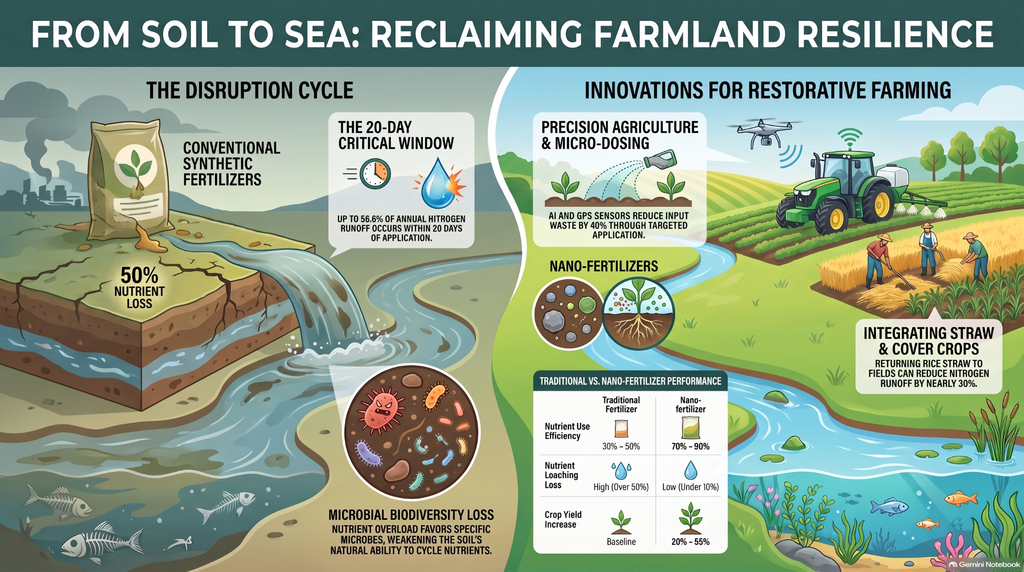
When nutrient overload occurs in soil due to excessive fertilizer application, it disrupts the delicate balance of soil microbial communities.
This imbalance can lead to several detrimental effects on microbial diversity and nutrient cycling, including:
- Dominance of specific microbes: Overabundant nutrients often favor a few microbial species, reducing overall diversity.
- Disruption of nutrient cycling: Microbial processes integral to breaking down organic matter become impaired, affecting soil fertility.
- Altered interactions: Beneficial relationships between microbes and plants weaken, inhibiting plant growth and health.
- Increased susceptibility to pathogens: A decline in microbial diversity can leave soil ecosystems vulnerable to harmful organisms.
Fertilizer Runoff and Its Impact on Soil Health
Farmers apply nutrients on their fields in the form of chemical fertilizers and animal manure, which provide crops with the nitrogen and phosphorus necessary to grow and produce the food we eat. However, when nitrogen and phosphorus are not fully utilized by the growing plants, they can be lost from the farm fields and negatively impact air and downstream water quality.
Fertilizer runoff creates a nutrient imbalance in soil, which can disrupt microbial communities essential for maintaining soil health.
When excess nitrogen and phosphorus enter the soil ecosystem, they can lead to detrimental shifts in microbial populations, impairing their functions.
As a result, you may observe reduced soil fertility and increased susceptibility to erosion and disease.
Nutrient Imbalance Effects
Excess nutrient runoff greatly disrupts soil health, intensifying the imbalance of essential elements necessary for plant growth. This imbalance poses several critical risks to agricultural ecosystems:
- Decreased Soil Resilience: Overapplication of fertilizers can diminish soil’s ability to recover from stressors.
- Impaired Nutrient Cycling: Disrupted ratios of nitrogen, phosphorus, and potassium inhibit the natural cycling processes crucial for soil fertility.
- Increased Leaching: Nutrient saturation leads to leaching, where crucial elements wash away, reducing soil quality.
- Altered pH Levels: Excess nutrients can shift soil pH, negatively affecting nutrient availability and microbial activity.
Addressing these issues is crucial for maintaining sustainable farming practices and ensuring long-term agricultural productivity.
Emphasizing balanced nutrient management can restore soil health and enhance ecosystem functionality.
Soil Microbial Disruption
Soil degradation refers to the loss of land’s physical, chemical, biological, and ecological qualities due to either natural or human-caused disturbances. Some examples of soil degradation processes are the exhaustion of nutrients and organic matter, soil erosion, acidification, desertification, and pollution.
Nutrient imbalances in soil not only affect plant growth but also greatly disrupt microbial communities. When fertilizers runoff, they can diminish microbial diversity, leading to weakened soil resilience. This disruption causes a cascading effect on nutrient cycling and soil structure, ultimately impacting crop yields and ecosystem health.
| Impact on Microbial Diversity | Impact on Soil Resilience |
| Reduced species richness | Decreased organic matter |
| Altered community structure | Compromised water retention |
| Increased pathogenic strains | Lowered nutrient availability |
| Loss of functional redundancy | Vulnerability to erosion |
| Impaired symbiotic relationships | Diminished carbon sequestration |
Restoring microbial diversity is essential for maintaining soil resilience, ensuring that agricultural systems thrive sustainably in the face of environmental challenges.
Biodiversity Loss in Farmland
As agricultural practices intensify, the delicate balance of biodiversity in farmland faces significant threats. The reliance on chemical fertilizers exacerbates habitat fragmentation, leading to a cascade of ecological consequences.
Here are key factors contributing to biodiversity loss:
- Nutrient Overload: Excessive fertilizer runoff disrupts nutrient cycles, contributing to nitrate and phosphate eutrophication biodiversity effects and altering plant communities.
- Pesticide Use: Chemical applications reduce non-target species, leading to declines in pollinator populations.
- Soil Degradation: Loss of soil health diminishes habitats, making it difficult for species to thrive.
- Monoculture Practices: Planting a single crop reduces genetic diversity, increasing vulnerability to pests and diseases.
These elements collectively accelerate species extinction rates, undermining ecosystem resilience.
To foster innovation in sustainable agriculture, addressing these issues is paramount. You must consider the intricate relationships within these ecosystems and prioritize strategies that preserve biodiversity while maintaining productivity.
INNOVATIVE PRACTICES TO REDUCE FERTILIZER RUNOFF
In marine conservation, we frequently talk about the concept of ecological resilience—the ability of an ecosystem to absorb stress and bounce back. A healthy coral reef relies on a diverse network of microorganisms, grazers, and predators; if you strip away that diversity, the entire habitat becomes fragile. The exact same principle governs farmland soil. When chemical fertilizers saturate the ground, they short-circuit the natural, symbiotic partnerships between crop roots and native soil microbes.
The microbial community loses its species richness, leaving the soil vulnerable to erosion, pathogen outbreaks, and chronic structural degradation. From my perspective as an ecologist, chemical runoff is a symptom of a disrupted ecological baseline. Over-applying nutrients masks underlying soil fatigue in the short term, but it systematically weakens the biological engine that sustains long-term productivity.
When rains wash those unabsorbed nitrates and phosphates off depleted fields, the terrestrial habitat loses critical organic structure, while downstream waterways are overwhelmed with toxic nutrient loads. Transitioning to precision management, straw return, and cover cropping is not simply about reducing farm waste—it is an urgent ecological imperative to rebuild the biological scaffolding that supports life across all trophic levels.
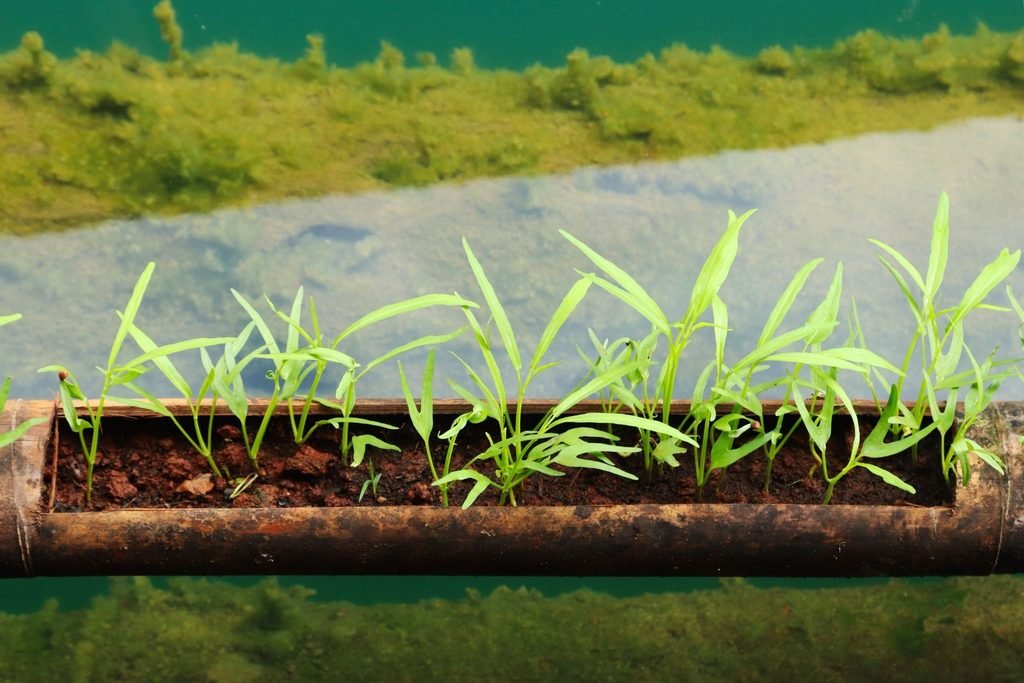
You can greatly reduce fertilizer runoff by implementing cover crops and precision agriculture techniques.
Cover crops enhance soil structure and nutrient retention, while precision agriculture optimizes input application based on real-time data.
Together, these practices can lead to improved soil health and reduced environmental impact.
Cover Crops Implementation
Implementing cover crops offers a practical and innovative approach to mitigate fertilizer runoff while enhancing soil health. By integrating cover crops into your farming practices, you can maximize their numerous benefits.
Consider these four key advantages:
- Erosion Control: Cover crops stabilize the soil, reducing erosion and nutrient loss during heavy rainfall.
- Nutrient Uptake: They absorb excess nutrients, preventing them from leaching into waterways.
- Biodiversity Enhancement: Introducing various cover crops fosters biodiversity, improving soil ecosystem resilience.
- Soil Structure Improvement: Cover crops enhance soil structure, facilitating better water infiltration and root development.
Incorporating cover crops into your crop rotation strategy not only optimizes cover crop benefits but also promotes sustainable agricultural practices essential for long-term soil health.
Precision Agriculture Techniques
While traditional farming methods often lead to excessive fertilizer runoff, precision agriculture techniques offer a data-driven solution to enhance nutrient management.
By employing precision farming strategies, you can utilize data analytics to monitor soil health, crop needs, and weather patterns. This approach enables you to apply fertilizers more accurately and only when necessary, considerably reducing excess application. Choosing eco friendly products alongside these data-driven practices can further support responsible nutrient management and reduce environmental impacts. Technologies such as GPS-guided equipment and remote sensing allow for real-time adjustments based on field variability.
Technologies such as GPS-guided equipment and remote sensing allow for real-time adjustments based on field variability. Additionally, integrating soil moisture sensors can further refine nutrient delivery, ensuring crops receive ideal levels without contributing to runoff.
How Policy Shapes Sustainable Fertilizer Practices
As policymakers recognize the urgent need to address environmental degradation caused by agricultural practices, they increasingly implement regulations aimed at promoting sustainable fertilizer use.
These sustainable policies and regulatory frameworks are vital for ensuring that agricultural activities don’t compromise ecosystem health. Here are some key approaches shaping these practices:
- Establishing nutrient management plans to optimize fertilizer application.
- Incentivizing the adoption of organic fertilizers and biostimulants.
- Mandating soil testing to tailor nutrient inputs precisely.
- Supporting research and development of innovative fertilizer technologies.
These strategies not only mitigate the adverse effects of chemical runoff but also foster a culture of accountability among farmers.
Balancing Agricultural Needs and Ecosystem Health
Nutrient run-off from farms laced with synthetic fertilizer has adversely affected land ecosystems, according to the United Nations-backed Intergovernmental Science-Policy Platform on Biodiversity and Ecosystem Services (IPBES). But freshwater and marine habitats have been hit hardest, with recurrent algal blooms such as in Lake Erie, and “dead zones” bereft of aquatic life as in the Gulf of Mexico, it says.
Balancing agricultural needs with ecosystem health is a complex challenge that requires careful consideration of both productivity and environmental integrity.
You need to integrate innovative practices like crop rotation and sustainable farming techniques to mitigate the adverse effects of fertilizer runoff. Crop rotation not only enhances soil fertility but also disrupts pest cycles, reducing the reliance on chemical inputs.
Sustainable farming embraces diverse agricultural methods that prioritize soil health and biodiversity, fostering resilience within ecosystems.
Implementing precision agriculture technologies can further optimize fertilizer applications, ensuring that nutrients are delivered efficiently and effectively.
By adopting these strategies, you can maintain high crop yields while minimizing ecological disruptions.
Collaboration among farmers, scientists, and policymakers is essential in developing frameworks that support this balance.
Ultimately, embracing these innovative practices can lead to a more sustainable agricultural landscape that respects both your productivity goals and the health of the ecosystems you depend on.

RELATED STUDIES ABOUT AGRICULTURAL FERTILIZER CHEMICAL RUNOFF SOIL ECOSYSTEM DISRUPTION
In conclusion, managing agricultural fertilizer runoff is vital for curbing contamination and conserving ecosystems. By embracing innovative practices and policy shifts, we can foster fertile fields while protecting precious soil health and biodiversity. It’s important to strike a sustainable balance between agricultural ambitions and environmental ethics, ensuring that our farming futures flourish without compromising the intricate interplay of life beneath our feet. With concerted efforts, we can create a healthier habitat for all.
Nano-fertilizers for climate-smart agriculture: Resource efficiency across soil-plant-environment systems
Overview
Traditional fertilization practices suffer from low nutrient use efficiency (NUE), typically below 40% for nitrogen and 20% for phosphorus, resulting in severe environmental impacts such as groundwater contamination and high greenhouse gas (GHG) emissions. This study evaluates the capacity of nano-fertilizers to address these inefficiencies across integrated soil, plant, and environmental systems to advance Climate-Smart Agriculture (CSA).
Key Impacts Across Systems
- Soil System:
- Nano-carriers such as carbon nanofibers and nano-silica reduce soil bulk density, enhance porosity, and improve water-holding capacity by up to 38–46.8%.
- Formulations such as nano-sulfur, nano-urea, and nano-hydroxyapatite help stabilize soil pH, boost cation exchange capacity (CEC), and increase the activity of nutrient-cycling enzymes (urease, dehydrogenase, catalase).
- Plant System:
- Nanoparticles (<100 nm) penetrate plant tissues via root epidermal cells and foliar pathways (stomata, cuticles).
- Controlled nutrient delivery elevates NUE to 70–90% (compared to 30–50% in bulk fertilizers), increases chlorophyll content by 20–50%, and improves grain yields across major crops by 20–55%.
- Physiological resilience is enhanced against drought, salinity, and thermal stress by upregulating antioxidant defenses (SOD, CAT) and maintaining osmolyte balance.
- Environmental System:
- Slow, targeted release minimizes nutrient leaching losses to under 10%.
- Nano-enabled formulations mitigate gaseous emissions, reducing nitrous oxide (N2O) by up to 38–50% and ammonia (NH3) volatilization by up to 40–63%.
Critical Challenges and Risks
- Ecotoxicity: High concentrations of metallic nanoparticles (e.g., CuO, ZnO, Ag) generate reactive oxygen species (ROS), disrupt cell membrane integrity, and suppress beneficial soil microbes and nitrifiers.
- Persistence & Bioaccumulation: Persistent metallic nanomaterials can accumulate in soil micro-aggregates, enter aquatic food webs via runoff, and accumulate in edible crop tissues (e.g., carrots, eggplants), posing potential food safety risks.
- Analytical Limitations: Tracking engineered nanoparticles in complex environmental matrices is hindered by extraction difficulties and the challenge of distinguishing them from natural soil colloids.
Strategic Recommendations
- Digital Integration: Combine nano-fertilizers with AI, IoT sensors, and drone-based multispectral mapping to enable precise micro-dosing and reduce nutrient input waste by up to 40%.
- Biodegradable Formulations: Prioritize green, bio-based carriers (e.g., nano-biochar, chitosan, lignin) to mitigate long-term accumulation risks.
- Standardized Oversight: Establish robust ecotoxicity protocols and conduct long-term, multi-location field trials to ensure safe adoption.
| REFERENCE: Md Asadujjaman Rasel, Sayma Salam, Md. Moshiul Islam, Nano-fertilizers for climate-smart agriculture: Resource efficiency across soil-plant-environment systems, Climate Smart Agriculture, Volume 3, Issue 2, 2026, 100115, ISSN 2950-4090, https://doi.org/10.1016/j.csag.2026.100115. (https://www.sciencedirect.com/science/article/pii/S2950409026000195) |
Carbon nanofertilizers in agriculture: A critical review of soil ecosystem impacts and phytotoxicity
Overview and Problem Statement
Conventional synthetic fertilizers exhibit low nutrient use efficiency (NUE), with losses often exceeding 50% through leaching, volatilization, and runoff. This inefficiency leads to soil acidification, water eutrophication, groundwater contamination, and increased operational costs. Carbon-based nanofertilizers (CNFs)—synthesized from precursors like biochar, agricultural waste, and carbon allotropes (such as carbon nanotubes, carbon nanodots, graphene, and fullerenes)—offer a sustainable, organic-based alternative that regulates nutrient delivery, improves soil quality, and mitigates environmental impacts.
Key Positive Impacts on Soil Health and Ecosystems
- Soil Structure and Water Retention: Due to their high porosity and large surface area-to-volume ratio, CNFs improve soil aggregate stability, reduce bulk density, and increase soil water retention capacity by up to 22%.
- Enzymatic Activity and Microbial Stimulation: At low to moderate application rates (typically 50–200 mg/kg), CNFs stimulate microbial communities and upregulate essential cycling enzymes such as urease, dehydrogenase, and phosphatase, accelerating organic matter decomposition and nutrient mineralization.
- Nutrient Bioavailability: Nanoscale carbon carriers allow controlled, targeted release of macro- and micronutrients, significantly reducing leaching losses and improving plant uptake.
- Carbon Sequestration: CNFs enhance root colonization and aggregate with humic substances and organic colloids, helping build stable soil organic matter pools and contributing to terrestrial carbon storage.
- Soil Chemistry Regulation: Functional groups on CNFs can buffer soil pH and alter cation exchange capacity (CEC), helping remediate degraded, acidic, or saline-alkali soils.
Phytotoxicity and Ecological Risks
The agronomic effects of CNFs are strictly concentration-dependent, exhibiting notable toxicity at elevated levels:
- Microbial and Enzymatic Suppression: Excessive concentrations (e.g., SWCNTs >300 µg/g or MWCNTs >400–5000 mg/kg) sharply reduce microbial biomass carbon and nitrogen, suppress nitrification, and inhibit enzyme activities.
- Cellular and Membrane Disruption: High doses physically pierce microbial and root cell membranes, obstruct cell wall pores, and cause reactive oxygen species (ROS) overproduction, leading to mitochondrial damage, lipid peroxidation, and electrolyte leakage.
- Genotoxicity: Nanomaterials entering root tip cells can induce DNA fragmentation, mitotic arrest, chromosomal abnormalities (sticky chromosomes, micronuclei), and altered microRNA expression.
- Inhibited Growth and Photosynthesis: Overapplication delays seed germination, restricts root elongation, and causes chlorophyll degradation, lowering photosynthetic efficiency.
Key Challenges and Strategic Roadmap
To transition CNFs from laboratory research to commercial agriculture, several key barriers must be addressed:
- Dosage and Threshold Optimization: Establish precise, crop- and soil-specific safe application limits to prevent acute and chronic phytotoxicity.
- Long-Term Environmental Fate: Conduct multi-year field trials to determine degradation kinetics, metabolic byproducts, and trophic transfer risks in soil and aquatic environments.
- Cost and Manufacturing Standards: Develop cost-effective, scalable green synthesis methods to replace expensive mass-production equipment.
- Evidence-Based Regulation: Create standardized life-cycle assessment frameworks and safety protocols for responsible deployment across global agroecosystems.
| REFERENCE: Rabia Javed, Zia-ul Islam, Ayesha Rathnayake, Omaththage Adithya Dananjaya Padmaperuma, Uzma Sharafat, Rhea Amor Lumactud, Lord Abbey, Raymond Thomas, Lakshman Galagedara, Mumtaz Cheema, Carbon nanofertilizers in agriculture: A critical review of soil ecosystem impacts and phytotoxicity, Plant Nano Biology, Volume 15, 2026, 100231, ISSN 2773-1111, https://doi.org/10.1016/j.plana.2025.100231. (https://www.sciencedirect.com/science/article/pii/S2773111125000981) |
Optimizing fertilizer application and straw return to fields to minimize nitrogen and phosphorus runoff losses in double-rice cropping systems
Context and Objectives
Intensive double-cropped rice systems in the subtropical Yangtze River Basin face severe nutrient runoff losses driven by high synthetic fertilizer inputs and frequent heavy precipitation. These losses lower nutrient use efficiency (NUE) and act as major drivers of non-point source pollution and water eutrophication. This 7-year field experiment (2015–2022) conducted in Hunan Province, China, investigated the long-term impacts of chemical fertilizer reduction and straw incorporation on total nitrogen (TN) and total phosphorus (TP) runoff losses, crop yields, and soil fertility.
Key Findings
- Critical Loss Window: The first 0–20 days following fertilizer application represents the highest-risk window, generating 41.7–56.6% of annual TN losses and 20.2–25.8% of annual TP losses. Runoff nutrient concentrations peak within 5 days post-application before steadily stabilizing.
- Seasonal Distribution Patterns:
- Nitrogen: Annual TN loss predominantly occurs during the early rice season (58.3–61.3%), where basal and top-dressing fertilization coincide with concentrated heavy monsoon rainfall (May–July).
- Phosphorus: In contrast to nitrogen, TP losses are distributed relatively evenly across the early rice, late rice, and winter fallow seasons (each accounting for >30% of annual losses). Winter fallow P loss is driven by the mobilization of legacy soil phosphorus during drying-rewetting cycles and aggregate breakdown in uncanopied soil.
- Agronomic Performance and Mitigation:
- Optimized Fertilization (TR3): Lowering chemical inputs (by 30.0% N / 25.0% P in early rice and 25.0% N / 60.0% P in late rice) reduced annual TN and TP losses by 11.7% and 13.7%, respectively, with negligible impacts on grain yield.
- Straw Return Integration (TR6): Partially substituting chemical fertilizers with returned rice straw (2250 kg/ha in early rice, 4500 kg/ha in late rice) while maintaining equivalent total nutrient inputs further reduced TN losses by 20.1% and TP losses by 11.5% compared to optimized fertilization alone, yielding an overall 29.4% TN and 23.6% TP reduction relative to conventional farming (TR2).
- Soil Fertility Enhancement: Straw return (TR6) increased soil organic matter (SOM) by 6.34% and soil TN by 4.57% compared to conventional practices, while maintaining stable crop yields.
- Environmental Soil Thresholds: Runoff TN concentrations spike sharply when soil TN exceeds 1.99 g/kg. Runoff TP concentrations surge when soil TP exceeds 1.02 g/kg, which is 12% higher than the agronomic optimum threshold for crop yield (0.91 g/kg).
Strategic Recommendations
- Adopt Combined Straw Return and Formula Fertilization: Replace a portion of chemical fertilizer with shredded straw return to improve soil structure, enhance microbial nitrogen immobilization, and maintain high yields while cutting nutrient runoff.
- Implement Dynamic Soil Phosphorus Caps: Adjust or halt external phosphorus applications when soil TP levels exceed 0.91–1.02 g/kg to curb legacy phosphorus saturation and prevent eutrophication.
- Target Winter Fallow and Early Season Risks: Address winter fallow phosphorus runoff through cover management or water retention, and decouple early-season fertilization schedules from forecasted heavy rainfall events to avoid peak loss periods.
| REFERENCE: Ying Zhang, Jian Zhu, Changjun Li, Hua Peng, Ji Liu, Yue Luo, Min Song, Yanjiao Dai, Kai Deng, Xionghui Ji, Optimizing fertilizer application and straw return to fields to minimize nitrogen and phosphorus runoff losses in double-rice cropping systems, Agricultural Water Management, Volume 317, 2025, 109601, ISSN 0378-3774, https://doi.org/10.1016/j.agwat.2025.109601. (https://www.sciencedirect.com/science/article/pii/S0378377425003154) |
CONCLUSION
Documenting fragile ecosystems through my underwater camera lens has taught me that nature operates on interconnected loops, never in isolated silos. Every nutrient that enters an agricultural field inevitably moves through a broader ecological cycle—shaping soil microbiomes, migrating through groundwater, and ultimately reaching our rivers, wetlands, and open seas. The scientific evidence is clear: continuing with business-as-usual chemical application risks degrading our soils beyond natural recovery while accelerating biodiversity loss across global aquatic habitats.
However, the growing momentum behind climate-smart agriculture, organic carbon enrichment, and data-driven nutrient precision gives me genuine hope. By integrating rigorous ecological monitoring with practical, supportive farmer policies, we can achieve high agricultural yields without sacrificing our living soils.
Safeguarding biodiversity is not an obstacle to sustainable farming; it is the fundamental foundation upon which resilient agriculture and thriving oceans depend. As advocates, scientists, and consumers, our task is to support restorative practices that honor the intricate web of life from the microscopic soil microbe to the furthest coral reef. Let us work toward a future where our land stewardship actively protects our shared waters.